Blog

156 articles dans cette catégorie

benefits-of-leasing-ip-addresses
Blog

Top 5 Benefits of Leasing IP Addresses for Global Businesses

What does leasing IP addresses mean for global businesses? Instead of buying IPv4 or IPv6 blocks altogether, leasing entails renting them from a supplier. This provides quick access to address space across several areas, which is essential for multinational corporations given the shortage of IPv4. Through leasing, expansions and short-term requirements can be easily met by transferring the cost from a significant capital investment to a manageable operational outlay. Related Posts Why the Cheapest IPv4 Lease May Cost More in the Long Run A low monthly price may look attractive during procurement, but the real cost of leased IPv4 addresses includes much more What causes IPv4 deals to stall after the first agreement IPv4 deals usually stall after the first agreement because agreeing on price is only the commercial beginning—not operational completion.A buyer What Is a /24 IPv4 Subnet and Why Is It Popular for Leasing? A /24 IPv4 subnet is one of the most common block sizes in the IPv4 leasing market. For hosting providers, .related-post {} .related-post .post-list { text-align: left; } .related-post .post-list .item { margin: 5px; padding: 10px; } .related-post .headline { font-size: 18px !important; color: #999999 !important; } .related-post .post-list .item .post_thumb { max-height: 220px; margin: 10px 0px; padding: 0px; display: block; } .related-post .post-list .item .post_title { font-size: 16px; color: #3f3f3f; margin: 10px 0px; padding: 0px; display: block; text-decoration: none; } .related-post .post-list .item .post_excerpt { font-size: 13px; color: #3f3f3f; margin: 10px 0px; padding: 0px; display: block; text-decoration: none; } @media only screen and (min-width: 1024px) { .related-post .post-list .item { width: 30%; } } @media only screen and (min-width: 768px) and (max-width: 1023px) { .related-post .post-list .item { width: 90%; } } @media only screen and (min-width: 0px) and (max-width: 767px) { .related-post .post-list .item { width: 90%; } }
Lire la suite →
byoip-enterprise
Blog

Why Enterprises are Adopting BYOIP

As organizations around the world accelerate their digital transformation processes, the adoption of cloud technology has no longer merely been a technological trend but has become a strategically significant initiative. Enterprises are migrating critical workloads to cloud environments at an unprecedented speed to enhance flexibility, scalability, and cost-effectiveness. However, this transformation is not without challenges. One of the most pressing issues in cloud migration is the need to maintainRead more Related Posts Why the Cheapest IPv4 Lease May Cost More in the Long Run A low monthly price may look attractive during procurement, but the real cost of leased IPv4 addresses includes much more What causes IPv4 deals to stall after the first agreement IPv4 deals usually stall after the first agreement because agreeing on price is only the commercial beginning—not operational completion.A buyer How to Avoid Downtime When Deploying Leased IPv4 Blocks Leased IPv4 blocks are often used by hosting providers, cloud platforms, ISPs, SaaS companies, data centers, and enterprise networks that .related-post {} .related-post .post-list { text-align: left; } .related-post .post-list .item { margin: 5px; padding: 10px; } .related-post .headline { font-size: 18px !important; color: #999999 !important; } .related-post .post-list .item .post_thumb { max-height: 220px; margin: 10px 0px; padding: 0px; display: block; } .related-post .post-list .item .post_title { font-size: 16px; color: #3f3f3f; margin: 10px 0px; padding: 0px; display: block; text-decoration: none; } .related-post .post-list .item .post_excerpt { font-size: 13px; color: #3f3f3f; margin: 10px 0px; padding: 0px; display: block; text-decoration: none; } @media only screen and (min-width: 1024px) { .related-post .post-list .item { width: 30%; } } @media only screen and (min-width: 768px) and (max-width: 1023px) { .related-post .post-list .item { width: 90%; } } @media only screen and (min-width: 0px) and (max-width: 767px) { .related-post .post-list .item { width: 90%; } }

byoip
Blog

BYOIP vs IP Leasing: Which is better for your Business?

In today’s digital landscape, businesses face critical decisions regarding their IP address management, especially when migrating to cloud services. Two prevalent options are Bring Your Own IP (BYOIP) and IP leasing. Each approach has its advantages and considerations, depending on your organization’s specific needs and resources. Understanding BYOIP and IP Leasing Also read: How BYOIP Helps Prevent IP Spoofing and Fraud What is BYOIP? BYOIP allows businesses to migrateRead more Related Posts Why the Cheapest IPv4 Lease May Cost More in the Long Run A low monthly price may look attractive during procurement, but the real cost of leased IPv4 addresses includes much more What causes IPv4 deals to stall after the first agreement IPv4 deals usually stall after the first agreement because agreeing on price is only the commercial beginning—not operational completion.A buyer How to Avoid Downtime When Deploying Leased IPv4 Blocks Leased IPv4 blocks are often used by hosting providers, cloud platforms, ISPs, SaaS companies, data centers, and enterprise networks that .related-post {} .related-post .post-list { text-align: left; } .related-post .post-list .item { margin: 5px; padding: 10px; } .related-post .headline { font-size: 18px !important; color: #999999 !important; } .related-post .post-list .item .post_thumb { max-height: 220px; margin: 10px 0px; padding: 0px; display: block; } .related-post .post-list .item .post_title { font-size: 16px; color: #3f3f3f; margin: 10px 0px; padding: 0px; display: block; text-decoration: none; } .related-post .post-list .item .post_excerpt { font-size: 13px; color: #3f3f3f; margin: 10px 0px; padding: 0px; display: block; text-decoration: none; } @media only screen and (min-width: 1024px) { .related-post .post-list .item { width: 30%; } } @media only screen and (min-width: 768px) and (max-width: 1023px) { .related-post .post-list .item { width: 90%; } } @media only screen and (min-width: 0px) and (max-width: 767px) { .related-post .post-list .item { width: 90%; } }
ddos-attack
Blog

Understanding the Different Types of DDoS Attacks

As the internet becomes more integral to everyday business operations, cybersecurity threats evolve in both complexity and impact. One of the most persistent and damaging threats facing organizations today is the Distributed Denial of Service (DDoS) attack. These attacks flood a targeted system with an overwhelming amount of traffic, rendering services unusable for legitimate users. To effectively mitigate DDoS threats, it’s essential to understand the various types ofRead more Related Posts Why the Cheapest IPv4 Lease May Cost More in the Long Run A low monthly price may look attractive during procurement, but the real cost of leased IPv4 addresses includes much more What causes IPv4 deals to stall after the first agreement IPv4 deals usually stall after the first agreement because agreeing on price is only the commercial beginning—not operational completion.A buyer How to Avoid Downtime When Deploying Leased IPv4 Blocks Leased IPv4 blocks are often used by hosting providers, cloud platforms, ISPs, SaaS companies, data centers, and enterprise networks that .related-post {} .related-post .post-list { text-align: left; } .related-post .post-list .item { margin: 5px; padding: 10px; } .related-post .headline { font-size: 18px !important; color: #999999 !important; } .related-post .post-list .item .post_thumb { max-height: 220px; margin: 10px 0px; padding: 0px; display: block; } .related-post .post-list .item .post_title { font-size: 16px; color: #3f3f3f; margin: 10px 0px; padding: 0px; display: block; text-decoration: none; } .related-post .post-list .item .post_excerpt { font-size: 13px; color: #3f3f3f; margin: 10px 0px; padding: 0px; display: block; text-decoration: none; } @media only screen and (min-width: 1024px) { .related-post .post-list .item { width: 30%; } } @media only screen and (min-width: 768px) and (max-width: 1023px) { .related-post .post-list .item { width: 90%; } } @media only screen and (min-width: 0px) and (max-width: 767px) { .related-post .post-list .item { width: 90%; } }
Understand What is ARIN, What they do
Blog

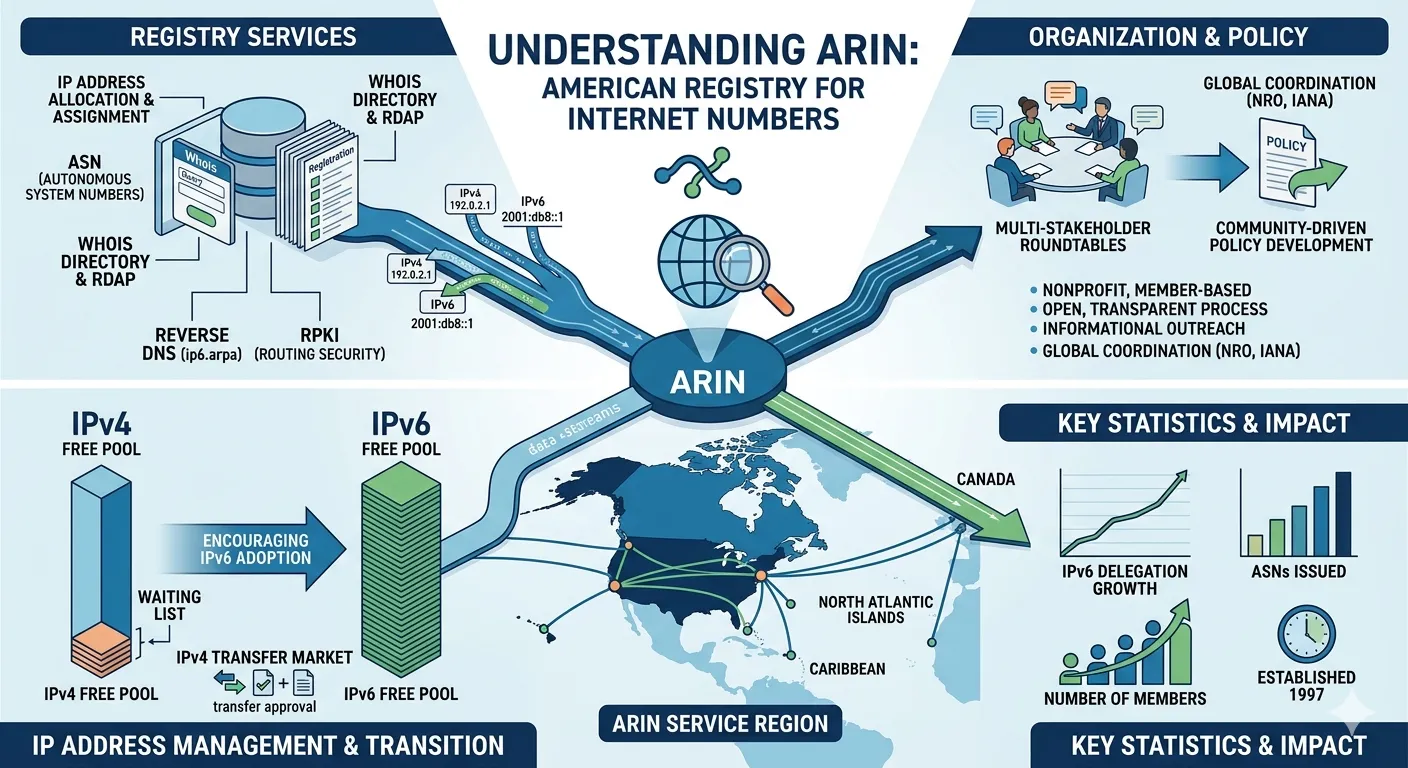
What is ARIN? Understanding the American Registry for Internet Numbers

The American Registry for Internet Numbers (ARIN) is a nonprofit organization that plays a vital role in managing and distributing Internet number resources. These resources include Internet Protocol (IP) addresses and Autonomous System Numbers (ASNs), which are essential for ensuring that data travels reliably across the global Internet. ARIN is one of five Regional Internet Registries (RIRs) worldwide. Its jurisdiction covers Canada, the United States, and many partsRead more Related Posts Why the Cheapest IPv4 Lease May Cost More in the Long Run A low monthly price may look attractive during procurement, but the real cost of leased IPv4 addresses includes much more What causes IPv4 deals to stall after the first agreement IPv4 deals usually stall after the first agreement because agreeing on price is only the commercial beginning—not operational completion.A buyer How to Avoid Downtime When Deploying Leased IPv4 Blocks Leased IPv4 blocks are often used by hosting providers, cloud platforms, ISPs, SaaS companies, data centers, and enterprise networks that .related-post {} .related-post .post-list { text-align: left; } .related-post .post-list .item { margin: 5px; padding: 10px; } .related-post .headline { font-size: 18px !important; color: #999999 !important; } .related-post .post-list .item .post_thumb { max-height: 220px; margin: 10px 0px; padding: 0px; display: block; } .related-post .post-list .item .post_title { font-size: 16px; color: #3f3f3f; margin: 10px 0px; padding: 0px; display: block; text-decoration: none; } .related-post .post-list .item .post_excerpt { font-size: 13px; color: #3f3f3f; margin: 10px 0px; padding: 0px; display: block; text-decoration: none; } @media only screen and (min-width: 1024px) { .related-post .post-list .item { width: 30%; } } @media only screen and (min-width: 768px) and (max-width: 1023px) { .related-post .post-list .item { width: 90%; } } @media only screen and (min-width: 0px) and (max-width: 767px) { .related-post .post-list .item { width: 90%; } }

What is Regional Internet Registry (RIR)
Blog

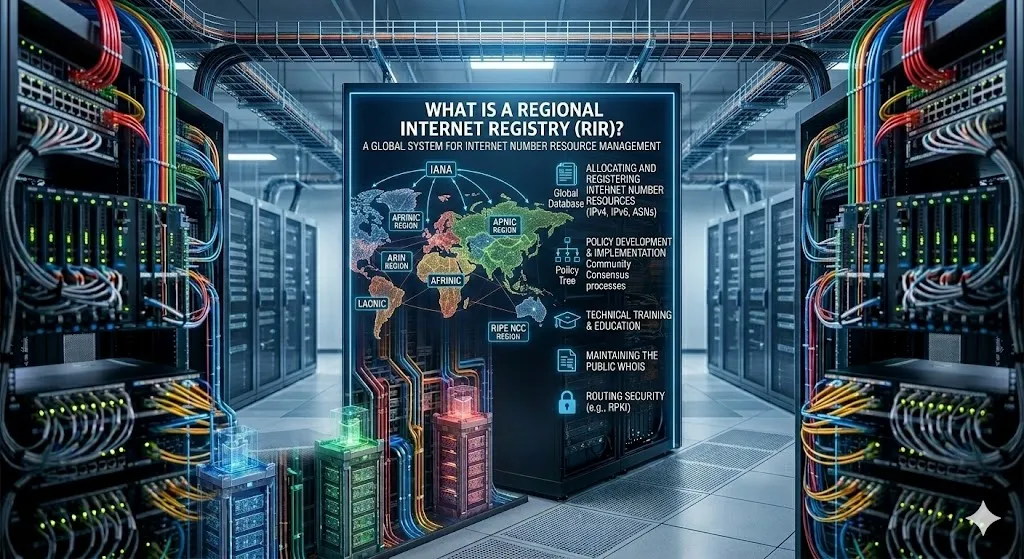
What Is a Regional Internet Registry (RIR)?

What Is a Regional Internet Registry (RIR)? The Five Global RIRs Explained Every device and network connected to the public internet needs unique numerical identifiers. Computers, servers, cloud platforms, internet service providers, and enterprise networks rely on IP addresses to exchange data, while network operators use Autonomous System Numbers to advertise routes between independently managed networks. These resources cannot be assigned randomly. If two organizations attempted to use theRead more Related Posts Why the Cheapest IPv4 Lease May Cost More in the Long Run A low monthly price may look attractive during procurement, but the real cost of leased IPv4 addresses includes much more What causes IPv4 deals to stall after the first agreement IPv4 deals usually stall after the first agreement because agreeing on price is only the commercial beginning—not operational completion.A buyer How to Avoid Downtime When Deploying Leased IPv4 Blocks Leased IPv4 blocks are often used by hosting providers, cloud platforms, ISPs, SaaS companies, data centers, and enterprise networks that .related-post {} .related-post .post-list { text-align: left; } .related-post .post-list .item { margin: 5px; padding: 10px; } .related-post .headline { font-size: 18px !important; color: #999999 !important; } .related-post .post-list .item .post_thumb { max-height: 220px; margin: 10px 0px; padding: 0px; display: block; } .related-post .post-list .item .post_title { font-size: 16px; color: #3f3f3f; margin: 10px 0px; padding: 0px; display: block; text-decoration: none; } .related-post .post-list .item .post_excerpt { font-size: 13px; color: #3f3f3f; margin: 10px 0px; padding: 0px; display: block; text-decoration: none; } @media only screen and (min-width: 1024px) { .related-post .post-list .item { width: 30%; } } @media only screen and (min-width: 768px) and (max-width: 1023px) { .related-post .post-list .item { width: 90%; } } @media only screen and (min-width: 0px) and (max-width: 767px) { .related-post .post-list .item { width: 90%; } }
Understand What is APNIC, What they do
Blog

What Is APNIC?

A Simple Introduction to the Asia Pacific Network Information Centre When you browse the Internet, you probably don’t think much about the technical systems working in the background. But the truth is, there’s a lot happening to make sure websites load, emails send, and videos stream without a hitch. One of the organizations helping keep the Internet running smoothly, at least in this part of the world, is APNIC. Related Posts Why the Cheapest IPv4 Lease May Cost More in the Long Run A low monthly price may look attractive during procurement, but the real cost of leased IPv4 addresses includes much more What causes IPv4 deals to stall after the first agreement IPv4 deals usually stall after the first agreement because agreeing on price is only the commercial beginning—not operational completion.A buyer How to Avoid Downtime When Deploying Leased IPv4 Blocks Leased IPv4 blocks are often used by hosting providers, cloud platforms, ISPs, SaaS companies, data centers, and enterprise networks that .related-post {} .related-post .post-list { text-align: left; } .related-post .post-list .item { margin: 5px; padding: 10px; } .related-post .headline { font-size: 18px !important; color: #999999 !important; } .related-post .post-list .item .post_thumb { max-height: 220px; margin: 10px 0px; padding: 0px; display: block; } .related-post .post-list .item .post_title { font-size: 16px; color: #3f3f3f; margin: 10px 0px; padding: 0px; display: block; text-decoration: none; } .related-post .post-list .item .post_excerpt { font-size: 13px; color: #3f3f3f; margin: 10px 0px; padding: 0px; display: block; text-decoration: none; } @media only screen and (min-width: 1024px) { .related-post .post-list .item { width: 30%; } } @media only screen and (min-width: 768px) and (max-width: 1023px) { .related-post .post-list .item { width: 90%; } } @media only screen and (min-width: 0px) and (max-width: 767px) { .related-post .post-list .item { width: 90%; } }
Lire la suite →
How to Handle Blacklisted IP Addresses in the APNIC Registry
Blog

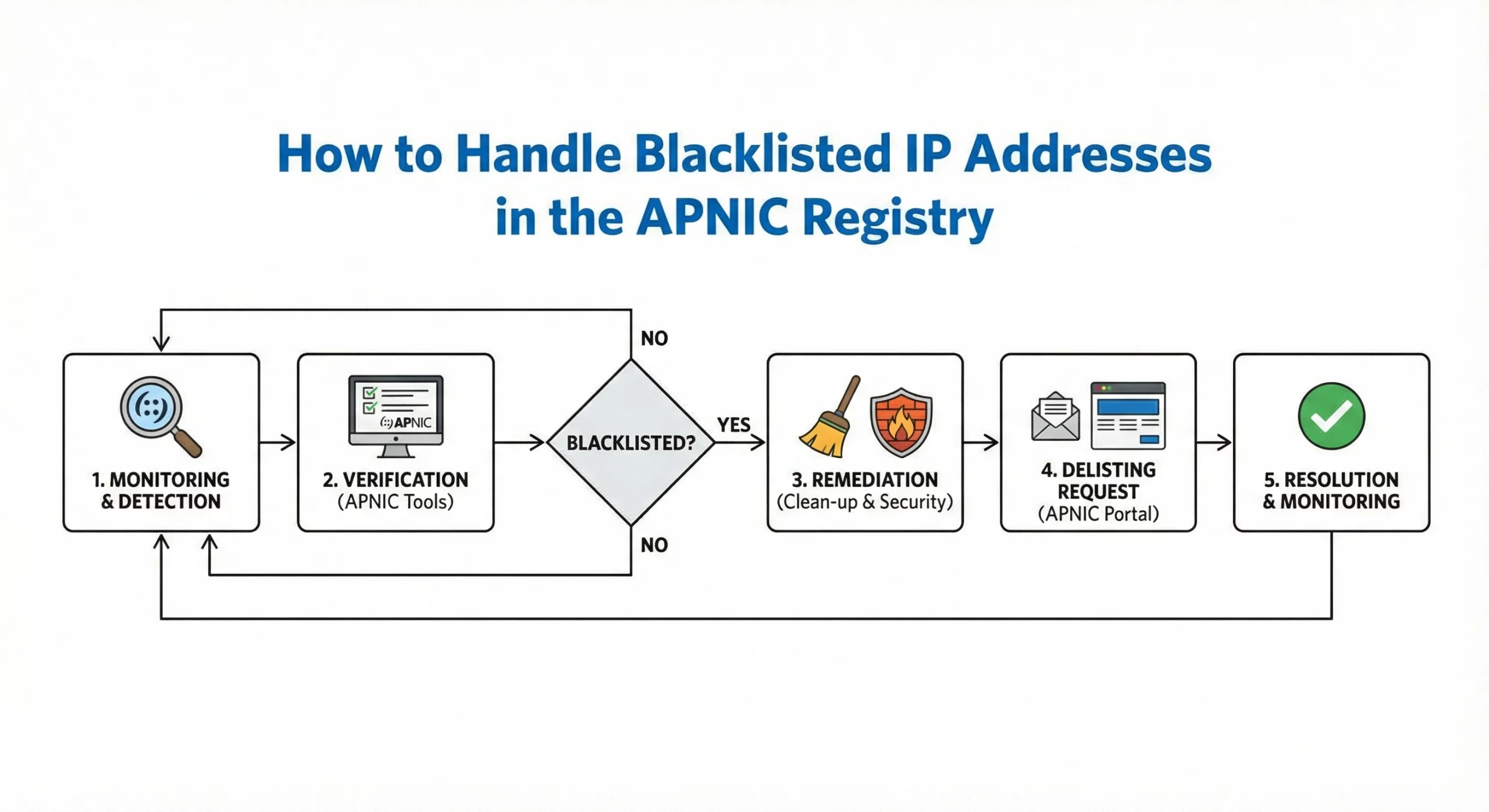
How to Handle Blacklisted IP Addresses in the APNIC Registry

In today’s internet ecosystem, maintaining a clean and trusted IP address range is crucial for any organization that manages network infrastructure. If you’re working with IPv4 resources in the Asia-Pacific region, chances are you’re dealing with APNIC — the regional Internet registry responsible for IP allocations. But what happens when an IP address you’ve been assigned — or one you’ve acquired through transfer or lease — ends upRead more Related Posts Why the Cheapest IPv4 Lease May Cost More in the Long Run A low monthly price may look attractive during procurement, but the real cost of leased IPv4 addresses includes much more What causes IPv4 deals to stall after the first agreement IPv4 deals usually stall after the first agreement because agreeing on price is only the commercial beginning—not operational completion.A buyer How to Avoid Downtime When Deploying Leased IPv4 Blocks Leased IPv4 blocks are often used by hosting providers, cloud platforms, ISPs, SaaS companies, data centers, and enterprise networks that .related-post {} .related-post .post-list { text-align: left; } .related-post .post-list .item { margin: 5px; padding: 10px; } .related-post .headline { font-size: 18px !important; color: #999999 !important; } .related-post .post-list .item .post_thumb { max-height: 220px; margin: 10px 0px; padding: 0px; display: block; } .related-post .post-list .item .post_title { font-size: 16px; color: #3f3f3f; margin: 10px 0px; padding: 0px; display: block; text-decoration: none; } .related-post .post-list .item .post_excerpt { font-size: 13px; color: #3f3f3f; margin: 10px 0px; padding: 0px; display: block; text-decoration: none; } @media only screen and (min-width: 1024px) { .related-post .post-list .item { width: 30%; } } @media only screen and (min-width: 768px) and (max-width: 1023px) { .related-post .post-list .item { width: 90%; } } @media only screen and (min-width: 0px) and (max-width: 767px) { .related-post .post-list .item { width: 90%; } }
Lire la suite →
IP-Routing-Network
Blog

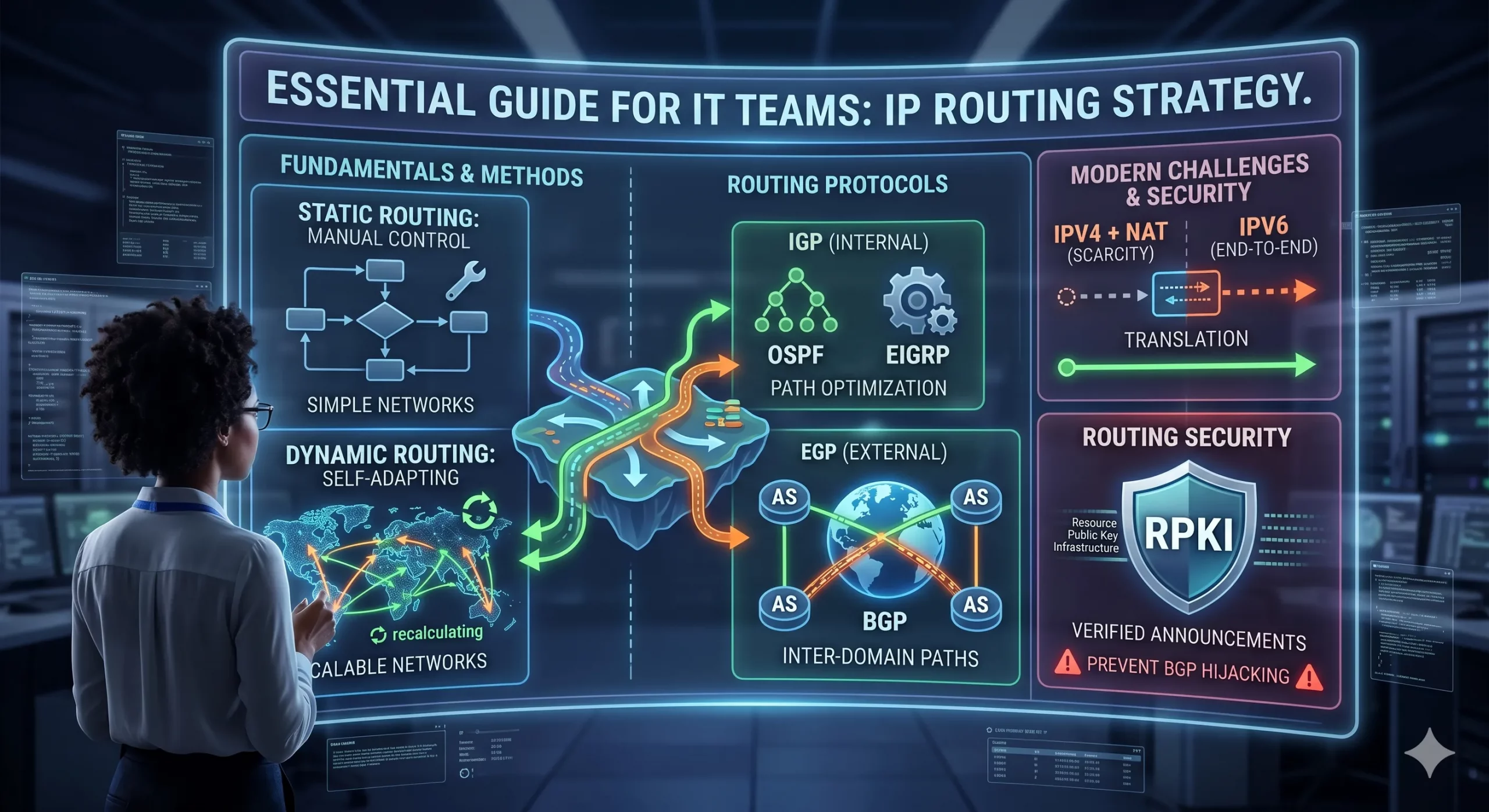
What IT Teams Should Know About IP Routing

In today’s cloud-first business environment, understanding how data moves across networks isn’t just a niche IT skill—it’s a necessity. For IT teams managing platforms like i.Lease, which support critical lease data and user access from multiple regions, IP routing becomes a key factor in performance, uptime, and security. So, what exactly should IT professionals keep in mind when it comes to IP routing in enterprise applications? Understanding theRead more Related Posts Why the Cheapest IPv4 Lease May Cost More in the Long Run A low monthly price may look attractive during procurement, but the real cost of leased IPv4 addresses includes much more What causes IPv4 deals to stall after the first agreement IPv4 deals usually stall after the first agreement because agreeing on price is only the commercial beginning—not operational completion.A buyer How to Avoid Downtime When Deploying Leased IPv4 Blocks Leased IPv4 blocks are often used by hosting providers, cloud platforms, ISPs, SaaS companies, data centers, and enterprise networks that .related-post {} .related-post .post-list { text-align: left; } .related-post .post-list .item { margin: 5px; padding: 10px; } .related-post .headline { font-size: 18px !important; color: #999999 !important; } .related-post .post-list .item .post_thumb { max-height: 220px; margin: 10px 0px; padding: 0px; display: block; } .related-post .post-list .item .post_title { font-size: 16px; color: #3f3f3f; margin: 10px 0px; padding: 0px; display: block; text-decoration: none; } .related-post .post-list .item .post_excerpt { font-size: 13px; color: #3f3f3f; margin: 10px 0px; padding: 0px; display: block; text-decoration: none; } @media only screen and (min-width: 1024px) { .related-post .post-list .item { width: 30%; } } @media only screen and (min-width: 768px) and (max-width: 1023px) { .related-post .post-list .item { width: 90%; } } @media only screen and (min-width: 0px) and (max-width: 767px) { .related-post .post-list .item { width: 90%; } }
Lire la suite →
Types of Network Address Translation
Blog

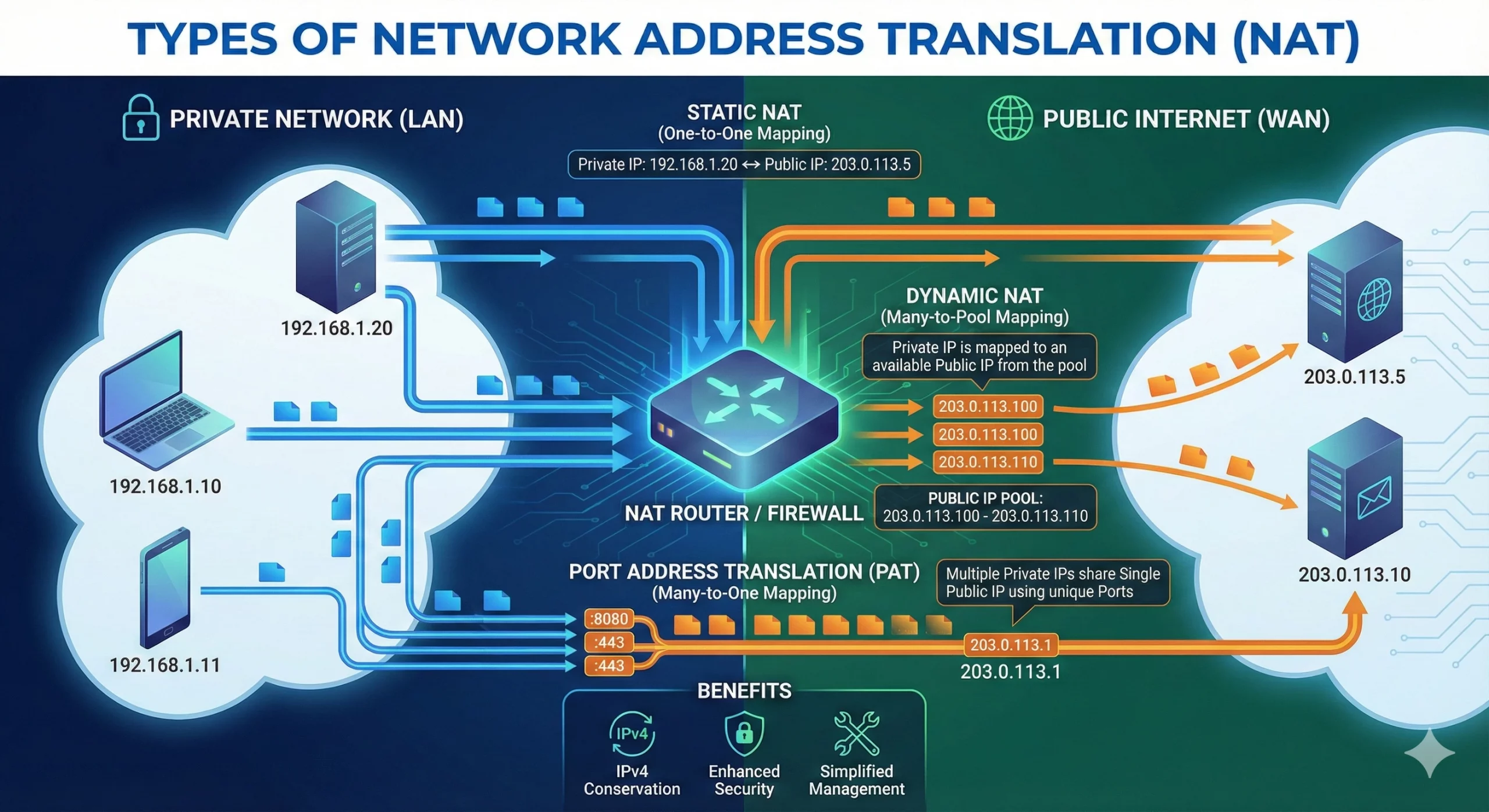
Types of Network Address Translation

Network Address Translation (NAT) is a technique used in networking to modify the source or destination IP addresses of packets as they traverse a routing device, such as a router or firewall. This process enables multiple devices within a private network to access external networks, like the internet, using a single public IP address, thereby conserving IP address space and enhancing security.​ Types of Network Address Translation: 1. StaticRead more Related Posts Why the Cheapest IPv4 Lease May Cost More in the Long Run A low monthly price may look attractive during procurement, but the real cost of leased IPv4 addresses includes much more What causes IPv4 deals to stall after the first agreement IPv4 deals usually stall after the first agreement because agreeing on price is only the commercial beginning—not operational completion.A buyer How to Avoid Downtime When Deploying Leased IPv4 Blocks Leased IPv4 blocks are often used by hosting providers, cloud platforms, ISPs, SaaS companies, data centers, and enterprise networks that .related-post {} .related-post .post-list { text-align: left; } .related-post .post-list .item { margin: 5px; padding: 10px; } .related-post .headline { font-size: 18px !important; color: #999999 !important; } .related-post .post-list .item .post_thumb { max-height: 220px; margin: 10px 0px; padding: 0px; display: block; } .related-post .post-list .item .post_title { font-size: 16px; color: #3f3f3f; margin: 10px 0px; padding: 0px; display: block; text-decoration: none; } .related-post .post-list .item .post_excerpt { font-size: 13px; color: #3f3f3f; margin: 10px 0px; padding: 0px; display: block; text-decoration: none; } @media only screen and (min-width: 1024px) { .related-post .post-list .item { width: 30%; } } @media only screen and (min-width: 768px) and (max-width: 1023px) { .related-post .post-list .item { width: 90%; } } @media only screen and (min-width: 0px) and (max-width: 767px) { .related-post .post-list .item { width: 90%; } }

Blog

The Role of BYOIP in Preventing IP Blocking

In today’s digital landscape, businesses and organizations rely heavily on seamless connectivity and secure access to online resources. However, IP blocking has become a common challenge, often disrupting operations, limiting access to critical platforms, and even affecting business continuity. One innovative solution to this problem is Bring Your Own IP (BYOIP), a strategy that allows organizations to retain control over their IP addresses and mitigate the risks associated withRead more Related Posts Why the Cheapest IPv4 Lease May Cost More in the Long Run A low monthly price may look attractive during procurement, but the real cost of leased IPv4 addresses includes much more What causes IPv4 deals to stall after the first agreement IPv4 deals usually stall after the first agreement because agreeing on price is only the commercial beginning—not operational completion.A buyer What Is a /24 IPv4 Subnet and Why Is It Popular for Leasing? A /24 IPv4 subnet is one of the most common block sizes in the IPv4 leasing market. For hosting providers, .related-post {} .related-post .post-list { text-align: left; } .related-post .post-list .item { margin: 5px; padding: 10px; } .related-post .headline { font-size: 18px !important; color: #999999 !important; } .related-post .post-list .item .post_thumb { max-height: 220px; margin: 10px 0px; padding: 0px; display: block; } .related-post .post-list .item .post_title { font-size: 16px; color: #3f3f3f; margin: 10px 0px; padding: 0px; display: block; text-decoration: none; } .related-post .post-list .item .post_excerpt { font-size: 13px; color: #3f3f3f; margin: 10px 0px; padding: 0px; display: block; text-decoration: none; } @media only screen and (min-width: 1024px) { .related-post .post-list .item { width: 30%; } } @media only screen and (min-width: 768px) and (max-width: 1023px) { .related-post .post-list .item { width: 90%; } } @media only screen and (min-width: 0px) and (max-width: 767px) { .related-post .post-list .item { width: 90%; } }

Lire la suite →
What is BYOIP (Bring Your Own IP)?
Blog

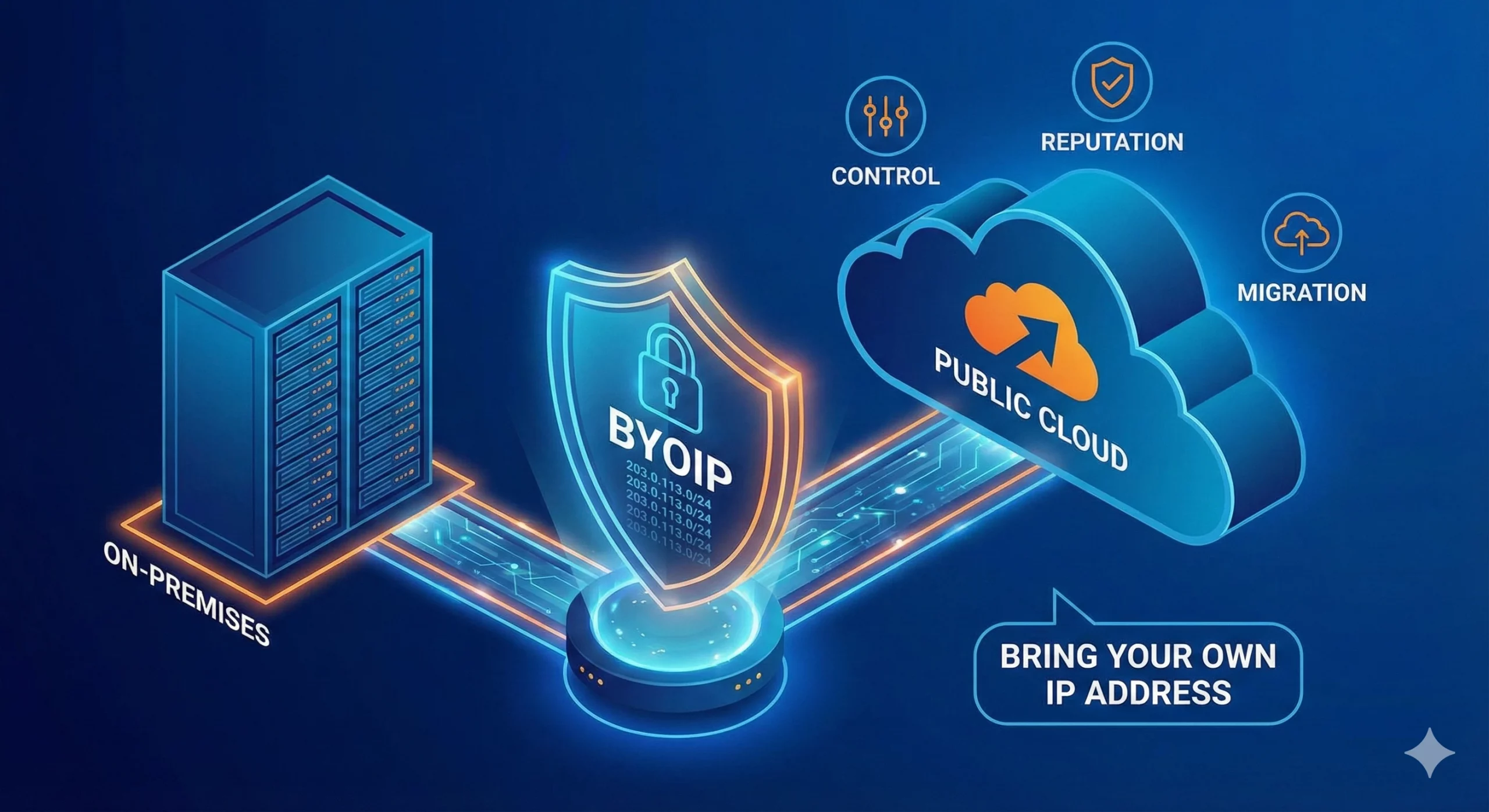
What is BYOIP (Bring Your Own IP)?

Bring Your Own IP, commonly known as BYOIP, allows a business to use its existing public IP address range with a cloud provider, data centre, content delivery network, or other infrastructure platform. Instead of accepting a new public IP range assigned by the provider, the business brings an IPv4 or IPv6 prefix that it already controls. The provider then verifies the organization’s authority to use the range and, whereRead more Related Posts Why the Cheapest IPv4 Lease May Cost More in the Long Run A low monthly price may look attractive during procurement, but the real cost of leased IPv4 addresses includes much more What causes IPv4 deals to stall after the first agreement IPv4 deals usually stall after the first agreement because agreeing on price is only the commercial beginning—not operational completion.A buyer What Is a /24 IPv4 Subnet and Why Is It Popular for Leasing? A /24 IPv4 subnet is one of the most common block sizes in the IPv4 leasing market. For hosting providers, .related-post {} .related-post .post-list { text-align: left; } .related-post .post-list .item { margin: 5px; padding: 10px; } .related-post .headline { font-size: 18px !important; color: #999999 !important; } .related-post .post-list .item .post_thumb { max-height: 220px; margin: 10px 0px; padding: 0px; display: block; } .related-post .post-list .item .post_title { font-size: 16px; color: #3f3f3f; margin: 10px 0px; padding: 0px; display: block; text-decoration: none; } .related-post .post-list .item .post_excerpt { font-size: 13px; color: #3f3f3f; margin: 10px 0px; padding: 0px; display: block; text-decoration: none; } @media only screen and (min-width: 1024px) { .related-post .post-list .item { width: 30%; } } @media only screen and (min-width: 768px) and (max-width: 1023px) { .related-post .post-list .item { width: 90%; } } @media only screen and (min-width: 0px) and (max-width: 767px) { .related-post .post-list .item { width: 90%; } }

Lire la suite →