Understanding the Different Types of DDoS Attacks

StephanieStephanie
ddos-attack

As the internet becomes more integral to everyday business operations, cybersecurity threats evolve in both complexity and impact. One of the most persistent and damaging threats facing organizations today is the Distributed Denial of Service (DDoS) attack. These attacks flood a targeted system with an overwhelming amount of traffic, rendering services unusable for legitimate users.


To effectively mitigate DDoS threats, it’s essential to understand the various types of attacks cybercriminals deploy. Each type targets a specific layer of the network or system infrastructure, and knowing how each one operates is the first step toward building a resilient defense strategy.


In this post, we’ll explore the main types of DDoS attacks, breaking them down into their categories and detailing how they disrupt services.

1. Volume-Based Attacks

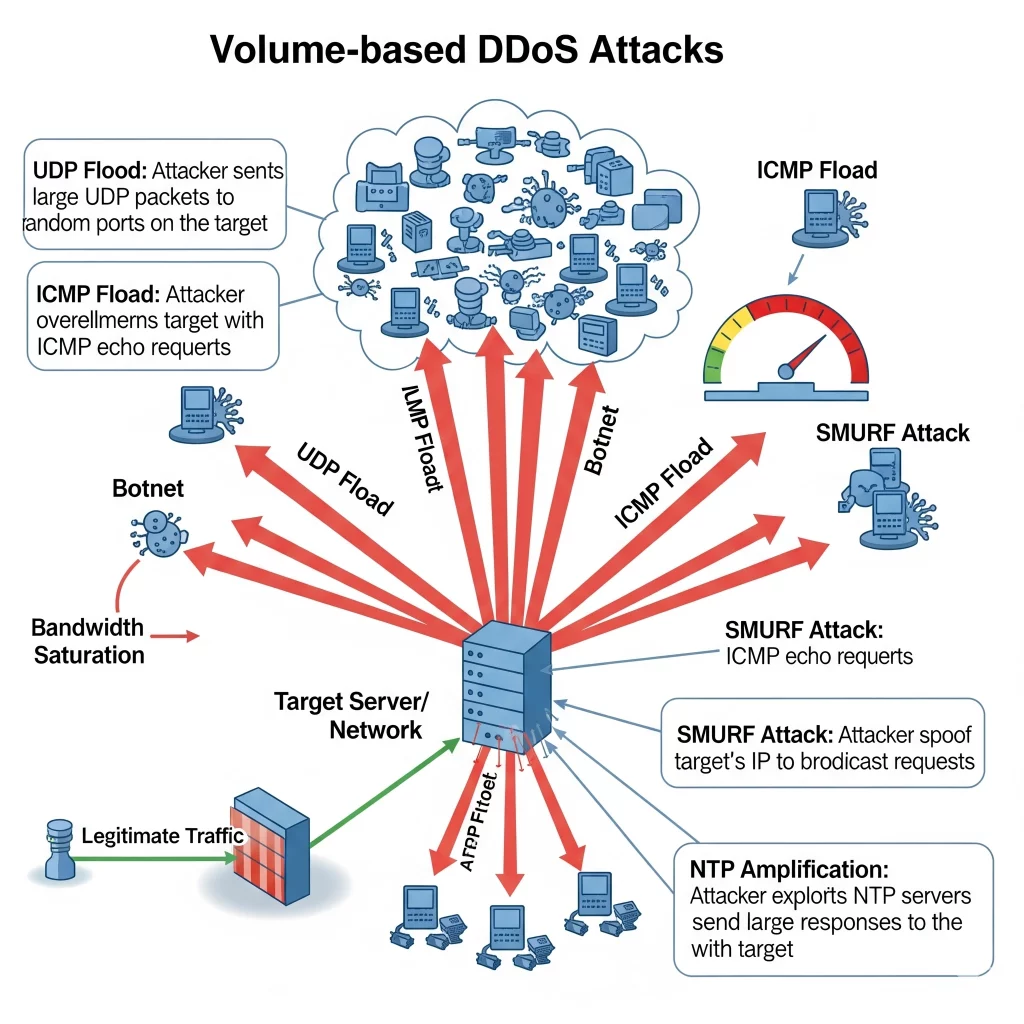
Volume-based DDoS attacks aim to saturate the bandwidth of the target site. They are the most common type and often involve botnets sending massive amounts of traffic.

Key Examples:

  • UDP Flood: A large number of UDP packets are sent to random ports on the target machine, forcing it to respond continuously.
  • ICMP Flood: This uses ICMP echo requests (pings) to flood the target, consuming both outgoing and incoming bandwidth.
  • DNS Amplification: Attackers spoof the victim’s IP and send DNS queries to open DNS resolvers, which respond with large amounts of data, amplifying the traffic hitting the target.

Impact:

These attacks are designed to consume all available bandwidth, effectively taking the target offline by exhausting its capacity.

2. Protocol Attacks

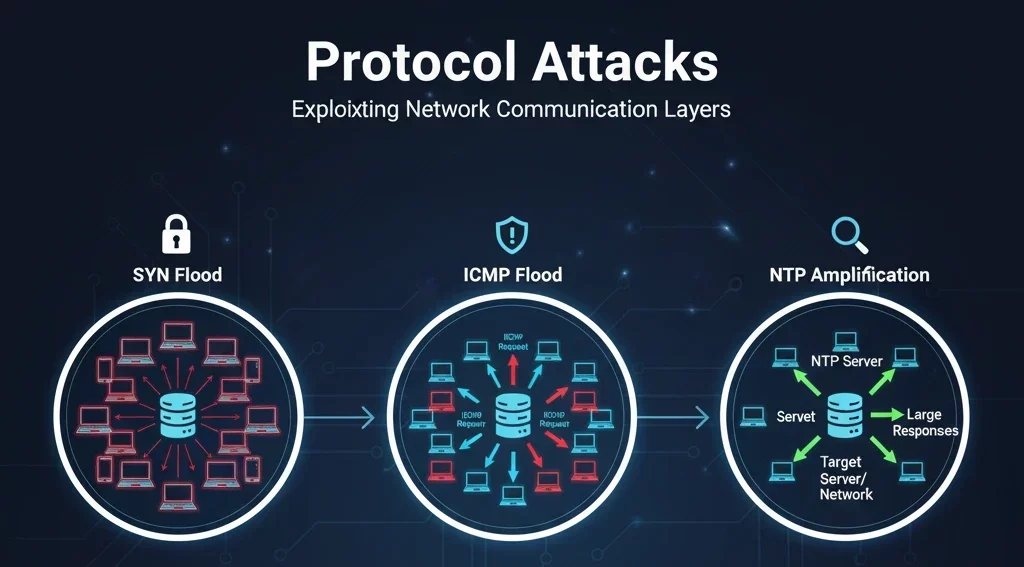
Protocol attacks exploit weaknesses in network layer protocols. These attacks target servers and intermediate resources like firewalls and load balancers.

Key Examples:

  • SYN Flood: Exploits the TCP handshake process by sending repeated SYN requests with spoofed IP addresses, never completing the connection.
  • Ping of Death: Sends maliciously crafted ping packets that exceed the maximum allowed size, causing systems to crash or reboot.
  • Smurf Attack: An attacker sends ICMP requests with a spoofed source address (the victim) to a network’s broadcast address, causing a flood of responses.

Impact:

These attacks consume server resources, and because they target the infrastructure itself, they can be harder to detect and mitigate.

3. Application Layer Attacks
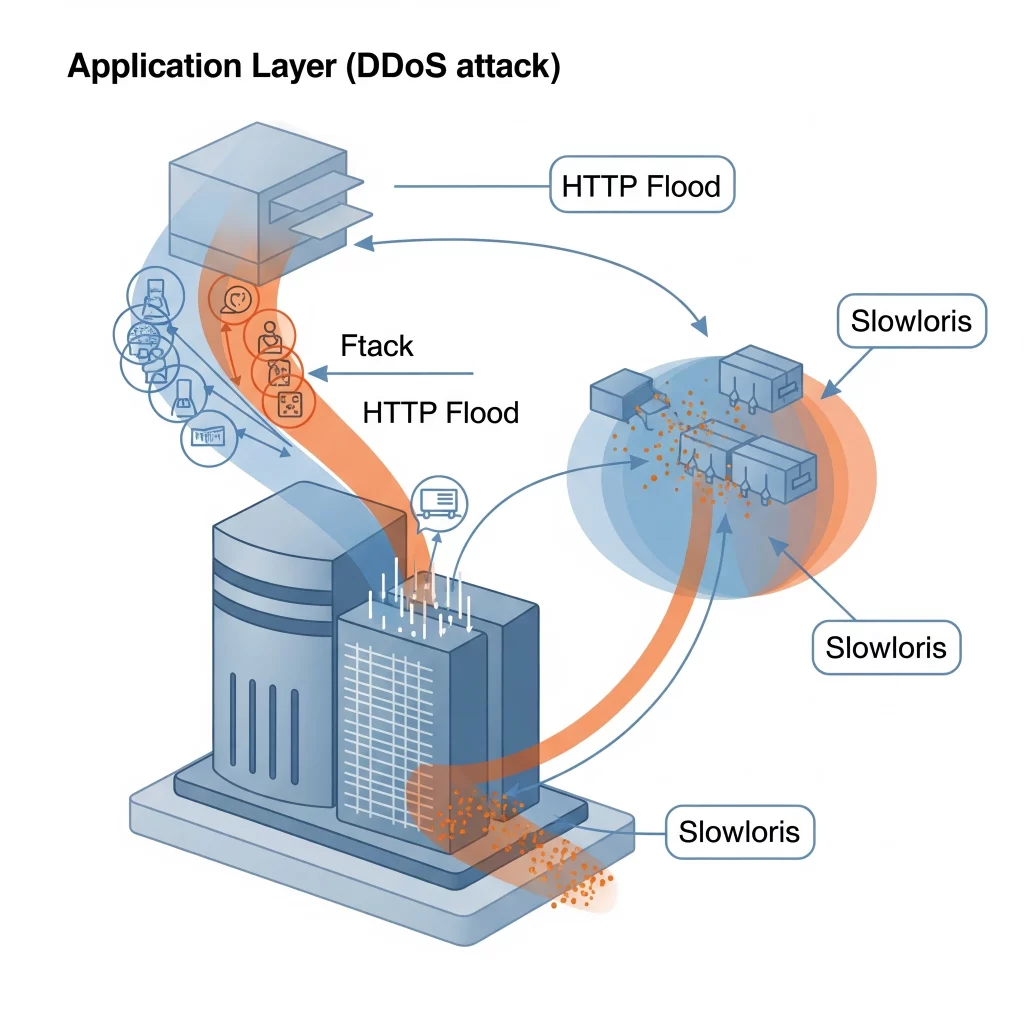
Application layer (Layer 7) attacks mimic legitimate user behavior, making them difficult to distinguish from normal traffic. They target the actual applications, such as web servers.

Key Examples:

  • HTTP Flood: Attackers send seemingly legitimate HTTP requests, overwhelming the web server’s capacity to process requests.
  • Slowloris: Keeps many connections to the target web server open and holds them open as long as possible by sending partial HTTP requests.
  • Zero-day Exploits: These attacks exploit unknown or unpatched vulnerabilities in applications to cause crashes or service interruptions.

Impact:

These attacks are highly stealthy and resource-intensive, aiming to exhaust application resources rather than network bandwidth.

4. Multi-Vector Attacks
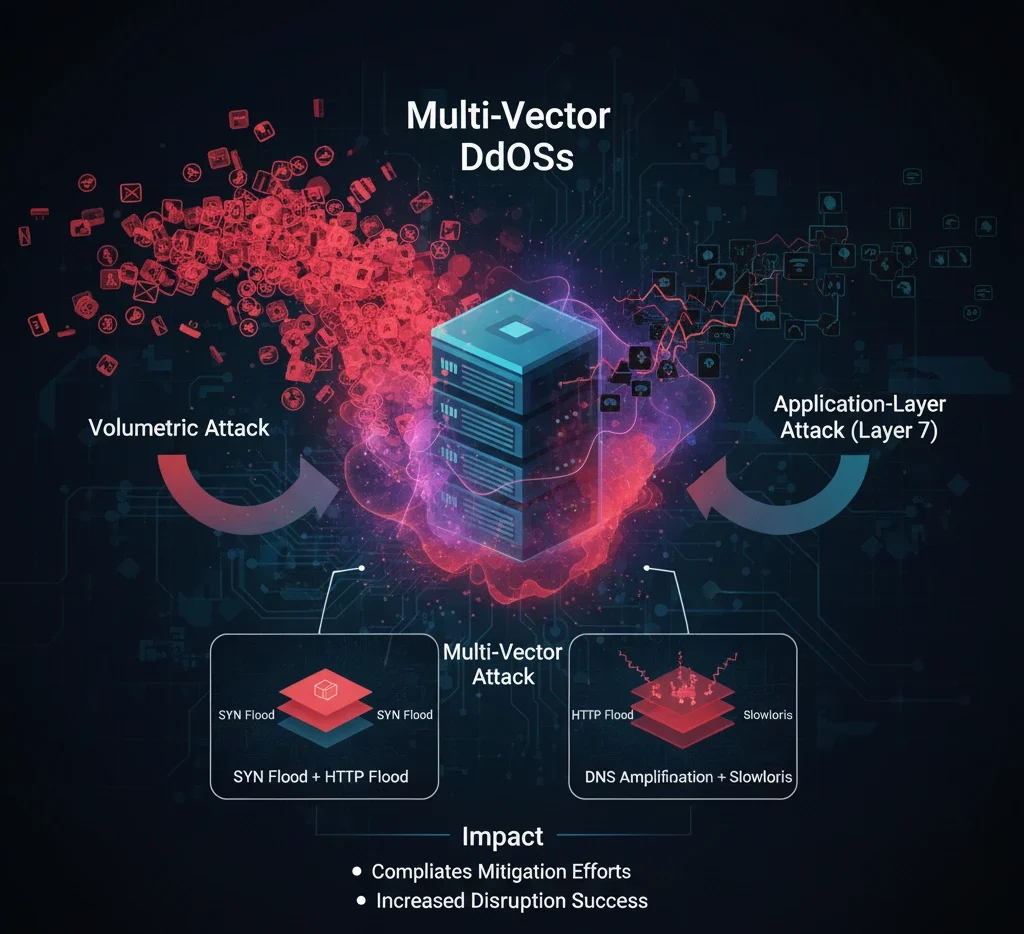
Multi-vector attacks combine two or more different types of DDoS strategies. For example, an attacker might initiate a volumetric attack while simultaneously targeting the application layer.

Key Examples:

  • Combining SYN floods with HTTP floods.
  • Using DNS amplification in conjunction with Slowloris.

Impact:

By mixing attack types, these methods complicate mitigation efforts and increase the chance of successful disruption.

Why It Matters

Understanding these DDoS variations is critical for implementing a comprehensive defense. Organizations must deploy layered security solutions, conduct regular vulnerability assessments, and ensure that both infrastructure and applications are equipped to detect and mitigate DDoS activity.


In addition to traditional firewalls and intrusion prevention systems, DDoS protection services and real-time traffic monitoring tools play vital roles in identifying and mitigating threats before they escalate.

Final Thoughts

DDoS attacks are becoming more sophisticated, but with a deep understanding of how each type functions, businesses can stay one step ahead. A well-informed security posture, complemented by robust mitigation strategies, is essential for safeguarding your digital presence.

Trusted IPv4 Leasing for Business Growth

Get enterprise-grade IPv4 space quickly, with seamless deployment and end-to-end management.

Get Started with i.lease
Articles connexes

ipv4-pricing

Quels sont les facteurs qui déterminent le prix de IPv4 sur le marché actuel ?

La rareté, l’évolution de la demande et les plateformes de location comme i.lease redéfinissent la valorisation et le commerce des adresses IPv4 à l’échelle mondiale. Le prix des adresses IPv4 est principalement déterminé par leur rareté, la taille des blocs et les fluctuations de la demande selon les régions et les secteurs. Les modèles de location, notamment les plateformes comme i.lease, contribuent à stabiliser les coûts face à laRead more Related Posts Short-term vs long-term IPv4 leasing Facing IPv4 shortages, companies must weigh cost, speed, and network growth when choosing a lease plan.Short-term leasing lets you scale Read more Why IPv4 scarcity drives economic value for operators IPv4 地址曾经只是互联网运行所需的基础资源。但在今天,它越来越像一种具有市场价格、可交易、可租赁的数字资产。造成这一变化的原因并不复杂:IPv4 的总量有限,而全球互联网对 IPv4 的需求并没有消失;与此同时,IPv6 虽然早已出现,但迁移进度依然缓慢。这三股力量叠加,正在重新塑造运营商对 IP 地址的看法,也改变了互联网基础设施的经济逻辑。原文将这点概括为“有限供给、持续需求与缓慢转型”,并指出这正在推动 IP 地址成为影响全球电信经济的可交易资产。 IPv4 稀缺并不是新问题 全球互联网至今仍大量依赖 IPv4。这个协议诞生于更早的时代,只能提供大约 43 亿个地址。这个数量在互联网初期似乎足够庞大,但在今天已经明显不够。原文指出,IANA 在 2011 年就已将最后一批大型 IPv4 Read more What Determines IPv4 Pricing in Today’s Market? Scarcity, shifting demand, and leasing platforms such as i.lease are reshaping how IPv4 addresses are valued and traded globally.IPv4 pricing is driven Read more .related-post {} .related-post .post-list { text-align: left; } .related-post .post-list .item { margin: 5px; padding: 10px; } .related-post .headline { font-size: 18px !important; color: #999999 !important; } .related-post .post-list .item .post_thumb { max-height: 220px; margin: 10px 0px; padding: 0px; display: block; } .related-post .post-list .item .post_title { font-size: 16px; color: #3f3f3f; margin: 10px 0px; padding: 0px; display: block; text-decoration: none; } .related-post .post-list .item .post_excerpt { font-size: 13px; color: #3f3f3f; margin: 10px 0px; padding: 0px; display: block; text-decoration: none; } @media only screen and (min-width: 1024px) { .related-post .post-list .item { width: 30%; } } @media only screen and (min-width: 768px) and (max-width: 1023px) { .related-post .post-list .item { width: 90%; } } @media only screen and (min-width: 0px) and (max-width: 767px) { .related-post .post-list .item { width: 90%; } }

ipv4

Pourquoi la rareté des adresses IPv4 génère de la valeur économique pour les opérateurs

La rareté des adresses IPv4, la demande persistante et la lenteur de la transition vers l’IPv6 transforment les adresses IP en actifs négociables, remodelant ainsi l’économie des télécommunications à l’échelle mondiale. L’épuisement des adresses IPv4 a fait de ces dernières des ressources numériques rares, dont les prix sont déterminés par le déséquilibre entre l’offre et la demande. Les opérateurs monétisent de plus en plus l’espace d’adressage inutilisé via desRead more Related Posts Short-term vs long-term IPv4 leasing Facing IPv4 shortages, companies must weigh cost, speed, and network growth when choosing a lease plan.Short-term leasing lets you scale Read more Why IPv4 scarcity drives economic value for operators IPv4 地址曾经只是互联网运行所需的基础资源。但在今天,它越来越像一种具有市场价格、可交易、可租赁的数字资产。造成这一变化的原因并不复杂:IPv4 的总量有限,而全球互联网对 IPv4 的需求并没有消失;与此同时,IPv6 虽然早已出现,但迁移进度依然缓慢。这三股力量叠加,正在重新塑造运营商对 IP 地址的看法,也改变了互联网基础设施的经济逻辑。原文将这点概括为“有限供给、持续需求与缓慢转型”,并指出这正在推动 IP 地址成为影响全球电信经济的可交易资产。 IPv4 稀缺并不是新问题 全球互联网至今仍大量依赖 IPv4。这个协议诞生于更早的时代,只能提供大约 43 亿个地址。这个数量在互联网初期似乎足够庞大,但在今天已经明显不够。原文指出,IANA 在 2011 年就已将最后一批大型 IPv4 Read more How much does a /24 IPv4 block cost in 2026? IPv4 scarcity continues to shape internet infrastructure, with /24 blocks still trading actively on global markets despite growing IPv6 adoption. Key Read more .related-post {} .related-post .post-list { text-align: left; } .related-post .post-list .item { margin: 5px; padding: 10px; } .related-post .headline { font-size: 18px !important; color: #999999 !important; } .related-post .post-list .item .post_thumb { max-height: 220px; margin: 10px 0px; padding: 0px; display: block; } .related-post .post-list .item .post_title { font-size: 16px; color: #3f3f3f; margin: 10px 0px; padding: 0px; display: block; text-decoration: none; } .related-post .post-list .item .post_excerpt { font-size: 13px; color: #3f3f3f; margin: 10px 0px; padding: 0px; display: block; text-decoration: none; } @media only screen and (min-width: 1024px) { .related-post .post-list .item { width: 30%; } } @media only screen and (min-width: 768px) and (max-width: 1023px) { .related-post .post-list .item { width: 90%; } } @media only screen and (min-width: 0px) and (max-width: 767px) { .related-post .post-list .item { width: 90%; } }

Qu’est-ce qu’une adresse IP proxy ?

Une adresse IP proxy est une adresse IP intermédiaire utilisée pour masquer ou relayer votre adresse IP d’origine lors de l’accès à Internet. Elle agit comme une passerelle entre l’utilisateur et le web. Lorsqu’une demande d’accès à un site Web est effectuée, le serveur proxy (qui utilise l’adresse IP proxy) transmet cette demande, cachant ainsi la véritable adresse IP de l’utilisateur au site. Cela permet d’augmenter la confidentialité etRead more Related Posts Short-term vs long-term IPv4 leasing Facing IPv4 shortages, companies must weigh cost, speed, and network growth when choosing a lease plan.Short-term leasing lets you scale Read more Why IPv4 scarcity drives economic value for operators IPv4 地址曾经只是互联网运行所需的基础资源。但在今天,它越来越像一种具有市场价格、可交易、可租赁的数字资产。造成这一变化的原因并不复杂:IPv4 的总量有限,而全球互联网对 IPv4 的需求并没有消失;与此同时,IPv6 虽然早已出现,但迁移进度依然缓慢。这三股力量叠加,正在重新塑造运营商对 IP 地址的看法,也改变了互联网基础设施的经济逻辑。原文将这点概括为“有限供给、持续需求与缓慢转型”,并指出这正在推动 IP 地址成为影响全球电信经济的可交易资产。 IPv4 稀缺并不是新问题 全球互联网至今仍大量依赖 IPv4。这个协议诞生于更早的时代,只能提供大约 43 亿个地址。这个数量在互联网初期似乎足够庞大,但在今天已经明显不够。原文指出,IANA 在 2011 年就已将最后一批大型 IPv4 Read more What Determines IPv4 Pricing in Today’s Market? Scarcity, shifting demand, and leasing platforms such as i.lease are reshaping how IPv4 addresses are valued and traded globally.IPv4 pricing is driven Read more .related-post {} .related-post .post-list { text-align: left; } .related-post .post-list .item { margin: 5px; padding: 10px; } .related-post .headline { font-size: 18px !important; color: #999999 !important; } .related-post .post-list .item .post_thumb { max-height: 220px; margin: 10px 0px; padding: 0px; display: block; } .related-post .post-list .item .post_title { font-size: 16px; color: #3f3f3f; margin: 10px 0px; padding: 0px; display: block; text-decoration: none; } .related-post .post-list .item .post_excerpt { font-size: 13px; color: #3f3f3f; margin: 10px 0px; padding: 0px; display: block; text-decoration: none; } @media only screen and (min-width: 1024px) { .related-post .post-list .item { width: 30%; } } @media only screen and (min-width: 768px) and (max-width: 1023px) { .related-post .post-list .item { width: 90%; } } @media only screen and (min-width: 0px) and (max-width: 767px) { .related-post .post-list .item { width: 90%; } }