Qu’est-ce que GeoIP et comment ça fonctionne ?
 Stephanie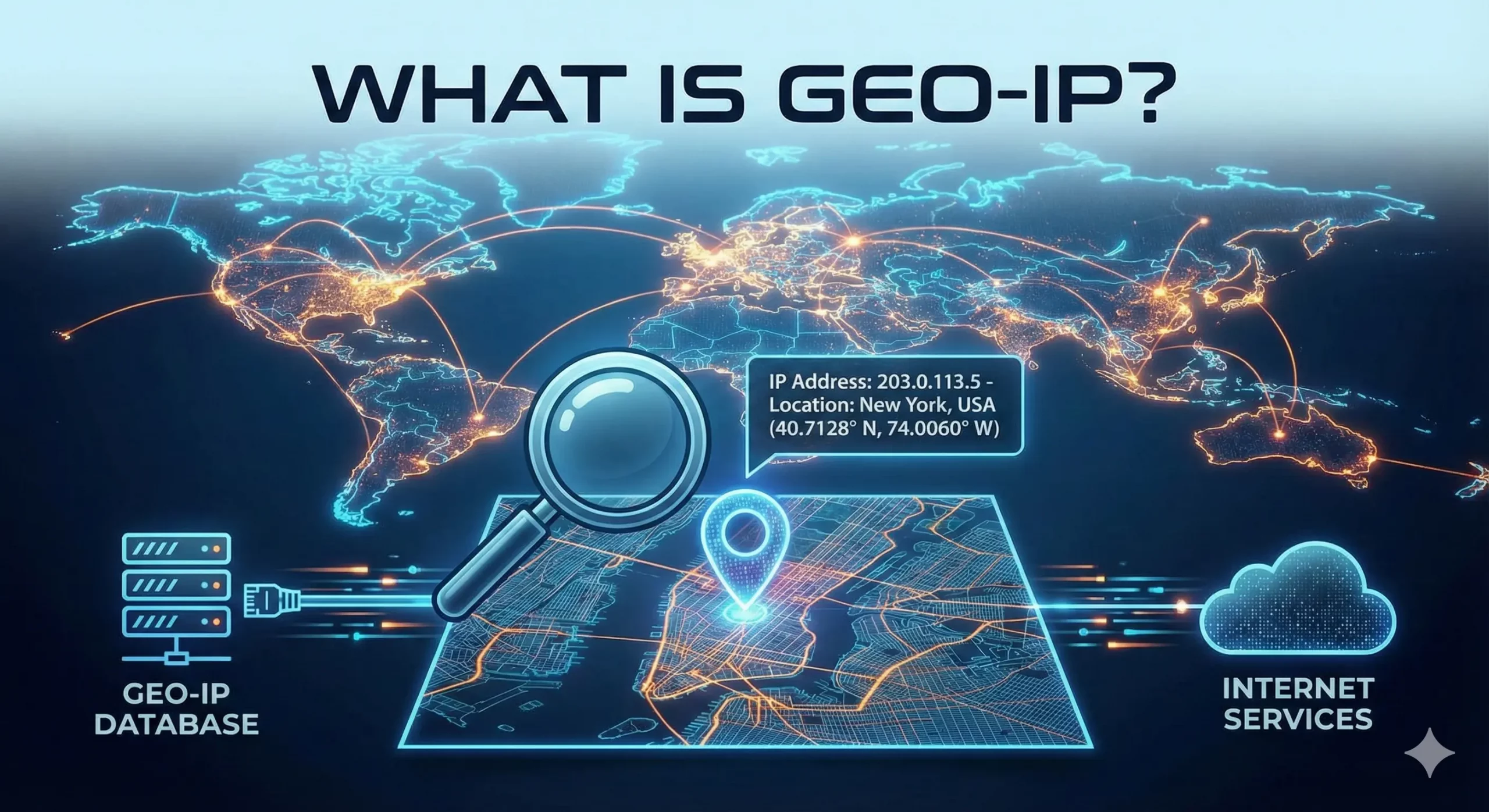
La géolocalisation IP est essentielle pour personnaliser les expériences en ligne, renforcer la cybersécurité et alimenter d’innombrables applications professionnelles. Mais qu’est-ce que la géolocalisation IP exactement, comment fonctionne-t-elle et pourquoi est-elle si importante ? Voyons cela de plus près.
Table of Contents
Qu'est-ce que GeoIP ?
GeoIP signifie « Géographie Internet ». Il s’agit d’une technologie qui détermine la localisation géographique d’un utilisateur à partir de son adresse IP (Internet Protocol). Chaque appareil connecté à Internet possède une adresse IP unique, qui fait office d’identifiant numérique. GeoIP exploite cette information pour localiser précisément l’appareil, révélant souvent le pays, la région, la ville et le fournisseur d’accès à Internet.
Comment fonctionne GeoIP ?
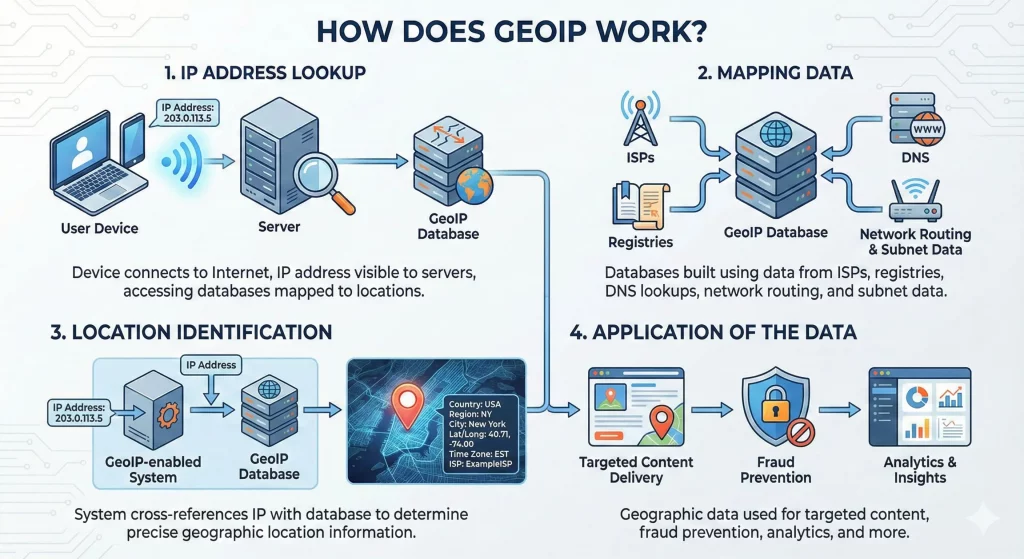
Le fonctionnement de GeoIP peut être résumé en quelques étapes :
1. Recherche d’adresse IP
Lorsqu’un appareil se connecte à Internet, son adresse IP devient visible par les serveurs avec lesquels il interagit. La technologie GeoIP accède à de vastes bases de données d’adresses IP associées à des localisations géographiques précises.
2. Cartographie des données
Les bases de données GeoIP sont construites à partir de données provenant des FAI, des registres et de fournisseurs tiers. Ces bases de données associent chaque adresse IP à une localisation géographique en fonction d’informations telles que les détails du fournisseur d’accès Internet, les requêtes DNS (Domain Name System), le routage réseau et les données de sous-réseau.
3. Identification de la localisation
Lorsqu’un système compatible GeoIP détecte une adresse IP, il la compare à la base de données pour déterminer la localisation. Le résultat peut inclure des informations telles que :
Pays, région/état, ville, latitude et longitude (approximatives), fuseau horaire et nom du FAI.
4. Utilisation des données
Les données géographiques sont utilisées à diverses fins, telles que la diffusion ciblée de contenu, la prévention de la fraude ou l’analyse.
Importance de la géolocalisation IP dans le monde numérique
La géolocalisation IP est devenue un outil indispensable dans de nombreux secteurs, offrant des avantages dans des domaines tels que :
1. Diffusion de contenu personnalisée :
Les sites web et les applications utilisent la géolocalisation IP pour personnaliser l’expérience utilisateur, par exemple en affichant des options linguistiques ou des devises spécifiques à la localisation, ou encore des recommandations personnalisées.
2. Marketing digital :
Les spécialistes du marketing exploitent la géolocalisation IP pour diffuser des publicités hyperlocalisées, garantissant ainsi des campagnes publicitaires plus pertinentes et efficaces.
3. Cybersécurité :
La géolocalisation IP est essentielle pour détecter et atténuer les menaces en ligne. Par exemple, des tentatives de connexion inhabituelles provenant de régions où un utilisateur n’est généralement pas actif peuvent déclencher des alertes de sécurité.
4. Conformité réglementaire :
Les entreprises opérant dans plusieurs pays utilisent la géolocalisation IP pour appliquer les restrictions géographiques, telles que la conformité au RGPD dans l’UE ou les réglementations relatives aux licences de contenu pour les plateformes de streaming.
5. Détection et prévention de la fraude :
Les plateformes de commerce électronique et les passerelles de paiement s’appuient sur la géolocalisation IP pour identifier les transactions potentiellement frauduleuses, telles que les incohérences entre les adresses de facturation et les adresses IP.
6. Analyse du trafic :
La géolocalisation IP améliore l’analyse Web en fournissant des informations sur la provenance des utilisateurs, ce qui aide les entreprises à optimiser leur portée.
Défis et limites
- Problèmes de précision : Les données GeoIP peuvent manquer de précision, notamment au niveau de la ville ou de la rue.
- VPN et proxys : Les utilisateurs qui masquent leur adresse IP à l’aide de réseaux privés virtuels (VPN) ou de proxys peuvent contourner la détection GeoIP.
- Mises à jour des bases de données : Les bases de données GeoIP nécessitent des mises à jour régulières pour garantir leur exactitude, car l’attribution des adresses IP évolue.
Conclusion
La géolocalisation IP (GeoIP) comble le fossé entre les mondes numérique et physique en fournissant des informations géolocalisées. Que vous gériez un site de commerce électronique international, veilliez au respect des législations locales ou proposiez simplement un contenu personnalisé, la technologie GeoIP améliore l’efficacité, la sécurité et la satisfaction des utilisateurs de multiples façons. Toutefois, à mesure que cette technologie évolue, les entreprises doivent trouver un équilibre entre son potentiel et les impératifs de précision, de confidentialité et d’éthique.
Trusted IPv4 Leasing for Business Growth
Get enterprise-grade IPv4 space quickly, with seamless deployment and end-to-end management.
Get Started with i.leaseArtículos relacionados
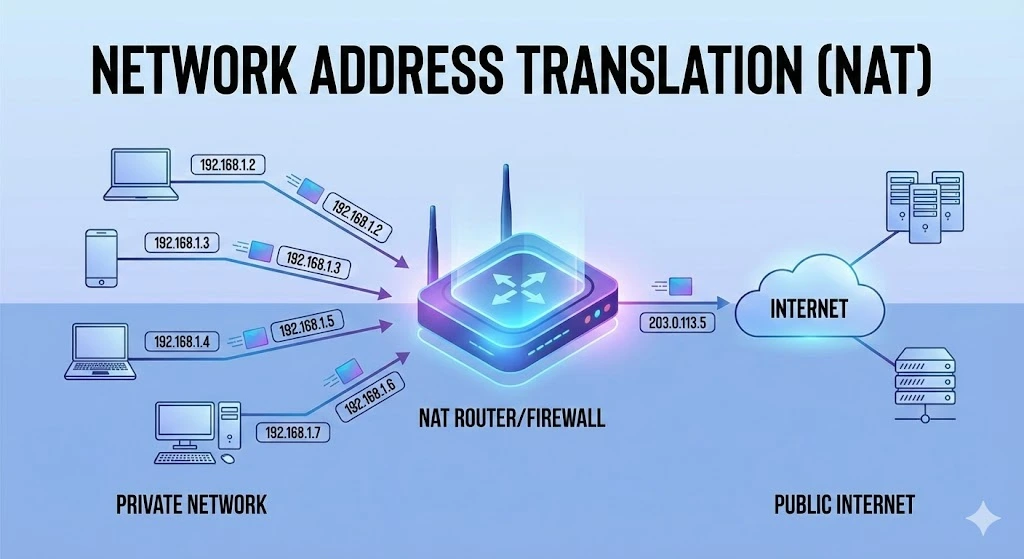
Comprensión de la traducción de direcciones de red (NAT)
En las redes informáticas, gestionar las direcciones IP de forma eficiente es fundamental para garantizar una comunicación fluida entre los dispositivos. Una de las tecnologías clave que ha surgido para afrontar este desafío es la Traducción de Direcciones de Red (NAT, por sus siglas en inglés). En este artículo explicamos qué es NAT, cómo funciona, sus distintos tipos, así como sus ventajas y limitaciones. ¿Qué es la traducción deRead more Related Posts Desbloqueando la privacidad digital con una red privada virtual (VPN) ¿Qué es una VPN? Una red privada virtual (VPN) es una tecnología que permite a los usuarios crear una conexión Comprensión de la traducción de direcciones de red (NAT) En las redes informáticas, gestionar las direcciones IP de forma eficiente es fundamental para garantizar una comunicación fluida entre los ¿Por qué Malasia se está convirtiendo en un centro neurálgico para la infraestructura de nube e IA? Malasia se está convirtiendo en uno de los mercados de crecimiento de centros de datos más importantes del Sudeste Asiático. .related-post {} .related-post .post-list { text-align: left; } .related-post .post-list .item { margin: 5px; padding: 10px; } .related-post .headline { font-size: 18px !important; color: #999999 !important; } .related-post .post-list .item .post_thumb { max-height: 220px; margin: 10px 0px; padding: 0px; display: block; } .related-post .post-list .item .post_title { font-size: 16px; color: #3f3f3f; margin: 10px 0px; padding: 0px; display: block; text-decoration: none; } .related-post .post-list .item .post_excerpt { font-size: 13px; color: #3f3f3f; margin: 10px 0px; padding: 0px; display: block; text-decoration: none; } @media only screen and (min-width: 1024px) { .related-post .post-list .item { width: 30%; } } @media only screen and (min-width: 768px) and (max-width: 1023px) { .related-post .post-list .item { width: 90%; } } @media only screen and (min-width: 0px) and (max-width: 767px) { .related-post .post-list .item { width: 90%; } }
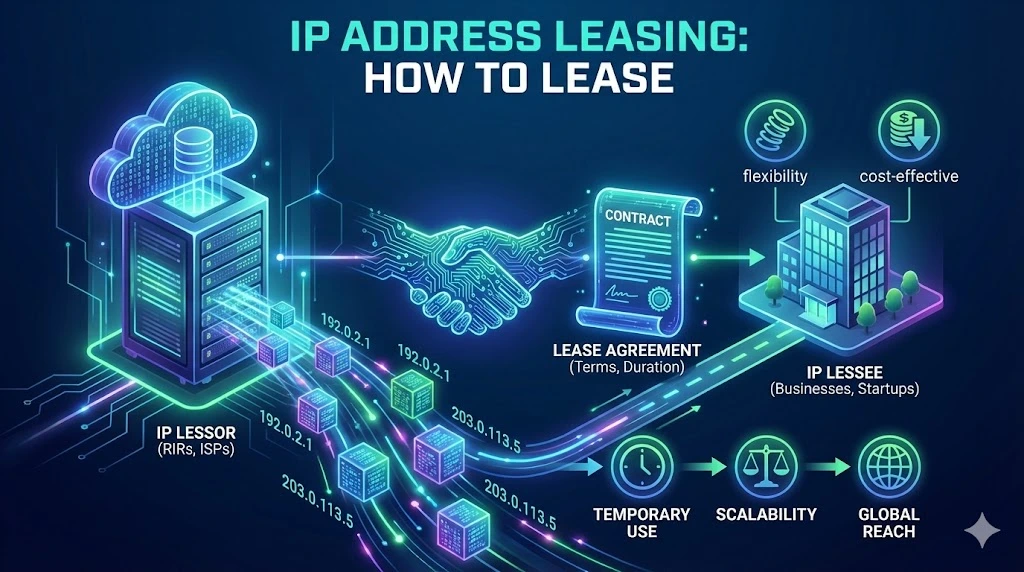
Arrendamiento de direcciones IP: Cómo arrendar direcciones IP
El mundo digital en el que nos movemos hoy depende en gran medida de las direcciones IP, identificadores únicos asignados a los dispositivos conectados a internet o a una red local. A medida que la demanda de direcciones IP sigue aumentando, empresas y particulares exploran diversas opciones para obtener los recursos necesarios. Un método cada vez más popular es el arrendamiento de direcciones IP. Este artículo profundiza en elRead more Related Posts Desbloqueando la privacidad digital con una red privada virtual (VPN) ¿Qué es una VPN? Una red privada virtual (VPN) es una tecnología que permite a los usuarios crear una conexión Comprensión de la traducción de direcciones de red (NAT) En las redes informáticas, gestionar las direcciones IP de forma eficiente es fundamental para garantizar una comunicación fluida entre los ¿Por qué Malasia se está convirtiendo en un centro neurálgico para la infraestructura de nube e IA? Malasia se está convirtiendo en uno de los mercados de crecimiento de centros de datos más importantes del Sudeste Asiático. .related-post {} .related-post .post-list { text-align: left; } .related-post .post-list .item { margin: 5px; padding: 10px; } .related-post .headline { font-size: 18px !important; color: #999999 !important; } .related-post .post-list .item .post_thumb { max-height: 220px; margin: 10px 0px; padding: 0px; display: block; } .related-post .post-list .item .post_title { font-size: 16px; color: #3f3f3f; margin: 10px 0px; padding: 0px; display: block; text-decoration: none; } .related-post .post-list .item .post_excerpt { font-size: 13px; color: #3f3f3f; margin: 10px 0px; padding: 0px; display: block; text-decoration: none; } @media only screen and (min-width: 1024px) { .related-post .post-list .item { width: 30%; } } @media only screen and (min-width: 768px) and (max-width: 1023px) { .related-post .post-list .item { width: 90%; } } @media only screen and (min-width: 0px) and (max-width: 767px) { .related-post .post-list .item { width: 90%; } }
¿Qué es el agotamiento de direcciones IPv4?
IPv4 es la versión inicial del Protocolo de Internet (IP), capaz de generar 4.300 millones de posibles direcciones IPv4. Sin embargo, muchas de estas direcciones están reservadas para fines específicos, como investigación y desarrollo. Esto deja un conjunto limitado disponible para organizaciones e individuos en todo el mundo. Con el crecimiento exponencial de Internet, la demanda de direcciones IPv4 se ha disparado. Esto provocó una rápida disminución de lasRead more Related Posts Desbloqueando la privacidad digital con una red privada virtual (VPN) ¿Qué es una VPN? Una red privada virtual (VPN) es una tecnología que permite a los usuarios crear una conexión Comprensión de la traducción de direcciones de red (NAT) En las redes informáticas, gestionar las direcciones IP de forma eficiente es fundamental para garantizar una comunicación fluida entre los Arrendamiento de direcciones IP: Cómo arrendar direcciones IP El mundo digital en el que nos movemos hoy depende en gran medida de las direcciones IP, identificadores únicos asignados .related-post {} .related-post .post-list { text-align: left; } .related-post .post-list .item { margin: 5px; padding: 10px; } .related-post .headline { font-size: 18px !important; color: #999999 !important; } .related-post .post-list .item .post_thumb { max-height: 220px; margin: 10px 0px; padding: 0px; display: block; } .related-post .post-list .item .post_title { font-size: 16px; color: #3f3f3f; margin: 10px 0px; padding: 0px; display: block; text-decoration: none; } .related-post .post-list .item .post_excerpt { font-size: 13px; color: #3f3f3f; margin: 10px 0px; padding: 0px; display: block; text-decoration: none; } @media only screen and (min-width: 1024px) { .related-post .post-list .item { width: 30%; } } @media only screen and (min-width: 768px) and (max-width: 1023px) { .related-post .post-list .item { width: 90%; } } @media only screen and (min-width: 0px) and (max-width: 767px) { .related-post .post-list .item { width: 90%; } }
