What happens when IP resources are mismanaged
 Stephanie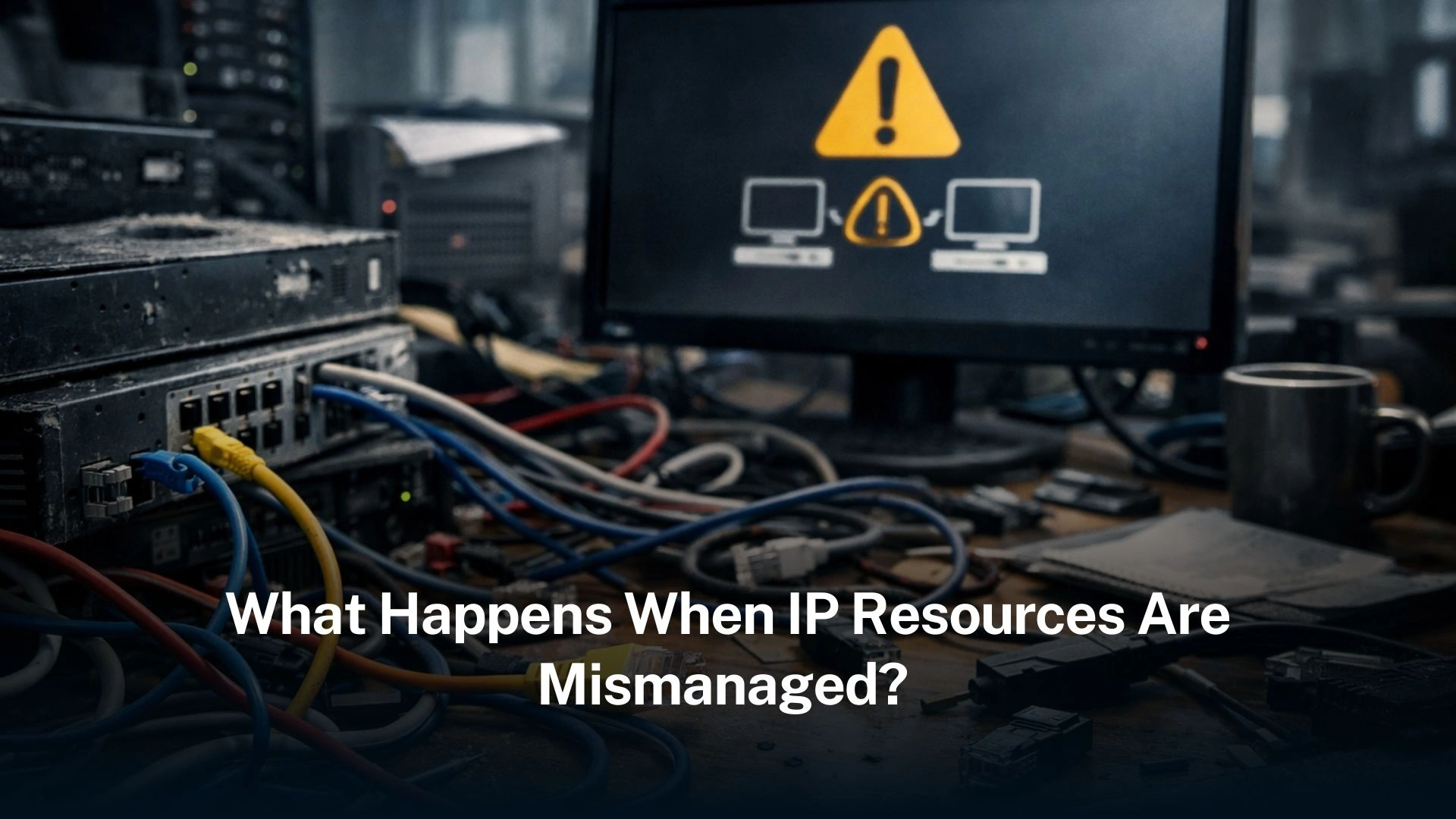
Poor IP resource management can lead to outages, security breaches, blacklisting, legal exposure and reputational damage across networks and business operations.
Table of Contents
- Mismanagement causes operational disruption, conflicts and wasted inventory that degrade performance and hinder growth.
- Security vulnerabilities such as hijacking, spoofing and blacklisting arise without disciplined stewardship and trusted leasing partners like i.Lease.
The hidden risk of IP mismanagement
Internet Protocol (IP) addresses are fundamental numerical identifiers that allow computers and networked devices to communicate. When managed effectively, they support seamless connectivity, security, and scalable operations. When mismanaged, however, the consequences can be severe: network instability, security breaches, degraded reputation, and financial loss.
Mismanagement issues range from simple configuration errors to orphaned or poorly tracked address ranges that attract malicious actors. Efficient IP management — including careful lease and ownership oversight — is essential in a world where IPv4 addresses are scarce and increasingly valuable.
Operational disruption and address conflicts
One of the most direct results of poor management is network disruption caused by IP conflicts or misallocation. When ranges are tracked manually or left unmanaged, two devices may be assigned the same address, causing packet loss, service degradation and connectivity failure for applications and users. Such conflicts are particularly disruptive in high-traffic environments where precision in address planning is essential. Studies show that poor subnetting and overlapping CIDR blocks can slow traffic, complicate troubleshooting and degrade performance, especially in modern cloud and 5G networks.
Without centralised IP address management systems, organisations often rely on spreadsheets or outdated records, increasing the risk of inconsistent configurations and unexpected service interruptions. A lack of real-time visibility into resource utilisation further amplifies these issues as networks scale.
Security vulnerabilities: hijacking, abuse and spoofing
Security is one of the most critical dimensions of IP resource mismanagement. Unused, unmonitored or poorly secured address blocks become prime targets for attackers. IPv4 exhaustion has accelerated tactics such as IP hijacking, where malicious actors manipulate routing tables to redirect traffic intended for legitimate addresses, often for use in Distributed Denial of Service (DDoS) attacks, phishing campaigns or malware operations.
Similarly, an unmanaged block with no active security controls may be abused for botnet command channels, spam distribution or other malicious behaviour. Once a block is associated with such activity, its reputation suffers, leading to blacklisting by email providers, firewalls, and network security services. This type of blacklisting can persist, forcing legitimate services to struggle with deliverability and connectivity until the block is cleaned or replaced.
IP spoofing — where attackers falsify source addresses to impersonate trusted hosts — can further compound risks, particularly in denial-of-service attacks where tracing the true origin becomes difficult. Without sound management and filtering practices, attackers exploit these vulnerabilities to disrupt service and evade detection.
Reputation damage and blacklisting
Reputation in the context of IP addresses reflects how trusted a block is based on its historical behaviour. Mismanaged or abused IP ranges often end up on blacklists maintained by security services. According to network security resources, IP addresses can be flagged as suspicious because of automated bot activity, misconfigured services, or repeated interactions with abusive traffic patterns. Once blacklisted, those addresses may be blocked by firewalls, spam filters, and web services — creating widespread access issues.
Reputation issues are not trivial. For example, when cloud service IPs are reused without proper hygiene, large numbers of addresses can be blacklisted, harming the provider’s image and client confidence. Analysis of cloud abuse patterns shows significant volumes of IP addresses associated with malicious activity, indicating that unmanaged resources disproportionately contribute to these risks.
Legal exposure and ownership disputes
Another consequence of mismanaging IP resources arises when ownership is unclear or undocumented. The secondary IPv4 market — including leases and transfers — is rife with challenges around verifying legal control of address space. Instances of fraud, where entities list addresses they do not own or where transfer documentation is incomplete, can lead to abrupt service loss, litigation, and financial damage.
Leasing platforms and brokers vary widely in how rigorously they verify ownership. Without strong verification, companies may unknowingly lease addresses with contestable claims, exposing them to legal disputes when original owners reassert control. Organisations have faced costly attempts to reclaim hijacked blocks or resolve disputes with registries because of inadequate documentation.
Wasted inventory and financial inefficiency
Mismanagement also manifests as wasted or stranded IP inventory. Organisations that allocate addresses without regular audits often leave large blocks unused or forgotten — a problem that does not reflect scarcity but poor resource hygiene. These dormant ranges not only waste valuable digital assets but also create administrative overhead when redistributing or repurposing resources.
Combined with the cost pressure of IPv4 scarcity, such inefficiencies can drive unnecessary acquisitions or leases, burdening budgets and complicating network planning. Optimising resource utilisation through regular reviews and reclaiming unused space is a core tenet of efficient IP address management.
Complicated incident response and compliance
Poor IP resource management complicates security incident response. When addresses are inadequately documented or their usage unclear, identifying the source of attacks, abuses or configuration failures becomes slower and more error-prone. This delay in resolution can escalate the impact of security incidents, spreading infection, increasing downtime, and intensifying reputational fallout.
Similarly, regulatory compliance — particularly around data protection, network security standards and contracts with internet registries — can falter when address management lacks transparency and accuracy. Organisations risk non-compliance penalties or forcing costly corrective actions downstream in their operational processes.
How disciplined management mitigates damage
Sound IP address management is central to preventing the above issues. This includes maintaining up-to-date inventory systems, using automated IP Address Management (IPAM) tools, conducting regular audits, and enforcing security controls such as filtering and abuse monitoring. Best practices also involve mitigating risks through address reputation verification, robust access controls, and proactive detection of anomalies in traffic patterns.
Leasing platforms that prioritise clean, verified addresses and enforce strong compliance protocols — such as i.Lease — can help organisations avoid many pitfalls associated with mismanaged resources. Partnering with trusted providers protects lessees from fraudulent transactions, ensures documentation aligns with registry requirements, and reduces the risk of inheriting addresses with poor histories.
Case example: conflict leads to fragmentation
A typical scenario involves an organisation that tracked addresses manually during rapid expansion and neglected to update its central record. Over time, duplicate assignments occurred across departments, causing intermittent outages and application failures. Customers experienced degraded service, and IT teams were forced into reactive troubleshooting that consumed resources and delayed projects. Only after implementing an automated IPAM system did the organisation restore coherence to its address inventory and reduce conflict incidents.
This illustrates how simple mismanagement — not malicious intent — can escalate into operational complexity that undermines performance and increases support costs.
Conclusion: disciplined management prevents systemic failure
IP resources are fundamental to network functionality and business outcomes.
Mismanagement — whether through poor tracking, lack of security awareness, failure to verify ownership, or neglect of reputation — can lead to operational disruption, reputational harm, legal exposure and financial waste.
By adopting disciplined management practices, leveraging automated tools, and engaging trusted partners and platforms such as i.Lease, organisations can protect against these risks, maintain continuity, and support growth even in a competitive and resource-constrained IPv4 landscape.
The IPv4 market reflects one of the most compelling examples of economic scarcity in the digital age. After the free pool exhausted, IPv4 addresses transitioned into a mature secondary market where block size, year, and buyer strategy all influence value. Prices surged in the early post‑exhaustion years, peaking as large enterprises competed for limited space. Over time, increased block availability and the rise of leasing solutions have tempered price volatility. Heading into 2026, we’re seeing a more balanced ecosystem — where buyers, sellers, and lessees negotiate not just on price, but on flexibility, timing, and network deployment plans
– Rachel Chen, IP Address Management Expert
Frequently Asked Questions
1. What is a common result of poor IP address tracking?
Conflicts and overlaps in address assignments can disrupt services and degrade network performance.
2. How does IP mismanagement contribute to security risks?
Unused or unmonitored addresses may be hijacked or abused for DDoS, spam or malware distribution.
3. Can IP reputation affect email and web services?
Yes. Addresses tied to past abuse can be blacklisted, causing delivery failures and blocked access.
4. Why is ownership verification important when leasing IPs?
Failing to confirm legal ownership can lead to lost services or legal disputes if the block is reclaimed by the rightful owner.
5. What tools help mitigate IP resource mismanagement?
Automated IPAM tools, filtering systems and reputation monitoring solutions improve visibility and control.
Related Blogs
Artículos relacionados
IPv4 leasing vs purchasing: structural risk in the IPv4 address market
IPv4 leasing vs purchasing reflects a structural shift in IP address markets, balancing cost, control, scarcity, and operational risk in 2026. Key points IPv4 leasing has become a flexible operating model, with stable monthly pricing driven by scarcity and fast deployment needs. IPv4 purchasing is shifting into a long-term asset strategy, but exposed to price cycles, liquidity changes, and capital lock-in. IPv4 is no longer just infrastructure — itRead more Related Posts IPv4 租赁 vs 购买|2026 年 IPv4 市场结构性风险解析 在 IPv4 稀缺持续加剧的市场中,租赁与购买已不只是价格差异,而是两种不同的风险结构。本文解析 IPv4 租赁与购买的成本、控制权、连续性、市场风险与适用场景,帮助企业制定更合适的 IP 策略。 重点摘要 到了 2026 年,IPv4 租赁已经成为一种更灵活的运营模式,月租价格相对稳定,主要由稀缺性和快速部署需求驱动。IPv4 购买则越来越像一种长期资产策略,但也会暴露在价格周期、流动性变化和资金锁定风险之下。 IPv4 已经不只是基础设施,它是一个稀缺市场 IPv4 地址系统已经完全转入二级市场生态。自从 IANA 的免费分配耗尽后,组织现在主要依赖以下方式取得 IPv4:通过区域互联网注册机构(RIR)的转移经纪撮合的二级市场买卖像 Read more IPv4 leasing vs purchasing: structural risk in the IPv4 address market IPv4 leasing vs purchasing reflects a structural shift in IP address markets, balancing cost, control, scarcity, and operational risk in Read more تأجير IPv4 لمراكز البيانات: ما الذي تحتاج إلى معرفته مع تزايد ندرة IPv4، تعتمد مراكز البيانات بشكل متزايد على التأجير لتوسيع البنية التحتية، والتحكم في التكاليف، والحفاظ على اتصال Read more .related-post {} .related-post .post-list { text-align: left; } .related-post .post-list .item { margin: 5px; padding: 10px; } .related-post .headline { font-size: 18px !important; color: #999999 !important; } .related-post .post-list .item .post_thumb { max-height: 220px; margin: 10px 0px; padding: 0px; display: block; } .related-post .post-list .item .post_title { font-size: 16px; color: #3f3f3f; margin: 10px 0px; padding: 0px; display: block; text-decoration: none; } .related-post .post-list .item .post_excerpt { font-size: 13px; color: #3f3f3f; margin: 10px 0px; padding: 0px; display: block; text-decoration: none; } @media only screen and (min-width: 1024px) { .related-post .post-list .item { width: 30%; } } @media only screen and (min-width: 768px) and (max-width: 1023px) { .related-post .post-list .item { width: 90%; } } @media only screen and (min-width: 0px) and (max-width: 767px) { .related-post .post-list .item { width: 90%; } }
IPv4 Leasing for Data Centres: What You Need To Know
As IPv4 scarcity intensifies, data centres increasingly rely on leasing to scale infrastructure, control costs, and maintain reliable connectivity worldwide. IPv4 leasing has become a critical strategy for data centres facing address shortages and rising acquisition costs Leasing offers flexibility and scalability, but introduces risks around reputation, compliance, and long-term dependency Understanding IPv4 and why data centres still depend on it Despite years of tech progress IPv4 is stillRead more Related Posts IPv4 租赁 vs 购买|2026 年 IPv4 市场结构性风险解析 在 IPv4 稀缺持续加剧的市场中,租赁与购买已不只是价格差异,而是两种不同的风险结构。本文解析 IPv4 租赁与购买的成本、控制权、连续性、市场风险与适用场景,帮助企业制定更合适的 IP 策略。 重点摘要 到了 2026 年,IPv4 租赁已经成为一种更灵活的运营模式,月租价格相对稳定,主要由稀缺性和快速部署需求驱动。IPv4 购买则越来越像一种长期资产策略,但也会暴露在价格周期、流动性变化和资金锁定风险之下。 IPv4 已经不只是基础设施,它是一个稀缺市场 IPv4 地址系统已经完全转入二级市场生态。自从 IANA 的免费分配耗尽后,组织现在主要依赖以下方式取得 IPv4:通过区域互联网注册机构(RIR)的转移经纪撮合的二级市场买卖像 Read more IPv4 leasing vs purchasing: structural risk in the IPv4 address market IPv4 leasing vs purchasing reflects a structural shift in IP address markets, balancing cost, control, scarcity, and operational risk in Read more تأجير IPv4 لمراكز البيانات: ما الذي تحتاج إلى معرفته مع تزايد ندرة IPv4، تعتمد مراكز البيانات بشكل متزايد على التأجير لتوسيع البنية التحتية، والتحكم في التكاليف، والحفاظ على اتصال Read more .related-post {} .related-post .post-list { text-align: left; } .related-post .post-list .item { margin: 5px; padding: 10px; } .related-post .headline { font-size: 18px !important; color: #999999 !important; } .related-post .post-list .item .post_thumb { max-height: 220px; margin: 10px 0px; padding: 0px; display: block; } .related-post .post-list .item .post_title { font-size: 16px; color: #3f3f3f; margin: 10px 0px; padding: 0px; display: block; text-decoration: none; } .related-post .post-list .item .post_excerpt { font-size: 13px; color: #3f3f3f; margin: 10px 0px; padding: 0px; display: block; text-decoration: none; } @media only screen and (min-width: 1024px) { .related-post .post-list .item { width: 30%; } } @media only screen and (min-width: 768px) and (max-width: 1023px) { .related-post .post-list .item { width: 90%; } } @media only screen and (min-width: 0px) and (max-width: 767px) { .related-post .post-list .item { width: 90%; } }

What are the risks of buying IPv4 from the wrong source?
Buying IPv4 addresses outside proper IP Allocation channels exposes organisations to fraud, legal disputes, operational failures and long-term governance risks. Key points: Poorly governed IPv4 transactions can fail regional internet registry checks, leading to loss of assets or invalid transfers. Cheap or unverified sources often hide risks including hijacked IP space, blacklisting, and non-compliance with centralized IP allocation policies. Introduction: scarcity fuels risk in the IPv4 market The globalRead more Related Posts IPv4 租赁 vs 购买|2026 年 IPv4 市场结构性风险解析 在 IPv4 稀缺持续加剧的市场中,租赁与购买已不只是价格差异,而是两种不同的风险结构。本文解析 IPv4 租赁与购买的成本、控制权、连续性、市场风险与适用场景,帮助企业制定更合适的 IP 策略。 重点摘要 到了 2026 年,IPv4 租赁已经成为一种更灵活的运营模式,月租价格相对稳定,主要由稀缺性和快速部署需求驱动。IPv4 购买则越来越像一种长期资产策略,但也会暴露在价格周期、流动性变化和资金锁定风险之下。 IPv4 已经不只是基础设施,它是一个稀缺市场 IPv4 地址系统已经完全转入二级市场生态。自从 IANA 的免费分配耗尽后,组织现在主要依赖以下方式取得 IPv4:通过区域互联网注册机构(RIR)的转移经纪撮合的二级市场买卖像 Read more IPv4 leasing vs purchasing: structural risk in the IPv4 address market IPv4 leasing vs purchasing reflects a structural shift in IP address markets, balancing cost, control, scarcity, and operational risk in Read more تأجير IPv4 لمراكز البيانات: ما الذي تحتاج إلى معرفته مع تزايد ندرة IPv4، تعتمد مراكز البيانات بشكل متزايد على التأجير لتوسيع البنية التحتية، والتحكم في التكاليف، والحفاظ على اتصال Read more .related-post {} .related-post .post-list { text-align: left; } .related-post .post-list .item { margin: 5px; padding: 10px; } .related-post .headline { font-size: 18px !important; color: #999999 !important; } .related-post .post-list .item .post_thumb { max-height: 220px; margin: 10px 0px; padding: 0px; display: block; } .related-post .post-list .item .post_title { font-size: 16px; color: #3f3f3f; margin: 10px 0px; padding: 0px; display: block; text-decoration: none; } .related-post .post-list .item .post_excerpt { font-size: 13px; color: #3f3f3f; margin: 10px 0px; padding: 0px; display: block; text-decoration: none; } @media only screen and (min-width: 1024px) { .related-post .post-list .item { width: 30%; } } @media only screen and (min-width: 768px) and (max-width: 1023px) { .related-post .post-list .item { width: 90%; } } @media only screen and (min-width: 0px) and (max-width: 767px) { .related-post .post-list .item { width: 90%; } }
