IPv4 Leasing for Data Centres: What You Need To Know
 Stephanie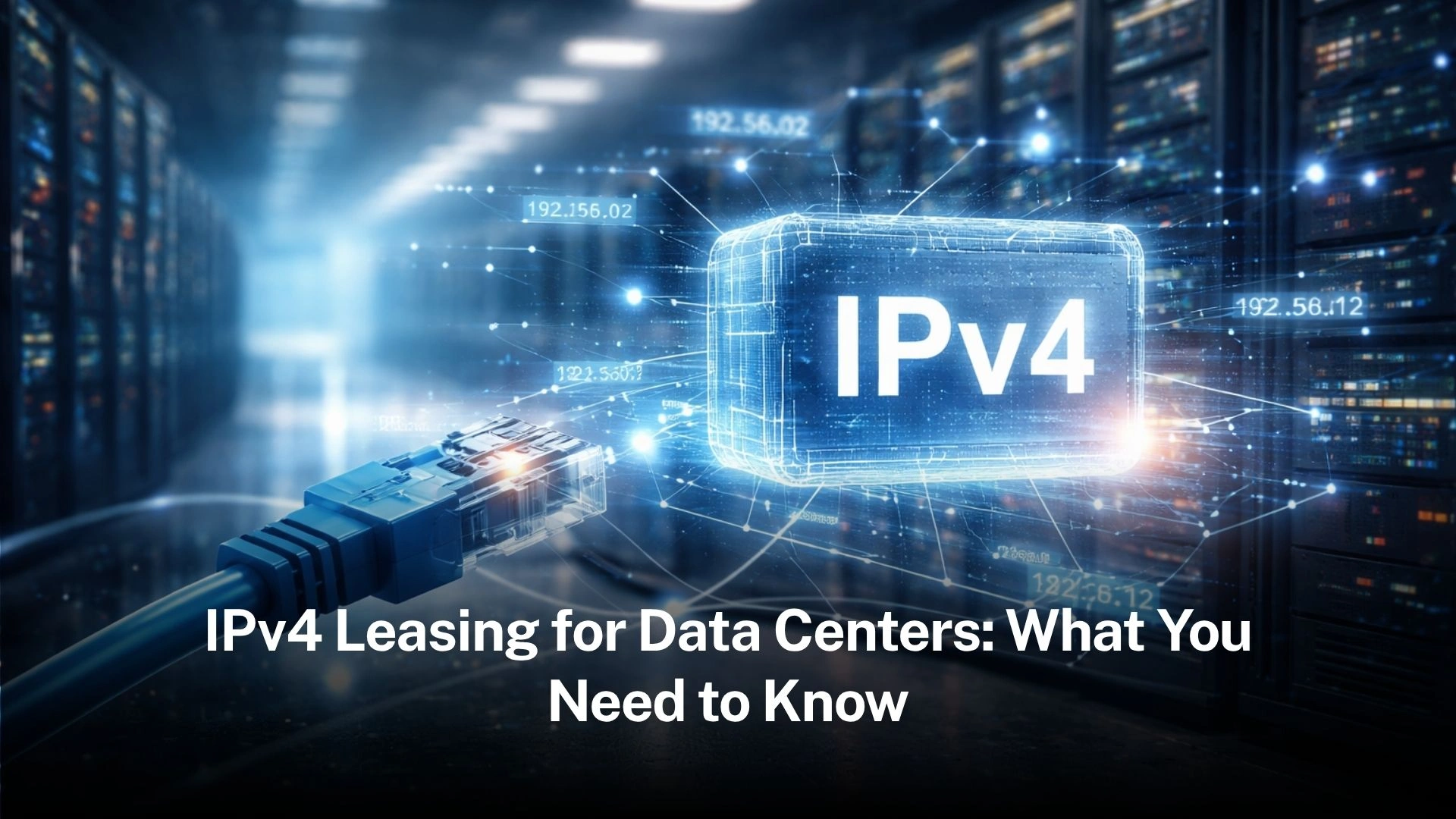
As IPv4 scarcity intensifies, data centres increasingly rely on leasing to scale infrastructure, control costs, and maintain reliable connectivity worldwide.
Table of Contents
- IPv4 leasing has become a critical strategy for data centres facing address shortages and rising acquisition costs
- Leasing offers flexibility and scalability, but introduces risks around reputation, compliance, and long-term dependency
Understanding IPv4 and why data centres still depend on it
Despite years of tech progress IPv4 is still the main part of the global Internet. It was made in the 1980s. IPv4 gives about 4.3 billion addresses. This is much less, than what all connected devices need today.
For data centres, IPv4 is not optional. It is essential for:
- Hosting public-facing services
- Ensuring compatibility with legacy systems
- Supporting global routing and accessibility
Even though more and more people are starting to use IPv6 most companies and cloud services still use IPv4 because it is what their systems are compatible with and it is not available everywhere, on all networks.
This is a problem: the number of people who want to use IPv4 is going up but there is only a limited amount of IPv4 available it is not like we can just make more of it.
The rise of IPv4 leasing in data centres
With the exhaustion of new IPv4 allocations from regional registries, organisations must now acquire addresses through secondary markets.
This is where leasing has become a solution.
Organisations can rent IPv4 addresses for a time, from people who already have them instead of buying them.
For data centres leasing IPv4 addresses makes sense because it fits well with how they work:
- Infrastructure demand fluctuates
- Capacity must scale quickly
- Capital expenditure must be controlled
Industry analysis shows leasing has evolved into a “billion-dollar IP leasing ecosystem” driven by scarcity and demand.
Why data centres choose IPv4 leasing
Cost efficiency and financial flexibility
One big reason for leasing IPv4 addresses is cost. Buying them needs a lot of money upfront. Prices have gone up to tens of dollars for each IP address recently.
IPv4 addresses are expensive to buy so leasing them is an option. The high cost is a factor, in choosing to lease IPv4 addresses. It costs a lot to purchase IPv4 addresses.
Leasing, by contrast:
- Converts capital expenditure into operational expenditure
- Offers predictable monthly or annual costs
- Avoids long-term financial commitment
As one industry analysis notes, leasing provides “lower initial costs” and enables organisations to allocate capital elsewhere.
Scalability for dynamic workloads
Data centres operate in highly dynamic environments. Customer demand can shift rapidly due to:
- Seasonal traffic spikes
- New product launches
- Geographic expansion
Leasing allows operators to scale IP resources up or down as needed. This flexibility is particularly valuable in cloud and hybrid environments, where capacity planning is complex.
Research highlights that leasing enables organisations to “quickly respond to usage spikes” without long-term commitments.
Faster deployment compared to purchasing
Acquiring an IPv4 address can take a lot of time if you buy or transfer it through registry. This process involves things:
- Legal verification
- Registry approval
- Technical validation
Leasing really helps to cut down on a lot of hassle. You can get address blocks up and running in a few days or weeks. This means that data centres can react fast to what people want.
Getting things done quickly is really important in areas, like cloud hosting and SaaS where everyone is competing with each other.
-IPv4 is the Internet’s most important service enabler; a device or server cannot be online without it.
– Heng.Lu, CEO of LARUS Limited and founder of the LARUS Foundation
The role of IPv4 leasing in modern data centre architecture
Supporting hybrid and multi-cloud environments
Modern data centres increasingly operate across hybrid and multi-cloud architectures. These environments require:
- Consistent addressing across platforms
- Secure communication between regions
- Reliable public-facing endpoints
Leased IPv4 addresses give you your IP space that you can use everywhere. This is better than shared IP pools because they can slow things down and have security issues. With leased IPv4 addresses you get performance and more control, over your IP space. You do not have to worry about people using the same IP address as you. Leased IPv4 addresses make it easy to set things up in environments.
Reducing reliance on NAT
People have been using Network Address Translation(NAT) for a time to deal with the problem of not having enough IPv4 addresses.However, it can make things more complicated and cause problems, with how well things work.
Experts note that NAT can:
- Increase latency
- Break certain protocols
- Complicate security configurations
Leasing IPv4 enables data centres to assign public IP addresses directly, reducing dependence on NAT and improving network efficiency.
Enabling reputation-sensitive services
For many data centre services—such as email hosting, SaaS platforms, and content delivery—IP reputation is critical.
Leasing providers often supply “clean” IP address ranges that have been vetted for:
- Blacklist history
- Abuse reports
- Routing integrity
This is particularly important for businesses that rely on deliverability and trust, such as marketing platforms or financial services.
Risks and challenges of IPv4 leasing
While leasing offers clear advantages, it is not without risks.
Lack of ownership and long-term control
Leasing does not confer ownership. Organisations remain dependent on:
- Contract terms
- Renewal agreements
- Provider stability
Over time, leasing costs may exceed the cost of purchasing, particularly for long-term infrastructure needs.
IP reputation and compliance risks
Leased IP addresses may carry historical baggage, including:
- Spam listings
- Abuse complaints
- Poor routing reputation
Although many providers vet addresses, the risk cannot be eliminated entirely.
As one analysis notes, leased IPs can come with “reputational baggage”, requiring careful due diligence.
Dependency on external providers
Leasing introduces reliance on brokers or platforms to:
- Maintain compliance with registry policies
- Manage routing authorisation
- Provide documentation and support
This dependency can create operational risk if providers fail or if agreements change unexpectedly.
Leasing vs buying IPv4 for data centres
The decision between leasing and buying depends on organisational priorities.
When leasing makes sense
Leasing is typically preferable when:
- Growth is rapid or unpredictable
- Budget constraints limit capital investment
- Short-term or experimental deployments are required
Data centres expanding into new regions often use leasing to test demand before committing to ownership.
When buying may be better
Purchasing IPv4 addresses may be more suitable when:
- Long-term stability is required
- Address usage is predictable
- Organisations want to treat IP space as a capital asset
Some operators adopt hybrid strategies—owning core infrastructure IPs while leasing additional capacity as needed.
The future of IPv4 leasing in data centres
Despite the ongoing transition to IPv6, IPv4 leasing is expected to remain a critical component of Internet infrastructure.
Several trends are shaping its future:
- Continued IPv4 scarcity and price volatility
- Growth of cloud-native and edge computing
- Increasing importance of IP reputation and security
Leasing is no longer a temporary workaround—it is now a strategic tool for managing digital infrastructure at scale.
As one industry perspective highlights, leasing has become “a critical resource to scale digital presence” in the face of persistent scarcity.
Conclusion
Data centers need to find ways to work with the internet. One thing that is really helpful is leasing IPv4 addresses. This is a way for data centers to get what they need. Leasing IPv4 addresses gives them the freedom to do things quickly and, at a cost. This is what they need to keep up with modern technology. IPv4 leasing is a way for data centers to stay ahead.
However, it also makes things more complicated when it comes to governance and reputation and planning for the term.
For people who run data centres the main thing is not to decide whether to lease or own but to figure out how to make both leasing and ownership work as part of a bigger plan for intellectual property or IP for short which is really, about the data centre operators overall IP strategy.
Frequently Asked Questions
1. What is IPv4 leasing?
IPv4 leasing is the process of renting IP address blocks from existing owners for a fixed period instead of purchasing them outright.
2. Why do data centres need IPv4 addresses?
They are required to host services, enable global connectivity, and maintain compatibility with legacy systems still dependent on IPv4.
3. Is IPv4 leasing cheaper than buying?
Leasing has lower upfront costs, but long-term leasing may become more expensive than purchasing depending on usage duration.
4. What are the risks of IPv4 leasing?
Risks include lack of ownership, dependency on providers, and potential issues with IP reputation or compliance
5. Will IPv6 replace IPv4 leasing?
IPv6 will reduce reliance on IPv4, but slow adoption means leasing will remain relevant for the foreseeable future.
Related Blogs
Artículos relacionados
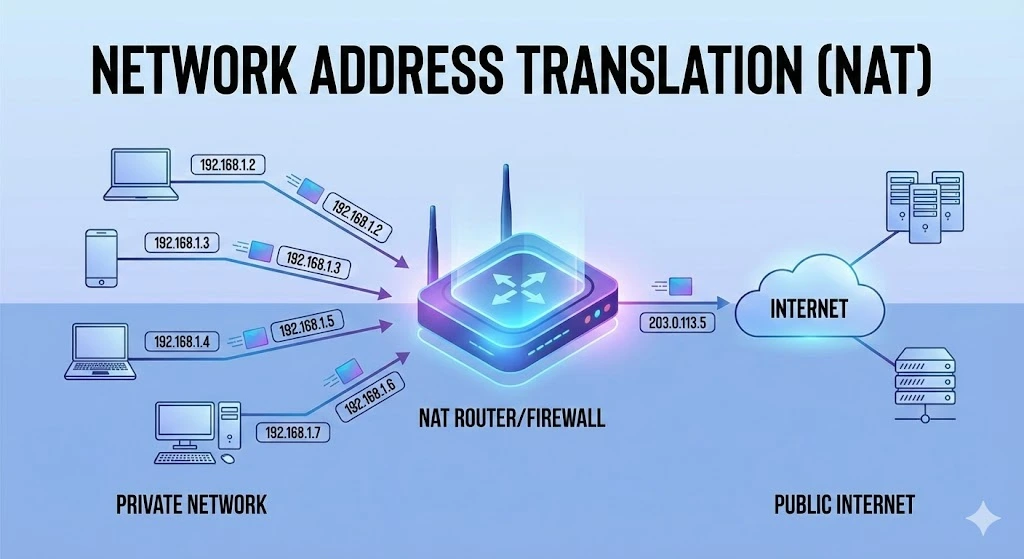
Comprensión de la traducción de direcciones de red (NAT)
En las redes informáticas, gestionar las direcciones IP de forma eficiente es fundamental para garantizar una comunicación fluida entre los dispositivos. Una de las tecnologías clave que ha surgido para afrontar este desafío es la Traducción de Direcciones de Red (NAT, por sus siglas en inglés). En este artículo explicamos qué es NAT, cómo funciona, sus distintos tipos, así como sus ventajas y limitaciones. ¿Qué es la traducción deRead more Related Posts Desbloqueando la privacidad digital con una red privada virtual (VPN) ¿Qué es una VPN? Una red privada virtual (VPN) es una tecnología que permite a los usuarios crear una conexión Comprensión de la traducción de direcciones de red (NAT) En las redes informáticas, gestionar las direcciones IP de forma eficiente es fundamental para garantizar una comunicación fluida entre los ¿Por qué Malasia se está convirtiendo en un centro neurálgico para la infraestructura de nube e IA? Malasia se está convirtiendo en uno de los mercados de crecimiento de centros de datos más importantes del Sudeste Asiático. .related-post {} .related-post .post-list { text-align: left; } .related-post .post-list .item { margin: 5px; padding: 10px; } .related-post .headline { font-size: 18px !important; color: #999999 !important; } .related-post .post-list .item .post_thumb { max-height: 220px; margin: 10px 0px; padding: 0px; display: block; } .related-post .post-list .item .post_title { font-size: 16px; color: #3f3f3f; margin: 10px 0px; padding: 0px; display: block; text-decoration: none; } .related-post .post-list .item .post_excerpt { font-size: 13px; color: #3f3f3f; margin: 10px 0px; padding: 0px; display: block; text-decoration: none; } @media only screen and (min-width: 1024px) { .related-post .post-list .item { width: 30%; } } @media only screen and (min-width: 768px) and (max-width: 1023px) { .related-post .post-list .item { width: 90%; } } @media only screen and (min-width: 0px) and (max-width: 767px) { .related-post .post-list .item { width: 90%; } }
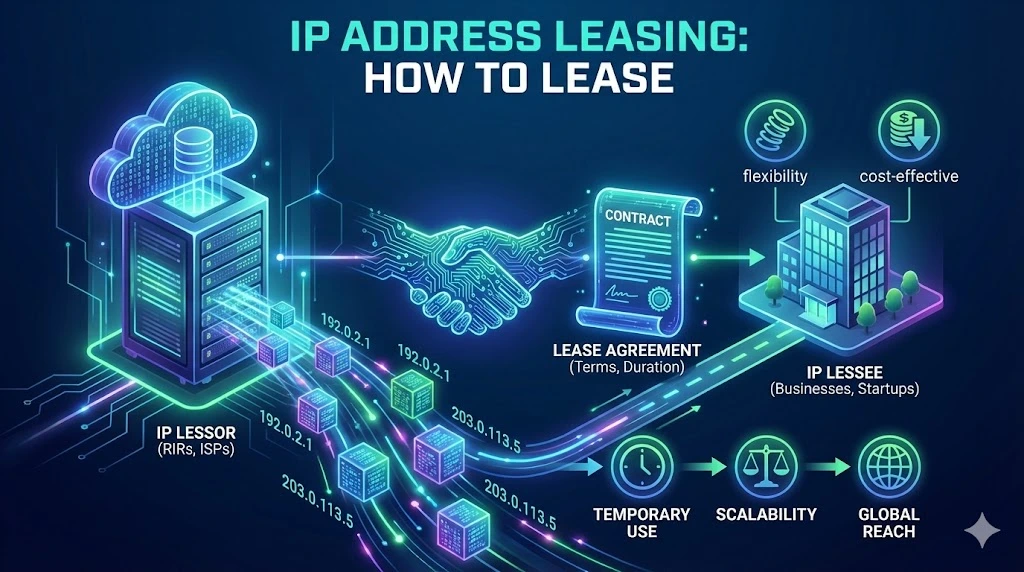
Arrendamiento de direcciones IP: Cómo arrendar direcciones IP
El mundo digital en el que nos movemos hoy depende en gran medida de las direcciones IP, identificadores únicos asignados a los dispositivos conectados a internet o a una red local. A medida que la demanda de direcciones IP sigue aumentando, empresas y particulares exploran diversas opciones para obtener los recursos necesarios. Un método cada vez más popular es el arrendamiento de direcciones IP. Este artículo profundiza en elRead more Related Posts Desbloqueando la privacidad digital con una red privada virtual (VPN) ¿Qué es una VPN? Una red privada virtual (VPN) es una tecnología que permite a los usuarios crear una conexión Comprensión de la traducción de direcciones de red (NAT) En las redes informáticas, gestionar las direcciones IP de forma eficiente es fundamental para garantizar una comunicación fluida entre los ¿Por qué Malasia se está convirtiendo en un centro neurálgico para la infraestructura de nube e IA? Malasia se está convirtiendo en uno de los mercados de crecimiento de centros de datos más importantes del Sudeste Asiático. .related-post {} .related-post .post-list { text-align: left; } .related-post .post-list .item { margin: 5px; padding: 10px; } .related-post .headline { font-size: 18px !important; color: #999999 !important; } .related-post .post-list .item .post_thumb { max-height: 220px; margin: 10px 0px; padding: 0px; display: block; } .related-post .post-list .item .post_title { font-size: 16px; color: #3f3f3f; margin: 10px 0px; padding: 0px; display: block; text-decoration: none; } .related-post .post-list .item .post_excerpt { font-size: 13px; color: #3f3f3f; margin: 10px 0px; padding: 0px; display: block; text-decoration: none; } @media only screen and (min-width: 1024px) { .related-post .post-list .item { width: 30%; } } @media only screen and (min-width: 768px) and (max-width: 1023px) { .related-post .post-list .item { width: 90%; } } @media only screen and (min-width: 0px) and (max-width: 767px) { .related-post .post-list .item { width: 90%; } }
¿Qué es el agotamiento de direcciones IPv4?
IPv4 es la versión inicial del Protocolo de Internet (IP), capaz de generar 4.300 millones de posibles direcciones IPv4. Sin embargo, muchas de estas direcciones están reservadas para fines específicos, como investigación y desarrollo. Esto deja un conjunto limitado disponible para organizaciones e individuos en todo el mundo. Con el crecimiento exponencial de Internet, la demanda de direcciones IPv4 se ha disparado. Esto provocó una rápida disminución de lasRead more Related Posts Desbloqueando la privacidad digital con una red privada virtual (VPN) ¿Qué es una VPN? Una red privada virtual (VPN) es una tecnología que permite a los usuarios crear una conexión Comprensión de la traducción de direcciones de red (NAT) En las redes informáticas, gestionar las direcciones IP de forma eficiente es fundamental para garantizar una comunicación fluida entre los Arrendamiento de direcciones IP: Cómo arrendar direcciones IP El mundo digital en el que nos movemos hoy depende en gran medida de las direcciones IP, identificadores únicos asignados .related-post {} .related-post .post-list { text-align: left; } .related-post .post-list .item { margin: 5px; padding: 10px; } .related-post .headline { font-size: 18px !important; color: #999999 !important; } .related-post .post-list .item .post_thumb { max-height: 220px; margin: 10px 0px; padding: 0px; display: block; } .related-post .post-list .item .post_title { font-size: 16px; color: #3f3f3f; margin: 10px 0px; padding: 0px; display: block; text-decoration: none; } .related-post .post-list .item .post_excerpt { font-size: 13px; color: #3f3f3f; margin: 10px 0px; padding: 0px; display: block; text-decoration: none; } @media only screen and (min-width: 1024px) { .related-post .post-list .item { width: 30%; } } @media only screen and (min-width: 768px) and (max-width: 1023px) { .related-post .post-list .item { width: 90%; } } @media only screen and (min-width: 0px) and (max-width: 767px) { .related-post .post-list .item { width: 90%; } }
