
Understanding the Different Types of DDoS Attacks

Table of Contents
As the internet becomes more integral to everyday business operations, cybersecurity threats evolve in both complexity and impact. One of the most persistent and damaging threats facing organizations today is the Distributed Denial of Service (DDoS) attack. These attacks flood a targeted system with an overwhelming amount of traffic, rendering services unusable for legitimate users.
To effectively mitigate DDoS threats, it’s essential to understand the various types of attacks cybercriminals deploy. Each type targets a specific layer of the network or system infrastructure, and knowing how each one operates is the first step toward building a resilient defense strategy.
In this post, we’ll explore the main types of DDoS attacks, breaking them down into their categories and detailing how they disrupt services.
1. Volume-Based Attacks
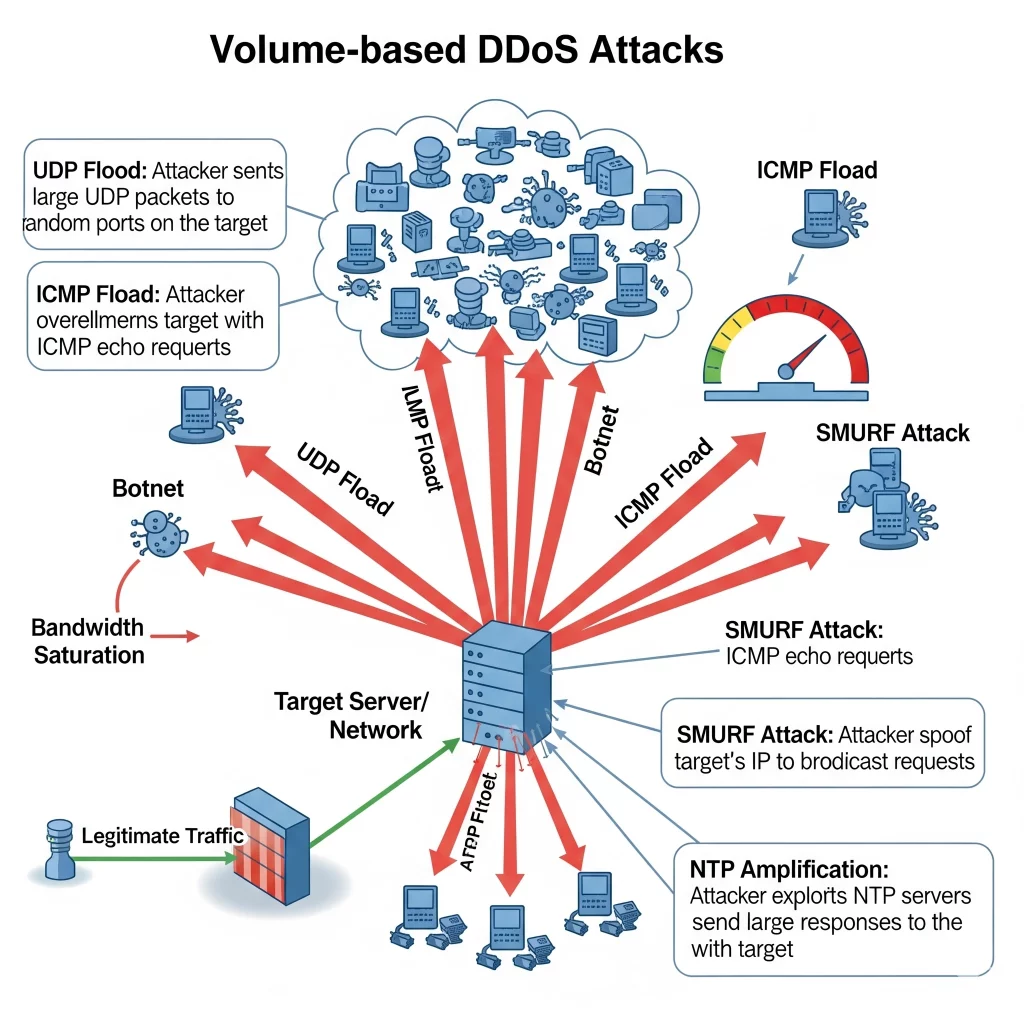
Volume-based DDoS attacks aim to saturate the bandwidth of the target site. They are the most common type and often involve botnets sending massive amounts of traffic.
Key Examples:
- UDP Flood: A large number of UDP packets are sent to random ports on the target machine, forcing it to respond continuously.
- ICMP Flood: This uses ICMP echo requests (pings) to flood the target, consuming both outgoing and incoming bandwidth.
- DNS Amplification: Attackers spoof the victim’s IP and send DNS queries to open DNS resolvers, which respond with large amounts of data, amplifying the traffic hitting the target.
Impact:
These attacks are designed to consume all available bandwidth, effectively taking the target offline by exhausting its capacity.
2. Protocol Attacks
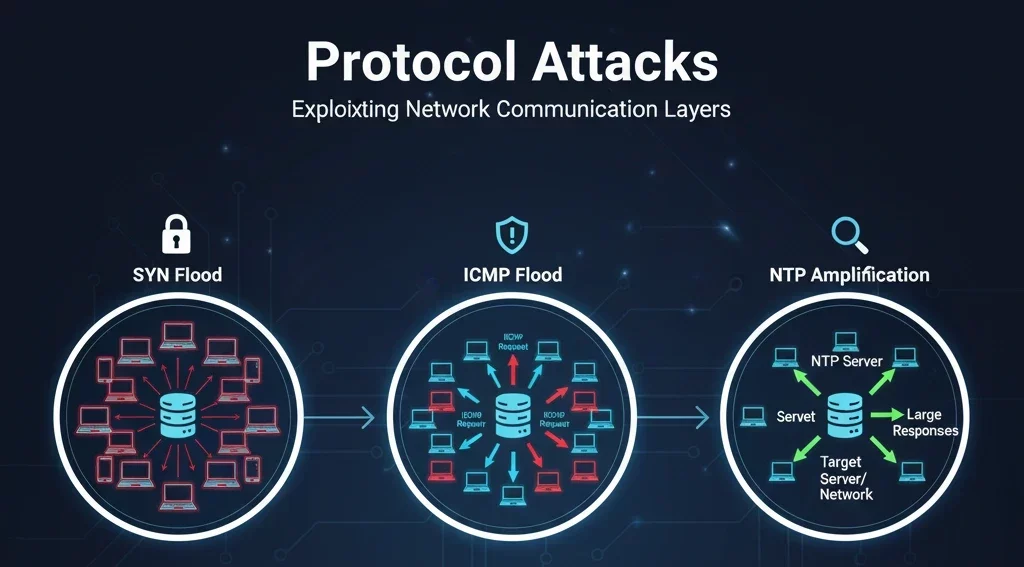
Protocol attacks exploit weaknesses in network layer protocols. These attacks target servers and intermediate resources like firewalls and load balancers.
Key Examples:
- SYN Flood: Exploits the TCP handshake process by sending repeated SYN requests with spoofed IP addresses, never completing the connection.
- Ping of Death: Sends maliciously crafted ping packets that exceed the maximum allowed size, causing systems to crash or reboot.
- Smurf Attack: An attacker sends ICMP requests with a spoofed source address (the victim) to a network’s broadcast address, causing a flood of responses.
Impact:
These attacks consume server resources, and because they target the infrastructure itself, they can be harder to detect and mitigate.
3. Application Layer Attacks
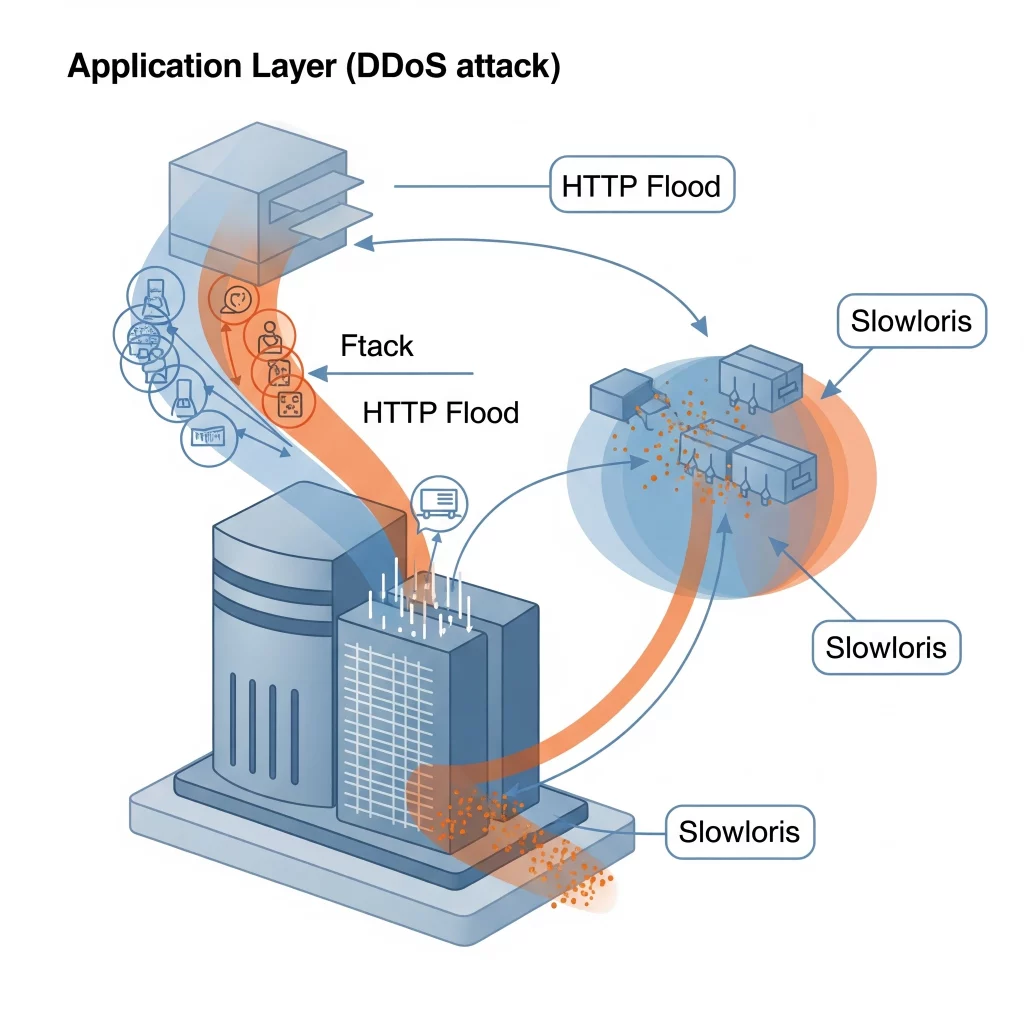
Application layer (Layer 7) attacks mimic legitimate user behavior, making them difficult to distinguish from normal traffic. They target the actual applications, such as web servers.
Key Examples:
- HTTP Flood: Attackers send seemingly legitimate HTTP requests, overwhelming the web server’s capacity to process requests.
- Slowloris: Keeps many connections to the target web server open and holds them open as long as possible by sending partial HTTP requests.
- Zero-day Exploits: These attacks exploit unknown or unpatched vulnerabilities in applications to cause crashes or service interruptions.
Impact:
These attacks are highly stealthy and resource-intensive, aiming to exhaust application resources rather than network bandwidth.
4. Multi-Vector Attacks
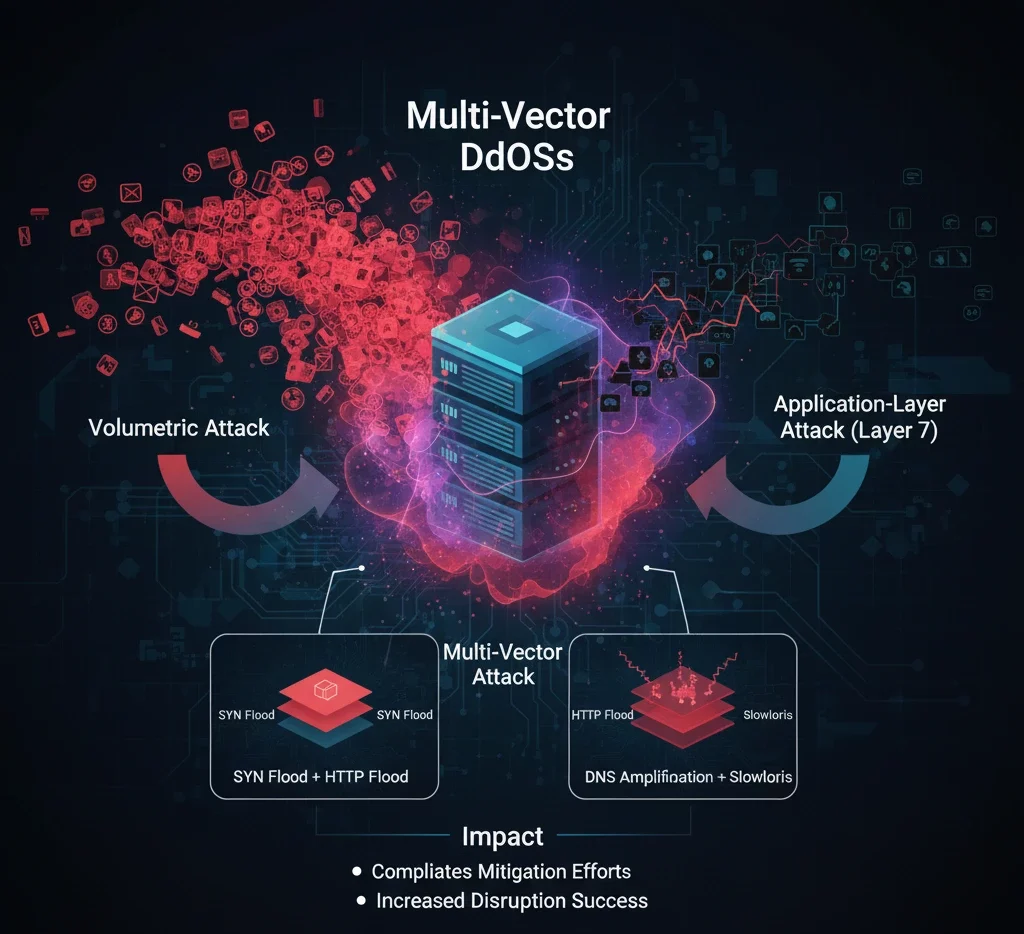
Multi-vector attacks combine two or more different types of DDoS strategies. For example, an attacker might initiate a volumetric attack while simultaneously targeting the application layer.
Key Examples:
- Combining SYN floods with HTTP floods.
- Using DNS amplification in conjunction with Slowloris.
Impact:
By mixing attack types, these methods complicate mitigation efforts and increase the chance of successful disruption.
Why It Matters
Understanding these DDoS variations is critical for implementing a comprehensive defense. Organizations must deploy layered security solutions, conduct regular vulnerability assessments, and ensure that both infrastructure and applications are equipped to detect and mitigate DDoS activity.
In addition to traditional firewalls and intrusion prevention systems, DDoS protection services and real-time traffic monitoring tools play vital roles in identifying and mitigating threats before they escalate.
Final Thoughts
DDoS attacks are becoming more sophisticated, but with a deep understanding of how each type functions, businesses can stay one step ahead. A well-informed security posture, complemented by robust mitigation strategies, is essential for safeguarding your digital presence.
Trusted IPv4 Leasing for Business Growth
Get enterprise-grade IPv4 space quickly, with seamless deployment and end-to-end management.
Get Started with i.leaseRelated Blogs
Related Posts

How RIR Policy Differences Shape IPv4 Transactions Across Regions
Two IPv4 blocks can have the same prefix size, similar market value, and equally willing buyers and sellers—yet require different transaction preparation. The reason is that an IPv4 transaction does not exist only at the commercial layer. The address block is also registered within a Regional Internet Registry framework, and the applicable policies can affect whether the resource is currently transferable, what the recipient must prepare, which records needRead more Related Posts How RIR Policy Differences Shape IPv4 Transactions Across Regions Two IPv4 blocks can have the same prefix size, similar market value, and equally willing buyers and sellers—yet require different What Is CGNAT (Carrier-Grade NAT)? Why It Breaks Hosting, Gaming, and Inbound Services CGNAT (Carrier-Grade NAT) is a technique that lets an Internet service provider share a single public IPv4 address among many RPKI and ROA Explained: How Route Origin Authorization Protects Your IPv4 Prefixes RPKI (Resource Public Key Infrastructure) is a security framework that lets IP address holders publish cryptographically signed statements about who .related-post {} .related-post .post-list { text-align: left; } .related-post .post-list .item { margin: 5px; padding: 10px; } .related-post .headline { font-size: 18px !important; color: #999999 !important; } .related-post .post-list .item .post_thumb { max-height: 220px; margin: 10px 0px; padding: 0px; display: block; } .related-post .post-list .item .post_title { font-size: 16px; color: #3f3f3f; margin: 10px 0px; padding: 0px; display: block; text-decoration: none; } .related-post .post-list .item .post_excerpt { font-size: 13px; color: #3f3f3f; margin: 10px 0px; padding: 0px; display: block; text-decoration: none; } @media only screen and (min-width: 1024px) { .related-post .post-list .item { width: 30%; } } @media only screen and (min-width: 768px) and (max-width: 1023px) { .related-post .post-list .item { width: 90%; } } @media only screen and (min-width: 0px) and (max-width: 767px) { .related-post .post-list .item { width: 90%; } }

Proxy vs VPN: What’s the Difference and Which Do You Need?
A proxy reroutes traffic for a specific application through an intermediary server, while a VPN routes and encrypts all of a device’s traffic through a secure tunnel. The short version: a proxy changes the apparent source of some of your traffic; a VPN changes and protects the source of all of it. That difference in scope and encryption is the core of the comparison, and it usually points clearlyRead more Related Posts How RIR Policy Differences Shape IPv4 Transactions Across Regions Two IPv4 blocks can have the same prefix size, similar market value, and equally willing buyers and sellers—yet require different Proxy vs VPN: What’s the Difference and Which Do You Need? A proxy reroutes traffic for a specific application through an intermediary server, while a VPN routes and encrypts all of What Is CGNAT (Carrier-Grade NAT)? Why It Breaks Hosting, Gaming, and Inbound Services CGNAT (Carrier-Grade NAT) is a technique that lets an Internet service provider share a single public IPv4 address among many .related-post {} .related-post .post-list { text-align: left; } .related-post .post-list .item { margin: 5px; padding: 10px; } .related-post .headline { font-size: 18px !important; color: #999999 !important; } .related-post .post-list .item .post_thumb { max-height: 220px; margin: 10px 0px; padding: 0px; display: block; } .related-post .post-list .item .post_title { font-size: 16px; color: #3f3f3f; margin: 10px 0px; padding: 0px; display: block; text-decoration: none; } .related-post .post-list .item .post_excerpt { font-size: 13px; color: #3f3f3f; margin: 10px 0px; padding: 0px; display: block; text-decoration: none; } @media only screen and (min-width: 1024px) { .related-post .post-list .item { width: 30%; } } @media only screen and (min-width: 768px) and (max-width: 1023px) { .related-post .post-list .item { width: 90%; } } @media only screen and (min-width: 0px) and (max-width: 767px) { .related-post .post-list .item { width: 90%; } }

What Is CGNAT (Carrier-Grade NAT)? Why It Breaks Hosting, Gaming, and Inbound Services
CGNAT (Carrier-Grade NAT) is a technique that lets an Internet service provider share a single public IPv4 address among many customers at once, instead of giving each customer their own. It adds a second layer of network address translation inside the provider’s network, so hundreds or thousands of subscribers sit behind one public address that the outside Internet sees. For ordinary browsing, streaming, and app use, CGNAT usually worksRead more Related Posts 什么是 CGNAT(运营商级 NAT)?它为何会影响主机托管、游戏和入站服务? CGNAT(Carrier-Grade NAT,运营商级网络地址转换)是一种技术,它允许互联网服务提供商让多个客户同时共享同一个公共 IPv4 地址,而不是为每位客户单独分配一个公共 IPv4 地址。 它会在服务提供商的网络内部增加第二层网络地址转换,因此数百甚至数千名用户都位于同一个公共地址之后,而外部互联网看到的只是这个共享的公共地址。对于日常网页浏览、流媒体播放和应用程序使用来说,CGNAT 通常不会被用户察觉。问题会在外部网络需要主动连接到你时出现,例如托管服务器、进行端口转发、运行游戏服务器、接收 VoIP 或 VPN 连接,或启用远程访问。由于你不再拥有属于自己的公共地址——而是与其他陌生用户共享同一个地址——传入连接无法明确知道应该被转发到哪一个用户,因此这些服务可能无法正常工作或变得不稳定。CGNAT 并不是程序错误或配置错误。它是针对一个结构性现实而采取的有意解决方案:全球 IPv4 地址已经不足,而互联网服务提供商仍需要在公共地址数量有限的情况下继续连接新的客户。这使 CGNAT 成为普通用户最容易接触到的一个明显迹象,说明公共 IPv4 地址是一种有限且竞争激烈的资源;同时也清楚说明了为什么运行对外服务的企业需要拥有自己的专用公共地址空间。本文将介绍什么是 CGNAT、它如何运作、具体会影响哪些功能、如何判断自己是否处于 How RIR Policy Differences Shape IPv4 Transactions Across Regions Two IPv4 blocks can have the same prefix size, similar market value, and equally willing buyers and sellers—yet require different Proxy vs VPN: What’s the Difference and Which Do You Need? A proxy reroutes traffic for a specific application through an intermediary server, while a VPN routes and encrypts all of .related-post {} .related-post .post-list { text-align: left; } .related-post .post-list .item { margin: 5px; padding: 10px; } .related-post .headline { font-size: 18px !important; color: #999999 !important; } .related-post .post-list .item .post_thumb { max-height: 220px; margin: 10px 0px; padding: 0px; display: block; } .related-post .post-list .item .post_title { font-size: 16px; color: #3f3f3f; margin: 10px 0px; padding: 0px; display: block; text-decoration: none; } .related-post .post-list .item .post_excerpt { font-size: 13px; color: #3f3f3f; margin: 10px 0px; padding: 0px; display: block; text-decoration: none; } @media only screen and (min-width: 1024px) { .related-post .post-list .item { width: 30%; } } @media only screen and (min-width: 768px) and (max-width: 1023px) { .related-post .post-list .item { width: 90%; } } @media only screen and (min-width: 0px) and (max-width: 767px) { .related-post .post-list .item { width: 90%; } }