为什么子网划分对网络管理至关重要
 Stephanie
子网划分在现代网络中的作用
子网划分是指将大型 IP 网络分割成更小的部分。它对网络管理至关重要。子网划分使管理员能够谨慎地分配 IP 地址,从而减少浪费并避免冲突。此外,子网划分还有助于以清晰的方式组织网络。如今,许多设备都连接到网络。如果没有子网,网络可能会变得混乱不堪。子网划分使网络更易于控制。
Table of Contents
子网划分起源于互联网 IP 地址较少的时期。工程师需要一种方法来使用地址而不会耗尽。他们将大块地址分割成更小的组。每个组都有自己的网络 ID 和主机地址。这种理念至今仍然重要。即使在拥有更多地址的 IPv6 时代,子网划分仍然能够保持网络的结构性和安全性,并且便于日后扩展网络。
对于网络管理员来说,子网划分有很多好处。它有助于合理利用地址并简化路由表,从而降低延迟并节省带宽。清晰的子网划分也使应用安全规则、控制资源和监控流量变得更加容易。每个子网可以服务于一个部门、一个地点或一个应用程序。这使得问题更容易解决,也使添加新设备更加便捷。
子网划分还有助于遵守规则和法律。许多组织出于安全考虑必须将数据隔离。子网可以隔离敏感信息,例如财务数据或个人数据。这使得访问控制和记录保存更加便捷。如果进行审计,清晰的子网划分也体现了良好的管理。子网划分不仅仅是技术层面的,它还有助于风险管理和规则遵守。
提升网络性能
网络性能至关重要。子网划分有助于提升网络运行速度。单个网络中设备过多会产生过多流量,从而导致通信速度下降。将网络划分为子网可以有效减少流量。设备仅在需要时才接收消息,从而降低延迟,使网络更加流畅。
子网划分还有助于路由器更好地工作。路由器利用子网信息高效地发送数据。较小的子网可以缩短路由表,使路由器运行速度更快。当网络规模扩大时,采用子网划分的网络能够更好地处理流量。
子网划分使网络扩展更加便捷。通过子网,添加新的办公室或应用程序变得简单。每个新子网都可以拥有足够的地址,而无需更改原有网络,从而保持网络的稳定性和速度。
安全性也得到提升。可以密切监控子网中的流量。防火墙可以单独控制每个子网。如果某个子网遭到攻击,攻击会被控制在一定范围内,从而防止攻击扩散。子网有助于保护关键数据并降低风险。
安全与合规优势
子网划分还能提高网络安全。每个部门或功能都可以拥有自己的子网。即使一个子网遭到攻击,其他子网也能保持安全。例如,访客 Wi-Fi 子网可以与内部服务器隔离。这样可以保护重要数据的安全。
子网划分使规则管理更加便捷。管理员无需控制每个设备,只需为子网设置规则即可。这既节省时间,又能保持安全性的一致性。每个子网都可以设置独立的登录信息。这可以限制攻击者,从而提高网络安全。
子网划分还有助于遵守相关法规。诸如 GDPR 或 PCI DSS 之类的法规要求对数据进行严格控制。子网划分清晰地显示了敏感数据的位置。由于流量位于不同的网段中,日志记录和审计也更加便捷。如果出现问题,只需在一个子网中排查问题即可。
子网划分还有助于快速响应问题。如果出现威胁,可以隔离子网而无需停止整个网络。这样可以确保其他设备正常运行。结合监控工具,子网划分有助于快速解决问题并减少数据丢失。
规划未来网络
子网划分是网络规划的一部分。良好的规划需要了解公司的需求和网络架构。管理员应检查部门规模、位置、应用程序和安全规则。规划可确保每个子网拥有足够的地址,避免浪费。
文档至关重要。记录子网、路由和安全规则有助于解决问题,也有助于规划升级。随着云计算、远程办公和物联网设备的普及,网络变得更加复杂。清晰的记录可以指导决策并防止错误。
培训和团队协作必不可少。网络工程师、安全人员和管理人员都应该了解子网。定期检查可以发现未使用的地址和问题。自动化工具可以帮助分配地址并监控使用情况,从而减少错误并及早提醒管理员注意问题。
随着技术的不断发展,子网划分的重要性将持续存在。IPv6、软件定义网络和云架构仍然需要良好的结构。任何类型的网络都能从子网划分中受益。它能保持网络的快速、安全和易于扩展。子网划分是实现长期成功的基本工具。
常见问题解答
用简单的话来说,什么是子网划分?
子网划分是将大型网络分割成称为子网的较小部分。每个子网都有自己的地址。这使得网络更易于管理。
网络为什么需要子网划分?
子网划分有助于组织网络、减少流量问题、提高安全性并规划未来发展。它能使网络运行得更好。
IPv6 还有必要进行子网划分吗?
是的。即使地址很多,子网划分也能使网络保持井然有序、安全可靠,并且更易于控制。
子网划分如何提高网络安全?
子网划分可以将部门和功能隔离开来。即使一个子网遭到攻击,其他子网也不会受到影响。它还有助于控制防火墙和监控网络流量。
创建子网时应该考虑哪些因素?
考虑设备数量、发展规划、位置、应用以及安全需求。良好的规划可以确保每个子网都有足够的地址。
相关博客
Artículos relacionados
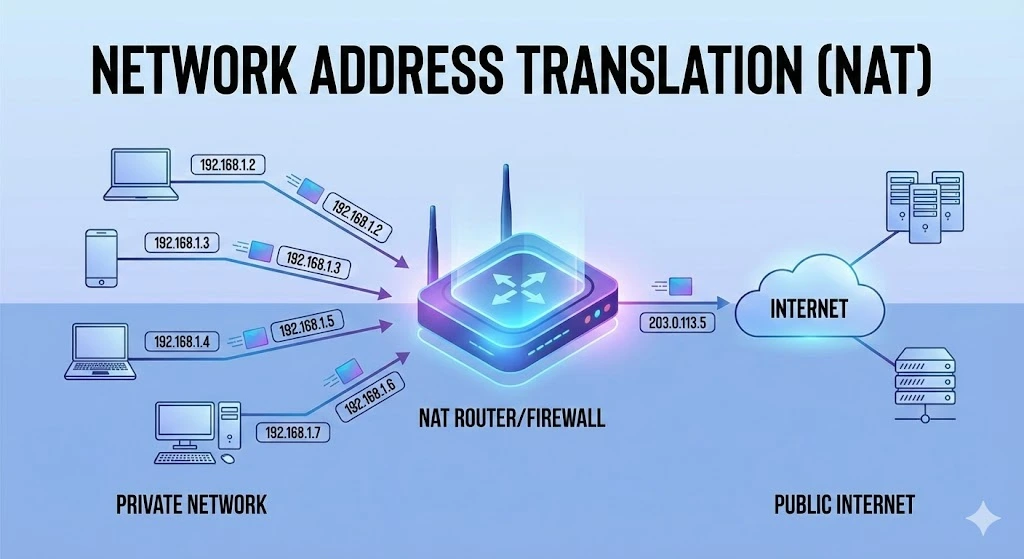
Comprensión de la traducción de direcciones de red (NAT)
En las redes informáticas, gestionar las direcciones IP de forma eficiente es fundamental para garantizar una comunicación fluida entre los dispositivos. Una de las tecnologías clave que ha surgido para afrontar este desafío es la Traducción de Direcciones de Red (NAT, por sus siglas en inglés). En este artículo explicamos qué es NAT, cómo funciona, sus distintos tipos, así como sus ventajas y limitaciones. ¿Qué es la traducción deRead more Related Posts Desbloqueando la privacidad digital con una red privada virtual (VPN) ¿Qué es una VPN? Una red privada virtual (VPN) es una tecnología que permite a los usuarios crear una conexión Comprensión de la traducción de direcciones de red (NAT) En las redes informáticas, gestionar las direcciones IP de forma eficiente es fundamental para garantizar una comunicación fluida entre los ¿Por qué Malasia se está convirtiendo en un centro neurálgico para la infraestructura de nube e IA? Malasia se está convirtiendo en uno de los mercados de crecimiento de centros de datos más importantes del Sudeste Asiático. .related-post {} .related-post .post-list { text-align: left; } .related-post .post-list .item { margin: 5px; padding: 10px; } .related-post .headline { font-size: 18px !important; color: #999999 !important; } .related-post .post-list .item .post_thumb { max-height: 220px; margin: 10px 0px; padding: 0px; display: block; } .related-post .post-list .item .post_title { font-size: 16px; color: #3f3f3f; margin: 10px 0px; padding: 0px; display: block; text-decoration: none; } .related-post .post-list .item .post_excerpt { font-size: 13px; color: #3f3f3f; margin: 10px 0px; padding: 0px; display: block; text-decoration: none; } @media only screen and (min-width: 1024px) { .related-post .post-list .item { width: 30%; } } @media only screen and (min-width: 768px) and (max-width: 1023px) { .related-post .post-list .item { width: 90%; } } @media only screen and (min-width: 0px) and (max-width: 767px) { .related-post .post-list .item { width: 90%; } }

Arrendamiento de direcciones IP: Cómo arrendar direcciones IP
El mundo digital en el que nos movemos hoy depende en gran medida de las direcciones IP, identificadores únicos asignados a los dispositivos conectados a internet o a una red local. A medida que la demanda de direcciones IP sigue aumentando, empresas y particulares exploran diversas opciones para obtener los recursos necesarios. Un método cada vez más popular es el arrendamiento de direcciones IP. Este artículo profundiza en elRead more Related Posts Desbloqueando la privacidad digital con una red privada virtual (VPN) ¿Qué es una VPN? Una red privada virtual (VPN) es una tecnología que permite a los usuarios crear una conexión Comprensión de la traducción de direcciones de red (NAT) En las redes informáticas, gestionar las direcciones IP de forma eficiente es fundamental para garantizar una comunicación fluida entre los ¿Por qué Malasia se está convirtiendo en un centro neurálgico para la infraestructura de nube e IA? Malasia se está convirtiendo en uno de los mercados de crecimiento de centros de datos más importantes del Sudeste Asiático. .related-post {} .related-post .post-list { text-align: left; } .related-post .post-list .item { margin: 5px; padding: 10px; } .related-post .headline { font-size: 18px !important; color: #999999 !important; } .related-post .post-list .item .post_thumb { max-height: 220px; margin: 10px 0px; padding: 0px; display: block; } .related-post .post-list .item .post_title { font-size: 16px; color: #3f3f3f; margin: 10px 0px; padding: 0px; display: block; text-decoration: none; } .related-post .post-list .item .post_excerpt { font-size: 13px; color: #3f3f3f; margin: 10px 0px; padding: 0px; display: block; text-decoration: none; } @media only screen and (min-width: 1024px) { .related-post .post-list .item { width: 30%; } } @media only screen and (min-width: 768px) and (max-width: 1023px) { .related-post .post-list .item { width: 90%; } } @media only screen and (min-width: 0px) and (max-width: 767px) { .related-post .post-list .item { width: 90%; } }
¿Qué es el agotamiento de direcciones IPv4?
IPv4 es la versión inicial del Protocolo de Internet (IP), capaz de generar 4.300 millones de posibles direcciones IPv4. Sin embargo, muchas de estas direcciones están reservadas para fines específicos, como investigación y desarrollo. Esto deja un conjunto limitado disponible para organizaciones e individuos en todo el mundo. Con el crecimiento exponencial de Internet, la demanda de direcciones IPv4 se ha disparado. Esto provocó una rápida disminución de lasRead more Related Posts Desbloqueando la privacidad digital con una red privada virtual (VPN) ¿Qué es una VPN? Una red privada virtual (VPN) es una tecnología que permite a los usuarios crear una conexión Comprensión de la traducción de direcciones de red (NAT) En las redes informáticas, gestionar las direcciones IP de forma eficiente es fundamental para garantizar una comunicación fluida entre los Arrendamiento de direcciones IP: Cómo arrendar direcciones IP El mundo digital en el que nos movemos hoy depende en gran medida de las direcciones IP, identificadores únicos asignados .related-post {} .related-post .post-list { text-align: left; } .related-post .post-list .item { margin: 5px; padding: 10px; } .related-post .headline { font-size: 18px !important; color: #999999 !important; } .related-post .post-list .item .post_thumb { max-height: 220px; margin: 10px 0px; padding: 0px; display: block; } .related-post .post-list .item .post_title { font-size: 16px; color: #3f3f3f; margin: 10px 0px; padding: 0px; display: block; text-decoration: none; } .related-post .post-list .item .post_excerpt { font-size: 13px; color: #3f3f3f; margin: 10px 0px; padding: 0px; display: block; text-decoration: none; } @media only screen and (min-width: 1024px) { .related-post .post-list .item { width: 30%; } } @media only screen and (min-width: 768px) and (max-width: 1023px) { .related-post .post-list .item { width: 90%; } } @media only screen and (min-width: 0px) and (max-width: 767px) { .related-post .post-list .item { width: 90%; } }
