What a Continuity-Backed IPv4 Marketplace Actually Means
 Stephanie
What is a continuity-backed IPv4 marketplace?
A continuity-backed IPv4 marketplace is an IPv4 trading and leasing model designed to ensure IPv4 addresses remain
operationally usable after transfer, not just successfully traded.
Table of Contents
Execution is not paperwork. Execution is continuity under registry-layer uncertainty. – Heng.lu, Note:66 On Why i.LEASE Exists — and Why the Broker Question Is Really a Registry-Risk Question
Unlike traditional brokers, this model focuses on registry risk management, lifecycle continuity, and execution beyond documentation.
Why traditional IPv4 marketplaces are not enough
Traditional IPv4 marketplaces typically focus on:
- listing IPv4 blocks
- matching buyers and sellers
- preparing transfer documents
- submitting RIR transfer requests
- closing transactions after approval
However, this model assumes the IPv4 registry system is:
- stable
- predictable
- neutral
- purely procedural
In reality, IPv4 operates under Regional Internet Registries (RIRs), where policy interpretation and administrative processes can affect outcomes.
This creates structural risk that traditional brokers do not fully control.
What is IPv4 registry risk?
IPv4 registry risk is the set of uncertainties introduced by RIR-based governance systems that can affect IPv4 usability after transfer.
Common registry risks include:
- RIR transfer approval delays or rejection
- policy interpretation differences between regions
- WHOIS record inconsistencies after transfer
- RPKI validation misalignment
- historical IP reputation issues
- routing propagation instability
Why registry risk matters
These risks can directly impact:
- enterprise network uptime
- cloud infrastructure stability
- SaaS service availability
- CDN performance
- VPN and global routing systems
This means IPv4 is not just an address system—it is a registry-dependent operational infrastructure asset.
How a continuity-backed IPv4 marketplace works
A continuity-backed IPv4 marketplace introduces an execution layer above traditional brokerage.
A continuity-backed IPv4 marketplace introduces an execution layer above traditional brokerage.
It ensures IPv4 usability through three key stages:
1. Pre-transaction IPv4 risk assessment
Before execution, the system evaluates:
- registry transfer feasibility
- historical routing stability
- policy sensitivity of the IPv4 block
- operational risk level
- transfer friction probability
This shifts evaluation from paperwork checking to infrastructure risk prediction.
2. Registry-aware execution layer
Unlike traditional brokers, execution is designed around real registry behavior.
This includes:
- managing RIR-specific policy differences
- structuring documentation for approval success
- handling registry escalation scenarios
- reducing transfer failure probability
The registry is treated as an active risk system, not a passive approval step.
3. Post-transfer IPv4 operational continuity
This is the most important difference from traditional brokerage.
After transfer, continuity systems manage:
- WHOIS record consistency
- RPKI validation stability
- routing propagation monitoring
- IPv4 reputation continuity
- lifecycle operational support
In real infrastructure systems, transfer is not completion. It is the beginning of operational dependency.
Why IPv4 is no longer just a commodity
IPv4 has evolved from a technical allocation system into a form of:
- infrastructure capital
- leasing-based network asset
- compliance-sensitive digital resource
- routing-dependent infrastructure layer
- balance-sheet managed operational asset
Because of this shift, the key question changes:
Old question:
Can I acquire IPv4 addresses?
New question:
Can I operate IPv4 continuously under registry constraints?
This is the core reason continuity matters.
Why liquidity alone is not enough
Many IPv4 platforms focus on:
- faster transactions
- higher liquidity
- more listings
- broker efficiency
However, liquidity does not guarantee stability.
A liquid IPv4 market can still produce:
- failed transfers
- registry delays
- routing inconsistencies
- operational downtime
- compliance disputes
Liquidity without continuity creates fragile infrastructure.
What makes i.LEASE different
i.LEASE is a continuity-backed IPv4 marketplace built as an execution-layer system.
It is designed to ensure:
- IPv4 usability after transfer
- registry-aware transaction execution
- lifecycle-based IPv4 management
- operational continuity across infrastructure systems
Learn more: https://i.lease
Key comparison: traditional vs continuity-backed IPv4 model
| Model | Focus | Success definition |
|---|---|---|
| Traditional IPv4 broker | Matching buyers and sellers | Transaction completed |
| Standard marketplace | Listings and liquidity | Trade executed |
| Continuity-backed IPv4 marketplace (i.LEASE) | Operational stability | IPv4 remains usable after transfer |
Conclusion
A continuity-backed IPv4 marketplace is not an upgrade to traditional brokerage.
It is a structural shift in how IPv4 infrastructure is managed.
It recognizes a simple reality:
The IPv4 market is not defined by transactions—it is defined by operational continuity under registry constraints.
i.LEASE exists to operate at this layer.
Not just to complete IPv4 transactions—but to ensure IPv4 remains usable after them.
Frequent Asked Questions
1. What is a continuity-backed IPv4 marketplace?
A continuity-backed IPv4 marketplace is a system that ensures IPv4 addresses remain operational after transfer by managing registry risk, execution processes, and lifecycle continuity.
2. Why is IPv4 registry risk important?
Because IPv4 transfers depend on RIR systems and policies that can affect whether an IPv4 block remains usable after transfer.
3. How is i.LEASE different from traditional IPv4 brokers?
i.LEASE focuses on execution and operational continuity, not just matching buyers and sellers or completing transactions.
4. Is IPv4 leasing safer than buying?
IPv4 leasing can reduce registry exposure and operational disruption by maintaining continuity under a managed infrastructure model.
Artículos relacionados
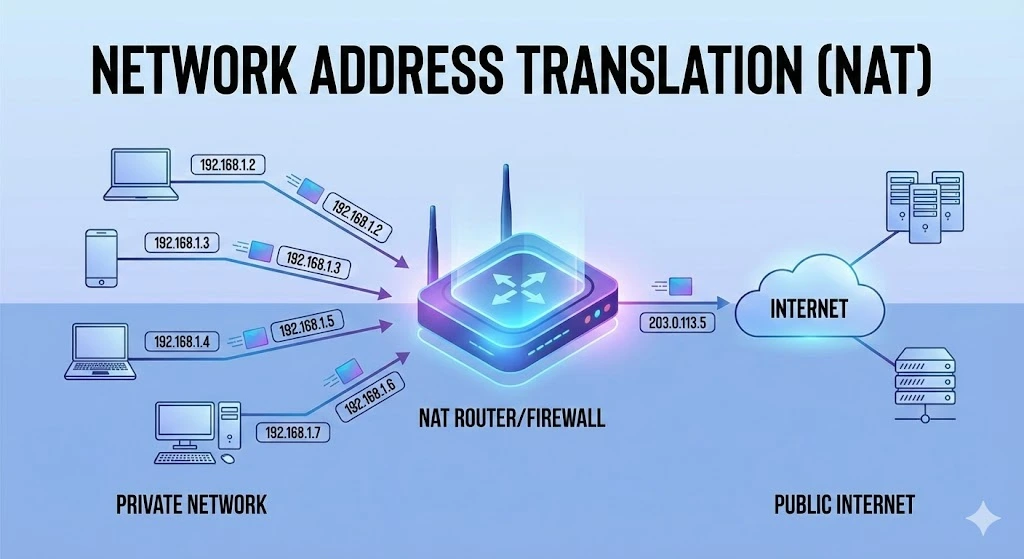
Comprensión de la traducción de direcciones de red (NAT)
En las redes informáticas, gestionar las direcciones IP de forma eficiente es fundamental para garantizar una comunicación fluida entre los dispositivos. Una de las tecnologías clave que ha surgido para afrontar este desafío es la Traducción de Direcciones de Red (NAT, por sus siglas en inglés). En este artículo explicamos qué es NAT, cómo funciona, sus distintos tipos, así como sus ventajas y limitaciones. ¿Qué es la traducción deRead more Related Posts Desbloqueando la privacidad digital con una red privada virtual (VPN) ¿Qué es una VPN? Una red privada virtual (VPN) es una tecnología que permite a los usuarios crear una conexión Comprensión de la traducción de direcciones de red (NAT) En las redes informáticas, gestionar las direcciones IP de forma eficiente es fundamental para garantizar una comunicación fluida entre los ¿Por qué Malasia se está convirtiendo en un centro neurálgico para la infraestructura de nube e IA? Malasia se está convirtiendo en uno de los mercados de crecimiento de centros de datos más importantes del Sudeste Asiático. .related-post {} .related-post .post-list { text-align: left; } .related-post .post-list .item { margin: 5px; padding: 10px; } .related-post .headline { font-size: 18px !important; color: #999999 !important; } .related-post .post-list .item .post_thumb { max-height: 220px; margin: 10px 0px; padding: 0px; display: block; } .related-post .post-list .item .post_title { font-size: 16px; color: #3f3f3f; margin: 10px 0px; padding: 0px; display: block; text-decoration: none; } .related-post .post-list .item .post_excerpt { font-size: 13px; color: #3f3f3f; margin: 10px 0px; padding: 0px; display: block; text-decoration: none; } @media only screen and (min-width: 1024px) { .related-post .post-list .item { width: 30%; } } @media only screen and (min-width: 768px) and (max-width: 1023px) { .related-post .post-list .item { width: 90%; } } @media only screen and (min-width: 0px) and (max-width: 767px) { .related-post .post-list .item { width: 90%; } }
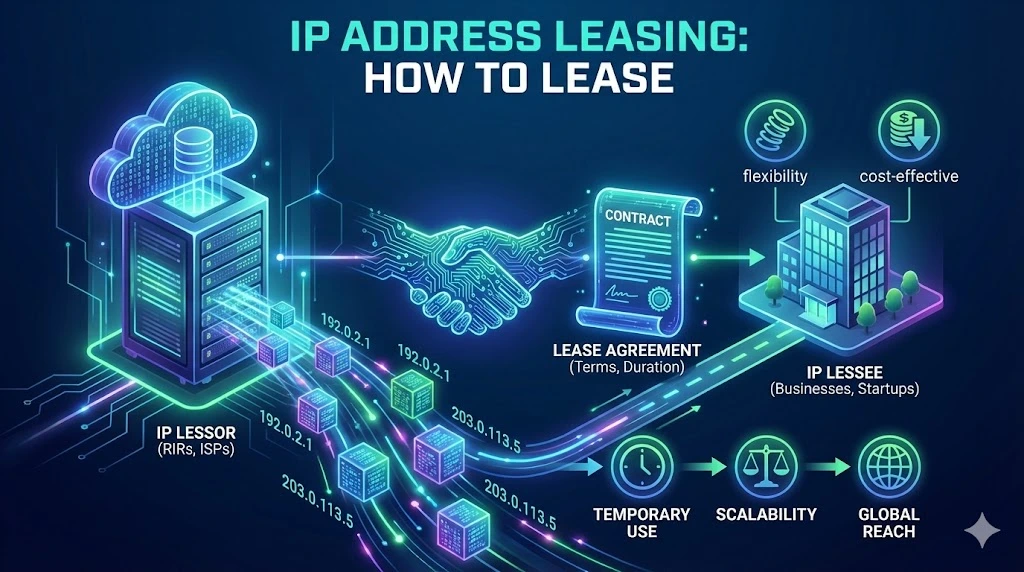
Arrendamiento de direcciones IP: Cómo arrendar direcciones IP
El mundo digital en el que nos movemos hoy depende en gran medida de las direcciones IP, identificadores únicos asignados a los dispositivos conectados a internet o a una red local. A medida que la demanda de direcciones IP sigue aumentando, empresas y particulares exploran diversas opciones para obtener los recursos necesarios. Un método cada vez más popular es el arrendamiento de direcciones IP. Este artículo profundiza en elRead more Related Posts Desbloqueando la privacidad digital con una red privada virtual (VPN) ¿Qué es una VPN? Una red privada virtual (VPN) es una tecnología que permite a los usuarios crear una conexión Comprensión de la traducción de direcciones de red (NAT) En las redes informáticas, gestionar las direcciones IP de forma eficiente es fundamental para garantizar una comunicación fluida entre los ¿Por qué Malasia se está convirtiendo en un centro neurálgico para la infraestructura de nube e IA? Malasia se está convirtiendo en uno de los mercados de crecimiento de centros de datos más importantes del Sudeste Asiático. .related-post {} .related-post .post-list { text-align: left; } .related-post .post-list .item { margin: 5px; padding: 10px; } .related-post .headline { font-size: 18px !important; color: #999999 !important; } .related-post .post-list .item .post_thumb { max-height: 220px; margin: 10px 0px; padding: 0px; display: block; } .related-post .post-list .item .post_title { font-size: 16px; color: #3f3f3f; margin: 10px 0px; padding: 0px; display: block; text-decoration: none; } .related-post .post-list .item .post_excerpt { font-size: 13px; color: #3f3f3f; margin: 10px 0px; padding: 0px; display: block; text-decoration: none; } @media only screen and (min-width: 1024px) { .related-post .post-list .item { width: 30%; } } @media only screen and (min-width: 768px) and (max-width: 1023px) { .related-post .post-list .item { width: 90%; } } @media only screen and (min-width: 0px) and (max-width: 767px) { .related-post .post-list .item { width: 90%; } }
¿Qué es el agotamiento de direcciones IPv4?
IPv4 es la versión inicial del Protocolo de Internet (IP), capaz de generar 4.300 millones de posibles direcciones IPv4. Sin embargo, muchas de estas direcciones están reservadas para fines específicos, como investigación y desarrollo. Esto deja un conjunto limitado disponible para organizaciones e individuos en todo el mundo. Con el crecimiento exponencial de Internet, la demanda de direcciones IPv4 se ha disparado. Esto provocó una rápida disminución de lasRead more Related Posts Desbloqueando la privacidad digital con una red privada virtual (VPN) ¿Qué es una VPN? Una red privada virtual (VPN) es una tecnología que permite a los usuarios crear una conexión Comprensión de la traducción de direcciones de red (NAT) En las redes informáticas, gestionar las direcciones IP de forma eficiente es fundamental para garantizar una comunicación fluida entre los Arrendamiento de direcciones IP: Cómo arrendar direcciones IP El mundo digital en el que nos movemos hoy depende en gran medida de las direcciones IP, identificadores únicos asignados .related-post {} .related-post .post-list { text-align: left; } .related-post .post-list .item { margin: 5px; padding: 10px; } .related-post .headline { font-size: 18px !important; color: #999999 !important; } .related-post .post-list .item .post_thumb { max-height: 220px; margin: 10px 0px; padding: 0px; display: block; } .related-post .post-list .item .post_title { font-size: 16px; color: #3f3f3f; margin: 10px 0px; padding: 0px; display: block; text-decoration: none; } .related-post .post-list .item .post_excerpt { font-size: 13px; color: #3f3f3f; margin: 10px 0px; padding: 0px; display: block; text-decoration: none; } @media only screen and (min-width: 1024px) { .related-post .post-list .item { width: 30%; } } @media only screen and (min-width: 768px) and (max-width: 1023px) { .related-post .post-list .item { width: 90%; } } @media only screen and (min-width: 0px) and (max-width: 767px) { .related-post .post-list .item { width: 90%; } }
