Comprendre l’infrastructure informatique : l’épine dorsale des entreprises modernes
 Stephanie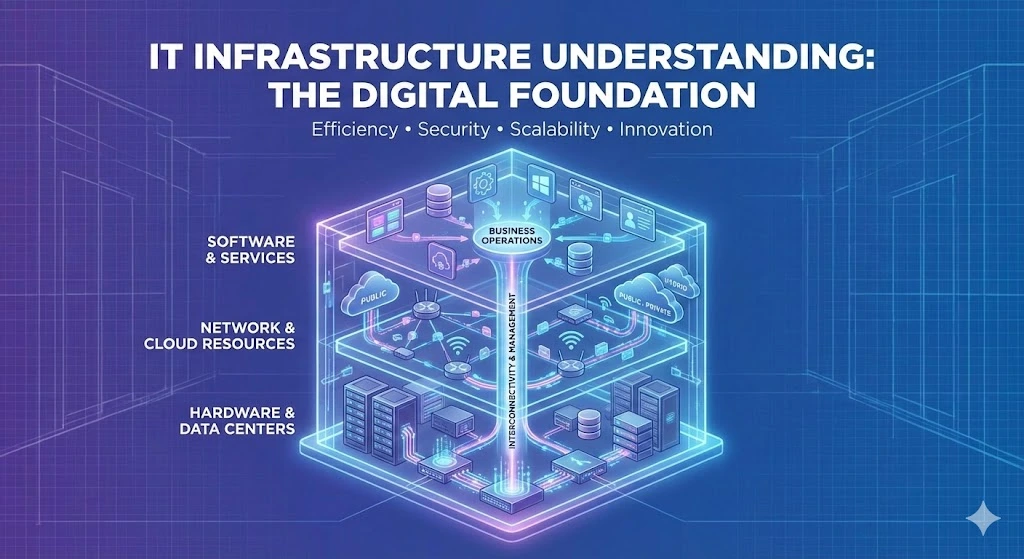
Une infrastructure informatique robuste est essentielle à la réussite de toute entreprise à l’ère du numérique. Elle constitue le socle sur lequel les entreprises bâtissent leurs opérations quotidiennes, garantissant le bon fonctionnement de l’ensemble de leurs activités, de la gestion des processus internes aux interactions avec les clients. Mais qu’est-ce qu’une infrastructure informatique exactement, et pourquoi est-elle si indispensable ?
Table of Contents
Cet article vous présentera les éléments clés de l’infrastructure informatique et son importance dans le paysage commercial moderne.
What is IT Infrastructure?
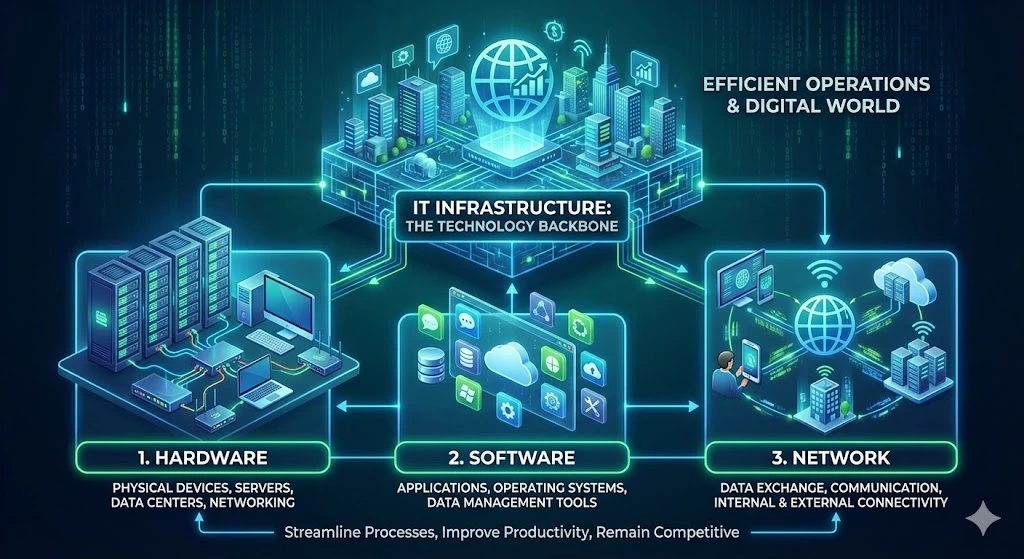
IT infrastructure refers to the collection of hardware, software, networks, and services required for an organization to operate efficiently in the digital world. Essentially, a company’s technology backbone supports all operations, allowing businesses to streamline processes, improve productivity, and remain competitive in a fast-evolving market.
IT infrastructure can be broadly categorized into three components:
1. Hardware: This includes physical devices such as servers, data centers, computers, and networking equipment (routers, switches, etc.) that form the core of IT operations.
2. Software: The applications and operating systems that run on hardware, providing businesses with the tools they need for communication, data management, and other functions.
3. Network: This enables data exchange and communication between devices, systems, and users, both internally and externally.
Composantes clés de l'infrastructure informatique
1. Servers:
Servers are the heart of IT infrastructure. They store, process, and manage data, ensuring that employees, systems, and customers can access information quickly and reliably. Businesses may rely on on-premises servers or cloud-based servers, depending on their size and needs.
2. Networking Equipment:
Routers, switches, and firewalls are essential for connecting different devices, systems, and users within an organization. They manage the flow of information and secure networks against cyber threats.
3. Data Storage:
Storing data securely and efficiently is a critical aspect of IT infrastructure. Businesses use storage solutions such as Network Attached Storage (NAS) or cloud storage to ensure that data is always available and protected from potential threats or disasters.
4. Software and Applications:
Operating systems, databases, and specialized applications all contribute to business efficiency. Whether it’s enterprise resource planning (ERP) systems, customer relationship management (CRM) software, or cloud-based collaboration tools, software plays an integral role in business operations.
5. Cloud Infrastructure:
Increasingly, businesses are turning to cloud infrastructure to reduce the cost and complexity of managing physical servers. Cloud computing enables businesses to scale their IT resources on demand and provides flexibility for remote access.
6. Security Systems:
Cybersecurity is a crucial aspect of IT infrastructure. Firewalls, encryption, intrusion detection systems, and antivirus software protect sensitive information from cyberattacks and ensure compliance with data protection regulations.
Why IT Infrastructure Matters for Businesses
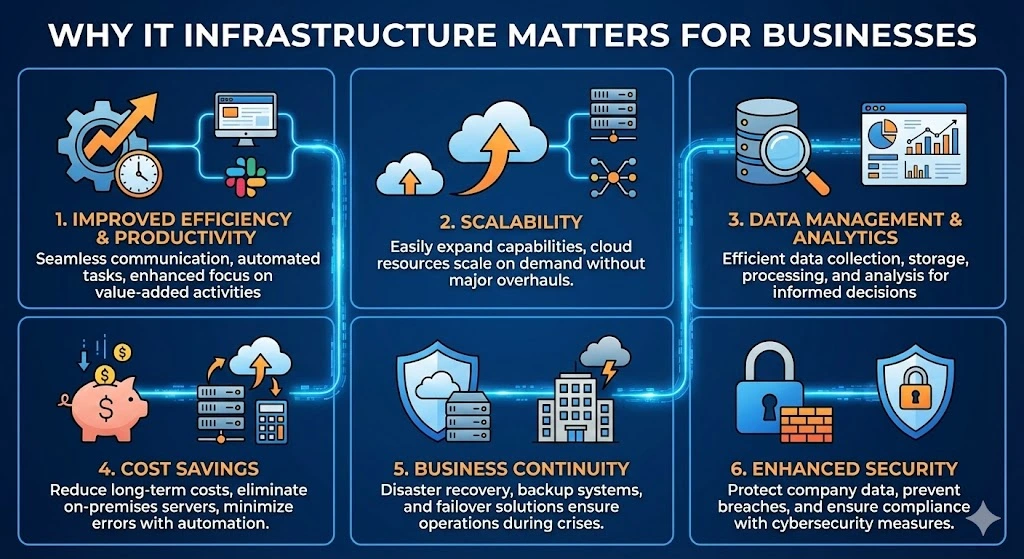
1. Improved Efficiency and Productivity:
A well-designed IT infrastructure ensures seamless communication between systems, automates manual tasks and allows employees to focus on more value-added activities. The integration of advanced software and collaboration tools enhances overall productivity.
2. Scalability:
As businesses grow, their IT needs evolve. A scalable IT infrastructure allows companies to expand their technology capabilities without major overhauls or disruptions. This is particularly important in cloud computing environments, where resources can be quickly scaled up or down based on demand.
3. Data Management and Analytics:
Modern businesses rely heavily on data to make informed decisions. A strong IT infrastructure enables efficient data collection, storage, and processing, providing valuable insights that can drive business strategy. Proper infrastructure also ensures that data remains secure and accessible for analysis.
4. Cost Savings:
By investing in the right infrastructure, businesses can reduce long-term costs. Cloud solutions, for example, eliminate the need for expensive on-premises servers, while automation tools can reduce labor costs and minimize errors.
5. Business Continuity:
A reliable IT infrastructure helps businesses remain operational during crises or unforeseen events. Disaster recovery plans, backup systems, and failover solutions are essential for ensuring business continuity in the face of cyberattacks, hardware failures, or natural disasters.
6. Enhanced Security:
With cyber threats on the rise, protecting company data and customer information is more important than ever. A strong IT infrastructure that incorporates cybersecurity measures helps prevent data breaches and ensures compliance with legal regulations.
Trusted IPv4 Leasing for Business Growth
Get enterprise-grade IPv4 space quickly, with seamless deployment and end-to-end management.
Get Started with i.leaseArtículos relacionados
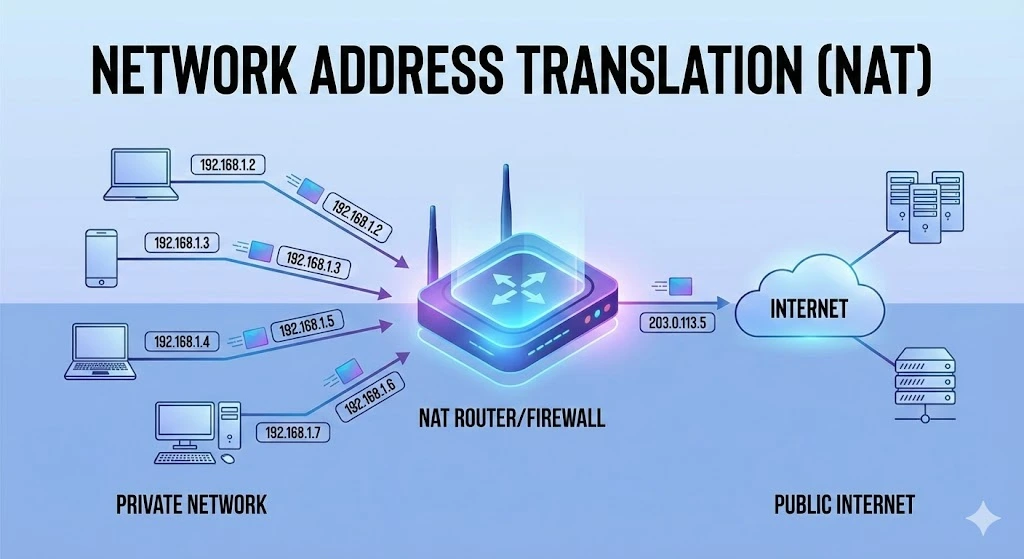
Comprensión de la traducción de direcciones de red (NAT)
En las redes informáticas, gestionar las direcciones IP de forma eficiente es fundamental para garantizar una comunicación fluida entre los dispositivos. Una de las tecnologías clave que ha surgido para afrontar este desafío es la Traducción de Direcciones de Red (NAT, por sus siglas en inglés). En este artículo explicamos qué es NAT, cómo funciona, sus distintos tipos, así como sus ventajas y limitaciones. ¿Qué es la traducción deRead more Related Posts Desbloqueando la privacidad digital con una red privada virtual (VPN) ¿Qué es una VPN? Una red privada virtual (VPN) es una tecnología que permite a los usuarios crear una conexión Comprensión de la traducción de direcciones de red (NAT) En las redes informáticas, gestionar las direcciones IP de forma eficiente es fundamental para garantizar una comunicación fluida entre los ¿Por qué Malasia se está convirtiendo en un centro neurálgico para la infraestructura de nube e IA? Malasia se está convirtiendo en uno de los mercados de crecimiento de centros de datos más importantes del Sudeste Asiático. .related-post {} .related-post .post-list { text-align: left; } .related-post .post-list .item { margin: 5px; padding: 10px; } .related-post .headline { font-size: 18px !important; color: #999999 !important; } .related-post .post-list .item .post_thumb { max-height: 220px; margin: 10px 0px; padding: 0px; display: block; } .related-post .post-list .item .post_title { font-size: 16px; color: #3f3f3f; margin: 10px 0px; padding: 0px; display: block; text-decoration: none; } .related-post .post-list .item .post_excerpt { font-size: 13px; color: #3f3f3f; margin: 10px 0px; padding: 0px; display: block; text-decoration: none; } @media only screen and (min-width: 1024px) { .related-post .post-list .item { width: 30%; } } @media only screen and (min-width: 768px) and (max-width: 1023px) { .related-post .post-list .item { width: 90%; } } @media only screen and (min-width: 0px) and (max-width: 767px) { .related-post .post-list .item { width: 90%; } }
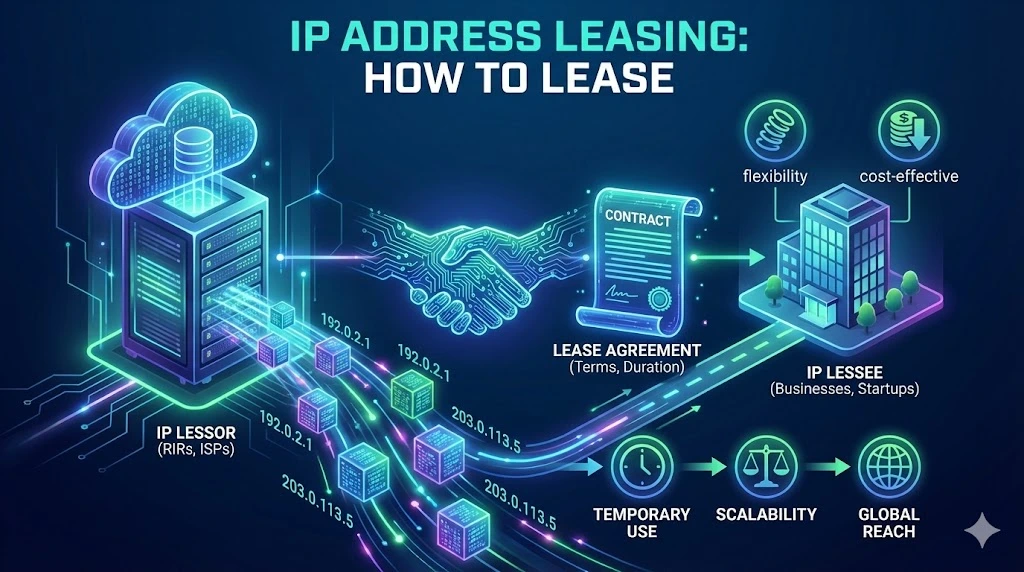
Arrendamiento de direcciones IP: Cómo arrendar direcciones IP
El mundo digital en el que nos movemos hoy depende en gran medida de las direcciones IP, identificadores únicos asignados a los dispositivos conectados a internet o a una red local. A medida que la demanda de direcciones IP sigue aumentando, empresas y particulares exploran diversas opciones para obtener los recursos necesarios. Un método cada vez más popular es el arrendamiento de direcciones IP. Este artículo profundiza en elRead more Related Posts Desbloqueando la privacidad digital con una red privada virtual (VPN) ¿Qué es una VPN? Una red privada virtual (VPN) es una tecnología que permite a los usuarios crear una conexión Comprensión de la traducción de direcciones de red (NAT) En las redes informáticas, gestionar las direcciones IP de forma eficiente es fundamental para garantizar una comunicación fluida entre los ¿Por qué Malasia se está convirtiendo en un centro neurálgico para la infraestructura de nube e IA? Malasia se está convirtiendo en uno de los mercados de crecimiento de centros de datos más importantes del Sudeste Asiático. .related-post {} .related-post .post-list { text-align: left; } .related-post .post-list .item { margin: 5px; padding: 10px; } .related-post .headline { font-size: 18px !important; color: #999999 !important; } .related-post .post-list .item .post_thumb { max-height: 220px; margin: 10px 0px; padding: 0px; display: block; } .related-post .post-list .item .post_title { font-size: 16px; color: #3f3f3f; margin: 10px 0px; padding: 0px; display: block; text-decoration: none; } .related-post .post-list .item .post_excerpt { font-size: 13px; color: #3f3f3f; margin: 10px 0px; padding: 0px; display: block; text-decoration: none; } @media only screen and (min-width: 1024px) { .related-post .post-list .item { width: 30%; } } @media only screen and (min-width: 768px) and (max-width: 1023px) { .related-post .post-list .item { width: 90%; } } @media only screen and (min-width: 0px) and (max-width: 767px) { .related-post .post-list .item { width: 90%; } }
¿Qué es el agotamiento de direcciones IPv4?
IPv4 es la versión inicial del Protocolo de Internet (IP), capaz de generar 4.300 millones de posibles direcciones IPv4. Sin embargo, muchas de estas direcciones están reservadas para fines específicos, como investigación y desarrollo. Esto deja un conjunto limitado disponible para organizaciones e individuos en todo el mundo. Con el crecimiento exponencial de Internet, la demanda de direcciones IPv4 se ha disparado. Esto provocó una rápida disminución de lasRead more Related Posts Desbloqueando la privacidad digital con una red privada virtual (VPN) ¿Qué es una VPN? Una red privada virtual (VPN) es una tecnología que permite a los usuarios crear una conexión Comprensión de la traducción de direcciones de red (NAT) En las redes informáticas, gestionar las direcciones IP de forma eficiente es fundamental para garantizar una comunicación fluida entre los Arrendamiento de direcciones IP: Cómo arrendar direcciones IP El mundo digital en el que nos movemos hoy depende en gran medida de las direcciones IP, identificadores únicos asignados .related-post {} .related-post .post-list { text-align: left; } .related-post .post-list .item { margin: 5px; padding: 10px; } .related-post .headline { font-size: 18px !important; color: #999999 !important; } .related-post .post-list .item .post_thumb { max-height: 220px; margin: 10px 0px; padding: 0px; display: block; } .related-post .post-list .item .post_title { font-size: 16px; color: #3f3f3f; margin: 10px 0px; padding: 0px; display: block; text-decoration: none; } .related-post .post-list .item .post_excerpt { font-size: 13px; color: #3f3f3f; margin: 10px 0px; padding: 0px; display: block; text-decoration: none; } @media only screen and (min-width: 1024px) { .related-post .post-list .item { width: 30%; } } @media only screen and (min-width: 768px) and (max-width: 1023px) { .related-post .post-list .item { width: 90%; } } @media only screen and (min-width: 0px) and (max-width: 767px) { .related-post .post-list .item { width: 90%; } }
