IPv6 address allocation: what you need to know
 Stephanie
Table of Contents
- IPv6 allocation rules ensure fair global distribution and help organisations prepare their networks for long-term scalability.
- Careful planning, documentation, and good management practices are essential for requesting and using IPv6 space effectively.
How IPv6 addresses are assigned
IPv6 addresses are assigned by a global system. When requesting IPv6 space, an organisation requests information about its network, technology requirements, as well as long-term goals. Typical regional policies demand that one present a deployment plan within a timeframe, efficient use of the allocated space in the event allocated space exists, and appropriate use of routing, aggregation, and documentation policies.
What organisations get
Internet service providers usually receive a /32 block, which offers large-scale address capacity for customer services. Smaller enterprises or networks often receive a /48 block, which still provides flexibility for internal growth. Once allocated, organisations are responsible for managing the addresses properly. This involves setting up hierarchical addressing plans, preparing for future expansion, maintaining accurate routing announcements, and managing reverse DNS records. Good management strengthens not only the local network but the stability of the wider internet.
Allocation duties
IPv6 allocations are not dependent on IPv4 holdings, thus even non-IPv4 organisations are eligible to apply. Obtained address space must be put to optimum use upon reception. It can be audited by regional registries to recover idle or unused space, if necessary, in order for resources to be equally assigned. It makes the address ecosystem sustainable as well as balanced.
Why IPv4 remains relevant even in the IPv6 era
While IPv6 holds the key to the future, IPv4, however, still remains central in the modern-day operation of the internet. The vast majority of global networks, devices, and services continue to utilize IPv4, predominantly because the vast majority of systems, applications, and infrastructure are yet to be migrated to IPv6. For the vast majority of organisations, keeping the environment ‘dualstacked,’ such that IPv4 and IPv6 are run side by side, remains essential in the continuation of unfettered connectivity, compatibility, and, crucially, a gradual migration. IPv4 continues to be central in regards to keeping the ‘door open’ to the legacy system, reaching non-IPv6-capable networks, as well as transitioning in as gradual a process as possible. While IPv6 deployment becomes ubiquitous in the long run, IPv4 management will continue in the same manner, thus the importance of organisations treating, governing, and respecting the two protocols equally.
Trusted IPv4 Leasing for Business Growth
Get enterprise-grade IPv4 space quickly, with seamless deployment and end-to-end management.
Buy IPv4 with i.leaseFAQs
Who can apply for IPv6 addresses?
Organisations such as internet service providers, companies, research networks, and government bodies that need global address space can apply through their regional registry.
How much IPv6 address space is usually assigned?
It depends on what the organisation requires, although service providers tend to get a /32 block and smaller networks may receive a /48.
Is IPv6 linked to IPv4?
No. IPv6 allocations are separate, and organisations that don’t have IPv4 can request IPv6 addresses.
What if the IPv6 space isn't employed?
Allocations may be reviewed, and underutilised space can be reclaimed to maintain fairness and efficiency.
Why IPv6 allocation matters now?
It allows organisations to scale, adopt new technologies, and avoid the technical and financial limits posed by IPv4 exhaustion.
Artículos relacionados
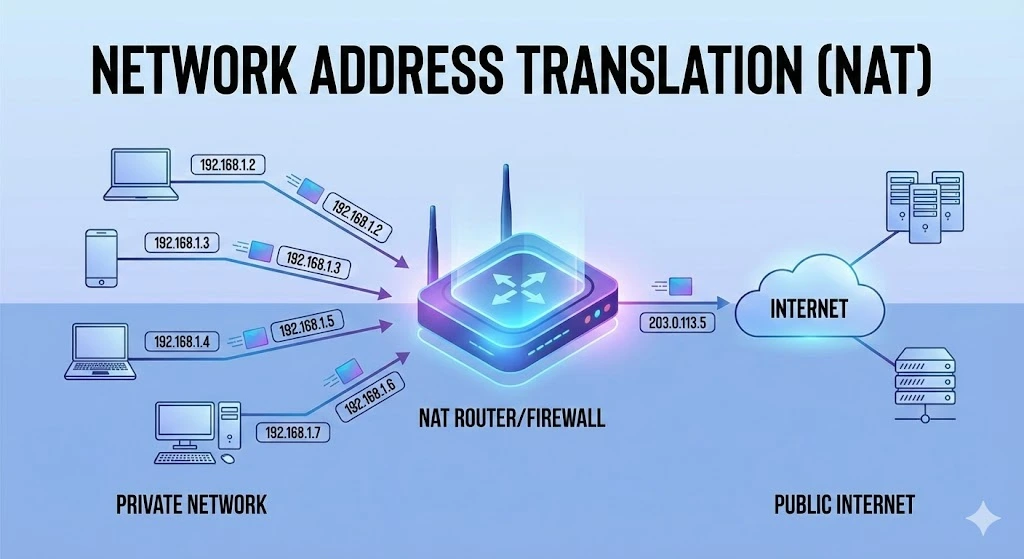
Comprensión de la traducción de direcciones de red (NAT)
En las redes informáticas, gestionar las direcciones IP de forma eficiente es fundamental para garantizar una comunicación fluida entre los dispositivos. Una de las tecnologías clave que ha surgido para afrontar este desafío es la Traducción de Direcciones de Red (NAT, por sus siglas en inglés). En este artículo explicamos qué es NAT, cómo funciona, sus distintos tipos, así como sus ventajas y limitaciones. ¿Qué es la traducción deRead more Related Posts Desbloqueando la privacidad digital con una red privada virtual (VPN) ¿Qué es una VPN? Una red privada virtual (VPN) es una tecnología que permite a los usuarios crear una conexión Comprensión de la traducción de direcciones de red (NAT) En las redes informáticas, gestionar las direcciones IP de forma eficiente es fundamental para garantizar una comunicación fluida entre los ¿Por qué Malasia se está convirtiendo en un centro neurálgico para la infraestructura de nube e IA? Malasia se está convirtiendo en uno de los mercados de crecimiento de centros de datos más importantes del Sudeste Asiático. .related-post {} .related-post .post-list { text-align: left; } .related-post .post-list .item { margin: 5px; padding: 10px; } .related-post .headline { font-size: 18px !important; color: #999999 !important; } .related-post .post-list .item .post_thumb { max-height: 220px; margin: 10px 0px; padding: 0px; display: block; } .related-post .post-list .item .post_title { font-size: 16px; color: #3f3f3f; margin: 10px 0px; padding: 0px; display: block; text-decoration: none; } .related-post .post-list .item .post_excerpt { font-size: 13px; color: #3f3f3f; margin: 10px 0px; padding: 0px; display: block; text-decoration: none; } @media only screen and (min-width: 1024px) { .related-post .post-list .item { width: 30%; } } @media only screen and (min-width: 768px) and (max-width: 1023px) { .related-post .post-list .item { width: 90%; } } @media only screen and (min-width: 0px) and (max-width: 767px) { .related-post .post-list .item { width: 90%; } }
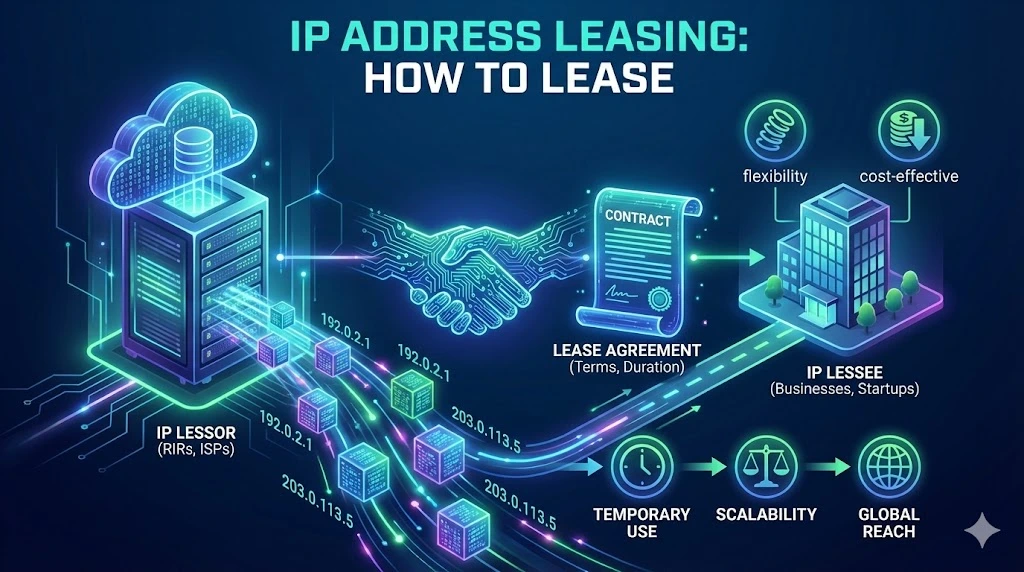
Arrendamiento de direcciones IP: Cómo arrendar direcciones IP
El mundo digital en el que nos movemos hoy depende en gran medida de las direcciones IP, identificadores únicos asignados a los dispositivos conectados a internet o a una red local. A medida que la demanda de direcciones IP sigue aumentando, empresas y particulares exploran diversas opciones para obtener los recursos necesarios. Un método cada vez más popular es el arrendamiento de direcciones IP. Este artículo profundiza en elRead more Related Posts Desbloqueando la privacidad digital con una red privada virtual (VPN) ¿Qué es una VPN? Una red privada virtual (VPN) es una tecnología que permite a los usuarios crear una conexión Comprensión de la traducción de direcciones de red (NAT) En las redes informáticas, gestionar las direcciones IP de forma eficiente es fundamental para garantizar una comunicación fluida entre los ¿Por qué Malasia se está convirtiendo en un centro neurálgico para la infraestructura de nube e IA? Malasia se está convirtiendo en uno de los mercados de crecimiento de centros de datos más importantes del Sudeste Asiático. .related-post {} .related-post .post-list { text-align: left; } .related-post .post-list .item { margin: 5px; padding: 10px; } .related-post .headline { font-size: 18px !important; color: #999999 !important; } .related-post .post-list .item .post_thumb { max-height: 220px; margin: 10px 0px; padding: 0px; display: block; } .related-post .post-list .item .post_title { font-size: 16px; color: #3f3f3f; margin: 10px 0px; padding: 0px; display: block; text-decoration: none; } .related-post .post-list .item .post_excerpt { font-size: 13px; color: #3f3f3f; margin: 10px 0px; padding: 0px; display: block; text-decoration: none; } @media only screen and (min-width: 1024px) { .related-post .post-list .item { width: 30%; } } @media only screen and (min-width: 768px) and (max-width: 1023px) { .related-post .post-list .item { width: 90%; } } @media only screen and (min-width: 0px) and (max-width: 767px) { .related-post .post-list .item { width: 90%; } }
¿Qué es el agotamiento de direcciones IPv4?
IPv4 es la versión inicial del Protocolo de Internet (IP), capaz de generar 4.300 millones de posibles direcciones IPv4. Sin embargo, muchas de estas direcciones están reservadas para fines específicos, como investigación y desarrollo. Esto deja un conjunto limitado disponible para organizaciones e individuos en todo el mundo. Con el crecimiento exponencial de Internet, la demanda de direcciones IPv4 se ha disparado. Esto provocó una rápida disminución de lasRead more Related Posts Desbloqueando la privacidad digital con una red privada virtual (VPN) ¿Qué es una VPN? Una red privada virtual (VPN) es una tecnología que permite a los usuarios crear una conexión Comprensión de la traducción de direcciones de red (NAT) En las redes informáticas, gestionar las direcciones IP de forma eficiente es fundamental para garantizar una comunicación fluida entre los Arrendamiento de direcciones IP: Cómo arrendar direcciones IP El mundo digital en el que nos movemos hoy depende en gran medida de las direcciones IP, identificadores únicos asignados .related-post {} .related-post .post-list { text-align: left; } .related-post .post-list .item { margin: 5px; padding: 10px; } .related-post .headline { font-size: 18px !important; color: #999999 !important; } .related-post .post-list .item .post_thumb { max-height: 220px; margin: 10px 0px; padding: 0px; display: block; } .related-post .post-list .item .post_title { font-size: 16px; color: #3f3f3f; margin: 10px 0px; padding: 0px; display: block; text-decoration: none; } .related-post .post-list .item .post_excerpt { font-size: 13px; color: #3f3f3f; margin: 10px 0px; padding: 0px; display: block; text-decoration: none; } @media only screen and (min-width: 1024px) { .related-post .post-list .item { width: 30%; } } @media only screen and (min-width: 768px) and (max-width: 1023px) { .related-post .post-list .item { width: 90%; } } @media only screen and (min-width: 0px) and (max-width: 767px) { .related-post .post-list .item { width: 90%; } }
