IP Subnetting and CIDR: A Guide for Internet Professionals
 Chan
Chan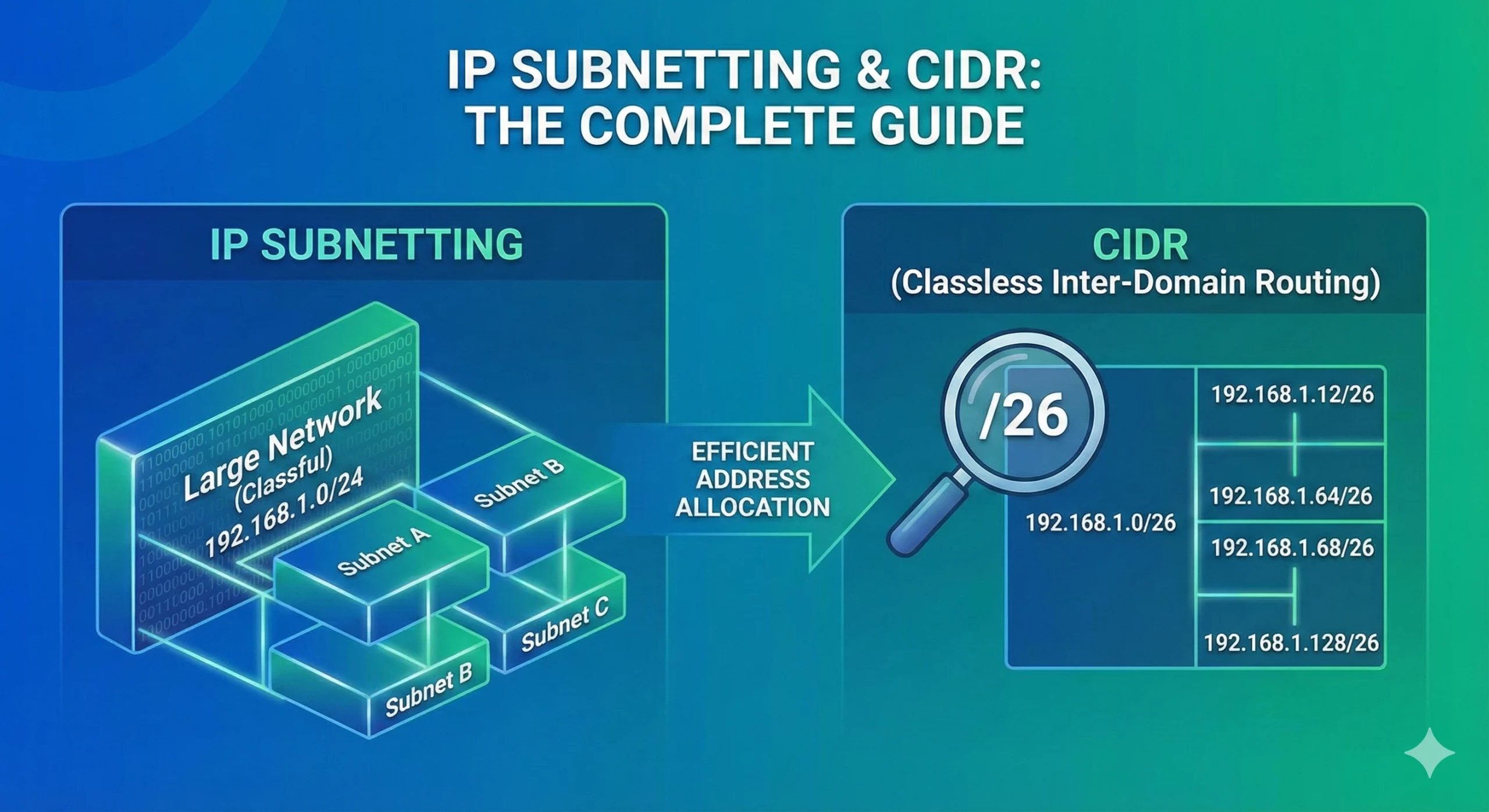
In Internet communication, IP addressing is a cornerstone technology that allows devices to connect and exchange information seamlessly. For Internet Service Providers (ISPs) and IT professionals, understanding IP subnetting and CIDR (Classless Inter-Domain Routing) is essential for efficient network management and scalability.
Table of Contents
This article delves into IP subnetting and CIDR concepts, highlighting their significance and practical application.
What Is IP Subnetting?
IP subnetting is the process of dividing a large IP network into smaller, more manageable segments called subnets. It’s like splitting a large parcel of land into smaller lots for specific use, allowing better organization and utilization.
Why Subnet?
Efficient Use of IP Addresses: With the finite IPv4 address space, subnetting ensures that addresses are allocated according to the specific needs of different network segments.
Improved Security: By segmenting networks, sensitive data can be isolated, reducing the risk of unauthorized access.
Reduced Network Traffic: Subnetting localizes traffic within each subnet, reducing congestion and improving performance.
CIDR: Classless Inter-Domain Routing
Introduced in the 1990s, CIDR replaced the rigid class-based system of IP addressing. CIDR provides a more flexible and efficient way to allocate IP addresses by allowing subnet masks of variable lengths.
Key Features of CIDR
Variable-Length Subnet Masking (VLSM): CIDR allows network administrators to define subnet masks of varying lengths, optimizing address utilization.
Aggregation (Supernetting): CIDR enables route aggregation, combining multiple IP networks into a single, summarized route. This reduces the size of routing tables and improves router efficiency.
Elimination of Classes: Traditional IP classes (A, B, C) are no longer restrictive; with CIDR, the network portion of an address is defined by the prefix length (e.g., /8, /16, /24).
Practical Applications of Subnetting and CIDR
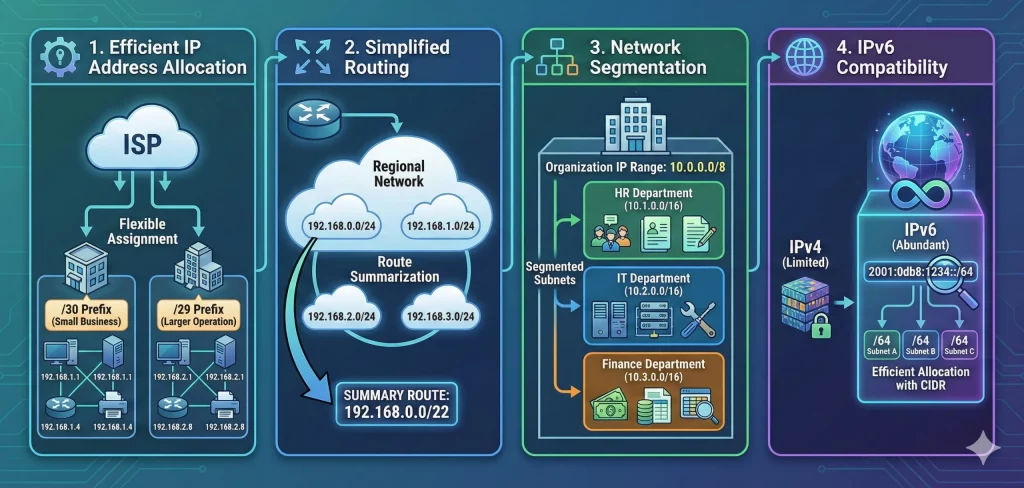
1. Efficient IP Address Allocation
ISPs often face the challenge of allocating IP addresses efficiently to customers. With CIDR, an ISP can allocate prefixes such as /30 for small businesses needing 4 addresses or /29 for slightly larger operations requiring 8 addresses.
2. Simplified Routing
Subnetting combined with CIDR allows for route summarization. For example, an ISP managing several networks in the range 192.168.0.0/24 through 192.168.3.0/24 can summarize these into a single route: 192.168.0.0/22.
3. Network Segmentation
Organizations can segment their networks by departments or functions. For instance, an IP range like 10.0.0.0/8 can be divided into subnets for HR (10.1.0.0/16), IT (10.2.0.0/16), and so on.
4. IPv6 Compatibility
CIDR is critical in IPv6, where addresses are plentiful, but efficient allocation is still necessary. With its 128-bit addressing scheme, IPv6 uses CIDR to break large address spaces into usable subnets (e.g., 2001:0db8:1234::/64).
In a nutshell
IP subnetting and CIDR are indispensable tools for managing modern networks. They enable ISPs and IT professionals to allocate IP addresses efficiently, reduce network congestion, and simplify routing. Mastering these concepts is crucial in the era of increasing internet connectivity and the transition to IPv6. With thoughtful planning and the right tools, subnetting and CIDR can significantly enhance network performance and scalability.
Trusted IPv4 Leasing for Business Growth
Get enterprise-grade IPv4 space quickly, with seamless deployment and end-to-end management.
Get Started with i.leaseArtículos relacionados
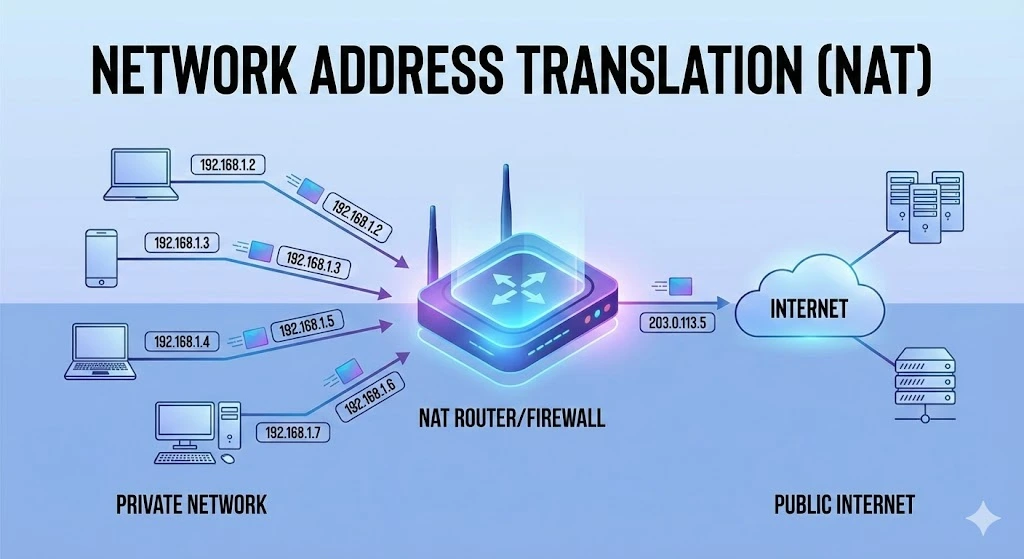
Comprensión de la traducción de direcciones de red (NAT)
En las redes informáticas, gestionar las direcciones IP de forma eficiente es fundamental para garantizar una comunicación fluida entre los dispositivos. Una de las tecnologías clave que ha surgido para afrontar este desafío es la Traducción de Direcciones de Red (NAT, por sus siglas en inglés). En este artículo explicamos qué es NAT, cómo funciona, sus distintos tipos, así como sus ventajas y limitaciones. ¿Qué es la traducción deRead more Related Posts Desbloqueando la privacidad digital con una red privada virtual (VPN) ¿Qué es una VPN? Una red privada virtual (VPN) es una tecnología que permite a los usuarios crear una conexión Comprensión de la traducción de direcciones de red (NAT) En las redes informáticas, gestionar las direcciones IP de forma eficiente es fundamental para garantizar una comunicación fluida entre los ¿Por qué Malasia se está convirtiendo en un centro neurálgico para la infraestructura de nube e IA? Malasia se está convirtiendo en uno de los mercados de crecimiento de centros de datos más importantes del Sudeste Asiático. .related-post {} .related-post .post-list { text-align: left; } .related-post .post-list .item { margin: 5px; padding: 10px; } .related-post .headline { font-size: 18px !important; color: #999999 !important; } .related-post .post-list .item .post_thumb { max-height: 220px; margin: 10px 0px; padding: 0px; display: block; } .related-post .post-list .item .post_title { font-size: 16px; color: #3f3f3f; margin: 10px 0px; padding: 0px; display: block; text-decoration: none; } .related-post .post-list .item .post_excerpt { font-size: 13px; color: #3f3f3f; margin: 10px 0px; padding: 0px; display: block; text-decoration: none; } @media only screen and (min-width: 1024px) { .related-post .post-list .item { width: 30%; } } @media only screen and (min-width: 768px) and (max-width: 1023px) { .related-post .post-list .item { width: 90%; } } @media only screen and (min-width: 0px) and (max-width: 767px) { .related-post .post-list .item { width: 90%; } }
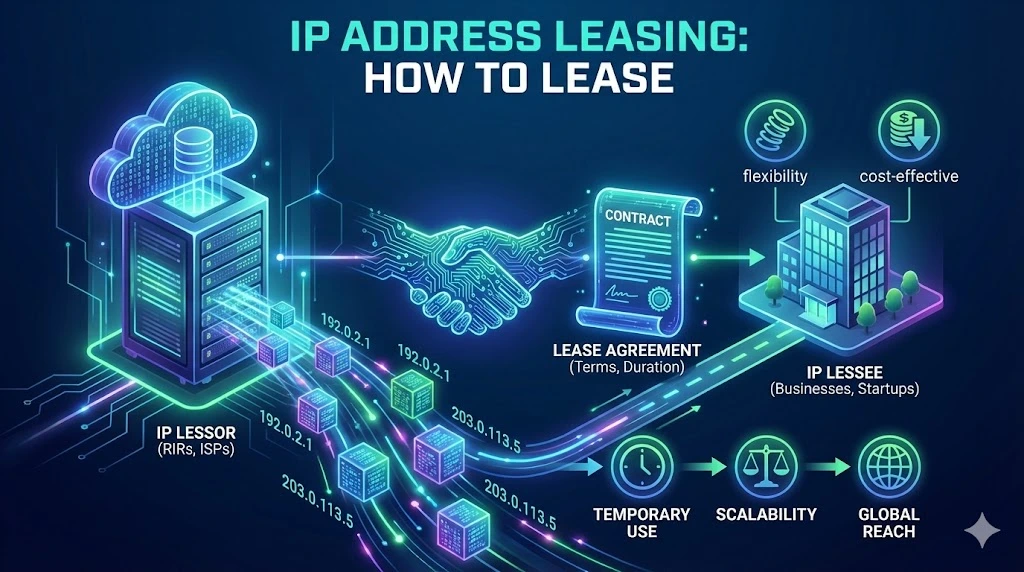
Arrendamiento de direcciones IP: Cómo arrendar direcciones IP
El mundo digital en el que nos movemos hoy depende en gran medida de las direcciones IP, identificadores únicos asignados a los dispositivos conectados a internet o a una red local. A medida que la demanda de direcciones IP sigue aumentando, empresas y particulares exploran diversas opciones para obtener los recursos necesarios. Un método cada vez más popular es el arrendamiento de direcciones IP. Este artículo profundiza en elRead more Related Posts Desbloqueando la privacidad digital con una red privada virtual (VPN) ¿Qué es una VPN? Una red privada virtual (VPN) es una tecnología que permite a los usuarios crear una conexión Comprensión de la traducción de direcciones de red (NAT) En las redes informáticas, gestionar las direcciones IP de forma eficiente es fundamental para garantizar una comunicación fluida entre los ¿Por qué Malasia se está convirtiendo en un centro neurálgico para la infraestructura de nube e IA? Malasia se está convirtiendo en uno de los mercados de crecimiento de centros de datos más importantes del Sudeste Asiático. .related-post {} .related-post .post-list { text-align: left; } .related-post .post-list .item { margin: 5px; padding: 10px; } .related-post .headline { font-size: 18px !important; color: #999999 !important; } .related-post .post-list .item .post_thumb { max-height: 220px; margin: 10px 0px; padding: 0px; display: block; } .related-post .post-list .item .post_title { font-size: 16px; color: #3f3f3f; margin: 10px 0px; padding: 0px; display: block; text-decoration: none; } .related-post .post-list .item .post_excerpt { font-size: 13px; color: #3f3f3f; margin: 10px 0px; padding: 0px; display: block; text-decoration: none; } @media only screen and (min-width: 1024px) { .related-post .post-list .item { width: 30%; } } @media only screen and (min-width: 768px) and (max-width: 1023px) { .related-post .post-list .item { width: 90%; } } @media only screen and (min-width: 0px) and (max-width: 767px) { .related-post .post-list .item { width: 90%; } }
¿Qué es el agotamiento de direcciones IPv4?
IPv4 es la versión inicial del Protocolo de Internet (IP), capaz de generar 4.300 millones de posibles direcciones IPv4. Sin embargo, muchas de estas direcciones están reservadas para fines específicos, como investigación y desarrollo. Esto deja un conjunto limitado disponible para organizaciones e individuos en todo el mundo. Con el crecimiento exponencial de Internet, la demanda de direcciones IPv4 se ha disparado. Esto provocó una rápida disminución de lasRead more Related Posts Desbloqueando la privacidad digital con una red privada virtual (VPN) ¿Qué es una VPN? Una red privada virtual (VPN) es una tecnología que permite a los usuarios crear una conexión Comprensión de la traducción de direcciones de red (NAT) En las redes informáticas, gestionar las direcciones IP de forma eficiente es fundamental para garantizar una comunicación fluida entre los Arrendamiento de direcciones IP: Cómo arrendar direcciones IP El mundo digital en el que nos movemos hoy depende en gran medida de las direcciones IP, identificadores únicos asignados .related-post {} .related-post .post-list { text-align: left; } .related-post .post-list .item { margin: 5px; padding: 10px; } .related-post .headline { font-size: 18px !important; color: #999999 !important; } .related-post .post-list .item .post_thumb { max-height: 220px; margin: 10px 0px; padding: 0px; display: block; } .related-post .post-list .item .post_title { font-size: 16px; color: #3f3f3f; margin: 10px 0px; padding: 0px; display: block; text-decoration: none; } .related-post .post-list .item .post_excerpt { font-size: 13px; color: #3f3f3f; margin: 10px 0px; padding: 0px; display: block; text-decoration: none; } @media only screen and (min-width: 1024px) { .related-post .post-list .item { width: 30%; } } @media only screen and (min-width: 768px) and (max-width: 1023px) { .related-post .post-list .item { width: 90%; } } @media only screen and (min-width: 0px) and (max-width: 767px) { .related-post .post-list .item { width: 90%; } }
