Combien de bits composent une adresse IPv4 ?
 Stephanie
Une adresse IPv4 comporte 32 bits. Mais pour bien comprendre ce que cela signifie, examinons ce que sont les bits et ce qu’est un espace d’adressage IP.
Table of Contents
1.0 C’est quoi des bits, au juste ?
“Bits ” is short for “binary digits.” A system that uses bits has two states: 0 and 1. By arranging bits in various patterns, we can have different number combinations that we can use as IP addresses.
The series of numbers below is an example of a 32 -bit address:
1000000.10101000.00000001.00001010
Notice that each section, separated by dots, has eight spaces in it. Four of these eight spaces make 32 bits.
Because 1000000.10101000.00000001.00001010 is difficult to read for humans, we represent these bits as decimal numbers on an IPv4 address. That binary combination, when converted to decimal, becomes: 192.168.1.10.
2.0 What is an address space?
Address space refers to the range of unique IP addresses that can be assigned. For example, in IPv4, the address space is the range of all possible ways that 32-bits can be combined.
Since IPv4 is a 32-bit system, you can calculate the possible combinations of IPv4 as follows: two to the power of 32. Therefore, the number of possible IPv4 combinations is 4,294,967,296.
In IPv6, the address space is the range of all possible 128-bit combinations. It’s a huge number: two to the power of 128. That’s a huge number that looks like this:
340,282,366,920,938,000,000,000,000,000,000,000,000
Because IPv6 holds such a big address space, it’s only natural that we want to transition to it. In fact, many companies and institutions are now investing in equipment and technology to shift to IPv6.
IPv6 was developed to address the limitations of the IPv4 address space. IPv6 addresses are typically written in the following format:
a. Hexadecimal: Using numbers and letters, as opposed to just numbers in IPv4.
b. Colons: Colons are used to separate values, unlike dots that are used in IPv4.
This is an example of an IPv6 address: 2001:0db8:85a3:0000:0000:8a2e:0370:7334.
This format holds a much larger address space. This expanded address space is designed to accommodate the growing number of devices and services connected to the internet.
3.0 Advantages of a larger bit size
a. Larger Address Space:
The most obvious advantage of having more bits is the ability to represent a larger range of unique values.
In the case of IPv6, the 128-bit address space provides a much larger number of unique addresses compared to the 32-bit address space of IPv4. This allows us an almost unlimited number of devices and networks to be connected to the Internet without running out of address space.
b. Addressing Flexibility:
With more bits, addressing schemes can be more structured. IPv6, for example, allows you to create multiple levels of subnets and hierarchical address assignment. This can help improve network management and organization.
c. Easier Address Assignment:
With IPv4, address shortages led to the use of techniques like Network Address Translation (NAT) to share a single public IP address among multiple devices. In IPv6, every device can have a unique address without the need for NAT.
d. Enhanced Security:
IPv6 includes built-in support for features like IPsec, which provides enhanced security and authentication at the IP layer. This is important for securing communication over the Internet and ensuring data integrity.
e. Future-Proofing:
You will no longer need to worry about running out of IP addresses. Switching to IPv6 means creating a network infrastructure that is future-proof.
f. Better Autoconfiguration:
IPv6 is designed for improved autoconfiguration. This means that you no longer have to manually configure devices that are within your network.
4.0 Close thoughts
There are only 32 bits in an IPv4 address — it’s an incredibly limited space if you think about how many devices are connecting to the Internet these days.
The switch to IPv6 is on the way but IPv4s remain an important gateway for connecting to the Internet. If you are in need of an IPv4, leasing can be your option to get these limited resources.You can easily lease an IPv4 address from a reputable company like i.lease.
Artículos relacionados
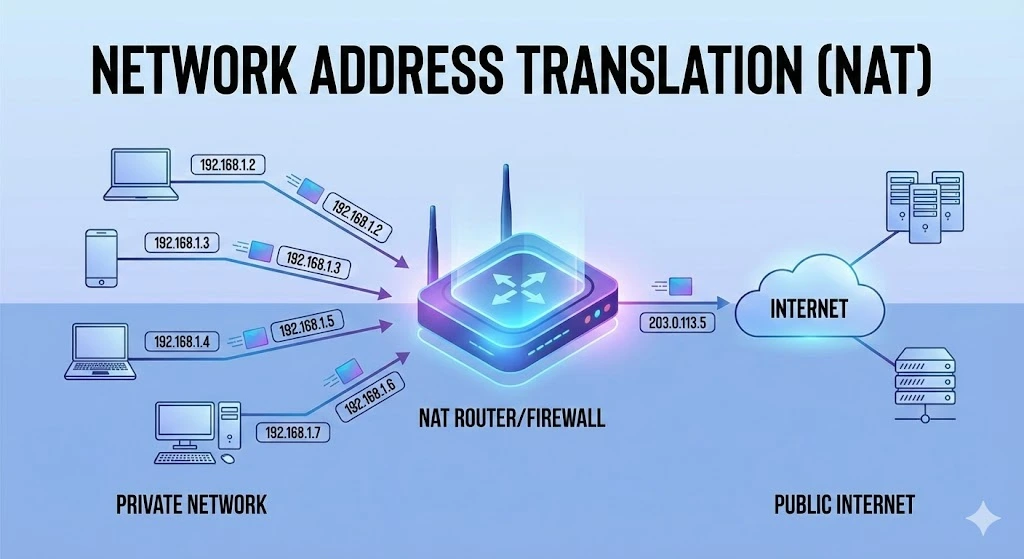
Comprensión de la traducción de direcciones de red (NAT)
En las redes informáticas, gestionar las direcciones IP de forma eficiente es fundamental para garantizar una comunicación fluida entre los dispositivos. Una de las tecnologías clave que ha surgido para afrontar este desafío es la Traducción de Direcciones de Red (NAT, por sus siglas en inglés). En este artículo explicamos qué es NAT, cómo funciona, sus distintos tipos, así como sus ventajas y limitaciones. ¿Qué es la traducción deRead more Related Posts Desbloqueando la privacidad digital con una red privada virtual (VPN) ¿Qué es una VPN? Una red privada virtual (VPN) es una tecnología que permite a los usuarios crear una conexión Comprensión de la traducción de direcciones de red (NAT) En las redes informáticas, gestionar las direcciones IP de forma eficiente es fundamental para garantizar una comunicación fluida entre los ¿Por qué Malasia se está convirtiendo en un centro neurálgico para la infraestructura de nube e IA? Malasia se está convirtiendo en uno de los mercados de crecimiento de centros de datos más importantes del Sudeste Asiático. .related-post {} .related-post .post-list { text-align: left; } .related-post .post-list .item { margin: 5px; padding: 10px; } .related-post .headline { font-size: 18px !important; color: #999999 !important; } .related-post .post-list .item .post_thumb { max-height: 220px; margin: 10px 0px; padding: 0px; display: block; } .related-post .post-list .item .post_title { font-size: 16px; color: #3f3f3f; margin: 10px 0px; padding: 0px; display: block; text-decoration: none; } .related-post .post-list .item .post_excerpt { font-size: 13px; color: #3f3f3f; margin: 10px 0px; padding: 0px; display: block; text-decoration: none; } @media only screen and (min-width: 1024px) { .related-post .post-list .item { width: 30%; } } @media only screen and (min-width: 768px) and (max-width: 1023px) { .related-post .post-list .item { width: 90%; } } @media only screen and (min-width: 0px) and (max-width: 767px) { .related-post .post-list .item { width: 90%; } }
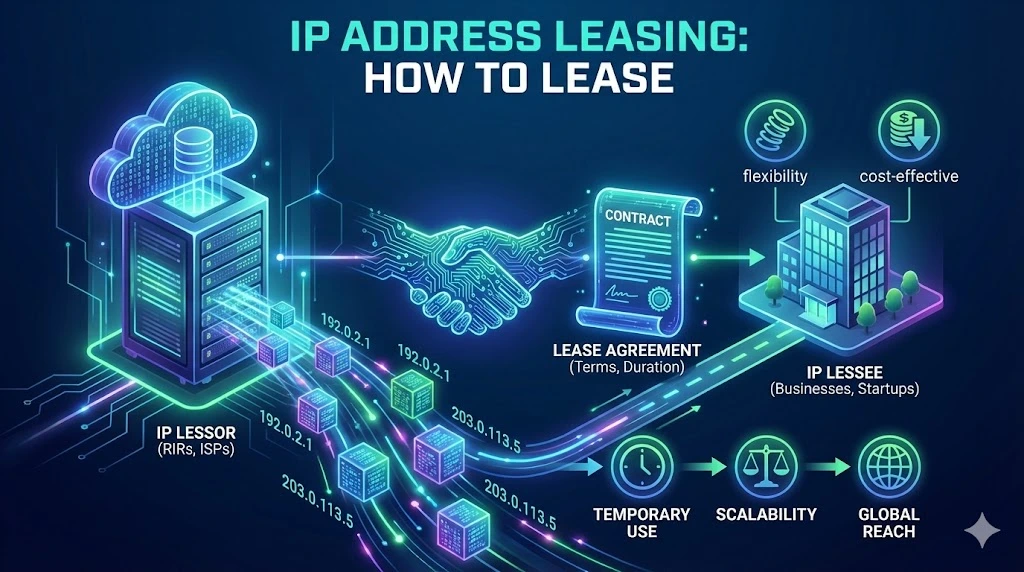
Arrendamiento de direcciones IP: Cómo arrendar direcciones IP
El mundo digital en el que nos movemos hoy depende en gran medida de las direcciones IP, identificadores únicos asignados a los dispositivos conectados a internet o a una red local. A medida que la demanda de direcciones IP sigue aumentando, empresas y particulares exploran diversas opciones para obtener los recursos necesarios. Un método cada vez más popular es el arrendamiento de direcciones IP. Este artículo profundiza en elRead more Related Posts Desbloqueando la privacidad digital con una red privada virtual (VPN) ¿Qué es una VPN? Una red privada virtual (VPN) es una tecnología que permite a los usuarios crear una conexión Comprensión de la traducción de direcciones de red (NAT) En las redes informáticas, gestionar las direcciones IP de forma eficiente es fundamental para garantizar una comunicación fluida entre los ¿Por qué Malasia se está convirtiendo en un centro neurálgico para la infraestructura de nube e IA? Malasia se está convirtiendo en uno de los mercados de crecimiento de centros de datos más importantes del Sudeste Asiático. .related-post {} .related-post .post-list { text-align: left; } .related-post .post-list .item { margin: 5px; padding: 10px; } .related-post .headline { font-size: 18px !important; color: #999999 !important; } .related-post .post-list .item .post_thumb { max-height: 220px; margin: 10px 0px; padding: 0px; display: block; } .related-post .post-list .item .post_title { font-size: 16px; color: #3f3f3f; margin: 10px 0px; padding: 0px; display: block; text-decoration: none; } .related-post .post-list .item .post_excerpt { font-size: 13px; color: #3f3f3f; margin: 10px 0px; padding: 0px; display: block; text-decoration: none; } @media only screen and (min-width: 1024px) { .related-post .post-list .item { width: 30%; } } @media only screen and (min-width: 768px) and (max-width: 1023px) { .related-post .post-list .item { width: 90%; } } @media only screen and (min-width: 0px) and (max-width: 767px) { .related-post .post-list .item { width: 90%; } }
¿Qué es el agotamiento de direcciones IPv4?
IPv4 es la versión inicial del Protocolo de Internet (IP), capaz de generar 4.300 millones de posibles direcciones IPv4. Sin embargo, muchas de estas direcciones están reservadas para fines específicos, como investigación y desarrollo. Esto deja un conjunto limitado disponible para organizaciones e individuos en todo el mundo. Con el crecimiento exponencial de Internet, la demanda de direcciones IPv4 se ha disparado. Esto provocó una rápida disminución de lasRead more Related Posts Desbloqueando la privacidad digital con una red privada virtual (VPN) ¿Qué es una VPN? Una red privada virtual (VPN) es una tecnología que permite a los usuarios crear una conexión Comprensión de la traducción de direcciones de red (NAT) En las redes informáticas, gestionar las direcciones IP de forma eficiente es fundamental para garantizar una comunicación fluida entre los Arrendamiento de direcciones IP: Cómo arrendar direcciones IP El mundo digital en el que nos movemos hoy depende en gran medida de las direcciones IP, identificadores únicos asignados .related-post {} .related-post .post-list { text-align: left; } .related-post .post-list .item { margin: 5px; padding: 10px; } .related-post .headline { font-size: 18px !important; color: #999999 !important; } .related-post .post-list .item .post_thumb { max-height: 220px; margin: 10px 0px; padding: 0px; display: block; } .related-post .post-list .item .post_title { font-size: 16px; color: #3f3f3f; margin: 10px 0px; padding: 0px; display: block; text-decoration: none; } .related-post .post-list .item .post_excerpt { font-size: 13px; color: #3f3f3f; margin: 10px 0px; padding: 0px; display: block; text-decoration: none; } @media only screen and (min-width: 1024px) { .related-post .post-list .item { width: 30%; } } @media only screen and (min-width: 768px) and (max-width: 1023px) { .related-post .post-list .item { width: 90%; } } @media only screen and (min-width: 0px) and (max-width: 767px) { .related-post .post-list .item { width: 90%; } }
