How to Avoid Downtime When Deploying Leased IPv4 Blocks
 Stephanie
Leased IPv4 blocks are often used by hosting providers, cloud platforms, ISPs, SaaS companies, data centers, and enterprise networks that need public IPv4 resources without purchasing address space outright. Leasing can be a practical way to support infrastructure growth, customer services, migration projects, and temporary deployment needs.
Table of Contents
However, getting access to IPv4 space is only the first step. The real challenge is deploying the leased IPv4 block without causing downtime, routing issues, failed connections, email delivery problems, or customer-facing disruptions.
A leased IPv4 block must be treated as a production network asset. It needs routing preparation, reputation checks, DNS configuration, firewall updates, monitoring, and a rollback plan. Without these steps, even a technically valid IPv4 block can create operational risk.
This guide explains how to avoid downtime when deploying leased IPv4 blocks and what your team should prepare before moving production traffic.
Why Downtime Happens During IPv4 Deployment
Downtime during leased IPv4 deployment usually happens because of poor coordination between commercial approval, network routing, security configuration, and application migration.
Common causes include:
- The IPv4 block is not announced correctly.
- Upstream providers reject the route.
- RPKI or route authorization is missing or incorrect.
- Reverse DNS has not been configured.
- Firewalls or access control lists still block the new range.
- Partner allowlists are not updated.
- The block has poor reputation or blacklist history.
- Geolocation databases show the wrong country or region.
- Monitoring starts too late.
- There is no rollback plan.
In many cases, the IPv4 lease itself is not the problem. The problem is that the deployment process is rushed or incomplete.
1. Confirm the Use Case Before Deployment
Before deploying a leased IPv4 block, your team should clearly define how the addresses will be used. Different use cases require different levels of preparation.
For example, a block used for web hosting may require DNS, SSL, load balancer, and firewall updates. A block used for email infrastructure will require deeper attention to reverse DNS, SPF, DKIM, DMARC, and blacklist checks. A block used for VPN or enterprise access may require customer allowlists and partner coordination.
Ask these questions before deployment:
- Will the block be used for hosting, cloud services, VPN, email, APIs, or customer access?
- Will it support production traffic immediately?
- Which ASN will announce the block?
- Which upstream provider will carry the route?
- Will the block be used in one region or multiple regions?
- Which internal teams need to approve the deployment?
- Who is responsible for troubleshooting?
A clear deployment scope helps prevent confusion when the block goes live.
2. Work With a Reliable IPv4 Leasing Provider
One of the safest ways to reduce deployment risk is to work with a provider that understands both the commercial and operational side of IPv4 leasing.
Some companies try to find unused IPv4 blocks directly from individual holders. This may work, but it can involve negotiation, verification, contract preparation, blacklist checks, routing coordination, and operational uncertainty. For businesses that need speed and reliability, it is often more practical to lease IPv4 blocks through an experienced IPv4 leasing provider, especially when managed IPv4 leasing support is needed for routing readiness, documentation, and operational handoff.
A reliable provider should help clarify:
- Block availability
- Lease duration
- Routing requirements
- Reputation status
- Required documentation
- Operational responsibilities
- Support process
- Renewal terms
This is especially important when the leased IPv4 block will support production systems. The provider should not only deliver the IP range, but also help reduce risk during deployment.
3. Validate Routing Before Moving Traffic
Routing is one of the most important parts of leased IPv4 deployment. If routing is not correct, users may not be able to reach your services even if the servers and applications are working properly.
Before production migration, confirm:
- The prefix is accepted by your upstream provider.
- Route objects are created where required.
- RPKI/ROA records are correct where applicable.
- The ASN is authorized to announce the block.
- BGP announcements are visible globally.
- No upstream filters are blocking the prefix.
- Route propagation is stable.
Do not wait until production traffic is moved to discover routing problems. Announce and test the prefix first, then verify reachability from multiple networks and regions.
4. Check IP Reputation Before Launch
IP reputation can affect whether your traffic is accepted, filtered, delayed, or blocked. This is especially important for email, hosting, SaaS platforms, login systems, API gateways, and customer-facing applications.
Before using a leased IPv4 block, check:
- Spam blacklist status
- Abuse history
- Malware or botnet listings
- Proxy or VPN reputation
- Email deliverability risk
- Threat intelligence databases
- Previous usage patterns
If a block has reputation issues, your team should address them before production launch. Otherwise, users may experience blocked emails, failed signups, security warnings, or restricted access.
For email-related deployments, reputation preparation is not optional. Reverse DNS, domain alignment, authentication records, and gradual sending volume are all important for protecting deliverability.
5. Configure Reverse DNS Early
Reverse DNS, also known as rDNS or PTR records, is often required for email servers, security validation, logging, and trust checks.
Before deployment, make sure:
- rDNS delegation is completed.
- PTR records match the intended service names.
- Forward and reverse DNS are consistent where needed.
- DNS records are tested before launch.
- Internal documentation records who controls DNS changes.
Missing or incorrect rDNS may not always create a full outage, but it can cause partial service failure. For example, email may be rejected, partner systems may flag the traffic, or security tools may treat the connection as suspicious.
6. Update Firewalls, ACLs, and Security Policies
Many downtime incidents happen because the network route works, but security controls still block the new IPv4 block.
Before migration, update:
- Firewalls
- Cloud security groups
- Router ACLs
- VPN policies
- DDoS protection rules
- Web application firewall rules
- SIEM rules
- Internal monitoring rules
- Partner allowlists
- Customer access controls
This step is critical when the new leased IPv4 block replaces an existing range. Customers, vendors, banks, payment providers, enterprise partners, and API integrations may already trust your old IP addresses. If they are not told to allowlist the new block, traffic may fail even though your own network is configured correctly.
7. Plan for Geolocation Updates
Geolocation issues are common when deploying leased IPv4 blocks. A block may be routed from one country but still appear in geolocation databases as another country or region.
This can affect:
- Content localization
- Fraud detection
- Payment systems
- Streaming access
- Compliance controls
- Regional pricing
- Login risk scoring
- Customer experience
Before launch, check the leased IPv4 block against major geolocation databases. If the location is incorrect, submit update requests early. These updates may take time, so do not leave them until the day of migration.
For businesses serving specific markets, geolocation accuracy should be part of the deployment checklist.
8. Stage the Migration
Avoid moving all production traffic to a leased IPv4 block at once. A staged rollout makes it easier to detect and fix problems before they affect every user.
A safer migration process may look like this:
Prepare routing and authorization.
Announce the leased IPv4 block.
Confirm global route visibility.
Configure DNS and rDNS.
Update firewalls and allowlists.
Test from multiple external networks.
Move a low-risk service first.
Monitor traffic and errors.
Gradually migrate production workloads.
Keep rollback options available.
This approach reduces the risk of a full outage. It also gives your team time to identify unexpected issues such as routing instability, blocked traffic, incorrect DNS, or reputation problems.
9. Use Monitoring From the First Announcement
Monitoring should begin as soon as the block is announced, not after production traffic has already moved.
Track:
- BGP visibility
- Route propagation
- Packet loss
- Latency
- DNS resolution
- rDNS correctness
- Application errors
- Blacklist changes
- Abuse reports
- Geolocation accuracy
- Customer support tickets
Monitoring should include both network-level and application-level checks. A route may be visible, but the application may still fail because of firewall rules, SSL configuration, DNS caching, or partner restrictions.
Set alerts for unusual traffic drops, route withdrawals, increased error rates, and reputation changes.
10. Prepare a Rollback Plan
Every IPv4 deployment should include a rollback plan. Even with careful preparation, unexpected issues can happen.
Your rollback plan should define:
- Which systems can return to the previous IP range
- How DNS rollback will be handled
- Expected DNS TTL behavior
- Who approves rollback
- Which teams must be notified
- How customer communication will be handled
- What logs and metrics must be preserved
A rollback plan does not mean the deployment is expected to fail. It means the business is prepared to protect uptime if something unexpected occurs.
11. Review Lease Terms and Continuity Requirements
Downtime risk is not limited to the first deployment. It can also appear later if the lease expires, renewal terms are unclear, or the provider cannot support long-term continuity.
Before using leased IPv4 blocks for production workloads, confirm:
- Lease duration
- Renewal process
- Notice period
- Termination terms
- Support availability
- Abuse handling process
- Routing responsibilities
- Documentation requirements
- Pricing structure
For smaller deployments, many teams start by evaluating a /24 because it is commonly used for production routing and service segmentation. To understand cost expectations, read this guide on how much a /24 IPv4 block costs in 2026.
Cost is important, but it should not be the only factor. For production use, stability, reputation, provider support, and renewal clarity are just as important.
12. Document the Entire Deployment
Good documentation helps prevent mistakes during troubleshooting, renewals, audits, and future migrations.
Your documentation should include:
- IPv4 block details
- Lease start and end date
- Provider contact
- ASN and routing information
- Route authorization details
- rDNS configuration
- DNS records
- Firewall changes
- Partner allowlists
- Monitoring dashboards
- Geolocation update records
- Abuse contact process
- Renewal reminders
- Rollback steps
Documentation should be accessible to network, security, infrastructure, and support teams. If only one engineer understands the deployment, the business has unnecessary operational risk.
Deployment Checklist for Leased IPv4 Blocks
Before moving production traffic, confirm the following:
- The leased IPv4 block is approved for your intended use.
- The ASN and routing plan are confirmed.
- Required route objects or authorization records are prepared.
- RPKI/ROA status is checked.
- BGP announcement is tested.
- IP reputation is reviewed.
- Blacklist checks are completed.
- rDNS is configured.
- DNS records are ready.
- Firewalls and ACLs are updated.
- Partner allowlists are updated.
- Geolocation is checked.
- Monitoring is active.
- A staged migration plan is prepared.
- A rollback plan is ready.
- Lease and renewal terms are documented.
This checklist can help reduce the most common causes of IPv4 deployment downtime.
Final Thoughts
Deploying leased IPv4 blocks safely requires more than assigning addresses to servers. It requires planning, validation, monitoring, and coordination across network, security, infrastructure, and business teams.
The most successful deployments start before traffic moves. Teams verify routing, check reputation, configure DNS, update security controls, monitor propagation, and prepare rollback steps in advance. These actions help prevent downtime and protect customer experience.
Leased IPv4 blocks can give businesses the flexibility to scale infrastructure without purchasing address space outright. But to get the full benefit, organizations must treat IPv4 leasing as an operational process, not just a commercial transaction.
Read: How to lease ipv4 block
With the right preparation and provider support, businesses can deploy leased IPv4 blocks smoothly, reduce downtime risk, and maintain reliable service continuity.
Frequent Asked Questions
1. What causes downtime when deploying leased IPv4 blocks?
Downtime often happens because of routing errors, missing route authorization, incorrect RPKI/ROA records, firewall misconfiguration, poor IP reputation, missing rDNS, outdated partner allowlists, or geolocation issues. Most problems can be avoided with proper testing before production traffic is moved.
2. How can I check if a leased IPv4 block is ready for deployment?
Before deployment, confirm that the IPv4 block can be announced by your ASN, route objects or authorization records are prepared, RPKI/ROA status is valid, BGP visibility is stable, rDNS is configured, IP reputation is clean, and monitoring is active.
3. Why is IP reputation important for leased IPv4 blocks?
IP reputation affects whether traffic from the block is trusted, filtered, delayed, or blocked. If the block has a history of spam, abuse, proxy use, or malware activity, it may affect email delivery, hosting reliability, API access, and customer-facing services.
4. Should leased IPv4 blocks be deployed all at once?
No. A staged migration is safer. Start by announcing the block, testing global reachability, configuring DNS and security rules, then moving low-risk services first. Production workloads should only be moved after monitoring confirms stable routing and service performance.
5. What should be included in a rollback plan for leased IPv4 deployment?
A rollback plan should include the previous IP range, DNS rollback steps, expected TTL behavior, approval contacts, customer communication steps, monitoring checks, and responsibilities for network, infrastructure, and support teams.
Artículos relacionados
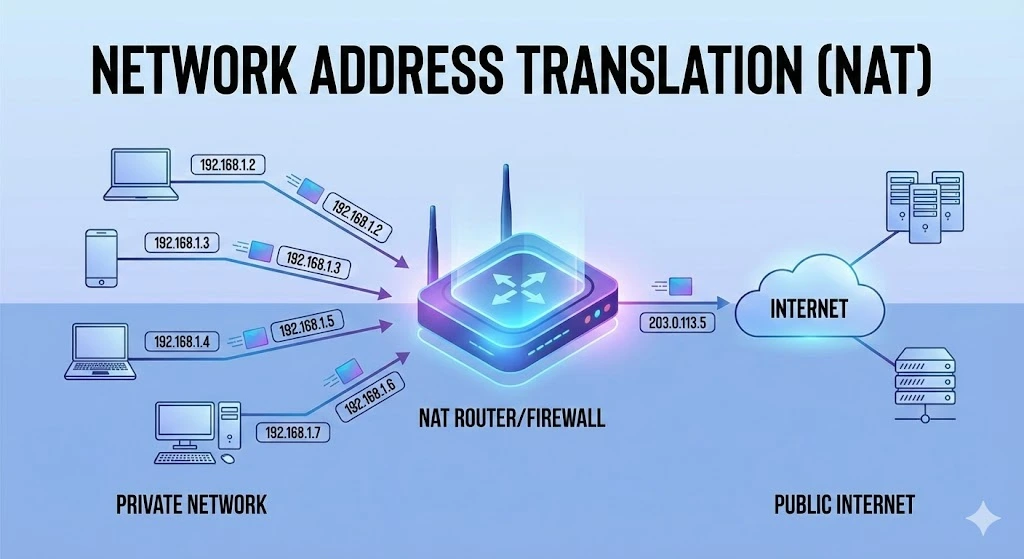
Comprensión de la traducción de direcciones de red (NAT)
En las redes informáticas, gestionar las direcciones IP de forma eficiente es fundamental para garantizar una comunicación fluida entre los dispositivos. Una de las tecnologías clave que ha surgido para afrontar este desafío es la Traducción de Direcciones de Red (NAT, por sus siglas en inglés). En este artículo explicamos qué es NAT, cómo funciona, sus distintos tipos, así como sus ventajas y limitaciones. ¿Qué es la traducción deRead more Related Posts Desbloqueando la privacidad digital con una red privada virtual (VPN) ¿Qué es una VPN? Una red privada virtual (VPN) es una tecnología que permite a los usuarios crear una conexión Comprensión de la traducción de direcciones de red (NAT) En las redes informáticas, gestionar las direcciones IP de forma eficiente es fundamental para garantizar una comunicación fluida entre los ¿Por qué Malasia se está convirtiendo en un centro neurálgico para la infraestructura de nube e IA? Malasia se está convirtiendo en uno de los mercados de crecimiento de centros de datos más importantes del Sudeste Asiático. .related-post {} .related-post .post-list { text-align: left; } .related-post .post-list .item { margin: 5px; padding: 10px; } .related-post .headline { font-size: 18px !important; color: #999999 !important; } .related-post .post-list .item .post_thumb { max-height: 220px; margin: 10px 0px; padding: 0px; display: block; } .related-post .post-list .item .post_title { font-size: 16px; color: #3f3f3f; margin: 10px 0px; padding: 0px; display: block; text-decoration: none; } .related-post .post-list .item .post_excerpt { font-size: 13px; color: #3f3f3f; margin: 10px 0px; padding: 0px; display: block; text-decoration: none; } @media only screen and (min-width: 1024px) { .related-post .post-list .item { width: 30%; } } @media only screen and (min-width: 768px) and (max-width: 1023px) { .related-post .post-list .item { width: 90%; } } @media only screen and (min-width: 0px) and (max-width: 767px) { .related-post .post-list .item { width: 90%; } }
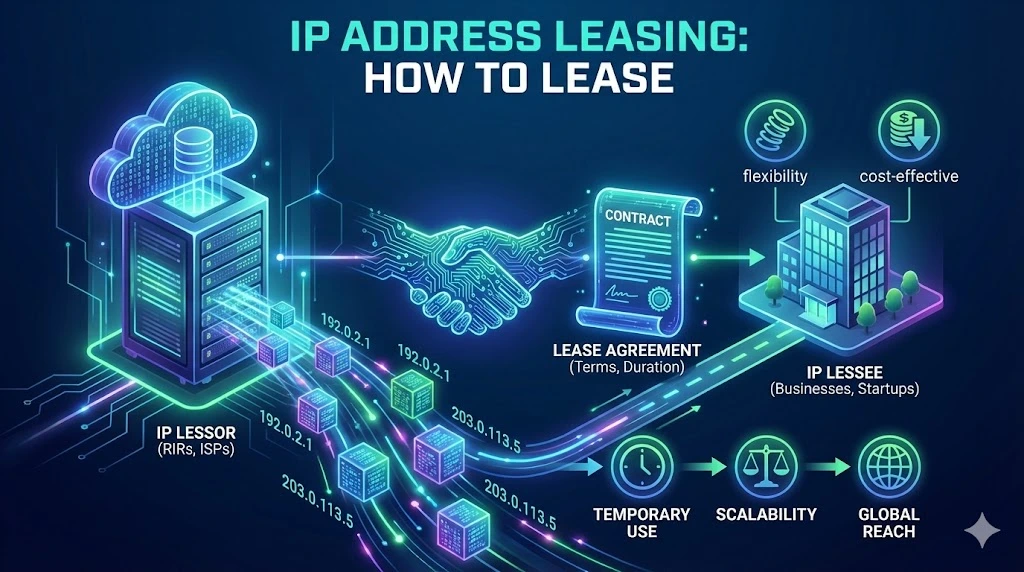
Arrendamiento de direcciones IP: Cómo arrendar direcciones IP
El mundo digital en el que nos movemos hoy depende en gran medida de las direcciones IP, identificadores únicos asignados a los dispositivos conectados a internet o a una red local. A medida que la demanda de direcciones IP sigue aumentando, empresas y particulares exploran diversas opciones para obtener los recursos necesarios. Un método cada vez más popular es el arrendamiento de direcciones IP. Este artículo profundiza en elRead more Related Posts Desbloqueando la privacidad digital con una red privada virtual (VPN) ¿Qué es una VPN? Una red privada virtual (VPN) es una tecnología que permite a los usuarios crear una conexión Comprensión de la traducción de direcciones de red (NAT) En las redes informáticas, gestionar las direcciones IP de forma eficiente es fundamental para garantizar una comunicación fluida entre los ¿Por qué Malasia se está convirtiendo en un centro neurálgico para la infraestructura de nube e IA? Malasia se está convirtiendo en uno de los mercados de crecimiento de centros de datos más importantes del Sudeste Asiático. .related-post {} .related-post .post-list { text-align: left; } .related-post .post-list .item { margin: 5px; padding: 10px; } .related-post .headline { font-size: 18px !important; color: #999999 !important; } .related-post .post-list .item .post_thumb { max-height: 220px; margin: 10px 0px; padding: 0px; display: block; } .related-post .post-list .item .post_title { font-size: 16px; color: #3f3f3f; margin: 10px 0px; padding: 0px; display: block; text-decoration: none; } .related-post .post-list .item .post_excerpt { font-size: 13px; color: #3f3f3f; margin: 10px 0px; padding: 0px; display: block; text-decoration: none; } @media only screen and (min-width: 1024px) { .related-post .post-list .item { width: 30%; } } @media only screen and (min-width: 768px) and (max-width: 1023px) { .related-post .post-list .item { width: 90%; } } @media only screen and (min-width: 0px) and (max-width: 767px) { .related-post .post-list .item { width: 90%; } }
¿Qué es el agotamiento de direcciones IPv4?
IPv4 es la versión inicial del Protocolo de Internet (IP), capaz de generar 4.300 millones de posibles direcciones IPv4. Sin embargo, muchas de estas direcciones están reservadas para fines específicos, como investigación y desarrollo. Esto deja un conjunto limitado disponible para organizaciones e individuos en todo el mundo. Con el crecimiento exponencial de Internet, la demanda de direcciones IPv4 se ha disparado. Esto provocó una rápida disminución de lasRead more Related Posts Desbloqueando la privacidad digital con una red privada virtual (VPN) ¿Qué es una VPN? Una red privada virtual (VPN) es una tecnología que permite a los usuarios crear una conexión Comprensión de la traducción de direcciones de red (NAT) En las redes informáticas, gestionar las direcciones IP de forma eficiente es fundamental para garantizar una comunicación fluida entre los Arrendamiento de direcciones IP: Cómo arrendar direcciones IP El mundo digital en el que nos movemos hoy depende en gran medida de las direcciones IP, identificadores únicos asignados .related-post {} .related-post .post-list { text-align: left; } .related-post .post-list .item { margin: 5px; padding: 10px; } .related-post .headline { font-size: 18px !important; color: #999999 !important; } .related-post .post-list .item .post_thumb { max-height: 220px; margin: 10px 0px; padding: 0px; display: block; } .related-post .post-list .item .post_title { font-size: 16px; color: #3f3f3f; margin: 10px 0px; padding: 0px; display: block; text-decoration: none; } .related-post .post-list .item .post_excerpt { font-size: 13px; color: #3f3f3f; margin: 10px 0px; padding: 0px; display: block; text-decoration: none; } @media only screen and (min-width: 1024px) { .related-post .post-list .item { width: 30%; } } @media only screen and (min-width: 768px) and (max-width: 1023px) { .related-post .post-list .item { width: 90%; } } @media only screen and (min-width: 0px) and (max-width: 767px) { .related-post .post-list .item { width: 90%; } }
