Comprendre les différents types d’attaques DDoS

StephanieStephanie
ddos-attack

Avec l’essor d’Internet dans les opérations commerciales quotidiennes, les menaces de cybersécurité gagnent en complexité et en impact. Parmi les menaces les plus persistantes et destructrices auxquelles les organisations sont confrontées aujourd’hui figurent les attaques par déni de service distribué (DDoS). Ces attaques inondent un système ciblé d’un volume de trafic considérable, rendant les services inaccessibles aux utilisateurs légitimes.


Pour contrer efficacement les menaces DDoS, il est essentiel de comprendre les différents types d’attaques déployées par les cybercriminels. Chaque type cible une couche spécifique de l’infrastructure réseau ou système, et comprendre leur mode de fonctionnement est la première étape vers l’élaboration d’une stratégie de défense robuste.


Dans cet article, nous explorerons les principaux types d’attaques DDoS, en les classant par catégories et en détaillant comment elles perturbent les services.

1. Attaques basées sur le volume

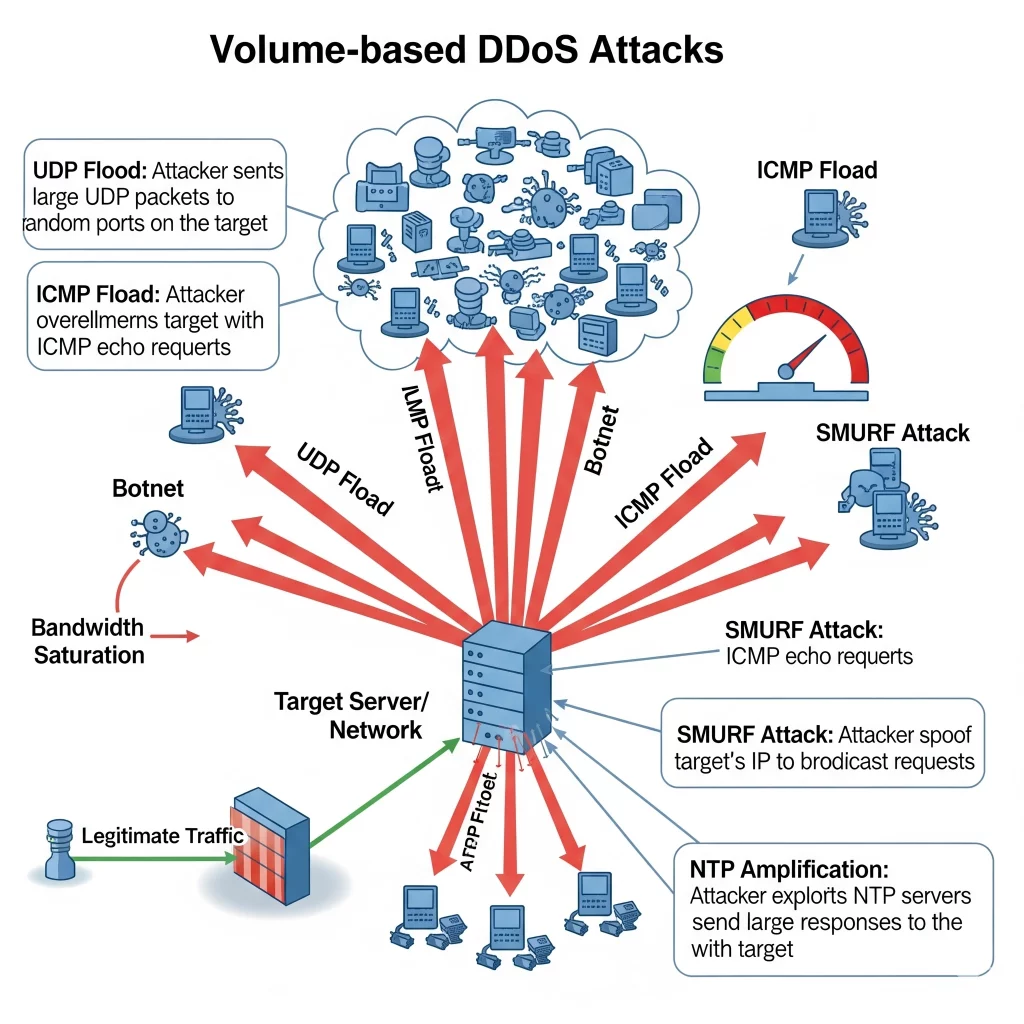
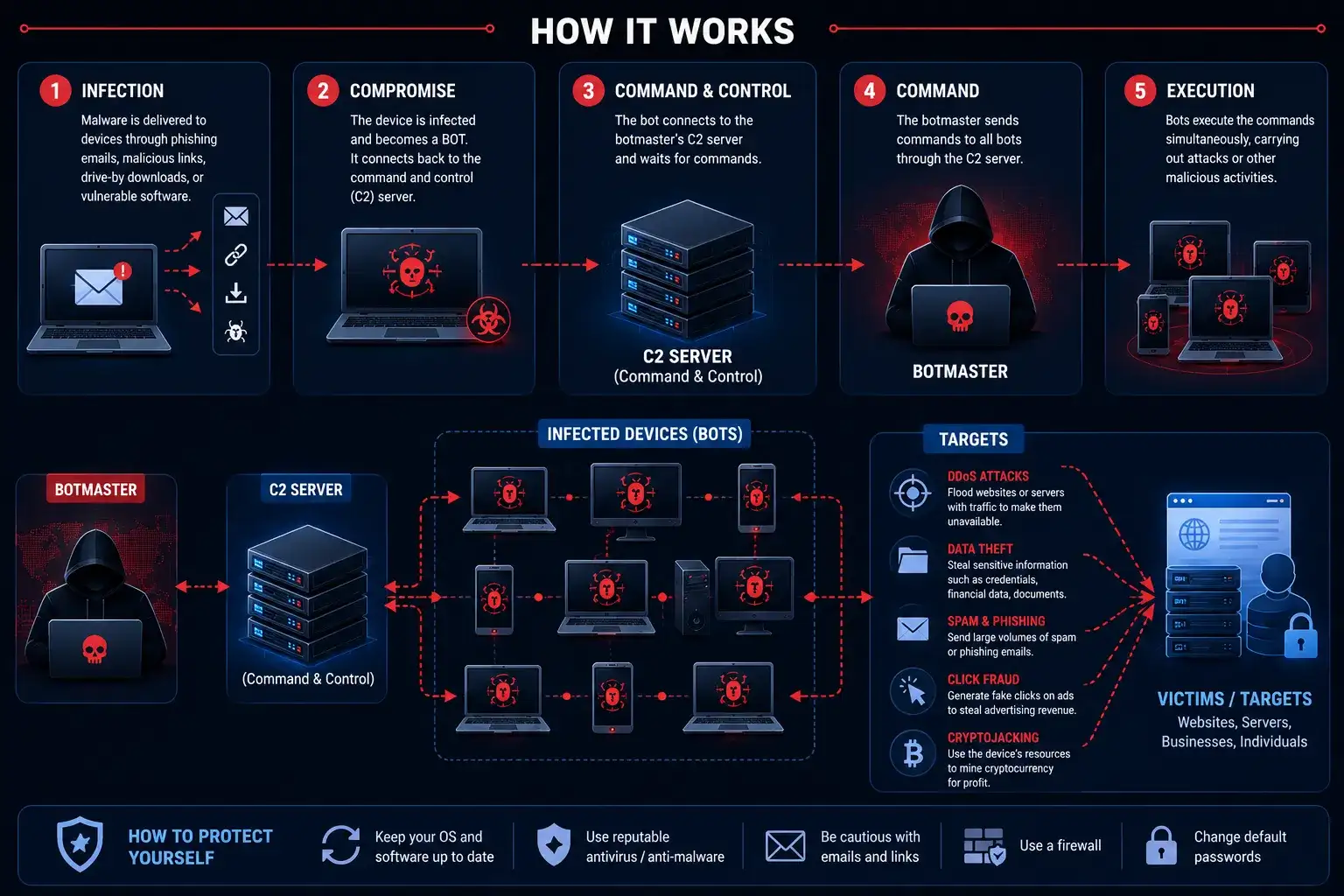
Les attaques DDoS par volume visent à saturer la bande passante du site cible. Ce sont les plus courantes et elles impliquent souvent des botnets envoyant un trafic massif.


Exemples clés :

Inondation UDP : Un grand nombre de paquets UDP sont envoyés à des ports aléatoires de la machine cible, la forçant à répondre en continu.


Inondation ICMP : Cette attaque utilise des requêtes d’écho ICMP (pings) pour saturer la cible, consommant ainsi la bande passante entrante et sortante.


Amplification DNS : Les attaquants usurpent l’adresse IP de la victime et envoient des requêtes DNS à des résolveurs DNS ouverts, qui répondent par une grande quantité de données, amplifiant ainsi le trafic atteignant la cible.


Impact :

Ces attaques sont conçues pour consommer toute la bande passante disponible, rendant la cible inaccessible en épuisant sa capacité.

2. Protocol Attacks

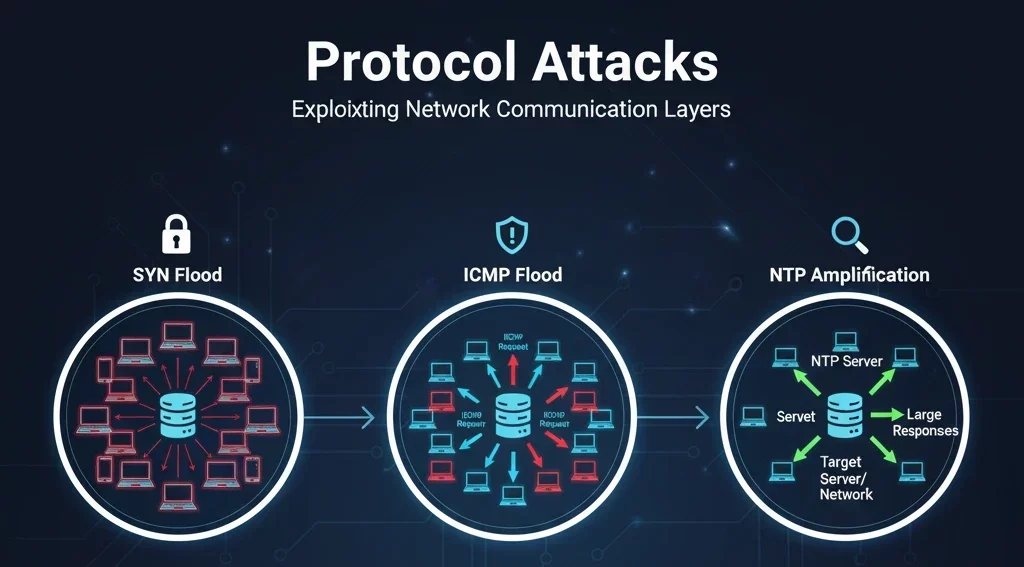
Protocol attacks exploit weaknesses in network layer protocols. These attacks target servers and intermediate resources like firewalls and load balancers.

Key Examples:

  • SYN Flood: Exploits the TCP handshake process by sending repeated SYN requests with spoofed IP addresses, never completing the connection.
  • Ping of Death: Sends maliciously crafted ping packets that exceed the maximum allowed size, causing systems to crash or reboot.
  • Smurf Attack: An attacker sends ICMP requests with a spoofed source address (the victim) to a network’s broadcast address, causing a flood of responses.

Impact:

These attacks consume server resources, and because they target the infrastructure itself, they can be harder to detect and mitigate.

3. Application Layer Attacks
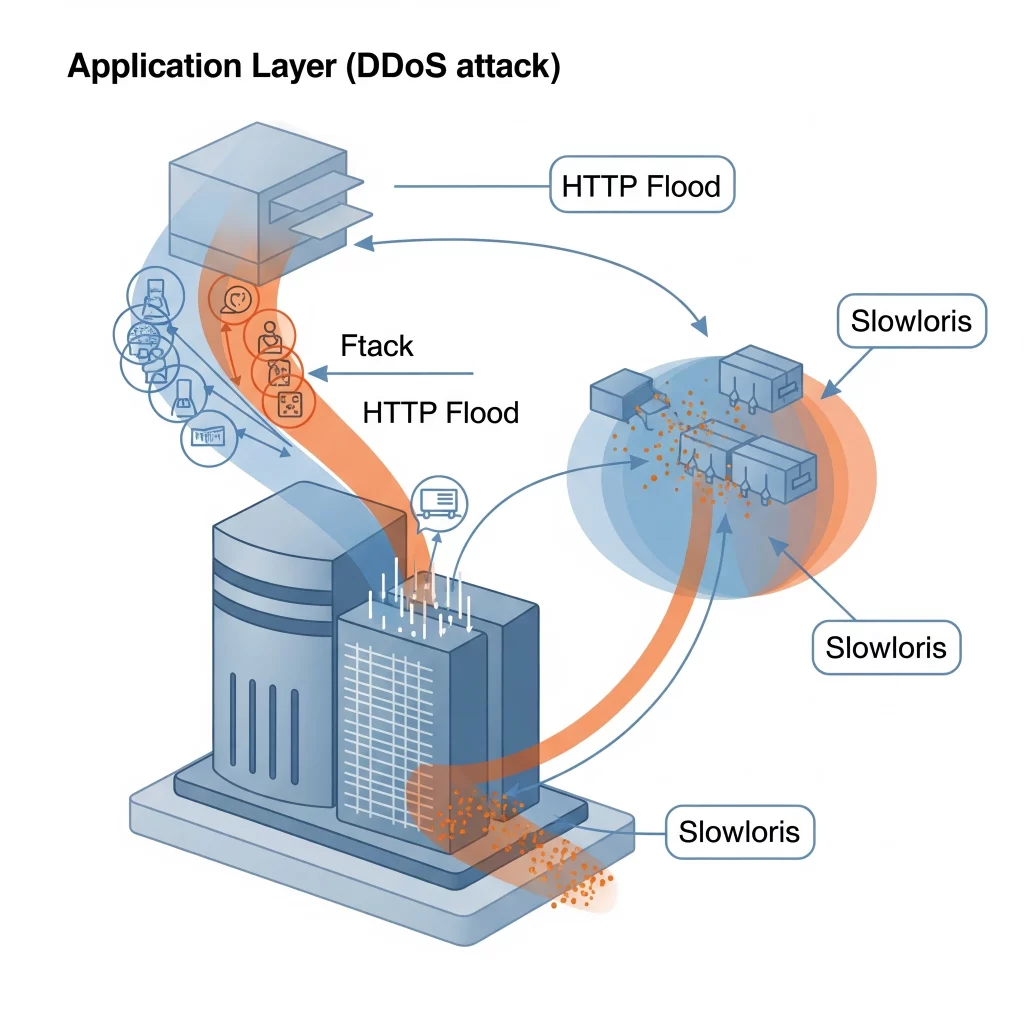
Application layer (Layer 7) attacks mimic legitimate user behavior, making them difficult to distinguish from normal traffic. They target the actual applications, such as web servers.

Key Examples:

  • HTTP Flood: Attackers send seemingly legitimate HTTP requests, overwhelming the web server’s capacity to process requests.
  • Slowloris: Keeps many connections to the target web server open and holds them open as long as possible by sending partial HTTP requests.
  • Zero-day Exploits: These attacks exploit unknown or unpatched vulnerabilities in applications to cause crashes or service interruptions.

Impact:

These attacks are highly stealthy and resource-intensive, aiming to exhaust application resources rather than network bandwidth.

4. Multi-Vector Attacks
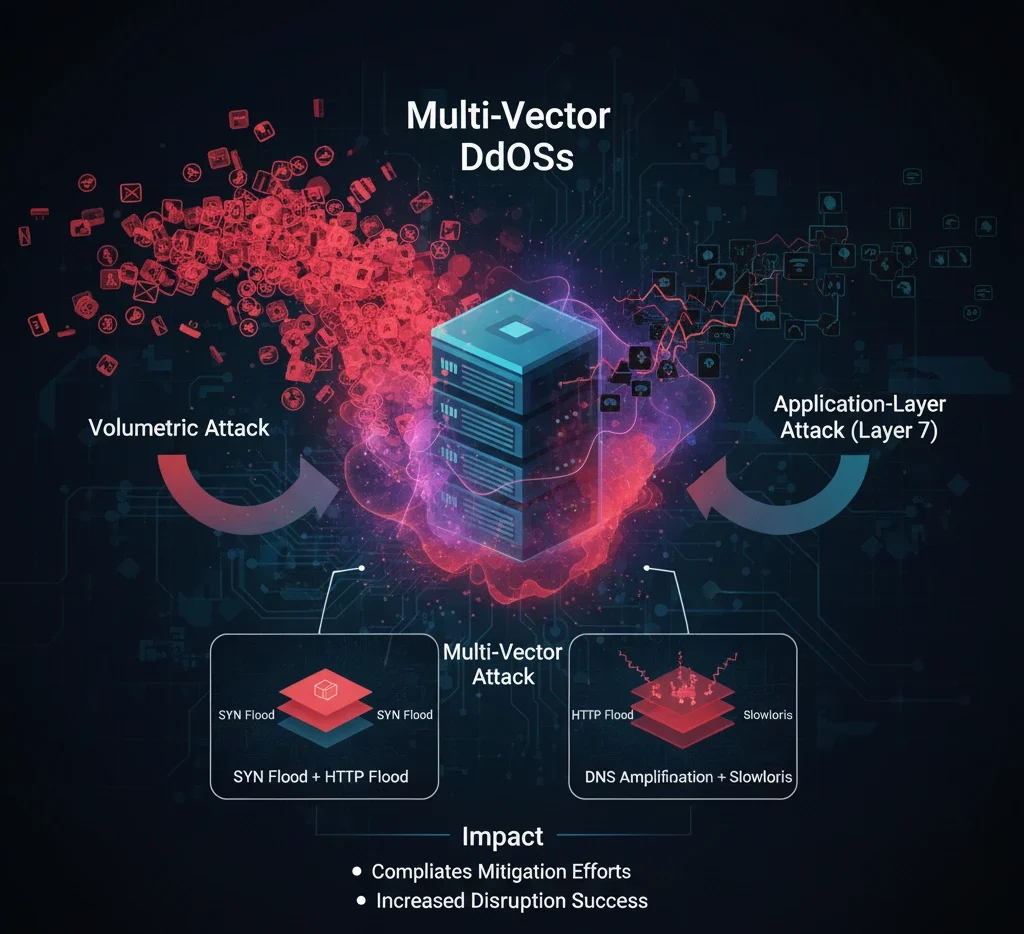
Multi-vector attacks combine two or more different types of DDoS strategies. For example, an attacker might initiate a volumetric attack while simultaneously targeting the application layer.

Key Examples:

  • Combining SYN floods with HTTP floods.
  • Using DNS amplification in conjunction with Slowloris.

Impact:

By mixing attack types, these methods complicate mitigation efforts and increase the chance of successful disruption.

Pourquoi c'est important

Comprendre ces différentes formes d’attaques DDoS est essentiel pour mettre en œuvre une défense complète. Les organisations doivent déployer des solutions de sécurité multicouches, réaliser régulièrement des évaluations de vulnérabilité et s’assurer que leur infrastructure et leurs applications sont capables de détecter et d’atténuer les activités DDoS.


Outre les pare-feu et les systèmes de prévention d’intrusion classiques, les services de protection contre les attaques DDoS et les outils de surveillance du trafic en temps réel jouent un rôle crucial dans l’identification et la neutralisation des menaces avant qu’elles ne s’aggravent.

Réflexions finales

Les attaques DDoS sont de plus en plus sophistiquées, mais une compréhension approfondie de leur fonctionnement permet aux entreprises de garder une longueur d’avance. Une stratégie de sécurité bien rodée, complétée par des mesures d’atténuation robustes, est essentielle pour protéger votre présence numérique.

Trusted IPv4 Leasing for Business Growth

Get enterprise-grade IPv4 space quickly, with seamless deployment and end-to-end management.

Get Started with i.lease
相关文章

什么是BYOIP(自备IP地址)?

什么是BYOIP(自备IP地址)?

自带 IP(Bring Your Own IP,简称 BYOIP)是一种网络部署方式,允许企业将自己现有的公网 IP 地址段应用于云服务提供商、数据中心、内容分发网络(CDN)或其他基础设施平台。 企业无需使用服务提供商分配的新公网 IP 地址,而是可以使用自己已拥有或已获授权使用的 IPv4 或 IPv6 地址前缀。服务提供商会验证该组织对该地址段的使用权限,并在支持的情况下,通过其自身网络对该地址段进行路由公告(Advertise)。 BYOIP 有助于企业在迁移至云平台时保留现有的防火墙规则、白名单(Allowlists)、客户系统集成、IP 信誉(IP Reputation)、DNS 配置以及既有的网络身份。这不仅能够减少因更换 IP 地址而带来的业务中断,还能降低对服务提供商分配 IP 的依赖,使未来的基础设施迁移与扩展更加灵活且易于管理。 对于需要 BYOIP 地址资源的企业,可选择 购买 IPv4 地址(Buy IP),以获得长期控制权;如果更重视灵活性,也可采用 IPv4 租赁(IPv4 Leasing),按业务需求获取公网 IP 资源。 什么是BYOIP? BYOIP 是 Bring Your Own IP(自带 IP)的缩写。这是一种网络部署模式,允许组织将现有的公网 IP 地址段带入云服务提供商或其他基础设施平台使用。 在 BYOIP 模式下,组织仍然拥有或保留该 IP 地址段的使用权,而平台则获得授权,可在其基础设施中对该地址段进行路由公告(Advertise)和使用。随后,这些 IP 地址可分配给虚拟机(Virtual Machines)、负载均衡器(Load Balancers)、VPN 网关、内容分发服务(CDN)、安全平台以及公网应用程序端点等受支持的服务。 例如,一家企业将应用程序从本地数据中心迁移到云环境时,可能并不希望更换现有的公网 IP 地址。这些 IP 地址可能已经存在于客户白名单(Allowlists)、防火墙策略、DNS 记录、合作伙伴配置以及电子邮件信誉(Email Reputation)数据库中。 BYOIP 使企业能够在迁移工作负载的同时,继续使用原有的公网 IP 地址,从而保持更一致的网络身份,并减少因更换 IP 地址而带来的配置调整和业务影响。 Related Posts 什么是BYOIP(自备IP地址)? 自带 IP(Bring Your Own IP,简称 BYOIP)是一种网络部署方式,允许企业将自己现有的公网 IP 地址段应用于云服务提供商、数据中心、内容分发网络(CDN)或其他基础设施平台。 企业无需使用服务提供商分配的新公网 IP 地址,而是可以使用自己已拥有或已获授权使用的 IPv4 或 IPv6 地址前缀。服务提供商会验证该组织对该地址段的使用权限,并在支持的情况下,通过其自身网络对该地址段进行路由公告(Advertise)。 BYOIP 有助于企业在迁移至云平台时保留现有的防火墙规则、白名单(Allowlists)、客户系统集成、IP 信誉(IP Reputation)、DNS 配置以及既有的网络身份。这不仅能够减少因更换 什么是区域互联网注册管理机构(RIR) 区域互联网注册管理机构(Regional Internet Registry, RIR)是负责在特定地理区域内分配和管理互联网编号资源的组织。这些资源主要包括 IP 地址(IPv4 和 IPv6)以及自治系统号(ASN),它们是支撑设备和网络在互联网上相互通信的关键要素。 如果没有一套组织完善的系统来分配唯一的 IP 地址和路由标识符,互联网便无法正常运转。RIR 确保这一过程在各自管辖的区域内保持公平、高效与一致,从而避免冲突,并提升互联网治理的透明度。 全球五大 RIR 目前全球共有五家获官方认可的 RIR,各自负责世界上特定的区域:AFRINIC – 非洲网络信息中心(非洲)APNIC – 亚太网络信息中心(亚太地区)ARIN 关于 IPv6:优势、应用及 IPv4 过渡规划 关于 IPv6:互联网全面过渡之前,企业需要了解哪些内容 IPv6 是下一代互联网协议寻址系统。它旨在解决 IPv4 地址空间的长期限制,并支持互联网、云平台、移动网络及联网设备持续增长。对于许多企业而言,IPv6 已不再只是面向未来的概念,而是现代网络规划的一部分。互联网服务提供商、云平台、移动网络和大型数字平台正越来越广泛地支持 IPv6。然而,整体过渡仍不均衡。许多系统、客户、应用程序和企业网络仍然依赖 IPv4。因此,即使您的机构目前仍依赖 IPv4,了解 IPv6 依然十分重要。 什么是IPv6? IPv6 是互联网协议第 6 版(Internet Protocol version 6)的简称。它是一种寻址系统,使设备、服务器、网络和在线服务能够通过互联网相互通信。每台连接互联网的设备都需要一个 .related-post {} .related-post .post-list { text-align: left; } .related-post .post-list .item { margin: 5px; padding: 10px; } .related-post .headline { font-size: 18px !important; color: #999999 !important; } .related-post .post-list .item .post_thumb { max-height: 220px; margin: 10px 0px; padding: 0px; display: block; } .related-post .post-list .item .post_title { font-size: 16px; color: #3f3f3f; margin: 10px 0px; padding: 0px; display: block; text-decoration: none; } .related-post .post-list .item .post_excerpt { font-size: 13px; color: #3f3f3f; margin: 10px 0px; padding: 0px; display: block; text-decoration: none; } @media only screen and (min-width: 1024px) { .related-post .post-list .item { width: 30%; } } @media only screen and (min-width: 768px) and (max-width: 1023px) { .related-post .post-list .item { width: 90%; } } @media only screen and (min-width: 0px) and (max-width: 767px) { .related-post .post-list .item { width: 90%; } }

What is Regional Internet Registry (RIR)

什么是区域互联网注册管理机构(RIR)

区域互联网注册管理机构(Regional Internet Registry, RIR)是负责在特定地理区域内分配和管理互联网编号资源的组织。这些资源主要包括 IP 地址(IPv4 和 IPv6)以及自治系统号(ASN),它们是支撑设备和网络在互联网上相互通信的关键要素。 如果没有一套组织完善的系统来分配唯一的 IP 地址和路由标识符,互联网便无法正常运转。RIR 确保这一过程在各自管辖的区域内保持公平、高效与一致,从而避免冲突,并提升互联网治理的透明度。 全球五大 RIR 目前全球共有五家获官方认可的 RIR,各自负责世界上特定的区域: AFRINIC – 非洲网络信息中心(非洲) APNIC – 亚太网络信息中心(亚太地区) ARIN – 美洲互联网号码注册管理机构(加拿大、美国及加勒比部分地区) LACNIC – 拉丁美洲及加勒比网络信息中心(拉丁美洲及加勒比地区) RIPE NCC – 欧洲 IP 网络协调中心(欧洲、中东及中亚) 每家 RIR 均独立运作,但通过号码资源组织(NRO)等协调机构在全球政策与最佳实践方面相互协作,并接受 ICANN(互联网名称与数字地址分配机构)下设部门 IANA(互联网号码分配机构)的指导。 为什么 RIR 如此重要? RIR 履行多项核心职能: IP 地址分配:向互联网服务提供商(ISP)、数据中心及其他机构分配 IP 地址。 政策制定:通过社群协商,RIR 推动制定互联网编号资源管理与分配的相关规则。 数据库维护:RIR 维护公开数据库(WHOIS),记录 IP 地址与 ASN 的持有信息,为互联网故障排查与安全防护提供支持。 推动 IPv6 普及:随着 IPv4 地址日益枯竭,RIR 积极倡导并支持 IPv6 的采用。 教育与培训:RIR 常提供培训与资源,以支持技术社群,并帮助各方利益相关者了解网络最佳实践。 RIR 如何与其他互联网治理机构协作? RIRRead more Related Posts 什么是BYOIP(自备IP地址)? 自带 IP(Bring Your Own IP,简称 BYOIP)是一种网络部署方式,允许企业将自己现有的公网 IP 地址段应用于云服务提供商、数据中心、内容分发网络(CDN)或其他基础设施平台。 企业无需使用服务提供商分配的新公网 IP 地址,而是可以使用自己已拥有或已获授权使用的 IPv4 或 IPv6 地址前缀。服务提供商会验证该组织对该地址段的使用权限,并在支持的情况下,通过其自身网络对该地址段进行路由公告(Advertise)。 BYOIP 有助于企业在迁移至云平台时保留现有的防火墙规则、白名单(Allowlists)、客户系统集成、IP 信誉(IP Reputation)、DNS 配置以及既有的网络身份。这不仅能够减少因更换 什么是区域互联网注册管理机构(RIR) 区域互联网注册管理机构(Regional Internet Registry, RIR)是负责在特定地理区域内分配和管理互联网编号资源的组织。这些资源主要包括 IP 地址(IPv4 和 IPv6)以及自治系统号(ASN),它们是支撑设备和网络在互联网上相互通信的关键要素。 如果没有一套组织完善的系统来分配唯一的 IP 地址和路由标识符,互联网便无法正常运转。RIR 确保这一过程在各自管辖的区域内保持公平、高效与一致,从而避免冲突,并提升互联网治理的透明度。 全球五大 RIR 目前全球共有五家获官方认可的 RIR,各自负责世界上特定的区域:AFRINIC – 非洲网络信息中心(非洲)APNIC – 亚太网络信息中心(亚太地区)ARIN 关于 IPv6:优势、应用及 IPv4 过渡规划 关于 IPv6:互联网全面过渡之前,企业需要了解哪些内容 IPv6 是下一代互联网协议寻址系统。它旨在解决 IPv4 地址空间的长期限制,并支持互联网、云平台、移动网络及联网设备持续增长。对于许多企业而言,IPv6 已不再只是面向未来的概念,而是现代网络规划的一部分。互联网服务提供商、云平台、移动网络和大型数字平台正越来越广泛地支持 IPv6。然而,整体过渡仍不均衡。许多系统、客户、应用程序和企业网络仍然依赖 IPv4。因此,即使您的机构目前仍依赖 IPv4,了解 IPv6 依然十分重要。 什么是IPv6? IPv6 是互联网协议第 6 版(Internet Protocol version 6)的简称。它是一种寻址系统,使设备、服务器、网络和在线服务能够通过互联网相互通信。每台连接互联网的设备都需要一个 .related-post {} .related-post .post-list { text-align: left; } .related-post .post-list .item { margin: 5px; padding: 10px; } .related-post .headline { font-size: 18px !important; color: #999999 !important; } .related-post .post-list .item .post_thumb { max-height: 220px; margin: 10px 0px; padding: 0px; display: block; } .related-post .post-list .item .post_title { font-size: 16px; color: #3f3f3f; margin: 10px 0px; padding: 0px; display: block; text-decoration: none; } .related-post .post-list .item .post_excerpt { font-size: 13px; color: #3f3f3f; margin: 10px 0px; padding: 0px; display: block; text-decoration: none; } @media only screen and (min-width: 1024px) { .related-post .post-list .item { width: 30%; } } @media only screen and (min-width: 768px) and (max-width: 1023px) { .related-post .post-list .item { width: 90%; } } @media only screen and (min-width: 0px) and (max-width: 767px) { .related-post .post-list .item { width: 90%; } }

ipv4-addresses

如何使用 i.Lease 将闲置的 IPv4 地址转化为持续的收入来源

通过 i.Lease 释放闲置 IPv4 地址的隐藏价值,将未被充分利用的数字基础设施转化为持续性收入来源,同时妥善应对市场需求、合规要求和相关风险。 租赁闲置的 IPv4 地址区块,可以在不放弃所有权的情况下,创造稳定的长期收入。 像 i.Lease 全球 IPv4 市场这样的平台,可以简化地址变现流程,并协助管理 IP 声誉与合规要求。 为什么 IPv4 地址仍然重要 尽管 IPv4 地址空间的耗尽早已在预料之中——IPv4 采用 32 位寻址系统,只能提供约 43 亿个唯一地址——全球企业仍然依赖这些地址来维持网络连接和提供服务。全球尚未分配的 IPv4 地址池在十多年前便已完全耗尽,如今区域互联网注册管理机构(RIR)主要负责处理地址转移以及数量有限的传统 IPv4 地址资源。 这种稀缺性使闲置的 IPv4 资产——即由机构持有但未用于实际生产环境的地址块——转变为具有价值的数字资本。持有大量 IPv4 地址块的机构正逐渐发现,这些地址可以通过租赁安排转化为持续性的收入来源,并吸引电信运营商、托管服务提供商及云平台的需求。这些企业通常需要以短期或灵活的方式获取公共 IP 地址空间。 IPv4 租赁与出售的经济效益比较 如果您持有尚未使用的 IPv4 地址,便需要作出一项战略选择:一次性出售以获得单笔付款,还是通过租赁获取持续性收入。租赁使您能够在保留所有权的同时获得稳定的现金流。行业分析机构的研究显示,近年来 IPv4 租赁价格已稳定在每个地址每月约 0.40 至 0.50 美元,使租赁成为希望长期获得可预测收入的地址持有者颇具吸引力的选择。 相比之下,大型地址块在二级市场上的售价有所回落,这意味着一次性出售所获得的总金额可能低于预期,尤其是规模非常大的地址分配。一般而言,在典型的使用率水平下,从中期周期来看(通常为 5 至 10 年),租赁带来的总收入可能高于出售,同时还能保留未来处置该资产的灵活性。 i.lease 如何运作 i.lease 全球 IPv4 市场平台定位为一个结构化平台,机构可以在平台上发布闲置 IPv4 地址块进行租赁、设定灵活的租赁条款,并与经过验证的承租方进行交易。i.lease 等平台与 RIR 政策框架相衔接,协助处理合法租赁交易所需的手续、文件和合规要求。 通常,出租方会列出连续的地址块,例如 /24 或更大的地址块,并根据自身业务目标制定租赁条款。租赁价格会受到地址块规模、区域需求和租赁期限的影响;较大的地址块或长期租赁承诺通常能够获得更有利的单个 IP 租赁条件。 Related Posts 什么是BYOIP(自备IP地址)? 自带 IP(Bring Your Own IP,简称 BYOIP)是一种网络部署方式,允许企业将自己现有的公网 IP 地址段应用于云服务提供商、数据中心、内容分发网络(CDN)或其他基础设施平台。 企业无需使用服务提供商分配的新公网 IP 地址,而是可以使用自己已拥有或已获授权使用的 IPv4 或 IPv6 地址前缀。服务提供商会验证该组织对该地址段的使用权限,并在支持的情况下,通过其自身网络对该地址段进行路由公告(Advertise)。 BYOIP 有助于企业在迁移至云平台时保留现有的防火墙规则、白名单(Allowlists)、客户系统集成、IP 信誉(IP Reputation)、DNS 配置以及既有的网络身份。这不仅能够减少因更换 什么是区域互联网注册管理机构(RIR) 区域互联网注册管理机构(Regional Internet Registry, RIR)是负责在特定地理区域内分配和管理互联网编号资源的组织。这些资源主要包括 IP 地址(IPv4 和 IPv6)以及自治系统号(ASN),它们是支撑设备和网络在互联网上相互通信的关键要素。 如果没有一套组织完善的系统来分配唯一的 IP 地址和路由标识符,互联网便无法正常运转。RIR 确保这一过程在各自管辖的区域内保持公平、高效与一致,从而避免冲突,并提升互联网治理的透明度。 全球五大 RIR 目前全球共有五家获官方认可的 RIR,各自负责世界上特定的区域:AFRINIC – 非洲网络信息中心(非洲)APNIC – 亚太网络信息中心(亚太地区)ARIN 关于 IPv6:优势、应用及 IPv4 过渡规划 关于 IPv6:互联网全面过渡之前,企业需要了解哪些内容 IPv6 是下一代互联网协议寻址系统。它旨在解决 IPv4 地址空间的长期限制,并支持互联网、云平台、移动网络及联网设备持续增长。对于许多企业而言,IPv6 已不再只是面向未来的概念,而是现代网络规划的一部分。互联网服务提供商、云平台、移动网络和大型数字平台正越来越广泛地支持 IPv6。然而,整体过渡仍不均衡。许多系统、客户、应用程序和企业网络仍然依赖 IPv4。因此,即使您的机构目前仍依赖 IPv4,了解 IPv6 依然十分重要。 什么是IPv6? IPv6 是互联网协议第 6 版(Internet Protocol version 6)的简称。它是一种寻址系统,使设备、服务器、网络和在线服务能够通过互联网相互通信。每台连接互联网的设备都需要一个 .related-post {} .related-post .post-list { text-align: left; } .related-post .post-list .item { margin: 5px; padding: 10px; } .related-post .headline { font-size: 18px !important; color: #999999 !important; } .related-post .post-list .item .post_thumb { max-height: 220px; margin: 10px 0px; padding: 0px; display: block; } .related-post .post-list .item .post_title { font-size: 16px; color: #3f3f3f; margin: 10px 0px; padding: 0px; display: block; text-decoration: none; } .related-post .post-list .item .post_excerpt { font-size: 13px; color: #3f3f3f; margin: 10px 0px; padding: 0px; display: block; text-decoration: none; } @media only screen and (min-width: 1024px) { .related-post .post-list .item { width: 30%; } } @media only screen and (min-width: 768px) and (max-width: 1023px) { .related-post .post-list .item { width: 90%; } } @media only screen and (min-width: 0px) and (max-width: 767px) { .related-post .post-list .item { width: 90%; } }