What is ARIN? Understanding the American Registry for Internet Numbers
 Stephanie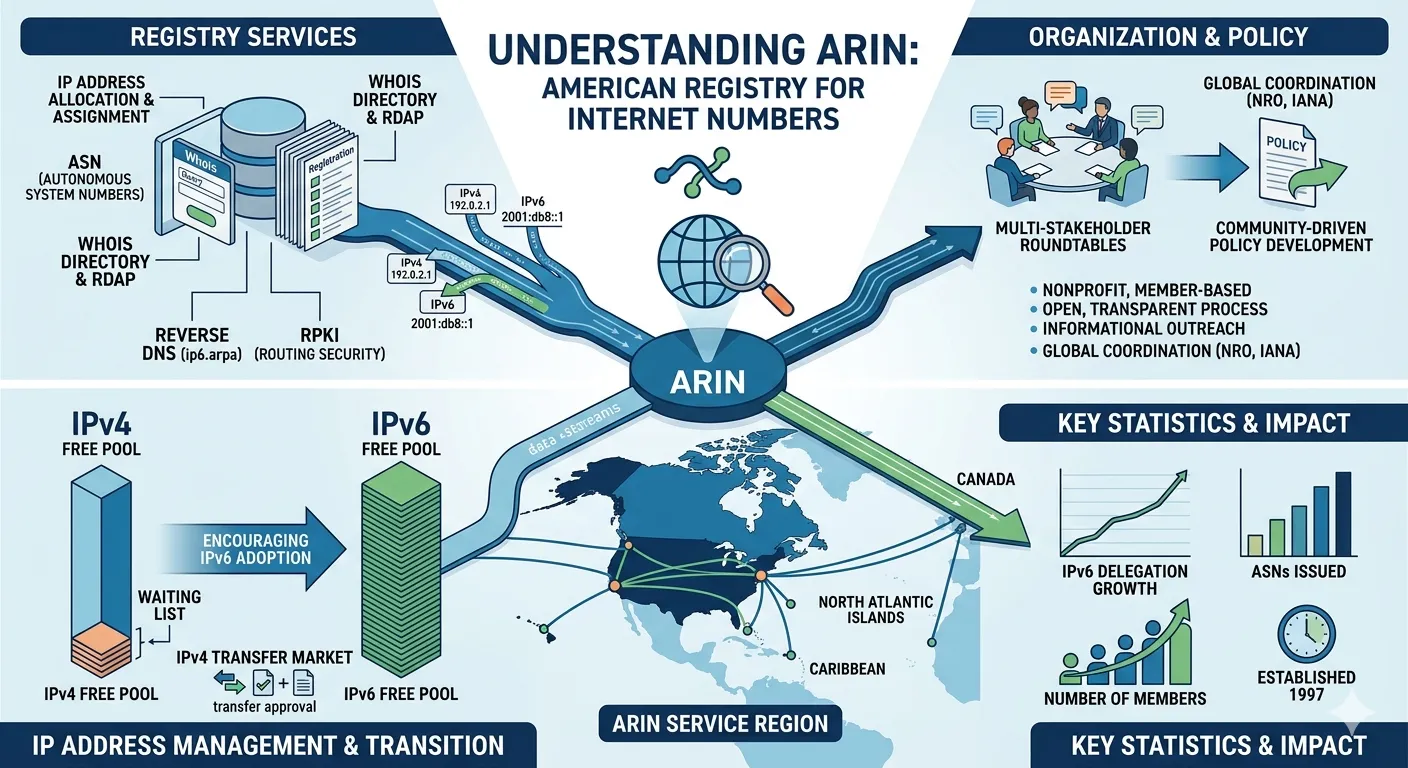
The American Registry for Internet Numbers (ARIN) is a nonprofit organization that plays a vital role in managing and distributing Internet number resources. These resources include Internet Protocol (IP) addresses and Autonomous System Numbers (ASNs), which are essential for ensuring that data travels reliably across the global Internet.
Table of Contents
ARIN is one of five Regional Internet Registries (RIRs) worldwide. Its jurisdiction covers Canada, the United States, and many parts of the Caribbean. In essence, ARIN helps organize the “address book” of the Internet for this region, ensuring that IP addresses are distributed fairly and efficiently to Internet service providers (ISPs), data centers, universities, government agencies, and other network operators.
Why IP Addresses Matter
Every device connected to the Internet needs an IP address to communicate—whether it’s a website server, a smartphone, or your smart home devices. These addresses must be unique to avoid confusion in data routing. Just like postal addresses ensure your mail ends up at the correct home, IP addresses ensure that data sent over the Internet reaches the right destination.
There are two types of IP addresses in use: IPv4 and IPv6. IPv4, the older standard, is running out of available addresses due to the explosive growth of the Internet. IPv6 was developed to solve this problem by offering a vastly larger pool of addresses. ARIN helps organizations manage and transition between these protocols.
ARIN’s Role in the Internet Ecosystem
ARIN doesn’t just hand out IP addresses. It also plays a key role in maintaining the accuracy of Internet number records. Through a publicly accessible database called WHOIS, anyone can look up who holds a specific IP address or ASN. This transparency is important for network troubleshooting, cybersecurity, and tracking abuse or malicious activity online.
Beyond resource distribution and record-keeping, ARIN contributes to policy development. It operates under a community-driven, open policy framework. This means that network operators, researchers, and other stakeholders can propose and discuss changes to the policies that govern IP address management. ARIN facilitates this process through mailing lists, public meetings, and working groups.
Security and Technical Services
ARIN also provides technical services that enhance Internet security and reliability. One such example is Resource Public Key Infrastructure (RPKI), a cryptographic system that helps prevent IP address hijacking—where malicious actors try to reroute Internet traffic by falsely claiming address ownership.
Conclusion
In a world that increasingly relies on digital infrastructure, the behind-the-scenes work of organizations like ARIN is more important than ever. By managing critical Internet number resources and supporting secure, transparent, and efficient Internet operations, ARIN ensures that the Internet continues to grow and function smoothly in North America and beyond. Whether you’re a tech professional or a curious learner, understanding ARIN gives insight into one of the fundamental layers of our connected world.
Trusted IPv4 Leasing for Business Growth
Get enterprise-grade IPv4 space quickly, with seamless deployment and end-to-end management.
Get Started with i.leaseRelated Blogs
Artículos relacionados
IPv4 leasing vs purchasing: structural risk in the IPv4 address market
IPv4 leasing vs purchasing reflects a structural shift in IP address markets, balancing cost, control, scarcity, and operational risk in 2026. Key points IPv4 leasing has become a flexible operating model, with stable monthly pricing driven by scarcity and fast deployment needs. IPv4 purchasing is shifting into a long-term asset strategy, but exposed to price cycles, liquidity changes, and capital lock-in. IPv4 is no longer just infrastructure — itRead more Related Posts IPv4 租赁 vs 购买|2026 年 IPv4 市场结构性风险解析 在 IPv4 稀缺持续加剧的市场中,租赁与购买已不只是价格差异,而是两种不同的风险结构。本文解析 IPv4 租赁与购买的成本、控制权、连续性、市场风险与适用场景,帮助企业制定更合适的 IP 策略。 重点摘要 到了 2026 年,IPv4 租赁已经成为一种更灵活的运营模式,月租价格相对稳定,主要由稀缺性和快速部署需求驱动。IPv4 购买则越来越像一种长期资产策略,但也会暴露在价格周期、流动性变化和资金锁定风险之下。 IPv4 已经不只是基础设施,它是一个稀缺市场 IPv4 地址系统已经完全转入二级市场生态。自从 IANA 的免费分配耗尽后,组织现在主要依赖以下方式取得 IPv4:通过区域互联网注册机构(RIR)的转移经纪撮合的二级市场买卖像 Read more IPv4 leasing vs purchasing: structural risk in the IPv4 address market IPv4 leasing vs purchasing reflects a structural shift in IP address markets, balancing cost, control, scarcity, and operational risk in Read more تأجير IPv4 لمراكز البيانات: ما الذي تحتاج إلى معرفته مع تزايد ندرة IPv4، تعتمد مراكز البيانات بشكل متزايد على التأجير لتوسيع البنية التحتية، والتحكم في التكاليف، والحفاظ على اتصال Read more .related-post {} .related-post .post-list { text-align: left; } .related-post .post-list .item { margin: 5px; padding: 10px; } .related-post .headline { font-size: 18px !important; color: #999999 !important; } .related-post .post-list .item .post_thumb { max-height: 220px; margin: 10px 0px; padding: 0px; display: block; } .related-post .post-list .item .post_title { font-size: 16px; color: #3f3f3f; margin: 10px 0px; padding: 0px; display: block; text-decoration: none; } .related-post .post-list .item .post_excerpt { font-size: 13px; color: #3f3f3f; margin: 10px 0px; padding: 0px; display: block; text-decoration: none; } @media only screen and (min-width: 1024px) { .related-post .post-list .item { width: 30%; } } @media only screen and (min-width: 768px) and (max-width: 1023px) { .related-post .post-list .item { width: 90%; } } @media only screen and (min-width: 0px) and (max-width: 767px) { .related-post .post-list .item { width: 90%; } }
IPv4 Leasing for Data Centres: What You Need To Know
As IPv4 scarcity intensifies, data centres increasingly rely on leasing to scale infrastructure, control costs, and maintain reliable connectivity worldwide. IPv4 leasing has become a critical strategy for data centres facing address shortages and rising acquisition costs Leasing offers flexibility and scalability, but introduces risks around reputation, compliance, and long-term dependency Understanding IPv4 and why data centres still depend on it Despite years of tech progress IPv4 is stillRead more Related Posts IPv4 租赁 vs 购买|2026 年 IPv4 市场结构性风险解析 在 IPv4 稀缺持续加剧的市场中,租赁与购买已不只是价格差异,而是两种不同的风险结构。本文解析 IPv4 租赁与购买的成本、控制权、连续性、市场风险与适用场景,帮助企业制定更合适的 IP 策略。 重点摘要 到了 2026 年,IPv4 租赁已经成为一种更灵活的运营模式,月租价格相对稳定,主要由稀缺性和快速部署需求驱动。IPv4 购买则越来越像一种长期资产策略,但也会暴露在价格周期、流动性变化和资金锁定风险之下。 IPv4 已经不只是基础设施,它是一个稀缺市场 IPv4 地址系统已经完全转入二级市场生态。自从 IANA 的免费分配耗尽后,组织现在主要依赖以下方式取得 IPv4:通过区域互联网注册机构(RIR)的转移经纪撮合的二级市场买卖像 Read more IPv4 leasing vs purchasing: structural risk in the IPv4 address market IPv4 leasing vs purchasing reflects a structural shift in IP address markets, balancing cost, control, scarcity, and operational risk in Read more تأجير IPv4 لمراكز البيانات: ما الذي تحتاج إلى معرفته مع تزايد ندرة IPv4، تعتمد مراكز البيانات بشكل متزايد على التأجير لتوسيع البنية التحتية، والتحكم في التكاليف، والحفاظ على اتصال Read more .related-post {} .related-post .post-list { text-align: left; } .related-post .post-list .item { margin: 5px; padding: 10px; } .related-post .headline { font-size: 18px !important; color: #999999 !important; } .related-post .post-list .item .post_thumb { max-height: 220px; margin: 10px 0px; padding: 0px; display: block; } .related-post .post-list .item .post_title { font-size: 16px; color: #3f3f3f; margin: 10px 0px; padding: 0px; display: block; text-decoration: none; } .related-post .post-list .item .post_excerpt { font-size: 13px; color: #3f3f3f; margin: 10px 0px; padding: 0px; display: block; text-decoration: none; } @media only screen and (min-width: 1024px) { .related-post .post-list .item { width: 30%; } } @media only screen and (min-width: 768px) and (max-width: 1023px) { .related-post .post-list .item { width: 90%; } } @media only screen and (min-width: 0px) and (max-width: 767px) { .related-post .post-list .item { width: 90%; } }

What are the risks of buying IPv4 from the wrong source?
Buying IPv4 addresses outside proper IP Allocation channels exposes organisations to fraud, legal disputes, operational failures and long-term governance risks. Key points: Poorly governed IPv4 transactions can fail regional internet registry checks, leading to loss of assets or invalid transfers. Cheap or unverified sources often hide risks including hijacked IP space, blacklisting, and non-compliance with centralized IP allocation policies. Introduction: scarcity fuels risk in the IPv4 market The globalRead more Related Posts IPv4 租赁 vs 购买|2026 年 IPv4 市场结构性风险解析 在 IPv4 稀缺持续加剧的市场中,租赁与购买已不只是价格差异,而是两种不同的风险结构。本文解析 IPv4 租赁与购买的成本、控制权、连续性、市场风险与适用场景,帮助企业制定更合适的 IP 策略。 重点摘要 到了 2026 年,IPv4 租赁已经成为一种更灵活的运营模式,月租价格相对稳定,主要由稀缺性和快速部署需求驱动。IPv4 购买则越来越像一种长期资产策略,但也会暴露在价格周期、流动性变化和资金锁定风险之下。 IPv4 已经不只是基础设施,它是一个稀缺市场 IPv4 地址系统已经完全转入二级市场生态。自从 IANA 的免费分配耗尽后,组织现在主要依赖以下方式取得 IPv4:通过区域互联网注册机构(RIR)的转移经纪撮合的二级市场买卖像 Read more IPv4 leasing vs purchasing: structural risk in the IPv4 address market IPv4 leasing vs purchasing reflects a structural shift in IP address markets, balancing cost, control, scarcity, and operational risk in Read more تأجير IPv4 لمراكز البيانات: ما الذي تحتاج إلى معرفته مع تزايد ندرة IPv4، تعتمد مراكز البيانات بشكل متزايد على التأجير لتوسيع البنية التحتية، والتحكم في التكاليف، والحفاظ على اتصال Read more .related-post {} .related-post .post-list { text-align: left; } .related-post .post-list .item { margin: 5px; padding: 10px; } .related-post .headline { font-size: 18px !important; color: #999999 !important; } .related-post .post-list .item .post_thumb { max-height: 220px; margin: 10px 0px; padding: 0px; display: block; } .related-post .post-list .item .post_title { font-size: 16px; color: #3f3f3f; margin: 10px 0px; padding: 0px; display: block; text-decoration: none; } .related-post .post-list .item .post_excerpt { font-size: 13px; color: #3f3f3f; margin: 10px 0px; padding: 0px; display: block; text-decoration: none; } @media only screen and (min-width: 1024px) { .related-post .post-list .item { width: 30%; } } @media only screen and (min-width: 768px) and (max-width: 1023px) { .related-post .post-list .item { width: 90%; } } @media only screen and (min-width: 0px) and (max-width: 767px) { .related-post .post-list .item { width: 90%; } }
