Principaux points à prendre en compte lors du commerce d’adresses IPv4 sur le marché secondaire
 Stephanie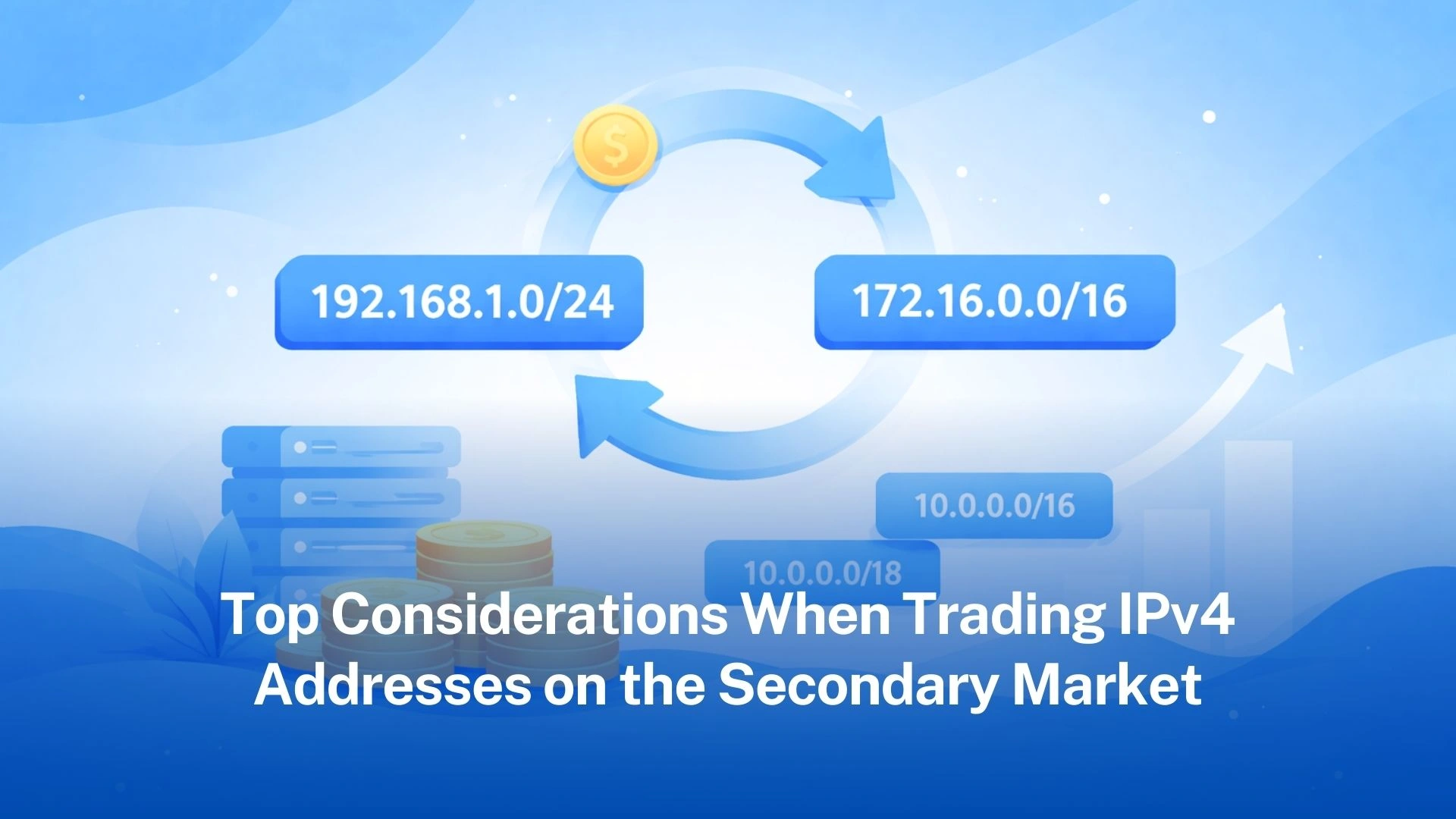
Naviguer sur le marché secondaire de l’IPv4 exige une attention particulière à la légalité, à la réputation, à la tarification, à la conformité et à la gestion des risques afin de garantir des transactions réussies.
Table of Contents
- La conformité légale des transferts, des registres de propriété exacts et des vérifications de réputation sont essentiels avant de s’engager dans le trading IPv4.
- Travailler avec des courtiers et des plateformes réputés comme i.Lease peut simplifier la diligence raisonnable et réduire les pièges courants du marché.
Pourquoi le marché secondaire IPv4 est important
Le pool mondial d’adresses IPv4 librement disponibles est officiellement épuisé depuis des années, obligeant les organisations qui dépendent encore de la connectivité IPv4 à acquérir de l’espace via les marchés secondaires. Ces marchés — où les blocs d’adresses IPv4 sont achetés, vendus ou loués — ont gagné en ampleur et en complexité, car la demande continue de dépasser l’offre. Les fournisseurs cloud, les entreprises d’hébergement, les ISP et les entreprises cherchant à étendre leurs services se tournent fréquemment vers les marchés de trading pour sécuriser de l’espace d’adressage, puisque les registres Internet régionaux ne fournissent plus de blocs non alloués.
Dans cet environnement, le trading sur le marché secondaire est devenu un élément central de la planification réseau. Mais y participer avec succès exige plus qu’une préparation financière ; cela demande une compréhension approfondie des exigences légales, de la gestion de la réputation et du risque opérationnel. Sans préparation minutieuse, les organisations peuvent rencontrer de graves difficultés, allant du trafic bloqué aux enregistrements échoués et aux dommages réputationnels.
Comprendre le contexte juridique et de conformité des registres
L’une des premières considérations lors de toute transaction IPv4 est de garantir la conformité avec les politiques du Registre Internet Régional (RIR) dont dépend le bloc d’adresses. Chaque RIR — comme ARIN (Amérique du Nord), RIPE NCC (Europe) ou APNIC (Asie-Pacifique) — possède ses propres politiques de transfert régissant les modalités de transfert des adresses IPv4. Ces politiques déterminent qui est autorisé à effectuer des transactions, comment les transferts sont enregistrés et quels documents sont requis pour les valider.
Le non-respect des exigences de conformité peut entraîner des retards, le blocage des transferts, voire une révocation de la propriété si un transfert n’est pas conforme à la politique du RIR. Il est donc essentiel que les acheteurs, les vendeurs et les courtiers suivent scrupuleusement les procédures de transfert et s’assurent d’avoir obtenu toutes les autorisations nécessaires avant de finaliser une transaction.
Vérifier la propriété et tenir des registres précis
Une documentation de propriété précise garantit la conformité et protège contre la fraude et les litiges. Des enregistrements Whois obsolètes ou erronés, par exemple, offrent aux personnes malveillantes la possibilité de s’approprier des blocs d’adresses inactifs et de les revendre sans autorisation. Les recommandations du secteur soulignent l’importance de la mise à jour régulière des registres d’enregistrement, car des informations obsolètes peuvent compromettre la sécurité et la clarté juridique des transactions.
Vérifier que le vendeur contrôle effectivement les ressources d’adresse, qu’aucun litige n’est en cours et qu’aucune plainte pour abus n’est déposée est une étape essentielle du processus de vérification préalable. Les organisations doivent s’assurer que les bases de données des RIR contiennent des informations exactes et à jour sur les titulaires de noms de domaine avant de procéder à des transferts ou des locations.
La réputation et l'historique des adresses ne doivent jamais être ignorés.
Les adresses IPv4 ayant un historique d’utilisation abusive (campagnes de spam, distribution de logiciels malveillants ou autres comportements abusifs) peuvent figurer sur des listes noires publiques. L’acquisition de telles adresses peut entraîner des problèmes de connectivité immédiats et des pertes d’opportunités commerciales. Il est donc essentiel de vérifier la réputation de tout bloc d’adresses avant toute transaction.
Un historique d’adresse irréprochable n’est pas qu’une simple question technique ; il a un impact direct sur l’activité. Une mauvaise réputation peut affecter la délivrabilité des e-mails, le score de sécurité et la confiance globale dans les opérations du réseau. Les acheteurs ou loueurs potentiels doivent utiliser des services de surveillance des listes noires reconnus et exiger une confirmation formelle des vendeurs que les adresses n’ont pas été associées à des abus. Ce type de vérification préalable de la réputation permet d’éviter des mesures correctives coûteuses a posteriori.
Dynamique des prix : rareté, demande et différences régionales
La rareté des adresses IPv4 entraîne une disparité des prix sur le marché. Ces dernières années, les prix des adresses ont augmenté régulièrement en raison de cette rareté persistante, certains blocs se vendant parfois à des prix nettement supérieurs aux normes historiques. Des courtiers et des plateformes d’échange ont émergé pour faciliter ces transactions, en faisant correspondre l’offre et la demande tout en garantissant la conformité et la transparence.
Les organisations envisageant d’échanger des adresses IPv4 doivent se tenir informées des fourchettes de prix moyennes, des variations régionales et de l’impact des pressions externes telles que la demande des fournisseurs de services cloud. Anticiper et bien connaître le marché permettent d’éviter les surpaiements et de mener des négociations plus stratégiques.
Le rôle des courtiers et des plateformes comme i.Lease
Compte tenu de la complexité du commerce d’adresses IPv4, de nombreuses organisations choisissent de collaborer avec des courtiers réputés ou des plateformes établies. Les courtiers jouent un rôle essentiel en facilitant les transactions, en gérant les formalités administratives, en assurant la coordination avec les RIR et, parfois, en proposant des services de séquestre. Ils contribuent également à vérifier la validité et la documentation des adresses, réduisant ainsi les risques de mauvaises surprises après la conclusion de la transaction.
Des plateformes telles que i.Lease étendent ce soutien en fournissant des environnements structurés pour le commerce et la location de ressources IPv4. Leurs places de marché permettent aux locataires et aux acheteurs de trouver efficacement des blocs disponibles, tandis que les bailleurs et les vendeurs bénéficient de processus éprouvés pour la documentation, les contrôles de conformité et l’assistance transactionnelle. Le recours à un intermédiaire de confiance permet d’éviter de nombreux écueils courants sur le marché secondaire.
Considérations fiscales, comptables et de classification des actifs
Dans de nombreuses juridictions, les adresses IPv4 sont considérées comme des actifs incorporels, et les produits de leur vente ou de leur location peuvent avoir des conséquences fiscales spécifiques. Par exemple, l’impôt sur les plus-values peut s’appliquer si la vente génère un profit, tandis que les revenus locatifs issus de contrats de location peuvent être traités comme des revenus d’entreprise ordinaires. S’assurer que les opérations de vente et de location sont correctement comptabilisées permet d’éviter des obligations fiscales imprévues.
Certaines organisations peuvent également amortir les adresses IPv4 utilisées en location, sous réserve des règles comptables locales. Comprendre le traitement fiscal de ces actifs dans les différentes juridictions est donc une étape importante pour planifier des opérations cohérentes avec des stratégies financières et fiscales globales.
Prévenir les abus et les fraudes dans les transactions
La croissance rapide du marché des adresses IPv4 a attiré non seulement des acteurs légitimes, mais aussi des personnes mal intentionnées cherchant à exploiter les failles des procédures d’enregistrement et de transfert. L’adoption de processus de vérification rigoureux et l’exigence d’une documentation transparente contribuent à protéger acheteurs et vendeurs contre la fraude. Cela implique de confirmer l’identité des contreparties, de valider la propriété des adresses et d’utiliser des cadres contractuels fiables pour définir les droits et les responsabilités.
Les rapports sur les tendances du secteur indiquent que le renforcement des politiques de transfert et des mécanismes de signalement des fraudes mis en place par les RIR a contribué à réduire les abus, mais la vigilance demeure essentielle car les acteurs malveillants continuent de rechercher les faiblesses du système.
Planification stratégique du calendrier et du marché
Étant donné que les prix et la disponibilité peuvent fluctuer en fonction des conditions générales du marché, les organisations doivent tenir compte du calendrier stratégique lors de la planification de leurs échanges d’adresses IPv4. L’offre d’adresses peut se raréfier ou s’assouplir selon les évolutions macroéconomiques liées à l’adoption des technologies, aux modes de consommation du cloud et même aux taux d’adoption de l’IPv6. Une planification anticipée permet aux institutions d’aligner l’acquisition d’adresses sur les calendriers d’expansion du réseau, réduisant ainsi le risque de surtaxes de dernière minute.
Les acteurs proactifs suivent également de près les évolutions réglementaires régionales, qui peuvent influencer les délais de transfert et les critères d’éligibilité. Se tenir informé de ces tendances permet aux entreprises de prendre des décisions éclairées plutôt que réactives.
Conclusion : commercez avec diligence
L’échange d’adresses IPv4 sur le marché secondaire offre aux entreprises une solution pratique pour sécuriser l’espace d’adressage nécessaire dans un contexte de pénurie persistante. Toutefois, ce processus est complexe et exige une attention particulière en matière de conformité légale, de vérification de propriété, d’historique de réputation, de dynamique des prix, de fiscalité et de gestion des risques. Collaborer avec des courtiers reconnus et des plateformes de confiance comme i.Lease permet de simplifier considérablement ces démarches, de réduire les risques et d’optimiser les résultats des transactions.
En considérant les échanges d’adresses IPv4 non pas comme de simples tâches techniques de routine, mais comme des investissements stratégiques ayant des implications réglementaires et opérationnelles, les entreprises peuvent protéger leurs réseaux et favoriser une croissance durable.
The IPv4 market reflects one of the most compelling examples of economic scarcity in the digital age. After the free pool exhausted, IPv4 addresses transitioned into a mature secondary market where block size, year, and buyer strategy all influence value. Prices surged in the early post‑exhaustion years, peaking as large enterprises competed for limited space. Over time, increased block availability and the rise of leasing solutions have tempered price volatility. Heading into 2026, we’re seeing a more balanced ecosystem — where buyers, sellers, and lessees negotiate not just on price, but on flexibility, timing, and network deployment plans
– Rachel Chen, IP Address Management Expert
Frequently Asked Questions
1. What is the IPv4 secondary market?
It is a marketplace where IPv4 address blocks are bought, sold or leased because the free pool of addresses is exhausted.
2. Why is IPv4 trading complex?
Complexity arises from RIR policies, compliance requirements, reputation issues and tax implications.
3. How can reputation affect an IPv4 address transaction?
Addresses with a history of abuse may be blacklisted, affecting connectivity and value in trades.
4. What role do brokers play in IPv4 trading?
Brokers help with compliance, documentation, matching buyers and sellers, and ensuring transparent transactions.
5. Are there tax considerations in IPv4 trading?
Yes, sales may trigger capital gains tax and lease income may be treated as ordinary business revenue, depending on jurisdiction.
Related Blogs
Artículos relacionados
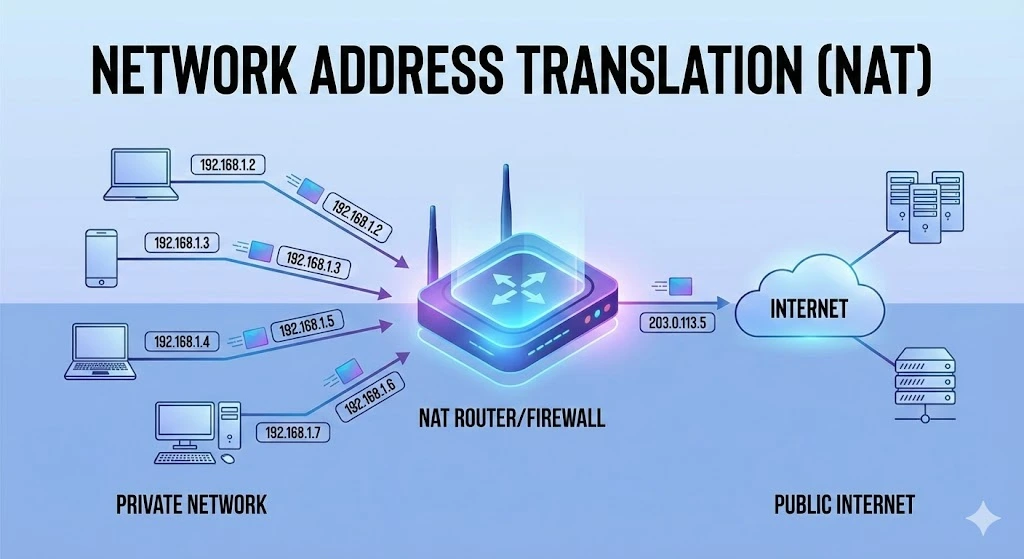
Comprensión de la traducción de direcciones de red (NAT)
En las redes informáticas, gestionar las direcciones IP de forma eficiente es fundamental para garantizar una comunicación fluida entre los dispositivos. Una de las tecnologías clave que ha surgido para afrontar este desafío es la Traducción de Direcciones de Red (NAT, por sus siglas en inglés). En este artículo explicamos qué es NAT, cómo funciona, sus distintos tipos, así como sus ventajas y limitaciones. ¿Qué es la traducción deRead more Related Posts Desbloqueando la privacidad digital con una red privada virtual (VPN) ¿Qué es una VPN? Una red privada virtual (VPN) es una tecnología que permite a los usuarios crear una conexión Comprensión de la traducción de direcciones de red (NAT) En las redes informáticas, gestionar las direcciones IP de forma eficiente es fundamental para garantizar una comunicación fluida entre los ¿Por qué Malasia se está convirtiendo en un centro neurálgico para la infraestructura de nube e IA? Malasia se está convirtiendo en uno de los mercados de crecimiento de centros de datos más importantes del Sudeste Asiático. .related-post {} .related-post .post-list { text-align: left; } .related-post .post-list .item { margin: 5px; padding: 10px; } .related-post .headline { font-size: 18px !important; color: #999999 !important; } .related-post .post-list .item .post_thumb { max-height: 220px; margin: 10px 0px; padding: 0px; display: block; } .related-post .post-list .item .post_title { font-size: 16px; color: #3f3f3f; margin: 10px 0px; padding: 0px; display: block; text-decoration: none; } .related-post .post-list .item .post_excerpt { font-size: 13px; color: #3f3f3f; margin: 10px 0px; padding: 0px; display: block; text-decoration: none; } @media only screen and (min-width: 1024px) { .related-post .post-list .item { width: 30%; } } @media only screen and (min-width: 768px) and (max-width: 1023px) { .related-post .post-list .item { width: 90%; } } @media only screen and (min-width: 0px) and (max-width: 767px) { .related-post .post-list .item { width: 90%; } }
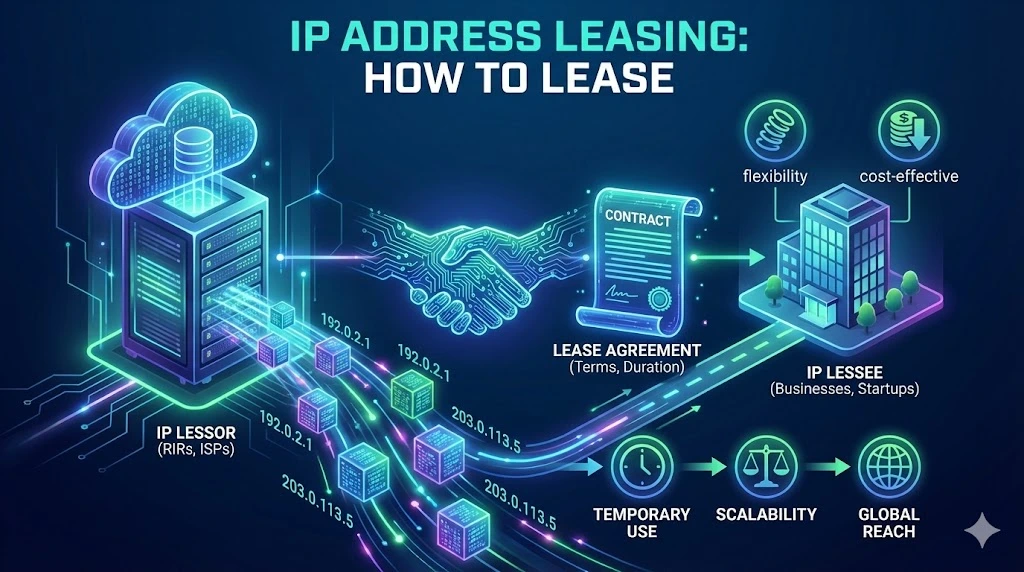
Arrendamiento de direcciones IP: Cómo arrendar direcciones IP
El mundo digital en el que nos movemos hoy depende en gran medida de las direcciones IP, identificadores únicos asignados a los dispositivos conectados a internet o a una red local. A medida que la demanda de direcciones IP sigue aumentando, empresas y particulares exploran diversas opciones para obtener los recursos necesarios. Un método cada vez más popular es el arrendamiento de direcciones IP. Este artículo profundiza en elRead more Related Posts Desbloqueando la privacidad digital con una red privada virtual (VPN) ¿Qué es una VPN? Una red privada virtual (VPN) es una tecnología que permite a los usuarios crear una conexión Comprensión de la traducción de direcciones de red (NAT) En las redes informáticas, gestionar las direcciones IP de forma eficiente es fundamental para garantizar una comunicación fluida entre los ¿Por qué Malasia se está convirtiendo en un centro neurálgico para la infraestructura de nube e IA? Malasia se está convirtiendo en uno de los mercados de crecimiento de centros de datos más importantes del Sudeste Asiático. .related-post {} .related-post .post-list { text-align: left; } .related-post .post-list .item { margin: 5px; padding: 10px; } .related-post .headline { font-size: 18px !important; color: #999999 !important; } .related-post .post-list .item .post_thumb { max-height: 220px; margin: 10px 0px; padding: 0px; display: block; } .related-post .post-list .item .post_title { font-size: 16px; color: #3f3f3f; margin: 10px 0px; padding: 0px; display: block; text-decoration: none; } .related-post .post-list .item .post_excerpt { font-size: 13px; color: #3f3f3f; margin: 10px 0px; padding: 0px; display: block; text-decoration: none; } @media only screen and (min-width: 1024px) { .related-post .post-list .item { width: 30%; } } @media only screen and (min-width: 768px) and (max-width: 1023px) { .related-post .post-list .item { width: 90%; } } @media only screen and (min-width: 0px) and (max-width: 767px) { .related-post .post-list .item { width: 90%; } }
¿Qué es el agotamiento de direcciones IPv4?
IPv4 es la versión inicial del Protocolo de Internet (IP), capaz de generar 4.300 millones de posibles direcciones IPv4. Sin embargo, muchas de estas direcciones están reservadas para fines específicos, como investigación y desarrollo. Esto deja un conjunto limitado disponible para organizaciones e individuos en todo el mundo. Con el crecimiento exponencial de Internet, la demanda de direcciones IPv4 se ha disparado. Esto provocó una rápida disminución de lasRead more Related Posts Desbloqueando la privacidad digital con una red privada virtual (VPN) ¿Qué es una VPN? Una red privada virtual (VPN) es una tecnología que permite a los usuarios crear una conexión Comprensión de la traducción de direcciones de red (NAT) En las redes informáticas, gestionar las direcciones IP de forma eficiente es fundamental para garantizar una comunicación fluida entre los Arrendamiento de direcciones IP: Cómo arrendar direcciones IP El mundo digital en el que nos movemos hoy depende en gran medida de las direcciones IP, identificadores únicos asignados .related-post {} .related-post .post-list { text-align: left; } .related-post .post-list .item { margin: 5px; padding: 10px; } .related-post .headline { font-size: 18px !important; color: #999999 !important; } .related-post .post-list .item .post_thumb { max-height: 220px; margin: 10px 0px; padding: 0px; display: block; } .related-post .post-list .item .post_title { font-size: 16px; color: #3f3f3f; margin: 10px 0px; padding: 0px; display: block; text-decoration: none; } .related-post .post-list .item .post_excerpt { font-size: 13px; color: #3f3f3f; margin: 10px 0px; padding: 0px; display: block; text-decoration: none; } @media only screen and (min-width: 1024px) { .related-post .post-list .item { width: 30%; } } @media only screen and (min-width: 768px) and (max-width: 1023px) { .related-post .post-list .item { width: 90%; } } @media only screen and (min-width: 0px) and (max-width: 767px) { .related-post .post-list .item { width: 90%; } }
