Understanding of Network Address Translation (NAT)
 Chan
Chan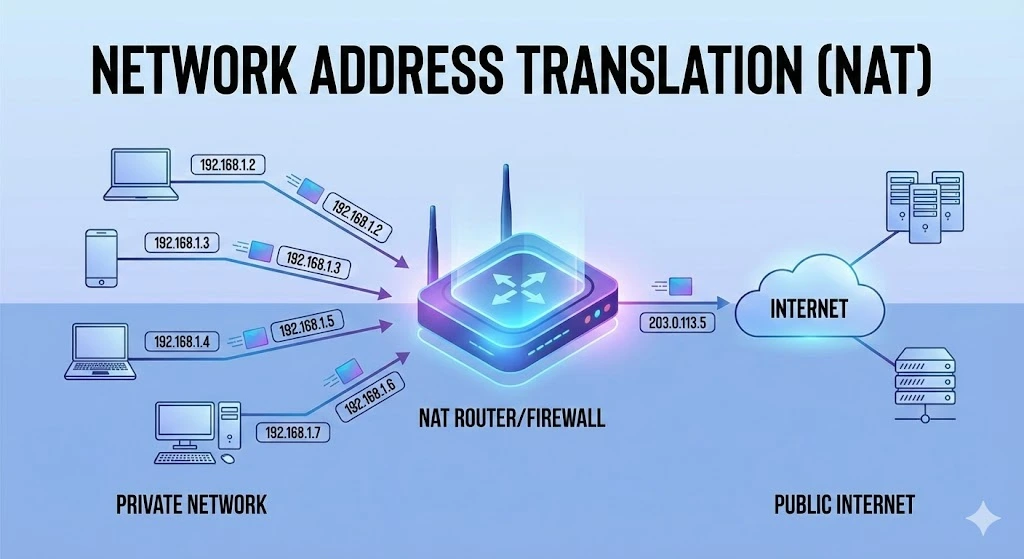
In networking, managing IP addresses efficiently ensures seamless communication between devices. One key technology that has emerged to address this challenge is Network Address Translation (NAT). This article explores what NAT is, how it works, its types, and its benefits and limitations.
Table of Contents
What is Network Address Translation (NAT)?
Network Address Translation (NAT) is a method used in networking to modify network address information in the IP header of packets while they are in transit. This technique allows multiple devices on a local network to share a single public IP address. NAT is commonly used to improve security and conserve the limited IPv4 addresses.
How Does NAT work?
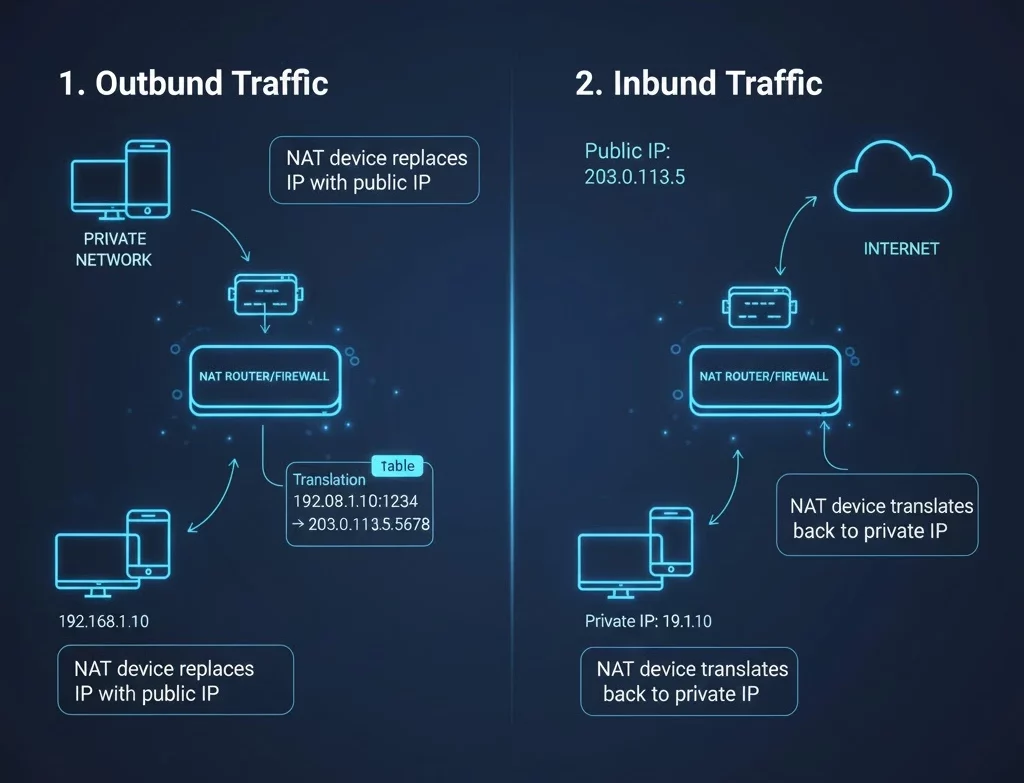
NAT operates by modifying the source or destination IP addresses of packets as they pass through a router or firewall. Here’s a simplified explanation of the process:
1. Outbound Traffic:
When a device on a local network (with a private IP address) sends a packet to the internet, the NAT device (usually a router) replaces the private IP address in the packet’s header with the router’s public IP address.
The NAT device also records this translation in a table, mapping the private IP address and port number to the public IP address and a unique port number.
2. Inbound Traffic:
When a response packet is received from the internet, the NAT device checks its translation table to determine the corresponding private IP address and port number. The NAT device then replaces the destination public IP address and port number in the packet’s header with the private IP address and port number and forwards the packet to the appropriate local device.
This translation process allows multiple devices on a private network to access the internet using a single public IP address, effectively hiding the internal network structure from external observers.
Types of NAT
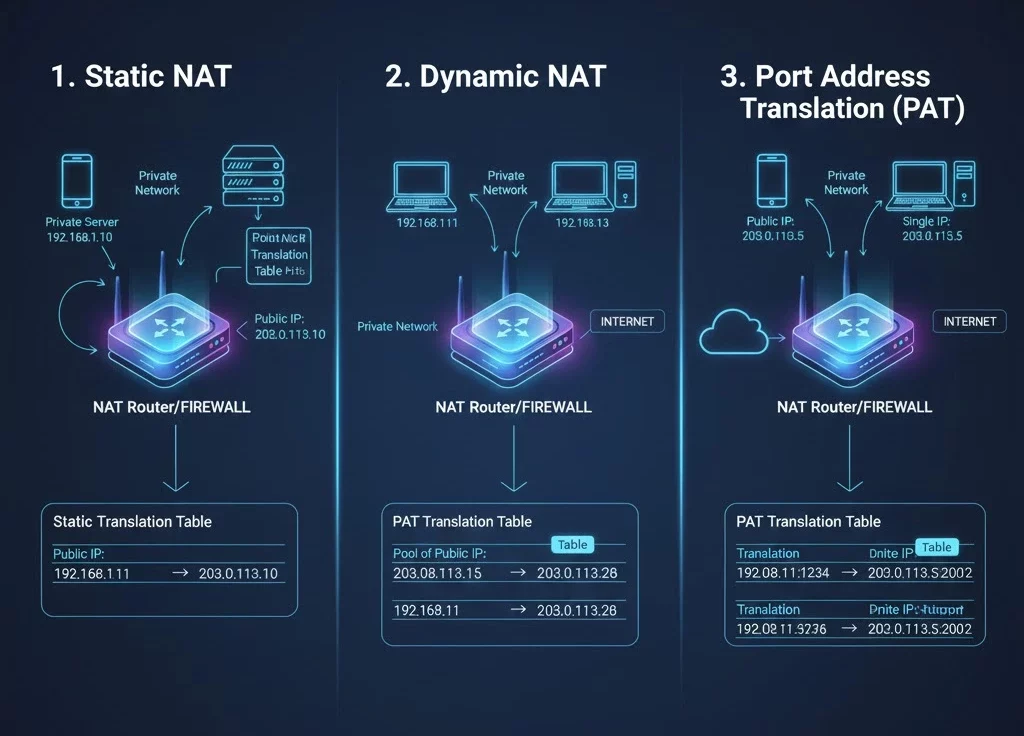
There are several types of NAT, each with specific use cases and functionalities:
1. Static NAT:
Also known as one-to-one NAT, static NAT maps a single private IP address to a single public IP address. This type is useful for hosting servers that need to be accessible from the internet.
2. Dynamic NAT:
Dynamic NAT maps a private IP address to a public IP address from a pool of available addresses. This type of NAT does not guarantee the same public IP address for each session.
3. Port Address Translation (PAT):
Also known as overload or many-to-one NAT, PAT allows multiple private IP addresses to be mapped to a single public IP address, but with a unique port number for each session. This is the most common type of NAT used in home and small office networks.
Benefits of NAT
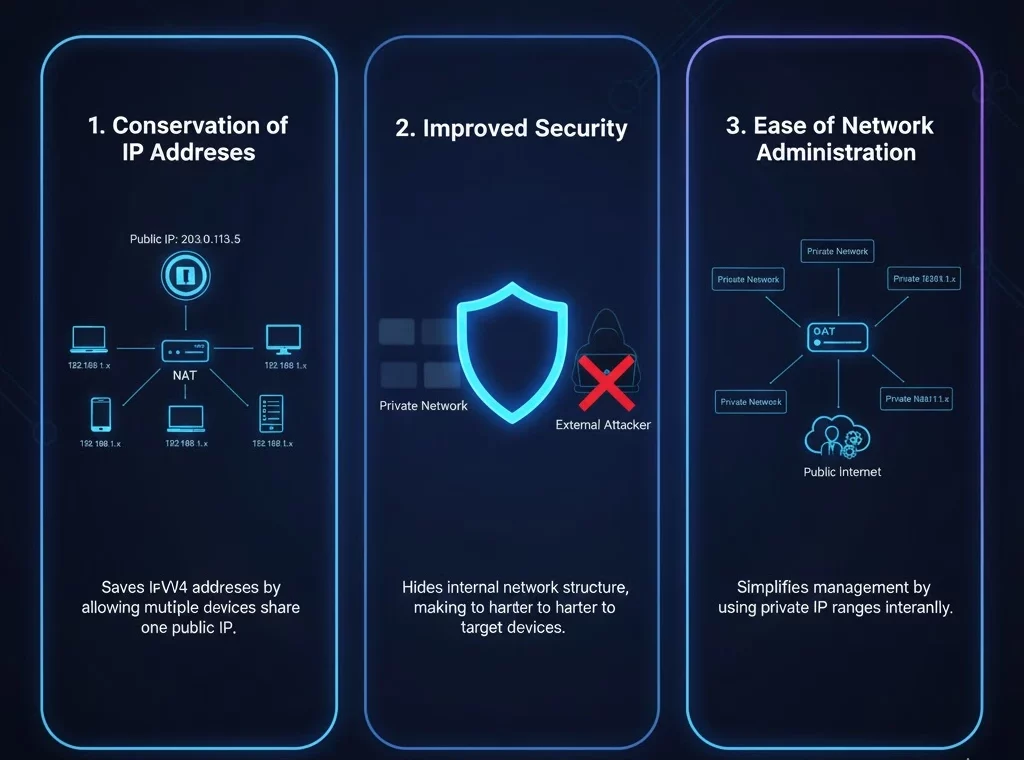
NAT offers several advantages that make it a valuable tool in modern networking:
1. Conservation of IP Addresses:
By allowing multiple devices to share a single public IP address, NAT helps to conserve the limited number of available IPv4 addresses.
2. Improved Security:
NAT adds a layer of security by hiding the internal network structure from external observers. This makes it more difficult for attackers to target specific devices on the network.
3. Ease of Network Administration:
NAT simplifies network management by allowing private IP address ranges to be used internally, reducing the need for public IP addresses.
Limitations of NAT
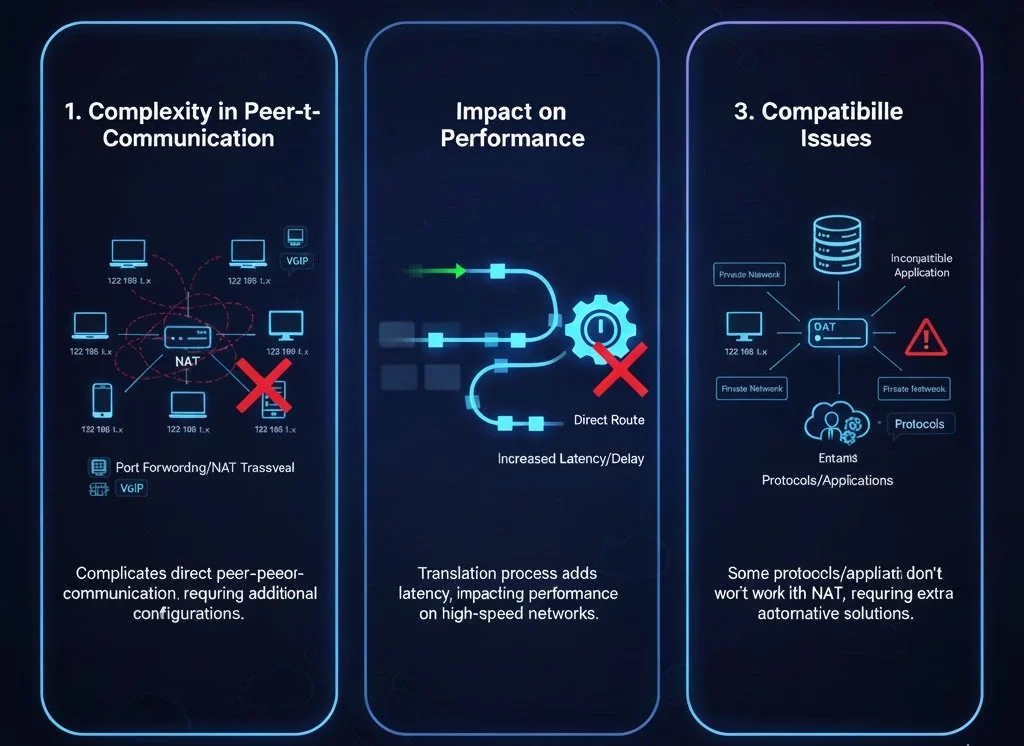
Despite its benefits, NAT has some limitations that need to be considered:
1. Complexity in Peer-to-Peer Communication:
NAT can complicate direct peer-to-peer communication, such as VoIP and online gaming, as it requires additional configurations like port forwarding or the use of NAT traversal techniques.
2. Impact on Performance:
The translation process adds a small amount of latency to network traffic, which could impact performance on high-speed networks.
3. Compatibility Issues:
Some protocols and applications may not work correctly with NAT, requiring additional configuration or alternative solutions.
NAT in a nutshell
Network Address Translation (NAT) is a fundamental technology that plays a crucial role in modern networking. By allowing multiple devices to share a single public IP address, NAT conserves IP addresses and enhances network security. However, it also introduces some challenges, particularly in peer-to-peer communication and application compatibility. Understanding how NAT works and its benefits and limitations is essential for effective network management and optimization.
Trusted IPv4 Leasing for Business Growth
Get enterprise-grade IPv4 space quickly, with seamless deployment and end-to-end management.
Get Started with i.leaseFAQs
Is NAT the same as a Firewall?
No, but they often work together. NAT hides your internal IP addresses from the public internet, which provides a basic level of privacy. A Firewall actively inspects and blocks malicious traffic based on security rules. Think of NAT as frosting glass windows (privacy) and a firewall as locking the doors (security).
Does NAT slow down my internet speed?
In most home networks, the impact is negligible. However, because the router has to rewrite the header of every data packet (a process called “translation overhead”), older or overloaded routers may introduce slight latency (lag) during heavy usage, such as 4K streaming or competitive gaming.
What is "Double NAT" and why is it bad?
Double NAT occurs when you have two routers connected in a row (e.g., an ISP modem/router combo connected to your own personal router), both trying to perform NAT. This causes connection issues for VPNs, online gaming, and port forwarding. You can fix this by enabling “Bridge Mode” on your ISP’s modem.
What is the difference between NAT and PAT?
NAT (Network Address Translation) typically maps one IP address to another (1-to-1). PAT (Port Address Translation), also called “NAT Overload,” allows multiple devices on your home network to share a single public IP address by assigning each device a unique “port” number. PAT is what almost all home Wi-Fi networks use.
Artículos relacionados
Short-term vs long-term IPv4 leasing
Facing IPv4 shortages, companies must weigh cost, speed, and network growth when choosing a lease plan. Short-term leasing lets you scale resources up or down easily, but costs more over time and offers less supply certainty. Long-term leasing provides stable pricing and more reliable access, yet makes it harder to adjust your setup as needs evolve. Introduction: Why leasing IPv4 addresses makes sense IPv4 has evolved from a technicalRead more Related Posts Short-term vs long-term IPv4 leasing Facing IPv4 shortages, companies must weigh cost, speed, and network growth when choosing a lease plan.Short-term leasing lets you scale Read more Why IPv4 scarcity drives economic value for operators IPv4 地址曾经只是互联网运行所需的基础资源。但在今天,它越来越像一种具有市场价格、可交易、可租赁的数字资产。造成这一变化的原因并不复杂:IPv4 的总量有限,而全球互联网对 IPv4 的需求并没有消失;与此同时,IPv6 虽然早已出现,但迁移进度依然缓慢。这三股力量叠加,正在重新塑造运营商对 IP 地址的看法,也改变了互联网基础设施的经济逻辑。原文将这点概括为“有限供给、持续需求与缓慢转型”,并指出这正在推动 IP 地址成为影响全球电信经济的可交易资产。 IPv4 稀缺并不是新问题 全球互联网至今仍大量依赖 IPv4。这个协议诞生于更早的时代,只能提供大约 43 亿个地址。这个数量在互联网初期似乎足够庞大,但在今天已经明显不够。原文指出,IANA 在 2011 年就已将最后一批大型 IPv4 Read more How much does a /24 IPv4 block cost in 2026? IPv4 scarcity continues to shape internet infrastructure, with /24 blocks still trading actively on global markets despite growing IPv6 adoption. Key Read more .related-post {} .related-post .post-list { text-align: left; } .related-post .post-list .item { margin: 5px; padding: 10px; } .related-post .headline { font-size: 18px !important; color: #999999 !important; } .related-post .post-list .item .post_thumb { max-height: 220px; margin: 10px 0px; padding: 0px; display: block; } .related-post .post-list .item .post_title { font-size: 16px; color: #3f3f3f; margin: 10px 0px; padding: 0px; display: block; text-decoration: none; } .related-post .post-list .item .post_excerpt { font-size: 13px; color: #3f3f3f; margin: 10px 0px; padding: 0px; display: block; text-decoration: none; } @media only screen and (min-width: 1024px) { .related-post .post-list .item { width: 30%; } } @media only screen and (min-width: 768px) and (max-width: 1023px) { .related-post .post-list .item { width: 90%; } } @media only screen and (min-width: 0px) and (max-width: 767px) { .related-post .post-list .item { width: 90%; } }
Why IPv4 scarcity drives economic value for operators
IPv4 地址曾经只是互联网运行所需的基础资源。但在今天,它越来越像一种具有市场价格、可交易、可租赁的数字资产。 造成这一变化的原因并不复杂:IPv4 的总量有限,而全球互联网对 IPv4 的需求并没有消失;与此同时,IPv6 虽然早已出现,但迁移进度依然缓慢。这三股力量叠加,正在重新塑造运营商对 IP 地址的看法,也改变了互联网基础设施的经济逻辑。原文将这点概括为“有限供给、持续需求与缓慢转型”,并指出这正在推动 IP 地址成为影响全球电信经济的可交易资产。 IPv4 稀缺并不是新问题 全球互联网至今仍大量依赖 IPv4。这个协议诞生于更早的时代,只能提供大约 43 亿个地址。这个数量在互联网初期似乎足够庞大,但在今天已经明显不够。原文指出,IANA 在 2011 年就已将最后一批大型 IPv4 地址区块分配给各区域注册机构,这成为互联网基础设施经济逻辑的转折点。 地址池耗尽之后,市场并没有停下来,而是开始适应。网络运营商、云服务商和电信企业不再只是把 IPv4 看成技术标识,而是把它视为一种有限资源,需要管理、分配、定价,甚至纳入财务优化的考量之中。 从技术资源走向经济资产 稀缺本身并不会自动带来价值,真正让 IPv4 变得有价值的,是它在现实世界中的持续需求。尽管 IPv6 已经存在,而且理论上更先进、地址空间也几乎无限,但大量旧系统、兼容性要求以及客户环境仍然依赖 IPv4。正因如此,IPv4 的需求并没有随着 IPv6 的出现而消失。原文将这一点称为一个“悖论”:技术上更优的替代方案已经存在,但 IPv4 依赖型系统的庞大存量仍在支撑市场需求。 供给固定、需求持续,这就形成了经典的供需失衡。文章提到,IPv4 的价格因此不断上升:2014 年约为每个地址 15 美元,近年则常见于 40 到 50 美元区间,高点甚至更高。围绕 IPv4 的语言也随之发生变化:从 allocation 走向 valuation,从 assignment 走向 trading。 价格不是固定的,但市场已经成形 IPv4 市场并不是静止不变的,也不是所有地址都一个价格。价格会受到区块大小、地区需求、宏观经济环境等因素影响。原文列出的历史数据表明,2014 年每个 IPv4 地址价格约在 6 到 24 美元之间,到 2021 年某些情况下可达到 60Read more Related Posts Short-term vs long-term IPv4 leasing Facing IPv4 shortages, companies must weigh cost, speed, and network growth when choosing a lease plan.Short-term leasing lets you scale Read more Why IPv4 scarcity drives economic value for operators IPv4 地址曾经只是互联网运行所需的基础资源。但在今天,它越来越像一种具有市场价格、可交易、可租赁的数字资产。造成这一变化的原因并不复杂:IPv4 的总量有限,而全球互联网对 IPv4 的需求并没有消失;与此同时,IPv6 虽然早已出现,但迁移进度依然缓慢。这三股力量叠加,正在重新塑造运营商对 IP 地址的看法,也改变了互联网基础设施的经济逻辑。原文将这点概括为“有限供给、持续需求与缓慢转型”,并指出这正在推动 IP 地址成为影响全球电信经济的可交易资产。 IPv4 稀缺并不是新问题 全球互联网至今仍大量依赖 IPv4。这个协议诞生于更早的时代,只能提供大约 43 亿个地址。这个数量在互联网初期似乎足够庞大,但在今天已经明显不够。原文指出,IANA 在 2011 年就已将最后一批大型 IPv4 Read more What Determines IPv4 Pricing in Today’s Market? Scarcity, shifting demand, and leasing platforms such as i.lease are reshaping how IPv4 addresses are valued and traded globally.IPv4 pricing is driven Read more .related-post {} .related-post .post-list { text-align: left; } .related-post .post-list .item { margin: 5px; padding: 10px; } .related-post .headline { font-size: 18px !important; color: #999999 !important; } .related-post .post-list .item .post_thumb { max-height: 220px; margin: 10px 0px; padding: 0px; display: block; } .related-post .post-list .item .post_title { font-size: 16px; color: #3f3f3f; margin: 10px 0px; padding: 0px; display: block; text-decoration: none; } .related-post .post-list .item .post_excerpt { font-size: 13px; color: #3f3f3f; margin: 10px 0px; padding: 0px; display: block; text-decoration: none; } @media only screen and (min-width: 1024px) { .related-post .post-list .item { width: 30%; } } @media only screen and (min-width: 768px) and (max-width: 1023px) { .related-post .post-list .item { width: 90%; } } @media only screen and (min-width: 0px) and (max-width: 767px) { .related-post .post-list .item { width: 90%; } }
What Determines IPv4 Pricing in Today’s Market?
Scarcity, shifting demand, and leasing platforms such as i.lease are reshaping how IPv4 addresses are valued and traded globally. IPv4 pricing is driven primarily by scarcity, block size, and fluctuating demand across regions and industries. Leasing models, including platforms like i.lease, are stabilising costs amid volatile purchase markets. What determines IPv4 pricing in today’s market A market shaped by scarcity IPv4 addresses, once freely allocated, have become a traded digital commodity. AsRead more Related Posts Short-term vs long-term IPv4 leasing Facing IPv4 shortages, companies must weigh cost, speed, and network growth when choosing a lease plan.Short-term leasing lets you scale Read more Why IPv4 scarcity drives economic value for operators IPv4 地址曾经只是互联网运行所需的基础资源。但在今天,它越来越像一种具有市场价格、可交易、可租赁的数字资产。造成这一变化的原因并不复杂:IPv4 的总量有限,而全球互联网对 IPv4 的需求并没有消失;与此同时,IPv6 虽然早已出现,但迁移进度依然缓慢。这三股力量叠加,正在重新塑造运营商对 IP 地址的看法,也改变了互联网基础设施的经济逻辑。原文将这点概括为“有限供给、持续需求与缓慢转型”,并指出这正在推动 IP 地址成为影响全球电信经济的可交易资产。 IPv4 稀缺并不是新问题 全球互联网至今仍大量依赖 IPv4。这个协议诞生于更早的时代,只能提供大约 43 亿个地址。这个数量在互联网初期似乎足够庞大,但在今天已经明显不够。原文指出,IANA 在 2011 年就已将最后一批大型 IPv4 Read more How much does a /24 IPv4 block cost in 2026? IPv4 scarcity continues to shape internet infrastructure, with /24 blocks still trading actively on global markets despite growing IPv6 adoption. Key Read more .related-post {} .related-post .post-list { text-align: left; } .related-post .post-list .item { margin: 5px; padding: 10px; } .related-post .headline { font-size: 18px !important; color: #999999 !important; } .related-post .post-list .item .post_thumb { max-height: 220px; margin: 10px 0px; padding: 0px; display: block; } .related-post .post-list .item .post_title { font-size: 16px; color: #3f3f3f; margin: 10px 0px; padding: 0px; display: block; text-decoration: none; } .related-post .post-list .item .post_excerpt { font-size: 13px; color: #3f3f3f; margin: 10px 0px; padding: 0px; display: block; text-decoration: none; } @media only screen and (min-width: 1024px) { .related-post .post-list .item { width: 30%; } } @media only screen and (min-width: 768px) and (max-width: 1023px) { .related-post .post-list .item { width: 90%; } } @media only screen and (min-width: 0px) and (max-width: 767px) { .related-post .post-list .item { width: 90%; } }