What is IP Subnetting? A Comprehensive Introduction
 Chan
Chan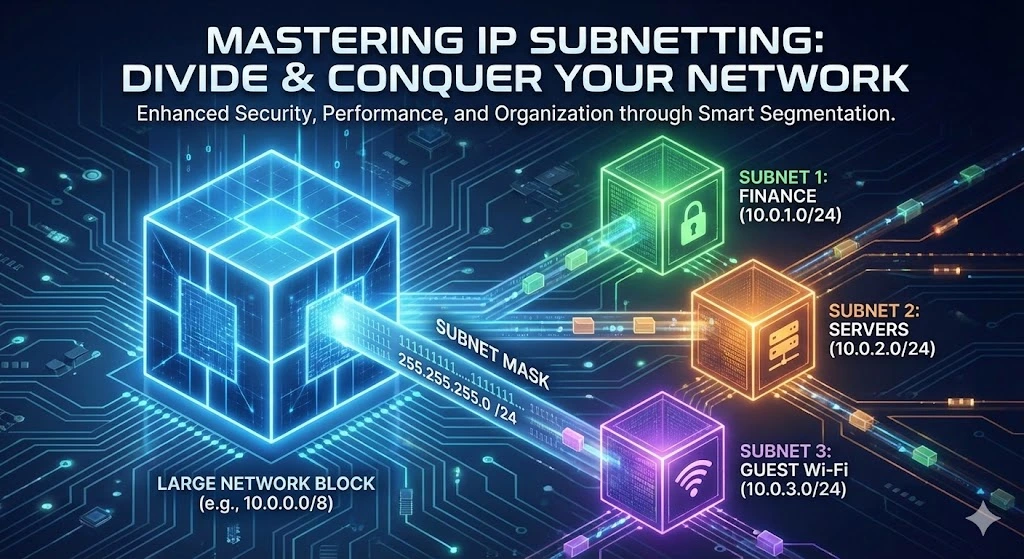
Understanding IP subnetting is essential for designing efficient and scalable networks. Subnetting allows network administrators to divide a single IP address range into smaller, more manageable subnetworks, enabling better organization of network resources and efficient allocation of IP addresses. In this article, we’ll provide a comprehensive introduction to IP subnetting, covering its fundamental concepts, benefits, and practical applications.
Table of Contents
Before we delve into subnetting, let’s review the basics of IP addresses.
Understanding IP Addresses
An IP address is a unique numerical identifier assigned to each device connected to a network. IPv4 addresses, the most commonly used type of IP address, consist of four sets of numbers separated by dots (e.g., 192.168.1.1). Each set of numbers ranges from 0 to 255, representing different portions of the address.
Now, let’s proceed to our main topic: subnetting.
What is subnetting?
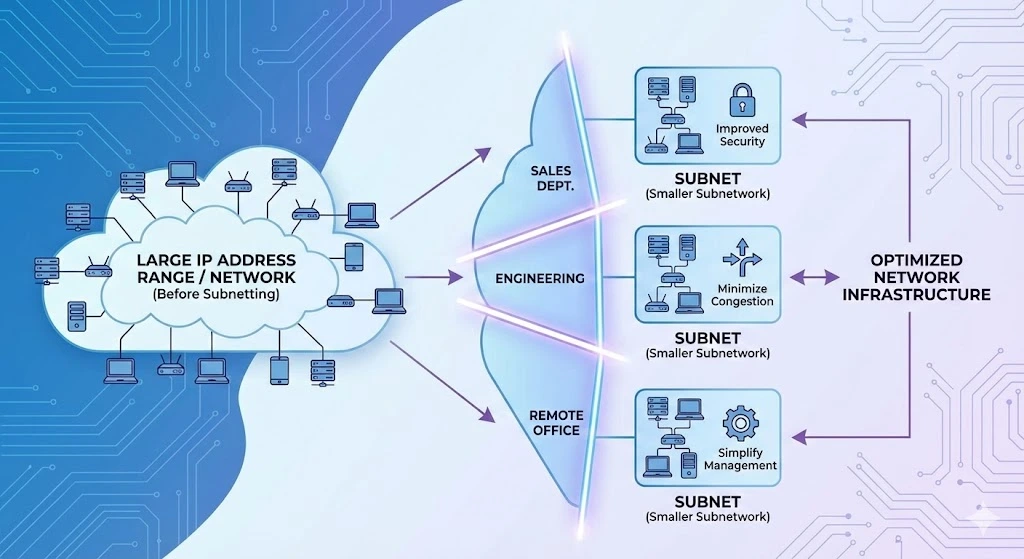
Subnetting is the process of dividing a large IP address range, or network, into smaller, more manageable subnetworks, or subnets. This allows organizations to optimize their network infrastructure by segmenting devices into logical groups based on factors such as location, function, or department. Subnetting helps minimize network congestion, improve security, and simplify network management tasks.
Each RIR has its own nuances. Such as whilst AFRINIC prevents transfers to intra-RIR only, APNIC, ARIN, RIPE, and LACNIC all facilitate inter-RIR transfers under reciprocal, needs-based policies. The registry affirms the fact the seller is the legitimate owner of the IP addresses and makes sure that all applicable regulations are met before RIR-led transfers can take position. Each transfer involves documentation, justification of need, and processing fees, making the process thorough but sometimes slow.
Benefits of Subnetting
1. Efficient Address Allocation
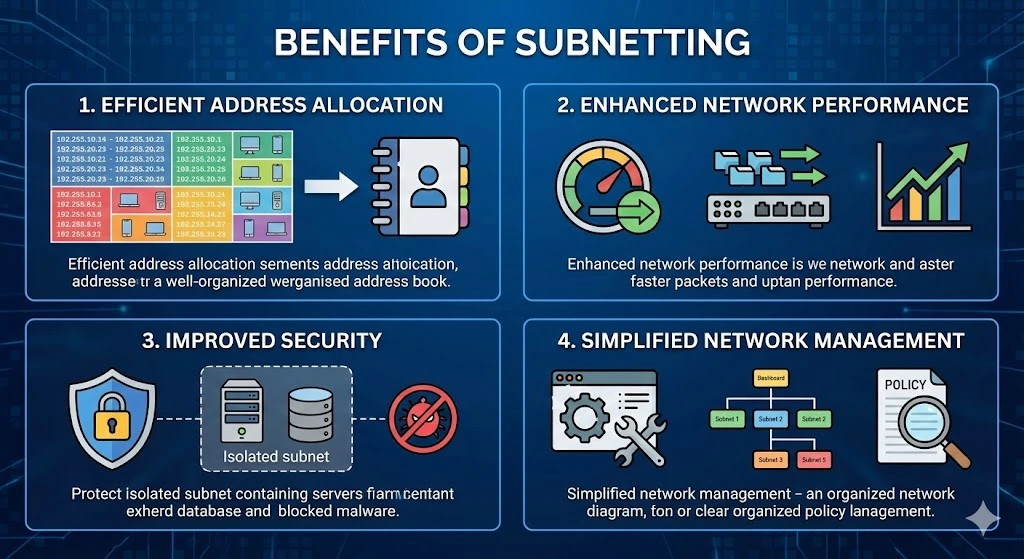
Subnetting enables organizations to allocate IP addresses more efficiently by dividing a large address space into smaller, more targeted subnets. This reduces IP address waste and ensures that each device receives an appropriate address within its subnet.
2. Enhanced Network Performance
By reducing the size of broadcast domains and segmenting traffic into smaller subnets, subnetting helps minimize network congestion and improve overall network performance. This allows for faster data transmission and better bandwidth utilization.
3. Improved Security
Subnetting enhances network security by isolating sensitive or critical network resources within their own subnets. This limits the scope of potential security breaches and helps contain network threats, such as malware or unauthorized access attempts.
4. Simplified Network Management
Subnetting simplifies network management tasks by organizing devices into logical groups based on their subnet assignments. This makes it easier to configure and troubleshoot network devices, track IP address usage, and implement network policies and rules.
Key Concepts in Subnetting
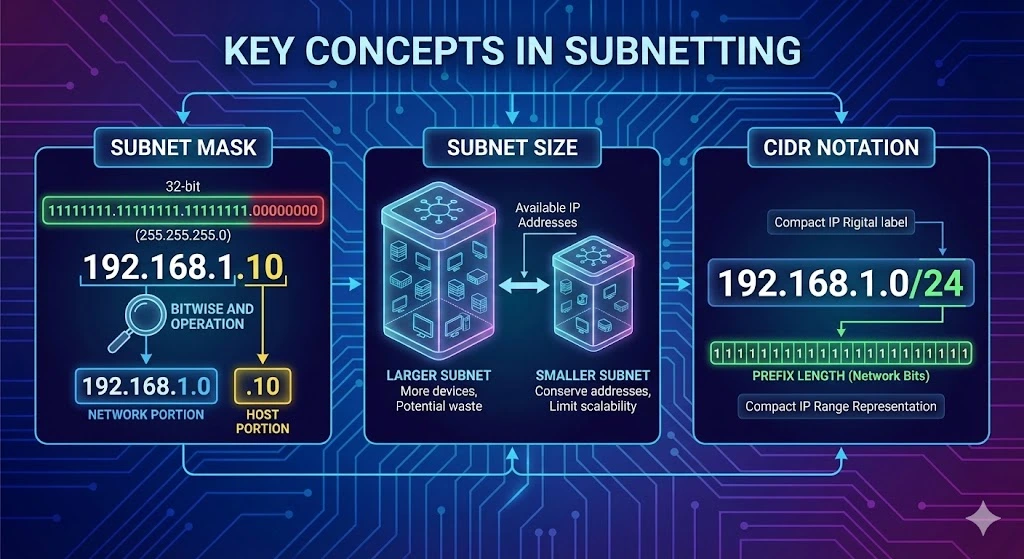
Subnet Mask: A subnet mask is a 32-bit binary number that defines the boundaries of a subnet within an IP address range. It consists of a series of consecutive binary 1s, followed by a series of consecutive binary 0s. The subnet mask is applied to an IP address using a bitwise AND operation to determine the network and host portions of the address.
Subnet Size: The size of a subnet is determined by the number of available IP addresses within the subnet range. Larger subnets accommodate more devices but may lead to greater address waste, while smaller subnets conserve addresses but may limit scalability.
CIDR Notation: The Classless Inter-Domain Routing (CIDR) notation is a compact representation of IP address ranges that includes the network address and subnet mask. CIDR notation uses a forward slash followed by a number to indicate the number of bits in the subnet mask (e.g., 192.168.1.0/24).
Practical Applications of Subnetting
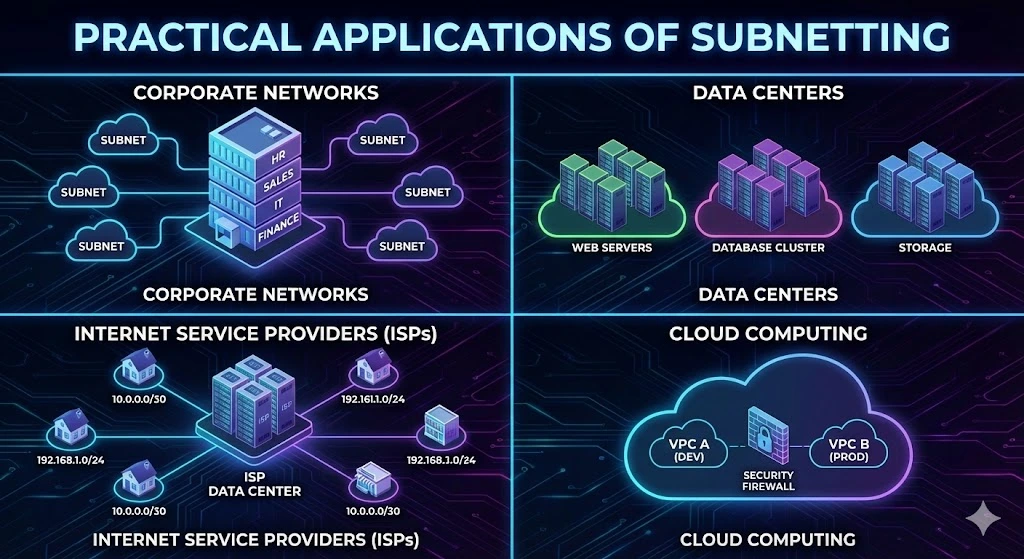
Corporate Networks: Subnetting is commonly used in corporate networks to divide large address ranges into smaller subnets for different departments, floors, or locations. This improves network performance, enhances security, and simplifies network management.
Internet Service Providers (ISPs): ISPs use subnetting to allocate IP address ranges to their customers more efficiently. By subnetting their address space, ISPs can accommodate more customers and reduce IP address waste.
Data Centers: In data center environments, subnetting helps organize servers and network devices into logical groups based on their roles or functions. This facilitates efficient resource allocation, load balancing, and fault tolerance.
Cloud Computing: Subnetting is essential in cloud computing environments for creating virtual private networks (VPNs), isolating workloads, and enforcing network security policies. Subnetting allows cloud providers to partition their infrastructure and offer customized networking solutions to customers.
IP Subnetting in a brief
In a nutshell, IP subnetting is a fundamental concept in networking that plays a crucial role in optimizing network infrastructure, enhancing security, and simplifying network management. By understanding the principles of subnetting and its practical applications, network administrators can design scalable, efficient, and resilient networks that meet the evolving needs of their organizations. Whether you’re configuring a small office network or managing a large-scale data center, mastering IP subnetting is essential for building robust and reliable network environments.
Are you interested in learning more about IP addresses? or do you want to lease an IP address? Contact us now!
Trusted IPv4 Leasing for Business Growth
Get enterprise-grade IPv4 space quickly, with seamless deployment and end-to-end management.
Get Started with i.leaseFAQs
How many usable IP addresses are in a /24 subnet?
A /24 subnet has 254 usable IP addresses. While there are 256 total addresses in the range (2^8), two are always reserved: the Network Address (the first IP) and the Broadcast Address (the last IP).
What is CIDR notation and how does it work?
CIDR (Classless Inter-Domain Routing) notation is a shorthand way to show an IP address and its associated subnet mask. The number after the slash (e.g., /24) represents the number of “bits” dedicated to the network portion of the address. The higher the number after the slash, the smaller the number of available host IPs in that subnet.
Why is 192.168.1.1 the most common IP address?
This address belongs to a “Private” IP range designated for local networks. Most router manufacturers set 192.168.1.1 as the default gateway (the “front door” to the internet) for home and small business routers because it is easy to remember and complies with standard IPv4 subnetting rules.
Artículos relacionados
IPv4 leasing vs purchasing: structural risk in the IPv4 address market
IPv4 leasing vs purchasing reflects a structural shift in IP address markets, balancing cost, control, scarcity, and operational risk in 2026. Key points IPv4 leasing has become a flexible operating model, with stable monthly pricing driven by scarcity and fast deployment needs. IPv4 purchasing is shifting into a long-term asset strategy, but exposed to price cycles, liquidity changes, and capital lock-in. IPv4 is no longer just infrastructure — itRead more Related Posts IPv4 租赁 vs 购买|2026 年 IPv4 市场结构性风险解析 在 IPv4 稀缺持续加剧的市场中,租赁与购买已不只是价格差异,而是两种不同的风险结构。本文解析 IPv4 租赁与购买的成本、控制权、连续性、市场风险与适用场景,帮助企业制定更合适的 IP 策略。 重点摘要 到了 2026 年,IPv4 租赁已经成为一种更灵活的运营模式,月租价格相对稳定,主要由稀缺性和快速部署需求驱动。IPv4 购买则越来越像一种长期资产策略,但也会暴露在价格周期、流动性变化和资金锁定风险之下。 IPv4 已经不只是基础设施,它是一个稀缺市场 IPv4 地址系统已经完全转入二级市场生态。自从 IANA 的免费分配耗尽后,组织现在主要依赖以下方式取得 IPv4:通过区域互联网注册机构(RIR)的转移经纪撮合的二级市场买卖像 Read more IPv4 leasing vs purchasing: structural risk in the IPv4 address market IPv4 leasing vs purchasing reflects a structural shift in IP address markets, balancing cost, control, scarcity, and operational risk in Read more تأجير IPv4 لمراكز البيانات: ما الذي تحتاج إلى معرفته مع تزايد ندرة IPv4، تعتمد مراكز البيانات بشكل متزايد على التأجير لتوسيع البنية التحتية، والتحكم في التكاليف، والحفاظ على اتصال Read more .related-post {} .related-post .post-list { text-align: left; } .related-post .post-list .item { margin: 5px; padding: 10px; } .related-post .headline { font-size: 18px !important; color: #999999 !important; } .related-post .post-list .item .post_thumb { max-height: 220px; margin: 10px 0px; padding: 0px; display: block; } .related-post .post-list .item .post_title { font-size: 16px; color: #3f3f3f; margin: 10px 0px; padding: 0px; display: block; text-decoration: none; } .related-post .post-list .item .post_excerpt { font-size: 13px; color: #3f3f3f; margin: 10px 0px; padding: 0px; display: block; text-decoration: none; } @media only screen and (min-width: 1024px) { .related-post .post-list .item { width: 30%; } } @media only screen and (min-width: 768px) and (max-width: 1023px) { .related-post .post-list .item { width: 90%; } } @media only screen and (min-width: 0px) and (max-width: 767px) { .related-post .post-list .item { width: 90%; } }
IPv4 Leasing for Data Centres: What You Need To Know
As IPv4 scarcity intensifies, data centres increasingly rely on leasing to scale infrastructure, control costs, and maintain reliable connectivity worldwide. IPv4 leasing has become a critical strategy for data centres facing address shortages and rising acquisition costs Leasing offers flexibility and scalability, but introduces risks around reputation, compliance, and long-term dependency Understanding IPv4 and why data centres still depend on it Despite years of tech progress IPv4 is stillRead more Related Posts IPv4 租赁 vs 购买|2026 年 IPv4 市场结构性风险解析 在 IPv4 稀缺持续加剧的市场中,租赁与购买已不只是价格差异,而是两种不同的风险结构。本文解析 IPv4 租赁与购买的成本、控制权、连续性、市场风险与适用场景,帮助企业制定更合适的 IP 策略。 重点摘要 到了 2026 年,IPv4 租赁已经成为一种更灵活的运营模式,月租价格相对稳定,主要由稀缺性和快速部署需求驱动。IPv4 购买则越来越像一种长期资产策略,但也会暴露在价格周期、流动性变化和资金锁定风险之下。 IPv4 已经不只是基础设施,它是一个稀缺市场 IPv4 地址系统已经完全转入二级市场生态。自从 IANA 的免费分配耗尽后,组织现在主要依赖以下方式取得 IPv4:通过区域互联网注册机构(RIR)的转移经纪撮合的二级市场买卖像 Read more IPv4 leasing vs purchasing: structural risk in the IPv4 address market IPv4 leasing vs purchasing reflects a structural shift in IP address markets, balancing cost, control, scarcity, and operational risk in Read more تأجير IPv4 لمراكز البيانات: ما الذي تحتاج إلى معرفته مع تزايد ندرة IPv4، تعتمد مراكز البيانات بشكل متزايد على التأجير لتوسيع البنية التحتية، والتحكم في التكاليف، والحفاظ على اتصال Read more .related-post {} .related-post .post-list { text-align: left; } .related-post .post-list .item { margin: 5px; padding: 10px; } .related-post .headline { font-size: 18px !important; color: #999999 !important; } .related-post .post-list .item .post_thumb { max-height: 220px; margin: 10px 0px; padding: 0px; display: block; } .related-post .post-list .item .post_title { font-size: 16px; color: #3f3f3f; margin: 10px 0px; padding: 0px; display: block; text-decoration: none; } .related-post .post-list .item .post_excerpt { font-size: 13px; color: #3f3f3f; margin: 10px 0px; padding: 0px; display: block; text-decoration: none; } @media only screen and (min-width: 1024px) { .related-post .post-list .item { width: 30%; } } @media only screen and (min-width: 768px) and (max-width: 1023px) { .related-post .post-list .item { width: 90%; } } @media only screen and (min-width: 0px) and (max-width: 767px) { .related-post .post-list .item { width: 90%; } }
What are the risks of buying IPv4 from the wrong source?
Buying IPv4 addresses outside proper IP Allocation channels exposes organisations to fraud, legal disputes, operational failures and long-term governance risks. Key points: Poorly governed IPv4 transactions can fail regional internet registry checks, leading to loss of assets or invalid transfers. Cheap or unverified sources often hide risks including hijacked IP space, blacklisting, and non-compliance with centralized IP allocation policies. Introduction: scarcity fuels risk in the IPv4 market The globalRead more Related Posts IPv4 租赁 vs 购买|2026 年 IPv4 市场结构性风险解析 在 IPv4 稀缺持续加剧的市场中,租赁与购买已不只是价格差异,而是两种不同的风险结构。本文解析 IPv4 租赁与购买的成本、控制权、连续性、市场风险与适用场景,帮助企业制定更合适的 IP 策略。 重点摘要 到了 2026 年,IPv4 租赁已经成为一种更灵活的运营模式,月租价格相对稳定,主要由稀缺性和快速部署需求驱动。IPv4 购买则越来越像一种长期资产策略,但也会暴露在价格周期、流动性变化和资金锁定风险之下。 IPv4 已经不只是基础设施,它是一个稀缺市场 IPv4 地址系统已经完全转入二级市场生态。自从 IANA 的免费分配耗尽后,组织现在主要依赖以下方式取得 IPv4:通过区域互联网注册机构(RIR)的转移经纪撮合的二级市场买卖像 Read more IPv4 leasing vs purchasing: structural risk in the IPv4 address market IPv4 leasing vs purchasing reflects a structural shift in IP address markets, balancing cost, control, scarcity, and operational risk in Read more تأجير IPv4 لمراكز البيانات: ما الذي تحتاج إلى معرفته مع تزايد ندرة IPv4، تعتمد مراكز البيانات بشكل متزايد على التأجير لتوسيع البنية التحتية، والتحكم في التكاليف، والحفاظ على اتصال Read more .related-post {} .related-post .post-list { text-align: left; } .related-post .post-list .item { margin: 5px; padding: 10px; } .related-post .headline { font-size: 18px !important; color: #999999 !important; } .related-post .post-list .item .post_thumb { max-height: 220px; margin: 10px 0px; padding: 0px; display: block; } .related-post .post-list .item .post_title { font-size: 16px; color: #3f3f3f; margin: 10px 0px; padding: 0px; display: block; text-decoration: none; } .related-post .post-list .item .post_excerpt { font-size: 13px; color: #3f3f3f; margin: 10px 0px; padding: 0px; display: block; text-decoration: none; } @media only screen and (min-width: 1024px) { .related-post .post-list .item { width: 30%; } } @media only screen and (min-width: 768px) and (max-width: 1023px) { .related-post .post-list .item { width: 90%; } } @media only screen and (min-width: 0px) and (max-width: 767px) { .related-post .post-list .item { width: 90%; } }
