Global IP Solution Providers and Their Services
 Chan
Chan
Managing and acquiring IP addresses has become critical for businesses worldwide. Global IP solution providers play an essential role in this space, offering services such as IP leasing, IP management, and IP brokerage. This article delves into these services, explaining their importance and how they contribute to efficient Internet operations.
Table of Contents
Global IP Solution Provider
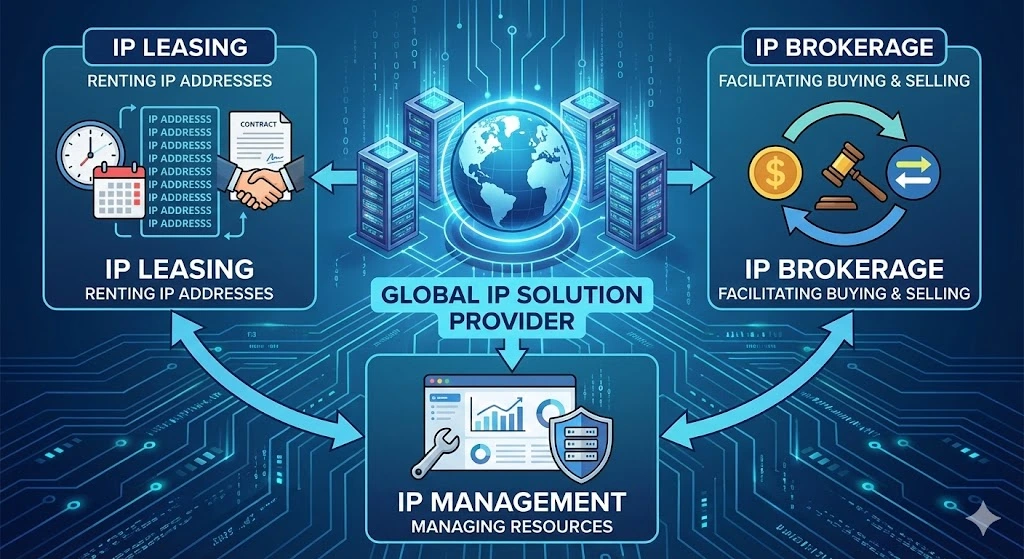
A global IP solution provider offers comprehensive services to manage and allocate IP addresses efficiently. These providers help businesses navigate the complexities of IP address allocation, ensuring that their clients have the necessary resources to maintain seamless internet connectivity and network operations.
3 key services offered:
1) IP Leasing: Renting IP addresses to businesses for a specified period.
2) IP Management: Managing and maintaining IP address resources.
3) IP Brokerage: Facilitating the buying and selling of IP addresses between entities.
IP Leasing
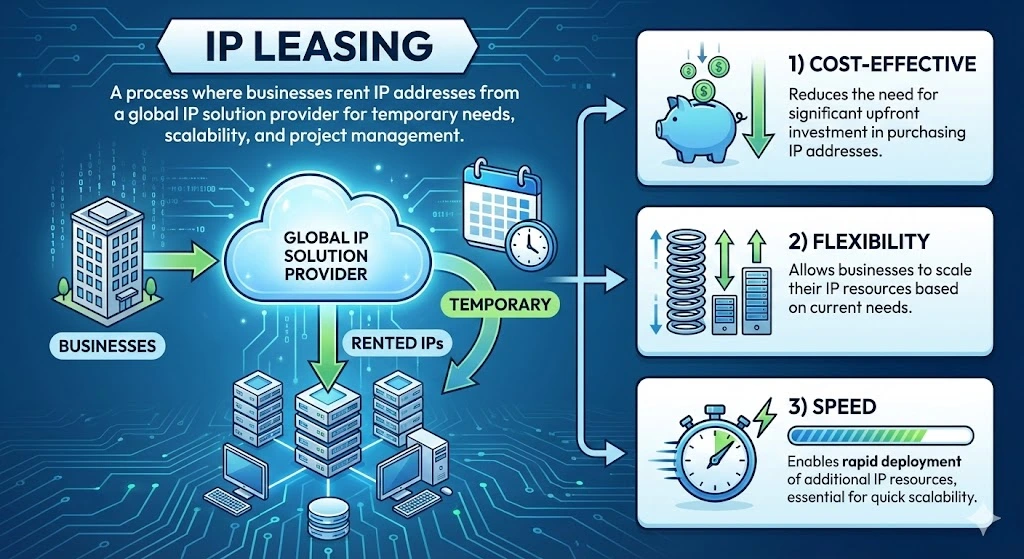
IP leasing is a process where businesses rent IP addresses from a global IP solution provider. This service is crucial for companies that need temporary IP resources to manage traffic spikes, expand their networks, or run specific projects without the long-term commitment of purchasing IP addresses.
Benefits of IP Leasing:
1) Cost-effective: Reduces the need for significant upfront investment in purchasing IP addresses.
2) Flexibility: Allows businesses to scale their IP resources based on current needs.
3) Speed: Enables rapid deployment of additional IP resources, essential for quick scalability.
IP Management
Effective IP management involves the allocation, tracking, and administration of IP addresses within a network. This service ensures that IP resources are used efficiently, reducing the risk of conflicts and improving network performance.
Components of IP Management:
IP Address Allocation: Distributing IP addresses based on organizational needs.
Monitoring and Auditing: Keeping track of IP address usage and ensuring compliance with policies; laws and local regulations
Maintenance and Support: Regular updates and troubleshooting to ensure optimal IP address functionality.
IP Brokerage
IP brokerage services facilitate the buying and selling of IP addresses. Brokers connect buyers who need additional IP resources with sellers looking to offload unused IP addresses. This market-driven approach helps redistribute IP resources efficiently, addressing the shortage of IPv4 addresses.
Benefits of IP Brokerage:
1) Market Access: Provides access to a broad market of potential buyers and sellers.
2) Valuation and Pricing: Brokers offer expert advice on IP address valuation and market pricing.
3) Regulatory Compliance: Ensures that transactions comply with regional Internet registry (RIR) policies.
Why Businesses Need Global IP Solution Providers

Global IP solution providers are essential for businesses that rely heavily on internet connectivity and network infrastructure. These providers offer a range of services that simplify IP address management, ensuring that businesses can focus on their core operations without worrying about technical network details.
I.Lease, as a global IP solution provider, provides scalable solutions that grow with your business and has access to expert IP knowledge and IP industry best practices. We assist our clients with adhering to regional compliance and global IP regulations
Conclusion
Global IP solution providers, through services like IP leasing, IP management, and IP brokerage, play a crucial role in the digital economy. They ensure that businesses can efficiently manage their IP resources, maintain network performance, and adapt to changing demands. As the internet continues to evolve, the importance of these providers and their services will only grow.
For more information on global IP solutions, IP leasing, IP management, and IP brokerage, consider visiting a reputable provider like LARUS. These organizations offer comprehensive resources and support for all your IP address needs.
Trusted IPv4 Leasing for Business Growth
Get enterprise-grade IPv4 space quickly, with seamless deployment and end-to-end management.
Get Started with i.leaseFAQs
What is the difference between an IP Broker and an IP Solution Provider?
An IP Broker primarily focuses on the transactional side—connecting buyers and sellers for a one-time fee. A Global IP Solution Provider (like i.lease or LARUS) offers a full suite of services, including long-term leasing, technical management, abuse handling, and routing support
Why should I lease IP addresses instead of buying them?
Leasing is often more capital-efficient. Purchasing IPv4 addresses requires a massive upfront investment (often over $50 per IP). Leasing allows you to scale up instantly for a low monthly fee, making it ideal for ISPs, hosting companies, and short-term projects that need to conserve cash flow.
What industries benefit most from IP Management services?
The primary beneficiaries are Internet Service Providers (ISPs), Data Centers, VPN Providers, and Content Delivery Networks (CDNs). However, large enterprises also use these services to manage their internal corporate networks and ensure compliance with digital sovereignty laws.
Artículos relacionados
Short-term vs long-term IPv4 leasing
Facing IPv4 shortages, companies must weigh cost, speed, and network growth when choosing a lease plan. Short-term leasing lets you scale resources up or down easily, but costs more over time and offers less supply certainty. Long-term leasing provides stable pricing and more reliable access, yet makes it harder to adjust your setup as needs evolve. Introduction: Why leasing IPv4 addresses makes sense IPv4 has evolved from a technicalRead more Related Posts Short-term vs long-term IPv4 leasing Facing IPv4 shortages, companies must weigh cost, speed, and network growth when choosing a lease plan.Short-term leasing lets you scale Read more Why IPv4 scarcity drives economic value for operators IPv4 地址曾经只是互联网运行所需的基础资源。但在今天,它越来越像一种具有市场价格、可交易、可租赁的数字资产。造成这一变化的原因并不复杂:IPv4 的总量有限,而全球互联网对 IPv4 的需求并没有消失;与此同时,IPv6 虽然早已出现,但迁移进度依然缓慢。这三股力量叠加,正在重新塑造运营商对 IP 地址的看法,也改变了互联网基础设施的经济逻辑。原文将这点概括为“有限供给、持续需求与缓慢转型”,并指出这正在推动 IP 地址成为影响全球电信经济的可交易资产。 IPv4 稀缺并不是新问题 全球互联网至今仍大量依赖 IPv4。这个协议诞生于更早的时代,只能提供大约 43 亿个地址。这个数量在互联网初期似乎足够庞大,但在今天已经明显不够。原文指出,IANA 在 2011 年就已将最后一批大型 IPv4 Read more How much does a /24 IPv4 block cost in 2026? IPv4 scarcity continues to shape internet infrastructure, with /24 blocks still trading actively on global markets despite growing IPv6 adoption. Key Read more .related-post {} .related-post .post-list { text-align: left; } .related-post .post-list .item { margin: 5px; padding: 10px; } .related-post .headline { font-size: 18px !important; color: #999999 !important; } .related-post .post-list .item .post_thumb { max-height: 220px; margin: 10px 0px; padding: 0px; display: block; } .related-post .post-list .item .post_title { font-size: 16px; color: #3f3f3f; margin: 10px 0px; padding: 0px; display: block; text-decoration: none; } .related-post .post-list .item .post_excerpt { font-size: 13px; color: #3f3f3f; margin: 10px 0px; padding: 0px; display: block; text-decoration: none; } @media only screen and (min-width: 1024px) { .related-post .post-list .item { width: 30%; } } @media only screen and (min-width: 768px) and (max-width: 1023px) { .related-post .post-list .item { width: 90%; } } @media only screen and (min-width: 0px) and (max-width: 767px) { .related-post .post-list .item { width: 90%; } }
Why IPv4 scarcity drives economic value for operators
IPv4 地址曾经只是互联网运行所需的基础资源。但在今天,它越来越像一种具有市场价格、可交易、可租赁的数字资产。 造成这一变化的原因并不复杂:IPv4 的总量有限,而全球互联网对 IPv4 的需求并没有消失;与此同时,IPv6 虽然早已出现,但迁移进度依然缓慢。这三股力量叠加,正在重新塑造运营商对 IP 地址的看法,也改变了互联网基础设施的经济逻辑。原文将这点概括为“有限供给、持续需求与缓慢转型”,并指出这正在推动 IP 地址成为影响全球电信经济的可交易资产。 IPv4 稀缺并不是新问题 全球互联网至今仍大量依赖 IPv4。这个协议诞生于更早的时代,只能提供大约 43 亿个地址。这个数量在互联网初期似乎足够庞大,但在今天已经明显不够。原文指出,IANA 在 2011 年就已将最后一批大型 IPv4 地址区块分配给各区域注册机构,这成为互联网基础设施经济逻辑的转折点。 地址池耗尽之后,市场并没有停下来,而是开始适应。网络运营商、云服务商和电信企业不再只是把 IPv4 看成技术标识,而是把它视为一种有限资源,需要管理、分配、定价,甚至纳入财务优化的考量之中。 从技术资源走向经济资产 稀缺本身并不会自动带来价值,真正让 IPv4 变得有价值的,是它在现实世界中的持续需求。尽管 IPv6 已经存在,而且理论上更先进、地址空间也几乎无限,但大量旧系统、兼容性要求以及客户环境仍然依赖 IPv4。正因如此,IPv4 的需求并没有随着 IPv6 的出现而消失。原文将这一点称为一个“悖论”:技术上更优的替代方案已经存在,但 IPv4 依赖型系统的庞大存量仍在支撑市场需求。 供给固定、需求持续,这就形成了经典的供需失衡。文章提到,IPv4 的价格因此不断上升:2014 年约为每个地址 15 美元,近年则常见于 40 到 50 美元区间,高点甚至更高。围绕 IPv4 的语言也随之发生变化:从 allocation 走向 valuation,从 assignment 走向 trading。 价格不是固定的,但市场已经成形 IPv4 市场并不是静止不变的,也不是所有地址都一个价格。价格会受到区块大小、地区需求、宏观经济环境等因素影响。原文列出的历史数据表明,2014 年每个 IPv4 地址价格约在 6 到 24 美元之间,到 2021 年某些情况下可达到 60Read more Related Posts Short-term vs long-term IPv4 leasing Facing IPv4 shortages, companies must weigh cost, speed, and network growth when choosing a lease plan.Short-term leasing lets you scale Read more Why IPv4 scarcity drives economic value for operators IPv4 地址曾经只是互联网运行所需的基础资源。但在今天,它越来越像一种具有市场价格、可交易、可租赁的数字资产。造成这一变化的原因并不复杂:IPv4 的总量有限,而全球互联网对 IPv4 的需求并没有消失;与此同时,IPv6 虽然早已出现,但迁移进度依然缓慢。这三股力量叠加,正在重新塑造运营商对 IP 地址的看法,也改变了互联网基础设施的经济逻辑。原文将这点概括为“有限供给、持续需求与缓慢转型”,并指出这正在推动 IP 地址成为影响全球电信经济的可交易资产。 IPv4 稀缺并不是新问题 全球互联网至今仍大量依赖 IPv4。这个协议诞生于更早的时代,只能提供大约 43 亿个地址。这个数量在互联网初期似乎足够庞大,但在今天已经明显不够。原文指出,IANA 在 2011 年就已将最后一批大型 IPv4 Read more What Determines IPv4 Pricing in Today’s Market? Scarcity, shifting demand, and leasing platforms such as i.lease are reshaping how IPv4 addresses are valued and traded globally.IPv4 pricing is driven Read more .related-post {} .related-post .post-list { text-align: left; } .related-post .post-list .item { margin: 5px; padding: 10px; } .related-post .headline { font-size: 18px !important; color: #999999 !important; } .related-post .post-list .item .post_thumb { max-height: 220px; margin: 10px 0px; padding: 0px; display: block; } .related-post .post-list .item .post_title { font-size: 16px; color: #3f3f3f; margin: 10px 0px; padding: 0px; display: block; text-decoration: none; } .related-post .post-list .item .post_excerpt { font-size: 13px; color: #3f3f3f; margin: 10px 0px; padding: 0px; display: block; text-decoration: none; } @media only screen and (min-width: 1024px) { .related-post .post-list .item { width: 30%; } } @media only screen and (min-width: 768px) and (max-width: 1023px) { .related-post .post-list .item { width: 90%; } } @media only screen and (min-width: 0px) and (max-width: 767px) { .related-post .post-list .item { width: 90%; } }
What Determines IPv4 Pricing in Today’s Market?
Scarcity, shifting demand, and leasing platforms such as i.lease are reshaping how IPv4 addresses are valued and traded globally. IPv4 pricing is driven primarily by scarcity, block size, and fluctuating demand across regions and industries. Leasing models, including platforms like i.lease, are stabilising costs amid volatile purchase markets. What determines IPv4 pricing in today’s market A market shaped by scarcity IPv4 addresses, once freely allocated, have become a traded digital commodity. AsRead more Related Posts Short-term vs long-term IPv4 leasing Facing IPv4 shortages, companies must weigh cost, speed, and network growth when choosing a lease plan.Short-term leasing lets you scale Read more Why IPv4 scarcity drives economic value for operators IPv4 地址曾经只是互联网运行所需的基础资源。但在今天,它越来越像一种具有市场价格、可交易、可租赁的数字资产。造成这一变化的原因并不复杂:IPv4 的总量有限,而全球互联网对 IPv4 的需求并没有消失;与此同时,IPv6 虽然早已出现,但迁移进度依然缓慢。这三股力量叠加,正在重新塑造运营商对 IP 地址的看法,也改变了互联网基础设施的经济逻辑。原文将这点概括为“有限供给、持续需求与缓慢转型”,并指出这正在推动 IP 地址成为影响全球电信经济的可交易资产。 IPv4 稀缺并不是新问题 全球互联网至今仍大量依赖 IPv4。这个协议诞生于更早的时代,只能提供大约 43 亿个地址。这个数量在互联网初期似乎足够庞大,但在今天已经明显不够。原文指出,IANA 在 2011 年就已将最后一批大型 IPv4 Read more How much does a /24 IPv4 block cost in 2026? IPv4 scarcity continues to shape internet infrastructure, with /24 blocks still trading actively on global markets despite growing IPv6 adoption. Key Read more .related-post {} .related-post .post-list { text-align: left; } .related-post .post-list .item { margin: 5px; padding: 10px; } .related-post .headline { font-size: 18px !important; color: #999999 !important; } .related-post .post-list .item .post_thumb { max-height: 220px; margin: 10px 0px; padding: 0px; display: block; } .related-post .post-list .item .post_title { font-size: 16px; color: #3f3f3f; margin: 10px 0px; padding: 0px; display: block; text-decoration: none; } .related-post .post-list .item .post_excerpt { font-size: 13px; color: #3f3f3f; margin: 10px 0px; padding: 0px; display: block; text-decoration: none; } @media only screen and (min-width: 1024px) { .related-post .post-list .item { width: 30%; } } @media only screen and (min-width: 768px) and (max-width: 1023px) { .related-post .post-list .item { width: 90%; } } @media only screen and (min-width: 0px) and (max-width: 767px) { .related-post .post-list .item { width: 90%; } }