Qu’est-ce que l’APNIC ?
 Stephanie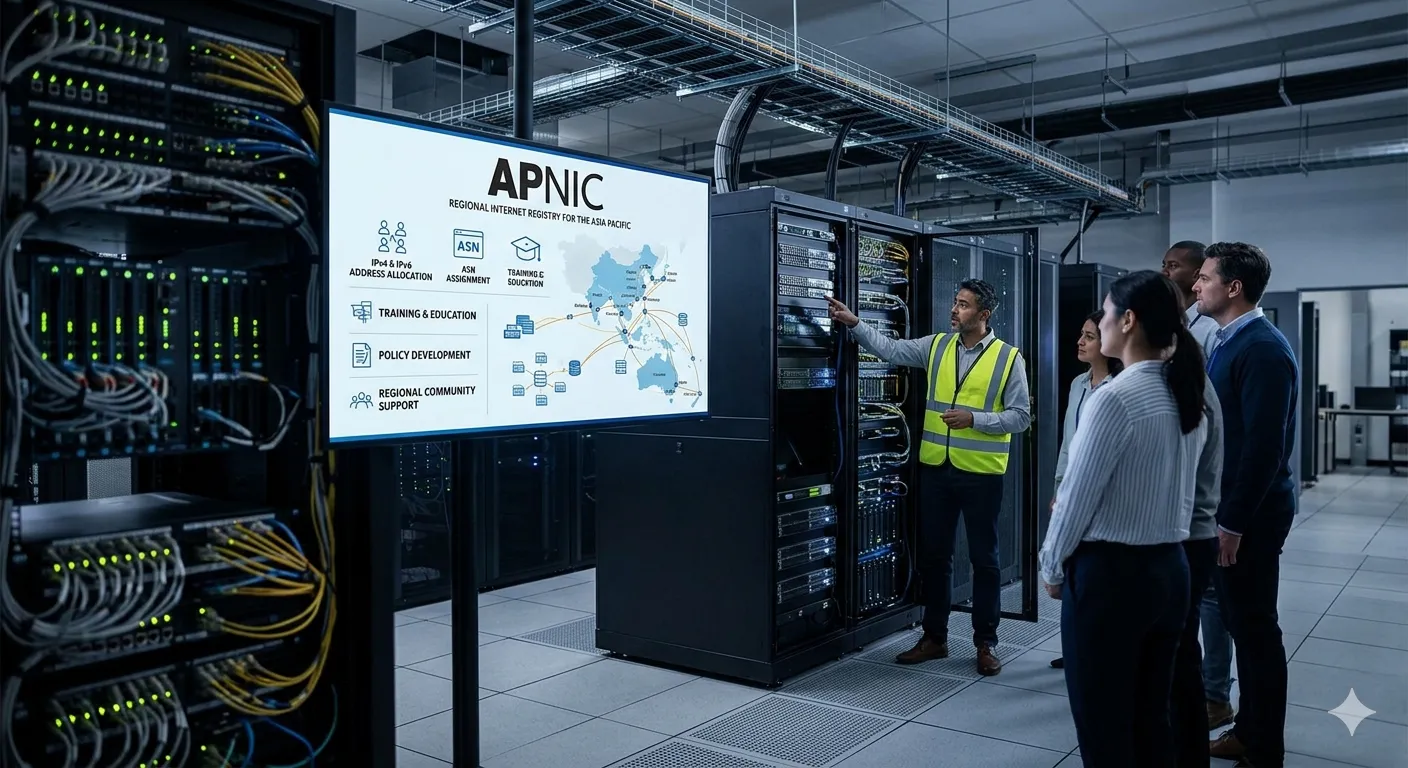
Une introduction simple au Centre d'information du réseau Asie-Pacifique
Lorsque vous naviguez sur Internet, vous ne pensez probablement pas beaucoup aux systèmes techniques qui fonctionnent en arrière-plan. Pourtant, la vérité est que de nombreux processus sont mis en œuvre pour garantir le bon fonctionnement des sites web, l’envoi des e-mails et la lecture fluide des vidéos. Parmi les organisations qui contribuent à ce bon fonctionnement d’Internet, du moins dans cette partie du monde, figure APNIC.
Table of Contents
Si vous n’avez jamais entendu parler d’APNIC, rassurez-vous, vous n’êtes pas le seul. Explications simples.
Qu'est-ce que l'APNIC exactement ?
APNIC signifie Centre d’information du réseau Asie-Pacifique.
Il s’agit d’une organisation indépendante à but non lucratif qui gère un élément essentiel d’Internet : les adresses IP et les numéros de système autonome (ASN) pour la région Asie-Pacifique.
En d’autres termes, si l’on compare Internet à une immense ville, l’APNIC joue le rôle de l’agence chargée d’attribuer les adresses postales, garantissant à chacun une localisation unique et une joignabilité aisée. Sans des organisations comme l’APNIC, Internet serait chaotique : imaginez la distribution du courrier dans une ville où des centaines de personnes partageraient la même adresse !
L’APNIC a officiellement démarré ses activités en 1993 et son siège social se situe à Brisbane, en Australie. Aujourd’hui, elle dessert 56 économies différentes, couvrant des pays comme le Japon et l’Australie, jusqu’aux plus petites îles du Pacifique.
Que fait concrètement l'APNIC ?
L’APNIC est principalement responsable des missions suivantes :
- Attribution et enregistrement des adresses IP (IPv4 et IPv6).
- Distribution des ASN, qui permettent la communication entre les différents réseaux.
- Gestion de la base de données publique WHOIS, qui permet de rechercher les titulaires d’une plage d’adresses IP.
- Formation et assistance aux entreprises, universités et gouvernements pour une meilleure gestion de leurs réseaux Internet.
- Promotion des bonnes pratiques de sécurité Internet, notamment en aidant les organisations à utiliser des outils comme RPKI pour se protéger des cyberattaques.
L’APNIC n’agit pas isolément : elle fait partie d’un système plus vaste. Il existe cinq registres Internet régionaux (RIR) dans le monde, et l’APNIC couvre la zone Asie-Pacifique.
Pourquoi l'APNIC est-elle importante ?
Sans l’APNIC et des organisations similaires, Internet aurait du mal à évoluer et à rester sécurisé. Voici pourquoi c’est important :
Distribution équitable : Les adresses IP sont une ressource limitée. L’APNIC veille à ce qu’elles soient distribuées équitablement et en fonction des besoins.
Responsabilité : Grâce aux registres de l’APNIC, il est plus facile de lutter contre les problèmes tels que le spam, le piratage ou les litiges relatifs aux adresses IP.
Accompagnement de la croissance : Avec la multiplication des appareils connectés (notamment l’essor des villes intelligentes et de l’Internet des objets), l’APNIC contribue à anticiper l’avenir.
Formation et partage des connaissances : L’APNIC ne se contente pas de distribuer des ressources ; elle forme également les utilisateurs à leur utilisation responsable et sécurisée.
Qui peut adhérer à l'APNIC ?
L’adhésion s’adresse principalement aux organisations qui ont besoin de leurs propres adresses IP, comme les fournisseurs d’accès Internet, les centres de données, les universités et les grandes entreprises. Les membres bénéficient de services, d’un soutien et d’une participation à l’élaboration des politiques.
Même si vous n’êtes pas ingénieur réseau, vous pouvez vous impliquer en assistant aux conférences publiques de l’APNIC, en participant aux discussions ou en profitant de leurs formations gratuites.
Conclusion
Internet a parfois quelque chose de magique, mais son fonctionnement repose sur un travail acharné, une planification rigoureuse et une coopération sans faille. L’APNIC joue un rôle essentiel pour garantir la connectivité et la sécurité de l’ensemble des réseaux dans l’une des régions les plus diversifiées et dynamiques de la planète.
La prochaine fois que vous consulterez un site web ou enverrez un message à l’autre bout du monde, vous en saurez un peu plus sur ce réseau invisible – et sur les personnes – qui le rendent possible.
Trusted IPv4 Leasing for Business Growth
Get enterprise-grade IPv4 space quickly, with seamless deployment and end-to-end management.
Get Started with i.leaseRelated Blogs
Artículos relacionados
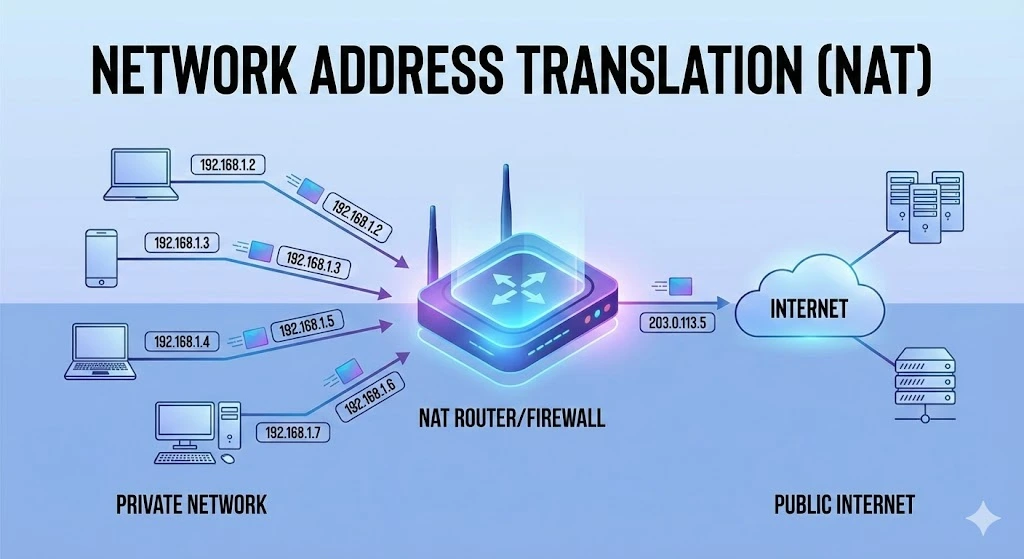
Comprensión de la traducción de direcciones de red (NAT)
En las redes informáticas, gestionar las direcciones IP de forma eficiente es fundamental para garantizar una comunicación fluida entre los dispositivos. Una de las tecnologías clave que ha surgido para afrontar este desafío es la Traducción de Direcciones de Red (NAT, por sus siglas en inglés). En este artículo explicamos qué es NAT, cómo funciona, sus distintos tipos, así como sus ventajas y limitaciones. ¿Qué es la traducción deRead more Related Posts Desbloqueando la privacidad digital con una red privada virtual (VPN) ¿Qué es una VPN? Una red privada virtual (VPN) es una tecnología que permite a los usuarios crear una conexión Comprensión de la traducción de direcciones de red (NAT) En las redes informáticas, gestionar las direcciones IP de forma eficiente es fundamental para garantizar una comunicación fluida entre los ¿Por qué Malasia se está convirtiendo en un centro neurálgico para la infraestructura de nube e IA? Malasia se está convirtiendo en uno de los mercados de crecimiento de centros de datos más importantes del Sudeste Asiático. .related-post {} .related-post .post-list { text-align: left; } .related-post .post-list .item { margin: 5px; padding: 10px; } .related-post .headline { font-size: 18px !important; color: #999999 !important; } .related-post .post-list .item .post_thumb { max-height: 220px; margin: 10px 0px; padding: 0px; display: block; } .related-post .post-list .item .post_title { font-size: 16px; color: #3f3f3f; margin: 10px 0px; padding: 0px; display: block; text-decoration: none; } .related-post .post-list .item .post_excerpt { font-size: 13px; color: #3f3f3f; margin: 10px 0px; padding: 0px; display: block; text-decoration: none; } @media only screen and (min-width: 1024px) { .related-post .post-list .item { width: 30%; } } @media only screen and (min-width: 768px) and (max-width: 1023px) { .related-post .post-list .item { width: 90%; } } @media only screen and (min-width: 0px) and (max-width: 767px) { .related-post .post-list .item { width: 90%; } }
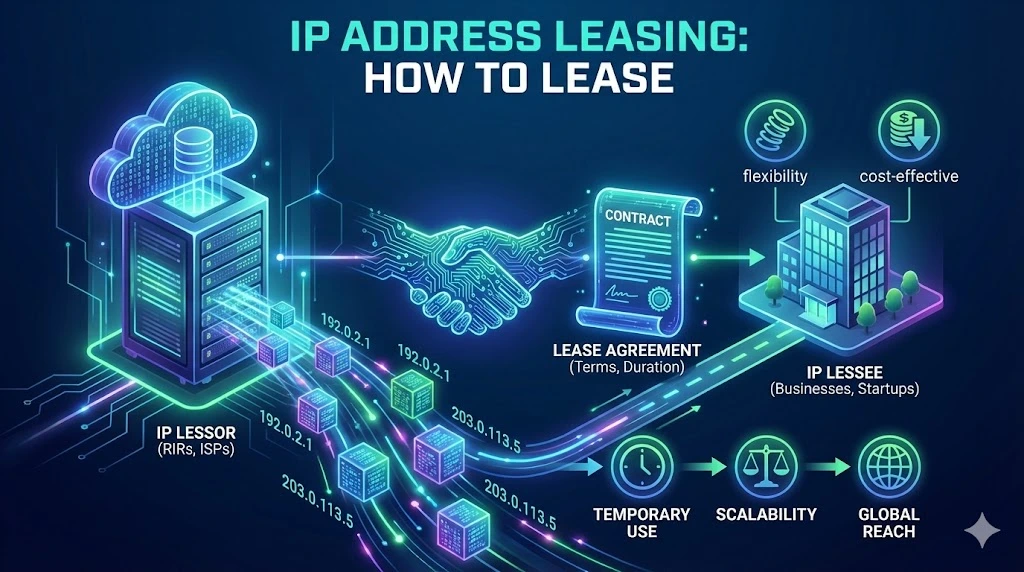
Arrendamiento de direcciones IP: Cómo arrendar direcciones IP
El mundo digital en el que nos movemos hoy depende en gran medida de las direcciones IP, identificadores únicos asignados a los dispositivos conectados a internet o a una red local. A medida que la demanda de direcciones IP sigue aumentando, empresas y particulares exploran diversas opciones para obtener los recursos necesarios. Un método cada vez más popular es el arrendamiento de direcciones IP. Este artículo profundiza en elRead more Related Posts Desbloqueando la privacidad digital con una red privada virtual (VPN) ¿Qué es una VPN? Una red privada virtual (VPN) es una tecnología que permite a los usuarios crear una conexión Comprensión de la traducción de direcciones de red (NAT) En las redes informáticas, gestionar las direcciones IP de forma eficiente es fundamental para garantizar una comunicación fluida entre los ¿Por qué Malasia se está convirtiendo en un centro neurálgico para la infraestructura de nube e IA? Malasia se está convirtiendo en uno de los mercados de crecimiento de centros de datos más importantes del Sudeste Asiático. .related-post {} .related-post .post-list { text-align: left; } .related-post .post-list .item { margin: 5px; padding: 10px; } .related-post .headline { font-size: 18px !important; color: #999999 !important; } .related-post .post-list .item .post_thumb { max-height: 220px; margin: 10px 0px; padding: 0px; display: block; } .related-post .post-list .item .post_title { font-size: 16px; color: #3f3f3f; margin: 10px 0px; padding: 0px; display: block; text-decoration: none; } .related-post .post-list .item .post_excerpt { font-size: 13px; color: #3f3f3f; margin: 10px 0px; padding: 0px; display: block; text-decoration: none; } @media only screen and (min-width: 1024px) { .related-post .post-list .item { width: 30%; } } @media only screen and (min-width: 768px) and (max-width: 1023px) { .related-post .post-list .item { width: 90%; } } @media only screen and (min-width: 0px) and (max-width: 767px) { .related-post .post-list .item { width: 90%; } }
¿Qué es el agotamiento de direcciones IPv4?
IPv4 es la versión inicial del Protocolo de Internet (IP), capaz de generar 4.300 millones de posibles direcciones IPv4. Sin embargo, muchas de estas direcciones están reservadas para fines específicos, como investigación y desarrollo. Esto deja un conjunto limitado disponible para organizaciones e individuos en todo el mundo. Con el crecimiento exponencial de Internet, la demanda de direcciones IPv4 se ha disparado. Esto provocó una rápida disminución de lasRead more Related Posts Desbloqueando la privacidad digital con una red privada virtual (VPN) ¿Qué es una VPN? Una red privada virtual (VPN) es una tecnología que permite a los usuarios crear una conexión Comprensión de la traducción de direcciones de red (NAT) En las redes informáticas, gestionar las direcciones IP de forma eficiente es fundamental para garantizar una comunicación fluida entre los Arrendamiento de direcciones IP: Cómo arrendar direcciones IP El mundo digital en el que nos movemos hoy depende en gran medida de las direcciones IP, identificadores únicos asignados .related-post {} .related-post .post-list { text-align: left; } .related-post .post-list .item { margin: 5px; padding: 10px; } .related-post .headline { font-size: 18px !important; color: #999999 !important; } .related-post .post-list .item .post_thumb { max-height: 220px; margin: 10px 0px; padding: 0px; display: block; } .related-post .post-list .item .post_title { font-size: 16px; color: #3f3f3f; margin: 10px 0px; padding: 0px; display: block; text-decoration: none; } .related-post .post-list .item .post_excerpt { font-size: 13px; color: #3f3f3f; margin: 10px 0px; padding: 0px; display: block; text-decoration: none; } @media only screen and (min-width: 1024px) { .related-post .post-list .item { width: 30%; } } @media only screen and (min-width: 768px) and (max-width: 1023px) { .related-post .post-list .item { width: 90%; } } @media only screen and (min-width: 0px) and (max-width: 767px) { .related-post .post-list .item { width: 90%; } }
