What Happens to IPv4 Records After an IP Address Transfer?
 Stephanie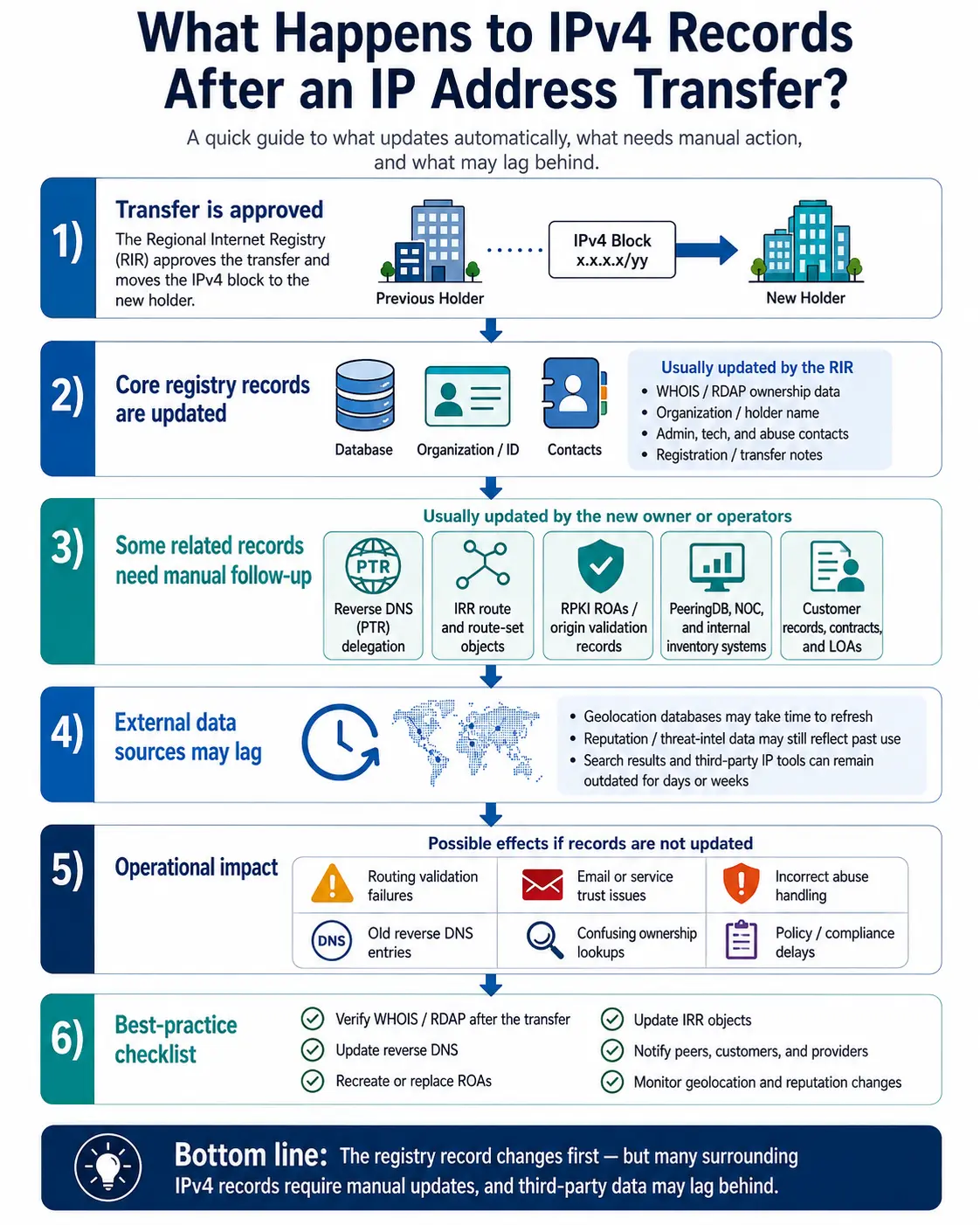
Completing an IPv4 transfer does more than move address space from one organization to another.
Table of Contents
It changes the administrative relationship around the IPv4 block—and that can affect multiple records and services associated with the resource.
After an IPv4 transfer, organizations may need to review or update:
- RIR registration records
- WHOIS and RDAP information
- Organization and contact details
- Abuse contacts
- RPKI certificates and ROAs
- Internet Routing Registry (IRR) objects
- Reverse DNS and PTR records
- BGP routing arrangements
- IP geolocation information
- Reputation and blacklist records
The important point is that these systems do not all update in the same way.
Some changes are handled as part of the Regional Internet Registry (RIR) transfer process. Others remain the responsibility of the recipient or network operator. Third-party databases, such as IP geolocation and reputation services, may take additional time to reflect how the address space is actually being used.
For IPv4 buyers, the transfer therefore should not be viewed as complete simply because the commercial transaction has closed.
A stronger definition of completion is:
The IPv4 block has been transferred, accurately registered, correctly routed, and made operationally ready for its new environment.
Quick Answer: What Changes After an IPv4 Transfer?
After an approved IPv4 transfer, the relevant RIR updates its authoritative registration information to reflect the receiving organization according to its policies and procedures.
But that is only the first layer.
| Record or Service | What Usually Happens After Transfer | Action May Be Required? |
|---|---|---|
| RIR registration | Resource is registered to the receiving organization | Usually handled through RIR process |
| WHOIS / RDAP | Updated registration information becomes publicly queryable | Verify after completion |
| Organization contacts | Recipient details should replace or supersede previous details | Verify |
| Abuse contact | May need to reflect the new operator or responsible organization | Yes |
| RPKI / ROA | Existing authorization may be removed or cease to apply | Often yes |
| IRR route objects | May require modification or recreation | Often yes |
| Reverse DNS / PTR | Existing delegation may need to be changed or recreated | Often yes |
| BGP announcement | New ASN or upstream may need to originate the prefix | Yes |
| Geolocation | Third-party databases may retain older location data | Often yes |
| IP reputation | Historical reputation normally does not disappear because of a transfer | Monitor |
That distinction is important because a registry transfer and a network migration are related—but they are not the same process.
1. RIR Registration Records Change
The first and most fundamental change occurs at the Regional Internet Registry level.
The five RIRs maintain registration information for Internet number resources within their respective service regions:
- ARIN
- RIPE NCC
- APNIC
- LACNIC
- AFRINIC
When an IPv4 transfer is formally approved, the applicable registry updates the registration relationship for the transferred resources.
For example, ARIN explains that once an eligible transfer is approved and the applicable registration requirements are completed, the resources are transferred to the recipient. ARIN also emphasizes ongoing record maintenance, including organization information, points of contact and reverse DNS information.
APNIC similarly states that its IPv4 transfer policies are intended to ensure that transfers are accurately reflected in the APNIC Whois Database so that the database describes the current distribution of address resources.
This means that after transfer completion, the recipient should verify that the authoritative registry correctly reflects the new administrative status.
2. What Happens to WHOIS and RDAP Records?
WHOIS and RDAP are commonly used to retrieve registration information associated with an IP address.
Following a transfer, the public registration information should ultimately reflect the recipient organization and the data maintained under the relevant registry framework.
Depending on the RIR and type of resource, this may include information such as:
- Registered organization
- IP address range
- Network name
- Administrative contacts
- Technical contacts
- Abuse contacts
- Registration status
- Parent resource information
- Last-modified information
RDAP is the newer structured protocol increasingly used for Internet registration data queries, while WHOIS remains widely recognized and used.
After acquiring an IPv4 block, buyers should perform their own WHOIS or RDAP lookup rather than assume that every public-facing record has been updated exactly as expected.
This check is simple but important.
If outdated information remains visible, it can create confusion during abuse investigations, routing coordination, vendor verification or infrastructure onboarding.
3. Organization and Contact Records Need Attention
IPv4 registration is not simply an IP prefix attached to a company name.
Registry systems also contain operational contact information.
Depending on the RIR, records may identify:
- Administrative contacts
- Technical contacts
- Network operations contacts
- Abuse contacts
- Responsible organizations
- Maintainers or account relationships
These records matter because other network operators may rely on them when something goes wrong.
Imagine a newly transferred IPv4 block starts generating unexpected traffic.
If its public records still direct an abuse report to an organization that no longer operates the address space, resolution may become slower and less reliable.
The recipient should therefore confirm that relevant contact information is:
Accurate, current and monitored.
This principle goes beyond transfer compliance. Accurate operational records support coordination between networks.
4. What Happens to RPKI and ROAs After an IPv4 Transfer?
This is one of the most important post-transfer checks.
RPKI, or Resource Public Key Infrastructure, allows resource holders to create cryptographically verifiable statements about which Autonomous System is authorized to originate a particular IP prefix.
Those statements are known as Route Origin Authorizations (ROAs).
An IPv4 transfer can change the resource holder and may also change the ASN that will originate the prefix.
Existing RPKI information therefore cannot simply be ignored.
ARIN explains that when resources covered by an ARIN RPKI certificate are transferred, the resources are removed from the source organization’s certificate together with associated ROAs. If the recipient already uses ARIN RPKI, its certificate can be updated to include the transferred resources, but the recipient is responsible for creating the appropriate new ROAs.
RIPE NCC describes a similar operational consideration for inter-RIR transfers. When resources leave its service region, the relevant certificate can be reduced or revoked and existing ROAs removed. New ROAs may then need to be created under the receiving registry environment.
Why this matters
Suppose the seller previously announced:
203.0.113.0/24 → AS64500
The buyer plans to announce the same prefix from:
AS64550
If the new routing authorization is not correctly configured, Route Origin Validation may not reflect the intended new origin.
The post-transfer process should therefore include:
- Confirming the old authorization has been handled correctly.
- Ensuring the recipient can access the appropriate RPKI system.
- Creating a new ROA where required.
- Confirming the correct origin ASN.
- Checking the permitted maximum prefix length.
- Validating the resulting RPKI state before production deployment.
An IPv4 block may be registered correctly while still requiring additional work before its routing authorization is operationally ready.
5. What Happens to IRR Route Objects?
Internet Routing Registries contain routing policy information used by many network operators.
A common object associates an IP prefix with an origin ASN.
Conceptually, it may represent:
203.0.113.0/24 → AS64550
When a transferred IPv4 block begins operating from a new network, existing IRR objects should be reviewed.
Questions include:
- Does an old route object still reference the seller’s ASN?
- Can the new operator create the required object?
- Does the upstream provider use IRR-based route filtering?
- Which IRR database should contain the authoritative object?
- Are duplicate or conflicting objects present?
This matters because some upstream networks generate routing filters using IRR data.
A successful RIR transfer therefore does not necessarily mean a new BGP announcement will immediately pass every upstream routing policy.
The new operator should review IRR information as part of the routing handover.
6. What Happens to Reverse DNS and PTR Records?
Reverse DNS is another area where transfer completion does not automatically mean operational continuity.
Reverse DNS maps an IP address back to a hostname through a PTR record.
For example:
203.0.113.25 → mail.example.com
After an IPv4 transfer, the reverse DNS delegation associated with the previous operator may need to be changed or recreated.
This is particularly important during inter-RIR transfers.
RIPE NCC explains that when resources leave its region, associated reverse DNS delegation is removed and the receiving party must request reverse DNS delegation through the receiving registry environment. When resources enter the RIPE NCC region, the receiving party must create the appropriate database objects to establish reverse DNS.
This can directly affect workloads such as:
- Email servers
- Hosting infrastructure
- Dedicated servers
- Security platforms
- Network logging systems
- Customer-facing services
If the block previously had PTR records associated with the seller’s infrastructure, those records should not simply remain unquestioned after transfer.
The recipient should verify:
- Who controls the reverse DNS zone?
- Are old PTR records still present?
- Does the new operator need custom PTR records?
- Is reverse DNS delegated correctly?
- Do forward and reverse DNS agree where appropriate?
For a deeper explanation, see i.lease’s guide to What Is Reverse DNS (rDNS)? Why PTR Records Matter for Email, Hosting, and Leased IPv4.
7. BGP Routing Does Not Change Just Because Registration Changes
RIR registration and Internet routing are different systems.
Changing the registered holder of an IPv4 block does not automatically tell every router on the Internet to send traffic to a new network.
The buyer still needs an operational routing plan.
That may involve:
- Selecting the origin ASN
- Creating or updating ROAs
- Updating IRR route objects
- Configuring BGP
- Coordinating with upstream providers
- Removing the seller’s announcement
- Announcing the prefix from the new network
- Monitoring global route propagation
The order of these actions matters.
If the seller stops announcing the prefix too early, availability may be interrupted.
If old and new routing arrangements overlap without coordination, routing behavior may become harder to predict.
This is why the transfer date and the network migration date should be planned together.
i.lease addresses this wider distinction through its continuity-backed marketplace approach: a successful IPv4 transaction is not only about closing the transfer, but also about preparing the resource for operational use.
8. Does IP Geolocation Automatically Change After a Transfer?
Not necessarily.
One of the most common misconceptions is that transferring an IPv4 block to a company in another country automatically causes every geolocation database to show the new location.
That is not how IP geolocation works.
There is no single global authoritative IP geolocation database.
RIPE NCC explicitly notes that it is not an IP geolocation provider.
Commercial providers and Internet platforms may determine location using a combination of:
- Registry information
- Routing observations
- Network measurements
- Operator submissions
- Customer feedback
- Historical data
- Geofeeds
RFC 8805 defines a standardized format that network operators can use to publish self-declared geolocation information for IP prefixes. It also makes clear that consumers may treat that information as one input among other sources.
After an IPv4 transfer, a buyer may therefore discover that some geolocation services still associate the block with the seller’s previous location.
Corrections may need to be submitted or published separately.
9. Does IP Reputation Reset After a Transfer?
No.
A transfer changes the administrative registration of the IPv4 resource.
It does not erase the historical activity associated with those IP addresses.
Third-party security, anti-spam and reputation systems may still contain information related to previous use.
Possible historical signals include:
- Spam activity
- Malware reports
- Abuse complaints
- Email reputation
- Blocklist listings
- VPN or proxy classification
- Bot activity
- Hosting classifications
That is why reputation due diligence should ideally happen before the transfer.
After completion, the buyer should continue monitoring the address space during deployment.
A clean registry record and a clean reputation profile are two different things.
10. Abuse Records May Need to Be Updated
Abuse contacts are particularly important because they support communication between networks.
When a transferred prefix enters a new operational environment, the listed abuse contact should direct reports to an organization capable of acting on them.
A good post-transfer review should confirm that:
- The email address is active.
- The responsible team receives the messages.
- The organization listed is appropriate.
- Escalation processes exist.
- Abuse reports are not being sent to the former operator.
Reliable abuse contact data helps reduce friction between independent networks.
It also reinforces an important principle of IPv4 resource management:
Registration data should describe the current operational reality as accurately as possible.
11. Intra-RIR vs Inter-RIR Transfers
The post-transfer workflow can differ depending on whether the transaction is an intra-RIR or inter-RIR transfer.
Intra-RIR transfer
Both organizations remain within the same Regional Internet Registry.
The registry framework remains the same, although the registered organization and related records change.
Inter-RIR transfer
The IPv4 block moves between different RIR service regions.
This can involve additional changes because the resource moves from one registry environment to another.
RIPE NCC notes that inter-RIR transfers require coordination between the registries and can affect services such as RPKI and reverse DNS.
For more detail, read i.lease’s guide to Which RIRs Support Inter-RIR IPv4 Transfers in 2026?
A Post-Transfer IPv4 Record Checklist
Once the RIR confirms the transaction is complete, the recipient should perform an operational audit.
Registry
- Confirm the correct IPv4 prefix.
- Confirm the receiving organization.
- Check WHOIS/RDAP information.
- Verify administrative and technical contacts.
- Verify abuse contact details.
Routing Security
- Review old RPKI authorization.
- Create the required new ROA.
- Verify the correct origin ASN.
- Check maximum prefix length.
- Confirm RPKI validation status.
Routing
- Review IRR route objects.
- Remove or replace obsolete objects where appropriate.
- Coordinate with upstream providers.
- Confirm BGP announcements.
- Monitor global route propagation.
DNS
- Review reverse DNS delegation.
- Remove obsolete PTR records.
- Configure new PTR records.
- Verify forward and reverse DNS.
Operational Data
- Review IP geolocation.
- Publish or update geofeed information where appropriate.
- Check major reputation databases.
- Review relevant blocklists.
- Monitor abuse reports.
Why Accurate IPv4 Records Matter After Transfer
Accurate records are not merely administrative housekeeping.
They support real network operations.
Incorrect or outdated data can contribute to:
- Routing authorization problems
- Failed network onboarding
- Reverse DNS errors
- Misrouted abuse reports
- Incorrect geolocation
- Delayed troubleshooting
- Confusion about the responsible network
- Operational interruptions
This is why the value of an IPv4 transaction should not be measured only by whether the registry approved it.
The more useful question is:
Is the transferred IPv4 block ready to operate correctly in its new environment?
That requires alignment between registry information, routing authorization, DNS, operational contacts and network configuration.
What IPv4 Buyers Should Check Before Closing a Transfer
Some post-transfer problems can be prevented through due diligence before the transaction closes.
Before buying an IPv4 block, verify:
- Registered holder — Confirm that the source is recognized by the relevant registry.
- Transfer eligibility — Check whether the resources are permitted to transfer.
- Registry records — Identify outdated or inconsistent information.
- RPKI status — Determine whether existing ROAs will need to change.
- IRR objects — Review existing route records.
- Reverse DNS — Identify current delegations and PTR configuration.
- Routing history — Understand how the block has previously been announced.
- Reputation — Check for significant historical abuse or blacklist issues.
- Geolocation — Identify incorrect legacy location information.
- Operational handover — Agree on how routing and supporting records will transition.
Businesses looking to acquire address space can explore Buy IPv4 Addresses on the i.lease marketplace, where available IPv4 blocks are handled through a structured process that includes ownership and reputation checks, registry transfer coordination and operational handover considerations.
What IPv4 Sellers Should Prepare
Sellers also benefit from preparing records before listing address space.
A well-documented IPv4 block is easier for a buyer to evaluate and can reduce questions during due diligence.
Before a sale, sellers should review:
- Registered organization information
- Authority to transfer
- Current contacts
- Block size and prefix boundaries
- RPKI status
- Active routing announcements
- IRR objects
- Reverse DNS
- Reputation history
- Transfer restrictions
i.lease’s Sell IPv4 Addresses process includes resource assessment, reputation review, buyer matching and managed RIR transfer coordination.
Transfer Is a Milestone, Not the End of the IPv4 Lifecycle
An IPv4 transfer has two dimensions.
The first is administrative:
The relevant registry recognizes the receiving organization according to applicable policy.
The second is operational:
The transferred IPv4 block must work correctly within the recipient’s network.
Those two milestones should be aligned.
A resource can appear correctly in a registry while still requiring RPKI, IRR, reverse DNS, BGP, geolocation or reputation work.
That is why post-transfer verification is an essential part of responsible IPv4 resource management.
For organizations buying IPv4 for hosting, cloud infrastructure, data centres, telecom networks or enterprise services, the objective should not be simply to complete a transaction.
The objective should be to acquire IPv4 space that can remain accurately registered, correctly routed and operationally usable throughout its lifecycle.
Final Thoughts
An IPv4 transfer changes more than one registry field.
It begins a wider handover involving registration data, routing authorization, DNS, contacts, geolocation and operational responsibility.
Some records change through the RIR process. Some must be recreated by the new operator. Others exist in independent third-party systems and may update on their own timelines.
The safest approach is therefore to treat every IPv4 transfer as a lifecycle transition rather than a single administrative event.
Accurate registration is the foundation. Operational continuity is the objective.
Organizations looking to acquire IPv4 address space can explore Buy IPv4 Addresses through i.lease, while IPv4 holders looking to monetize unused resources can review the Sell IPv4 Addresses marketplace process.
Frequently Asked Questions
1. Does WHOIS automatically change after an IPv4 transfer?
The relevant RIR updates registration information as part of an approved transfer according to its procedures. Buyers should still verify the resulting WHOIS or RDAP records after completion to confirm that the expected organization and contact information is visible.
2. What happens to a ROA after an IPv4 transfer?
The exact process depends on the RIR. Existing authorization associated with the source may be removed or cease to apply, and the recipient may need to create a new ROA for the IPv4 prefix and intended origin ASN. ARIN, for example, removes transferred resources and their associated ROAs from the source’s RPKI certificate.
3. Do PTR records transfer with an IPv4 block?
Not necessarily. Reverse DNS authority and PTR configuration should be reviewed during the handover. In some inter-RIR transfers, reverse DNS delegation is removed from the source registry and must be recreated through the receiving registry.
4. Does IPv4 geolocation update automatically after a transfer?
No. Geolocation is maintained by multiple third-party providers and platforms. Registry transfer information may be one signal, but operators may need to publish geofeed data or submit corrections to individual providers.
5. Does an IPv4 transfer remove the block's previous reputation?
No. Historical reputation data is maintained independently by third-party systems. Buyers should check the reputation and abuse history of an IPv4 block before acquisition and continue monitoring it after deployment.
Artículos relacionados

¿Qué es una Carta de Autorización (LOA) en el arrendamiento de propiedad intelectual? LOA vs. ROA y qué verificar
Una Carta de Autorización (LOA) es un documento formal mediante el cual el titular registrado de un bloque de direcciones IP autoriza a otra parte a anunciar ese espacio de direcciones desde un Número de Sistema Autónomo especificado. Es el permiso escrito que conecta el derecho contractual de utilizar un espacio de direcciones con el acto técnico de enrutarlo y, sin él, los proveedores upstream generalmente se negarán aRead more Related Posts 您需要多少 IPv4 地址空间?IP 地址块大小(/24、/23、/22、/21、/20)与容量规划指南 大多数企业在规划 IPv4 地址空间时,应从 /24 开始——这是全球互联网能够可靠路由的最小地址块——然后根据实际服务所消耗的地址数量以及未来增长空间逐步扩大。 一个 /24 提供 256 个地址;每增加一个级别,地址数量大约翻倍。合适的地址块大小,应能够覆盖您真实的地址使用量和近期增长,同时避免让您为大量无法合理说明或实际使用的地址空间付费。 在租赁或购买 IPv4 时,这个问题经常出现,而且通常还伴随着另一个问题:像 /24、/22 或 /20 这样的标记到底是什么意思?本指南会同时回答这两个问题。它会说明每种常见地址块大小包含多少个地址、适合哪些使用场景,并提供一个实用框架,帮助您将实际服务需求转换为合适的地址块大小。目标是让您做出一个能够向注册管理机构、财务团队以及内部容量规划团队合理解释的决定,而不是凭猜测选择一个过小或过度配置的地址块。 这是一篇关于容量规划和地址块大小选择的指南,而不是子网划分教程。如果您想了解地址块如何划分,以及 CIDR 标记在位级别上如何工作,请参考我们专门的 What Happens to IPv4 Records After an IP Address Transfer? Completing an IPv4 transfer does more than move address space from one organization to another. It changes the administrative relationship Qu’est-ce qu’une lettre d’autorisation (LOA) dans le cadre d’un bail de propriété intellectuelle ? LOA vs ROA et points à vérifier Une Lettre d’Autorisation (LOA) est un document officiel dans lequel le titulaire enregistré d’un bloc d’adresses IP autorise une autre .related-post {} .related-post .post-list { text-align: left; } .related-post .post-list .item { margin: 5px; padding: 10px; } .related-post .headline { font-size: 18px !important; color: #999999 !important; } .related-post .post-list .item .post_thumb { max-height: 220px; margin: 10px 0px; padding: 0px; display: block; } .related-post .post-list .item .post_title { font-size: 16px; color: #3f3f3f; margin: 10px 0px; padding: 0px; display: block; text-decoration: none; } .related-post .post-list .item .post_excerpt { font-size: 13px; color: #3f3f3f; margin: 10px 0px; padding: 0px; display: block; text-decoration: none; } @media only screen and (min-width: 1024px) { .related-post .post-list .item { width: 30%; } } @media only screen and (min-width: 768px) and (max-width: 1023px) { .related-post .post-list .item { width: 90%; } } @media only screen and (min-width: 0px) and (max-width: 767px) { .related-post .post-list .item { width: 90%; } }
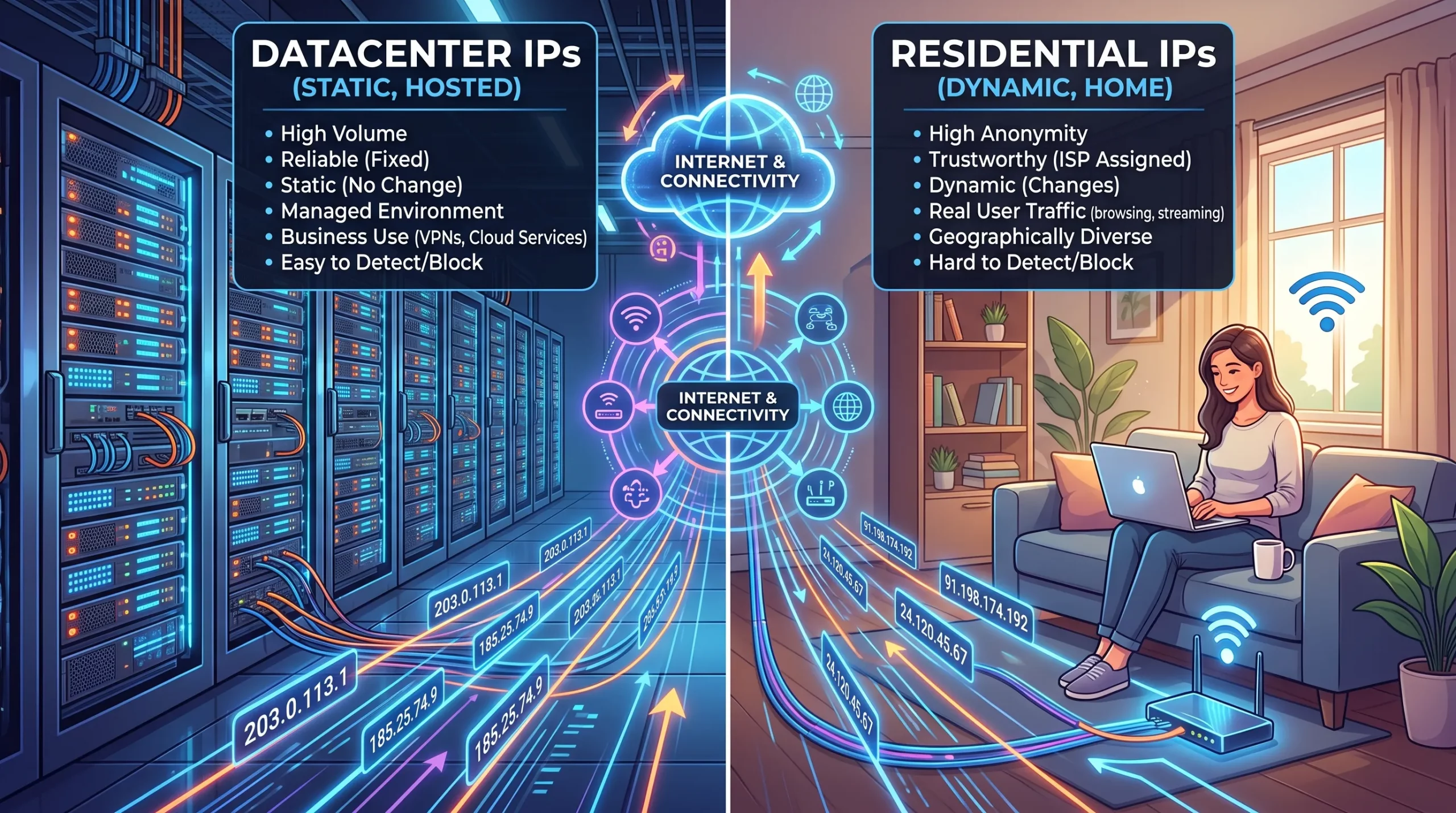
Direcciones IP de centros de datos frente a direcciones IP residenciales: ¿Cuál es la diferencia y por qué es importante?
A data center IP address originates from a commercial data center, cloud provider, or hosting company, while a residential IP address is assigned by an internet service provider to a home or business user. The difference lies in the origin: one comes from infrastructure designed to run servers; the other, from a connection designed to serve an end user. This single distinction determines how the rest of the internetRead more Related Posts 您需要多少 IPv4 地址空间?IP 地址块大小(/24、/23、/22、/21、/20)与容量规划指南 大多数企业在规划 IPv4 地址空间时,应从 /24 开始——这是全球互联网能够可靠路由的最小地址块——然后根据实际服务所消耗的地址数量以及未来增长空间逐步扩大。 一个 /24 提供 256 个地址;每增加一个级别,地址数量大约翻倍。合适的地址块大小,应能够覆盖您真实的地址使用量和近期增长,同时避免让您为大量无法合理说明或实际使用的地址空间付费。 在租赁或购买 IPv4 时,这个问题经常出现,而且通常还伴随着另一个问题:像 /24、/22 或 /20 这样的标记到底是什么意思?本指南会同时回答这两个问题。它会说明每种常见地址块大小包含多少个地址、适合哪些使用场景,并提供一个实用框架,帮助您将实际服务需求转换为合适的地址块大小。目标是让您做出一个能够向注册管理机构、财务团队以及内部容量规划团队合理解释的决定,而不是凭猜测选择一个过小或过度配置的地址块。 这是一篇关于容量规划和地址块大小选择的指南,而不是子网划分教程。如果您想了解地址块如何划分,以及 CIDR 标记在位级别上如何工作,请参考我们专门的 IP地址租赁中的授权书 (LOA) 是什么?LOA 与 ROA 的区别以及需要核实的内容 授权书(Letter of Authorization,LOA)是一份正式文件,由 IP 地址块的注册持有者授权另一方通过指定的自治系统编号(ASN)公告该地址空间。 它是一份书面授权,将使用地址空间的合同权利与实际进行路由公告的技术行为连接起来——如果没有 LOA,上游服务提供商通常会拒绝接受你的路由公告。 正是这种拒绝,使 LOA 在运营上具有决定性意义,而不仅仅是一项行政文件。Transit 服务提供商、数据中心和电信运营商都需要证明,公告某个前缀的一方确实获得了授权,因为接受未经授权的公告就意味着参与了一次路由劫持。Cloudflare 的 BYOIP 文档对此说明得非常明确:其 Transit 服务提供商要求在接受 Cloudflare 代表客户公告的路由之前提供 LOA,而且文件必须明确列出获得授权的前缀以及将用于公告这些前缀的 ASN。整个行业普遍都有类似要求。一家企业即使已经签署租赁协议、完成路由器配置,仍然可能因为 IPv4 地址总共有多少个?43 亿个地址详解 在 32 位 IPv4 地址空间中,理论上总共有 4,294,967,296 个可能的 IPv4 地址。 这个数字来自 232,因为一个 IPv4 地址包含 32 个二进制位。然而,42.9 亿并不意味着有 42.9 亿个地址可用于普通的公共互联网。IPv4 地址空间中的很大一部分被保留用于私有网络、回环通信、多播、共享地址空间、文档、基准测试、协议功能以及其他特殊用途。剩余的全球可用地址空间,在互联网发展历史中也已经被大量分配。IPv4 地址总量与可公开使用的 .related-post {} .related-post .post-list { text-align: left; } .related-post .post-list .item { margin: 5px; padding: 10px; } .related-post .headline { font-size: 18px !important; color: #999999 !important; } .related-post .post-list .item .post_thumb { max-height: 220px; margin: 10px 0px; padding: 0px; display: block; } .related-post .post-list .item .post_title { font-size: 16px; color: #3f3f3f; margin: 10px 0px; padding: 0px; display: block; text-decoration: none; } .related-post .post-list .item .post_excerpt { font-size: 13px; color: #3f3f3f; margin: 10px 0px; padding: 0px; display: block; text-decoration: none; } @media only screen and (min-width: 1024px) { .related-post .post-list .item { width: 30%; } } @media only screen and (min-width: 768px) and (max-width: 1023px) { .related-post .post-list .item { width: 90%; } } @media only screen and (min-width: 0px) and (max-width: 767px) { .related-post .post-list .item { width: 90%; } }
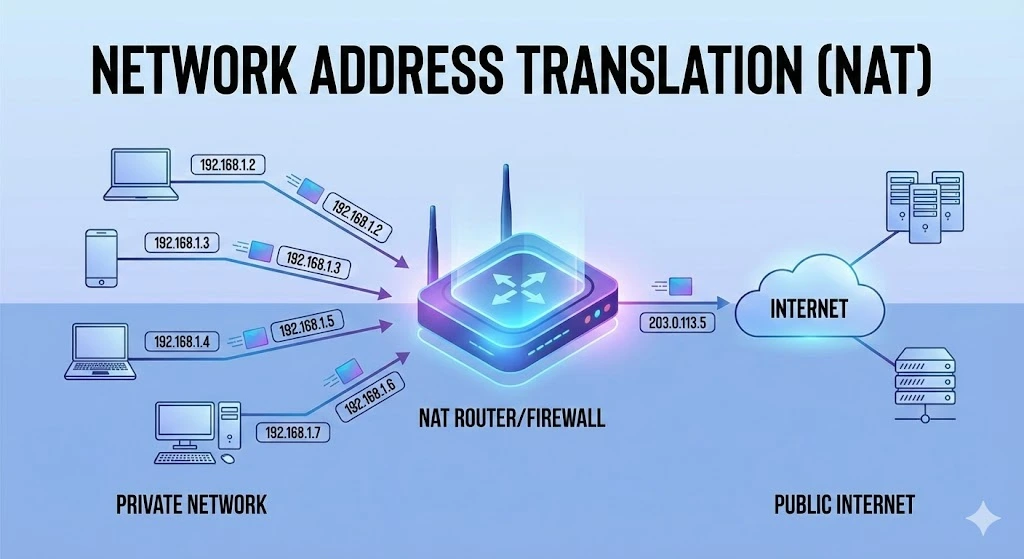
Comprensión de la traducción de direcciones de red (NAT)
En las redes informáticas, gestionar las direcciones IP de forma eficiente es fundamental para garantizar una comunicación fluida entre los dispositivos. Una de las tecnologías clave que ha surgido para afrontar este desafío es la Traducción de Direcciones de Red (NAT, por sus siglas en inglés). En este artículo explicamos qué es NAT, cómo funciona, sus distintos tipos, así como sus ventajas y limitaciones. ¿Qué es la traducción deRead more Related Posts ¿Qué es una Carta de Autorización (LOA) en el arrendamiento de propiedad intelectual? LOA vs. ROA y qué verificar Una Carta de Autorización (LOA) es un documento formal mediante el cual el titular registrado de un bloque de direcciones Direcciones IP de centros de datos frente a direcciones IP residenciales: ¿Cuál es la diferencia y por qué es importante? A data center IP address originates from a commercial data center, cloud provider, or hosting company, while a residential IP Desbloqueando la privacidad digital con una red privada virtual (VPN) ¿Qué es una VPN? Una red privada virtual (VPN) es una tecnología que permite a los usuarios crear una conexión .related-post {} .related-post .post-list { text-align: left; } .related-post .post-list .item { margin: 5px; padding: 10px; } .related-post .headline { font-size: 18px !important; color: #999999 !important; } .related-post .post-list .item .post_thumb { max-height: 220px; margin: 10px 0px; padding: 0px; display: block; } .related-post .post-list .item .post_title { font-size: 16px; color: #3f3f3f; margin: 10px 0px; padding: 0px; display: block; text-decoration: none; } .related-post .post-list .item .post_excerpt { font-size: 13px; color: #3f3f3f; margin: 10px 0px; padding: 0px; display: block; text-decoration: none; } @media only screen and (min-width: 1024px) { .related-post .post-list .item { width: 30%; } } @media only screen and (min-width: 768px) and (max-width: 1023px) { .related-post .post-list .item { width: 90%; } } @media only screen and (min-width: 0px) and (max-width: 767px) { .related-post .post-list .item { width: 90%; } }
