Securing Your IP Network, Part 2: How to secure IP address
 Chan
Chan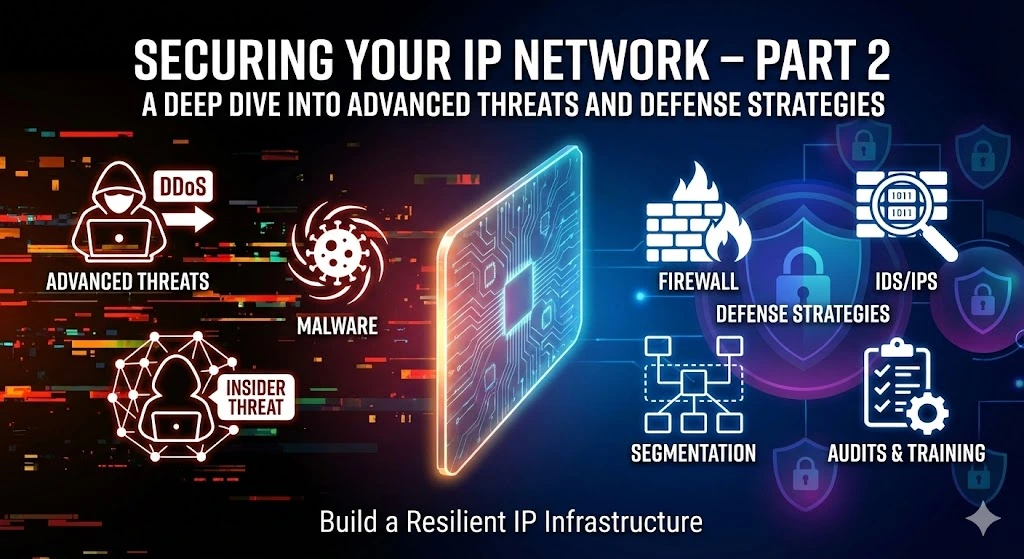
In Part 1 of our series, we explored the importance of securing your IP network and outlined fundamental strategies for enhancing network security. In this instalment, we will delve deeper into the specific measures and best practices for securing your IP addresses and safeguarding your network against cyber threats and unauthorized access.
Table of Contents
In this article, we will guide you through 6 methods of securing your IP network. Refer to Part 1 to check out the importance of securing an IP network.
How to secure an IP address
Implement IP address whitelisting
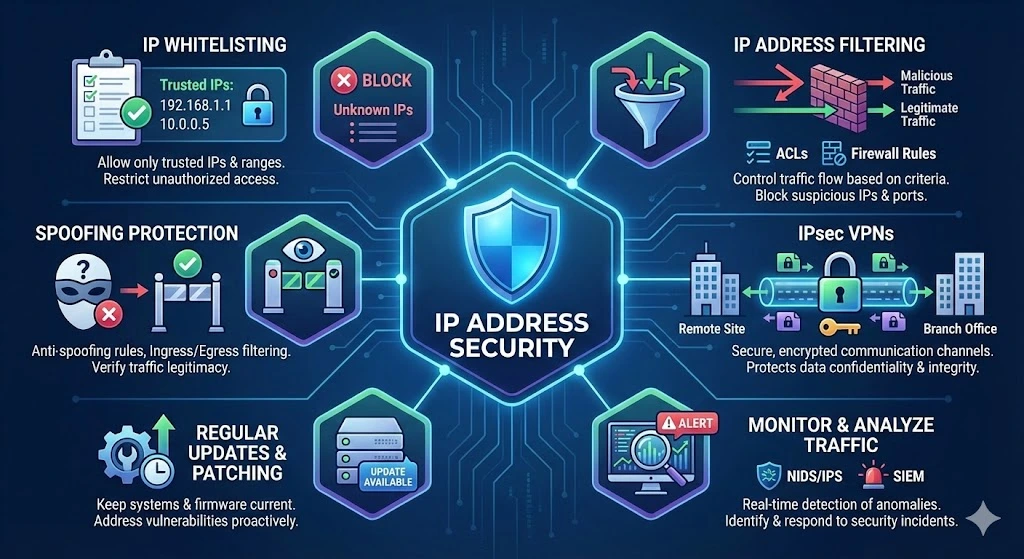
One effective way to enhance IP address security is by implementing IP address whitelisting. Whitelisting involves creating a list of trusted IP addresses or ranges that are allowed to access your network resources. By restricting access to only authorized IP addresses, you can mitigate the risk of unauthorized access and malicious activity.
Utilize IP Address Filtering
IP address filtering allows you to control the flow of traffic to and from your network based on specific criteria, such as source or destination IP addresses, protocols, and ports. By configuring firewall rules and access control lists (ACLs) to filter incoming and outgoing traffic, you can block suspicious IP addresses, prevent unauthorized access attempts, and filter out malicious traffic.
Enable IP Address Spoofing Protection
IP address spoofing is a common technique attackers use to disguise their identity and bypass network security measures. To prevent IP address spoofing attacks, it is essential to enable IP address spoofing protection mechanisms, such as ingress and egress filtering, anti-spoofing rules, and network ingress validation. These measures help verify the legitimacy of incoming and outgoing traffic, preventing spoofed IP addresses from infiltrating your network.
Deploy IPsec VPNs for Secure Communication
IPsec (Internet Protocol Security) VPNs (Virtual Private Networks) provide a secure and encrypted communication channel for transmitting data over IP networks. By deploying IPsec VPNs, you can establish secure connections between remote sites, branch offices, or individual devices, ensuring the confidentiality, integrity, and authenticity of transmitted data. IPsec VPNs protect against eavesdropping, data tampering, and man-in-the-middle attacks, making them an essential component of IP address security.
Regularly Update and Patch Systems
Keeping your network infrastructure, operating systems, and network devices up-to-date with the latest security patches and firmware updates is crucial for addressing vulnerabilities and mitigating security risks.
Regularly monitor vendor advisories, security bulletins, and vulnerability databases to identify and remediate potential security vulnerabilities in your IP network components. Additionally, establish a proactive patch management process to ensure the timely deployment of patches and updates across your network infrastructure.
Monitor and Analyze IP Traffic
Effective IP address security requires continuous monitoring and analysis of IP traffic to detect and respond to security incidents in real time.
Implement network intrusion detection systems (NIDS), intrusion prevention systems (IPS), and security information and event management (SIEM) solutions to monitor network traffic, detect suspicious activities, and generate alerts for potential security threats.
By analyzing IP traffic patterns, anomalies, and security events, you can identify and mitigate security breaches, unauthorized access attempts, and malicious activities on your IP network.
Part 2: How to secure IP address in a brief
Securing your IP addresses is a critical aspect of maintaining a secure and resilient network infrastructure. By implementing robust security measures such as IP address whitelisting, filtering, spoofing protection, VPNs, patch management, and traffic monitoring, you can effectively safeguard your IP network against cyber threats, unauthorized access, and data breaches.
Trusted IPv4 Leasing for Business Growth
Get enterprise-grade IPv4 space quickly, with seamless deployment and end-to-end management.
Get Started with i.leaseFAQs
What is the difference between IP Security (IPsec) and a standard Firewall?
A firewall is a gatekeeper that allows or blocks traffic based on rules (ports, IPs, protocols). IPsec, however, is a suite of protocols that provides security at the IP layer by encrypting the data and authenticating the sender. While a firewall prevents unauthorized entry, IPsec ensures that even if traffic is intercepted, it cannot be read or altered.
Does securing an IP network cause latency or slow down internet speeds?
Yes, introducing security layers like Deep Packet Inspection (DPI) or Encryption (VPN/IPsec) adds “overhead” because the hardware must process and decrypt every packet. To mitigate this, businesses should use high-performance hardware with dedicated encryption chips or Next-Generation Firewalls (NGFW) designed to handle high-throughput traffic without significant lag.
How can I protect my network from IP Spoofing attacks?
The most effective way to prevent IP Spoofing is by implementing Ingress and Egress Filtering. This ensures that incoming packets have a source IP that matches their actual entry point and outgoing packets don’t have “fake” internal addresses. Modern routers can automate this using Unicast Reverse Path Forwarding (uRPF).
Artículos relacionados
What are the risks of buying IPv4 from the wrong source?
Buying IPv4 addresses outside proper IP Allocation channels exposes organisations to fraud, legal disputes, operational failures and long-term governance risks. Key points: Poorly governed IPv4 transactions can fail regional internet registry checks, leading to loss of assets or invalid transfers. Cheap or unverified sources often hide risks including hijacked IP space, blacklisting, and non-compliance with centralized IP allocation policies. Introduction: scarcity fuels risk in the IPv4 market The globalRead more Related Posts What are the risks of buying IPv4 from the wrong source? Buying IPv4 addresses outside proper IP Allocation channels exposes organisations to fraud, legal disputes, operational failures and long-term governance risks.Key Read more Pourquoi la rareté des adresses IPv4 génère de la valeur économique pour les opérateurs La rareté des adresses IPv4, la demande persistante et la lenteur de la transition vers l'IPv6 transforment les adresses IP Read more Why IPv4 scarcity drives economic value for operators IPv4 地址曾经只是互联网运行所需的基础资源。但在今天,它越来越像一种具有市场价格、可交易、可租赁的数字资产。造成这一变化的原因并不复杂:IPv4 的总量有限,而全球互联网对 IPv4 的需求并没有消失;与此同时,IPv6 虽然早已出现,但迁移进度依然缓慢。这三股力量叠加,正在重新塑造运营商对 IP 地址的看法,也改变了互联网基础设施的经济逻辑。原文将这点概括为“有限供给、持续需求与缓慢转型”,并指出这正在推动 IP 地址成为影响全球电信经济的可交易资产。 IPv4 稀缺并不是新问题 全球互联网至今仍大量依赖 IPv4。这个协议诞生于更早的时代,只能提供大约 43 亿个地址。这个数量在互联网初期似乎足够庞大,但在今天已经明显不够。原文指出,IANA 在 2011 年就已将最后一批大型 IPv4 Read more .related-post {} .related-post .post-list { text-align: left; } .related-post .post-list .item { margin: 5px; padding: 10px; } .related-post .headline { font-size: 18px !important; color: #999999 !important; } .related-post .post-list .item .post_thumb { max-height: 220px; margin: 10px 0px; padding: 0px; display: block; } .related-post .post-list .item .post_title { font-size: 16px; color: #3f3f3f; margin: 10px 0px; padding: 0px; display: block; text-decoration: none; } .related-post .post-list .item .post_excerpt { font-size: 13px; color: #3f3f3f; margin: 10px 0px; padding: 0px; display: block; text-decoration: none; } @media only screen and (min-width: 1024px) { .related-post .post-list .item { width: 30%; } } @media only screen and (min-width: 768px) and (max-width: 1023px) { .related-post .post-list .item { width: 90%; } } @media only screen and (min-width: 0px) and (max-width: 767px) { .related-post .post-list .item { width: 90%; } }
Short-term vs long-term IPv4 leasing
Facing IPv4 shortages, companies must weigh cost, speed, and network growth when choosing a lease plan. Short-term leasing lets you scale resources up or down easily, but costs more over time and offers less supply certainty. Long-term leasing provides stable pricing and more reliable access, yet makes it harder to adjust your setup as needs evolve. Introduction: Why leasing IPv4 addresses makes sense IPv4 has evolved from a technicalRead more Related Posts What are the risks of buying IPv4 from the wrong source? Buying IPv4 addresses outside proper IP Allocation channels exposes organisations to fraud, legal disputes, operational failures and long-term governance risks.Key Read more Pourquoi la rareté des adresses IPv4 génère de la valeur économique pour les opérateurs La rareté des adresses IPv4, la demande persistante et la lenteur de la transition vers l'IPv6 transforment les adresses IP Read more Why IPv4 scarcity drives economic value for operators IPv4 地址曾经只是互联网运行所需的基础资源。但在今天,它越来越像一种具有市场价格、可交易、可租赁的数字资产。造成这一变化的原因并不复杂:IPv4 的总量有限,而全球互联网对 IPv4 的需求并没有消失;与此同时,IPv6 虽然早已出现,但迁移进度依然缓慢。这三股力量叠加,正在重新塑造运营商对 IP 地址的看法,也改变了互联网基础设施的经济逻辑。原文将这点概括为“有限供给、持续需求与缓慢转型”,并指出这正在推动 IP 地址成为影响全球电信经济的可交易资产。 IPv4 稀缺并不是新问题 全球互联网至今仍大量依赖 IPv4。这个协议诞生于更早的时代,只能提供大约 43 亿个地址。这个数量在互联网初期似乎足够庞大,但在今天已经明显不够。原文指出,IANA 在 2011 年就已将最后一批大型 IPv4 Read more .related-post {} .related-post .post-list { text-align: left; } .related-post .post-list .item { margin: 5px; padding: 10px; } .related-post .headline { font-size: 18px !important; color: #999999 !important; } .related-post .post-list .item .post_thumb { max-height: 220px; margin: 10px 0px; padding: 0px; display: block; } .related-post .post-list .item .post_title { font-size: 16px; color: #3f3f3f; margin: 10px 0px; padding: 0px; display: block; text-decoration: none; } .related-post .post-list .item .post_excerpt { font-size: 13px; color: #3f3f3f; margin: 10px 0px; padding: 0px; display: block; text-decoration: none; } @media only screen and (min-width: 1024px) { .related-post .post-list .item { width: 30%; } } @media only screen and (min-width: 768px) and (max-width: 1023px) { .related-post .post-list .item { width: 90%; } } @media only screen and (min-width: 0px) and (max-width: 767px) { .related-post .post-list .item { width: 90%; } }
Why IPv4 scarcity drives economic value for operators
IPv4 地址曾经只是互联网运行所需的基础资源。但在今天,它越来越像一种具有市场价格、可交易、可租赁的数字资产。 造成这一变化的原因并不复杂:IPv4 的总量有限,而全球互联网对 IPv4 的需求并没有消失;与此同时,IPv6 虽然早已出现,但迁移进度依然缓慢。这三股力量叠加,正在重新塑造运营商对 IP 地址的看法,也改变了互联网基础设施的经济逻辑。原文将这点概括为“有限供给、持续需求与缓慢转型”,并指出这正在推动 IP 地址成为影响全球电信经济的可交易资产。 IPv4 稀缺并不是新问题 全球互联网至今仍大量依赖 IPv4。这个协议诞生于更早的时代,只能提供大约 43 亿个地址。这个数量在互联网初期似乎足够庞大,但在今天已经明显不够。原文指出,IANA 在 2011 年就已将最后一批大型 IPv4 地址区块分配给各区域注册机构,这成为互联网基础设施经济逻辑的转折点。 地址池耗尽之后,市场并没有停下来,而是开始适应。网络运营商、云服务商和电信企业不再只是把 IPv4 看成技术标识,而是把它视为一种有限资源,需要管理、分配、定价,甚至纳入财务优化的考量之中。 从技术资源走向经济资产 稀缺本身并不会自动带来价值,真正让 IPv4 变得有价值的,是它在现实世界中的持续需求。尽管 IPv6 已经存在,而且理论上更先进、地址空间也几乎无限,但大量旧系统、兼容性要求以及客户环境仍然依赖 IPv4。正因如此,IPv4 的需求并没有随着 IPv6 的出现而消失。原文将这一点称为一个“悖论”:技术上更优的替代方案已经存在,但 IPv4 依赖型系统的庞大存量仍在支撑市场需求。 供给固定、需求持续,这就形成了经典的供需失衡。文章提到,IPv4 的价格因此不断上升:2014 年约为每个地址 15 美元,近年则常见于 40 到 50 美元区间,高点甚至更高。围绕 IPv4 的语言也随之发生变化:从 allocation 走向 valuation,从 assignment 走向 trading。 价格不是固定的,但市场已经成形 IPv4 市场并不是静止不变的,也不是所有地址都一个价格。价格会受到区块大小、地区需求、宏观经济环境等因素影响。原文列出的历史数据表明,2014 年每个 IPv4 地址价格约在 6 到 24 美元之间,到 2021 年某些情况下可达到 60Read more Related Posts What are the risks of buying IPv4 from the wrong source? Buying IPv4 addresses outside proper IP Allocation channels exposes organisations to fraud, legal disputes, operational failures and long-term governance risks.Key Read more Pourquoi la rareté des adresses IPv4 génère de la valeur économique pour les opérateurs La rareté des adresses IPv4, la demande persistante et la lenteur de la transition vers l'IPv6 transforment les adresses IP Read more Why IPv4 scarcity drives economic value for operators IPv4 地址曾经只是互联网运行所需的基础资源。但在今天,它越来越像一种具有市场价格、可交易、可租赁的数字资产。造成这一变化的原因并不复杂:IPv4 的总量有限,而全球互联网对 IPv4 的需求并没有消失;与此同时,IPv6 虽然早已出现,但迁移进度依然缓慢。这三股力量叠加,正在重新塑造运营商对 IP 地址的看法,也改变了互联网基础设施的经济逻辑。原文将这点概括为“有限供给、持续需求与缓慢转型”,并指出这正在推动 IP 地址成为影响全球电信经济的可交易资产。 IPv4 稀缺并不是新问题 全球互联网至今仍大量依赖 IPv4。这个协议诞生于更早的时代,只能提供大约 43 亿个地址。这个数量在互联网初期似乎足够庞大,但在今天已经明显不够。原文指出,IANA 在 2011 年就已将最后一批大型 IPv4 Read more .related-post {} .related-post .post-list { text-align: left; } .related-post .post-list .item { margin: 5px; padding: 10px; } .related-post .headline { font-size: 18px !important; color: #999999 !important; } .related-post .post-list .item .post_thumb { max-height: 220px; margin: 10px 0px; padding: 0px; display: block; } .related-post .post-list .item .post_title { font-size: 16px; color: #3f3f3f; margin: 10px 0px; padding: 0px; display: block; text-decoration: none; } .related-post .post-list .item .post_excerpt { font-size: 13px; color: #3f3f3f; margin: 10px 0px; padding: 0px; display: block; text-decoration: none; } @media only screen and (min-width: 1024px) { .related-post .post-list .item { width: 30%; } } @media only screen and (min-width: 768px) and (max-width: 1023px) { .related-post .post-list .item { width: 90%; } } @media only screen and (min-width: 0px) and (max-width: 767px) { .related-post .post-list .item { width: 90%; } }
