Le Rôle des Courtiers en Adresses IP dans l’Économie Numérique
 Chan
ChanÀ mesure que l’économie numérique se développe, les entreprises et les fournisseurs de services ont besoin de plus d’adresses IP pour soutenir leurs opérations. Cependant, acquérir ces ressources précieuses n’est pas aussi simple qu’il y paraît. C’est là que les courtiers en adresses IP jouent un rôle crucial, agissant en tant qu’intermédiaires qui facilitent les transactions, garantissent la conformité légale et fournissent des conseils experts.
Table of Contents
Dans cet article, nous explorerons le rôle des courtiers en adresses IP dans l’économie numérique et comment ils apportent de la valeur aux acheteurs et aux vendeurs.
Comprendre le Marché des Adresses IP
Les adresses IP sont des identificateurs numériques uniques qui permettent aux dispositifs de communiquer sur Internet. À mesure qu’Internet a grandi, l’offre d’adresses IP disponibles, en particulier les adresses IPv4, a diminué. Cette pénurie a conduit à l’émergence d’un marché secondaire prospère où les adresses IP sont achetées, vendues et louées. Cependant, naviguer sur ce marché peut être complexe en raison des divers facteurs légaux, techniques et financiers impliqués.
Qu’est-ce qu’un Courtier en Adresses IP ?
Un courtier en adresses IP est un intermédiaire professionnel spécialisé dans la facilitation de l’achat, de la vente et du transfert de blocs d’adresses IP. Les courtiers possèdent généralement une connaissance approfondie du marché des adresses IP, y compris les tendances de prix actuelles, les exigences réglementaires et les aspects techniques de l’allocation des adresses IP.
Comment les Courtiers en Adresses IP Facilitent les Transactions
Expertise du Marché et Évaluation : Les courtiers en adresses IP possèdent une connaissance approfondie du marché, ce qui leur permet d’évaluer avec précision la valeur des blocs IP en fonction de leur taille, de leur réputation, de leur géolocalisation et de la demande, garantissant un prix équitable pour les acheteurs et les vendeurs.
Sourcing et Liste des Blocs IP : Les courtiers aident les acheteurs à trouver des blocs IP répondant à des besoins spécifiques, tels que des adresses propres ou régionales. Ils répertorient également les blocs IP des vendeurs, attirant un large éventail d’acheteurs potentiels pour des ventes compétitives.
Négociation et Structuration des Offres : Les courtiers négocient des accords satisfaisants pour les deux parties, en s’appuyant sur leur compréhension des dynamiques du marché pour garantir des transactions fluides.
Conformité Légale et Diligence Raisonnable : Les courtiers gèrent les aspects juridiques, y compris la vérification de la propriété et la conformité avec les politiques des RIR, réduisant le risque de litiges.
Facilitation du Processus de Transfert : Les courtiers gèrent le transfert technique des adresses IP, en coordonnant avec les RIR et en garantissant le bon routage.
Support Post-Vente : Les courtiers fournissent souvent un support après la vente, aidant à la configuration des adresses IP et résolvant les problèmes post-transfert.
Valeur des Courtiers en Adresses IP
Efficacité en Temps et Coût : Naviguer sur le marché des adresses IP peut être long et complexe, surtout pour ceux qui ne sont pas familiers avec les subtilités des transactions d’adresses IP. Les courtiers simplifient le processus, économisant du temps et réduisant le potentiel d’erreurs coûteuses.
Accès à un Large Réseau : Les courtiers possèdent généralement des réseaux étendus de contacts au sein de l’industrie, y compris d’autres courtiers, acheteurs, vendeurs et registres. Ce réseau permet d’accéder à un plus grand nombre d’acheteurs et de vendeurs potentiels, augmentant les chances de trouver le bon correspondant.
Atténuation des Risques : En gérant la diligence raisonnable, la conformité légale et les aspects techniques du transfert, les courtiers réduisent considérablement les risques associés aux transactions d’adresses IP. Cela inclut l’évitement de la fraude, la garantie du transfert approprié de la propriété et l’atténuation du risque d’acquisition de blocs IP sur liste noire ou compromis.
Négociation Experte : Les courtiers apportent des compétences professionnelles en négociation, garantissant que les deux parties obtiennent un accord équitable. Leur capacité à médiatiser et à résoudre les conflits peut empêcher les accords de tomber à l’eau, ce qui est particulièrement précieux dans les transactions à enjeux élevés.
Conclusion
Les courtiers en adresses IP fournissent l’expertise, la connaissance du marché et les compétences en négociation nécessaires pour faciliter des transactions d’adresses IP réussies. Que vous soyez une entreprise cherchant à étendre vos avoirs en adresses IP ou un vendeur souhaitant liquider des actifs, collaborer avec un courtier en adresses IP réputé peut apporter une valeur significative, garantissant une transaction fluide et rentable.
Alors que la demande d’adresses IP continue de croître, le rôle des courtiers ne fera que devenir plus critique pour aider les entreprises à naviguer dans cet aspect essentiel du paysage numérique.
Artículos relacionados

¿Qué es una Carta de Autorización (LOA) en el arrendamiento de propiedad intelectual? LOA vs. ROA y qué verificar
Una Carta de Autorización (LOA) es un documento formal mediante el cual el titular registrado de un bloque de direcciones IP autoriza a otra parte a anunciar ese espacio de direcciones desde un Número de Sistema Autónomo especificado. Es el permiso escrito que conecta el derecho contractual de utilizar un espacio de direcciones con el acto técnico de enrutarlo y, sin él, los proveedores upstream generalmente se negarán aRead more Related Posts 您需要多少 IPv4 地址空间?IP 地址块大小(/24、/23、/22、/21、/20)与容量规划指南 大多数企业在规划 IPv4 地址空间时,应从 /24 开始——这是全球互联网能够可靠路由的最小地址块——然后根据实际服务所消耗的地址数量以及未来增长空间逐步扩大。 一个 /24 提供 256 个地址;每增加一个级别,地址数量大约翻倍。合适的地址块大小,应能够覆盖您真实的地址使用量和近期增长,同时避免让您为大量无法合理说明或实际使用的地址空间付费。 在租赁或购买 IPv4 时,这个问题经常出现,而且通常还伴随着另一个问题:像 /24、/22 或 /20 这样的标记到底是什么意思?本指南会同时回答这两个问题。它会说明每种常见地址块大小包含多少个地址、适合哪些使用场景,并提供一个实用框架,帮助您将实际服务需求转换为合适的地址块大小。目标是让您做出一个能够向注册管理机构、财务团队以及内部容量规划团队合理解释的决定,而不是凭猜测选择一个过小或过度配置的地址块。 这是一篇关于容量规划和地址块大小选择的指南,而不是子网划分教程。如果您想了解地址块如何划分,以及 CIDR 标记在位级别上如何工作,请参考我们专门的 What Happens to IPv4 Records After an IP Address Transfer? Completing an IPv4 transfer does more than move address space from one organization to another. It changes the administrative relationship Qu’est-ce qu’une lettre d’autorisation (LOA) dans le cadre d’un bail de propriété intellectuelle ? LOA vs ROA et points à vérifier Une Lettre d’Autorisation (LOA) est un document officiel dans lequel le titulaire enregistré d’un bloc d’adresses IP autorise une autre .related-post {} .related-post .post-list { text-align: left; } .related-post .post-list .item { margin: 5px; padding: 10px; } .related-post .headline { font-size: 18px !important; color: #999999 !important; } .related-post .post-list .item .post_thumb { max-height: 220px; margin: 10px 0px; padding: 0px; display: block; } .related-post .post-list .item .post_title { font-size: 16px; color: #3f3f3f; margin: 10px 0px; padding: 0px; display: block; text-decoration: none; } .related-post .post-list .item .post_excerpt { font-size: 13px; color: #3f3f3f; margin: 10px 0px; padding: 0px; display: block; text-decoration: none; } @media only screen and (min-width: 1024px) { .related-post .post-list .item { width: 30%; } } @media only screen and (min-width: 768px) and (max-width: 1023px) { .related-post .post-list .item { width: 90%; } } @media only screen and (min-width: 0px) and (max-width: 767px) { .related-post .post-list .item { width: 90%; } }
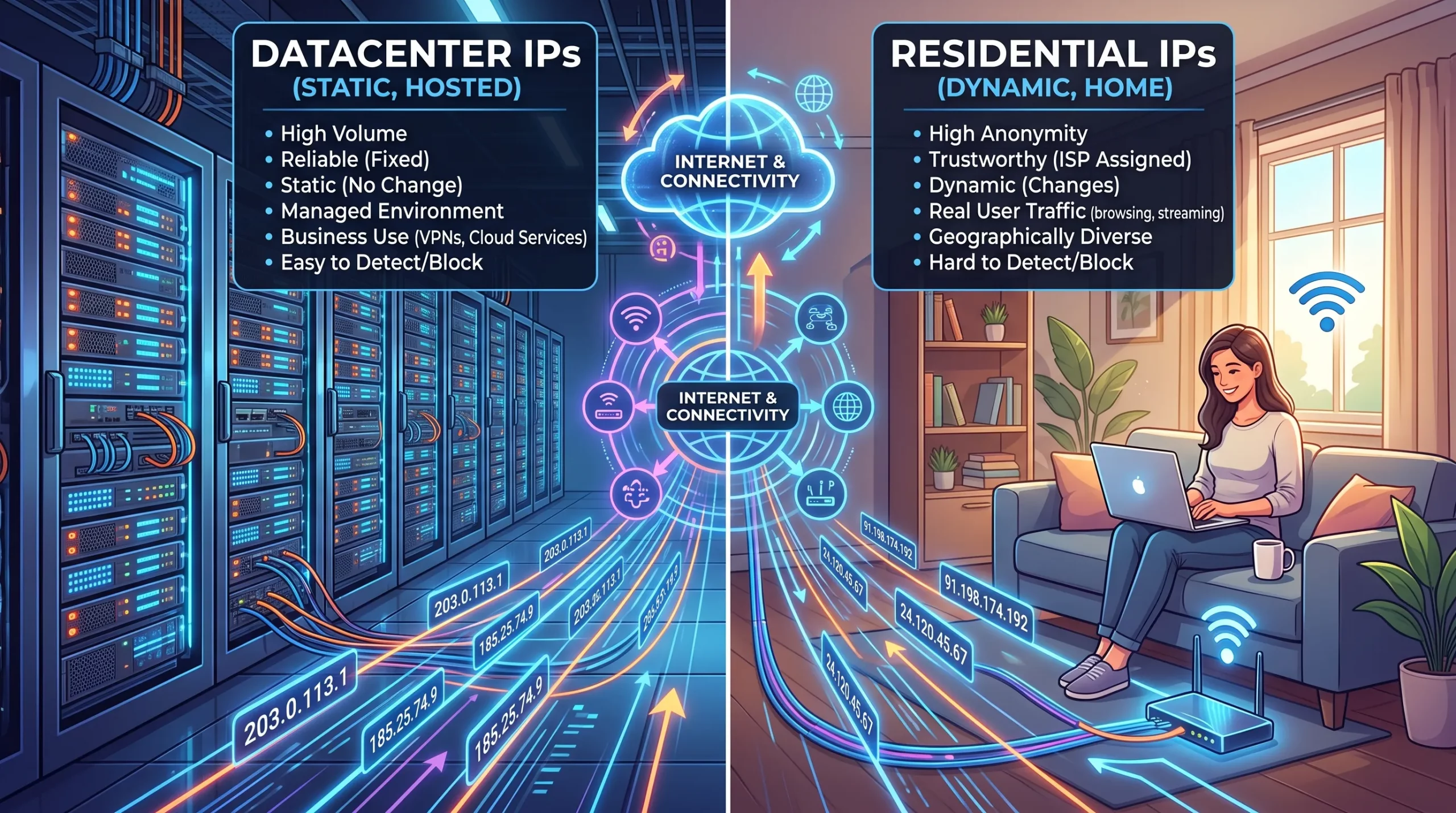
Direcciones IP de centros de datos frente a direcciones IP residenciales: ¿Cuál es la diferencia y por qué es importante?
A data center IP address originates from a commercial data center, cloud provider, or hosting company, while a residential IP address is assigned by an internet service provider to a home or business user. The difference lies in the origin: one comes from infrastructure designed to run servers; the other, from a connection designed to serve an end user. This single distinction determines how the rest of the internetRead more Related Posts 您需要多少 IPv4 地址空间?IP 地址块大小(/24、/23、/22、/21、/20)与容量规划指南 大多数企业在规划 IPv4 地址空间时,应从 /24 开始——这是全球互联网能够可靠路由的最小地址块——然后根据实际服务所消耗的地址数量以及未来增长空间逐步扩大。 一个 /24 提供 256 个地址;每增加一个级别,地址数量大约翻倍。合适的地址块大小,应能够覆盖您真实的地址使用量和近期增长,同时避免让您为大量无法合理说明或实际使用的地址空间付费。 在租赁或购买 IPv4 时,这个问题经常出现,而且通常还伴随着另一个问题:像 /24、/22 或 /20 这样的标记到底是什么意思?本指南会同时回答这两个问题。它会说明每种常见地址块大小包含多少个地址、适合哪些使用场景,并提供一个实用框架,帮助您将实际服务需求转换为合适的地址块大小。目标是让您做出一个能够向注册管理机构、财务团队以及内部容量规划团队合理解释的决定,而不是凭猜测选择一个过小或过度配置的地址块。 这是一篇关于容量规划和地址块大小选择的指南,而不是子网划分教程。如果您想了解地址块如何划分,以及 CIDR 标记在位级别上如何工作,请参考我们专门的 IP地址租赁中的授权书 (LOA) 是什么?LOA 与 ROA 的区别以及需要核实的内容 授权书(Letter of Authorization,LOA)是一份正式文件,由 IP 地址块的注册持有者授权另一方通过指定的自治系统编号(ASN)公告该地址空间。 它是一份书面授权,将使用地址空间的合同权利与实际进行路由公告的技术行为连接起来——如果没有 LOA,上游服务提供商通常会拒绝接受你的路由公告。 正是这种拒绝,使 LOA 在运营上具有决定性意义,而不仅仅是一项行政文件。Transit 服务提供商、数据中心和电信运营商都需要证明,公告某个前缀的一方确实获得了授权,因为接受未经授权的公告就意味着参与了一次路由劫持。Cloudflare 的 BYOIP 文档对此说明得非常明确:其 Transit 服务提供商要求在接受 Cloudflare 代表客户公告的路由之前提供 LOA,而且文件必须明确列出获得授权的前缀以及将用于公告这些前缀的 ASN。整个行业普遍都有类似要求。一家企业即使已经签署租赁协议、完成路由器配置,仍然可能因为 IPv4 地址总共有多少个?43 亿个地址详解 在 32 位 IPv4 地址空间中,理论上总共有 4,294,967,296 个可能的 IPv4 地址。 这个数字来自 232,因为一个 IPv4 地址包含 32 个二进制位。然而,42.9 亿并不意味着有 42.9 亿个地址可用于普通的公共互联网。IPv4 地址空间中的很大一部分被保留用于私有网络、回环通信、多播、共享地址空间、文档、基准测试、协议功能以及其他特殊用途。剩余的全球可用地址空间,在互联网发展历史中也已经被大量分配。IPv4 地址总量与可公开使用的 .related-post {} .related-post .post-list { text-align: left; } .related-post .post-list .item { margin: 5px; padding: 10px; } .related-post .headline { font-size: 18px !important; color: #999999 !important; } .related-post .post-list .item .post_thumb { max-height: 220px; margin: 10px 0px; padding: 0px; display: block; } .related-post .post-list .item .post_title { font-size: 16px; color: #3f3f3f; margin: 10px 0px; padding: 0px; display: block; text-decoration: none; } .related-post .post-list .item .post_excerpt { font-size: 13px; color: #3f3f3f; margin: 10px 0px; padding: 0px; display: block; text-decoration: none; } @media only screen and (min-width: 1024px) { .related-post .post-list .item { width: 30%; } } @media only screen and (min-width: 768px) and (max-width: 1023px) { .related-post .post-list .item { width: 90%; } } @media only screen and (min-width: 0px) and (max-width: 767px) { .related-post .post-list .item { width: 90%; } }
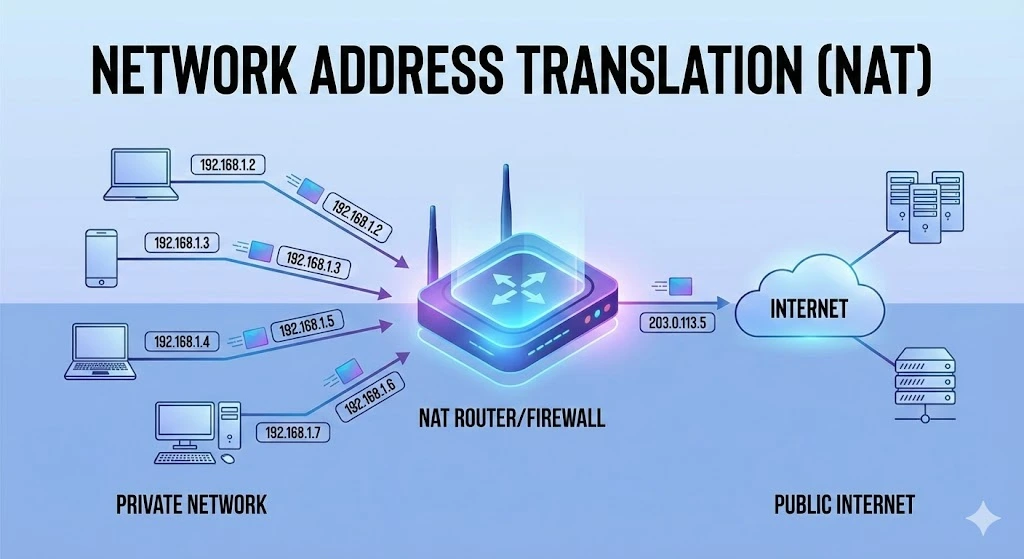
Comprensión de la traducción de direcciones de red (NAT)
En las redes informáticas, gestionar las direcciones IP de forma eficiente es fundamental para garantizar una comunicación fluida entre los dispositivos. Una de las tecnologías clave que ha surgido para afrontar este desafío es la Traducción de Direcciones de Red (NAT, por sus siglas en inglés). En este artículo explicamos qué es NAT, cómo funciona, sus distintos tipos, así como sus ventajas y limitaciones. ¿Qué es la traducción deRead more Related Posts ¿Qué es una Carta de Autorización (LOA) en el arrendamiento de propiedad intelectual? LOA vs. ROA y qué verificar Una Carta de Autorización (LOA) es un documento formal mediante el cual el titular registrado de un bloque de direcciones Direcciones IP de centros de datos frente a direcciones IP residenciales: ¿Cuál es la diferencia y por qué es importante? A data center IP address originates from a commercial data center, cloud provider, or hosting company, while a residential IP Desbloqueando la privacidad digital con una red privada virtual (VPN) ¿Qué es una VPN? Una red privada virtual (VPN) es una tecnología que permite a los usuarios crear una conexión .related-post {} .related-post .post-list { text-align: left; } .related-post .post-list .item { margin: 5px; padding: 10px; } .related-post .headline { font-size: 18px !important; color: #999999 !important; } .related-post .post-list .item .post_thumb { max-height: 220px; margin: 10px 0px; padding: 0px; display: block; } .related-post .post-list .item .post_title { font-size: 16px; color: #3f3f3f; margin: 10px 0px; padding: 0px; display: block; text-decoration: none; } .related-post .post-list .item .post_excerpt { font-size: 13px; color: #3f3f3f; margin: 10px 0px; padding: 0px; display: block; text-decoration: none; } @media only screen and (min-width: 1024px) { .related-post .post-list .item { width: 30%; } } @media only screen and (min-width: 768px) and (max-width: 1023px) { .related-post .post-list .item { width: 90%; } } @media only screen and (min-width: 0px) and (max-width: 767px) { .related-post .post-list .item { width: 90%; } }
