
The Role of IP Address Brokers in the Digital Economy

ChanChan
The Role of IP Address Brokers in the Digital Economy

As the digital economy expands, businesses and service providers require more IP addresses to support their operations. However, acquiring these valuable resources isn’t as straightforward as it may seem. This is where IP address brokers play a crucial role, acting as intermediaries who facilitate transactions, ensure legal compliance, and provide expert guidance.


In this article, we’ll explore the role of IP address brokers in the digital economy and how they bring value to buyers and sellers.

Understanding the IP Address Market
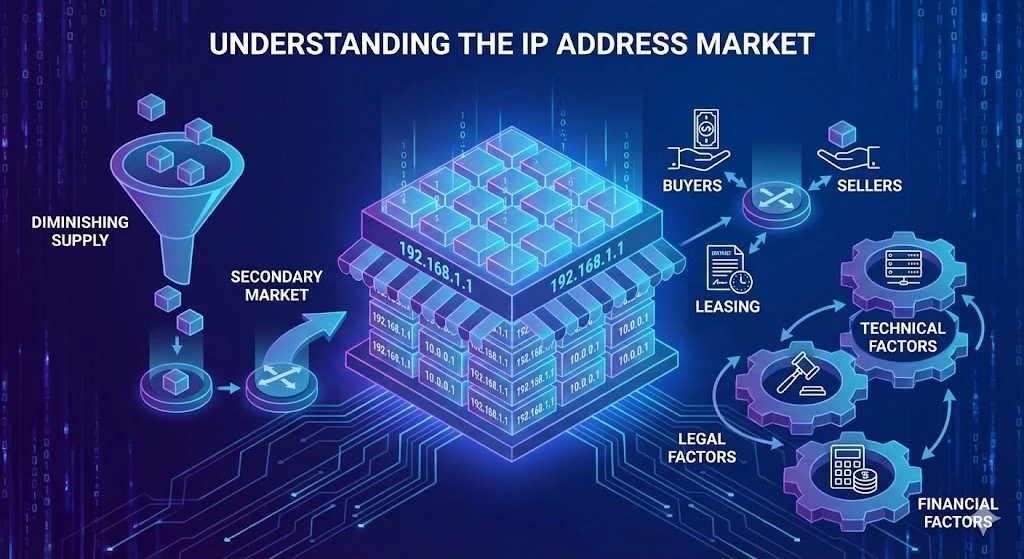
IP addresses are unique numerical identifiers that allow devices to communicate over the internet. As the internet has grown, the supply of available IP addresses, particularly IPv4 addresses, has diminished. This scarcity has led to a thriving secondary market where IP addresses are bought, sold, and leased. However, navigating this market can be complex due to the various legal, technical, and financial factors involved.

What is an IP Address Broker?

An IP address broker is a professional intermediary specializing in facilitating the purchase, sale, and transfer of IP address blocks. Brokers typically have deep knowledge of the IP address market, including current pricing trends, regulatory requirements, and the technical aspects of IP address allocation.

How IP Address Brokers Facilitate Transactions
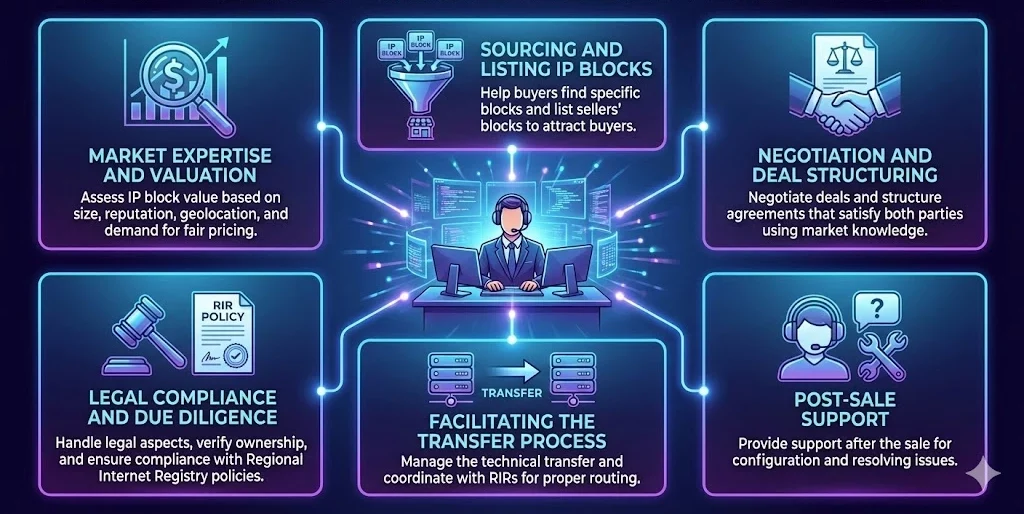
Market Expertise and Valuation: IP address brokers have deep market knowledge, enabling them to accurately assess IP block value based on size, reputation, geolocation, and demand, ensuring fair pricing for both buyers and sellers.


Sourcing and Listing IP Blocks: Brokers help buyers find IP blocks that meet specific needs, such as clean or region-specific addresses. They also list sellers’ IP blocks, attracting a wide range of potential buyers for competitive sales.


Negotiation and Deal Structuring: Brokers negotiate deals that satisfy both parties, leveraging their understanding of market dynamics to ensure smooth transactions.


Legal Compliance and Due Diligence: Brokers handle legal aspects, including ownership verification and compliance with RIR policies, reducing the risk of disputes.


Facilitating the Transfer Process: Brokers manage the technical transfer of IP addresses, coordinating with RIRs, and ensuring proper routing.


Post-Sale Support: Brokers often provide support after the sale, helping with IP address configuration and resolving any post-transfer issues.

Value of IP Address Brokers
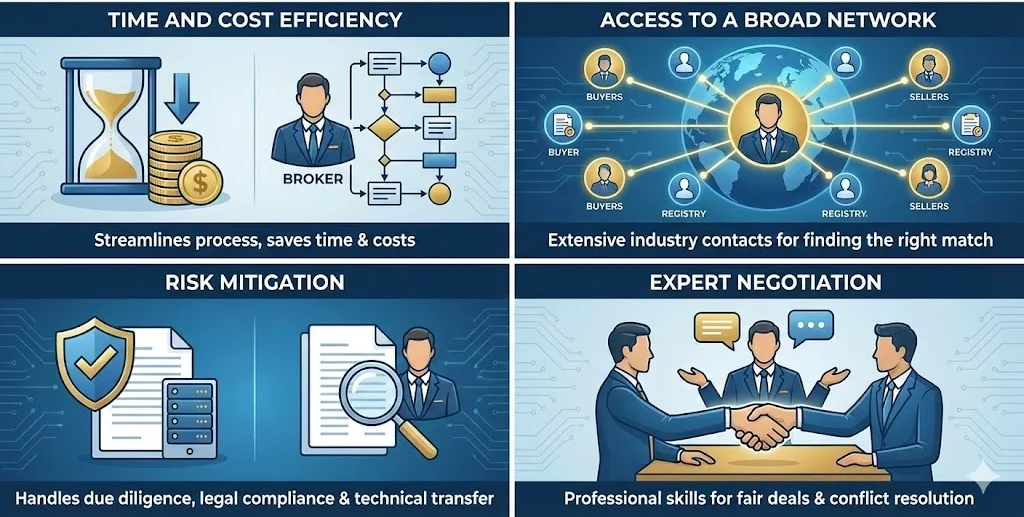
Time and Cost Efficiency: Navigating the IP address market can be time-consuming and complex, especially for those unfamiliar with the intricacies of IP address transactions. Brokers streamline the process, saving time and reducing the potential for costly mistakes.


Access to a Broad Network: Brokers typically have extensive networks of contacts within the industry, including other brokers, buyers, sellers, and registries. This network provides access to a larger pool of potential buyers and sellers, increasing the chances of finding the right match.


Risk Mitigation: By handling due diligence, legal compliance, and technical aspects of the transfer, brokers significantly reduce the risks associated with IP address transactions. This includes avoiding fraud, ensuring proper ownership transfer, and mitigating the risk of acquiring blacklisted or compromised IP blocks.


Expert Negotiation: Brokers bring professional negotiation skills to the table, ensuring that both parties achieve a fair deal. Their ability to mediate and resolve conflicts can prevent deals from falling apart, which is particularly valuable in high-stakes transactions.

Conclusion

IP address brokers provide the expertise, market knowledge, and negotiation skills necessary to facilitate successful IP address transactions. Whether you are a business looking to expand your IP address holdings or a seller aiming to liquidate assets, partnering with a reputable IP address broker can provide significant value, ensuring a smooth and profitable transaction.

As the demand for IP addresses continues to grow, the role of brokers will only become more critical in helping businesses navigate this essential aspect of the digital landscape.

Trusted IPv4 Leasing for Business Growth

Get enterprise-grade IPv4 space quickly, with seamless deployment and end-to-end management.

Get Started with i.lease

FAQs

How much do IP address brokers charge for their services?

Most IP brokers work on a commission basis, typically charging a “Success Fee” ranging from 15% to 35% of the total transaction value. Some may also offer flat-fee structures for smaller block transfers. It is important to clarify if this fee is paid by the buyer, the seller, or split between both parties before signing a contract.

Is it legal to buy and sell IP addresses?

Technically, you are not “buying” the IP addresses themselves but rather transferring the “Right of Registration” to use them. This process is fully legal and recognized by Regional Internet Registries (RIRs) like ARIN, RIPE, and APNIC, provided that their specific transfer policies are followed.

What are the risks of buying IP addresses without a broker?

conducting a private sale without a broker exposes you to significant risks, including:

  • Fraud: Sending money and never receiving the IPs.
  • Blacklisted IPs: Acquiring addresses that have been used for spam and are blocked by major networks.
  • Reclamation: Buying IPs that have a “dirty” chain of custody, leading to the RIR revoking them later.
  • Hidden Costs: Unexpected transfer fees or legal hurdles.
Can an IP broker help me sell my unused IPv4 blocks?

Yes. Brokers are essential for sellers because they can:

  1. Clean your IPs: Help remove old blacklist records to increase value.
  2. Find Buyers: distinct access to a global network of pre-vetted buyers.
  3. Handle Escrow: Ensure you get paid before the IPs are transferred out of your account.

Related Posts

ipv4-subnet

What Is a /24 IPv4 Subnet and Why Is It Popular for Leasing?

A /24 IPv4 subnet is one of the most common block sizes in the IPv4 leasing market. For hosting providers, SaaS platforms, VPN operators, ISPs, cloud infrastructure teams, and enterprises, it offers a practical balance between address capacity, routing usability, and cost control. As IPv4 scarcity continues, businesses are no longer treating IP addresses as simple technical resources. IPv4 space has become operational infrastructure. The question is no longerRead more Related Posts What Is a /24 IPv4 Subnet and Why Is It Popular for Leasing? A /24 IPv4 subnet is one of the most common block sizes in the IPv4 leasing market. For hosting providers, How to Avoid Downtime When Deploying Leased IPv4 Blocks Leased IPv4 blocks are often used by hosting providers, cloud platforms, ISPs, SaaS companies, data centers, and enterprise networks that Rent IPv4 Addresses: The Enterprise Guide to Building Long-Term IPv4 Continuity If you're looking to rent IPv4 addresses, you're not alone.Businesses worldwide continue to need IPv4 resources to support growth, expand .related-post {} .related-post .post-list { text-align: left; } .related-post .post-list .item { margin: 5px; padding: 10px; } .related-post .headline { font-size: 18px !important; color: #999999 !important; } .related-post .post-list .item .post_thumb { max-height: 220px; margin: 10px 0px; padding: 0px; display: block; } .related-post .post-list .item .post_title { font-size: 16px; color: #3f3f3f; margin: 10px 0px; padding: 0px; display: block; text-decoration: none; } .related-post .post-list .item .post_excerpt { font-size: 13px; color: #3f3f3f; margin: 10px 0px; padding: 0px; display: block; text-decoration: none; } @media only screen and (min-width: 1024px) { .related-post .post-list .item { width: 30%; } } @media only screen and (min-width: 768px) and (max-width: 1023px) { .related-post .post-list .item { width: 90%; } } @media only screen and (min-width: 0px) and (max-width: 767px) { .related-post .post-list .item { width: 90%; } }

lease-ipv4-block

How to Avoid Downtime When Deploying Leased IPv4 Blocks

Leased IPv4 blocks are often used by hosting providers, cloud platforms, ISPs, SaaS companies, data centers, and enterprise networks that need public IPv4 resources without purchasing address space outright. Leasing can be a practical way to support infrastructure growth, customer services, migration projects, and temporary deployment needs. However, getting access to IPv4 space is only the first step. The real challenge is deploying the leased IPv4 block without causingRead more Related Posts What Is a /24 IPv4 Subnet and Why Is It Popular for Leasing? A /24 IPv4 subnet is one of the most common block sizes in the IPv4 leasing market. For hosting providers, How to Avoid Downtime When Deploying Leased IPv4 Blocks Leased IPv4 blocks are often used by hosting providers, cloud platforms, ISPs, SaaS companies, data centers, and enterprise networks that Rent IPv4 Addresses: The Enterprise Guide to Building Long-Term IPv4 Continuity If you're looking to rent IPv4 addresses, you're not alone.Businesses worldwide continue to need IPv4 resources to support growth, expand .related-post {} .related-post .post-list { text-align: left; } .related-post .post-list .item { margin: 5px; padding: 10px; } .related-post .headline { font-size: 18px !important; color: #999999 !important; } .related-post .post-list .item .post_thumb { max-height: 220px; margin: 10px 0px; padding: 0px; display: block; } .related-post .post-list .item .post_title { font-size: 16px; color: #3f3f3f; margin: 10px 0px; padding: 0px; display: block; text-decoration: none; } .related-post .post-list .item .post_excerpt { font-size: 13px; color: #3f3f3f; margin: 10px 0px; padding: 0px; display: block; text-decoration: none; } @media only screen and (min-width: 1024px) { .related-post .post-list .item { width: 30%; } } @media only screen and (min-width: 768px) and (max-width: 1023px) { .related-post .post-list .item { width: 90%; } } @media only screen and (min-width: 0px) and (max-width: 767px) { .related-post .post-list .item { width: 90%; } }

ipv4-block

Understanding RIR Transfer Rules Across Regions

Understanding RIR Transfer Rules Across Regions IPv4 addresses have become valuable operational assets. For ISPs, hosting providers, cloud platforms, enterprises, and network operators, obtaining IPv4 space is no longer just a technical task. It often involves policy review, registry approval, documentation, and regional compliance. At the center of this process are the five Regional Internet Registries, commonly known as RIRs: ARIN RIPE NCC APNIC LACNIC AFRINIC Each RIR managesRead more Related Posts What Is a /24 IPv4 Subnet and Why Is It Popular for Leasing? A /24 IPv4 subnet is one of the most common block sizes in the IPv4 leasing market. For hosting providers, How to Avoid Downtime When Deploying Leased IPv4 Blocks Leased IPv4 blocks are often used by hosting providers, cloud platforms, ISPs, SaaS companies, data centers, and enterprise networks that Rent IPv4 Addresses: The Enterprise Guide to Building Long-Term IPv4 Continuity If you're looking to rent IPv4 addresses, you're not alone.Businesses worldwide continue to need IPv4 resources to support growth, expand .related-post {} .related-post .post-list { text-align: left; } .related-post .post-list .item { margin: 5px; padding: 10px; } .related-post .headline { font-size: 18px !important; color: #999999 !important; } .related-post .post-list .item .post_thumb { max-height: 220px; margin: 10px 0px; padding: 0px; display: block; } .related-post .post-list .item .post_title { font-size: 16px; color: #3f3f3f; margin: 10px 0px; padding: 0px; display: block; text-decoration: none; } .related-post .post-list .item .post_excerpt { font-size: 13px; color: #3f3f3f; margin: 10px 0px; padding: 0px; display: block; text-decoration: none; } @media only screen and (min-width: 1024px) { .related-post .post-list .item { width: 30%; } } @media only screen and (min-width: 768px) and (max-width: 1023px) { .related-post .post-list .item { width: 90%; } } @media only screen and (min-width: 0px) and (max-width: 767px) { .related-post .post-list .item { width: 90%; } }

Tags

#Role of IP Address Brokers