
Blog

该分类下共有 163 篇文章

Telco Companies, UK, US, and Canada
Blog

What Are Telco Companies? How Telecom Providers Support Connectivity in the UK, US, and Canada

Telco companies, also known as telecommunications companies, provide communication and connectivity services. These services may include mobile networks, broadband internet, fibre connections, fixed-line services, enterprise connectivity, cloud access, managed network services, and data centre connectivity. For consumers, telco companies are often known as mobile or broadband providers. For businesses, telcos are much more than service brands. They are infrastructure partners that help connect offices, data centres, cloud platforms, remoteRead more Related Posts What Is BGP Hijacking? How Route Hijacks Work, Famous Incidents, and How Networks Prevent Them BGP hijacking is the illegitimate takeover of traffic destined for IP address space, carried out by announcing routes for prefixes Which RIRs Support Inter-RIR IPv4 Transfers in 2026? IPv4 addresses may be globally routable, but transferring their registration from one organization to another is governed by Regional Internet What Is Reverse DNS (rDNS)? Why PTR Records Matter for Email, Hosting, and Leased IPv4 Reverse DNS (rDNS) is the process of resolving an IP address back to a domain name. It is the mirror .related-post {} .related-post .post-list { text-align: left; } .related-post .post-list .item { margin: 5px; padding: 10px; } .related-post .headline { font-size: 18px !important; color: #999999 !important; } .related-post .post-list .item .post_thumb { max-height: 220px; margin: 10px 0px; padding: 0px; display: block; } .related-post .post-list .item .post_title { font-size: 16px; color: #3f3f3f; margin: 10px 0px; padding: 0px; display: block; text-decoration: none; } .related-post .post-list .item .post_excerpt { font-size: 13px; color: #3f3f3f; margin: 10px 0px; padding: 0px; display: block; text-decoration: none; } @media only screen and (min-width: 1024px) { .related-post .post-list .item { width: 30%; } } @media only screen and (min-width: 768px) and (max-width: 1023px) { .related-post .post-list .item { width: 90%; } } @media only screen and (min-width: 0px) and (max-width: 767px) { .related-post .post-list .item { width: 90%; } }


阅读更多 →
IPv4 block cannot be renewed
Blog

Is Your Company Absorbing IPv4 Risk Through Double Extraction?

Is Your Company Becoming the Shock Absorber for IPv4 Risk? Many businesses think the biggest IPv4 risk is not having enough addresses. That is only part of the problem. The more dangerous question is this: when something goes wrong, who absorbs the damage? If your IPv4 strategy is poorly structured, the answer may be your company. Your business may carry the customers, servers, routing, contracts, compliance duties, support workload, Related Posts What Is BGP Hijacking? How Route Hijacks Work, Famous Incidents, and How Networks Prevent Them BGP hijacking is the illegitimate takeover of traffic destined for IP address space, carried out by announcing routes for prefixes Which RIRs Support Inter-RIR IPv4 Transfers in 2026? IPv4 addresses may be globally routable, but transferring their registration from one organization to another is governed by Regional Internet What Is Reverse DNS (rDNS)? Why PTR Records Matter for Email, Hosting, and Leased IPv4 Reverse DNS (rDNS) is the process of resolving an IP address back to a domain name. It is the mirror .related-post {} .related-post .post-list { text-align: left; } .related-post .post-list .item { margin: 5px; padding: 10px; } .related-post .headline { font-size: 18px !important; color: #999999 !important; } .related-post .post-list .item .post_thumb { max-height: 220px; margin: 10px 0px; padding: 0px; display: block; } .related-post .post-list .item .post_title { font-size: 16px; color: #3f3f3f; margin: 10px 0px; padding: 0px; display: block; text-decoration: none; } .related-post .post-list .item .post_excerpt { font-size: 13px; color: #3f3f3f; margin: 10px 0px; padding: 0px; display: block; text-decoration: none; } @media only screen and (min-width: 1024px) { .related-post .post-list .item { width: 30%; } } @media only screen and (min-width: 768px) and (max-width: 1023px) { .related-post .post-list .item { width: 90%; } } @media only screen and (min-width: 0px) and (max-width: 767px) { .related-post .post-list .item { width: 90%; } }

阅读更多 →
Hidden Cost of Policy
Blog

Running-Code Betrayal: What If a Policy Room Puts Your Running Network at Risk?

What If a Policy Room Puts Your Running Network at Risk? Your network may be running today. Your customers may be connected. Your servers may be online. Your IPv4 addresses may already support applications, hosting, VPNs, SaaS platforms, email systems, cloud workloads, and revenue-generating services. But what if the real risk is not inside your data centre? What if the risk sits above your network — inside policy rooms, Related Posts What Is BGP Hijacking? How Route Hijacks Work, Famous Incidents, and How Networks Prevent Them BGP hijacking is the illegitimate takeover of traffic destined for IP address space, carried out by announcing routes for prefixes Which RIRs Support Inter-RIR IPv4 Transfers in 2026? IPv4 addresses may be globally routable, but transferring their registration from one organization to another is governed by Regional Internet What Is Reverse DNS (rDNS)? Why PTR Records Matter for Email, Hosting, and Leased IPv4 Reverse DNS (rDNS) is the process of resolving an IP address back to a domain name. It is the mirror .related-post {} .related-post .post-list { text-align: left; } .related-post .post-list .item { margin: 5px; padding: 10px; } .related-post .headline { font-size: 18px !important; color: #999999 !important; } .related-post .post-list .item .post_thumb { max-height: 220px; margin: 10px 0px; padding: 0px; display: block; } .related-post .post-list .item .post_title { font-size: 16px; color: #3f3f3f; margin: 10px 0px; padding: 0px; display: block; text-decoration: none; } .related-post .post-list .item .post_excerpt { font-size: 13px; color: #3f3f3f; margin: 10px 0px; padding: 0px; display: block; text-decoration: none; } @media only screen and (min-width: 1024px) { .related-post .post-list .item { width: 30%; } } @media only screen and (min-width: 768px) and (max-width: 1023px) { .related-post .post-list .item { width: 90%; } } @media only screen and (min-width: 0px) and (max-width: 767px) { .related-post .post-list .item { width: 90%; } }
阅读更多 →
Mandate Laundering
Blog

Who Controls Your IPv4 Future? Mandate Laundering and Hidden Governance Risk

Your business may think it controls its IPv4 strategy. You choose a provider. You lease or buy address space. You build servers, launch platforms, support customers, and scale infrastructure. But behind every IPv4 decision sits a deeper question most businesses never ask: who really controls the rules behind your address space? IPv4 risk is not only about price, supply, or technical setup. It is also about governance. If aRead more Related Posts What Is BGP Hijacking? How Route Hijacks Work, Famous Incidents, and How Networks Prevent Them BGP hijacking is the illegitimate takeover of traffic destined for IP address space, carried out by announcing routes for prefixes Which RIRs Support Inter-RIR IPv4 Transfers in 2026? IPv4 addresses may be globally routable, but transferring their registration from one organization to another is governed by Regional Internet What Is Reverse DNS (rDNS)? Why PTR Records Matter for Email, Hosting, and Leased IPv4 Reverse DNS (rDNS) is the process of resolving an IP address back to a domain name. It is the mirror .related-post {} .related-post .post-list { text-align: left; } .related-post .post-list .item { margin: 5px; padding: 10px; } .related-post .headline { font-size: 18px !important; color: #999999 !important; } .related-post .post-list .item .post_thumb { max-height: 220px; margin: 10px 0px; padding: 0px; display: block; } .related-post .post-list .item .post_title { font-size: 16px; color: #3f3f3f; margin: 10px 0px; padding: 0px; display: block; text-decoration: none; } .related-post .post-list .item .post_excerpt { font-size: 13px; color: #3f3f3f; margin: 10px 0px; padding: 0px; display: block; text-decoration: none; } @media only screen and (min-width: 1024px) { .related-post .post-list .item { width: 30%; } } @media only screen and (min-width: 768px) and (max-width: 1023px) { .related-post .post-list .item { width: 90%; } } @media only screen and (min-width: 0px) and (max-width: 767px) { .related-post .post-list .item { width: 90%; } }

阅读更多 →
IPv4 Provider Chain Risk
Blog

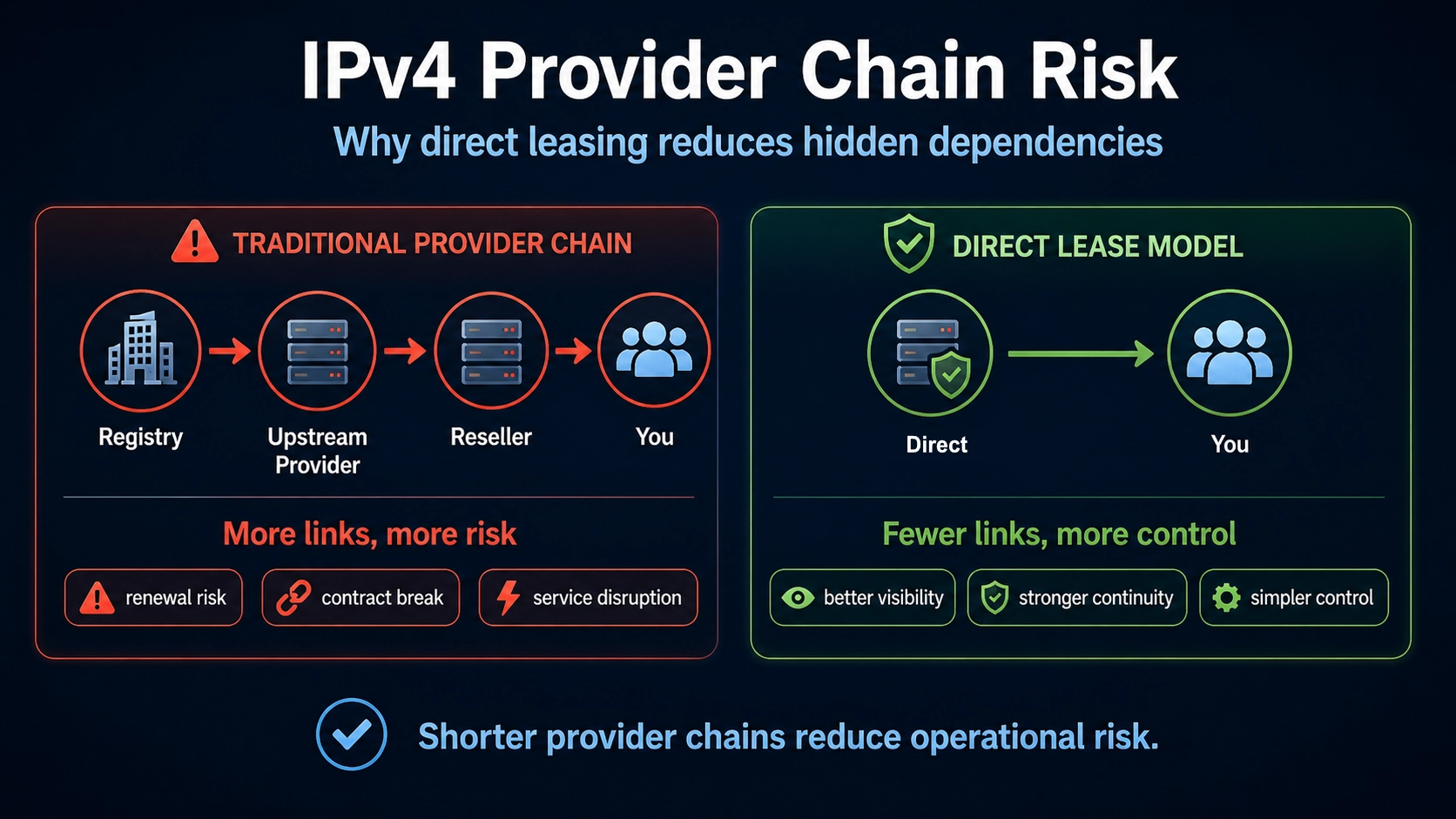
Your IPv4 Looks Stable — Until the Provider Chain Breaks Through Double Extraction

Your IPv4 Looks Stable — Until the Provider Chain BREAKS Your IPv4 addresses may look stable today. Your servers are online. Your customers can connect. Your applications are running. Your team may assume everything is fine because nothing has failed yet. But IPv4 risk often hides behind the surface. The address may work, but the provider chain behind it may be weak. The source may be unclear. The renewalRead more Related Posts What Is BGP Hijacking? How Route Hijacks Work, Famous Incidents, and How Networks Prevent Them BGP hijacking is the illegitimate takeover of traffic destined for IP address space, carried out by announcing routes for prefixes Which RIRs Support Inter-RIR IPv4 Transfers in 2026? IPv4 addresses may be globally routable, but transferring their registration from one organization to another is governed by Regional Internet What Is Reverse DNS (rDNS)? Why PTR Records Matter for Email, Hosting, and Leased IPv4 Reverse DNS (rDNS) is the process of resolving an IP address back to a domain name. It is the mirror .related-post {} .related-post .post-list { text-align: left; } .related-post .post-list .item { margin: 5px; padding: 10px; } .related-post .headline { font-size: 18px !important; color: #999999 !important; } .related-post .post-list .item .post_thumb { max-height: 220px; margin: 10px 0px; padding: 0px; display: block; } .related-post .post-list .item .post_title { font-size: 16px; color: #3f3f3f; margin: 10px 0px; padding: 0px; display: block; text-decoration: none; } .related-post .post-list .item .post_excerpt { font-size: 13px; color: #3f3f3f; margin: 10px 0px; padding: 0px; display: block; text-decoration: none; } @media only screen and (min-width: 1024px) { .related-post .post-list .item { width: 30%; } } @media only screen and (min-width: 768px) and (max-width: 1023px) { .related-post .post-list .item { width: 90%; } } @media only screen and (min-width: 0px) and (max-width: 767px) { .related-post .post-list .item { width: 90%; } }

阅读更多 →
US$100 IPv4 Liability Gap
Blog

Can Your Business Survive a US$100 IPv4 Liability Gap?

Can Your Business Survive a US$100 IPv4 Liability Gap? Most businesses treat IPv4 addresses as a technical resource. They see them as numbers used for servers, hosting, VPNs, SaaS platforms, telecom services, cloud infrastructure, and customer access. But the real danger is not the number itself. The real danger is the structure behind the number. Your business may depend on IPv4 addresses every day, but the registry and providerRead more Related Posts What Is BGP Hijacking? How Route Hijacks Work, Famous Incidents, and How Networks Prevent Them BGP hijacking is the illegitimate takeover of traffic destined for IP address space, carried out by announcing routes for prefixes Which RIRs Support Inter-RIR IPv4 Transfers in 2026? IPv4 addresses may be globally routable, but transferring their registration from one organization to another is governed by Regional Internet What Is Reverse DNS (rDNS)? Why PTR Records Matter for Email, Hosting, and Leased IPv4 Reverse DNS (rDNS) is the process of resolving an IP address back to a domain name. It is the mirror .related-post {} .related-post .post-list { text-align: left; } .related-post .post-list .item { margin: 5px; padding: 10px; } .related-post .headline { font-size: 18px !important; color: #999999 !important; } .related-post .post-list .item .post_thumb { max-height: 220px; margin: 10px 0px; padding: 0px; display: block; } .related-post .post-list .item .post_title { font-size: 16px; color: #3f3f3f; margin: 10px 0px; padding: 0px; display: block; text-decoration: none; } .related-post .post-list .item .post_excerpt { font-size: 13px; color: #3f3f3f; margin: 10px 0px; padding: 0px; display: block; text-decoration: none; } @media only screen and (min-width: 1024px) { .related-post .post-list .item { width: 30%; } } @media only screen and (min-width: 768px) and (max-width: 1023px) { .related-post .post-list .item { width: 90%; } } @media only screen and (min-width: 0px) and (max-width: 767px) { .related-post .post-list .item { width: 90%; } }
阅读更多 →
Why Buy IPv4 Address?
Blog

Buy IPv4 Address: What Businesses Must Check Before Purchasing IPv4

Buying an IPv4 address block can look like a simple asset purchase. You find available IPv4 space.You agree on a price.You complete the paperwork.You transfer the block.You start using the addresses. But for businesses that depend on IPv4 for hosting, cloud, VPN, telecom, SaaS, security, email, or customer access, buying IPv4 is not just a transaction. It is a continuity decision. The real question is not only: Can yourRead more Related Posts What Is BGP Hijacking? How Route Hijacks Work, Famous Incidents, and How Networks Prevent Them BGP hijacking is the illegitimate takeover of traffic destined for IP address space, carried out by announcing routes for prefixes Which RIRs Support Inter-RIR IPv4 Transfers in 2026? IPv4 addresses may be globally routable, but transferring their registration from one organization to another is governed by Regional Internet What Is Reverse DNS (rDNS)? Why PTR Records Matter for Email, Hosting, and Leased IPv4 Reverse DNS (rDNS) is the process of resolving an IP address back to a domain name. It is the mirror .related-post {} .related-post .post-list { text-align: left; } .related-post .post-list .item { margin: 5px; padding: 10px; } .related-post .headline { font-size: 18px !important; color: #999999 !important; } .related-post .post-list .item .post_thumb { max-height: 220px; margin: 10px 0px; padding: 0px; display: block; } .related-post .post-list .item .post_title { font-size: 16px; color: #3f3f3f; margin: 10px 0px; padding: 0px; display: block; text-decoration: none; } .related-post .post-list .item .post_excerpt { font-size: 13px; color: #3f3f3f; margin: 10px 0px; padding: 0px; display: block; text-decoration: none; } @media only screen and (min-width: 1024px) { .related-post .post-list .item { width: 30%; } } @media only screen and (min-width: 768px) and (max-width: 1023px) { .related-post .post-list .item { width: 90%; } } @media only screen and (min-width: 0px) and (max-width: 767px) { .related-post .post-list .item { width: 90%; } }
阅读更多 →
IPv4-Leasing-Purchasing
Blog

IPv4 leasing vs purchasing: structural risk in the IPv4 address market

The IPv4 address market is no longer a simple question of price. A business can lease IPv4 addresses.A business can purchase IPv4 addresses.A business can use both strategies at different stages of growth. But the real question is not only whether IPv4 leasing is cheaper than purchasing, or whether buying IPv4 gives stronger long-term control. The deeper question is structural: Which IPv4 access model gives the business the rightRead more Related Posts What Is BGP Hijacking? How Route Hijacks Work, Famous Incidents, and How Networks Prevent Them BGP hijacking is the illegitimate takeover of traffic destined for IP address space, carried out by announcing routes for prefixes Which RIRs Support Inter-RIR IPv4 Transfers in 2026? IPv4 addresses may be globally routable, but transferring their registration from one organization to another is governed by Regional Internet What Is BGP? How Border Gateway Protocol Turns IP Addresses into Reachable Services BGP (Border Gateway Protocol) is the routing protocol that connects independent networks across the Internet. It allows networks to announce .related-post {} .related-post .post-list { text-align: left; } .related-post .post-list .item { margin: 5px; padding: 10px; } .related-post .headline { font-size: 18px !important; color: #999999 !important; } .related-post .post-list .item .post_thumb { max-height: 220px; margin: 10px 0px; padding: 0px; display: block; } .related-post .post-list .item .post_title { font-size: 16px; color: #3f3f3f; margin: 10px 0px; padding: 0px; display: block; text-decoration: none; } .related-post .post-list .item .post_excerpt { font-size: 13px; color: #3f3f3f; margin: 10px 0px; padding: 0px; display: block; text-decoration: none; } @media only screen and (min-width: 1024px) { .related-post .post-list .item { width: 30%; } } @media only screen and (min-width: 768px) and (max-width: 1023px) { .related-post .post-list .item { width: 90%; } } @media only screen and (min-width: 0px) and (max-width: 767px) { .related-post .post-list .item { width: 90%; } }
阅读更多 →
Public IP vs Private IP Address
Blog

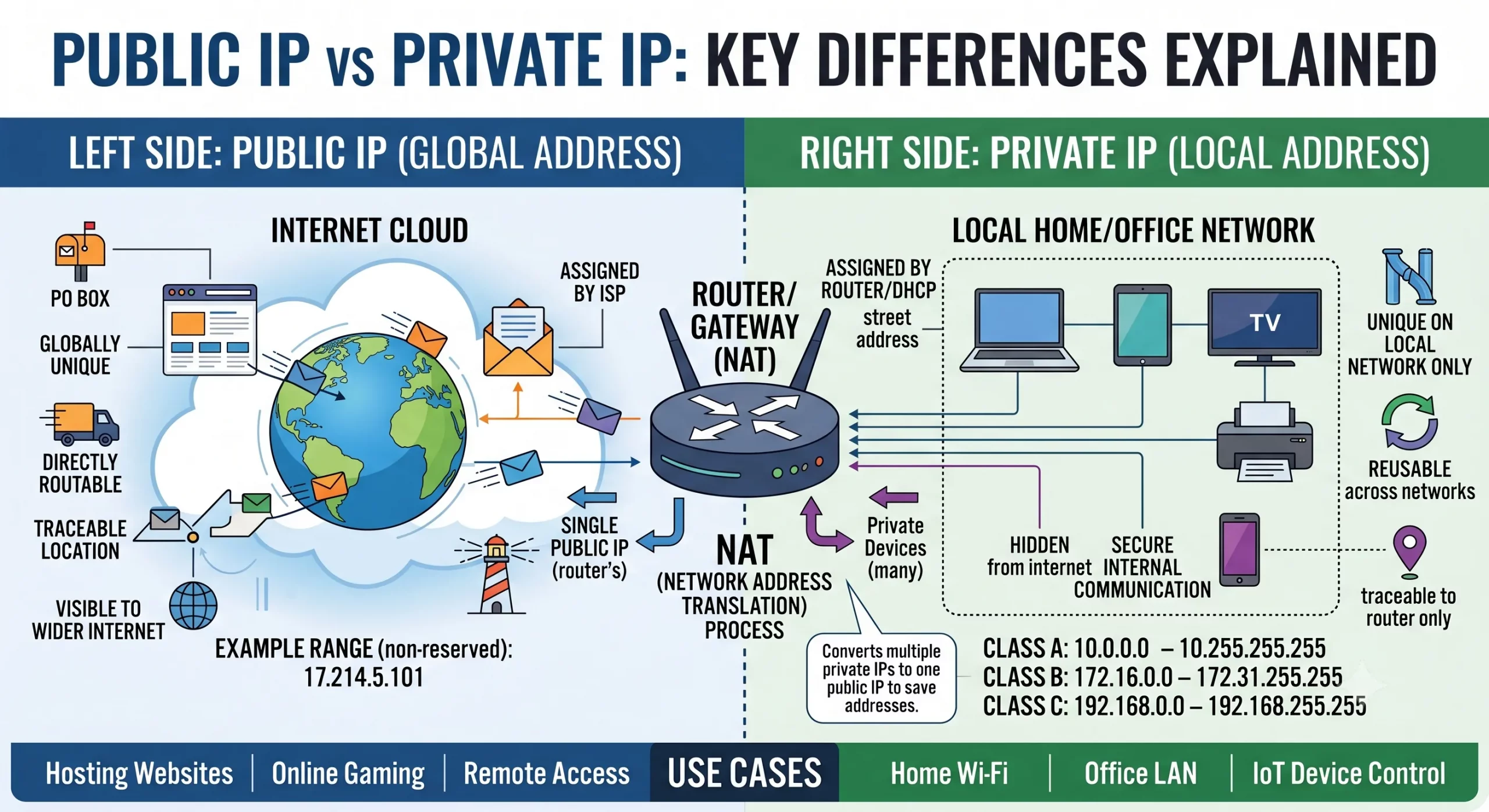
Public IP vs Private IP: What Businesses Need to Know Before Scaling Infrastructure

Public IP and private IP addresses both help devices communicate across networks, but they serve different purposes. A public IP address connects a device, server, or network to the internet. A private IP address is used inside a local or internal network. For businesses, the difference matters because IP planning affects hosting, cloud infrastructure, VPN access, cybersecurity, remote work, customer platforms, and network growth. A small office may onlyRead more Related Posts What Is BGP Hijacking? How Route Hijacks Work, Famous Incidents, and How Networks Prevent Them BGP hijacking is the illegitimate takeover of traffic destined for IP address space, carried out by announcing routes for prefixes Which RIRs Support Inter-RIR IPv4 Transfers in 2026? IPv4 addresses may be globally routable, but transferring their registration from one organization to another is governed by Regional Internet What Is Reverse DNS (rDNS)? Why PTR Records Matter for Email, Hosting, and Leased IPv4 Reverse DNS (rDNS) is the process of resolving an IP address back to a domain name. It is the mirror .related-post {} .related-post .post-list { text-align: left; } .related-post .post-list .item { margin: 5px; padding: 10px; } .related-post .headline { font-size: 18px !important; color: #999999 !important; } .related-post .post-list .item .post_thumb { max-height: 220px; margin: 10px 0px; padding: 0px; display: block; } .related-post .post-list .item .post_title { font-size: 16px; color: #3f3f3f; margin: 10px 0px; padding: 0px; display: block; text-decoration: none; } .related-post .post-list .item .post_excerpt { font-size: 13px; color: #3f3f3f; margin: 10px 0px; padding: 0px; display: block; text-decoration: none; } @media only screen and (min-width: 1024px) { .related-post .post-list .item { width: 30%; } } @media only screen and (min-width: 768px) and (max-width: 1023px) { .related-post .post-list .item { width: 90%; } } @media only screen and (min-width: 0px) and (max-width: 767px) { .related-post .post-list .item { width: 90%; } }
阅读更多 →
What is Data Centre IPv4 Address
Blog

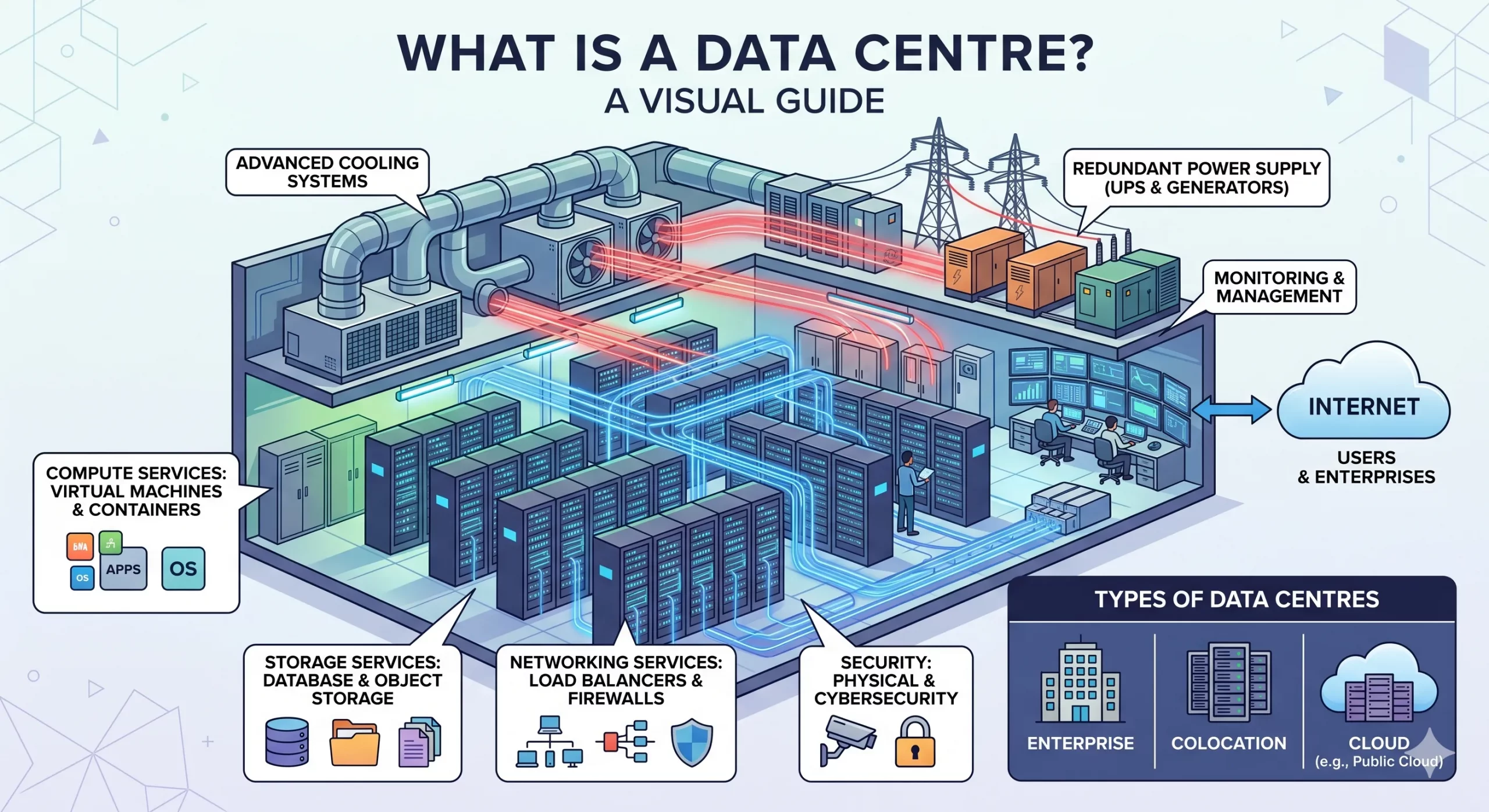
What Is a Data Centre? How It Supports Business Websites, Apps, and Networks

A data centre is a facility that houses servers, storage systems, network equipment, power systems, cooling infrastructure, and security controls. Businesses use data centres to run websites, applications, cloud services, databases, backups, enterprise systems, and digital platforms. In simple terms, a data centre is where business technology operates at scale. Instead of keeping important systems on a small office server, companies use data centres to improve reliability, security, performance, Related Posts What Is BGP Hijacking? How Route Hijacks Work, Famous Incidents, and How Networks Prevent Them BGP hijacking is the illegitimate takeover of traffic destined for IP address space, carried out by announcing routes for prefixes Which RIRs Support Inter-RIR IPv4 Transfers in 2026? IPv4 addresses may be globally routable, but transferring their registration from one organization to another is governed by Regional Internet What Is Reverse DNS (rDNS)? Why PTR Records Matter for Email, Hosting, and Leased IPv4 Reverse DNS (rDNS) is the process of resolving an IP address back to a domain name. It is the mirror .related-post {} .related-post .post-list { text-align: left; } .related-post .post-list .item { margin: 5px; padding: 10px; } .related-post .headline { font-size: 18px !important; color: #999999 !important; } .related-post .post-list .item .post_thumb { max-height: 220px; margin: 10px 0px; padding: 0px; display: block; } .related-post .post-list .item .post_title { font-size: 16px; color: #3f3f3f; margin: 10px 0px; padding: 0px; display: block; text-decoration: none; } .related-post .post-list .item .post_excerpt { font-size: 13px; color: #3f3f3f; margin: 10px 0px; padding: 0px; display: block; text-decoration: none; } @media only screen and (min-width: 1024px) { .related-post .post-list .item { width: 30%; } } @media only screen and (min-width: 768px) and (max-width: 1023px) { .related-post .post-list .item { width: 90%; } } @media only screen and (min-width: 0px) and (max-width: 767px) { .related-post .post-list .item { width: 90%; } }

阅读更多 →
Network Operators
Blog

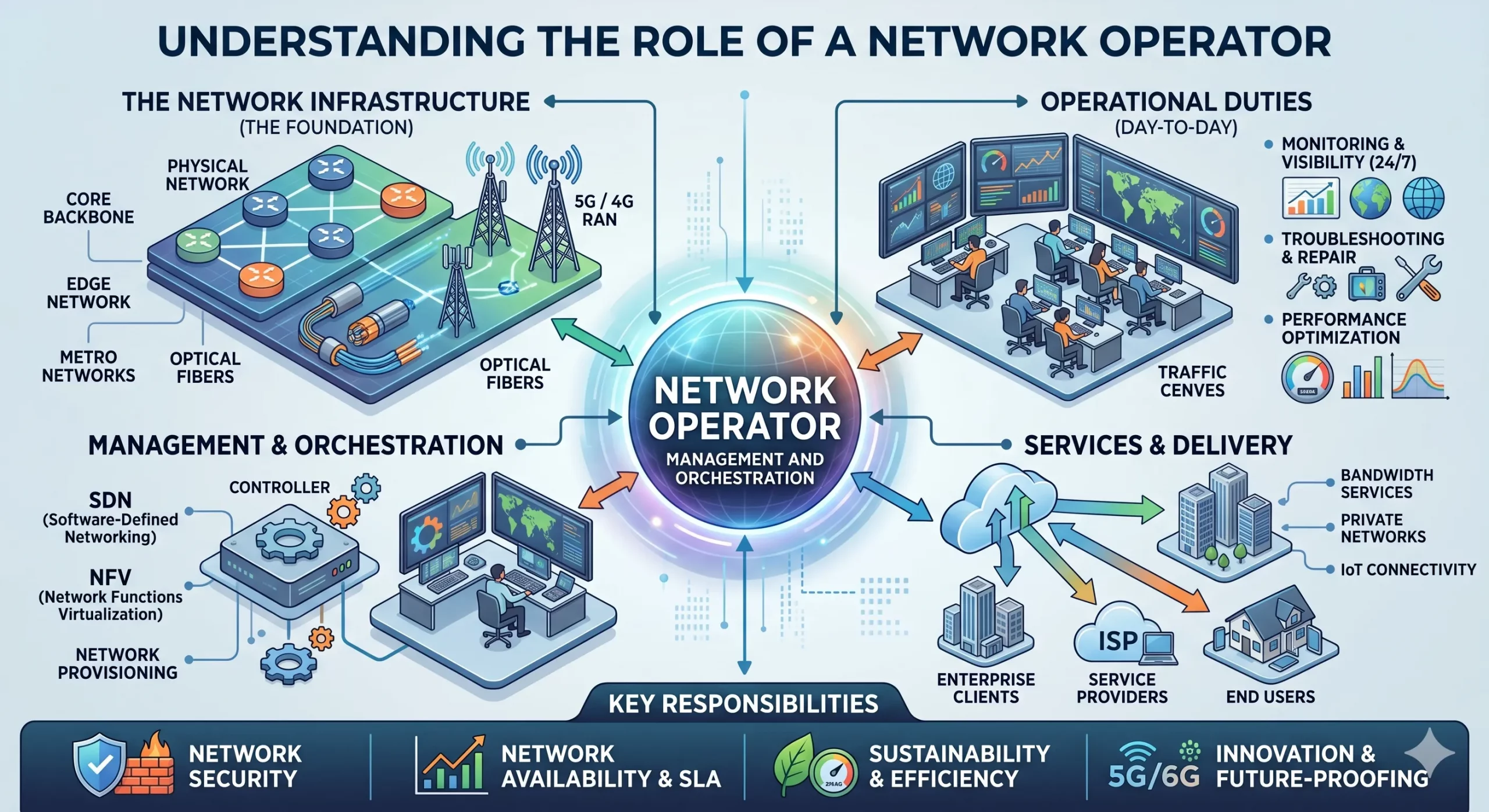
What Is a Network Operator? How Network Operators Support Connectivity in the UK, US, and Canada

A network operator is an organization that builds, manages, or operates the infrastructure used to move data between users, businesses, devices, cloud platforms, and the wider internet. Network operators may manage fibre networks, mobile networks, internet backbone routes, fixed wireless networks, data centre connectivity, enterprise networks, or wholesale access networks. Some network operators sell services directly to consumers, while others provide infrastructure to internet service providers, telco companies, cloudRead more Related Posts What Is BGP Hijacking? How Route Hijacks Work, Famous Incidents, and How Networks Prevent Them BGP hijacking is the illegitimate takeover of traffic destined for IP address space, carried out by announcing routes for prefixes Which RIRs Support Inter-RIR IPv4 Transfers in 2026? IPv4 addresses may be globally routable, but transferring their registration from one organization to another is governed by Regional Internet What Is Reverse DNS (rDNS)? Why PTR Records Matter for Email, Hosting, and Leased IPv4 Reverse DNS (rDNS) is the process of resolving an IP address back to a domain name. It is the mirror .related-post {} .related-post .post-list { text-align: left; } .related-post .post-list .item { margin: 5px; padding: 10px; } .related-post .headline { font-size: 18px !important; color: #999999 !important; } .related-post .post-list .item .post_thumb { max-height: 220px; margin: 10px 0px; padding: 0px; display: block; } .related-post .post-list .item .post_title { font-size: 16px; color: #3f3f3f; margin: 10px 0px; padding: 0px; display: block; text-decoration: none; } .related-post .post-list .item .post_excerpt { font-size: 13px; color: #3f3f3f; margin: 10px 0px; padding: 0px; display: block; text-decoration: none; } @media only screen and (min-width: 1024px) { .related-post .post-list .item { width: 30%; } } @media only screen and (min-width: 768px) and (max-width: 1023px) { .related-post .post-list .item { width: 90%; } } @media only screen and (min-width: 0px) and (max-width: 767px) { .related-post .post-list .item { width: 90%; } }

阅读更多 →
Malaysia Data Centre
Blog

Why Malaysia Is Becoming a Data Centre Hub for Cloud and AI Infrastructure

Malaysia is becoming one of Southeast Asia’s most important data centre growth markets. Demand for cloud computing, artificial intelligence, enterprise applications, digital payments, e-commerce, cybersecurity, and low-latency regional services is pushing companies to build more infrastructure closer to users. This growth is not only based on hype. Malaysia has attracted large-scale investment from global technology companies, cloud providers, AI infrastructure operators, and hyperscale data centre developers. According to MIDA’sRead more Related Posts What Is BGP Hijacking? How Route Hijacks Work, Famous Incidents, and How Networks Prevent Them BGP hijacking is the illegitimate takeover of traffic destined for IP address space, carried out by announcing routes for prefixes Which RIRs Support Inter-RIR IPv4 Transfers in 2026? IPv4 addresses may be globally routable, but transferring their registration from one organization to another is governed by Regional Internet What Is Reverse DNS (rDNS)? Why PTR Records Matter for Email, Hosting, and Leased IPv4 Reverse DNS (rDNS) is the process of resolving an IP address back to a domain name. It is the mirror .related-post {} .related-post .post-list { text-align: left; } .related-post .post-list .item { margin: 5px; padding: 10px; } .related-post .headline { font-size: 18px !important; color: #999999 !important; } .related-post .post-list .item .post_thumb { max-height: 220px; margin: 10px 0px; padding: 0px; display: block; } .related-post .post-list .item .post_title { font-size: 16px; color: #3f3f3f; margin: 10px 0px; padding: 0px; display: block; text-decoration: none; } .related-post .post-list .item .post_excerpt { font-size: 13px; color: #3f3f3f; margin: 10px 0px; padding: 0px; display: block; text-decoration: none; } @media only screen and (min-width: 1024px) { .related-post .post-list .item { width: 30%; } } @media only screen and (min-width: 768px) and (max-width: 1023px) { .related-post .post-list .item { width: 90%; } } @media only screen and (min-width: 0px) and (max-width: 767px) { .related-post .post-list .item { width: 90%; } }

阅读更多 →