Unlocking Business Growth with IPv4 Scalability
 admin
admin
You’re probably at a point where your business growth is limited by the amount of IP addresses available to you.
Table of Contents
In the early days of the internet, a team of engineers developed IPv4. However, they did not foresee the growth of the Internet (Who could have?). Now, we are at a point where we’ve practically run out of IPv4s.
To deal with this issue, IPv6 was introduced. But not all devices and networks support IPv6. In response, companies seeking more IPv4 addresses turned to the open market. IP address brokers like like i.lease help ensure that these transactions are safe and successful.
1.0 IPv4’s Role in Business Operations
When it comes to a successful business, being able to connect to the Internet is at the top tier.
Many businesses find themselves scrambling for IPv4 addresses as they seek growth. For some, IP addresses can be the bottleneck — without the ability to grow their online presence, their business could grow no futher.
Thankfully, the IP address market is a dynamic place.
Just as some companies are short on Ipv4s, some companies found themselves with surplus IPv4 addresses.
These surplus happens when data centers downsize or a business decides to shift their focus — freeing up precious IPv4s.
These surplus addresses became available for purchase through IP address brokers. Naturally, prices are pushed up and pulled down by varying supply and demand.
The transition to IPv6 may be delayed for some companies due to its complexity and cost.
The dwindling supply of IPv4 addresses in the open market could lead to rising prices. It could potentially impacting companies’ ability to acquire the addresses they need.
2.0 Exploring Your Options Today
Considering the persistent shortage of IPv4 addresses, most of the internet still relies on them. This has resulted in a situation where industry giants possess a significant portion of IPv4 addresses. As a result, small and medium-sized businesses (SMBs) are struggling to secure them.
There are two primary options for SMBs today:
a. Transition to IPv6
No question, this is the more forward-thinking course of action. But transitioning to IPv6 can be complex and expensive, and not all devices and networks support it yet. It’s understandable why SMBs struggle in this transition.
b. Lease IPv4 addresses
This is a more cost-effective option for businesses that need IPv4 addresses promptly. It solves an imminent problem without committing to long-term ownership. Leasing allows businesses to use IPv4 addresses for a duration without the cost of ownership.
c. Purchase IPv4 addresses
While more costly, it is ideal for longer term needs.
The choice between these options should align with your business’s specific needs and budget. If you have the resources and are willing to invest long-term, transitioning to IPv6 is the ideal approach to address the IPv4 shortage.
However, if rapid IPv4 address acquisition without significant expenses is your priority, leasing IPv4 addresses offers a practical solution.
3.0 Enhancing Network Performance with IPv4
Network address translation (NAT) is a common workaround for businesses with insufficient IP addresses. However, the process of translating IP addresses can slow your network down.
Leasing IPv4 addresses presents several advantages, including the ability to do away with NAT. Moreover, leasing offers other advantages including:
a. Cost-effectiveness
Leasing is more affordable than outright purchase.
b. Flexibility
You can choose the lease period that suits your needs, whether it’s a month or several years.
c. Reduced Risk
Avoid concerns about IP blacklisting due to misuse or spam.
If your business requires IPv4 addresses urgently and aims to minimize costs, leasing IPv4 addresses is a viable option. It also suits businesses experiencing rapid growth.
4.0 ROI of IPv4 Investments
There are two ways to think of the return of investment (ROI) for purchasing or leasing IPv4s.
First, this ROI can manifest in terms of better network performance, which leads to a more satisfied customer base.
Second, you can resell IPv4s that you may no longer need. There is a possibility that the price of IPv4s will continue to go up as adopting IPv4s is still an uphill trudge for many companies.
The market for IP addresses is global. Reselling can help you turn a profit from your initial IPv4 investment.i.lease can help if you are lost in the intricacies of buying, selling, or leasing IP addresses. You may contact us for expert opinion on your networking needs, particularly when it comes to IPv4 addresses.
Related Article
Articles connexes
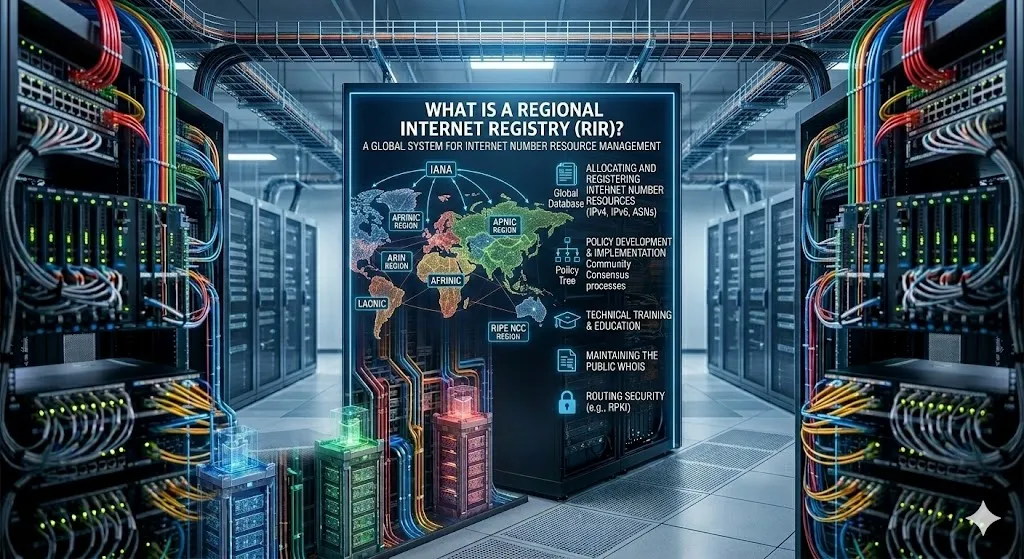
Qu’est-ce qu’un registre Internet régional (RIR) ?
Un registre Internet régional (RIR) est une organisation chargée de l’attribution et de la gestion des ressources de numérotation Internet au sein d’une région géographique spécifique. Ces ressources comprennent principalement les adresses IP (IPv4 et IPv6) et les numéros de système autonome (ASN), éléments essentiels permettant aux appareils et aux réseaux de communiquer sur Internet. Internet ne peut fonctionner sans un système performant d’attribution d’adresses IP uniques etRead more Related Posts Qu’est-ce qu’un registre Internet régional (RIR) ? Un registre Internet régional (RIR) est une organisation chargée de l'attribution et de la gestion des ressources de numérotation Internet Read more Pourquoi n’y a-t-il pas d’IPv5 ? L’histoire du protocole Internet manquant Lorsqu'on parle de protocoles Internet, la plupart des gens connaissent IPv4 et IPv6. Mais vous vous demandez peut-être : qu'est-il arrivé Read more Qu’est-ce que l’APNIC ? Une introduction simple au Centre d'information du réseau Asie-Pacifique Lorsque vous naviguez sur Internet, vous ne pensez probablement pas beaucoup Read more .related-post {} .related-post .post-list { text-align: left; } .related-post .post-list .item { margin: 5px; padding: 10px; } .related-post .headline { font-size: 18px !important; color: #999999 !important; } .related-post .post-list .item .post_thumb { max-height: 220px; margin: 10px 0px; padding: 0px; display: block; } .related-post .post-list .item .post_title { font-size: 16px; color: #3f3f3f; margin: 10px 0px; padding: 0px; display: block; text-decoration: none; } .related-post .post-list .item .post_excerpt { font-size: 13px; color: #3f3f3f; margin: 10px 0px; padding: 0px; display: block; text-decoration: none; } @media only screen and (min-width: 1024px) { .related-post .post-list .item { width: 30%; } } @media only screen and (min-width: 768px) and (max-width: 1023px) { .related-post .post-list .item { width: 90%; } } @media only screen and (min-width: 0px) and (max-width: 767px) { .related-post .post-list .item { width: 90%; } }

Pourquoi n’y a-t-il pas d’IPv5 ? L’histoire du protocole Internet manquant
Lorsqu’on parle de protocoles Internet, la plupart des gens connaissent IPv4 et IPv6. Mais vous vous demandez peut-être : qu’est-il arrivé à IPv5 ? Pourquoi a-t-on l’impression qu’Internet est passé directement d’IPv4 à IPv6 ? Plongeons-nous dans l’histoire fascinante de ce protocole « manquant ». Qu’est-ce que l’IPv5 ? Le protocole IPv5, officiellement appelé Internet Stream Protocol (ST), était un protocole expérimental développé à la fin des années 1970 et dans les années 1980. IlRead more Related Posts Qu’est-ce qu’un registre Internet régional (RIR) ? Un registre Internet régional (RIR) est une organisation chargée de l'attribution et de la gestion des ressources de numérotation Internet Read more Pourquoi n’y a-t-il pas d’IPv5 ? L’histoire du protocole Internet manquant Lorsqu'on parle de protocoles Internet, la plupart des gens connaissent IPv4 et IPv6. Mais vous vous demandez peut-être : qu'est-il arrivé Read more Qu’est-ce que l’APNIC ? Une introduction simple au Centre d'information du réseau Asie-Pacifique Lorsque vous naviguez sur Internet, vous ne pensez probablement pas beaucoup Read more .related-post {} .related-post .post-list { text-align: left; } .related-post .post-list .item { margin: 5px; padding: 10px; } .related-post .headline { font-size: 18px !important; color: #999999 !important; } .related-post .post-list .item .post_thumb { max-height: 220px; margin: 10px 0px; padding: 0px; display: block; } .related-post .post-list .item .post_title { font-size: 16px; color: #3f3f3f; margin: 10px 0px; padding: 0px; display: block; text-decoration: none; } .related-post .post-list .item .post_excerpt { font-size: 13px; color: #3f3f3f; margin: 10px 0px; padding: 0px; display: block; text-decoration: none; } @media only screen and (min-width: 1024px) { .related-post .post-list .item { width: 30%; } } @media only screen and (min-width: 768px) and (max-width: 1023px) { .related-post .post-list .item { width: 90%; } } @media only screen and (min-width: 0px) and (max-width: 767px) { .related-post .post-list .item { width: 90%; } }
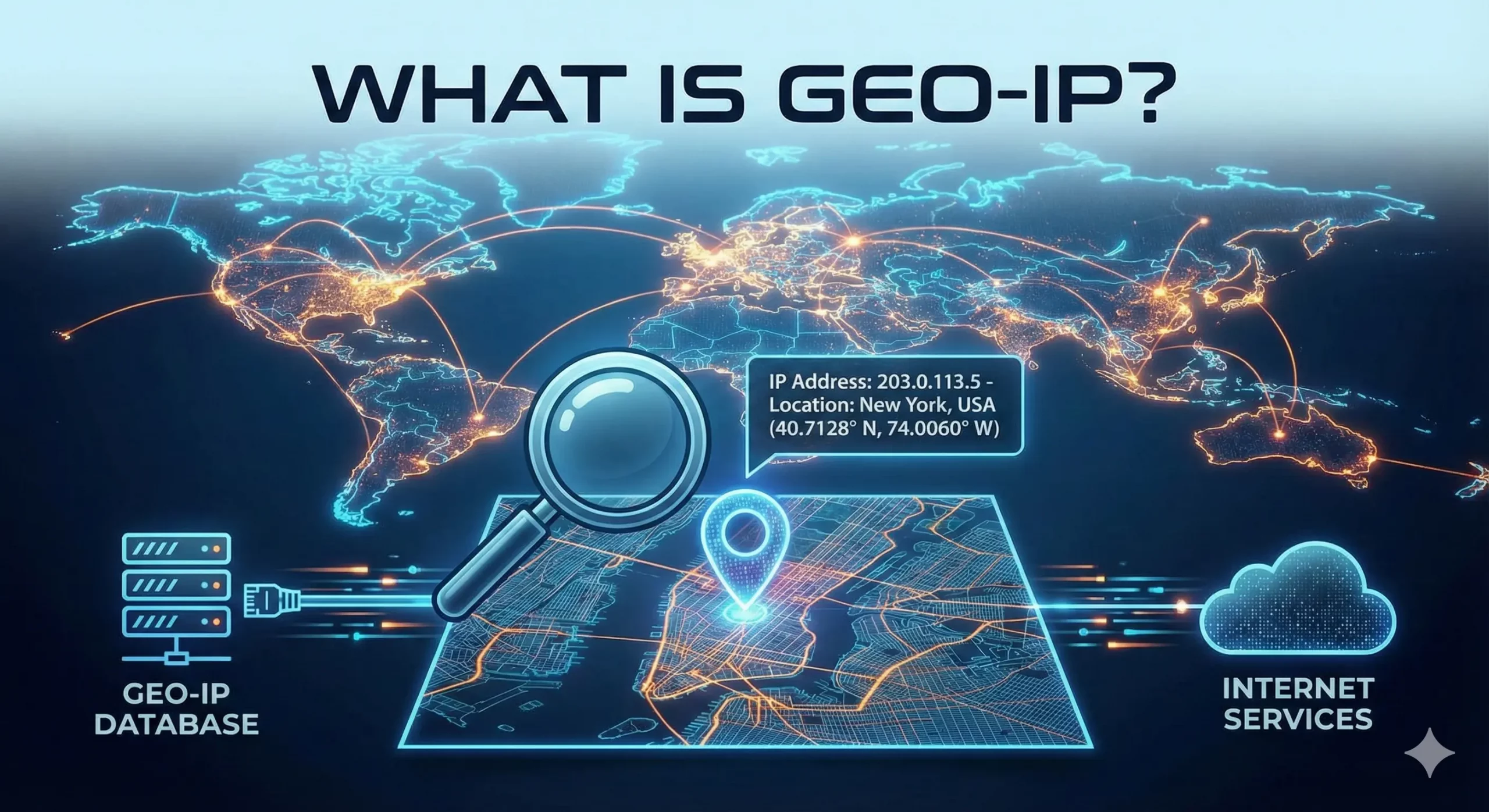
Qu’est-ce que GeoIP et comment ça fonctionne ?
La géolocalisation IP est essentielle pour personnaliser les expériences en ligne, renforcer la cybersécurité et alimenter d’innombrables applications professionnelles. Mais qu’est-ce que la géolocalisation IP exactement, comment fonctionne-t-elle et pourquoi est-elle si importante ? Voyons cela de plus près. Qu’est-ce que GeoIP ? GeoIP signifie « Géographie Internet ». Il s’agit d’une technologie qui détermine la localisation géographique d’un utilisateur à partir de son adresse IP (Internet Protocol). Chaque appareil connecté à InternetRead more Related Posts Qu’est-ce qu’un registre Internet régional (RIR) ? Un registre Internet régional (RIR) est une organisation chargée de l'attribution et de la gestion des ressources de numérotation Internet Read more Pourquoi n’y a-t-il pas d’IPv5 ? L’histoire du protocole Internet manquant Lorsqu'on parle de protocoles Internet, la plupart des gens connaissent IPv4 et IPv6. Mais vous vous demandez peut-être : qu'est-il arrivé Read more Qu’est-ce que l’APNIC ? Une introduction simple au Centre d'information du réseau Asie-Pacifique Lorsque vous naviguez sur Internet, vous ne pensez probablement pas beaucoup Read more .related-post {} .related-post .post-list { text-align: left; } .related-post .post-list .item { margin: 5px; padding: 10px; } .related-post .headline { font-size: 18px !important; color: #999999 !important; } .related-post .post-list .item .post_thumb { max-height: 220px; margin: 10px 0px; padding: 0px; display: block; } .related-post .post-list .item .post_title { font-size: 16px; color: #3f3f3f; margin: 10px 0px; padding: 0px; display: block; text-decoration: none; } .related-post .post-list .item .post_excerpt { font-size: 13px; color: #3f3f3f; margin: 10px 0px; padding: 0px; display: block; text-decoration: none; } @media only screen and (min-width: 1024px) { .related-post .post-list .item { width: 30%; } } @media only screen and (min-width: 768px) and (max-width: 1023px) { .related-post .post-list .item { width: 90%; } } @media only screen and (min-width: 0px) and (max-width: 767px) { .related-post .post-list .item { width: 90%; } }
