IP encryption vs HTTPS: what’s the difference?
 Stephanie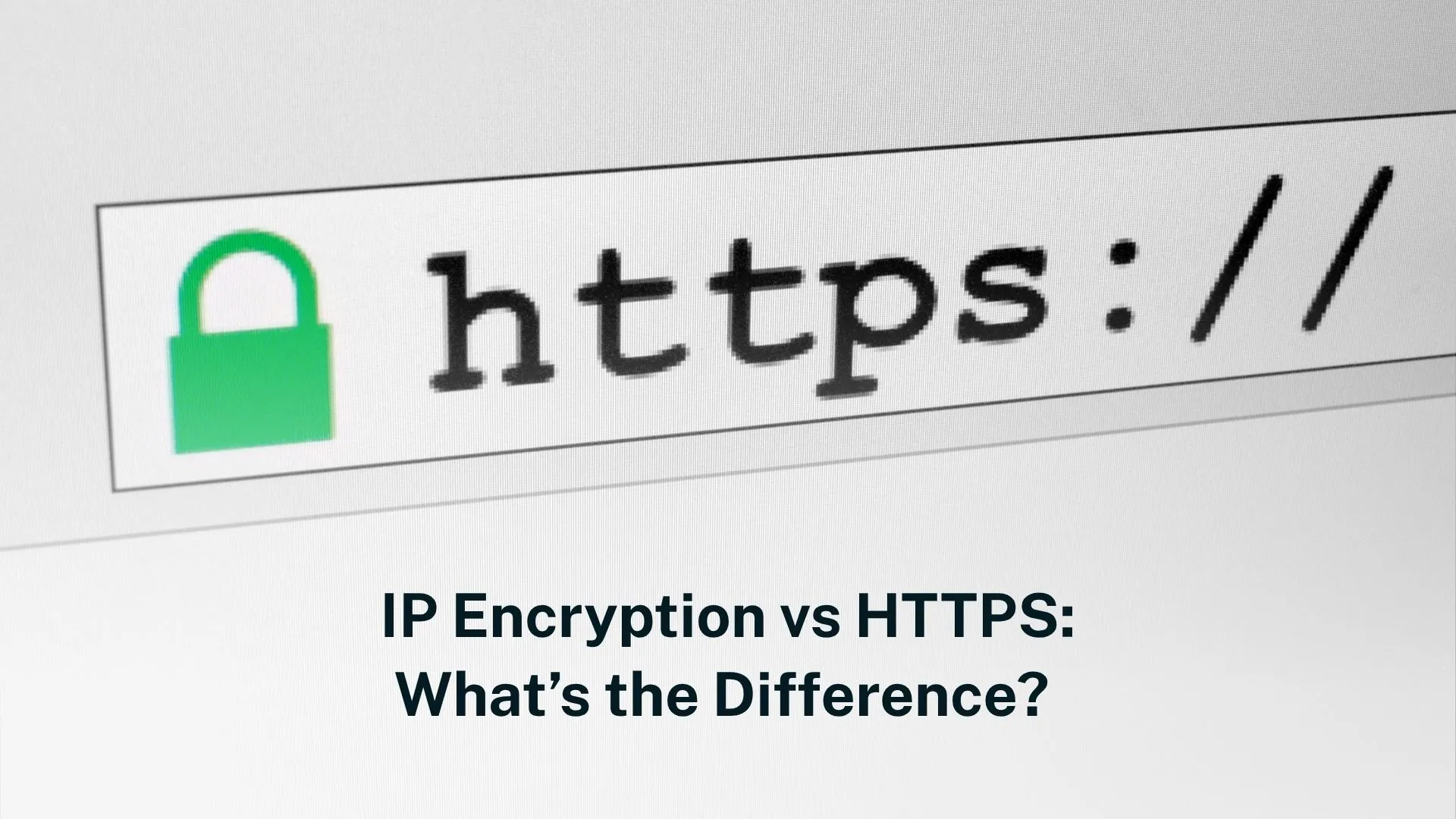
Table of Contents
Explore the distinctions between IP‑layer encryption (IPsec) and HTTPS, their use cases, performance trade‑offs and overlapping functionalities.
For most use cases, a single well-implemented protocol is sufficient. The decision to use both should be guided by risk assessment, data classification, and regulatory obligations, rather than assumptions about added security.
Future directions
Both IPsec and HTTPS continue to evolve in response to emerging security threats, performance demands, and shifts in internet architecture.
On the IPsec side, development is driven by the IETF’s IP Security Maintenance and Extensions (ipsecme) working group, which focuses on refining key exchange mechanisms like IKEv2, supporting modern cryptographic algorithms(e.g., ChaCha20-Poly1305 for improved performance on low-power devices), and enhancing NAT traversal to improve compatibility across diverse networks. As enterprises adopt hybrid cloud and multi-site deployments, IPsec remains critical for establishing secure tunnels across complex topologies.
Meanwhile, HTTPS continues its rapid progression alongside the TLS protocol. The widespread adoption of TLS 1.3has reduced handshake times, deprecated older cryptographic suites, and improved privacy by encrypting more of the negotiation process itself. In parallel, HTTP/3, built on QUIC (a transport protocol running over UDP), introduces lower latency, built-in congestion control, and improved resilience for mobile and real-time applications.
Beyond these protocols, there’s a broader movement toward end-to-end encryption across all layers of the internet stack. Technologies like DNS-over-HTTPS (DoH) and DNS-over-TLS (DoT) aim to secure traditionally exposed DNS queries. Initiatives such as Encrypted Client Hello (ECH) further extend encryption into the TLS handshake, concealing metadata like the hostname from observers.
These advancements reflect a growing consensus: encryption should be the default, not the exception. As attackers become more sophisticated and surveillance capabilities expand, both IPsec and HTTPS will continue to adapt—ensuring the confidentiality, integrity, and authenticity of data in an increasingly interconnected world.
Trusted IPv4 Leasing for Business Growth
Get enterprise-grade IPv4 space quickly, with seamless deployment and end-to-end management.
Get Started with i.leaseFAQs
Can IPsec replace HTTPS?
No, because HTTPS provides publicly trusted certificate-based identity verification, which IPsec lacks; the two serve different roles in the security stack.
Is HTTPS slower than HTTP?
Not significantly—thanks to TLS 1.3 and protocols like HTTP/2 and HTTP/3, HTTPS now delivers security with performance comparable to or even better than HTTP in many cases.
Do I need IPsec if my website uses HTTPS?
Generally no, unless you also need to secure other types of traffic beyond HTTP, such as internal database access or file sharing over IP.
Can IPsec and HTTPS work together?
Yes, they can be layered for added protection in certain scenarios, but it’s rarely necessary outside of environments with strict regulatory or security requirements.
What about other encryption like DoH or DoT?
Protocols like DNS-over-HTTPS (DoH) and DNS-over-TLS (DoT) enhance privacy by encrypting DNS queries, and are complementary to HTTPS and IPsec rather than replacements.
Related Blogs
Articles connexes
Combien y a-t-il d’adresses IPv4 au total ?
Il existe environ 4,3 milliards d’adresses IPv4. Plus précisément, 4 294 967 296. Bien que 10 chiffres puissent paraître beaucoup, nous n’avons plus accès à ces adresses. Internet a atteint sa capacité maximale. Ce n’est pas la fin du monde, mais cette situation marque une étape cruciale dans l’histoire de notre monde numérique interconnecté. 1.0 Les adresses IPv4 sont-elles épuisées ? Les adresses IPv4 sont-elles épuisées ? La réponse est oui. Les adresses IPv4Read more Related Posts Combien y a-t-il d’adresses IPv4 au total ? Il existe environ 4,3 milliards d'adresses IPv4. Plus précisément, 4 294 967 296. Bien que 10 chiffres puissent paraître beaucoup, nous n'avons plus Read more Comprendre la différence entre IPv4 et IPv6 Lorsqu'un appareil se connecte à un réseau, il doit respecter une norme spécifique. Cette norme, appelée protocole Internet, permet à Read more Historique du prix des adresses IPv4, de l’épuisement des stocks à 2026 Une analyse des tendances des prix des adresses IPv4, des pics dus à la rareté aux corrections du marché, et Read more .related-post {} .related-post .post-list { text-align: left; } .related-post .post-list .item { margin: 5px; padding: 10px; } .related-post .headline { font-size: 18px !important; color: #999999 !important; } .related-post .post-list .item .post_thumb { max-height: 220px; margin: 10px 0px; padding: 0px; display: block; } .related-post .post-list .item .post_title { font-size: 16px; color: #3f3f3f; margin: 10px 0px; padding: 0px; display: block; text-decoration: none; } .related-post .post-list .item .post_excerpt { font-size: 13px; color: #3f3f3f; margin: 10px 0px; padding: 0px; display: block; text-decoration: none; } @media only screen and (min-width: 1024px) { .related-post .post-list .item { width: 30%; } } @media only screen and (min-width: 768px) and (max-width: 1023px) { .related-post .post-list .item { width: 90%; } } @media only screen and (min-width: 0px) and (max-width: 767px) { .related-post .post-list .item { width: 90%; } }
Comprendre la différence entre IPv4 et IPv6
Lorsqu’un appareil se connecte à un réseau, il doit respecter une norme spécifique. Cette norme, appelée protocole Internet, permet à un appareil de communiquer avec d’autres appareils. Table of Contents Que ce soit via Internet ou sur un réseau local (comme un réseau domestique ou professionnel), un appareil a besoin d’une adresse réseau. Il reçoit cette adresse une fois connecté au réseau, généralement par l’intermédiaire d’un routeur. Pour communiquerRead more Related Posts Combien y a-t-il d’adresses IPv4 au total ? Il existe environ 4,3 milliards d'adresses IPv4. Plus précisément, 4 294 967 296. Bien que 10 chiffres puissent paraître beaucoup, nous n'avons plus Read more Comprendre la différence entre IPv4 et IPv6 Lorsqu'un appareil se connecte à un réseau, il doit respecter une norme spécifique. Cette norme, appelée protocole Internet, permet à Read more Historique du prix des adresses IPv4, de l’épuisement des stocks à 2026 Une analyse des tendances des prix des adresses IPv4, des pics dus à la rareté aux corrections du marché, et Read more .related-post {} .related-post .post-list { text-align: left; } .related-post .post-list .item { margin: 5px; padding: 10px; } .related-post .headline { font-size: 18px !important; color: #999999 !important; } .related-post .post-list .item .post_thumb { max-height: 220px; margin: 10px 0px; padding: 0px; display: block; } .related-post .post-list .item .post_title { font-size: 16px; color: #3f3f3f; margin: 10px 0px; padding: 0px; display: block; text-decoration: none; } .related-post .post-list .item .post_excerpt { font-size: 13px; color: #3f3f3f; margin: 10px 0px; padding: 0px; display: block; text-decoration: none; } @media only screen and (min-width: 1024px) { .related-post .post-list .item { width: 30%; } } @media only screen and (min-width: 768px) and (max-width: 1023px) { .related-post .post-list .item { width: 90%; } } @media only screen and (min-width: 0px) and (max-width: 767px) { .related-post .post-list .item { width: 90%; } }

Combien de bits composent une adresse IPv4 ?
Une adresse IPv4 comporte 32 bits. Mais pour bien comprendre ce que cela signifie, examinons ce que sont les bits et ce qu’est un espace d’adressage IP. 1.0 C’est quoi des bits, au juste ? “Bits ” is short for “binary digits.” A system that uses bits has two states: 0 and 1. By arranging bits in various patterns, we can have different number combinations that we can useRead more Related Posts Combien y a-t-il d’adresses IPv4 au total ? Il existe environ 4,3 milliards d'adresses IPv4. Plus précisément, 4 294 967 296. Bien que 10 chiffres puissent paraître beaucoup, nous n'avons plus Read more Comprendre la différence entre IPv4 et IPv6 Lorsqu'un appareil se connecte à un réseau, il doit respecter une norme spécifique. Cette norme, appelée protocole Internet, permet à Read more Historique du prix des adresses IPv4, de l’épuisement des stocks à 2026 Une analyse des tendances des prix des adresses IPv4, des pics dus à la rareté aux corrections du marché, et Read more .related-post {} .related-post .post-list { text-align: left; } .related-post .post-list .item { margin: 5px; padding: 10px; } .related-post .headline { font-size: 18px !important; color: #999999 !important; } .related-post .post-list .item .post_thumb { max-height: 220px; margin: 10px 0px; padding: 0px; display: block; } .related-post .post-list .item .post_title { font-size: 16px; color: #3f3f3f; margin: 10px 0px; padding: 0px; display: block; text-decoration: none; } .related-post .post-list .item .post_excerpt { font-size: 13px; color: #3f3f3f; margin: 10px 0px; padding: 0px; display: block; text-decoration: none; } @media only screen and (min-width: 1024px) { .related-post .post-list .item { width: 30%; } } @media only screen and (min-width: 768px) and (max-width: 1023px) { .related-post .post-list .item { width: 90%; } } @media only screen and (min-width: 0px) and (max-width: 767px) { .related-post .post-list .item { width: 90%; } }
