How to turn idle IPv4 addresses into a recurring revenue stream with iLease
 Stephanie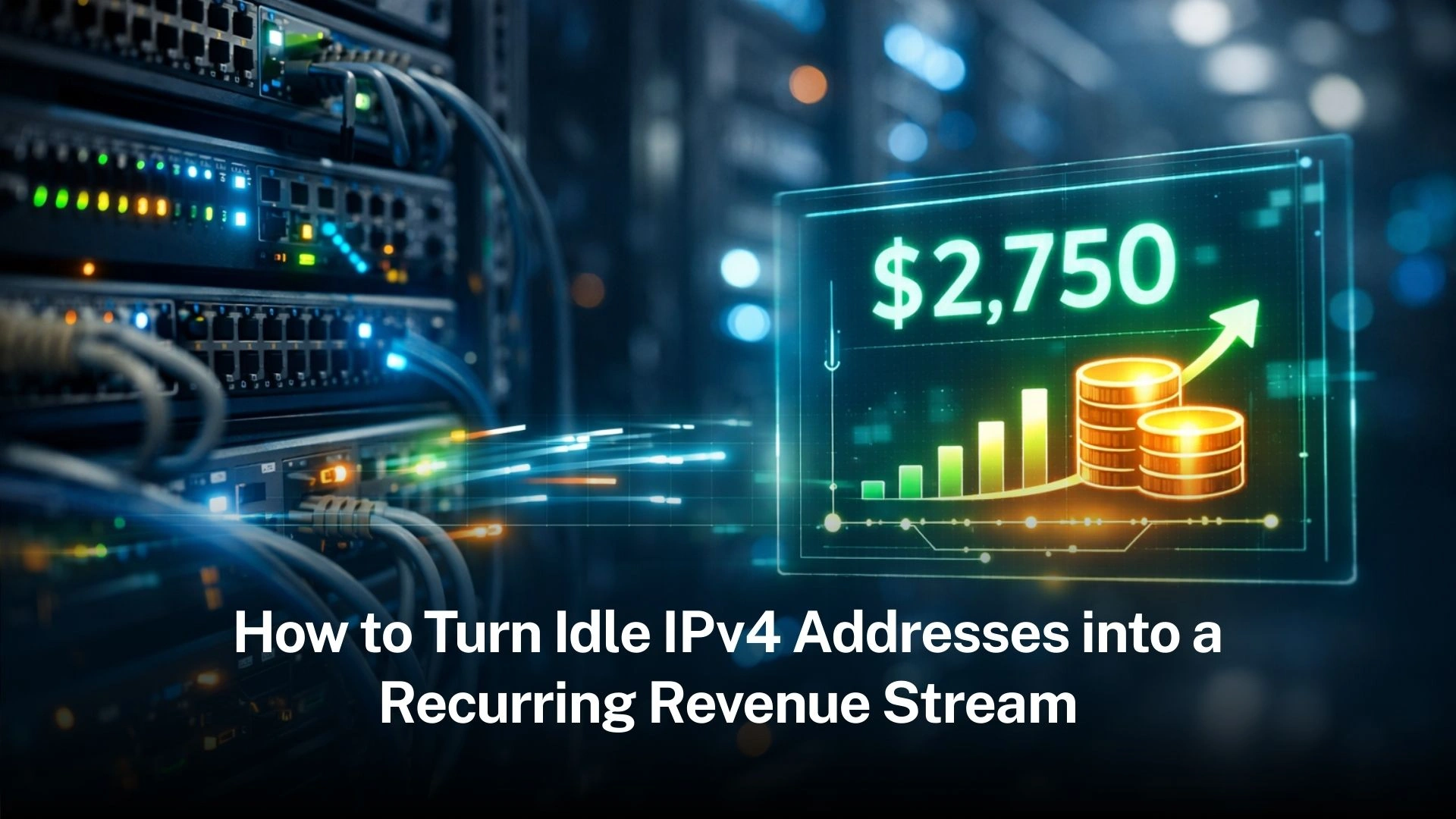
Unlock the hidden value of unused IPv4 addresses with iLease, turning dormant digital infrastructure into a recurring revenue stream while navigating market demand, compliance and risk.
Table of Contents
- Leasing idle IPv4 blocks can generate steady, long-term income without relinquishing ownership.
- Platforms like i.lease global IPv4 marketplace make it easier to monetise addresses and manage reputation and compliance.
why IPv4 addresses still matter
Despite the long-anticipated exhaustion of the IPv4 address space — a 32-bit system that only provides about 4.3 billion unique addresses — businesses worldwide continue to rely on these addresses for connectivity and services. The global pool of unallocated IPv4 addresses was fully exhausted over a decade ago, with regional Internet registries (RIRs) now managing only transfers and scarce legacy space.
This scarcity has transformed idle IPv4 assets — blocks owned but not used in production — into valuable digital capital. Organisations that control sizable IPv4 blocks are finding that these addresses can become recurring revenue streams through leasing arrangements, attracting demand from carriers, hosting providers and cloud platforms that need short-term or flexible access to public IP space.
The economics of leasing vs. selling
If you own unused IPv4 addresses, you face a strategic choice: sell them outright for a one-off payment or lease them for recurring income. Leasing allows you to retain ownership while earning a steady cash flow. Research from industry analysts shows that lease rates have stabilised in recent years at roughly US $0.40–$0.50 per address per month, making leasing a compelling alternative for holders who want predictable revenue over time.
In contrast, large block sale prices have softened in the secondary market, meaning the lump sum from a sale might be lower than expected — especially for very large allocations. As a rule of thumb, at typical utilisation rates, leasing can outperform selling in total revenue over a mid-term horizon (often 5–10 years) while preserving asset optionality.
How iLease works
i.lease global IPv4 marketplace is positioned as a structured platform where organisations can list unused IPv4 blocks for lease, setting flexible terms and engaging verified lessees. Platforms like iLease integrate with the RIR policy framework, helping lane the paperwork, documentation and compliance needed for legitimate leasing transactions.
Typically, lessors list contiguous address blocks — such as /24 or larger — and establish lease terms that match their business goals. Lease rates are influenced by block size, regional demand and lease duration, with larger blocks or long-term commitments often securing better per-IP terms.
iLease and similar marketplaces facilitate rapid deployment of leased IPs, reducing the operational friction that traditionally hampered IP transfers. Unlike outright transfers — which can take weeks — leases can sometimes be active within days once governance documents, such as Letters of Authorisation (LOAs), are in place.
Demand drivers for leased IPv4 space
Organisations lease IPv4 addresses for a range of reasons:
- Cloud scaling: Providers lease additional IPv4 space to support service growth without capital outlays on address purchases.
- Hosting and content delivery: Data centres rely on leased addresses to meet customer needs for public routing.
- Temporary capacity: Businesses with burst or seasonal demand can acquire IPs on flexible terms.
- Geographic strategy: Some lessees lease addresses in specific regions to optimise latency and compliance.
This broad demand spectrum has kept the leasing market resilient even as IPv6 adoption continues gradually.
Expert perspectives on monetising unused IPv4
Industry practitioners increasingly view IPv4 as a balance sheet asset rather than a purely operational resource. According to market research, enterprises globally are converting idle IPv4 blocks into predictable revenue streams through leasing or sales, with secondary market activity generating significant capital for holders.
“The IPv4 leasing market has matured into a credible strategy for organisations with excess capacity,” notes recent analysis of address pricing trends, observing stable lease rates and sustained demand among infrastructure players.
Financial modelling from IP monetisation experts reiterates that leasing can deliver returns competitive with long-term asset investments, especially when operators factor in ongoing demand for IPv4 resources tied to legacy systems and transitional networks.
Practical steps to monetise idle IPv4
For organisations looking to convert unused IPv4 into recurring revenue, here’s a roadmap:
- Audit your inventory: Compile a clear inventory of unused IPv4 blocks within your resources.
- Assess reputation: Ensure no blacklist history or abuse issues — clean blocks command higher lease rates.
- Choose a platform: Consider structured marketplaces like iLease that streamline compliance and discovery.
- Set terms: Determine lease rate benchmarks based on market data and desired commitment length.
- Negotiate contracts: Use professional services or brokers to align lease contracts with RIR policy and legal frameworks.
Platforms like iLease help automate many of these steps, from reputation checks to automated LOA issuance, reducing administrative overhead for lessors.
Risks and compliance considerations
Leasing IPv4 isn’t without challenges. Address holders must manage operational risks, including:
- IP reputation: Leased addresses can inherit negative reputation if misused, potentially reducing future lease value.
- Policy compliance: RIR transfer policies and regional regulations must be respected to avoid sanctions.
- Contract enforcement: Ensuring lessees abide by usage terms is critical to protect address value over time.
- Experienced brokers and marketplace platforms can help mitigate these risks by vetting lessees and monitoring ongoing usage.
Conclusion
At a time when IPv4 availability remains tight and infrastructure needs continue to grow, turning idle IPv4 addresses into a recurring revenue stream is both practical and potentially lucrative. Platforms such as iLease are helping transform these dormant digital assets into working capital — enabling holders to generate predictable income while retaining strategic control. With careful management, compliance and market insight, IPv4 leasing offers a compelling long-term asset strategy in the digital economy.
The IPv4 market reflects one of the most compelling examples of economic scarcity in the digital age. After the free pool exhausted, IPv4 addresses transitioned into a mature secondary market where block size, year, and buyer strategy all influence value. Prices surged in the early post‑exhaustion years, peaking as large enterprises competed for limited space. Over time, increased block availability and the rise of leasing solutions have tempered price volatility. Heading into 2026, we’re seeing a more balanced ecosystem — where buyers, sellers, and lessees negotiate not just on price, but on flexibility, timing, and network deployment plans
– Rachel Chen, IP Address Management Expert
Frequently Asked Questions
1. What is IPv4 leasing?
IPv4 leasing is the practice of renting unused IPv4 address blocks to other organisations for a defined period in exchange for recurring payments, allowing holders to monetise idle resources without selling them.
2. How much can I earn leasing IPv4 addresses?
Market data suggests lease rates often range around US $0.40–$0.50 per IP per month, varying by region, block size and lease duration.
3. Do I retain ownership when I lease IPv4?
Yes — unlike selling, leasing lets you keep ownership and the option to reclaim the addresses when the lease term ends.
4. Can any company lease IPv4 addresses?
Most holders with unused blocks can lease them, but compliance with RIR policies and reputation checks is generally required.
5. What are the risks of leasing IPv4 addresses?
Primary risks include misuse by lessees affecting IP reputation and regulatory compliance obligations. Professional platforms help manage these risks.
Related Blogs
Articles connexes
Quels sont les facteurs qui déterminent le prix de IPv4 sur le marché actuel ?
La rareté, l’évolution de la demande et les plateformes de location comme i.lease redéfinissent la valorisation et le commerce des adresses IPv4 à l’échelle mondiale. Le prix des adresses IPv4 est principalement déterminé par leur rareté, la taille des blocs et les fluctuations de la demande selon les régions et les secteurs. Les modèles de location, notamment les plateformes comme i.lease, contribuent à stabiliser les coûts face à laRead more Related Posts Short-term vs long-term IPv4 leasing Facing IPv4 shortages, companies must weigh cost, speed, and network growth when choosing a lease plan.Short-term leasing lets you scale Read more Why IPv4 scarcity drives economic value for operators IPv4 地址曾经只是互联网运行所需的基础资源。但在今天,它越来越像一种具有市场价格、可交易、可租赁的数字资产。造成这一变化的原因并不复杂:IPv4 的总量有限,而全球互联网对 IPv4 的需求并没有消失;与此同时,IPv6 虽然早已出现,但迁移进度依然缓慢。这三股力量叠加,正在重新塑造运营商对 IP 地址的看法,也改变了互联网基础设施的经济逻辑。原文将这点概括为“有限供给、持续需求与缓慢转型”,并指出这正在推动 IP 地址成为影响全球电信经济的可交易资产。 IPv4 稀缺并不是新问题 全球互联网至今仍大量依赖 IPv4。这个协议诞生于更早的时代,只能提供大约 43 亿个地址。这个数量在互联网初期似乎足够庞大,但在今天已经明显不够。原文指出,IANA 在 2011 年就已将最后一批大型 IPv4 Read more What Determines IPv4 Pricing in Today’s Market? Scarcity, shifting demand, and leasing platforms such as i.lease are reshaping how IPv4 addresses are valued and traded globally.IPv4 pricing is driven Read more .related-post {} .related-post .post-list { text-align: left; } .related-post .post-list .item { margin: 5px; padding: 10px; } .related-post .headline { font-size: 18px !important; color: #999999 !important; } .related-post .post-list .item .post_thumb { max-height: 220px; margin: 10px 0px; padding: 0px; display: block; } .related-post .post-list .item .post_title { font-size: 16px; color: #3f3f3f; margin: 10px 0px; padding: 0px; display: block; text-decoration: none; } .related-post .post-list .item .post_excerpt { font-size: 13px; color: #3f3f3f; margin: 10px 0px; padding: 0px; display: block; text-decoration: none; } @media only screen and (min-width: 1024px) { .related-post .post-list .item { width: 30%; } } @media only screen and (min-width: 768px) and (max-width: 1023px) { .related-post .post-list .item { width: 90%; } } @media only screen and (min-width: 0px) and (max-width: 767px) { .related-post .post-list .item { width: 90%; } }

Pourquoi la rareté des adresses IPv4 génère de la valeur économique pour les opérateurs
La rareté des adresses IPv4, la demande persistante et la lenteur de la transition vers l’IPv6 transforment les adresses IP en actifs négociables, remodelant ainsi l’économie des télécommunications à l’échelle mondiale. L’épuisement des adresses IPv4 a fait de ces dernières des ressources numériques rares, dont les prix sont déterminés par le déséquilibre entre l’offre et la demande. Les opérateurs monétisent de plus en plus l’espace d’adressage inutilisé via desRead more Related Posts Short-term vs long-term IPv4 leasing Facing IPv4 shortages, companies must weigh cost, speed, and network growth when choosing a lease plan.Short-term leasing lets you scale Read more Why IPv4 scarcity drives economic value for operators IPv4 地址曾经只是互联网运行所需的基础资源。但在今天,它越来越像一种具有市场价格、可交易、可租赁的数字资产。造成这一变化的原因并不复杂:IPv4 的总量有限,而全球互联网对 IPv4 的需求并没有消失;与此同时,IPv6 虽然早已出现,但迁移进度依然缓慢。这三股力量叠加,正在重新塑造运营商对 IP 地址的看法,也改变了互联网基础设施的经济逻辑。原文将这点概括为“有限供给、持续需求与缓慢转型”,并指出这正在推动 IP 地址成为影响全球电信经济的可交易资产。 IPv4 稀缺并不是新问题 全球互联网至今仍大量依赖 IPv4。这个协议诞生于更早的时代,只能提供大约 43 亿个地址。这个数量在互联网初期似乎足够庞大,但在今天已经明显不够。原文指出,IANA 在 2011 年就已将最后一批大型 IPv4 Read more How much does a /24 IPv4 block cost in 2026? IPv4 scarcity continues to shape internet infrastructure, with /24 blocks still trading actively on global markets despite growing IPv6 adoption. Key Read more .related-post {} .related-post .post-list { text-align: left; } .related-post .post-list .item { margin: 5px; padding: 10px; } .related-post .headline { font-size: 18px !important; color: #999999 !important; } .related-post .post-list .item .post_thumb { max-height: 220px; margin: 10px 0px; padding: 0px; display: block; } .related-post .post-list .item .post_title { font-size: 16px; color: #3f3f3f; margin: 10px 0px; padding: 0px; display: block; text-decoration: none; } .related-post .post-list .item .post_excerpt { font-size: 13px; color: #3f3f3f; margin: 10px 0px; padding: 0px; display: block; text-decoration: none; } @media only screen and (min-width: 1024px) { .related-post .post-list .item { width: 30%; } } @media only screen and (min-width: 768px) and (max-width: 1023px) { .related-post .post-list .item { width: 90%; } } @media only screen and (min-width: 0px) and (max-width: 767px) { .related-post .post-list .item { width: 90%; } }
Qu’est-ce qu’une adresse IP proxy ?
Une adresse IP proxy est une adresse IP intermédiaire utilisée pour masquer ou relayer votre adresse IP d’origine lors de l’accès à Internet. Elle agit comme une passerelle entre l’utilisateur et le web. Lorsqu’une demande d’accès à un site Web est effectuée, le serveur proxy (qui utilise l’adresse IP proxy) transmet cette demande, cachant ainsi la véritable adresse IP de l’utilisateur au site. Cela permet d’augmenter la confidentialité etRead more Related Posts Short-term vs long-term IPv4 leasing Facing IPv4 shortages, companies must weigh cost, speed, and network growth when choosing a lease plan.Short-term leasing lets you scale Read more Why IPv4 scarcity drives economic value for operators IPv4 地址曾经只是互联网运行所需的基础资源。但在今天,它越来越像一种具有市场价格、可交易、可租赁的数字资产。造成这一变化的原因并不复杂:IPv4 的总量有限,而全球互联网对 IPv4 的需求并没有消失;与此同时,IPv6 虽然早已出现,但迁移进度依然缓慢。这三股力量叠加,正在重新塑造运营商对 IP 地址的看法,也改变了互联网基础设施的经济逻辑。原文将这点概括为“有限供给、持续需求与缓慢转型”,并指出这正在推动 IP 地址成为影响全球电信经济的可交易资产。 IPv4 稀缺并不是新问题 全球互联网至今仍大量依赖 IPv4。这个协议诞生于更早的时代,只能提供大约 43 亿个地址。这个数量在互联网初期似乎足够庞大,但在今天已经明显不够。原文指出,IANA 在 2011 年就已将最后一批大型 IPv4 Read more What Determines IPv4 Pricing in Today’s Market? Scarcity, shifting demand, and leasing platforms such as i.lease are reshaping how IPv4 addresses are valued and traded globally.IPv4 pricing is driven Read more .related-post {} .related-post .post-list { text-align: left; } .related-post .post-list .item { margin: 5px; padding: 10px; } .related-post .headline { font-size: 18px !important; color: #999999 !important; } .related-post .post-list .item .post_thumb { max-height: 220px; margin: 10px 0px; padding: 0px; display: block; } .related-post .post-list .item .post_title { font-size: 16px; color: #3f3f3f; margin: 10px 0px; padding: 0px; display: block; text-decoration: none; } .related-post .post-list .item .post_excerpt { font-size: 13px; color: #3f3f3f; margin: 10px 0px; padding: 0px; display: block; text-decoration: none; } @media only screen and (min-width: 1024px) { .related-post .post-list .item { width: 30%; } } @media only screen and (min-width: 768px) and (max-width: 1023px) { .related-post .post-list .item { width: 90%; } } @media only screen and (min-width: 0px) and (max-width: 767px) { .related-post .post-list .item { width: 90%; } }