Can we get a fixed IP address if we use a VPN?
 Chan
Chan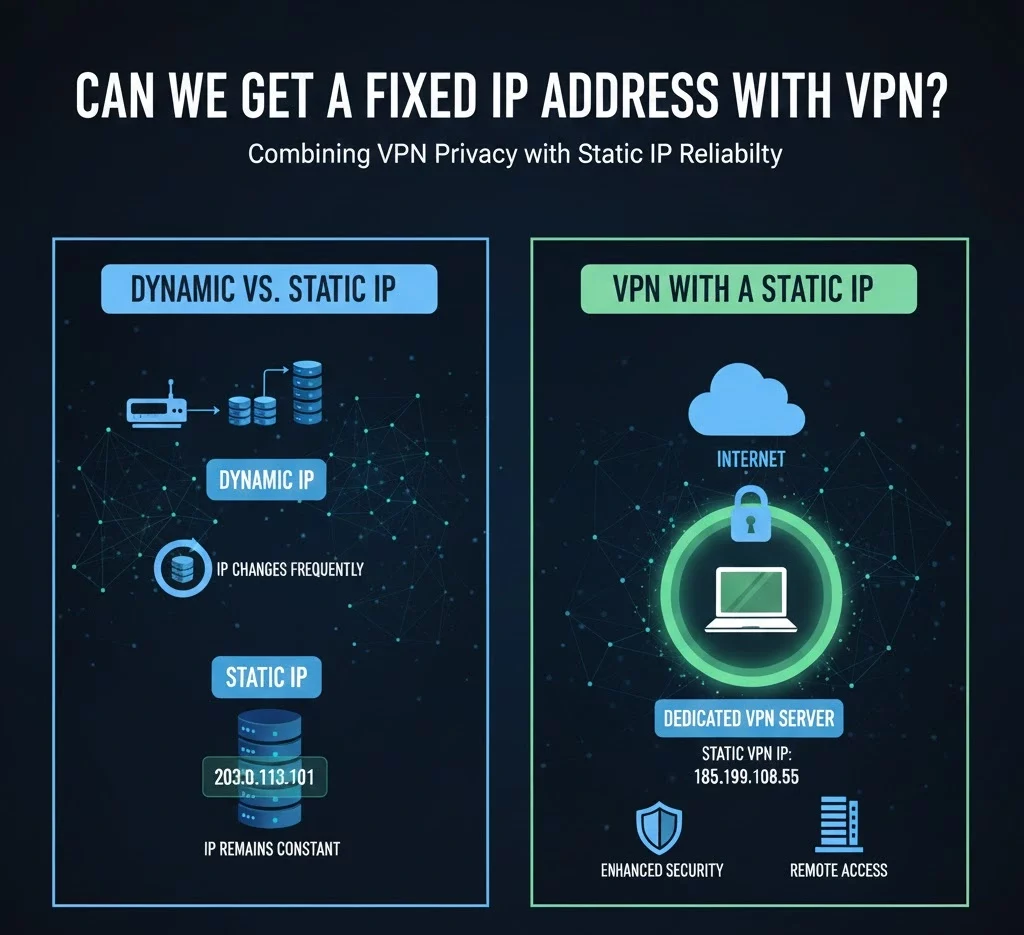
In the world of internet connectivity and digital privacy, Virtual Private Networks (VPNs) have become a staple tool for many users. One common question that arises is whether it’s possible to obtain a fixed IP address when using a VPN.
Table of Contents
The answer is yes, but it depends on the VPN service provider you choose. In this article, we’ll explore how you can get a fixed IP address with a VPN, the benefits, and potential considerations.
Understanding Fixed IP Addresses via VPN
Dynamic vs. Static IP Addresses
When you connect to the internet, your device is assigned an IP address, which can either be dynamic or static.
Dynamic IP Address: Most standard VPN services provide dynamic IP addresses. This means the IP address assigned to you changes each time you connect to the VPN. While this enhances privacy, it can be inconvenient for activities requiring a consistent IP address.
Static IP Address: Some VPN providers offer static or fixed IP addresses. With a static IP, you get the same IP address each time you connect to the VPN, offering consistency and reliability.
Benefits of a Fixed IP Address
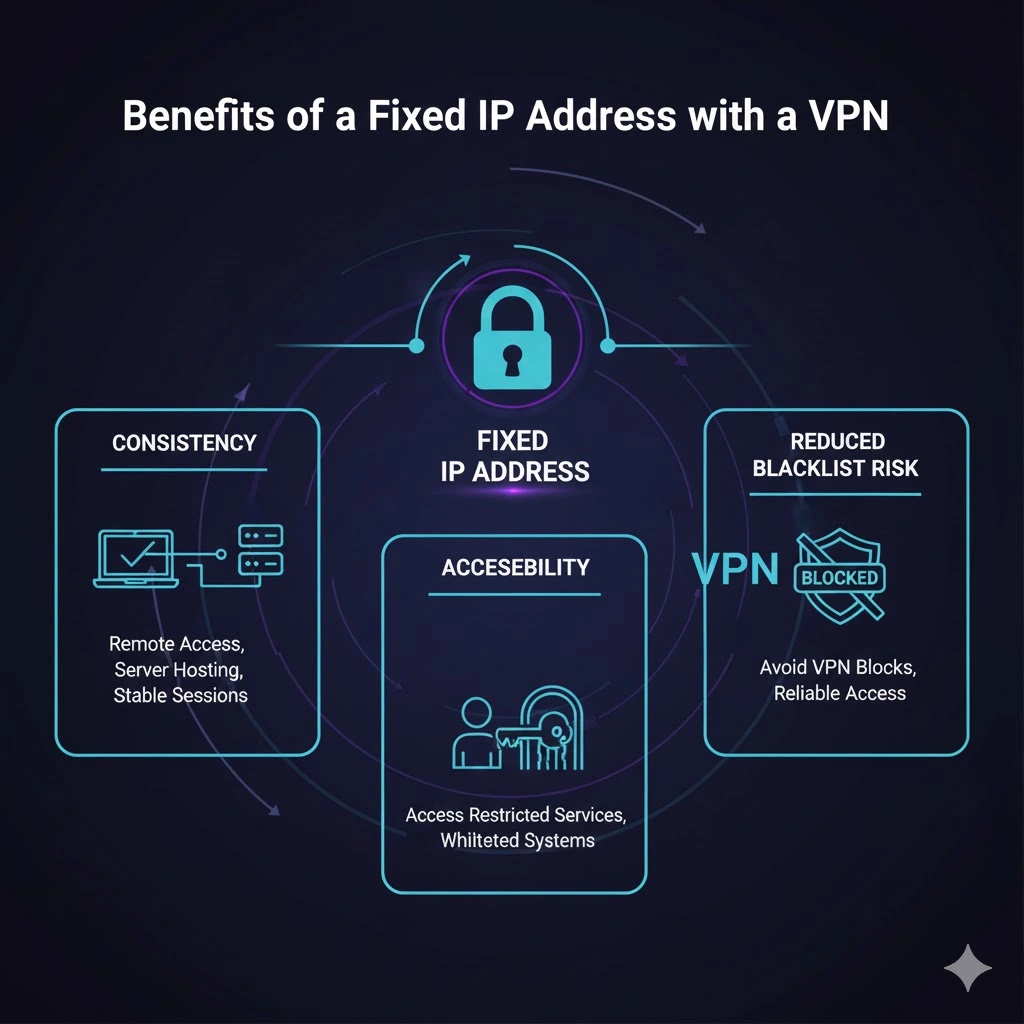
There are several advantages to using a fixed IP address through a VPN:
Consistency: A fixed IP address ensures that your IP address remains the same across sessions. This is particularly useful for remote access to systems, running a server, or accessing certain online services that require a consistent IP.
Accessibility: Fixed IP addresses make it easier to access certain services and systems that are restricted to specific IP addresses.
Reduced Risk of IP Blacklisting: Some websites and services might block dynamic IP addresses frequently used by VPNs. A fixed IP can reduce the risk of being flagged or blocked.
How to Get a Fixed IP Address with a VPN
Choose a VPN Provider: Look for VPN providers that offer static IP addresses as part of their service. Some popular VPN providers offering this feature include:
- NordVPN: Offers dedicated IP addresses in multiple countries.
- PureVPN: Provides dedicated IP options.
- CyberGhost: Has dedicated IP addresses available.
- TorGuard: Known for its dedicated IP address options.
Subscription Plans: Static IP addresses often come at an additional cost compared to standard VPN plans. Review the pricing and select a plan that includes a static IP feature.
Select Your Preferred Location: Depending on the provider, you may have options for the geographic location of your fixed IP address. Choose a location that suits your needs, whether for business or personal use.
Setup and Configuration: Once you’ve subscribed to a plan with a fixed IP address, follow the provider’s instructions to configure your VPN client. This usually involves logging in with your account details and selecting the static IP option.
Potential Limitations
While a fixed IP address can be beneficial, there are some potential limitations to consider:
Privacy Considerations: Using a fixed IP address can reduce some aspects of anonymity, as your online activities will consistently be associated with the same IP address. This could potentially make tracking easier.
Additional Costs: Static IP addresses typically come with an additional cost. Ensure the benefits align with your needs before committing to the extra expense.
In a nutshell, yes, you can get a fixed IP address with a VPN if you choose a provider that offers this service. It provides the advantage of consistency and reliability, which can be beneficial for various online activities. However, weigh the benefits against any potential privacy concerns and additional costs.
For more information on managing IP addresses and enhancing your network security, consider exploring the resources available at larus.net. They offer comprehensive solutions and expert advice tailored to your IP address management needs.
Trusted IPv4 Leasing for Business Growth
Get enterprise-grade IPv4 space quickly, with seamless deployment and end-to-end management.
Get Started with i.leaseFAQs
What is the difference between a Static IP and a Dedicated IP?
While often used interchangeably, there is a subtle difference. A Static IP just means the address doesn’t change. A Dedicated IP is a static IP that is exclusively assigned to you and not shared with any other users. Most premium VPNs offer “Dedicated IPs” to ensure you don’t get punished for the bad behavior of other users sharing the same server.
Is a fixed IP address safer than a dynamic one?
Not necessarily. A Dynamic IP (shared) offers better anonymity because your traffic is mixed with hundreds of other users, making you harder to track. A Fixed IP is easier to track back to your specific account, but it provides better usability for accessing secure networks, online banking, and remote desktop tools.
Can I use a fixed IP VPN for online banking?
Yes, and it is highly recommended. Banks often flag accounts that log in from different IP addresses (locations) as suspicious fraud attempts. Using a Fixed IP helps you avoid these security lockouts by providing a consistent, trusted location for every login.
Articles connexes
Combien y a-t-il d’adresses IPv4 au total ?
Il existe environ 4,3 milliards d’adresses IPv4. Plus précisément, 4 294 967 296. Bien que 10 chiffres puissent paraître beaucoup, nous n’avons plus accès à ces adresses. Internet a atteint sa capacité maximale. Ce n’est pas la fin du monde, mais cette situation marque une étape cruciale dans l’histoire de notre monde numérique interconnecté. 1.0 Les adresses IPv4 sont-elles épuisées ? Les adresses IPv4 sont-elles épuisées ? La réponse est oui. Les adresses IPv4Read more Related Posts Combien y a-t-il d’adresses IPv4 au total ? Il existe environ 4,3 milliards d'adresses IPv4. Plus précisément, 4 294 967 296. Bien que 10 chiffres puissent paraître beaucoup, nous n'avons plus Read more Comprendre la différence entre IPv4 et IPv6 Lorsqu'un appareil se connecte à un réseau, il doit respecter une norme spécifique. Cette norme, appelée protocole Internet, permet à Read more Historique du prix des adresses IPv4, de l’épuisement des stocks à 2026 Une analyse des tendances des prix des adresses IPv4, des pics dus à la rareté aux corrections du marché, et Read more .related-post {} .related-post .post-list { text-align: left; } .related-post .post-list .item { margin: 5px; padding: 10px; } .related-post .headline { font-size: 18px !important; color: #999999 !important; } .related-post .post-list .item .post_thumb { max-height: 220px; margin: 10px 0px; padding: 0px; display: block; } .related-post .post-list .item .post_title { font-size: 16px; color: #3f3f3f; margin: 10px 0px; padding: 0px; display: block; text-decoration: none; } .related-post .post-list .item .post_excerpt { font-size: 13px; color: #3f3f3f; margin: 10px 0px; padding: 0px; display: block; text-decoration: none; } @media only screen and (min-width: 1024px) { .related-post .post-list .item { width: 30%; } } @media only screen and (min-width: 768px) and (max-width: 1023px) { .related-post .post-list .item { width: 90%; } } @media only screen and (min-width: 0px) and (max-width: 767px) { .related-post .post-list .item { width: 90%; } }
Comprendre la différence entre IPv4 et IPv6
Lorsqu’un appareil se connecte à un réseau, il doit respecter une norme spécifique. Cette norme, appelée protocole Internet, permet à un appareil de communiquer avec d’autres appareils. Table of Contents Que ce soit via Internet ou sur un réseau local (comme un réseau domestique ou professionnel), un appareil a besoin d’une adresse réseau. Il reçoit cette adresse une fois connecté au réseau, généralement par l’intermédiaire d’un routeur. Pour communiquerRead more Related Posts Combien y a-t-il d’adresses IPv4 au total ? Il existe environ 4,3 milliards d'adresses IPv4. Plus précisément, 4 294 967 296. Bien que 10 chiffres puissent paraître beaucoup, nous n'avons plus Read more Comprendre la différence entre IPv4 et IPv6 Lorsqu'un appareil se connecte à un réseau, il doit respecter une norme spécifique. Cette norme, appelée protocole Internet, permet à Read more Historique du prix des adresses IPv4, de l’épuisement des stocks à 2026 Une analyse des tendances des prix des adresses IPv4, des pics dus à la rareté aux corrections du marché, et Read more .related-post {} .related-post .post-list { text-align: left; } .related-post .post-list .item { margin: 5px; padding: 10px; } .related-post .headline { font-size: 18px !important; color: #999999 !important; } .related-post .post-list .item .post_thumb { max-height: 220px; margin: 10px 0px; padding: 0px; display: block; } .related-post .post-list .item .post_title { font-size: 16px; color: #3f3f3f; margin: 10px 0px; padding: 0px; display: block; text-decoration: none; } .related-post .post-list .item .post_excerpt { font-size: 13px; color: #3f3f3f; margin: 10px 0px; padding: 0px; display: block; text-decoration: none; } @media only screen and (min-width: 1024px) { .related-post .post-list .item { width: 30%; } } @media only screen and (min-width: 768px) and (max-width: 1023px) { .related-post .post-list .item { width: 90%; } } @media only screen and (min-width: 0px) and (max-width: 767px) { .related-post .post-list .item { width: 90%; } }

Combien de bits composent une adresse IPv4 ?
Une adresse IPv4 comporte 32 bits. Mais pour bien comprendre ce que cela signifie, examinons ce que sont les bits et ce qu’est un espace d’adressage IP. 1.0 C’est quoi des bits, au juste ? “Bits ” is short for “binary digits.” A system that uses bits has two states: 0 and 1. By arranging bits in various patterns, we can have different number combinations that we can useRead more Related Posts Combien y a-t-il d’adresses IPv4 au total ? Il existe environ 4,3 milliards d'adresses IPv4. Plus précisément, 4 294 967 296. Bien que 10 chiffres puissent paraître beaucoup, nous n'avons plus Read more Comprendre la différence entre IPv4 et IPv6 Lorsqu'un appareil se connecte à un réseau, il doit respecter une norme spécifique. Cette norme, appelée protocole Internet, permet à Read more Historique du prix des adresses IPv4, de l’épuisement des stocks à 2026 Une analyse des tendances des prix des adresses IPv4, des pics dus à la rareté aux corrections du marché, et Read more .related-post {} .related-post .post-list { text-align: left; } .related-post .post-list .item { margin: 5px; padding: 10px; } .related-post .headline { font-size: 18px !important; color: #999999 !important; } .related-post .post-list .item .post_thumb { max-height: 220px; margin: 10px 0px; padding: 0px; display: block; } .related-post .post-list .item .post_title { font-size: 16px; color: #3f3f3f; margin: 10px 0px; padding: 0px; display: block; text-decoration: none; } .related-post .post-list .item .post_excerpt { font-size: 13px; color: #3f3f3f; margin: 10px 0px; padding: 0px; display: block; text-decoration: none; } @media only screen and (min-width: 1024px) { .related-post .post-list .item { width: 30%; } } @media only screen and (min-width: 768px) and (max-width: 1023px) { .related-post .post-list .item { width: 90%; } } @media only screen and (min-width: 0px) and (max-width: 767px) { .related-post .post-list .item { width: 90%; } }
