How to buy IPv4 addresses through a certified IP broker
 Stephanie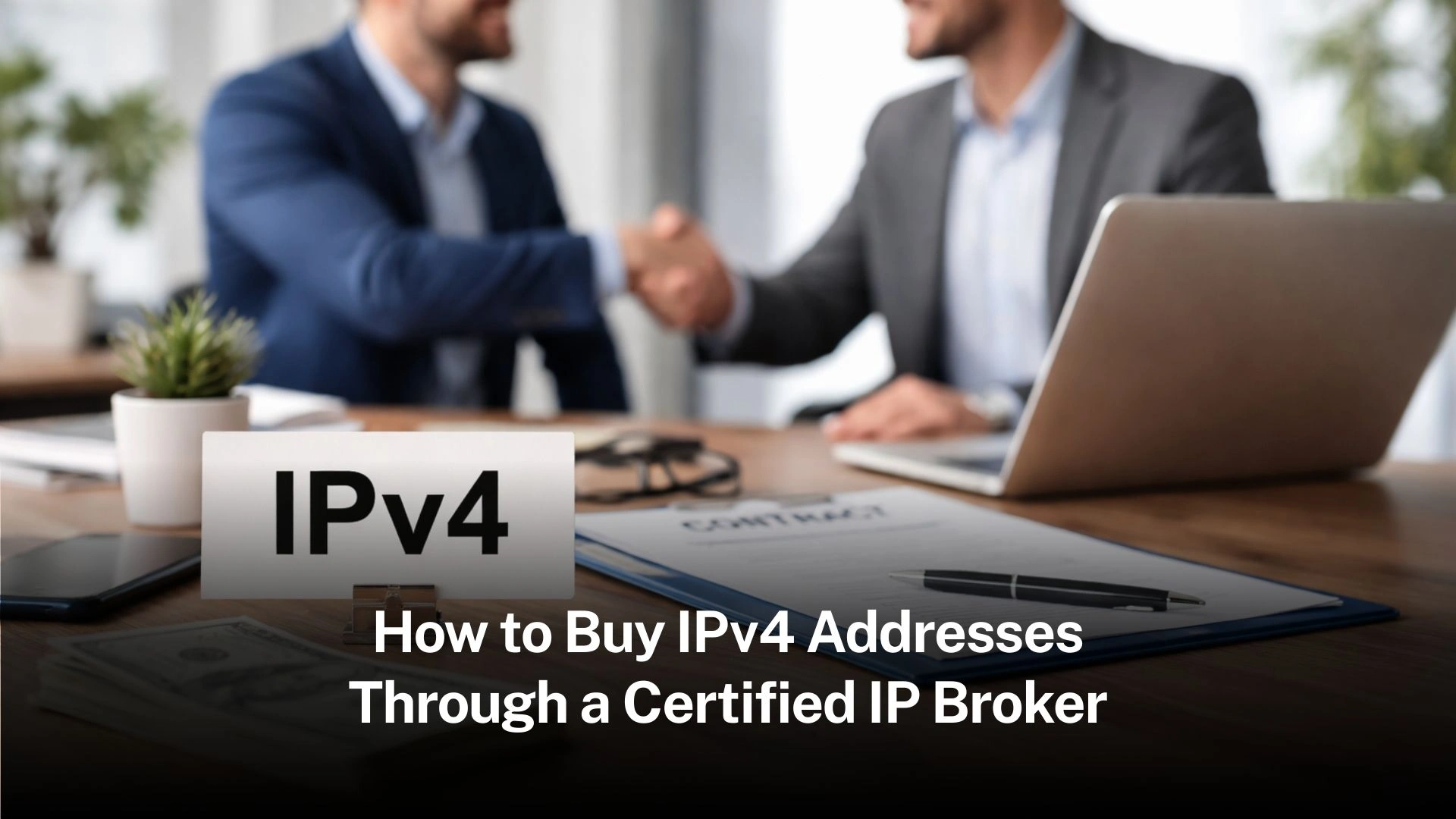
Buying IPv4 space requires policy compliance, verified need, and registry approval, making certified IP brokers essential guides through complex global transfers.
Table of Contents
- IPv4 transactions are regulated transfers, not simple purchases — registries must approve documentation, justification and registration changes.
- Certified brokers reduce risk and delay by aligning buyers with registry policy, routing legitimacy and cross-region requirements.
Why companies still need to buy IPv4 addresses
The global supply of IPv4 addresses effectively ran out more than a decade ago. Regional Internet Registries (RIRs) now allocate only limited leftovers, meaning organisations requiring additional capacity must obtain addresses from existing holders through transfers.
Despite IPv6 adoption, demand persists because countless systems — embedded devices, enterprise applications, hosting platforms and legacy infrastructure — still depend on IPv4 compatibility. Markets have therefore emerged to re-allocate existing address space rather than issue new blocks.
This is where brokers come in. A company cannot simply wire money and receive an IP block. Instead, the process resembles a regulated title transfer in which policy compliance matters more than price negotiation.
What a “certified IP broker” actually does
In the IPv4 ecosystem, a broker acts as an intermediary between seller and buyer, coordinating the administrative and policy requirements imposed by RIRs such as ARIN and RIPE NCC.
Transfers require an authorised organisational contact and a registry-verified identity linked to an organisation identifier before a request can even be submitted.
Because these processes differ between regions and involve detailed documentation, brokers help organisations:
- prepare justification of need,
- validate source legitimacy,
- align registry policies,
- manage escrow and contractual protections,
- coordinate registry approval across regions.
The process is deliberately strict. RIRs impose these requirements to maintain “privacy, security and transparency” in number resource transfers.
In short, the broker does not sell addresses — they shepherd a regulated change in registration.
The evolution of IPv4 brokerage
The market has matured from informal trading into structured infrastructure finance. The site heng.lu describes how entrepreneur Lu Heng founded LARUS Limited to build “a transparent and scalable IP leasing system” connecting unused capacity with global demand.
His public commentary on the market emphasises the structural mismatch between modern connectivity demand and legacy allocation models. A profile noted he controlled and leased millions of IPv4 addresses, highlighting ongoing reliance on IPv4 resources worldwide.
Heng has argued publicly that IPv4 assets remain undervalued and could rise dramatically in value if organisations improved address management and allocation strategies.
Whether or not such predictions prove accurate, they reflect a broader shift: IPv4 addresses have become a managed infrastructure asset class requiring governance and intermediation.
Step-by-step: how to buy IPv4 through a broker
1. Define your technical and business need
Registries require justification before approving transfers.
Buyers must demonstrate operational necessity for the requested addresses rather than speculative acquisition.
Typical justification includes:
- hosting expansion,
- SaaS deployment,
- ISP customer growth,
- migration from NAT-limited environments.
Without documented need, approval may fail regardless of payment.
2. Create registry identity and compliance records
Before any transfer request:
register an online account,
create a point-of-contact record,
create an organisational identifier.
These steps establish accountability within the registry database.
A broker typically prepares these records correctly the first time — preventing rejection or delays.
3. Source legitimate address space
Not all IPv4 blocks are equal. A broker verifies:
- clean routing history,
- absence of disputes,
- correct registration chain,
- compliance with transfer policy.
Because address transfers change registry registration rather than the addresses themselves, legitimacy matters more than technical usability.
4. Prepare transfer documentation
Each registry requires specific forms and approvals.
For example:
- both source and recipient must submit requests,
- minimum transfer sizes apply (often /24),
- documentation must satisfy both registries in cross-region transfers.
Transfers can take weeks because approval from both RIRs is required in inter-regional transactions.
Brokers coordinate these steps to avoid restart cycles.
5. Registry review and approval
After submission, the registry validates:
- identity,
- need justification,
- policy compliance,
- payment of transfer fees.
Once approved, the registry updates the official record — the moment when control legally changes.
The final deliverable is not a block of numbers but a database entry recognised by the global internet.
Inter-RIR transfers and why they are complex
Different regions operate under different policies. Some regions cannot exchange resources directly; others require additional checks.
Inter-regional transfers were introduced partly because allocation patterns were historically uneven across the world.
A broker’s expertise lies in understanding these policy mismatches and aligning both sides before submission — preventing regulatory dead-ends.
Risks of buying IPv4 without a broker
Organisations sometimes attempt direct purchase agreements. This can fail for reasons unrelated to contract law:
- registry rejects justification,
- seller lacks authority,
- block has policy restrictions,
- cross-region approval impossible,
- routing legitimacy cannot be established.
The result: money tied up in unusable resources.
Because the internet recognises registry records, not private contracts, operational control follows the registry — not the purchase agreement.
After purchase: what you actually receive
After approval:
- the buyer becomes the registered holder,
- routing authorisation can be configured,
- the block can be announced to the internet.
But crucially, you gain a registered right to use, not traditional property ownership. The registry maintains administrative authority over registration accuracy and policy compliance.
This distinction explains why brokerage expertise matters: the value lies in legitimacy and reachability, not possession.
The strategic importance of professional brokerage
Buying IPv4 space today resembles regulatory infrastructure acquisition rather than commodity procurement.
A certified broker contributes value in three areas:
Policy translation – converting technical justification into registry-accepted documentation.
Risk reduction – validating provenance and routing reputation.
Operational continuity – ensuring the acquired addresses actually work globally.
The complexity explains why specialised intermediaries emerged. The market exists because the internet’s governance framework prioritises stability over transactional simplicity.
Conclusion
Buying IPv4 addresses is less like purchasing equipment and more like acquiring regulated operating rights. Registry approval, documentation, and routing legitimacy define success, not just contractual agreement.
Certified brokers — including industry figures highlighted by heng.lu — exist because the system requires expertise in policy navigation, not merely negotiation. In a scarce resource environment, legitimacy determines utility, and utility determines value.
Organisations that understand this treat IPv4 acquisition as a compliance-driven infrastructure project rather than a procurement task. Those that do not often discover the difference only after a transfer fails.
The IPv4 market reflects one of the most compelling examples of economic scarcity in the digital age. After the free pool exhausted, IPv4 addresses transitioned into a mature secondary market where block size, year, and buyer strategy all influence value. Prices surged in the early post‑exhaustion years, peaking as large enterprises competed for limited space. Over time, increased block availability and the rise of leasing solutions have tempered price volatility. Heading into 2026, we’re seeing a more balanced ecosystem — where buyers, sellers, and lessees negotiate not just on price, but on flexibility, timing, and network deployment plans
– Rachel Chen, IP Address Management Expert
Frequently Asked Questions
1. Can I buy IPv4 addresses directly from another company
You can sign a contract, but the transfer only becomes valid after registry approval and registration change.
2. Why do I need to justify usage to the registry
Registries require demonstrated operational need before approving transfers to prevent speculation and preserve fair allocation.
3. How long does an IPv4 transfer take
Typically several weeks, especially for cross-region transfers requiring approvals from multiple registries.
4. What does a broker actually guarantee
They coordinate policy compliance and documentation but cannot override registry rules or approvals.
5. Do I own the IPv4 addresses after purchase
You become the registered holder with rights to use the resources; the registry maintains administrative oversight.
Related Blogs
Artículos relacionados
Short-term vs long-term IPv4 leasing
Facing IPv4 shortages, companies must weigh cost, speed, and network growth when choosing a lease plan. Short-term leasing lets you scale resources up or down easily, but costs more over time and offers less supply certainty. Long-term leasing provides stable pricing and more reliable access, yet makes it harder to adjust your setup as needs evolve. Introduction: Why leasing IPv4 addresses makes sense IPv4 has evolved from a technicalRead more Related Posts Short-term vs long-term IPv4 leasing Facing IPv4 shortages, companies must weigh cost, speed, and network growth when choosing a lease plan.Short-term leasing lets you scale Read more Why IPv4 scarcity drives economic value for operators IPv4 地址曾经只是互联网运行所需的基础资源。但在今天,它越来越像一种具有市场价格、可交易、可租赁的数字资产。造成这一变化的原因并不复杂:IPv4 的总量有限,而全球互联网对 IPv4 的需求并没有消失;与此同时,IPv6 虽然早已出现,但迁移进度依然缓慢。这三股力量叠加,正在重新塑造运营商对 IP 地址的看法,也改变了互联网基础设施的经济逻辑。原文将这点概括为“有限供给、持续需求与缓慢转型”,并指出这正在推动 IP 地址成为影响全球电信经济的可交易资产。 IPv4 稀缺并不是新问题 全球互联网至今仍大量依赖 IPv4。这个协议诞生于更早的时代,只能提供大约 43 亿个地址。这个数量在互联网初期似乎足够庞大,但在今天已经明显不够。原文指出,IANA 在 2011 年就已将最后一批大型 IPv4 Read more How much does a /24 IPv4 block cost in 2026? IPv4 scarcity continues to shape internet infrastructure, with /24 blocks still trading actively on global markets despite growing IPv6 adoption. Key Read more .related-post {} .related-post .post-list { text-align: left; } .related-post .post-list .item { margin: 5px; padding: 10px; } .related-post .headline { font-size: 18px !important; color: #999999 !important; } .related-post .post-list .item .post_thumb { max-height: 220px; margin: 10px 0px; padding: 0px; display: block; } .related-post .post-list .item .post_title { font-size: 16px; color: #3f3f3f; margin: 10px 0px; padding: 0px; display: block; text-decoration: none; } .related-post .post-list .item .post_excerpt { font-size: 13px; color: #3f3f3f; margin: 10px 0px; padding: 0px; display: block; text-decoration: none; } @media only screen and (min-width: 1024px) { .related-post .post-list .item { width: 30%; } } @media only screen and (min-width: 768px) and (max-width: 1023px) { .related-post .post-list .item { width: 90%; } } @media only screen and (min-width: 0px) and (max-width: 767px) { .related-post .post-list .item { width: 90%; } }

Why IPv4 scarcity drives economic value for operators
IPv4 地址曾经只是互联网运行所需的基础资源。但在今天,它越来越像一种具有市场价格、可交易、可租赁的数字资产。 造成这一变化的原因并不复杂:IPv4 的总量有限,而全球互联网对 IPv4 的需求并没有消失;与此同时,IPv6 虽然早已出现,但迁移进度依然缓慢。这三股力量叠加,正在重新塑造运营商对 IP 地址的看法,也改变了互联网基础设施的经济逻辑。原文将这点概括为“有限供给、持续需求与缓慢转型”,并指出这正在推动 IP 地址成为影响全球电信经济的可交易资产。 IPv4 稀缺并不是新问题 全球互联网至今仍大量依赖 IPv4。这个协议诞生于更早的时代,只能提供大约 43 亿个地址。这个数量在互联网初期似乎足够庞大,但在今天已经明显不够。原文指出,IANA 在 2011 年就已将最后一批大型 IPv4 地址区块分配给各区域注册机构,这成为互联网基础设施经济逻辑的转折点。 地址池耗尽之后,市场并没有停下来,而是开始适应。网络运营商、云服务商和电信企业不再只是把 IPv4 看成技术标识,而是把它视为一种有限资源,需要管理、分配、定价,甚至纳入财务优化的考量之中。 从技术资源走向经济资产 稀缺本身并不会自动带来价值,真正让 IPv4 变得有价值的,是它在现实世界中的持续需求。尽管 IPv6 已经存在,而且理论上更先进、地址空间也几乎无限,但大量旧系统、兼容性要求以及客户环境仍然依赖 IPv4。正因如此,IPv4 的需求并没有随着 IPv6 的出现而消失。原文将这一点称为一个“悖论”:技术上更优的替代方案已经存在,但 IPv4 依赖型系统的庞大存量仍在支撑市场需求。 供给固定、需求持续,这就形成了经典的供需失衡。文章提到,IPv4 的价格因此不断上升:2014 年约为每个地址 15 美元,近年则常见于 40 到 50 美元区间,高点甚至更高。围绕 IPv4 的语言也随之发生变化:从 allocation 走向 valuation,从 assignment 走向 trading。 价格不是固定的,但市场已经成形 IPv4 市场并不是静止不变的,也不是所有地址都一个价格。价格会受到区块大小、地区需求、宏观经济环境等因素影响。原文列出的历史数据表明,2014 年每个 IPv4 地址价格约在 6 到 24 美元之间,到 2021 年某些情况下可达到 60Read more Related Posts Short-term vs long-term IPv4 leasing Facing IPv4 shortages, companies must weigh cost, speed, and network growth when choosing a lease plan.Short-term leasing lets you scale Read more Why IPv4 scarcity drives economic value for operators IPv4 地址曾经只是互联网运行所需的基础资源。但在今天,它越来越像一种具有市场价格、可交易、可租赁的数字资产。造成这一变化的原因并不复杂:IPv4 的总量有限,而全球互联网对 IPv4 的需求并没有消失;与此同时,IPv6 虽然早已出现,但迁移进度依然缓慢。这三股力量叠加,正在重新塑造运营商对 IP 地址的看法,也改变了互联网基础设施的经济逻辑。原文将这点概括为“有限供给、持续需求与缓慢转型”,并指出这正在推动 IP 地址成为影响全球电信经济的可交易资产。 IPv4 稀缺并不是新问题 全球互联网至今仍大量依赖 IPv4。这个协议诞生于更早的时代,只能提供大约 43 亿个地址。这个数量在互联网初期似乎足够庞大,但在今天已经明显不够。原文指出,IANA 在 2011 年就已将最后一批大型 IPv4 Read more What Determines IPv4 Pricing in Today’s Market? Scarcity, shifting demand, and leasing platforms such as i.lease are reshaping how IPv4 addresses are valued and traded globally.IPv4 pricing is driven Read more .related-post {} .related-post .post-list { text-align: left; } .related-post .post-list .item { margin: 5px; padding: 10px; } .related-post .headline { font-size: 18px !important; color: #999999 !important; } .related-post .post-list .item .post_thumb { max-height: 220px; margin: 10px 0px; padding: 0px; display: block; } .related-post .post-list .item .post_title { font-size: 16px; color: #3f3f3f; margin: 10px 0px; padding: 0px; display: block; text-decoration: none; } .related-post .post-list .item .post_excerpt { font-size: 13px; color: #3f3f3f; margin: 10px 0px; padding: 0px; display: block; text-decoration: none; } @media only screen and (min-width: 1024px) { .related-post .post-list .item { width: 30%; } } @media only screen and (min-width: 768px) and (max-width: 1023px) { .related-post .post-list .item { width: 90%; } } @media only screen and (min-width: 0px) and (max-width: 767px) { .related-post .post-list .item { width: 90%; } }

What Determines IPv4 Pricing in Today’s Market?
Scarcity, shifting demand, and leasing platforms such as i.lease are reshaping how IPv4 addresses are valued and traded globally. IPv4 pricing is driven primarily by scarcity, block size, and fluctuating demand across regions and industries. Leasing models, including platforms like i.lease, are stabilising costs amid volatile purchase markets. What determines IPv4 pricing in today’s market A market shaped by scarcity IPv4 addresses, once freely allocated, have become a traded digital commodity. AsRead more Related Posts Short-term vs long-term IPv4 leasing Facing IPv4 shortages, companies must weigh cost, speed, and network growth when choosing a lease plan.Short-term leasing lets you scale Read more Why IPv4 scarcity drives economic value for operators IPv4 地址曾经只是互联网运行所需的基础资源。但在今天,它越来越像一种具有市场价格、可交易、可租赁的数字资产。造成这一变化的原因并不复杂:IPv4 的总量有限,而全球互联网对 IPv4 的需求并没有消失;与此同时,IPv6 虽然早已出现,但迁移进度依然缓慢。这三股力量叠加,正在重新塑造运营商对 IP 地址的看法,也改变了互联网基础设施的经济逻辑。原文将这点概括为“有限供给、持续需求与缓慢转型”,并指出这正在推动 IP 地址成为影响全球电信经济的可交易资产。 IPv4 稀缺并不是新问题 全球互联网至今仍大量依赖 IPv4。这个协议诞生于更早的时代,只能提供大约 43 亿个地址。这个数量在互联网初期似乎足够庞大,但在今天已经明显不够。原文指出,IANA 在 2011 年就已将最后一批大型 IPv4 Read more How much does a /24 IPv4 block cost in 2026? IPv4 scarcity continues to shape internet infrastructure, with /24 blocks still trading actively on global markets despite growing IPv6 adoption. Key Read more .related-post {} .related-post .post-list { text-align: left; } .related-post .post-list .item { margin: 5px; padding: 10px; } .related-post .headline { font-size: 18px !important; color: #999999 !important; } .related-post .post-list .item .post_thumb { max-height: 220px; margin: 10px 0px; padding: 0px; display: block; } .related-post .post-list .item .post_title { font-size: 16px; color: #3f3f3f; margin: 10px 0px; padding: 0px; display: block; text-decoration: none; } .related-post .post-list .item .post_excerpt { font-size: 13px; color: #3f3f3f; margin: 10px 0px; padding: 0px; display: block; text-decoration: none; } @media only screen and (min-width: 1024px) { .related-post .post-list .item { width: 30%; } } @media only screen and (min-width: 768px) and (max-width: 1023px) { .related-post .post-list .item { width: 90%; } } @media only screen and (min-width: 0px) and (max-width: 767px) { .related-post .post-list .item { width: 90%; } }