Pourquoi les entreprises adoptent le BYOIP
 Stephanie
Alors que les organisations du monde entier accélèrent leur transformation numérique, l’adoption du cloud n’est plus une simple tendance technologique, mais une initiative stratégique majeure. Les entreprises migrent leurs charges de travail critiques vers le cloud à un rythme sans précédent afin d’améliorer leur flexibilité, leur évolutivité et leur rentabilité. Cependant, cette transformation n’est pas sans défis. L’un des enjeux les plus pressants de la migration vers le cloud est la nécessité de conserver une maîtrise totale des configurations réseau, de garantir des politiques de sécurité robustes et d’assurer la continuité de service, notamment pour les services étroitement liés à l’infrastructure existante.
Table of Contents
L’introduction de la solution pratique « Bring Your Own Internal Network » (BYOIP) se généralise rapidement auprès des entreprises confrontées à ces situations complexes. BYOIP permet aux organisations de migrer vers des fournisseurs de services cloud tout en conservant leurs adresses IP pré-attribuées. Elles peuvent ainsi continuer à opérer avec les mêmes identités numériques établies au fil des ans, préservant leur réputation, simplifiant la configuration et évitant des coûts d’interruption de service élevés.
Cet article explore les raisons pour lesquelles les entreprises adoptent la pratique du « Bring Your Own Internet Access Point » (BYOIP), analyse les facteurs commerciaux à l’origine de cette tendance, ses avantages concrets, les considérations techniques et réglementaires, et explique comment les principales plateformes cloud telles qu’Amazon Web Services (AWS), Microsoft Azure et Google Cloud peuvent faciliter son application. Du taux de délivrabilité des e-mails à la conformité aux réglementations sur la souveraineté des données, le BYOIP devient progressivement une stratégie clé pour les responsables informatiques modernes souhaitant garantir la résilience opérationnelle et le contrôle du réseau dans un monde où le cloud est omniprésent.
Le BYOIP permet aux entreprises d’utiliser leurs propres plages d’adresses IP publiques auprès des fournisseurs de services cloud (CSP). Cette approche leur permet de conserver leurs adresses IP existantes, préservant ainsi leur réputation et simplifiant la configuration de la sécurité lors de la migration vers le cloud. Les principaux fournisseurs de services cloud tels qu’Amazon Web Services (AWS), Microsoft Azure, Google Cloud Platform (GCP), IBM Cloud et Oracle Cloud Infrastructure (OCI) prennent tous en charge le BYOIP, permettant une intégration simple et transparente à leurs plateformes.
Dans un monde numérique de plus en plus interconnecté, les adresses IP sont considérées comme une ressource essentielle. Ce ne sont pas seulement des identifiants techniques, mais aussi des éléments essentiels à l’identité et à la crédibilité en ligne d’une organisation. La délivrabilité des e-mails, les pare-feu, les listes blanches d’API et le contrôle d’accès basé sur la géolocalisation reposent tous sur des adresses IP stables et cohérentes. La perte ou la modification de ces adresses lors d’une migration vers le cloud peut perturber les opérations commerciales, nuire à la confiance des clients et même entraîner des conséquences réglementaires dans des secteurs tels que la finance ou la santé.
Comprendre le BYOIP
C’est pourquoi l’utilisation de sa propre adresse IP (BYOIP) est devenue un choix essentiel. Lors de la migration de leur infrastructure vers le cloud, les entreprises peuvent conserver leurs propres plages d’adresses IP, qu’elles les obtiennent directement auprès d’organismes d’enregistrement Internet régionaux comme l’ARIN, le RIPE NCC ou l’APNIC, ou qu’elles les achètent auprès de revendeurs d’adresses IP légitimes. Les entreprises ne dépendent plus uniquement des adresses IP attribuées par les fournisseurs de services cloud, mais peuvent directement intégrer leurs plages d’adresses au réseau cloud, ce qui leur assure une meilleure continuité et un contrôle accru.
Par exemple, AWS prend en charge la fonctionnalité BYOIP via son service Elastic IP Address, permettant aux entreprises de publier leurs plages d’adresses IP sur le réseau Amazon et de les utiliser au sein de clouds privés virtuels (VPC). De même, Azure permet aux clients d’utiliser leurs propres préfixes IP dans des services tels que les passerelles d’application et les pare-feu Azure. Google Cloud offre une prise en charge similaire grâce à sa fonctionnalité BYOIP, qui permet d’importer des plages d’adresses IP dans des nuages privés virtuels et de les gérer comme des ressources régionales. La prise en charge du « bring your own internet access point » (BYOIP) par les principaux fournisseurs de services cloud n’est pas simplement une question de commodité technique ; cela reflète en fait le consensus croissant au sein de l’ensemble du secteur concernant l’importance de conserver les identités numériques dans le cloud. Qu’il s’agisse de minimiser les temps d’arrêt, d’assurer un basculement transparent entre différentes régions ou de préserver la réputation des noms de domaine liés au trafic de courrier électronique depuis des années, BYOIP construit un pont crucial entre les systèmes traditionnels et l’avenir du cloud natif.
Avantages de l'adoption du BYOIP
Préserver la réputation de la propriété intellectuelle
Conserver ses adresses IP existantes permet aux entreprises de préserver leur réputation, un point particulièrement important pour des services comme la messagerie électronique où la réputation de l’adresse IP influe sur la délivrabilité. Changer d’adresse IP peut entraîner le classement des e-mails comme spam ou leur blocage, ce qui nuit à la communication avec les clients et les partenaires.Using familiar IP addresses allows for easier transfer of existing security policies, reducing the complexity of reconfiguring firewalls and access controls in new environments. This continuity ensures that security measures remain consistent during and after migration.
Simplifier les politiques de sécurité
L’utilisation d’adresses IP connues facilite le transfert des politiques de sécurité existantes, réduisant ainsi la complexité de la reconfiguration des pare-feu et des contrôles d’accès dans les nouveaux environnements. Cette continuité garantit la cohérence des mesures de sécurité pendant et après la migration.
Garantir la conformité réglementaire
Le BYOIP facilite la conformité aux réglementations sectorielles et aux lois sur la souveraineté des données en permettant aux entreprises de conserver le contrôle de leurs ressources de propriété intellectuelle. Ceci est particulièrement crucial pour les organisations opérant dans des régions où les exigences de résidence des données sont strictes..
Rationaliser les migrations vers le cloud
La conservation des adresses IP lors des migrations vers le cloud minimise les interruptions, garantissant ainsi une migration plus fluide et la continuité des services. Cette approche réduit le besoin de reconfiguration et de tests approfondis, accélérant ainsi le calendrier global de la migration.
Mise en œuvre de BYOIPA sur les plateformes cloud

Amazon Web Services (AWS)
AWS permet aux clients d’utiliser leurs propres adresses IP pour des services comme EC2 et Global Accelerator. Cette fonctionnalité contribue à maintenir une cohérence des adresses IP sur l’ensemble des déploiements AWS, préservant ainsi l’identité de marque et simplifiant la configuration réseau.
Microsoft Azure
Azure prend en charge le BYOIP grâce à sa fonctionnalité de préfixe IP personnalisé, permettant aux entreprises d’intégrer leurs plages d’adresses IP à l’infrastructure réseau Azure. Cette intégration facilite la migration et l’application de politiques réseau cohérentes entre les environnements sur site et cloud.
GCP propose la fonctionnalité BYOIP via les préfixes publics, permettant aux organisations d’utiliser leurs adresses IP au sein des services cloud de Google. Cette fonctionnalité facilite la migration tout en minimisant les interruptions de service et en préservant les configurations existantes.
Google Cloud Platform (GCP)
IBM Cloud
IBM Cloud prend en charge le BYOIP, facilitant ainsi l’intégration des adresses IP existantes dans l’environnement cloud d’IBM. Ceci est avantageux pour les stratégies de cloud hybride, garantissant la cohérence entre différents modèles de déploiement.
Oracle Cloud Infrastructure (OCI)
OCI permet aux clients d’utiliser leur propre espace d’adressage IP, en l’alignant sur leurs configurations et politiques réseau existantes. Cette prise en charge garantit aux entreprises la conservation de leurs ressources IP et des configurations associées lors de la migration.
Challenges and considerations
Complexité technique
La mise en œuvre du BYOIP (Bring Your Own IP) exige une planification rigoureuse et une coordination étroite avec les fournisseurs de services cloud afin de garantir un routage et une intégration optimaux. Ce processus peut impliquer la configuration des autorisations d’origine de routage (ROA) et la mise à jour des enregistrements RDAP (Registry Data Access Protocol).
Exigences réglementaires
Les organisations doivent s’assurer que leur utilisation du BYOIP est conforme aux réglementations et politiques en vigueur. Cela inclut la vérification de la propriété des adresses IP et la garantie de leur enregistrement auprès des registres Internet régionaux.
Incidences financières
Le transfert d’adresses IP vers les plateformes cloud peut engendrer des coûts, notamment des frais potentiels facturés par les fournisseurs de services cloud. Toutefois, le BYOIP peut également permettre de réaliser des économies en évitant les frais liés à l’utilisation d’adresses IP attribuées par un fournisseur.
Conclusion
Les entreprises adoptent de plus en plus l’approche « Apportez votre propre protocole Internet » (BYOIP) pour optimiser la gestion de leurs ressources réseau, garantir la conformité aux exigences réglementaires et faciliter une transition fluide et sans interruption vers le cloud. Face à l’accélération du passage aux stratégies hybrides et multicloud, la conservation des plages d’adresses IP publiques existantes n’est plus un simple choix technique, mais une nécessité stratégique.
Pour de nombreuses organisations, les adresses IP sont bien plus que de simples identifiants de routage : elles constituent un élément essentiel de l’infrastructure numérique qui sous-tend la confiance des clients et la continuité des opérations. Par exemple, une plage d’adresses IP utilisée depuis longtemps peut figurer sur la liste blanche de clients, de partenaires commerciaux ou d’applications critiques. Le taux de délivrabilité des e-mails, étroitement lié à la réputation de l’adresse IP, peut chuter considérablement en cas de changement d’adresse non vérifié. Grâce à la solution « Apportez votre propre IP » (BYOIP), les entreprises peuvent éviter ces risques et continuer à utiliser les mêmes adresses IP que celles utilisées par leurs noms de domaine, leurs serveurs de messagerie et leurs API. Cela réduit le risque d’être considéré comme du spam ou intercepté par les filtres de sécurité, ce qui peut entraîner des pertes importantes de revenus et nuire à la valeur de la marque.
De plus, le BYOIP facilite la mise en œuvre de politiques de sécurité cohérentes entre les systèmes cloud et les systèmes locaux. Les pare-feu, les systèmes de détection d’intrusion et les listes de contrôle d’accès (ACL) s’appuient généralement sur des règles basées sur l’adresse IP. Sans BYOIP, les équipes de sécurité doivent reconfigurer et vérifier ces règles à chaque migration ou extension d’infrastructure vers une nouvelle région ; un processus fastidieux et source d’erreurs. En utilisant leurs propres adresses IP, les entreprises peuvent maintenir une limite de réseau cohérente, ce qui simplifie considérablement la mise en œuvre des protocoles de sécurité et la surveillance du trafic dans différents environnements.
Du point de vue de la conformité, le BYOIP (Bring Your Own IP Address) peut aider les organisations à respecter les réglementations locales ou sectorielles en matière de traitement des données. Dans des secteurs comme la finance, la santé ou les marchés publics, où les exigences en matière de résidence et de traçabilité des données sont extrêmement élevées, la possibilité d’utiliser et de gérer des adresses IP au sein d’une juridiction spécifique offre des garanties supplémentaires. Elle peut également faciliter le processus d’audit, en garantissant que les flux de données et les limites du réseau sont bien documentés et sous le contrôle de l’entreprise, et non du fournisseur de cloud.
En définitive, le BYOIP (Bring Your Own IP) intègre flexibilité opérationnelle, continuité de la sécurité et autonomie stratégique. Face à un écosystème cloud de plus en plus complexe et interconnecté, les entreprises qui adoptent le BYOIP peuvent s’adapter plus rapidement à cet environnement, opérer de manière plus fiable et éviter de nombreux risques liés à une dépendance exclusive à l’allocation d’adresses IP natives du cloud.
Trusted IPv4 Leasing for Business Growth
Get enterprise-grade IPv4 space quickly, with seamless deployment and end-to-end management.
Get Started with i.leaseFoire aux questions (FAQ)
Qu'est-ce que le BYOIP ?
BYOIP signifie « Apportez votre propre adresse IP », une pratique qui permet aux entreprises d’utiliser leurs plages d’adresses IP existantes dans des environnements cloud, assurant ainsi la continuité et le contrôle de leurs ressources réseau.
Quels fournisseurs de cloud prennent en charge le BYOIP ?
Les principaux fournisseurs de services cloud, notamment AWS, Microsoft Azure, Google Cloud Platform, IBM Cloud et Oracle Cloud Infrastructure, proposent une prise en charge BYOIP, permettant aux entreprises d’intégrer leurs adresses IP aux services cloud.
Quels sont les avantages du BYOIP ?
BYOIP offre plusieurs avantages, tels que la préservation de la réputation IP, la simplification des transferts de politiques de sécurité, la garantie de la conformité réglementaire et la facilitation de migrations vers le cloud plus fluides.
Existe-t-il des défis associés au BYOIP ?
Oui, la mise en œuvre du BYOIP peut impliquer des complexités techniques, des considérations réglementaires et des coûts potentiels, nécessitant une planification et une coordination minutieuses avec les fournisseurs de services cloud.
Quel est l'impact du BYOIP sur la migration vers le cloud ?
BYOIP simplifie la migration vers le cloud en permettant aux entreprises de conserver leurs adresses IP existantes, réduisant ainsi le besoin de reconfiguration et minimisant les interruptions de service pendant la transition.
Blogs associés
Artículos relacionados
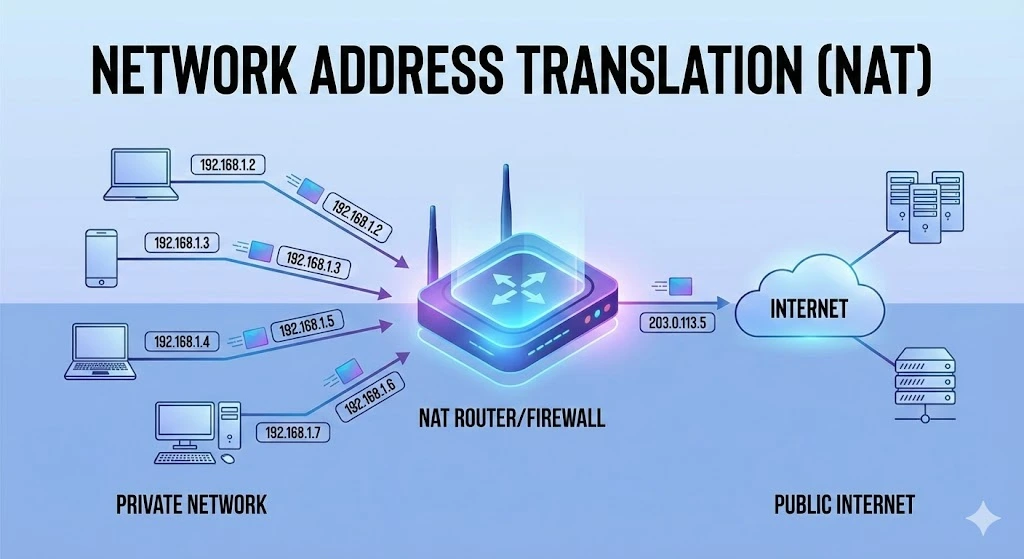
Comprensión de la traducción de direcciones de red (NAT)
En las redes informáticas, gestionar las direcciones IP de forma eficiente es fundamental para garantizar una comunicación fluida entre los dispositivos. Una de las tecnologías clave que ha surgido para afrontar este desafío es la Traducción de Direcciones de Red (NAT, por sus siglas en inglés). En este artículo explicamos qué es NAT, cómo funciona, sus distintos tipos, así como sus ventajas y limitaciones. ¿Qué es la traducción deRead more Related Posts Desbloqueando la privacidad digital con una red privada virtual (VPN) ¿Qué es una VPN? Una red privada virtual (VPN) es una tecnología que permite a los usuarios crear una conexión Comprensión de la traducción de direcciones de red (NAT) En las redes informáticas, gestionar las direcciones IP de forma eficiente es fundamental para garantizar una comunicación fluida entre los ¿Por qué Malasia se está convirtiendo en un centro neurálgico para la infraestructura de nube e IA? Malasia se está convirtiendo en uno de los mercados de crecimiento de centros de datos más importantes del Sudeste Asiático. .related-post {} .related-post .post-list { text-align: left; } .related-post .post-list .item { margin: 5px; padding: 10px; } .related-post .headline { font-size: 18px !important; color: #999999 !important; } .related-post .post-list .item .post_thumb { max-height: 220px; margin: 10px 0px; padding: 0px; display: block; } .related-post .post-list .item .post_title { font-size: 16px; color: #3f3f3f; margin: 10px 0px; padding: 0px; display: block; text-decoration: none; } .related-post .post-list .item .post_excerpt { font-size: 13px; color: #3f3f3f; margin: 10px 0px; padding: 0px; display: block; text-decoration: none; } @media only screen and (min-width: 1024px) { .related-post .post-list .item { width: 30%; } } @media only screen and (min-width: 768px) and (max-width: 1023px) { .related-post .post-list .item { width: 90%; } } @media only screen and (min-width: 0px) and (max-width: 767px) { .related-post .post-list .item { width: 90%; } }
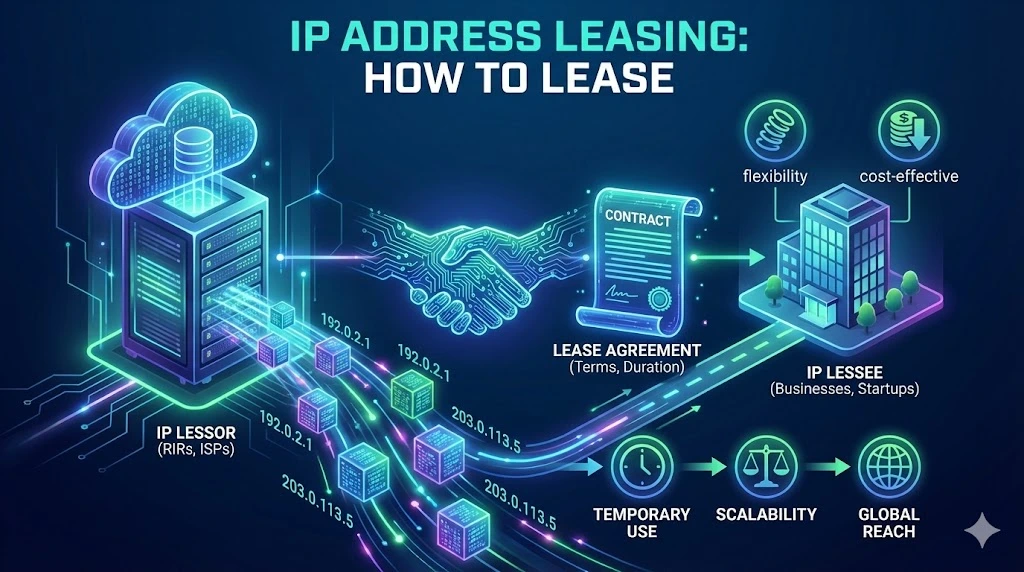
Arrendamiento de direcciones IP: Cómo arrendar direcciones IP
El mundo digital en el que nos movemos hoy depende en gran medida de las direcciones IP, identificadores únicos asignados a los dispositivos conectados a internet o a una red local. A medida que la demanda de direcciones IP sigue aumentando, empresas y particulares exploran diversas opciones para obtener los recursos necesarios. Un método cada vez más popular es el arrendamiento de direcciones IP. Este artículo profundiza en elRead more Related Posts Desbloqueando la privacidad digital con una red privada virtual (VPN) ¿Qué es una VPN? Una red privada virtual (VPN) es una tecnología que permite a los usuarios crear una conexión Comprensión de la traducción de direcciones de red (NAT) En las redes informáticas, gestionar las direcciones IP de forma eficiente es fundamental para garantizar una comunicación fluida entre los ¿Por qué Malasia se está convirtiendo en un centro neurálgico para la infraestructura de nube e IA? Malasia se está convirtiendo en uno de los mercados de crecimiento de centros de datos más importantes del Sudeste Asiático. .related-post {} .related-post .post-list { text-align: left; } .related-post .post-list .item { margin: 5px; padding: 10px; } .related-post .headline { font-size: 18px !important; color: #999999 !important; } .related-post .post-list .item .post_thumb { max-height: 220px; margin: 10px 0px; padding: 0px; display: block; } .related-post .post-list .item .post_title { font-size: 16px; color: #3f3f3f; margin: 10px 0px; padding: 0px; display: block; text-decoration: none; } .related-post .post-list .item .post_excerpt { font-size: 13px; color: #3f3f3f; margin: 10px 0px; padding: 0px; display: block; text-decoration: none; } @media only screen and (min-width: 1024px) { .related-post .post-list .item { width: 30%; } } @media only screen and (min-width: 768px) and (max-width: 1023px) { .related-post .post-list .item { width: 90%; } } @media only screen and (min-width: 0px) and (max-width: 767px) { .related-post .post-list .item { width: 90%; } }
¿Qué es el agotamiento de direcciones IPv4?
IPv4 es la versión inicial del Protocolo de Internet (IP), capaz de generar 4.300 millones de posibles direcciones IPv4. Sin embargo, muchas de estas direcciones están reservadas para fines específicos, como investigación y desarrollo. Esto deja un conjunto limitado disponible para organizaciones e individuos en todo el mundo. Con el crecimiento exponencial de Internet, la demanda de direcciones IPv4 se ha disparado. Esto provocó una rápida disminución de lasRead more Related Posts Desbloqueando la privacidad digital con una red privada virtual (VPN) ¿Qué es una VPN? Una red privada virtual (VPN) es una tecnología que permite a los usuarios crear una conexión Comprensión de la traducción de direcciones de red (NAT) En las redes informáticas, gestionar las direcciones IP de forma eficiente es fundamental para garantizar una comunicación fluida entre los Arrendamiento de direcciones IP: Cómo arrendar direcciones IP El mundo digital en el que nos movemos hoy depende en gran medida de las direcciones IP, identificadores únicos asignados .related-post {} .related-post .post-list { text-align: left; } .related-post .post-list .item { margin: 5px; padding: 10px; } .related-post .headline { font-size: 18px !important; color: #999999 !important; } .related-post .post-list .item .post_thumb { max-height: 220px; margin: 10px 0px; padding: 0px; display: block; } .related-post .post-list .item .post_title { font-size: 16px; color: #3f3f3f; margin: 10px 0px; padding: 0px; display: block; text-decoration: none; } .related-post .post-list .item .post_excerpt { font-size: 13px; color: #3f3f3f; margin: 10px 0px; padding: 0px; display: block; text-decoration: none; } @media only screen and (min-width: 1024px) { .related-post .post-list .item { width: 30%; } } @media only screen and (min-width: 768px) and (max-width: 1023px) { .related-post .post-list .item { width: 90%; } } @media only screen and (min-width: 0px) and (max-width: 767px) { .related-post .post-list .item { width: 90%; } }
