Raisons courantes pour lesquelles les entreprises achètent des blocs IP
 Stephanie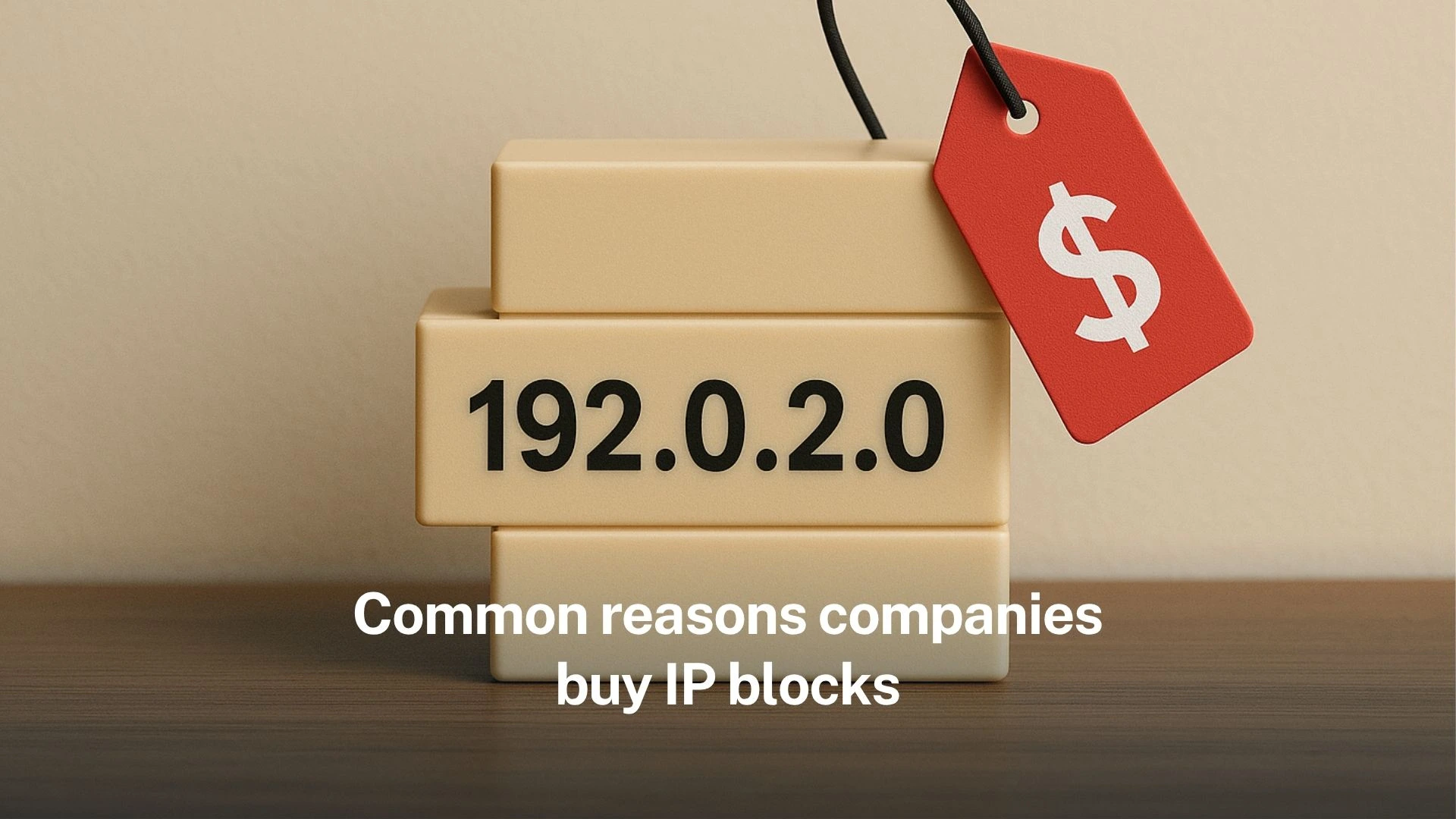
Introduction au concept d'achat de blocs IP
Table of Contents
In the early years of the Internet, there were enough addresses for everyone. But as online use grew, free space ran out. Because new addresses are limited, many companies now choose to buy IP blocks from others instead of waiting for fresh allocations.
Buying IP blocks has become part of modern network planning. A company that buys addresses can support its customers, grow its infrastructure, and protect itself from shortage. The market for IPv4 space now works much like real estate. A company with unused addresses can sell them, and another can buy them to keep its services running. The transaction takes place through regional Internet registries, or RIRs, such as ARIN, APNIC, RIPE NCC, and AFRINIC. Each region follows its own policy, but the idea is the same everywhere — to move address space from low-use holders to active networks that need it.
Développement des réseaux et des infrastructures
The first and most common reason for buying IP blocks is simple growth. Every new server, router, or online service needs an address. When a company’s customer base grows, its existing pool of addresses can quickly become too small. Buying additional IP space is often the fastest way to keep up. It allows the network to expand without changing its basic design. The company can add new clients or machines while keeping its systems stable.
Internet service providers, hosting companies, and cloud platforms often buy IP blocks to support their expansion plans. Without more addresses, they cannot connect new customers or deploy new data centres. Even with private addressing and NAT technology, public IPv4 space is still essential for external connectivity. Buying extra blocks helps these companies avoid service limits. It also gives them more flexibility when they launch products in new cities or countries.
Supporting Data Centres and Hosting Services
Data centres and hosting companies often purchase IP blocks because their clients demand direct assignments. A customer who hosts websites or applications under a provider expects dedicated addresses for each project. Shared IPs can lead to security issues or poor reputation. By owning more addresses, the provider can offer cleaner segmentation between clients. Each customer’s traffic stays separate, which improves both safety and traceability.
Another reason hosting providers buy IP space is scalability. When they open a new facility, they need a block ready to assign to servers on day one. Waiting for a registry allocation can take months, and there is no guarantee of approval. Buying addresses on the secondary market solves this timing problem.
Compliance with Regional and Legal Requirements
In some cases, companies buy IP blocks to meet regulatory needs. Certain regions require that online services hosted in their territory use address space registered under the same jurisdiction. For example, a company that moves operations from North America to Asia may need addresses registered with APNIC instead of ARIN. Buying IP blocks already under APNIC’s control helps meet this requirement without changing the entire system design.
Data protection and localisation laws also play a role. Some countries prefer that user data stays inside their borders and that the network addresses reflect this geography. Using a local IP block can simplify compliance and reduce scrutiny from regulators. It also improves trust with customers who prefer services that appear local. By buying a regional IP block, a business aligns its digital footprint with its physical presence.
Managing Corporate Mergers and Acquisitions
Often they discover that one has too few addresses to support the combined operations. Buying extra IP blocks becomes a practical solution. It allows the new entity to unify its systems without relying on temporary leases. The purchased block can serve as a neutral pool that both teams migrate into. This approach avoids conflicts over which legacy addresses to keep and which to release.
In acquisitions, a company may buy IP blocks to integrate a newly purchased business. The acquired company’s network may use private space or overlapping addresses. Buying a clean public block gives the parent company a fresh range for migration. It also helps separate the traffic of different departments while integration continues. For large mergers that span multiple countries, owning enough public IPv4 space simplifies routing and makes policy enforcement easier. It provides a stable base for growth without disrupting existing customers.
Improving Network Reputation and Email Deliverability
Another reason companies buy IP blocks is to control reputation. On the Internet, each IP address carries a reputation score based on its past use. If an address was previously used for spam or abuse, mail servers may block it. Organisations that rely on email marketing or high-volume messaging prefer to own clean addresses. Buying a fresh or well-maintained IP block ensures their messages reach inboxes rather than spam folders.
Reputation also affects website ranking and online visibility. Search engines may lower trust for websites hosted on blacklisted addresses. By buying their own IP space, companies isolate themselves from shared environments that may include risky users. They can build their reputation from zero and maintain it through consistent behaviour. Clean IPs also make it easier to pass security audits and obtain SSL certificates. Over time, having good-standing addresses becomes part of a brand’s digital identity.
Controlling Costs and Avoiding Dependence on Leases
Many providers offer IPv4 addresses for rent, but long-term leasing can become expensive. The monthly cost may seem low at first, yet over several years it often exceeds the price of ownership. Companies that expect stable or growing demand find it cheaper to buy their own blocks. Once purchased, there are only minor registry fees to maintain them. Ownership also means there is no risk of sudden withdrawal if the lessor changes terms or raises prices.
Owning IP space gives financial predictability. It transforms a recurring expense into a one-time investment. This helps in budgeting and valuation because the IP block becomes an asset on the balance sheet. For some firms, these assets can even be resold later if needs change. In a market where address scarcity increases, the value of owned IP space often rises over time. Buying rather than renting can thus provide both operational freedom and long-term return.
Enabling Cloud and Virtualization Projects
Cloud computing has made IP management more dynamic. Virtual machines appear and disappear in seconds, each needing an address. If a company depends only on limited leased space, its automation systems may fail when no free addresses remain. Buying its own IP block removes that risk. It gives the freedom to assign and release addresses as fast as the infrastructure requires. The process becomes simpler because all addresses belong to the same organisation.
Large cloud providers often buy multiple IP blocks to segment services. One block may serve public instances, another internal control systems, and another customer APIs. This separation enhances security and makes troubleshooting easier. It also allows clear reporting for usage and billing. For smaller enterprises that build private clouds, owning their own block ensures stable internal routing. It avoids conflicts with external providers and supports hybrid models that connect data centres to public clouds without overlap.
Supporting Internet of Things and Mobile Growth
Buying IP blocks lets them plan for long-term growth rather than relying on temporary allocations. Without enough addresses, scaling to millions of devices becomes impossible.
Mobile operators face a similar issue. Each subscriber session may need a public address for a short time. With billions of users online, demand never stops growing. Operators buy large IP blocks to manage this flow efficiently. It lets them assign space dynamically while keeping proper records. The extra capacity also helps them support modern applications that depend on stable connections. In both IoT and mobile networks, owning sufficient IP resources ensures smooth performance as the user base expands.
Protecting Against Market Scarcity
IPv4 scarcity is a major driver behind corporate purchases. Companies buy now to secure their needs before costs increase further. The logic is similar to stocking raw materials before they become expensive or hard to find. Scarcity also affects timing. Waiting until a crisis occurs can disrupt service and cost far more than buying early.
Strengthening Brand Identity and Customer Trust
For many online businesses, owning IP addresses is more than a technical step. It signals credibility and permanence. Customers associate stable, dedicated infrastructure with reliability. A company that uses its own IP space shows that it invests in long-term service rather than temporary hosting. This perception can improve trust, especially in industries where data security matters.
A unique IP block can also become part of a company’s brand identity. Just as phone numbers or domain names reflect ownership, IP ranges represent digital property. When customers or partners look up a company’s network, they see consistent registration under the same organisation. This consistency supports brand recognition and helps build professional reputation. Over time, it becomes another layer of credibility that separates established companies from short-term operators.
Simplifying Security and Access Control
Owning IP space simplifies many security tasks. When a company controls its entire address range, it can define firewall rules, VPN policies, and monitoring systems more easily. It can restrict sensitive resources to specific IPs it owns. It can also detect intrusions faster because unknown addresses stand out. This visibility improves defence against cyber threats.
Third-party services often trust traffic from known IP ranges more than from shared ones. By using its own addresses, a company can whitelist access to partners and customers more securely. Centralised management also reduces errors caused by inconsistent address records. Security teams gain a single source of truth for all assets. This makes audits smoother and compliance checks easier. The clear ownership of IP blocks thus becomes a foundation for better security governance.
Meeting the Needs of Emerging Industries
New digital industries like blockchain, edge computing, and content delivery networks depend heavily on IP resources. Blockchain nodes, for instance, need static IPs to maintain stable connections. Edge platforms require multiple small networks across cities. Each site needs public addresses for control and traffic management. Buying IP blocks lets these industries grow at their own speed instead of waiting for limited allocations.
Media streaming companies also need many IPs to balance content delivery across servers. By owning enough space, they can manage global traffic better and handle sudden spikes in demand. The entertainment, gaming, and fintech sectors follow similar logic. Their services rely on smooth, always-on connectivity. IP ownership allows them to plan capacity months or years ahead, ensuring the network never becomes a bottleneck.
Encouraging Investment and Market Value Growth
IP addresses have become digital assets with real market value. Investors now treat them like property that can appreciate over time. Companies buy IP blocks not only for use but also as a form of investment. As IPv4 scarcity increases, the price per address rises. Owning a large block today can generate profit in the future if resold.
Some corporations include their IP portfolios as part of company valuation. Just as patents or trademarks add intangible worth, IP blocks contribute to digital asset strength. This perception attracts investors who value technological stability. A well-managed IP portfolio can become a strategic advantage in negotiations or mergers. It represents both technical capacity and potential financial return.
Building Partnerships and Service Integration
Service providers often need to interconnect with partners, resellers, or clients. Having their own IP blocks simplifies integration. Each partner can receive sub-ranges without involving third-party registries. This flexibility helps in managed-service agreements, white-label hosting, and cooperative network projects. It keeps control within the same administrative domain.
Buying IP blocks also improves coordination between subsidiaries or regional branches. Each branch can operate independently while staying under one ownership record. The parent company can monitor usage and reallocate space when necessary. It becomes easier to share resources across departments and keep consistent policy enforcement. Strong internal ownership of IP space supports smoother collaboration across complex business structures.
Enhancing Customer Experience and Localisation
Users often trust services that seem geographically close. When a company owns IP blocks that match the region of its customers, web pages load faster and applications respond better. Regional IP ownership improves latency and helps content delivery networks optimise routes. It also ensures that local search engines and social platforms detect the right location, enhancing visibility to local users.
Owning local IP blocks supports multi-language and regional content strategies. Websites can show correct currencies, offers, and rules automatically. It also improves accuracy for analytics and fraud detection because the address space reflects real geography. Many e-commerce and fintech companies buy IP blocks in target markets to deliver faster and more personal experiences. This direct connection between network design and customer satisfaction drives many corporate purchases.
Encouraging Digital Transformation and Innovation
Digital transformation requires flexible infrastructure. As companies automate operations and expand into online platforms, they need stable network foundations. Owning IP blocks supports this shift by removing limits on connectivity. It allows teams to build new applications, IoT systems, or private networks without waiting for provider approval. This autonomy accelerates innovation.
When developers have direct access to an organisation’s IP resources, they can test new systems safely. They can launch pilot services, connect experimental devices, or create micro-data centres. The company no longer depends on external allocations or restrictions. The freedom to innovate within owned address space speeds up digital progress. In competitive industries, this agility can decide who stays ahead.
Trusted IPv4 Leasing for Business Growth
Get enterprise-grade IPv4 space quickly, with seamless deployment and end-to-end management.
Get Started with i.leaseFAQs
Where do businesses find IP blocks to buy?
Usually they talk to brokers or check listings with regional Internet registries. These brokers act as middlemen and make sure both sides are real. They check ownership papers and help send documents to the registry so the transfer is clean and safe.
What decides how much an IP block costs?
The size and the history make the difference. Big blocks cost more because they are harder to find. Clean space with no abuse record also sells for a higher price. Some regions are more expensive because demand is stronger there, and prices keep changing every few months.
Does owning IP blocks really make networks safer?
It helps a lot. When the space belongs only to one company, it knows exactly who uses each address. This makes it easier to find strange traffic or stop unwanted access. Shared addresses make that harder because you never know who else is behind them.
Can the value of IPv4 blocks drop later?
It rarely happens. IPv4 supply keeps shrinking, and that makes each address more valuable. Some companies hold onto their blocks for years because prices usually rise. The only time value goes down is when the space gets a bad reputation for spam or abuse.
What kind of papers do buyers and sellers need?
They need simple proof of ownership and permission to transfer. That can include company registration, IDs of authorised people, and signed forms. The Internet registry checks everything before approving the move.
When can the new owner start using the IPs?
As soon as the transfer is complete, the new owner can start routing the space. Sometimes they keep using the same setup for a short time until DNS and system records are updated. The addresses themselves never stop working.
Are there any costs after buying the block?
There are small yearly fees. Registries charge maintenance costs to keep ownership records current. These payments are minor compared to monthly rental costs, and they make sure the holder stays listed as the legal owner.
Related Blogs
Artículos relacionados
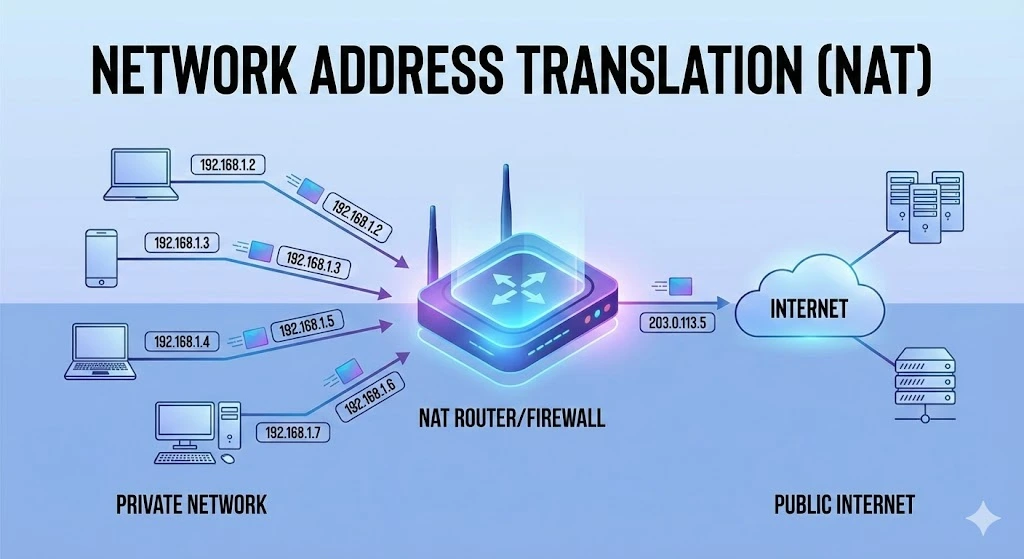
Comprensión de la traducción de direcciones de red (NAT)
En las redes informáticas, gestionar las direcciones IP de forma eficiente es fundamental para garantizar una comunicación fluida entre los dispositivos. Una de las tecnologías clave que ha surgido para afrontar este desafío es la Traducción de Direcciones de Red (NAT, por sus siglas en inglés). En este artículo explicamos qué es NAT, cómo funciona, sus distintos tipos, así como sus ventajas y limitaciones. ¿Qué es la traducción deRead more Related Posts Desbloqueando la privacidad digital con una red privada virtual (VPN) ¿Qué es una VPN? Una red privada virtual (VPN) es una tecnología que permite a los usuarios crear una conexión Comprensión de la traducción de direcciones de red (NAT) En las redes informáticas, gestionar las direcciones IP de forma eficiente es fundamental para garantizar una comunicación fluida entre los ¿Por qué Malasia se está convirtiendo en un centro neurálgico para la infraestructura de nube e IA? Malasia se está convirtiendo en uno de los mercados de crecimiento de centros de datos más importantes del Sudeste Asiático. .related-post {} .related-post .post-list { text-align: left; } .related-post .post-list .item { margin: 5px; padding: 10px; } .related-post .headline { font-size: 18px !important; color: #999999 !important; } .related-post .post-list .item .post_thumb { max-height: 220px; margin: 10px 0px; padding: 0px; display: block; } .related-post .post-list .item .post_title { font-size: 16px; color: #3f3f3f; margin: 10px 0px; padding: 0px; display: block; text-decoration: none; } .related-post .post-list .item .post_excerpt { font-size: 13px; color: #3f3f3f; margin: 10px 0px; padding: 0px; display: block; text-decoration: none; } @media only screen and (min-width: 1024px) { .related-post .post-list .item { width: 30%; } } @media only screen and (min-width: 768px) and (max-width: 1023px) { .related-post .post-list .item { width: 90%; } } @media only screen and (min-width: 0px) and (max-width: 767px) { .related-post .post-list .item { width: 90%; } }
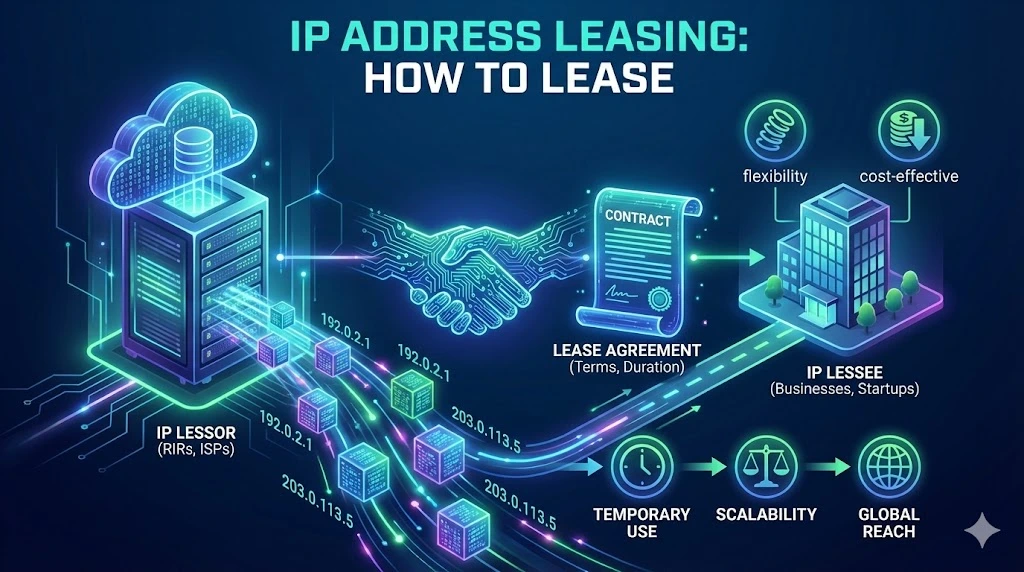
Arrendamiento de direcciones IP: Cómo arrendar direcciones IP
El mundo digital en el que nos movemos hoy depende en gran medida de las direcciones IP, identificadores únicos asignados a los dispositivos conectados a internet o a una red local. A medida que la demanda de direcciones IP sigue aumentando, empresas y particulares exploran diversas opciones para obtener los recursos necesarios. Un método cada vez más popular es el arrendamiento de direcciones IP. Este artículo profundiza en elRead more Related Posts Desbloqueando la privacidad digital con una red privada virtual (VPN) ¿Qué es una VPN? Una red privada virtual (VPN) es una tecnología que permite a los usuarios crear una conexión Comprensión de la traducción de direcciones de red (NAT) En las redes informáticas, gestionar las direcciones IP de forma eficiente es fundamental para garantizar una comunicación fluida entre los ¿Por qué Malasia se está convirtiendo en un centro neurálgico para la infraestructura de nube e IA? Malasia se está convirtiendo en uno de los mercados de crecimiento de centros de datos más importantes del Sudeste Asiático. .related-post {} .related-post .post-list { text-align: left; } .related-post .post-list .item { margin: 5px; padding: 10px; } .related-post .headline { font-size: 18px !important; color: #999999 !important; } .related-post .post-list .item .post_thumb { max-height: 220px; margin: 10px 0px; padding: 0px; display: block; } .related-post .post-list .item .post_title { font-size: 16px; color: #3f3f3f; margin: 10px 0px; padding: 0px; display: block; text-decoration: none; } .related-post .post-list .item .post_excerpt { font-size: 13px; color: #3f3f3f; margin: 10px 0px; padding: 0px; display: block; text-decoration: none; } @media only screen and (min-width: 1024px) { .related-post .post-list .item { width: 30%; } } @media only screen and (min-width: 768px) and (max-width: 1023px) { .related-post .post-list .item { width: 90%; } } @media only screen and (min-width: 0px) and (max-width: 767px) { .related-post .post-list .item { width: 90%; } }
¿Qué es el agotamiento de direcciones IPv4?
IPv4 es la versión inicial del Protocolo de Internet (IP), capaz de generar 4.300 millones de posibles direcciones IPv4. Sin embargo, muchas de estas direcciones están reservadas para fines específicos, como investigación y desarrollo. Esto deja un conjunto limitado disponible para organizaciones e individuos en todo el mundo. Con el crecimiento exponencial de Internet, la demanda de direcciones IPv4 se ha disparado. Esto provocó una rápida disminución de lasRead more Related Posts Desbloqueando la privacidad digital con una red privada virtual (VPN) ¿Qué es una VPN? Una red privada virtual (VPN) es una tecnología que permite a los usuarios crear una conexión Comprensión de la traducción de direcciones de red (NAT) En las redes informáticas, gestionar las direcciones IP de forma eficiente es fundamental para garantizar una comunicación fluida entre los Arrendamiento de direcciones IP: Cómo arrendar direcciones IP El mundo digital en el que nos movemos hoy depende en gran medida de las direcciones IP, identificadores únicos asignados .related-post {} .related-post .post-list { text-align: left; } .related-post .post-list .item { margin: 5px; padding: 10px; } .related-post .headline { font-size: 18px !important; color: #999999 !important; } .related-post .post-list .item .post_thumb { max-height: 220px; margin: 10px 0px; padding: 0px; display: block; } .related-post .post-list .item .post_title { font-size: 16px; color: #3f3f3f; margin: 10px 0px; padding: 0px; display: block; text-decoration: none; } .related-post .post-list .item .post_excerpt { font-size: 13px; color: #3f3f3f; margin: 10px 0px; padding: 0px; display: block; text-decoration: none; } @media only screen and (min-width: 1024px) { .related-post .post-list .item { width: 30%; } } @media only screen and (min-width: 768px) and (max-width: 1023px) { .related-post .post-list .item { width: 90%; } } @media only screen and (min-width: 0px) and (max-width: 767px) { .related-post .post-list .item { width: 90%; } }
