Buying an IPv4 address block can look like a simple asset purchase.
Table of Contents
You find available IPv4 space.
You agree on a price.
You complete the paperwork.
You transfer the block.
You start using the addresses.
But for businesses that depend on IPv4 for hosting, cloud, VPN, telecom, SaaS, security, email, or customer access, buying IPv4 is not just a transaction.
It is a continuity decision.
The real question is not only:
Can your company Buy IPv4 Addresses?
The stronger question is:
Can your company protect the IPv4 asset after purchase?
IPv4 addresses are no longer ordinary technical records. They are scarce, transferable, priced, operationally important infrastructure assets. If your business buys IPv4 without checking source clarity, transfer eligibility, registry exposure, routing readiness, IP reputation, and long-term operational control, the purchase may create hidden risk instead of stability.
That is why companies should treat IPv4 buying as more than procurement.
They should treat it as infrastructure risk management.
What Does It Mean to Buy IPv4 Address?
To buy an IPv4 address means to acquire the right to use a block of IPv4 address space through a recognized transfer process. In practical terms, a business purchases IPv4 resources from an existing holder because new IPv4 supply is limited and many organizations still need IPv4 for public internet connectivity.
IPv4 buying is common among companies that need long-term address control, stable infrastructure planning, or permanent capacity for network growth.
However, buying IPv4 does not only involve price.
A serious IPv4 purchase should include:
- source verification
- transfer eligibility checks
- registry documentation
- routing readiness
- reputation review
- abuse history checks
- legal and operational due diligence
- long-term continuity planning
A company that only asks for the cheapest IPv4 price may miss the bigger question:
Will this IPv4 block remain usable, transferable, routable, and defensible after purchase?
For a wider explanation of how IPv4 resources fit into business infrastructure, see LARUS IPv4 Infrastructure Solutions.
Why Businesses Buy IPv4 Addresses
Businesses Buy IPv4 Addresses because IPv4 remains essential for many parts of the internet.
Even with IPv6 adoption, many networks, users, applications, security systems, hosting environments, and enterprise platforms still depend on IPv4 compatibility. For companies operating at scale, IPv4 may be required for:
- cloud infrastructure
- hosting services
- VPN platforms
- telecom operations
- ISP networks
- SaaS applications
- cybersecurity platforms
- email infrastructure
- CDN and proxy networks
- enterprise connectivity
- customer-facing applications
Buying IPv4 may be attractive when a company wants long-term control instead of monthly leasing. It can also help organizations avoid repeated renewal negotiations, unstable provider chains, or sudden lease changes.
When your company buys IPv4, you may also inherit the need to manage registry records, transfer documentation, routing authorization, abuse handling, reputation protection, and future compliance requirements.
That is why buying IPv4 should not be treated as a simple purchase order. It should be treated as a long-term infrastructure decision.
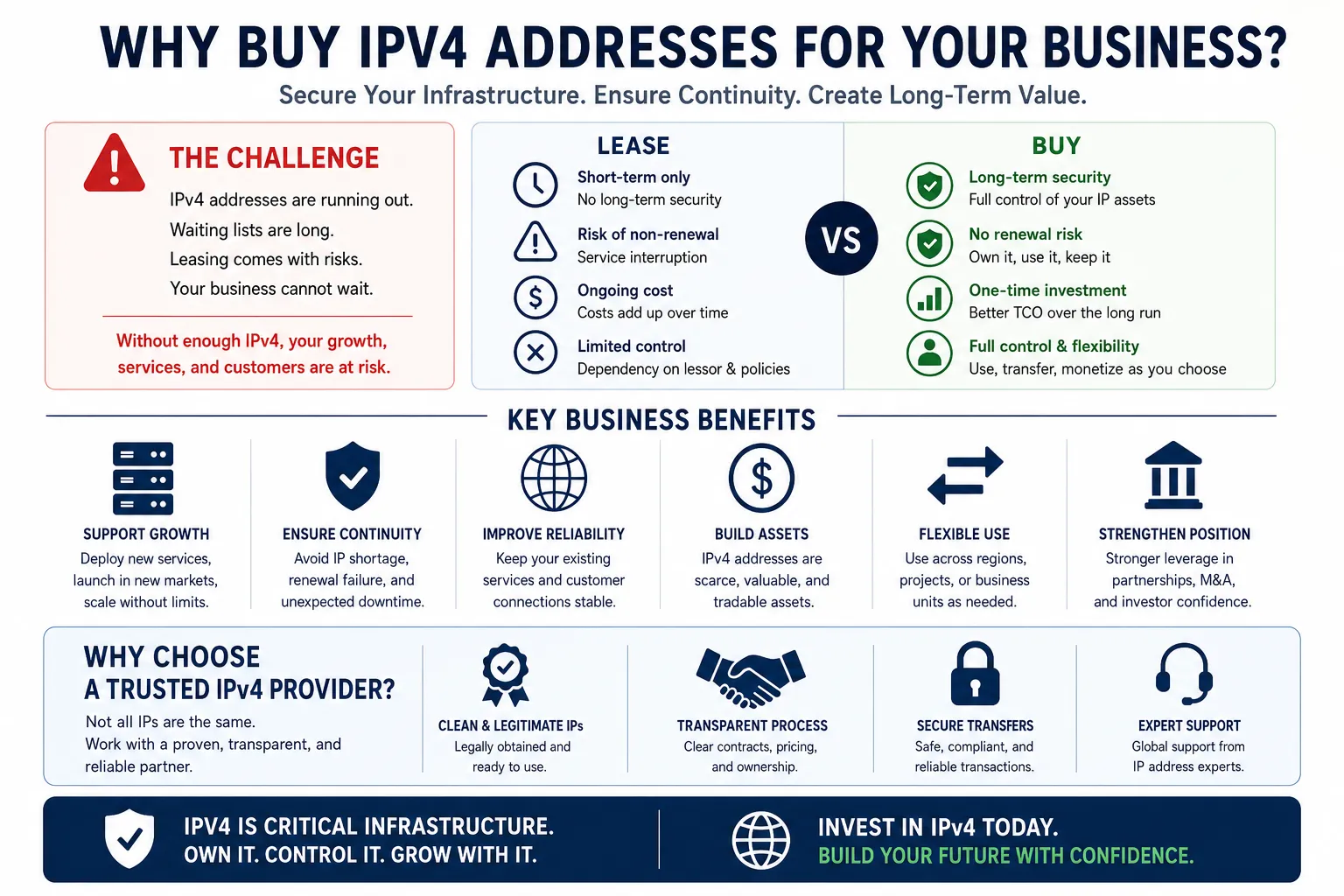
Buy IPv4 Address vs Lease IPv4 Address
Buying and leasing IPv4 addresses serve different business needs.
Buying IPv4 may be suitable for companies that need permanent address control and have the capital, registry knowledge, and operational capacity to manage IPv4 assets directly.
Leasing IPv4 may be better for companies that need flexibility, lower upfront cost, faster deployment, or temporary capacity without committing large capital to ownership.
| Option | Best For | Main Advantage | Main Risk |
|---|---|---|---|
| Buy IPv4 Address | Long-term infrastructure planning | Asset control and permanent capacity | High upfront cost, registry exposure, transfer risk |
| Lease IPv4 Address | Flexible growth and faster deployment | Lower upfront cost and scalability | Provider quality, renewal accountability, routing support |
The choice should depend on your business model.
A hosting provider building long-term infrastructure may prefer to buy IPv4 addresses.
A SaaS company expanding into a new region may prefer leasing first.
A telecom or ISP may use both strategies depending on capacity planning.
The safest approach is not to ask only “buy or lease?”
The safer question is:
Which IPv4 structure gives your business the strongest continuity, control, and operational stability?
If your company is still comparing both options, read Lease IP Addresses: Why Businesses Lease IPv4 and What to Check First.
The Hidden Risks of Buying IPv4 Addresses
Many companies assume buying IPv4 removes risk.
That is not always true.
Buying IPv4 may remove lease-renewal dependency, but it can introduce other forms of exposure.
1. Transfer Risk
IPv4 transfers may require registry approval, documentation, eligibility review, or compliance with regional transfer policies. If the transfer is delayed or rejected, your business may lose time, money, and deployment confidence.
2. Source Risk
Not every IPv4 block has the same history. A block may have unclear source records, unresolved disputes, prior misuse, or documentation gaps.
3. Registry Risk
The registry layer can affect recognition, transferability, and administrative standing. If your company directly holds IPv4, the registry relationship may sit inside your own operating structure.
This is why registry-layer risk should not be ignored. For a governance-focused explanation, see Lu Heng’s notes on Internet number resource governance.
4. Reputation Risk
An IPv4 block may have prior abuse history, spam records, blacklist issues, or poor email reputation. A cheap block may become expensive if it requires long cleanup work.
5. Routing Risk
Buying IPv4 does not automatically mean the block is ready to route. Your company may need BGP setup, route objects, ROA/RPKI support, and upstream coordination.
6. Legal and Contract Risk
If the purchase agreement is vague, your business may face uncertainty around payment terms, transfer timing, warranties, dispute handling, or post-transfer support.
7. Liquidity Risk
IPv4 is valuable, but resale or future transfer may depend on policy, market timing, documentation, and buyer demand.
These risks do not mean businesses should avoid buying IPv4.
They mean buying IPv4 should be done carefully, with the right structure.
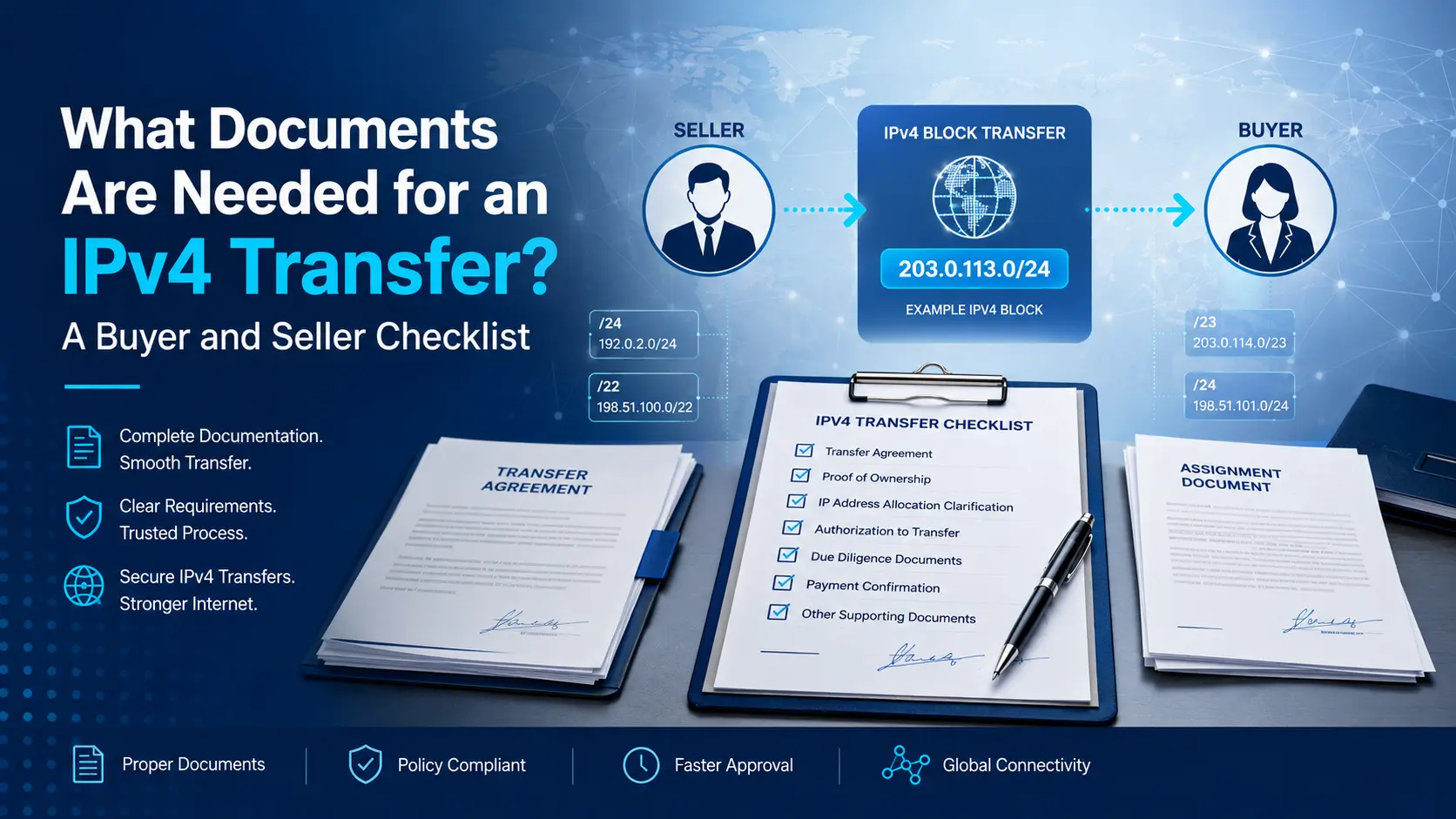
What to Check Before You Buy IPv4
Before buying IPv4 addresses, your company should check more than price.
Use this checklist before committing.
Source Clarity
Ask where the IPv4 block comes from, who currently holds it, and whether the seller has the authority to transfer it.
Transfer Eligibility
Check whether the block can be transferred under the relevant registry policy and whether the buyer can meet any required conditions.
Registry Record
Review the registry record, allocation history, holder details, and any visible administrative issues.
IP Reputation
Check whether the IPs appear on major blocklists or have abuse, spam, malware, proxy, or suspicious traffic history.
Routing Readiness
Confirm whether the block can be announced through your ASN or provider network, and whether routing support is available.
ROA / RPKI Support
Check whether ROA creation or update is possible to support route validation.
Contract Protection
Review payment schedule, transfer obligations, refund terms, warranties, dispute process, and what happens if the transfer fails.
Post-Transfer Support
Ask whether the seller or platform supports the buyer after transfer, especially for routing, documentation, and registry follow-up.
Continuity Planning
Consider whether your company has the internal capacity to manage the IPv4 block long term.
The biggest mistake is assuming that purchase completion equals risk completion.
In reality, the risk often changes form after purchase.
Why Registry Exposure Matters After Purchase
When a company buys IPv4 and holds it directly, the registry relationship may become part of the company’s own operating risk.
That may be acceptable for large network operators with legal, technical, policy, and compliance teams.
But for many businesses, direct holding can create hidden pressure.
Your company may need to manage:
- registry account requirements
- transfer documentation
- policy updates
- renewal obligations
- abuse complaints
- contact accuracy
- routing records
- future transfer readiness
- administrative disputes
This matters because the registry layer is not merely paperwork. It can affect recognition, transferability, and operational confidence.
A company that buys IPv4 without understanding registry exposure may think it has acquired stability, while actually bringing a new administrative risk layer into its own structure.
That is why IPv4 buying should be supported by people who understand both the asset market and the registry environment. For more context on operator coordination and registry accountability, visit NRS Help.
Sovereignty Inversion After Buying IPv4
Buying IPv4 can give a business stronger long-term control, but it does not automatically remove every control risk. This is where Sovereignty Inversion becomes relevant in practical business terms.
The company may pay for the IPv4 block, operate the network, serve the customers, finance the infrastructure, and depend on the addresses every day. But if recognition, transferability, registry standing, routing records, or future movement still depends on a layer above the business, control may not be as complete as it appears.
This does not mean buying IPv4 is wrong. For many businesses, buying IPv4 addresses can be the right long-term decision. The issue is whether the purchase structure gives the buyer enough clarity over source, transfer, routing, documentation, reputation, and post-transfer continuity.
A weak purchase structure can create a form of Double Extraction: the buyer pays a large upfront cost for IPv4 assets, but still carries the operational downside if registry uncertainty, routing issues, reputation problems, or transfer disputes appear later.
That is why IPv4 buying should not stop at price negotiation. A serious purchase should also ask who controls the source records, who supports transfer execution, who helps with routing readiness, and who remains accountable if the block becomes difficult to use after the deal closes.
Why IP Reputation Can Affect the Real Value
Not all IPv4 addresses have equal value.
Two blocks may have the same size, but very different commercial usefulness.
A clean IPv4 block can support hosting, cloud, email, SaaS, VPN, or enterprise use more easily. A damaged block may require time, cleanup, delisting, customer explanation, and reputation repair.
Before buying IPv4, businesses should check whether the block has been associated with:
- spam activity
- malware
- phishing
- open proxy use
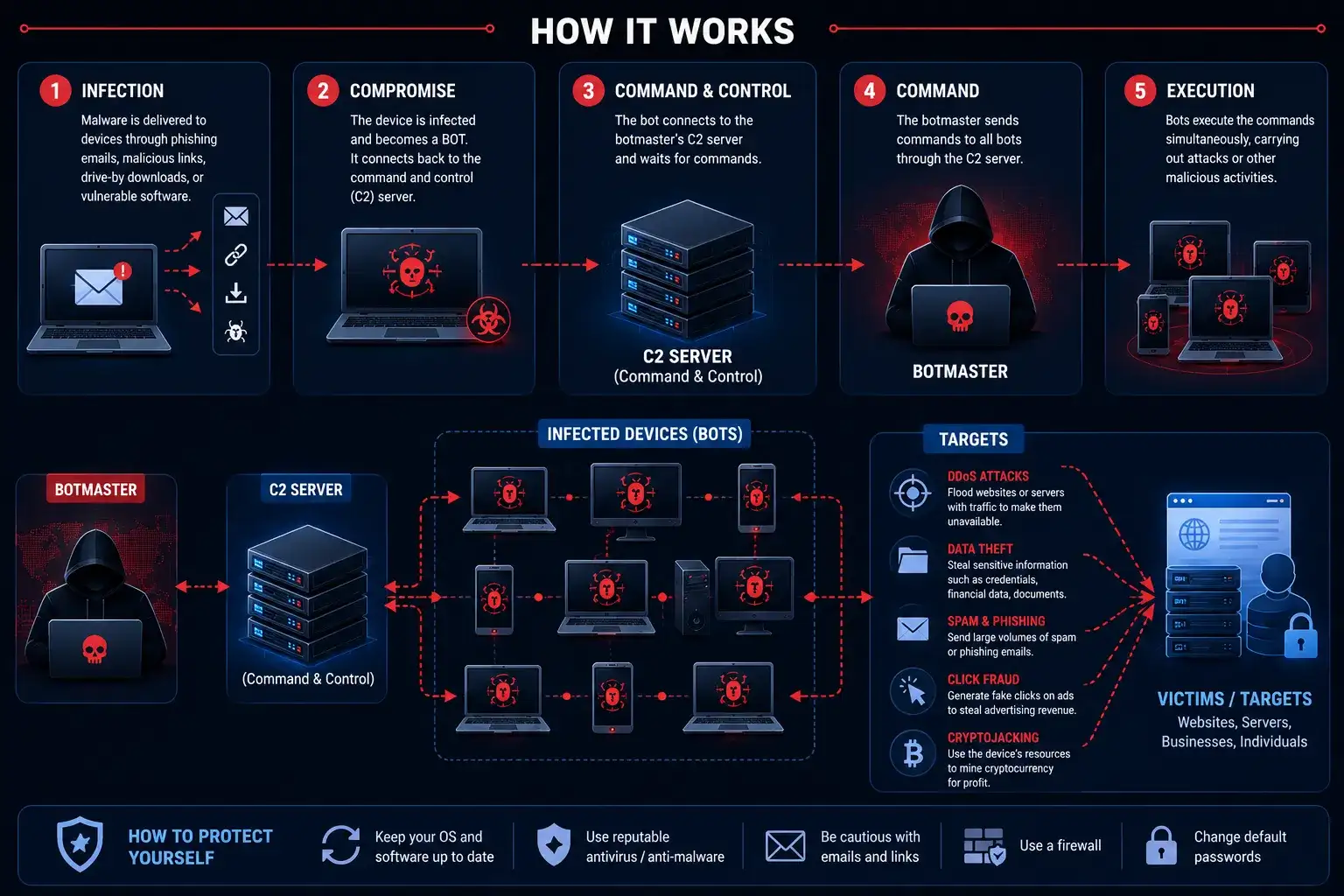
- botnet traffic
- blacklist records
- suspicious hosting activity
- poor email sender reputation
A low purchase price may look attractive, but if the block cannot be used smoothly, the real cost may be higher than expected.
The safest IPv4 purchase is not always the cheapest.
It is the one with clearer source, cleaner reputation, stronger documentation, and better continuity support.
Why Routing and Transfer Support Matter
Buying IPv4 is only useful if the addresses can be deployed.
A business may complete a purchase but still face practical issues if routing is not ready.
Important technical checks include:
- ASN readiness
- BGP announcement plan
- route object creation
- ROA/RPKI support
- upstream acceptance
- geolocation requirements
- reverse DNS planning
- abuse contact setup
- monitoring and reputation tracking
For companies without deep network operations experience, these details can become deployment blockers. That is why IPv4 buying should not stop at the transfer agreement. A serious IPv4 transaction should include a practical deployment path.
How i.lease Helps Businesses Buy IPv4 More Safely
i.Lease helps businesses approach IPv4 buying with a continuity-first mindset. i.Lease is not only to help companies find IPv4 addresses. The goal is to help companies reduce hidden risk around source clarity, transfer readiness, documentation, reputation, routing, and long-term control.
For businesses that need to buy IPv4 addresses, i.lease can support a more structured approach around:
- IPv4 sourcing
- transfer guidance
- market comparison
- seller and block review
- reputation checks
- routing considerations
- documentation preparation
- buy-versus-lease planning
- continuity-focused IPv4 strategy
This matters because IPv4 is not just a number range. It is a business infrastructure asset.
Through LARUS-backed IPv4 operations, i.lease provides a structured alternative to weak broker-chain sourcing and helps businesses think beyond the first transaction.
To explore a continuity-focused approach, visit Buy IPv4 Addresses with i.lease.
Final Thought
Buying IPv4 can strengthen your company’s infrastructure strategy. But only if the purchase is structured correctly. An IPv4 block with unclear source, poor reputation, weak documentation, transfer uncertainty, or routing issues can create more risk than value.
The danger is not always visible at the moment of purchase. It appears later when the company tries to route the block, renew registry records, resolve abuse complaints, transfer the asset again, or defend its operational continuity.
That is why buying IPv4 should never be treated as a simple marketplace transaction. It should be treated as a long-term IP infrastructure decision involving capital, routing, registry exposure, reputation, documentation, and IP Address Continuity.
Also Read
- Lease IP Addresses: Why Businesses Lease IPv4 and What to Check First
- Can Your Business Survive a US$100 IPv4 Liability Gap?
- Your IPv4 Looks Stable — Until the Provider Chain Breaks
- Who Really Controls Your IPv4 Future?
- Is Your Company Absorbing IPv4 Risk?
- Why Self-Holding Can Expose IPv4 Assets to Registry Risk
Frequent Asked Questions (FAQs)
What does it mean to Buy IPv4 Address?
Buying an IPv4 address means acquiring IPv4 address space from an existing holder through a transfer process. Businesses buy IPv4 addresses when they need long-term address control for hosting, cloud, telecom, ISP, SaaS, VPN, email, or enterprise infrastructure.
Why do businesses buy IPv4 addresses?
Businesses buy IPv4 addresses because IPv4 remains widely used across the internet. Buying can provide long-term control, permanent capacity, and greater planning certainty compared with short-term leasing.
Is it better to buy or lease IPv4 addresses?
Buying may be better for companies that need long-term asset control and have the capital and operational capacity to manage IPv4 directly. Leasing may be better for companies that need flexibility, lower upfront cost, or temporary capacity.
What should I check before buying IPv4 addresses?
Before buying IPv4 addresses, check source clarity, transfer eligibility, registry records, IP reputation, routing readiness, ROA/RPKI support, legal terms, payment protection, and post-transfer support.
Are cheap IPv4 addresses risky?
Cheap IPv4 addresses are not always risky, but low price can sometimes hide poor reputation, unclear source records, transfer difficulty, or weak documentation. Buyers should compare total risk, not only price.
Can i.lease help businesses buy IPv4 addresses?
Yes. i.lease helps businesses evaluate IPv4 buying options with a continuity-first approach, including source clarity, transfer considerations, reputation checks, routing support, and buy-versus-lease planning.