ما هي إعادة توجيه IP؟
 Chan
Chanإعادة توجيه IP هي العملية التي يقوم من خلالها جهاز شبكة، مثل جهاز التوجيه، بإعادة توجيه أو ترحيل حزم IP (بروتوكول الإنترنت) من شبكة إلى أخرى. وهو يتيح الاتصال بين قطاعات الشبكة المختلفة من خلال توجيه حزم البيانات إلى عناوين IP الوجهة المناسبة لها. عندما يقوم الجهاز بإعادة توجيه الحزم غير الموجهة إلى عنوان IP الخاص به، فإنه يعمل كبوابة، حيث يقوم بتمرير البيانات من شبكة إلى أخرى، عادةً بين شبكات فرعية أو شبكات مختلفة.
يعد إعادة توجيه IP أمراً بالغ الأهمية في أجهزة التوجيه ولكن يمكن تمكينه أيضاً على أجهزة الكمبيوتر أو أجهزة الشبكة الأخرى للسماح لها بالعمل كوسيط بين الشبكات. بدون إعادة توجيه بروتوكول الإنترنت، لا يمكن للأجهزة داخل الشبكة المحلية الاتصال بأجهزة خارج شبكتها المباشرة.
Related Posts
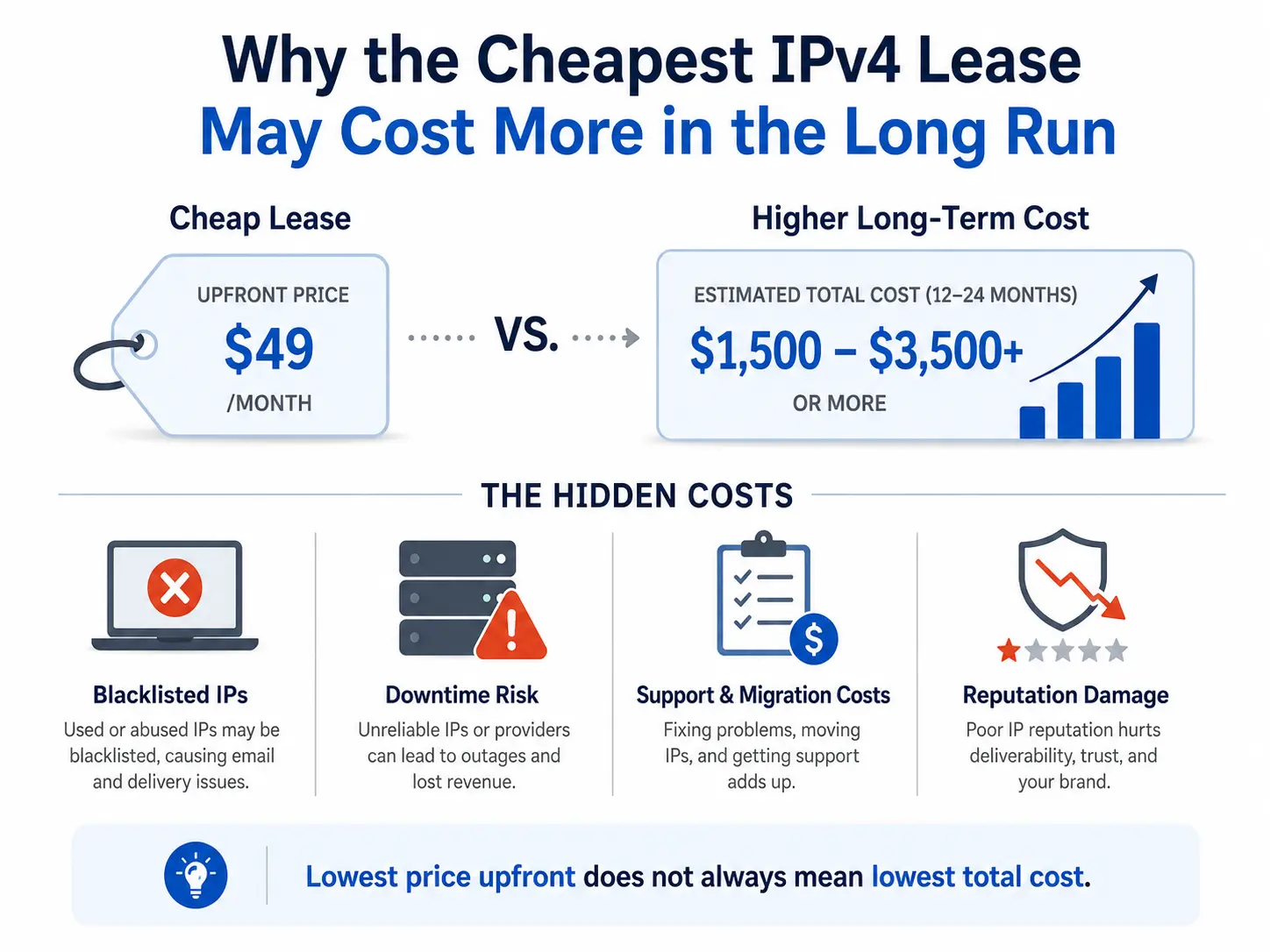
Why the Cheapest IPv4 Lease May Cost More in the Long Run
A low monthly price may look attractive during procurement, but the real cost of leased IPv4 addresses includes much more than the advertised rate. Poor IP reputation, incomplete routing authorisation, deployment delays, weak technical support, incorrect geolocation and uncertain renewal terms can quickly erase the initial saving. For testing or short-lived projects, a basic low-cost IPv4 lease may be sufficient. For production networks, however, businesses should evaluate the totalRead more Related Posts Why the Cheapest IPv4 Lease May Cost More in the Long Run A low monthly price may look attractive during procurement, but the real cost of leased IPv4 addresses includes much more What causes IPv4 deals to stall after the first agreement IPv4 deals usually stall after the first agreement because agreeing on price is only the commercial beginning—not operational completion.A buyer How to Avoid Downtime When Deploying Leased IPv4 Blocks Leased IPv4 blocks are often used by hosting providers, cloud platforms, ISPs, SaaS companies, data centers, and enterprise networks that .related-post {} .related-post .post-list { text-align: left; } .related-post .post-list .item { margin: 5px; padding: 10px; } .related-post .headline { font-size: 18px !important; color: #999999 !important; } .related-post .post-list .item .post_thumb { max-height: 220px; margin: 10px 0px; padding: 0px; display: block; } .related-post .post-list .item .post_title { font-size: 16px; color: #3f3f3f; margin: 10px 0px; padding: 0px; display: block; text-decoration: none; } .related-post .post-list .item .post_excerpt { font-size: 13px; color: #3f3f3f; margin: 10px 0px; padding: 0px; display: block; text-decoration: none; } @media only screen and (min-width: 1024px) { .related-post .post-list .item { width: 30%; } } @media only screen and (min-width: 768px) and (max-width: 1023px) { .related-post .post-list .item { width: 90%; } } @media only screen and (min-width: 0px) and (max-width: 767px) { .related-post .post-list .item { width: 90%; } }
What causes IPv4 deals to stall after the first agreement
IPv4 deals usually stall after the first agreement because agreeing on price is only the commercial beginning—not operational completion. A buyer and seller may agree on a block and price within hours, but the transaction can still be delayed by unclear ownership, incomplete documents, mismatched Regional Internet Registry requirements, recipient eligibility, reputation concerns, payment conditions, or missing routing authorization. The most common causes are: The seller’s authority over theRead more Related Posts Why the Cheapest IPv4 Lease May Cost More in the Long Run A low monthly price may look attractive during procurement, but the real cost of leased IPv4 addresses includes much more What causes IPv4 deals to stall after the first agreement IPv4 deals usually stall after the first agreement because agreeing on price is only the commercial beginning—not operational completion.A buyer How to Avoid Downtime When Deploying Leased IPv4 Blocks Leased IPv4 blocks are often used by hosting providers, cloud platforms, ISPs, SaaS companies, data centers, and enterprise networks that .related-post {} .related-post .post-list { text-align: left; } .related-post .post-list .item { margin: 5px; padding: 10px; } .related-post .headline { font-size: 18px !important; color: #999999 !important; } .related-post .post-list .item .post_thumb { max-height: 220px; margin: 10px 0px; padding: 0px; display: block; } .related-post .post-list .item .post_title { font-size: 16px; color: #3f3f3f; margin: 10px 0px; padding: 0px; display: block; text-decoration: none; } .related-post .post-list .item .post_excerpt { font-size: 13px; color: #3f3f3f; margin: 10px 0px; padding: 0px; display: block; text-decoration: none; } @media only screen and (min-width: 1024px) { .related-post .post-list .item { width: 30%; } } @media only screen and (min-width: 768px) and (max-width: 1023px) { .related-post .post-list .item { width: 90%; } } @media only screen and (min-width: 0px) and (max-width: 767px) { .related-post .post-list .item { width: 90%; } }
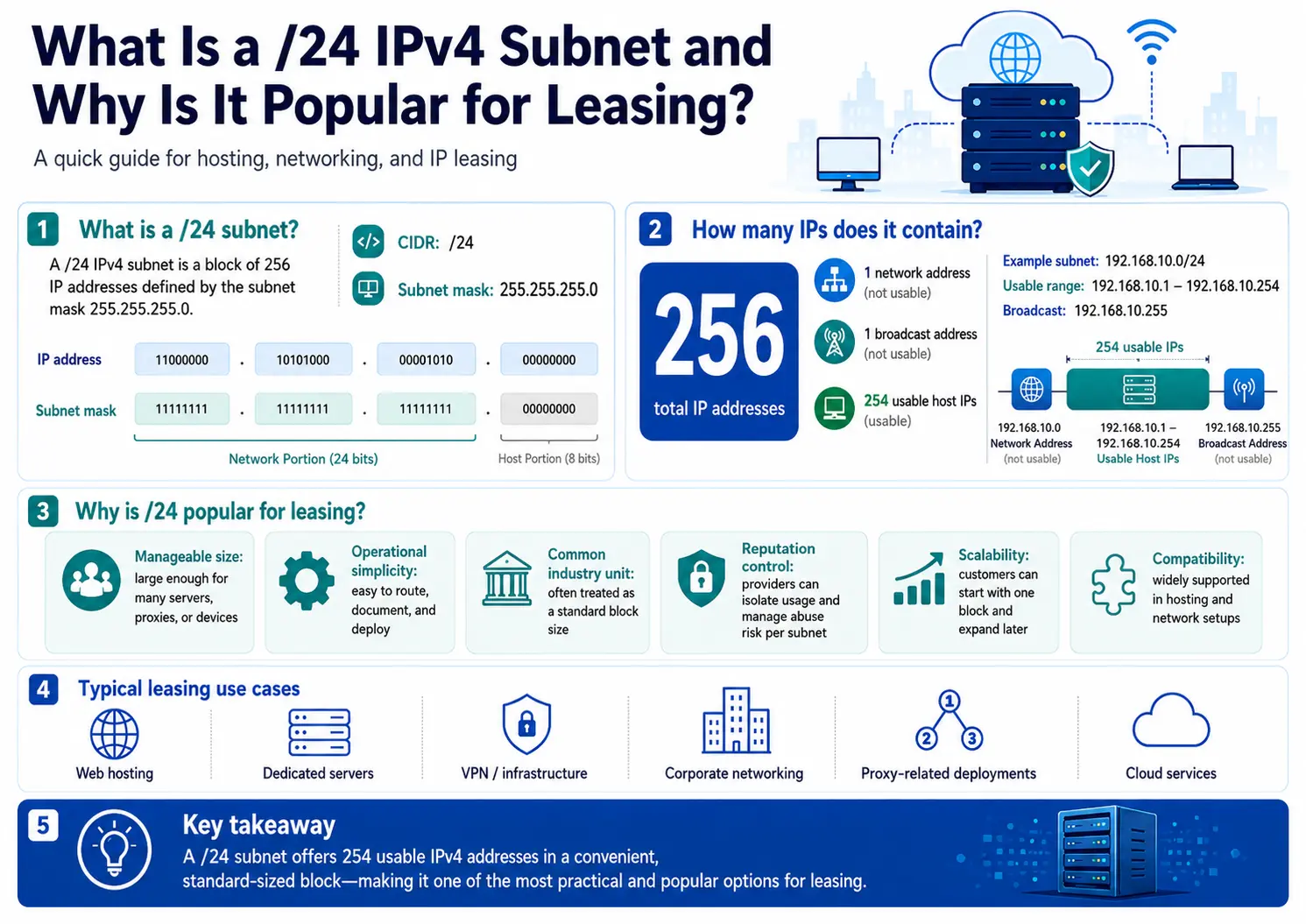
What Is a /24 IPv4 Subnet and Why Is It Popular for Leasing?
A /24 IPv4 subnet is one of the most common block sizes in the IPv4 leasing market. For hosting providers, SaaS platforms, VPN operators, ISPs, cloud infrastructure teams, and enterprises, it offers a practical balance between address capacity, routing usability, and cost control. As IPv4 scarcity continues, businesses are no longer treating IP addresses as simple technical resources. IPv4 space has become operational infrastructure. The question is no longerRead more Related Posts Why the Cheapest IPv4 Lease May Cost More in the Long Run A low monthly price may look attractive during procurement, but the real cost of leased IPv4 addresses includes much more What causes IPv4 deals to stall after the first agreement IPv4 deals usually stall after the first agreement because agreeing on price is only the commercial beginning—not operational completion.A buyer How to Avoid Downtime When Deploying Leased IPv4 Blocks Leased IPv4 blocks are often used by hosting providers, cloud platforms, ISPs, SaaS companies, data centers, and enterprise networks that .related-post {} .related-post .post-list { text-align: left; } .related-post .post-list .item { margin: 5px; padding: 10px; } .related-post .headline { font-size: 18px !important; color: #999999 !important; } .related-post .post-list .item .post_thumb { max-height: 220px; margin: 10px 0px; padding: 0px; display: block; } .related-post .post-list .item .post_title { font-size: 16px; color: #3f3f3f; margin: 10px 0px; padding: 0px; display: block; text-decoration: none; } .related-post .post-list .item .post_excerpt { font-size: 13px; color: #3f3f3f; margin: 10px 0px; padding: 0px; display: block; text-decoration: none; } @media only screen and (min-width: 1024px) { .related-post .post-list .item { width: 30%; } } @media only screen and (min-width: 768px) and (max-width: 1023px) { .related-post .post-list .item { width: 90%; } } @media only screen and (min-width: 0px) and (max-width: 767px) { .related-post .post-list .item { width: 90%; } }
