Table of Contents
Navigating the IPv4 secondary market requires careful attention to legality, reputation, pricing, compliance and risk management to ensure successful transactions.
- Legal transfer compliance, accurate ownership records and reputation checks are critical before engaging in IPv4 trading.
- Working with reputable brokers and platforms like i.Lease can streamline due diligence and reduce common market pitfalls.
Why the IPv4 secondary market matters
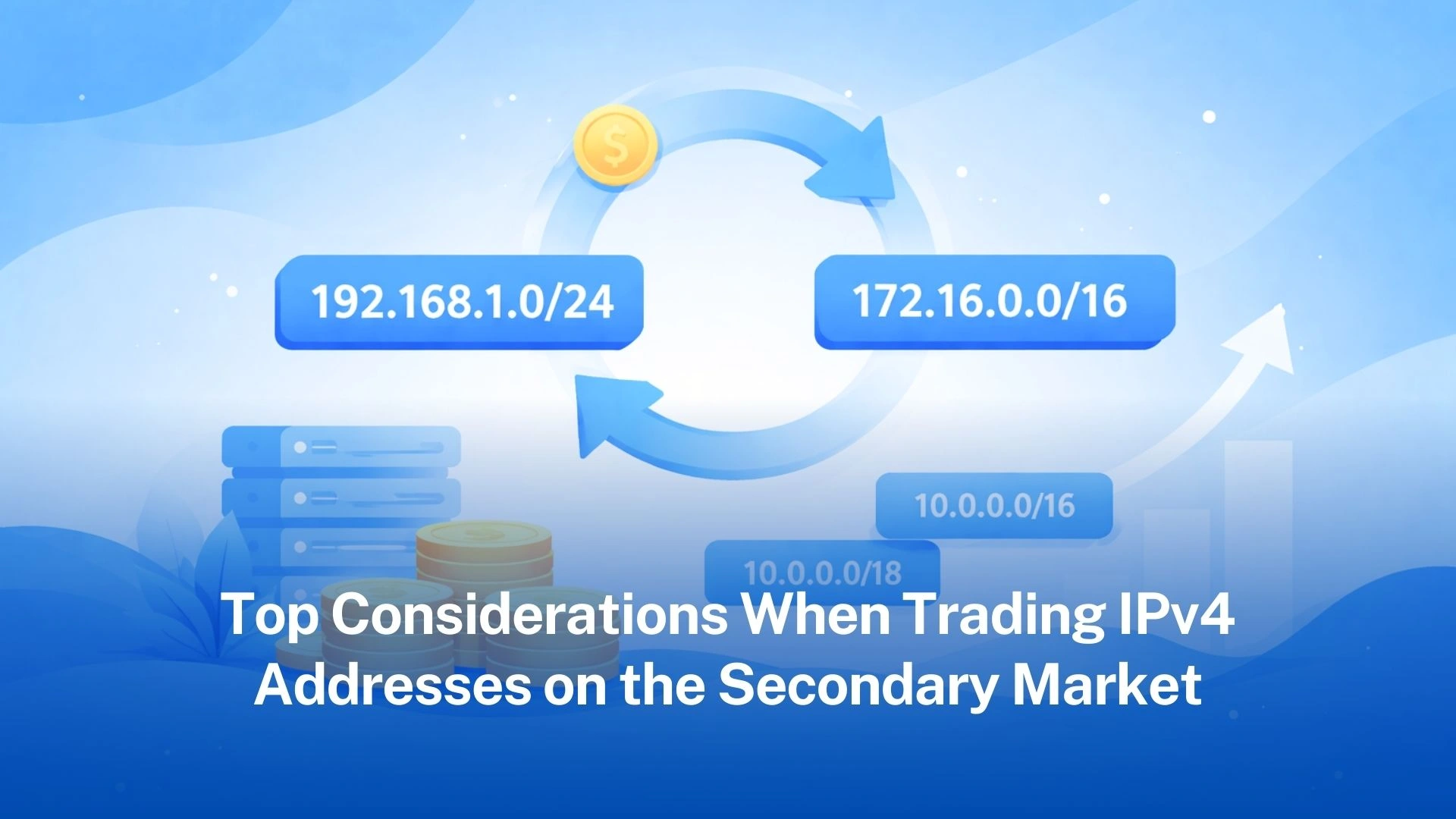
The global pool of freely available IPv4 addresses was officially exhausted years ago, leaving organisations that still rely on IPv4 connectivity to acquire space through secondary markets. These markets — where IPv4 address blocks are bought, sold or leased — have grown in scale and complexity as demand continues to outstrip supply. Cloud providers, hosting companies, ISPs and enterprises looking to expand services frequently turn to trading markets to secure address space, because regional internet registries no longer provide unallocated blocks.
In this environment, secondary market trading has become a core component of network planning. But participating successfully requires more than financial readiness; it demands a deep understanding of legal requirements, reputation management and operational risk. Without careful preparation, organisations can encounter severe difficulties ranging from blocked traffic to failed registrations and reputational damage.
Understand the legal and registry compliance landscape
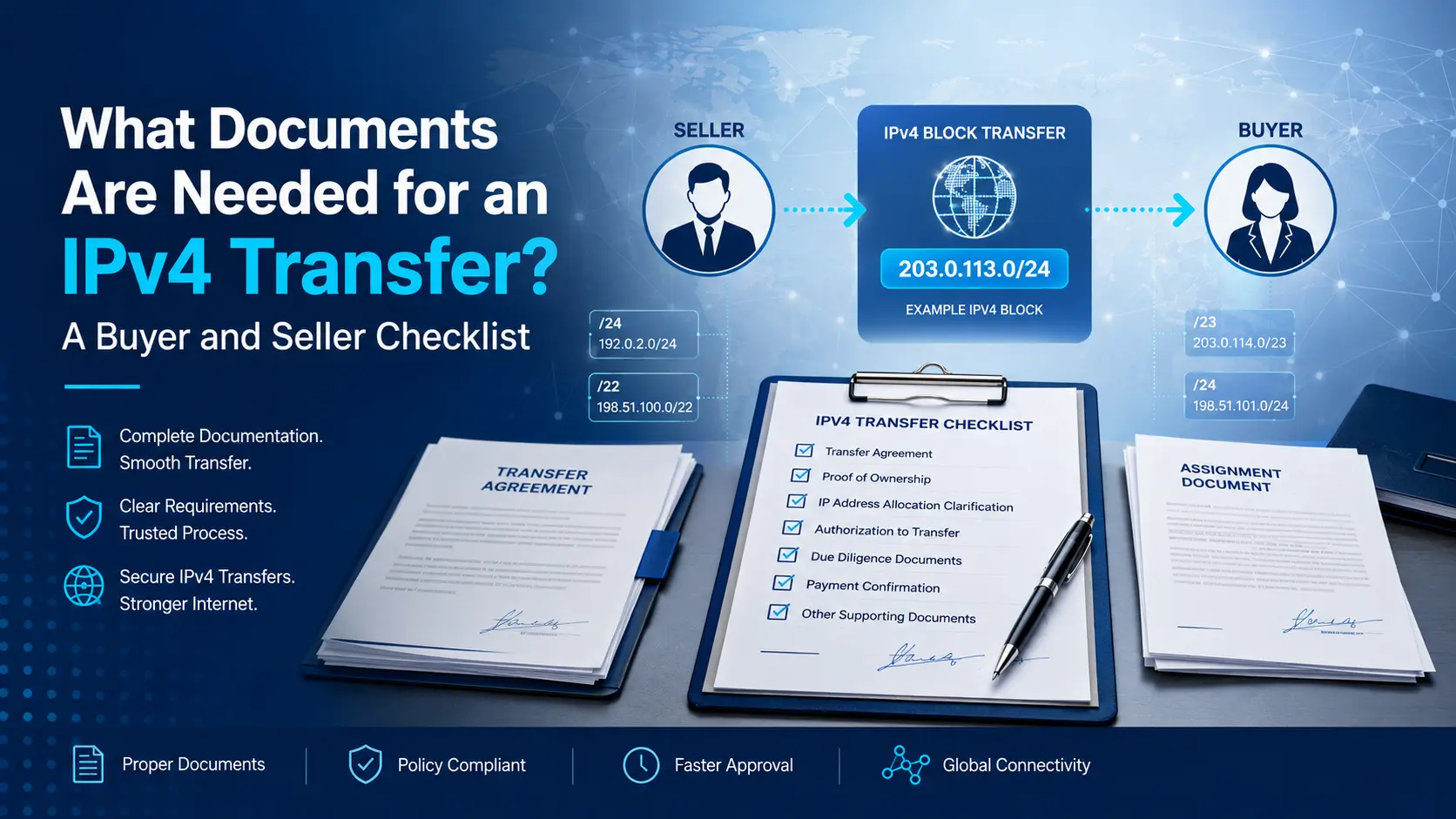
One of the first considerations in any IPv4 transaction is ensuring compliance with the policies of the Regional Internet Registry (RIR) under whose jurisdiction the address block falls. Each RIR — such as ARIN (North America), RIPE NCC (Europe), or APNIC (Asia-Pacific) — has its own transfer policies governing how IPv4 addresses can change hands. These policies affect who can trade, how transfers are recorded and what documentation is required to validate transactions.
Failure to meet compliance requirements can lead to delays, blocked transfers, or even reversion of ownership if a transfer does not meet RIR policy. This makes it vital for buyers, sellers and brokers to meticulously follow transfer procedures and ensure all necessary approvals are in place prior to finalising a trade.
Verify ownership and maintain accurate records
Accurate ownership documentation not only supports compliance but also protects against fraud and disputes. Outdated or incorrect Whois records, for example, create opportunities for malicious actors to attempt hijacking of dormant address blocks, potentially reselling them without legitimate authority. Industry guidance stresses the importance of regularly updating registration records, since stale information can undermine both security and legal clarity in transactions.
Verifying that the seller genuinely controls the address resources, that there are no open disputes, and that no outstanding abuse complaints exist, is a critical due-diligence step. Organisations should confirm that RIR databases reflect accurate and current registrant information before moving forward with transfers or leases.
Reputation and address history should never be ignored
IPv4 addresses with a history of misuse — such as involvement in spam campaigns, malware distribution or other abusive behaviour — may be listed in public blacklists. Acquiring such addresses can result in immediate connectivity issues and lost business opportunity. It’s therefore essential to check the reputation of any block before completing a trade.
Clean address history is not just a technical nicety; it has direct business impact. Poor reputation can affect email deliverability, security scoring and overall trust in network operations. Prospective buyers or lessors should use established blacklist monitoring services and insist on formal confirmation from sellers that the addresses have not been associated with abuse. This kind of reputational due diligence can prevent costly remediation efforts after the fact.
Pricing dynamics: scarcity, demand and regional differences
The scarcity of IPv4 addresses means that pricing is not uniform across the market. Address prices have risen steadily in recent years due to ongoing scarcity, with blocks sometimes selling at significant premiums relative to historic norms. Brokers and marketplaces have emerged to mediate these trades, helping match supply and demand while ensuring compliance and transparency.
Organisations considering trading IPv4 addresses should stay informed about average price ranges, regional variances and the effect of external pressures such as cloud provider demand. Forward planning and market awareness can prevent overpaying and support more strategic negotiations.
The role of brokers and platforms like i.Lease
Given the complexity of IPv4 trading, many organisations choose to work with reputable brokers or established platforms. Brokers play an important role in facilitating transactions, handling paperwork, coordinating with RIRs, and sometimes providing escrow services. They also assist with verifying that addresses are clean and properly documented, reducing the risk of surprises after closing.
Platforms such as i.Lease extend this support by providing structured environments for trading and leasing IPv4 resources. Their marketplaces help lessees and buyers find available blocks efficiently, while lessors and sellers benefit from established processes for documentation, compliance checks and transactional support. Using a trusted intermediary can reduce many common pitfalls in secondary market trading.
Tax, accounting and asset classification considerations
In many jurisdictions, IPv4 addresses are classified as intangible assets, and proceeds from selling or leasing them may have specific tax implications. For example, capital gains tax may apply if a sale yields a profit, while rental income from leases might be treated as ordinary business revenue. Ensuring that trading and leasing arrangements are properly reflected in financial records can help avoid unintended tax liabilities.
Some organisations may also be able to take depreciation on IPv4 holdings used for leasing, subject to local accounting rules. Understanding how different jurisdictions treat these assets is therefore an important step in planning trades that align with broader financial and tax strategies.
Avoiding abuse and fraud in trades
The rapid growth of the IPv4 address market has attracted not only legitimate participants but also opportunistic actors seeking to exploit gaps in registration and transfer processes. Adopting robust verification processes and insisting on transparent documentation helps to protect buyers and sellers from fraud. This includes confirming the identity of counterparties, validating address ownership, and using trusted contract frameworks to define rights and responsibilities.
Industry trend reports indicate that stricter transfer policies and fraud reporting mechanisms introduced by RIRs have helped reduce abuse, but vigilance remains critical because malicious actors continue to seek weaknesses in the system.
Strategic timing and market planning
Because pricing and availability can fluctuate with broader market conditions, organisations should consider strategic timing when planning IPv4 trades. Address supply may tighten or loosen based on macro shifts in technology adoption, cloud consumption patterns, and even IPv6 adoption rates. Forward-looking planning allows institutions to align address acquisition with network expansion timelines, reducing the risk of last-minute scarcity premiums.
Proactive participants pay attention to regional regulatory changes as well, which can influence transfer turnaround times and eligibility criteria. Keeping abreast of these trends helps companies make informed decisions rather than reactive ones.
Conclusion: trade with diligence
Trading IPv4 addresses on the secondary market offers a practical way for organisations to secure necessary address space in an environment of sustained scarcity. However, the process is nuanced and requires careful consideration of legal compliance, ownership verification, reputation history, pricing dynamics, tax treatment and risk management. Working with established brokers and trusted platforms like i.Lease can streamline much of this complexity, reduce risk, and improve transactional outcomes.
By treating IPv4 trades not as routine technical tasks but as strategic investments with regulatory and operational implications, organisations can protect their networks and support sustainable growth.
The IPv4 market reflects one of the most compelling examples of economic scarcity in the digital age. After the free pool exhausted, IPv4 addresses transitioned into a mature secondary market where block size, year, and buyer strategy all influence value. Prices surged in the early post‑exhaustion years, peaking as large enterprises competed for limited space. Over time, increased block availability and the rise of leasing solutions have tempered price volatility. Heading into 2026, we’re seeing a more balanced ecosystem — where buyers, sellers, and lessees negotiate not just on price, but on flexibility, timing, and network deployment plans
– Rachel Chen, IP Address Management Expert
Frequently Asked Questions
1. What is the IPv4 secondary market?
It is a marketplace where IPv4 address blocks are bought, sold or leased because the free pool of addresses is exhausted.
2. Why is IPv4 trading complex?
Complexity arises from RIR policies, compliance requirements, reputation issues and tax implications.
3. How can reputation affect an IPv4 address transaction?
Addresses with a history of abuse may be blacklisted, affecting connectivity and value in trades.
4. What role do brokers play in IPv4 trading?
Brokers help with compliance, documentation, matching buyers and sellers, and ensuring transparent transactions.
5. Are there tax considerations in IPv4 trading?
Yes, sales may trigger capital gains tax and lease income may be treated as ordinary business revenue, depending on jurisdiction.
Related Blogs