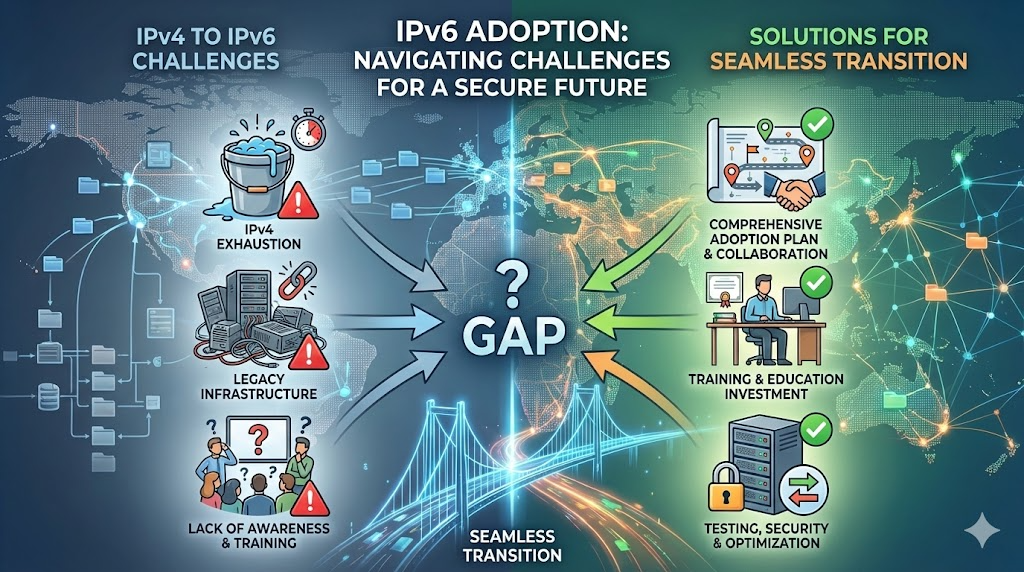
In the rapidly evolving landscape of internet technology, the transition from IPv4 to IPv6 has become an increasingly pressing concern for organizations worldwide. While IPv6 offers numerous advantages over its predecessor, including a vastly expanded address space and enhanced security features, its adoption presents unique challenges and complexities. In this article, we will explore the key challenges associated with IPv6 adoption and provide practical solutions for overcoming them. UnderstandingRead more

As IPv4 scarcity deepens, carefully drafted lease contracts have become essential tools for managing risk, compliance and long-term network stability.Well-defined Read more

Key points:IPv4 transfer delays are primarily driven by registry policy complexity and incomplete or inconsistent documentation.Early preparation, pre-approval and professional Read more

Standfirst APNIC IPv4 transfers can stall on documentation, timing, and registry hygiene. Preparation, pre-approval, and clean records materially accelerate outcomes. Read more