As IPv4 scarcity deepens, carefully drafted lease contracts have become essential tools for managing risk, compliance and long-term network stability.
Table of Contents
- Well-defined IPv4 lease clauses protect both asset value and operational continuity.
- Clear legal, technical and compliance terms reduce disputes and security exposure throughout the lease lifecycle.

Why IPv4 lease contracts deserve closer scrutiny
Why IPv4 lease contracts deserve closer scrutiny
The exhaustion of the global IPv4 free pool has fundamentally reshaped how organisations access internet protocol address resources. Instead of relying on direct allocation, enterprises increasingly turn to leasing to meet short- and medium-term demand. While this approach offers flexibility, it also introduces legal, technical and reputational risks if agreements are poorly constructed.
According to Geoff Huston, Chief Scientist at APNIC, IPv4 addresses are now “scarce, valuable resources whose use must be carefully managed to preserve global routing stability.” That reality makes the lease contract more than a formality — it becomes a governance instrument that defines responsibility for a critical internet resource.
Platforms such as i.Lease have emerged to professionalise IPv4 leasing, but even when intermediaries are involved, the underlying contract terms remain decisive.
Clearly defining ownership, control and scope
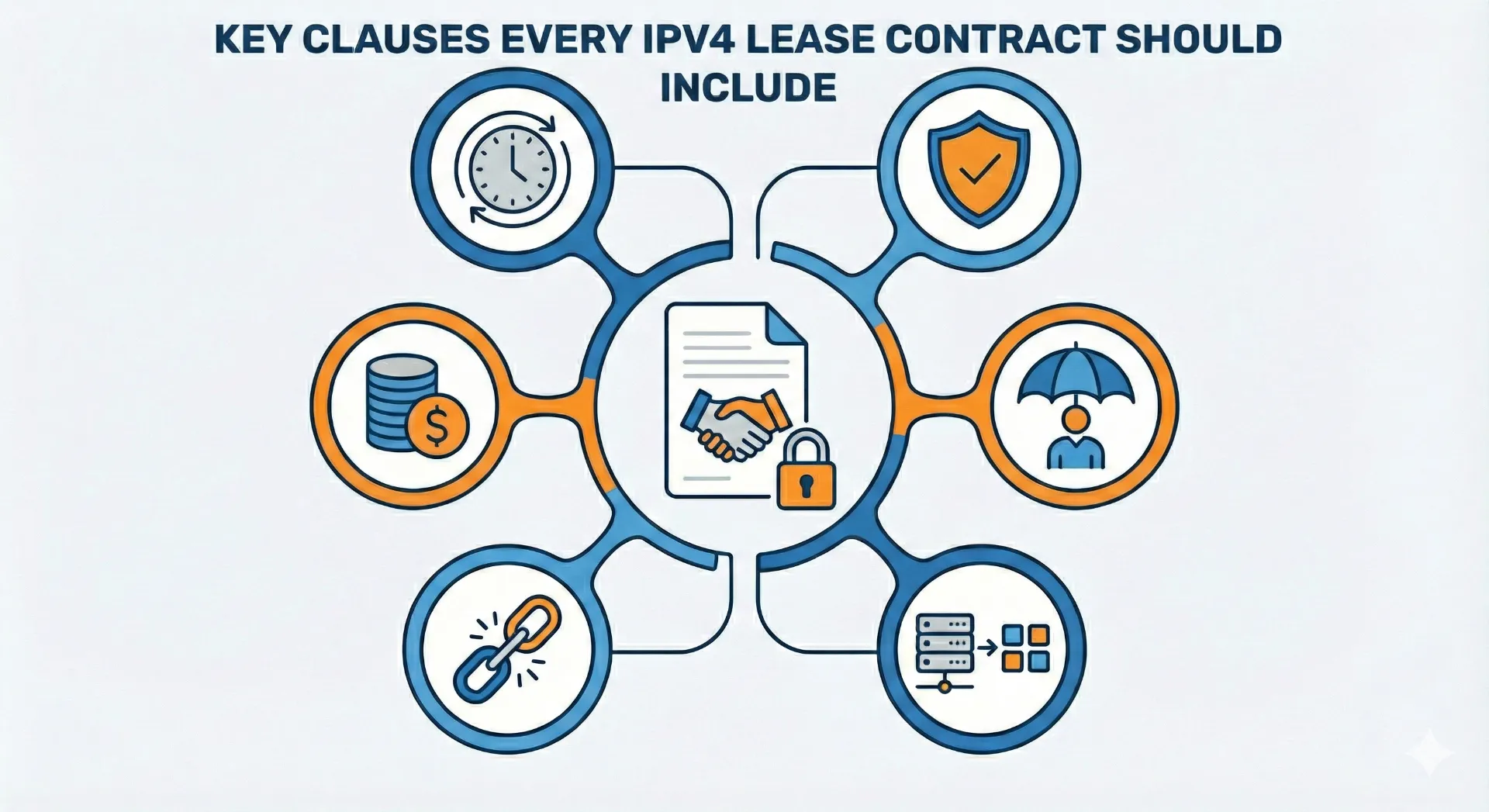
Every IPv4 lease contract should start by distinguishing ownership from usage rights. The lessor retains legal control of the address block, while the lessee receives a time-limited right to announce and use it. This distinction must be explicit to avoid confusion with permanent transfers.
The contract should specify the exact IPv4 prefix leased (in CIDR notation), any associated routing assets such as Route Authorization (LOA) or AS Path Authorization, and the jurisdiction and legal status of both parties.
Legal clarity at this stage prevents disputes later, particularly if the leased space is reassigned, sold or audited by a regional Internet registry (RIR).
Lease duration, renewal rights and exit certainty
Clear time limits are one of the most easily overlooked aspects of IPv4 leasing. The contract should clearly specify the start and end dates, renewal mechanisms, and the notification period required for non-renewal.
Some leases renew automatically, while others expire unless renegotiated. Without explicit wording, disputes can arise over whether a lessee has the right to continue announcing a prefix after the stated term.
John Curran, President and CEO of ARIN, has repeatedly stressed that “accurate records and timely updates are critical to maintaining trust in the number registry system.” Clear lease timelines support that objective by ensuring address usage aligns with registry records.
Acceptable use and abuse prevention obligations
Because IPv4 addresses have historical reputation, misuse quickly diminishes their value. A sound lease agreement should clearly define the lessee’s acceptable usage obligations, including prohibitions on spam distribution, malware hosting, fraudulent or illegal content.
The contract should also define how abuse complaints are handled, who responds to upstream providers, and what remediation steps are required. If misuse persists, termination rights should be clearly stated.
From an operational perspective, these clauses protect not only the lessor, but also the broader internet ecosystem by discouraging behaviour that undermines routing trust.
Financial structure and pricing transparency
IPv4 lease pricing is rarely static. Contracts should specify:
- Base lease rate and billing frequency
- Payment deadlines and penalties
- Currency, taxes and administrative fees
- Conditions under which prices may change
Hidden costs are a common source of friction. Industry analysts frequently note that renewal escalators or administrative surcharges can significantly alter the total cost of a lease if they are not disclosed upfront.
By spelling out all financial terms, both parties gain predictability — a key advantage in a market where IPv4 prices remain volatile.
Technical responsibilities and registry alignment
Leasing IPv4 space involves more than contractual permission; it requires operational coordination. Contracts should clearly allocate responsibility for:
- Route announcements and withdrawals
- Maintenance of IRR and RIR records
- Ongoing technical support
Misalignment between routing practice and registry data can lead to reachability issues or policy violations. As the RIPE NCC has noted in its public guidance, consistency between operational use and registry information is essential for internet stability.
Including these obligations in the contract ensures accountability throughout the lease term.
As IPv4 addresses become scarcer, poorly defined lease contracts create hidden liabilities. Enterprises must ensure their agreements explicitly address renewal rights, abuse handling, registry alignment, and termination scenarios to safeguard operational stability.
– James Whitaker, Senior Network Strategy Consultant
Compliance with RIR policies and local law
IPv4 leases operate within the policy frameworks of regional Internet registries such as ARIN, RIPE NCC, APNIC and LACNIC. Contracts should explicitly require compliance with applicable policies, including audit cooperation and data accuracy.
Legal compliance also matters. Depending on jurisdiction, leased IP addresses may intersect with data protection laws, sanctions regimes or telecommunications regulation. Clear compliance clauses reduce exposure to regulatory enforcement or service disruption.
Liability, indemnification and risk allocation
No lease is risk-free. Liability clauses define who bears responsibility if something goes wrong — whether through misuse, misconfiguration or legal challenge. Indemnification provisions typically require the lessee to cover losses arising from their activities, including third-party claims.
As network security researcher Job Snijders has observed in public forums, “address reputation can be destroyed far faster than it can be rebuilt.” Liability clauses acknowledge this asymmetry and seek to allocate risk accordingly.
Termination rights and orderly return
Termination clauses should cover both normal expiration and early termination due to breach. These clauses should clearly state the grounds for termination, notification requirements, and obligations to cease publication of notices and relinquish control.
Without a clear exit process, address blocks may remain improperly routed, exposing both parties to operational and reputational harm.
Why standardisation benefits the IPv4 leasing market
As IPv4 leasing matures, there is growing recognition that standardised, well-structured contracts benefit the entire ecosystem. Clear clauses reduce disputes, improve registry accuracy and support routing security.
For organisations using professional platforms such as i.Lease, focusing on these key contractual elements helps ensure that leasing remains a strategic solution rather than a source of long-term risk.
A well-structured IPv4 lease contract protects continuity, compliance, and asset reputation — not just address access.
– Rachel Chen, IP Address Management Expert
Trusted IPv4 Leasing for Business Growth
Get enterprise-grade IPv4 space quickly, with seamless deployment and end-to-end management.
Get Started with i.leaseFrequently Asked Questions
1. What is the lease term and renewal clause in an IPv4 contract?
The lease term clause specifies the duration of the IPv4 address lease, including start and end dates. It should also cover renewal options, whether automatic or subject to renegotiation. Clear terms prevent disputes over IP availability and ensure that your business can plan network expansions confidently.
2. How does the payment and pricing clause work?
An IPv4 lease contract should detail payment terms, including the lease fee, invoicing schedule, and any late payment penalties. It should also clarify whether the lease fee is fixed or adjustable, helping both parties avoid confusion about financial obligations over the lease term.
3. What are the rights and obligations of each party?
This clause defines who can use the IP addresses and for what purposes, as well as responsibilities for maintaining accurate registration records. It ensures that both the lessee and lessor understand their duties, which can include reporting usage, preventing abuse, or adhering to regional internet registry (RIR) policies.
4. What happens if the contract is terminated early?
A termination clause addresses scenarios where the lease may end before the agreed term, including breaches, non-payment, or regulatory requirements. It should outline the process for returning IP addresses, any fees or penalties, and steps to transfer the address back to the lessor safely.
5. How is liability and dispute resolution handled?
This clause clarifies each party’s liabilities, including network misuse, service interruptions, or legal compliance issues. It should also specify the method for resolving disputes, whether through mediation, arbitration, or court proceedings, and under which jurisdiction. Clear terms protect both parties and minimize legal risks.
Related Blogs