IPv6 address allocation: what you need to know
 Stephanie
Table of Contents
- IPv6 allocation rules ensure fair global distribution and help organisations prepare their networks for long-term scalability.
- Careful planning, documentation, and good management practices are essential for requesting and using IPv6 space effectively.
How IPv6 addresses are assigned
IPv6 addresses are assigned by a global system. When requesting IPv6 space, an organisation requests information about its network, technology requirements, as well as long-term goals. Typical regional policies demand that one present a deployment plan within a timeframe, efficient use of the allocated space in the event allocated space exists, and appropriate use of routing, aggregation, and documentation policies.
What organisations get
Internet service providers usually receive a /32 block, which offers large-scale address capacity for customer services. Smaller enterprises or networks often receive a /48 block, which still provides flexibility for internal growth. Once allocated, organisations are responsible for managing the addresses properly. This involves setting up hierarchical addressing plans, preparing for future expansion, maintaining accurate routing announcements, and managing reverse DNS records. Good management strengthens not only the local network but the stability of the wider internet.
Allocation duties
IPv6 allocations are not dependent on IPv4 holdings, thus even non-IPv4 organisations are eligible to apply. Obtained address space must be put to optimum use upon reception. It can be audited by regional registries to recover idle or unused space, if necessary, in order for resources to be equally assigned. It makes the address ecosystem sustainable as well as balanced.
Why IPv4 remains relevant even in the IPv6 era
While IPv6 holds the key to the future, IPv4, however, still remains central in the modern-day operation of the internet. The vast majority of global networks, devices, and services continue to utilize IPv4, predominantly because the vast majority of systems, applications, and infrastructure are yet to be migrated to IPv6. For the vast majority of organisations, keeping the environment ‘dualstacked,’ such that IPv4 and IPv6 are run side by side, remains essential in the continuation of unfettered connectivity, compatibility, and, crucially, a gradual migration. IPv4 continues to be central in regards to keeping the ‘door open’ to the legacy system, reaching non-IPv6-capable networks, as well as transitioning in as gradual a process as possible. While IPv6 deployment becomes ubiquitous in the long run, IPv4 management will continue in the same manner, thus the importance of organisations treating, governing, and respecting the two protocols equally.
Trusted IPv4 Leasing for Business Growth
Get enterprise-grade IPv4 space quickly, with seamless deployment and end-to-end management.
Get Started with i.leaseFAQs
Who can apply for IPv6 addresses?
Organisations such as internet service providers, companies, research networks, and government bodies that need global address space can apply through their regional registry.
How much IPv6 address space is usually assigned?
It depends on what the organisation requires, although service providers tend to get a /32 block and smaller networks may receive a /48.
Is IPv6 linked to IPv4?
No. IPv6 allocations are separate, and organisations that don’t have IPv4 can request IPv6 addresses.
What if the IPv6 space isn't employed?
Allocations may be reviewed, and underutilised space can be reclaimed to maintain fairness and efficiency.
Why IPv6 allocation matters now?
It allows organisations to scale, adopt new technologies, and avoid the technical and financial limits posed by IPv4 exhaustion.
Related Blogs
Articles connexes
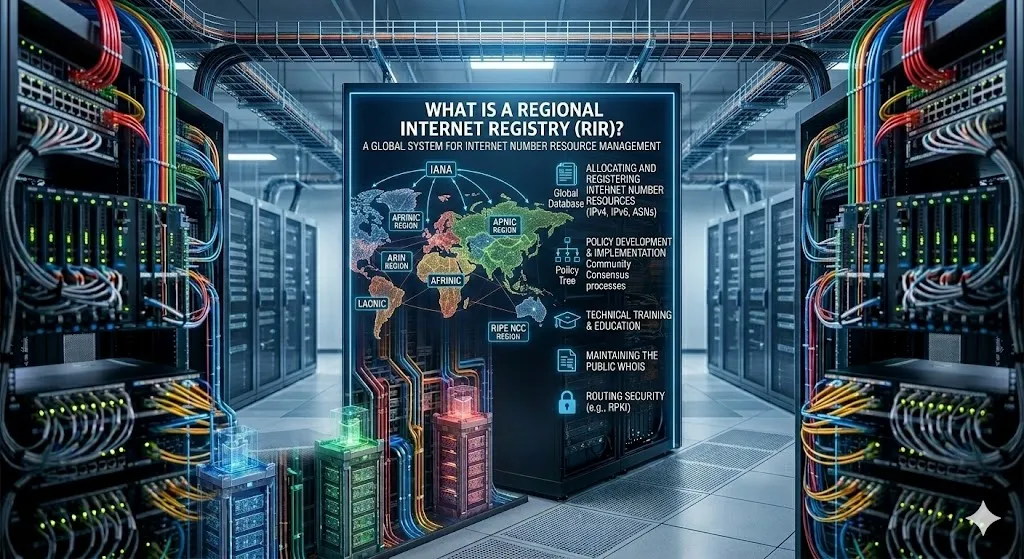
Qu’est-ce qu’un registre Internet régional (RIR) ?
Un registre Internet régional (RIR) est une organisation chargée de l’attribution et de la gestion des ressources de numérotation Internet au sein d’une région géographique spécifique. Ces ressources comprennent principalement les adresses IP (IPv4 et IPv6) et les numéros de système autonome (ASN), éléments essentiels permettant aux appareils et aux réseaux de communiquer sur Internet. Internet ne peut fonctionner sans un système performant d’attribution d’adresses IP uniques etRead more Related Posts Qu’est-ce qu’un registre Internet régional (RIR) ? Un registre Internet régional (RIR) est une organisation chargée de l'attribution et de la gestion des ressources de numérotation Internet Read more Pourquoi n’y a-t-il pas d’IPv5 ? L’histoire du protocole Internet manquant Lorsqu'on parle de protocoles Internet, la plupart des gens connaissent IPv4 et IPv6. Mais vous vous demandez peut-être : qu'est-il arrivé Read more Qu’est-ce que l’APNIC ? Une introduction simple au Centre d'information du réseau Asie-Pacifique Lorsque vous naviguez sur Internet, vous ne pensez probablement pas beaucoup Read more .related-post {} .related-post .post-list { text-align: left; } .related-post .post-list .item { margin: 5px; padding: 10px; } .related-post .headline { font-size: 18px !important; color: #999999 !important; } .related-post .post-list .item .post_thumb { max-height: 220px; margin: 10px 0px; padding: 0px; display: block; } .related-post .post-list .item .post_title { font-size: 16px; color: #3f3f3f; margin: 10px 0px; padding: 0px; display: block; text-decoration: none; } .related-post .post-list .item .post_excerpt { font-size: 13px; color: #3f3f3f; margin: 10px 0px; padding: 0px; display: block; text-decoration: none; } @media only screen and (min-width: 1024px) { .related-post .post-list .item { width: 30%; } } @media only screen and (min-width: 768px) and (max-width: 1023px) { .related-post .post-list .item { width: 90%; } } @media only screen and (min-width: 0px) and (max-width: 767px) { .related-post .post-list .item { width: 90%; } }

Pourquoi n’y a-t-il pas d’IPv5 ? L’histoire du protocole Internet manquant
Lorsqu’on parle de protocoles Internet, la plupart des gens connaissent IPv4 et IPv6. Mais vous vous demandez peut-être : qu’est-il arrivé à IPv5 ? Pourquoi a-t-on l’impression qu’Internet est passé directement d’IPv4 à IPv6 ? Plongeons-nous dans l’histoire fascinante de ce protocole « manquant ». Qu’est-ce que l’IPv5 ? Le protocole IPv5, officiellement appelé Internet Stream Protocol (ST), était un protocole expérimental développé à la fin des années 1970 et dans les années 1980. IlRead more Related Posts Qu’est-ce qu’un registre Internet régional (RIR) ? Un registre Internet régional (RIR) est une organisation chargée de l'attribution et de la gestion des ressources de numérotation Internet Read more Pourquoi n’y a-t-il pas d’IPv5 ? L’histoire du protocole Internet manquant Lorsqu'on parle de protocoles Internet, la plupart des gens connaissent IPv4 et IPv6. Mais vous vous demandez peut-être : qu'est-il arrivé Read more Qu’est-ce que l’APNIC ? Une introduction simple au Centre d'information du réseau Asie-Pacifique Lorsque vous naviguez sur Internet, vous ne pensez probablement pas beaucoup Read more .related-post {} .related-post .post-list { text-align: left; } .related-post .post-list .item { margin: 5px; padding: 10px; } .related-post .headline { font-size: 18px !important; color: #999999 !important; } .related-post .post-list .item .post_thumb { max-height: 220px; margin: 10px 0px; padding: 0px; display: block; } .related-post .post-list .item .post_title { font-size: 16px; color: #3f3f3f; margin: 10px 0px; padding: 0px; display: block; text-decoration: none; } .related-post .post-list .item .post_excerpt { font-size: 13px; color: #3f3f3f; margin: 10px 0px; padding: 0px; display: block; text-decoration: none; } @media only screen and (min-width: 1024px) { .related-post .post-list .item { width: 30%; } } @media only screen and (min-width: 768px) and (max-width: 1023px) { .related-post .post-list .item { width: 90%; } } @media only screen and (min-width: 0px) and (max-width: 767px) { .related-post .post-list .item { width: 90%; } }
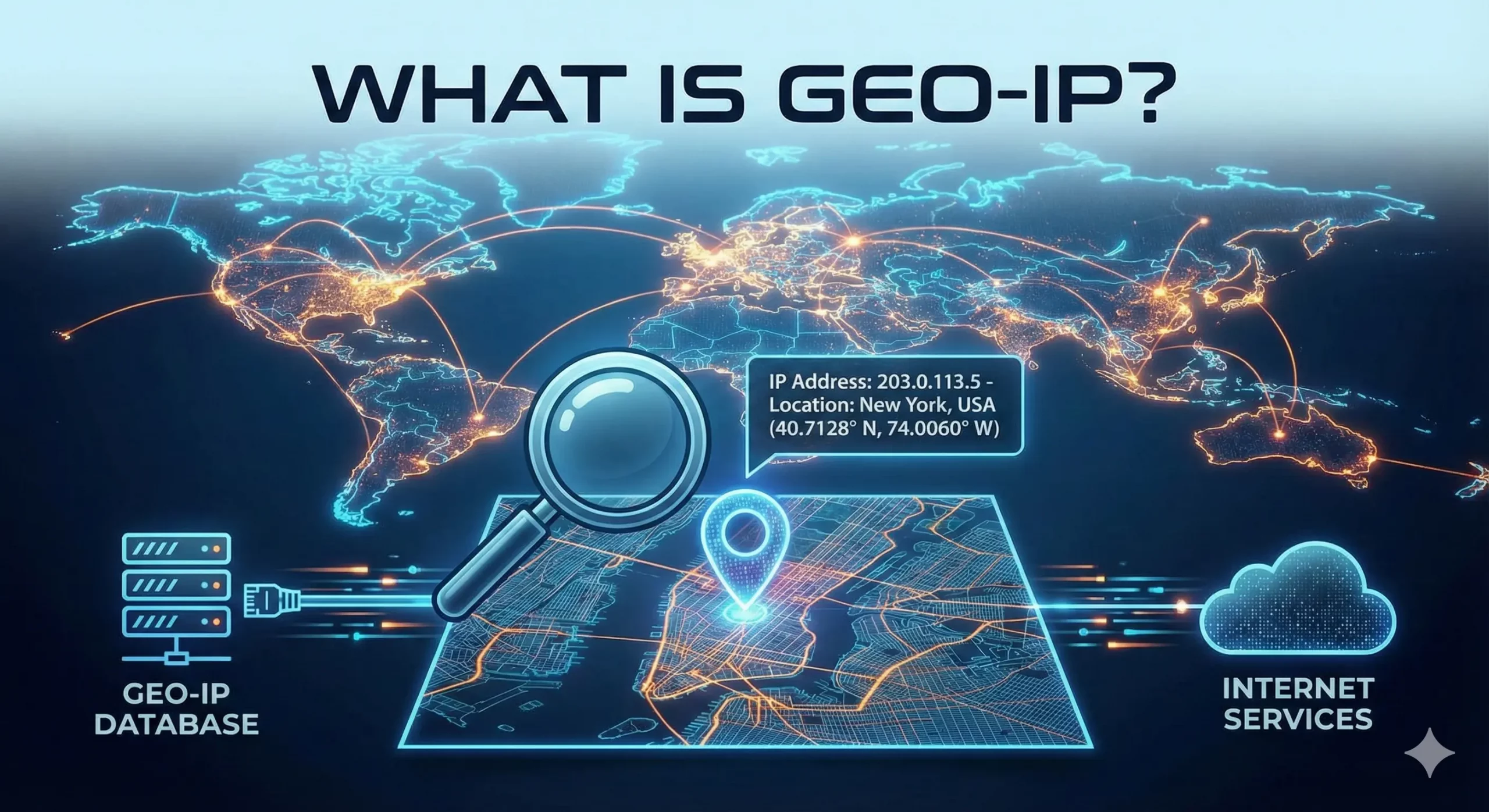
Qu’est-ce que GeoIP et comment ça fonctionne ?
La géolocalisation IP est essentielle pour personnaliser les expériences en ligne, renforcer la cybersécurité et alimenter d’innombrables applications professionnelles. Mais qu’est-ce que la géolocalisation IP exactement, comment fonctionne-t-elle et pourquoi est-elle si importante ? Voyons cela de plus près. Qu’est-ce que GeoIP ? GeoIP signifie « Géographie Internet ». Il s’agit d’une technologie qui détermine la localisation géographique d’un utilisateur à partir de son adresse IP (Internet Protocol). Chaque appareil connecté à InternetRead more Related Posts Qu’est-ce qu’un registre Internet régional (RIR) ? Un registre Internet régional (RIR) est une organisation chargée de l'attribution et de la gestion des ressources de numérotation Internet Read more Pourquoi n’y a-t-il pas d’IPv5 ? L’histoire du protocole Internet manquant Lorsqu'on parle de protocoles Internet, la plupart des gens connaissent IPv4 et IPv6. Mais vous vous demandez peut-être : qu'est-il arrivé Read more Qu’est-ce que l’APNIC ? Une introduction simple au Centre d'information du réseau Asie-Pacifique Lorsque vous naviguez sur Internet, vous ne pensez probablement pas beaucoup Read more .related-post {} .related-post .post-list { text-align: left; } .related-post .post-list .item { margin: 5px; padding: 10px; } .related-post .headline { font-size: 18px !important; color: #999999 !important; } .related-post .post-list .item .post_thumb { max-height: 220px; margin: 10px 0px; padding: 0px; display: block; } .related-post .post-list .item .post_title { font-size: 16px; color: #3f3f3f; margin: 10px 0px; padding: 0px; display: block; text-decoration: none; } .related-post .post-list .item .post_excerpt { font-size: 13px; color: #3f3f3f; margin: 10px 0px; padding: 0px; display: block; text-decoration: none; } @media only screen and (min-width: 1024px) { .related-post .post-list .item { width: 30%; } } @media only screen and (min-width: 768px) and (max-width: 1023px) { .related-post .post-list .item { width: 90%; } } @media only screen and (min-width: 0px) and (max-width: 767px) { .related-post .post-list .item { width: 90%; } }
