Get ready for European IPv4 addresses
 admin
admin
If you want ripe RIPE IPv4 addresses, there will be a literal waiting list to join.
In a new policy approved and posted on Tuesday, the regional internet registry (RIR) that serves Europe, the Middle East and Central Asia, dubbed RIPE, has decided that the only way it can deal with the ever-diminishing number of unassigned IPv4 addresses is for everyone to form an orderly queue.
“On application for IPv4 resources, LIRs will receive IPv4 addresses according to the following,” notes the new policy. And the first bulletpoint? “All allocation requests are placed on a first-come-first-served waiting list. No guarantees are given about the waiting time.”
The registry has also decided that it is not worth its while dishing out tiny numbers of public IP addresses, and will only make an allocation once it has a full /24 block, i.e. 256 consecutive addresses, to hand over.
The new policy: “All address blocks smaller than the allocation size will be held by the RIPE NCC and are declared unallocatable until the missing fragments are received/recovered by the RIPE NCC and they can be allocated as a contiguous allocation.”
And a /24 is all you’re going to get. From the policy: “The size of the allocation made will be exactly one /24. The sum of all allocations made to a single LIR by the RIPE NCC is limited to a maximum of 256 IPv4 addresses (a single /24). If this allocation limit has been reached or exceeded, an LIR cannot request an IPv4 allocation under this policy.”
In other words, you will have to queue for an indefinite period of time to get your hands on a block of 256 addresses.
The good news is that faced with the absolutely stark, irrefutable fact that there really are no new IPv4 addresses, all corporations in Europe have collectively decided to expend all necessary resources to move permanently to IPv6.
Ha! Who you kidding? It’s NATs-a-go-go, and record prices on the IPv4 black market. Remind us again why the IETF didn’t make IPv6 backwards compatible… ®
Updated to add
We’d like to stress that the waiting list policy was announced only this week, and so, has yet to be implemented. Stay tuned, though: it will kick in when RIPE deems it necessary, likely when it runs out of IPv4 addresses later this year or early 2020.
Also, yes, as some have pointed out, there is a black market for IPv4 addresses if you want to get your hands on some right now rather than get in line.
And for those of us in North America, yes, ARIN already has an IPv4 waiting list of sorts. That registry notes:The IPv4 Waiting List is one of several ways an organization may request IPv4 addresses from ARIN. Other available options are to transfer resources or request IPv4 addresses from pools reserved specifically for micro-allocations (NRPM 4.4) or Dedicated IPv4 block to facilitate IPv6 Deployment (NRPM 4.10).
Articles connexes
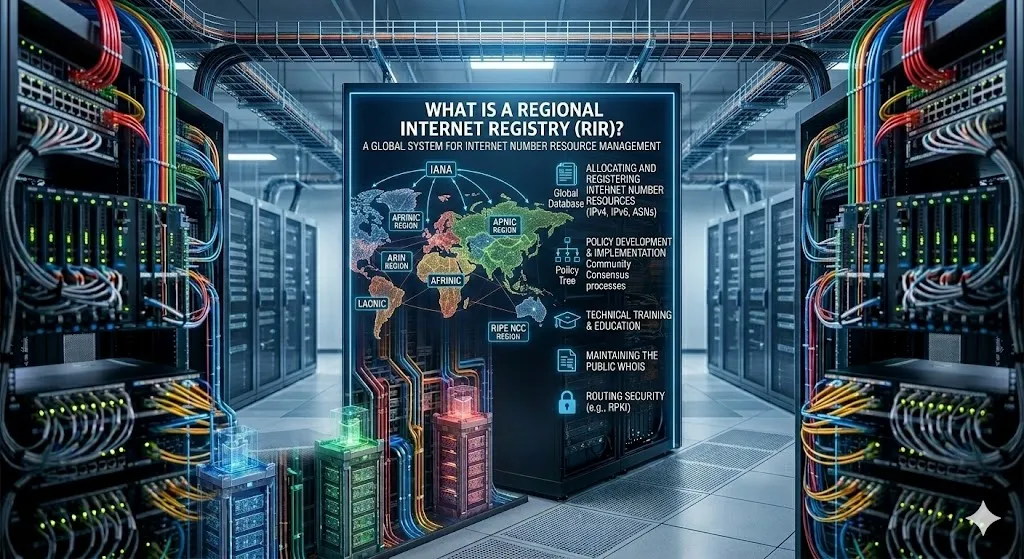
Qu’est-ce qu’un registre Internet régional (RIR) ?
Un registre Internet régional (RIR) est une organisation chargée de l’attribution et de la gestion des ressources de numérotation Internet au sein d’une région géographique spécifique. Ces ressources comprennent principalement les adresses IP (IPv4 et IPv6) et les numéros de système autonome (ASN), éléments essentiels permettant aux appareils et aux réseaux de communiquer sur Internet. Internet ne peut fonctionner sans un système performant d’attribution d’adresses IP uniques etRead more Related Posts Qu’est-ce qu’un registre Internet régional (RIR) ? Un registre Internet régional (RIR) est une organisation chargée de l'attribution et de la gestion des ressources de numérotation Internet Read more Pourquoi n’y a-t-il pas d’IPv5 ? L’histoire du protocole Internet manquant Lorsqu'on parle de protocoles Internet, la plupart des gens connaissent IPv4 et IPv6. Mais vous vous demandez peut-être : qu'est-il arrivé Read more Qu’est-ce que l’APNIC ? Une introduction simple au Centre d'information du réseau Asie-Pacifique Lorsque vous naviguez sur Internet, vous ne pensez probablement pas beaucoup Read more .related-post {} .related-post .post-list { text-align: left; } .related-post .post-list .item { margin: 5px; padding: 10px; } .related-post .headline { font-size: 18px !important; color: #999999 !important; } .related-post .post-list .item .post_thumb { max-height: 220px; margin: 10px 0px; padding: 0px; display: block; } .related-post .post-list .item .post_title { font-size: 16px; color: #3f3f3f; margin: 10px 0px; padding: 0px; display: block; text-decoration: none; } .related-post .post-list .item .post_excerpt { font-size: 13px; color: #3f3f3f; margin: 10px 0px; padding: 0px; display: block; text-decoration: none; } @media only screen and (min-width: 1024px) { .related-post .post-list .item { width: 30%; } } @media only screen and (min-width: 768px) and (max-width: 1023px) { .related-post .post-list .item { width: 90%; } } @media only screen and (min-width: 0px) and (max-width: 767px) { .related-post .post-list .item { width: 90%; } }

Pourquoi n’y a-t-il pas d’IPv5 ? L’histoire du protocole Internet manquant
Lorsqu’on parle de protocoles Internet, la plupart des gens connaissent IPv4 et IPv6. Mais vous vous demandez peut-être : qu’est-il arrivé à IPv5 ? Pourquoi a-t-on l’impression qu’Internet est passé directement d’IPv4 à IPv6 ? Plongeons-nous dans l’histoire fascinante de ce protocole « manquant ». Qu’est-ce que l’IPv5 ? Le protocole IPv5, officiellement appelé Internet Stream Protocol (ST), était un protocole expérimental développé à la fin des années 1970 et dans les années 1980. IlRead more Related Posts Qu’est-ce qu’un registre Internet régional (RIR) ? Un registre Internet régional (RIR) est une organisation chargée de l'attribution et de la gestion des ressources de numérotation Internet Read more Pourquoi n’y a-t-il pas d’IPv5 ? L’histoire du protocole Internet manquant Lorsqu'on parle de protocoles Internet, la plupart des gens connaissent IPv4 et IPv6. Mais vous vous demandez peut-être : qu'est-il arrivé Read more Qu’est-ce que l’APNIC ? Une introduction simple au Centre d'information du réseau Asie-Pacifique Lorsque vous naviguez sur Internet, vous ne pensez probablement pas beaucoup Read more .related-post {} .related-post .post-list { text-align: left; } .related-post .post-list .item { margin: 5px; padding: 10px; } .related-post .headline { font-size: 18px !important; color: #999999 !important; } .related-post .post-list .item .post_thumb { max-height: 220px; margin: 10px 0px; padding: 0px; display: block; } .related-post .post-list .item .post_title { font-size: 16px; color: #3f3f3f; margin: 10px 0px; padding: 0px; display: block; text-decoration: none; } .related-post .post-list .item .post_excerpt { font-size: 13px; color: #3f3f3f; margin: 10px 0px; padding: 0px; display: block; text-decoration: none; } @media only screen and (min-width: 1024px) { .related-post .post-list .item { width: 30%; } } @media only screen and (min-width: 768px) and (max-width: 1023px) { .related-post .post-list .item { width: 90%; } } @media only screen and (min-width: 0px) and (max-width: 767px) { .related-post .post-list .item { width: 90%; } }

Qu’est-ce que GeoIP et comment ça fonctionne ?
La géolocalisation IP est essentielle pour personnaliser les expériences en ligne, renforcer la cybersécurité et alimenter d’innombrables applications professionnelles. Mais qu’est-ce que la géolocalisation IP exactement, comment fonctionne-t-elle et pourquoi est-elle si importante ? Voyons cela de plus près. Qu’est-ce que GeoIP ? GeoIP signifie « Géographie Internet ». Il s’agit d’une technologie qui détermine la localisation géographique d’un utilisateur à partir de son adresse IP (Internet Protocol). Chaque appareil connecté à InternetRead more Related Posts Qu’est-ce qu’un registre Internet régional (RIR) ? Un registre Internet régional (RIR) est une organisation chargée de l'attribution et de la gestion des ressources de numérotation Internet Read more Pourquoi n’y a-t-il pas d’IPv5 ? L’histoire du protocole Internet manquant Lorsqu'on parle de protocoles Internet, la plupart des gens connaissent IPv4 et IPv6. Mais vous vous demandez peut-être : qu'est-il arrivé Read more Qu’est-ce que l’APNIC ? Une introduction simple au Centre d'information du réseau Asie-Pacifique Lorsque vous naviguez sur Internet, vous ne pensez probablement pas beaucoup Read more .related-post {} .related-post .post-list { text-align: left; } .related-post .post-list .item { margin: 5px; padding: 10px; } .related-post .headline { font-size: 18px !important; color: #999999 !important; } .related-post .post-list .item .post_thumb { max-height: 220px; margin: 10px 0px; padding: 0px; display: block; } .related-post .post-list .item .post_title { font-size: 16px; color: #3f3f3f; margin: 10px 0px; padding: 0px; display: block; text-decoration: none; } .related-post .post-list .item .post_excerpt { font-size: 13px; color: #3f3f3f; margin: 10px 0px; padding: 0px; display: block; text-decoration: none; } @media only screen and (min-width: 1024px) { .related-post .post-list .item { width: 30%; } } @media only screen and (min-width: 768px) and (max-width: 1023px) { .related-post .post-list .item { width: 90%; } } @media only screen and (min-width: 0px) and (max-width: 767px) { .related-post .post-list .item { width: 90%; } }
