Understanding IT Infrastructure: The Backbone of Modern Businesses

ChanChan
Understanding IT Infrastructure: The Backbone of Modern Businesses

A robust IT infrastructure is critical for the success of any business in today’s digital age. It forms the foundation on which companies build their day-to-day operations, ensuring everything runs smoothly—from managing internal processes to interacting with customers. But what exactly is IT infrastructure, and why is it so essential?


This article will walk you through the key elements of IT infrastructure and its importance in the modern business landscape.

What is IT Infrastructure?

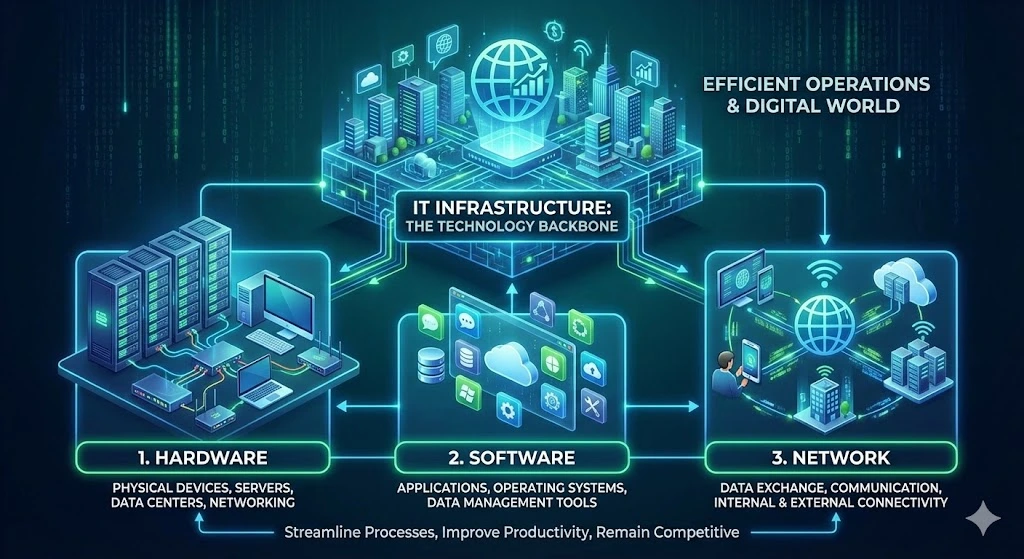
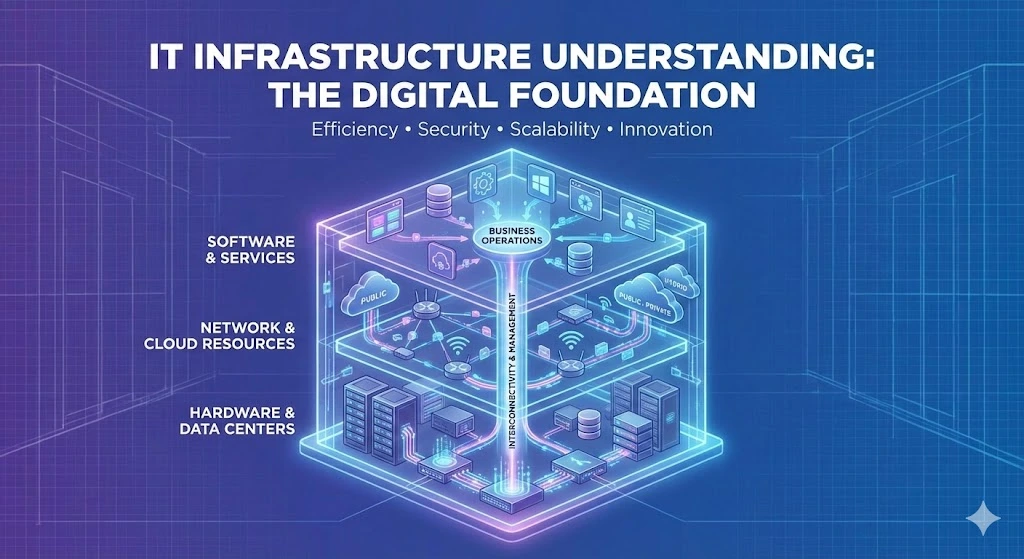
IT infrastructure refers to the collection of hardware, software, networks, and services required for an organization to operate efficiently in the digital world. Essentially, a company’s technology backbone supports all operations, allowing businesses to streamline processes, improve productivity, and remain competitive in a fast-evolving market.


IT infrastructure can be broadly categorized into three components:


1. Hardware: This includes physical devices such as servers, data centers, computers, and networking equipment (routers, switches, etc.) that form the core of IT operations.


2. Software: The applications and operating systems that run on hardware, providing businesses with the tools they need for communication, data management, and other functions.


3. Network: This enables data exchange and communication between devices, systems, and users, both internally and externally.

Key Components of IT Infrastructure

1. Servers:

Servers are the heart of IT infrastructure. They store, process, and manage data, ensuring that employees, systems, and customers can access information quickly and reliably. Businesses may rely on on-premises servers or cloud-based servers, depending on their size and needs.

2. Networking Equipment:

Routers, switches, and firewalls are essential for connecting different devices, systems, and users within an organization. They manage the flow of information and secure networks against cyber threats.

3. Data Storage:

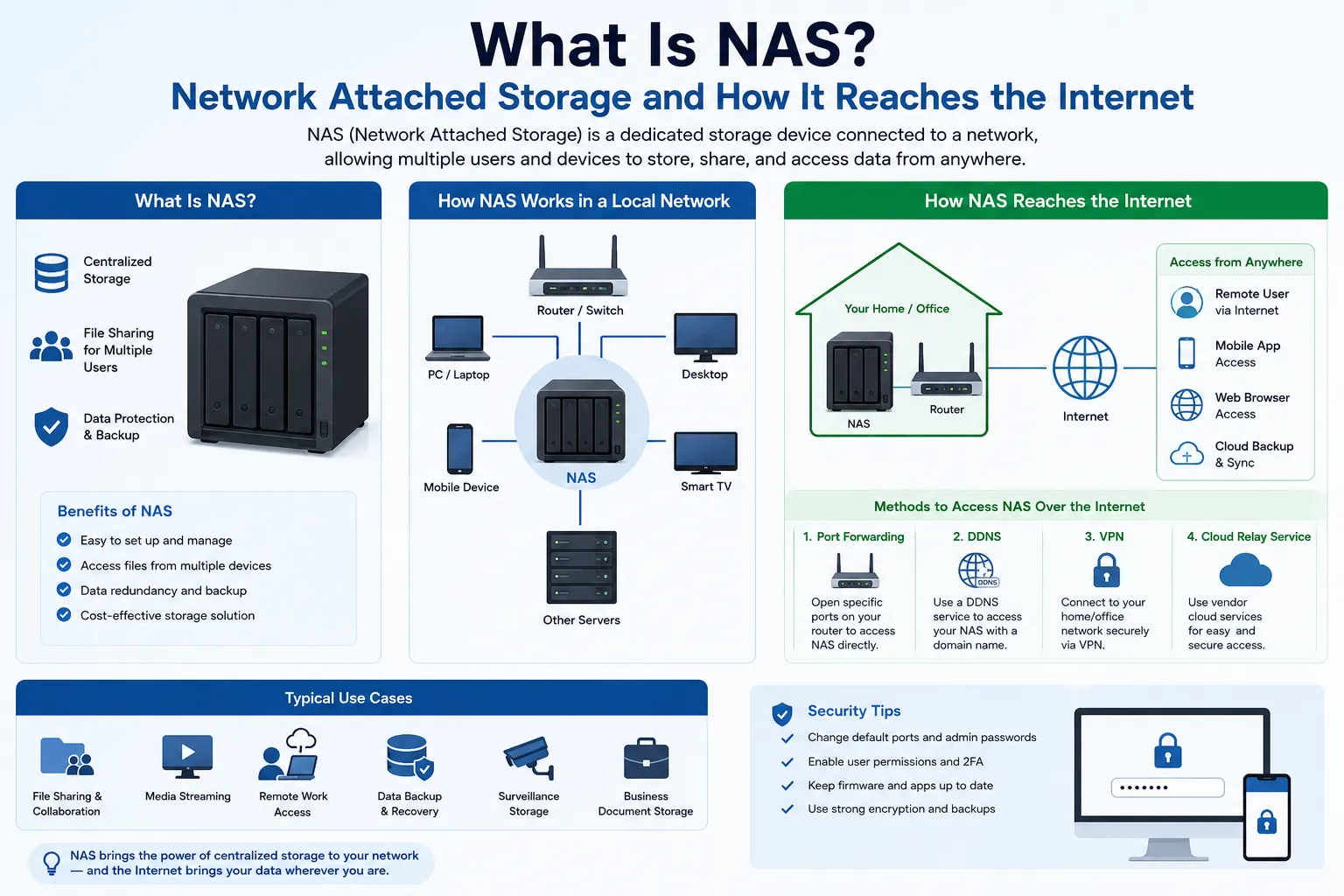
Storing data securely and efficiently is a critical aspect of IT infrastructure. Businesses use storage solutions such as Network Attached Storage (NAS) or cloud storage to ensure that data is always available and protected from potential threats or disasters.

4. Software and Applications:

Operating systems, databases, and specialized applications all contribute to business efficiency. Whether it’s enterprise resource planning (ERP) systems, customer relationship management (CRM) software, or cloud-based collaboration tools, software plays an integral role in business operations.

5. Cloud Infrastructure:

Increasingly, businesses are turning to cloud infrastructure to reduce the cost and complexity of managing physical servers. Cloud computing enables businesses to scale their IT resources on demand and provides flexibility for remote access.

6. Security Systems:

Cybersecurity is a crucial aspect of IT infrastructure. Firewalls, encryption, intrusion detection systems, and antivirus software protect sensitive information from cyberattacks and ensure compliance with data protection regulations.

Why IT Infrastructure Matters for Businesses
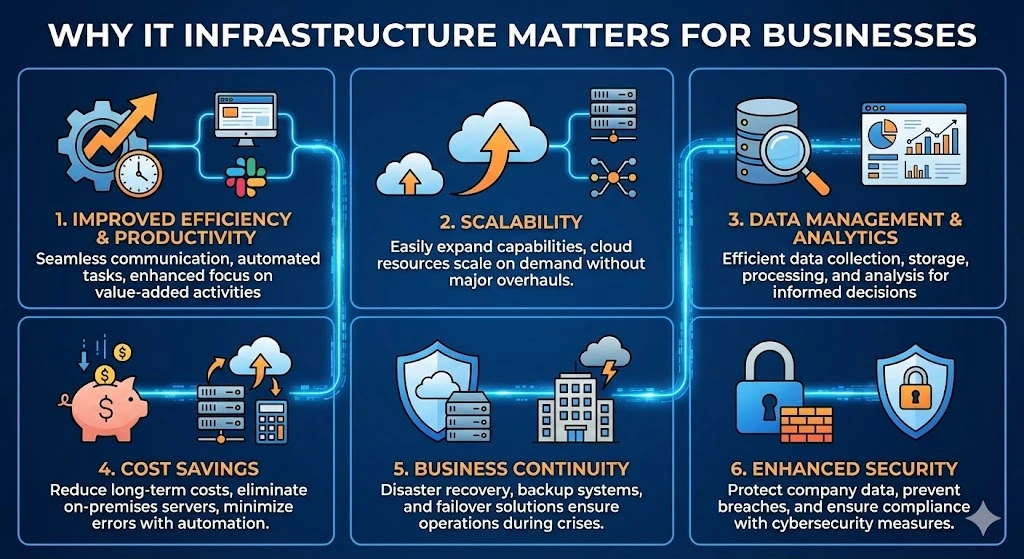
1. Improved Efficiency and Productivity:

A well-designed IT infrastructure ensures seamless communication between systems, automates manual tasks and allows employees to focus on more value-added activities. The integration of advanced software and collaboration tools enhances overall productivity.

2. Scalability:

As businesses grow, their IT needs evolve. A scalable IT infrastructure allows companies to expand their technology capabilities without major overhauls or disruptions. This is particularly important in cloud computing environments, where resources can be quickly scaled up or down based on demand.

3. Data Management and Analytics:

Modern businesses rely heavily on data to make informed decisions. A strong IT infrastructure enables efficient data collection, storage, and processing, providing valuable insights that can drive business strategy. Proper infrastructure also ensures that data remains secure and accessible for analysis.

4. Cost Savings:

By investing in the right infrastructure, businesses can reduce long-term costs. Cloud solutions, for example, eliminate the need for expensive on-premises servers, while automation tools can reduce labor costs and minimize errors.

5. Business Continuity:

A reliable IT infrastructure helps businesses remain operational during crises or unforeseen events. Disaster recovery plans, backup systems, and failover solutions are essential for ensuring business continuity in the face of cyberattacks, hardware failures, or natural disasters.

6. Enhanced Security:

With cyber threats on the rise, protecting company data and customer information is more important than ever. A strong IT infrastructure that incorporates cybersecurity measures helps prevent data breaches and ensures compliance with legal regulations.

Trusted IPv4 Leasing for Business Growth

Get enterprise-grade IPv4 space quickly, with seamless deployment and end-to-end management.
Get Started with i.lease

Articles connexes

24-IPv4-block-cost

Combien coûte un bloc IPv4 /24 en 2026 ?

La rareté des adresses IPv4 continue de façonner l’infrastructure Internet, les blocs /24 étant toujours activement négociés sur les marchés mondiaux malgré l’adoption croissante de l’IPv6.   Points clés Un bloc IPv4 /24 coûte généralement entre 6 000 et 15 000 dollars en 2026. Les fournisseurs de services cloud, les hébergeurs et les fournisseurs SaaS ont besoin d’adresses IPv4, ce qui explique le maintien de prix élevés. Les adresses IPv4 sontRead more Related Posts Quels sont les facteurs qui déterminent le prix de IPv4 sur le marché actuel ? La rareté, l'évolution de la demande et les plateformes de location comme i.lease redéfinissent la valorisation et le commerce des Read more Pourquoi la rareté des adresses IPv4 génère de la valeur économique pour les opérateurs La rareté des adresses IPv4, la demande persistante et la lenteur de la transition vers l'IPv6 transforment les adresses IP Read more How much does a /24 IPv4 block cost in 2026? IPv4 scarcity continues to shape internet infrastructure, with /24 blocks still trading actively on global markets despite growing IPv6 adoption. Key Read more .related-post {} .related-post .post-list { text-align: left; } .related-post .post-list .item { margin: 5px; padding: 10px; } .related-post .headline { font-size: 18px !important; color: #999999 !important; } .related-post .post-list .item .post_thumb { max-height: 220px; margin: 10px 0px; padding: 0px; display: block; } .related-post .post-list .item .post_title { font-size: 16px; color: #3f3f3f; margin: 10px 0px; padding: 0px; display: block; text-decoration: none; } .related-post .post-list .item .post_excerpt { font-size: 13px; color: #3f3f3f; margin: 10px 0px; padding: 0px; display: block; text-decoration: none; } @media only screen and (min-width: 1024px) { .related-post .post-list .item { width: 30%; } } @media only screen and (min-width: 768px) and (max-width: 1023px) { .related-post .post-list .item { width: 90%; } } @media only screen and (min-width: 0px) and (max-width: 767px) { .related-post .post-list .item { width: 90%; } }

ipv4-pricing

Quels sont les facteurs qui déterminent le prix de IPv4 sur le marché actuel ?

La rareté, l’évolution de la demande et les plateformes de location comme i.lease redéfinissent la valorisation et le commerce des adresses IPv4 à l’échelle mondiale. Le prix des adresses IPv4 est principalement déterminé par leur rareté, la taille des blocs et les fluctuations de la demande selon les régions et les secteurs. Les modèles de location, notamment les plateformes comme i.lease, contribuent à stabiliser les coûts face à laRead more Related Posts IPv4 leasing for data centres: what you need to know As IPv4 scarcity intensifies, data centres increasingly rely on leasing to scale infrastructure, control costs, and maintain reliable connectivity worldwide.IPv4 Read more What are the risks of buying IPv4 from the wrong source? Buying IPv4 addresses outside proper IP Allocation channels exposes organisations to fraud, legal disputes, operational failures and long-term governance risks.Key Read more Combien coûte un bloc IPv4 /24 en 2026 ? La rareté des adresses IPv4 continue de façonner l'infrastructure Internet, les blocs /24 étant toujours activement négociés sur les marchés Read more .related-post {} .related-post .post-list { text-align: left; } .related-post .post-list .item { margin: 5px; padding: 10px; } .related-post .headline { font-size: 18px !important; color: #999999 !important; } .related-post .post-list .item .post_thumb { max-height: 220px; margin: 10px 0px; padding: 0px; display: block; } .related-post .post-list .item .post_title { font-size: 16px; color: #3f3f3f; margin: 10px 0px; padding: 0px; display: block; text-decoration: none; } .related-post .post-list .item .post_excerpt { font-size: 13px; color: #3f3f3f; margin: 10px 0px; padding: 0px; display: block; text-decoration: none; } @media only screen and (min-width: 1024px) { .related-post .post-list .item { width: 30%; } } @media only screen and (min-width: 768px) and (max-width: 1023px) { .related-post .post-list .item { width: 90%; } } @media only screen and (min-width: 0px) and (max-width: 767px) { .related-post .post-list .item { width: 90%; } }

ipv4

Pourquoi la rareté des adresses IPv4 génère de la valeur économique pour les opérateurs

La rareté des adresses IPv4, la demande persistante et la lenteur de la transition vers l’IPv6 transforment les adresses IP en actifs négociables, remodelant ainsi l’économie des télécommunications à l’échelle mondiale. L’épuisement des adresses IPv4 a fait de ces dernières des ressources numériques rares, dont les prix sont déterminés par le déséquilibre entre l’offre et la demande. Les opérateurs monétisent de plus en plus l’espace d’adressage inutilisé via desRead more Related Posts IPv4 leasing for data centres: what you need to know As IPv4 scarcity intensifies, data centres increasingly rely on leasing to scale infrastructure, control costs, and maintain reliable connectivity worldwide.IPv4 Read more What are the risks of buying IPv4 from the wrong source? Buying IPv4 addresses outside proper IP Allocation channels exposes organisations to fraud, legal disputes, operational failures and long-term governance risks.Key Read more Combien coûte un bloc IPv4 /24 en 2026 ? La rareté des adresses IPv4 continue de façonner l'infrastructure Internet, les blocs /24 étant toujours activement négociés sur les marchés Read more .related-post {} .related-post .post-list { text-align: left; } .related-post .post-list .item { margin: 5px; padding: 10px; } .related-post .headline { font-size: 18px !important; color: #999999 !important; } .related-post .post-list .item .post_thumb { max-height: 220px; margin: 10px 0px; padding: 0px; display: block; } .related-post .post-list .item .post_title { font-size: 16px; color: #3f3f3f; margin: 10px 0px; padding: 0px; display: block; text-decoration: none; } .related-post .post-list .item .post_excerpt { font-size: 13px; color: #3f3f3f; margin: 10px 0px; padding: 0px; display: block; text-decoration: none; } @media only screen and (min-width: 1024px) { .related-post .post-list .item { width: 30%; } } @media only screen and (min-width: 768px) and (max-width: 1023px) { .related-post .post-list .item { width: 90%; } } @media only screen and (min-width: 0px) and (max-width: 767px) { .related-post .post-list .item { width: 90%; } }

Étiquettes

#IT Infrastructure