IPv4 租赁 vs 购买|2026 年 IPv4 市场结构性风险解析
 Stephanie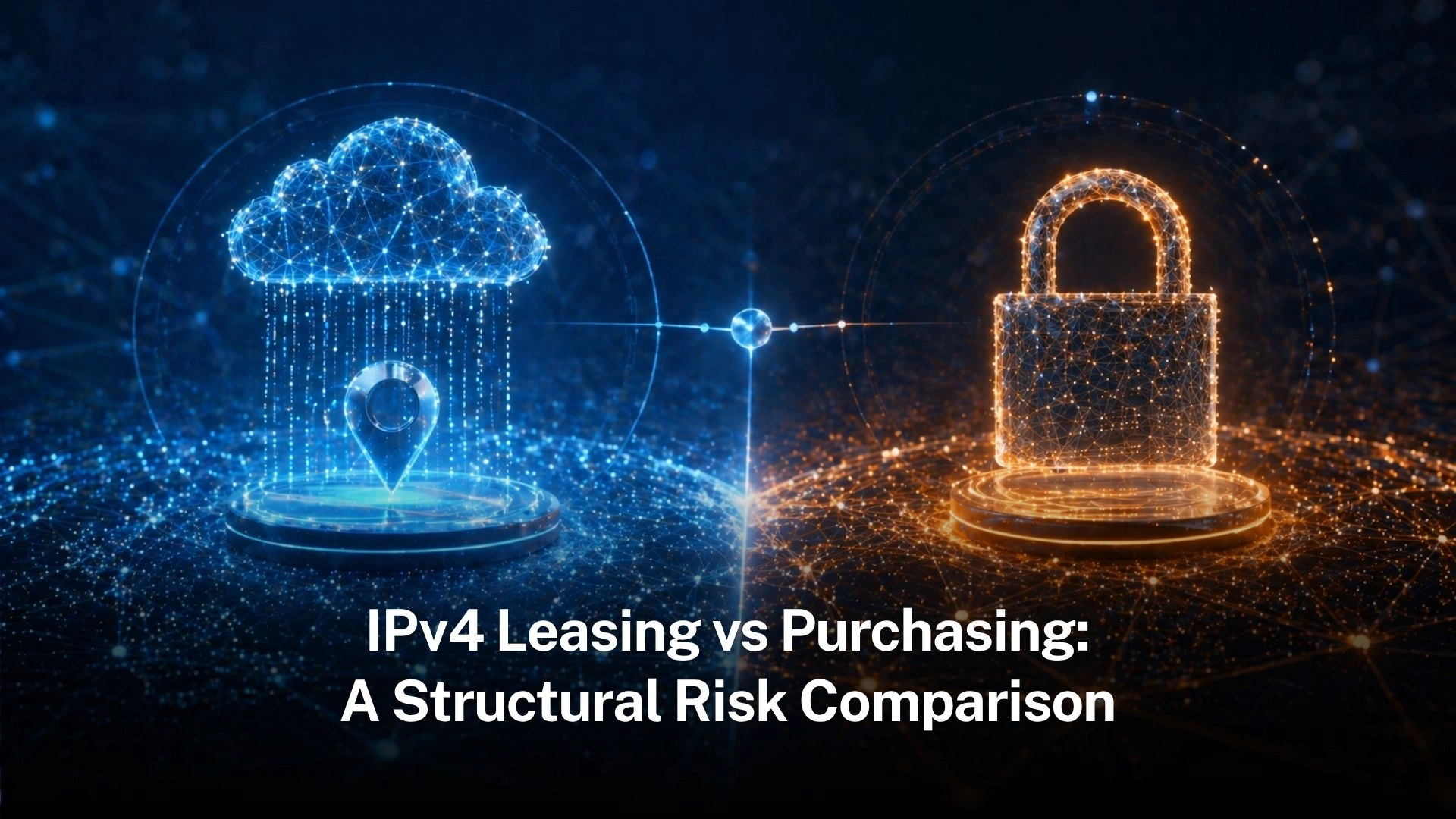
在 IPv4 稀缺持续加剧的市场中,租赁与购买已不只是价格差异,而是两种不同的风险结构。本文解析 IPv4 租赁与购买的成本、控制权、连续性、市场风险与适用场景,帮助企业制定更合适的 IP 策略。
Table of Contents
重点摘要
- 到了 2026 年,IPv4 租赁已经成为一种更灵活的运营模式,月租价格相对稳定,主要由稀缺性和快速部署需求驱动。
- IPv4 购买则越来越像一种长期资产策略,但也会暴露在价格周期、流动性变化和资金锁定风险之下。
IPv4 已经不只是基础设施,它是一个稀缺市场
IPv4 地址系统已经完全转入二级市场生态。
自从 IANA 的免费分配耗尽后,组织现在主要依赖以下方式取得 IPv4:
- 通过区域互联网注册机构(RIR)的转移
- 经纪撮合的二级市场买卖
- 像 i.lease 这样的结构化租赁平台
像 i.lease 这样的平台,现在已经覆盖租赁、购买和 IP 管理等完整流程,这反映出 IPv4 已经更像一种“资产类别”,而不再只是单纯的技术分配资源。
而这整个结构性变化,就是“租赁 vs 购买”这个讨论的基础。
2026 年的 IPv4 租赁到底是什么意思
IPv4 租赁是一种按时间计算的使用权,不是所有权。
按照当前市场结构,租赁通常包括:
- 临时路由权
- 由提供方管理的 IP 区块
- 合约式续租周期
- 与合规和路由相关的运营支持
它最大的优势是速度和灵活性:
- IP 空间几乎可以立即启用
- 不需要等待注册机构转移
- 不需要高资本投入的购买流程
IPv4 租赁的成本结构
目前市场共识大致是:
- 全球平均:每个 IP 每月 0.30 至 0.60 美元
- APNIC 高需求地区:每个 IP 每月 0.40 至 0.75 美元
- /24 区块通常每月约 60 至 140 美元,具体取决于路由质量
原文的意思是,这种价格已经越来越稳定,比较像一种“公用资源”式的定价区间,而不是纯投机型资产曲线。
IPv4 购买:拥有一种有限的数字资产
购买 IPv4,指的是通过符合 RIR 规定的转移机制,取得地址空间的永久控制权。
像 i.lease 这样的平台,通常会通过以下方式来处理:
- 第三方托管结算
- 符合 RIR 政策
- 注册层级的转移执行
- 转移后的路由设置,例如 RPKI、DNS、BGP
这会让 IPv4 从“基础设施”变成“资产负债表上的资产”。
原文还引用一句话:
“IPv4 是互联网最重要的服务使能资源;没有它,设备或服务器就无法在线。”
-IPv4 is the Internet’s most important service enabler; a device or server cannot be online without it.
– Heng.Lu, CEO of LARUS Limited and founder of the LARUS Foundation
IPv4 购买价格
根据当前经纪和二级市场的共识:
- 大区块(/16):每个 IP 18 至 28 美元
- 中型区块(/20–/22):每个 IP 26 至 40 美元
- 小区块(/23–/24):每个 IP 35 至 45 美元
这里的重点趋势不是“继续上涨”,而是流动性开始碎片化:
- 大区块价格开始转软
- 小型运营区块因为需求密度高,价格仍较稳
结构性差异:租赁 vs 购买 IPv4
原文说,真正的差别不是价格,而是风险结构。
1. 资本结构
- 租赁 = 营运支出(OPEX)
- 购买 = 资本支出(CAPEX)
租赁可以降低前期负担,常见于:
- 云扩容
- 代理网络
- SaaS 基础设施扩张
购买通常用于:
- 核心基础设施稳定
- 长期托管服务商
- 需求可预测的网络运营商
2. 连续性风险
- 租赁:依赖合约续租周期
- 购买:一旦完成转移,就是永久所有权
原文这里的核心句是:
租赁优化灵活性,所有权优化连续性。
3. 市场风险暴露
- 租赁:价格较稳定,但会受缓慢价格漂移影响
- 购买:暴露在资产估值周期中
原文这里想表达的是,IPv4 已经不是只涨不跌,而是对周期敏感。
4. 运营灵活性
租赁支持:
- 快速部署
- 工作负载扩张
- 临时基础设施需求
- 多地区扩展
所有权更优先保障:
- 路由独立性
- 长期 IP 声誉控制
- 降低对供应商依赖
为什么 IPv4 租赁在 2026 年变得更有结构性优势
IPv4 租赁的增长,主要由三种结构性力量驱动。
1. 稀缺但没有真正替代品
尽管 IPv6 在推进,但 IPv4 仍然在全球范围内很重要。
很多网络仍依赖 IPv4 来支持:
- 旧系统
- 全球兼容性
- 服务可达性
2. 成本优化压力
租赁避免了高额前期购买成本,同时又能支持扩张。
市场现实就是:
- 购买 = 高 CAPEX 门槛
- 租赁 = 可预测的月度扩展方式
3. 部署速度
购买通常需要:
- RIR 审批
- 转移验证
- 注册更新
而租赁可以绕过大部分这类流程,实现接近即时启用。
结构性风险:租赁 vs 购买
租赁风险
- 依赖供应商续租
- IP 声誉可能波动
- 长期成本会不断累积
购买风险
- 高资本锁定
- 暴露在市场时机风险中
- 在基础设施需求变化很快时,灵活性较低
最关键的结构性洞察
2026 年的 IPv4,已经不再是“只有一个价格的市场”。
它更像是一个流动性碎片化系统:
- 租赁像基础设施订阅
- 持有像稀缺资产持仓
这也是为什么这两种模式不是互相取代,而是同时扩张。
决策框架:什么时候租,什么时候买
适合租 IPv4:
- 工作负载是临时的或弹性的
- 需要快速扩张
- 资本效率比所有权更重要
适合买 IPv4:
- 基础设施稳定且长期存在
- IP 使用需求可预测
- 需要对路由和声誉有战略控制权
结论:IPv4 现在是双结构资产系统
2026 年的 IPv4 生态已经明显分化:
- 租赁 = 运营灵活性层
- 购买 = 战略性稀缺资产层
两者不会互相取代。
越来越多组织实际上采用的是混合模式:
- 扩容时用租赁
- 核心基础设施用购买
Frequently Asked Questions
1. What is IPv4 leasing?
Short-term yes. Long-term depends on usage duration; breakeven is typically 2–4 years.
2. What is the current IPv4 lease price in 2026?
Around $0.30–$0.60 per IP per month globally.
3. Is IPv4 still increasing in price?
Not uniformly. Large blocks are softening while small blocks remain stable.
4. Why does IPv4 still matter if IPv6 exists?
Because global infrastructure and legacy systems still rely heavily on IPv4 compatibility.
5. Is buying IPv4 a good investment?
It depends on time horizon. It behaves more like a scarce infrastructure asset than a growth asset.
Related Blogs
Articles connexes

Qu’est-ce qu’une lettre d’autorisation (LOA) dans le cadre d’un bail de propriété intellectuelle ? LOA vs ROA et points à vérifier
Une Lettre d’Autorisation (LOA) est un document officiel dans lequel le titulaire enregistré d’un bloc d’adresses IP autorise une autre partie à annoncer cet espace d’adressage à partir d’un numéro de système autonome spécifié. Il s’agit de l’autorisation écrite qui relie un droit contractuel d’utiliser un espace d’adressage à l’acte technique consistant à le router — et sans elle, les fournisseurs en amont refuseront généralement d’accepter vos annonces. CeRead more Related Posts IP地址租赁中的授权书 (LOA) 是什么?LOA 与 ROA 的区别以及需要核实的内容 授权书(Letter of Authorization,LOA)是一份正式文件,由 IP 地址块的注册持有者授权另一方通过指定的自治系统编号(ASN)公告该地址空间。 它是一份书面授权,将使用地址空间的合同权利与实际进行路由公告的技术行为连接起来——如果没有 LOA,上游服务提供商通常会拒绝接受你的路由公告。 正是这种拒绝,使 LOA 在运营上具有决定性意义,而不仅仅是一项行政文件。Transit 服务提供商、数据中心和电信运营商都需要证明,公告某个前缀的一方确实获得了授权,因为接受未经授权的公告就意味着参与了一次路由劫持。Cloudflare 的 BYOIP 文档对此说明得非常明确:其 Transit 服务提供商要求在接受 Cloudflare 代表客户公告的路由之前提供 LOA,而且文件必须明确列出获得授权的前缀以及将用于公告这些前缀的 ASN。整个行业普遍都有类似要求。一家企业即使已经签署租赁协议、完成路由器配置,仍然可能因为 Qu’est-ce qu’une lettre d’autorisation (LOA) dans le cadre d’un bail de propriété intellectuelle ? LOA vs ROA et points à vérifier Une Lettre d’Autorisation (LOA) est un document officiel dans lequel le titulaire enregistré d’un bloc d’adresses IP autorise une autre What Is a Letter of Authorization (LOA) in IP Leasing? LOA vs ROA and What to Verify A Letter of Authorization (LOA) is a formal document in which the registered holder of an IP address block authorizes .related-post {} .related-post .post-list { text-align: left; } .related-post .post-list .item { margin: 5px; padding: 10px; } .related-post .headline { font-size: 18px !important; color: #999999 !important; } .related-post .post-list .item .post_thumb { max-height: 220px; margin: 10px 0px; padding: 0px; display: block; } .related-post .post-list .item .post_title { font-size: 16px; color: #3f3f3f; margin: 10px 0px; padding: 0px; display: block; text-decoration: none; } .related-post .post-list .item .post_excerpt { font-size: 13px; color: #3f3f3f; margin: 10px 0px; padding: 0px; display: block; text-decoration: none; } @media only screen and (min-width: 1024px) { .related-post .post-list .item { width: 30%; } } @media only screen and (min-width: 768px) and (max-width: 1023px) { .related-post .post-list .item { width: 90%; } } @media only screen and (min-width: 0px) and (max-width: 767px) { .related-post .post-list .item { width: 90%; } }
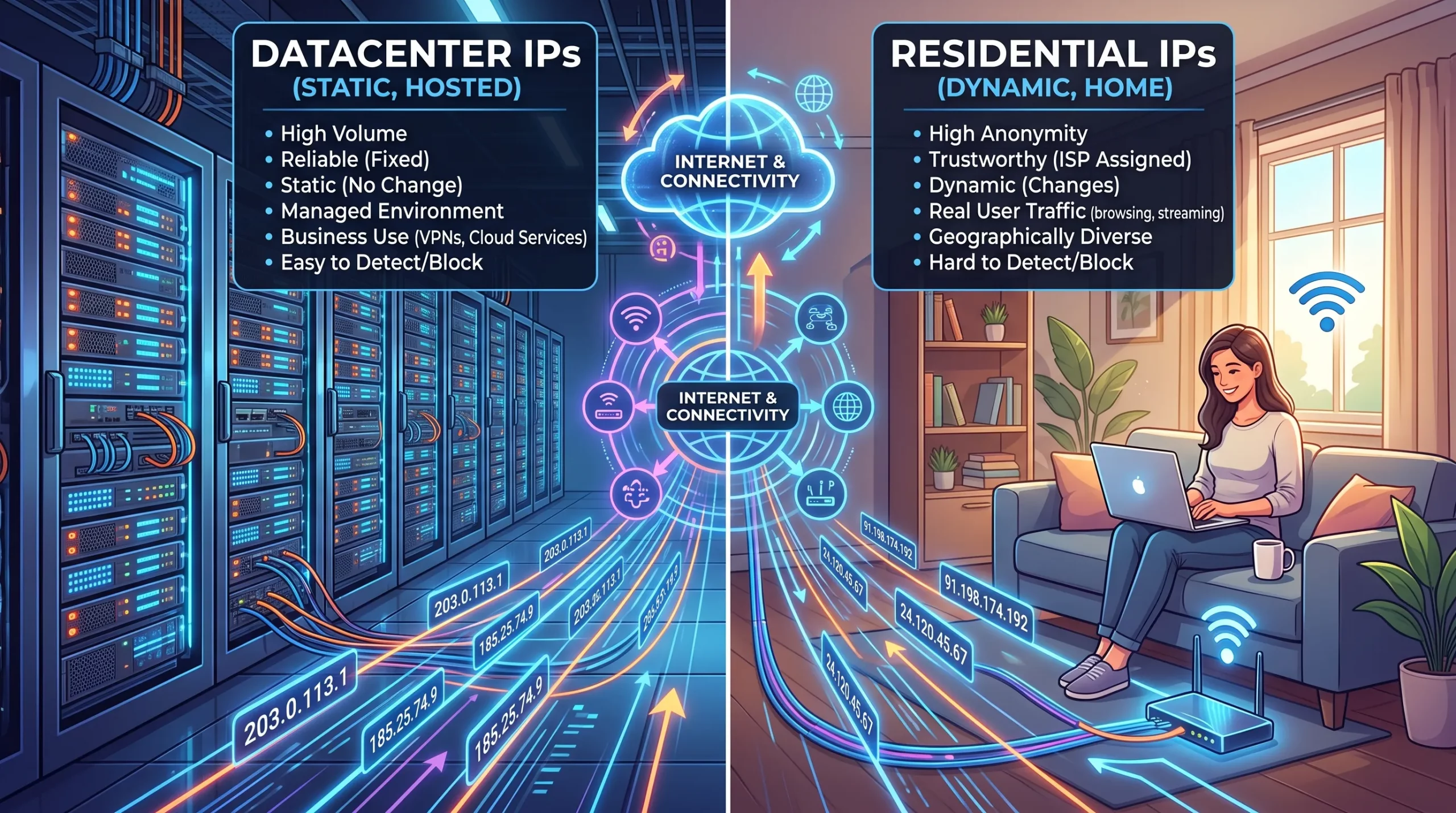
Adresses IP de centres de données vs adresses IP résidentielles : quelle est la différence ? Pourquoi est-ce important ?
Une adresse IP de centre de données provient d’un centre de données commercial, d’un fournisseur cloud ou d’une société d’hébergement, tandis qu’une adresse IP résidentielle est attribuée par un fournisseur d’accès Internet à un particulier ou à une entreprise. La différence tient à l’origine : l’une provient d’une infrastructure conçue pour faire fonctionner des serveurs, l’autre d’une connexion conçue pour servir un utilisateur final. Cette seule distinction influence laRead more Related Posts Qu’est-ce qu’une lettre d’autorisation (LOA) dans le cadre d’un bail de propriété intellectuelle ? LOA vs ROA et points à vérifier Une Lettre d’Autorisation (LOA) est un document officiel dans lequel le titulaire enregistré d’un bloc d’adresses IP autorise une autre 数据中心IP地址与住宅IP地址:区别是什么?为什么这很重要? 常见问题解答 数据中心 IP 地址来源于商业数据中心、云服务提供商或托管公司,而住宅 IP 地址则由互联网服务提供商分配给家庭或企业用户。 两者的区别在于来源:一种来自为运行服务器而建设的基础设施,另一种来自为终端用户提供连接而建设的网络。正是这一根本区别,决定了互联网其他系统如何看待来自这两类地址的流量。 这个话题通常只会在代理和反检测的狭窄语境下被讨论,因此很容易形成片面的认知。实际上,数据中心 IP 与住宅 IP 的区别,对任何运营互联网基础设施的人都很重要,因为它会影响一个地址天然具有多少信任度、网站和安全系统如何响应它,以及这个地址适合什么用途。几乎所有合法的商业互联网基础设施——包括你使用的每个网站、API、邮件服务器和云服务——都运行在数据中心 IP 地址空间上,而这本来就是正确的使用方式。重点并不是哪一种更好、哪一种更差;而是它们服务于不同目的,也会受到不同方式的对待。了解自己正在使用或真正需要哪一种,可以避免许多本来可以避免的问题。 本文将解释这两种 IP 地址分别是什么、系统如何区分它们、为什么它们会受到不同对待,以及这种差异对于在公共 IPv4 地址空间上部署真实服务的企业意味着什么——包括它与地址信誉、地理定位以及不同使用场景究竟需要哪种地址空间之间的关系。 数据中心 Direcciones IP de centros de datos frente a direcciones IP residenciales: ¿Cuál es la diferencia y por qué es importante? A data center IP address originates from a commercial data center, cloud provider, or hosting company, while a residential IP .related-post {} .related-post .post-list { text-align: left; } .related-post .post-list .item { margin: 5px; padding: 10px; } .related-post .headline { font-size: 18px !important; color: #999999 !important; } .related-post .post-list .item .post_thumb { max-height: 220px; margin: 10px 0px; padding: 0px; display: block; } .related-post .post-list .item .post_title { font-size: 16px; color: #3f3f3f; margin: 10px 0px; padding: 0px; display: block; text-decoration: none; } .related-post .post-list .item .post_excerpt { font-size: 13px; color: #3f3f3f; margin: 10px 0px; padding: 0px; display: block; text-decoration: none; } @media only screen and (min-width: 1024px) { .related-post .post-list .item { width: 30%; } } @media only screen and (min-width: 768px) and (max-width: 1023px) { .related-post .post-list .item { width: 90%; } } @media only screen and (min-width: 0px) and (max-width: 767px) { .related-post .post-list .item { width: 90%; } }
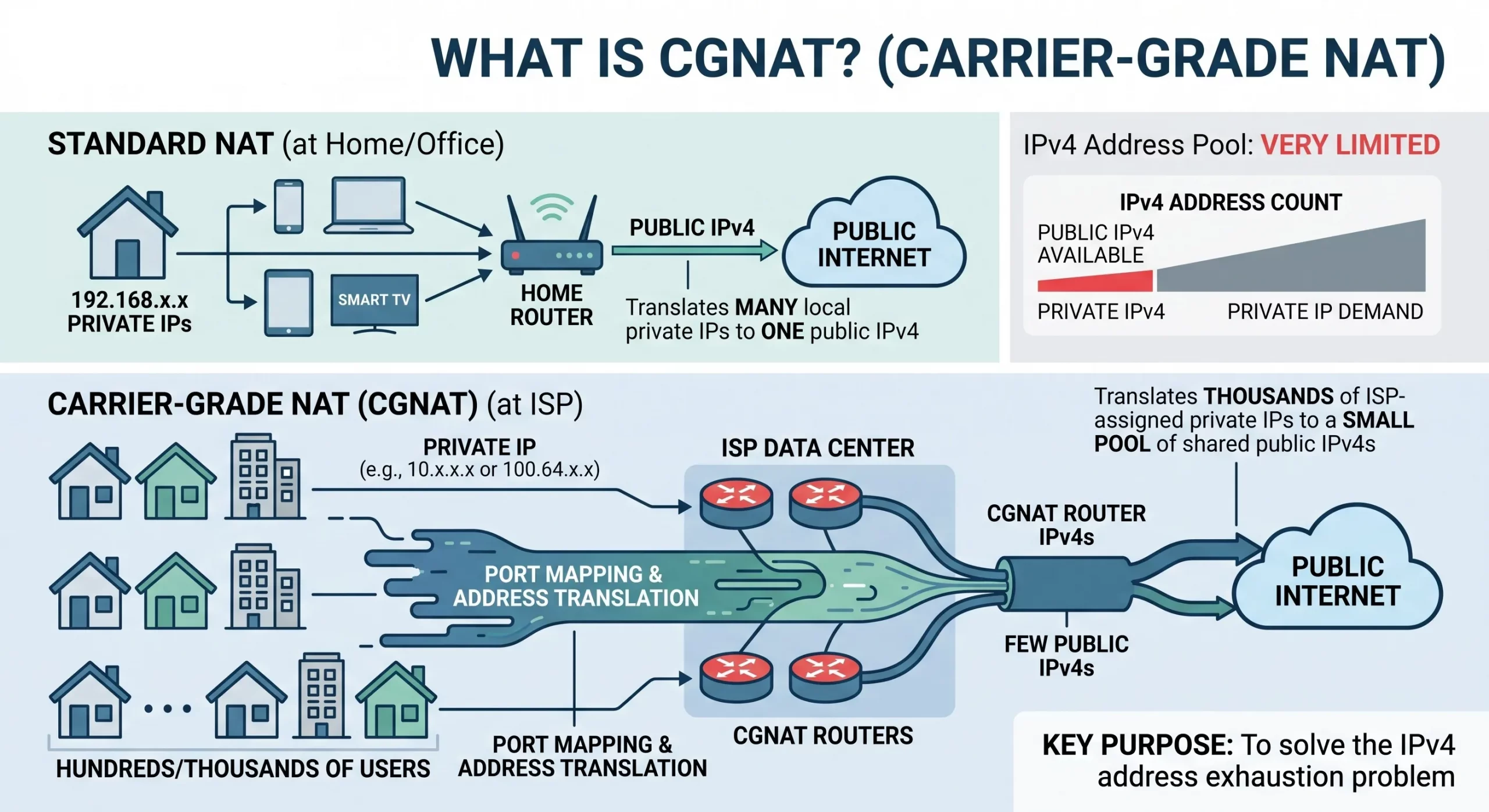
Qu’est-ce que le CGNAT (NAT de niveau opérateur) ? Pourquoi il perturbe l’hébergement, les jeux et les services entrants
Le CGNAT (Carrier-Grade NAT) est une technique qui permet à un fournisseur d’accès Internet de partager simultanément une seule adresse IPv4 publique entre de nombreux clients, au lieu d’attribuer à chacun sa propre adresse. Il ajoute une deuxième couche de traduction d’adresses réseau à l’intérieur du réseau du fournisseur, de sorte que des centaines ou des milliers d’abonnés se trouvent derrière une seule adresse publique visible depuis Internet. PourRead more Related Posts Qu’est-ce qu’une lettre d’autorisation (LOA) dans le cadre d’un bail de propriété intellectuelle ? LOA vs ROA et points à vérifier Une Lettre d’Autorisation (LOA) est un document officiel dans lequel le titulaire enregistré d’un bloc d’adresses IP autorise une autre 数据中心IP地址与住宅IP地址:区别是什么?为什么这很重要? 常见问题解答 数据中心 IP 地址来源于商业数据中心、云服务提供商或托管公司,而住宅 IP 地址则由互联网服务提供商分配给家庭或企业用户。 两者的区别在于来源:一种来自为运行服务器而建设的基础设施,另一种来自为终端用户提供连接而建设的网络。正是这一根本区别,决定了互联网其他系统如何看待来自这两类地址的流量。 这个话题通常只会在代理和反检测的狭窄语境下被讨论,因此很容易形成片面的认知。实际上,数据中心 IP 与住宅 IP 的区别,对任何运营互联网基础设施的人都很重要,因为它会影响一个地址天然具有多少信任度、网站和安全系统如何响应它,以及这个地址适合什么用途。几乎所有合法的商业互联网基础设施——包括你使用的每个网站、API、邮件服务器和云服务——都运行在数据中心 IP 地址空间上,而这本来就是正确的使用方式。重点并不是哪一种更好、哪一种更差;而是它们服务于不同目的,也会受到不同方式的对待。了解自己正在使用或真正需要哪一种,可以避免许多本来可以避免的问题。 本文将解释这两种 IP 地址分别是什么、系统如何区分它们、为什么它们会受到不同对待,以及这种差异对于在公共 IPv4 地址空间上部署真实服务的企业意味着什么——包括它与地址信誉、地理定位以及不同使用场景究竟需要哪种地址空间之间的关系。 数据中心 Direcciones IP de centros de datos frente a direcciones IP residenciales: ¿Cuál es la diferencia y por qué es importante? A data center IP address originates from a commercial data center, cloud provider, or hosting company, while a residential IP .related-post {} .related-post .post-list { text-align: left; } .related-post .post-list .item { margin: 5px; padding: 10px; } .related-post .headline { font-size: 18px !important; color: #999999 !important; } .related-post .post-list .item .post_thumb { max-height: 220px; margin: 10px 0px; padding: 0px; display: block; } .related-post .post-list .item .post_title { font-size: 16px; color: #3f3f3f; margin: 10px 0px; padding: 0px; display: block; text-decoration: none; } .related-post .post-list .item .post_excerpt { font-size: 13px; color: #3f3f3f; margin: 10px 0px; padding: 0px; display: block; text-decoration: none; } @media only screen and (min-width: 1024px) { .related-post .post-list .item { width: 30%; } } @media only screen and (min-width: 768px) and (max-width: 1023px) { .related-post .post-list .item { width: 90%; } } @media only screen and (min-width: 0px) and (max-width: 767px) { .related-post .post-list .item { width: 90%; } }
