Internet Censorship and the Great Firewall
 Chan
Chan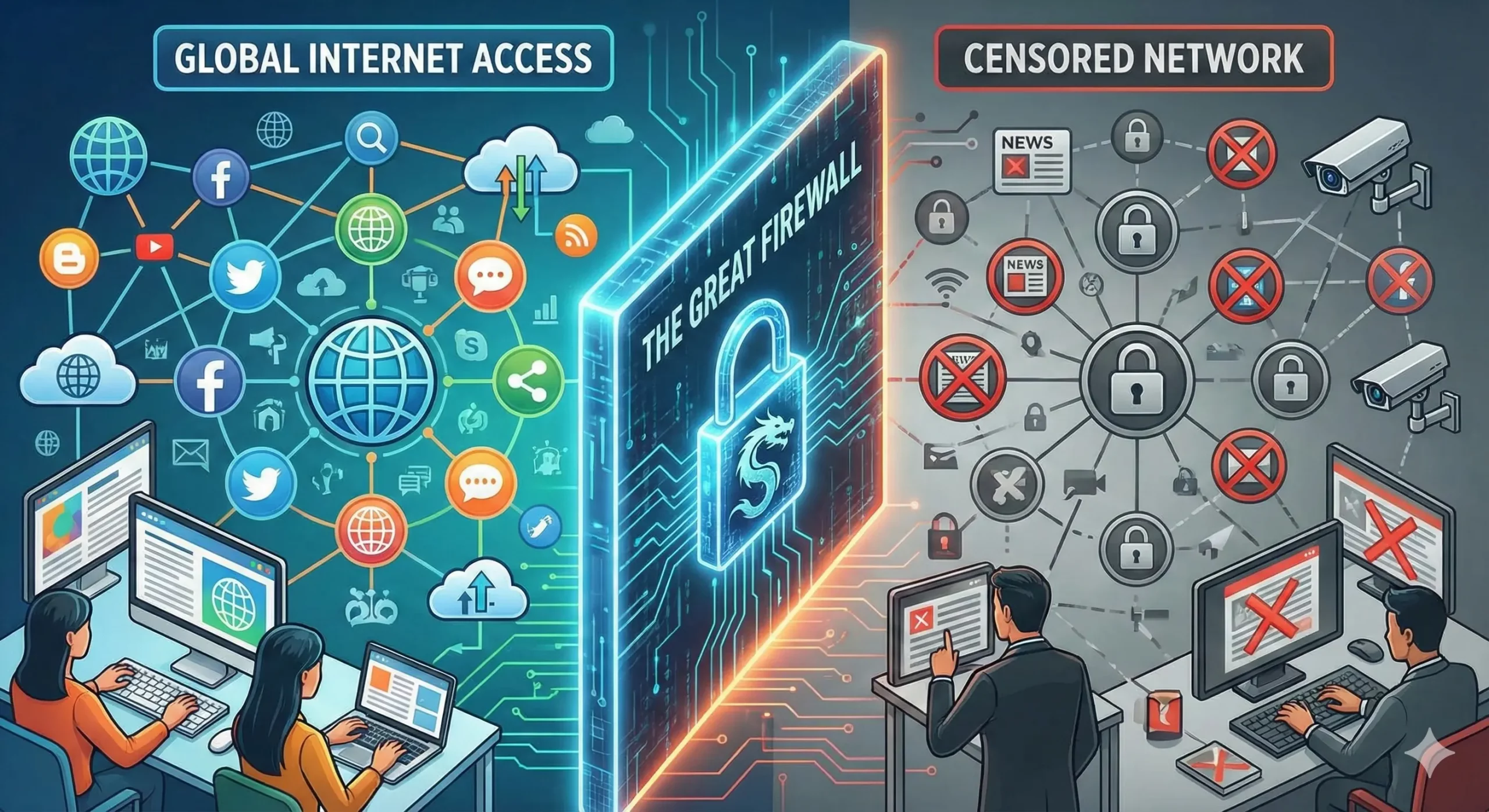
Internet Censorship and the Great Firewall: Understanding the Boundaries of the Digital World
The Internet has revolutionized the way we connect, learn, and share information, but its open nature has also led to significant debates about control, privacy, and freedom.
Table of Contents
At the center of these discussions lies the concept of Internet censorship and, most notably, China’s Great Firewall (GFW). This article explores the intricacies of Internet censorship, its implementation, and the technology behind the Great Firewall.
What Is Internet Censorship?
Internet censorship refers to the control or suppression of access to information on the Internet. Governments, private organizations, or other regulatory bodies may enforce censorship to restrict the content available to users. This can range from blocking specific websites to filtering search results or monitoring online activities.
Why Is Internet Censorship Implemented?
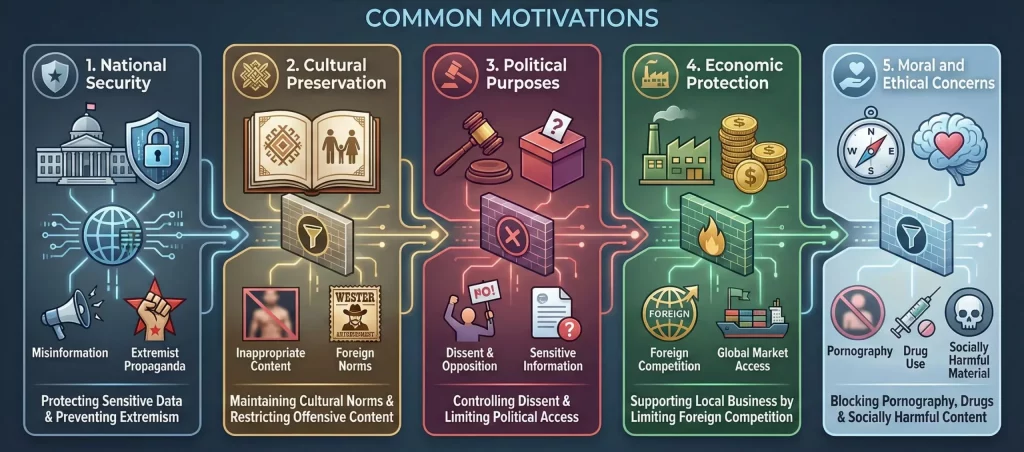
The reasons for implementing Internet censorship vary by country, ideology, and circumstance. Common motivations include:
1) National Security: Protecting sensitive government data and preventing the spread of misinformation or extremist propaganda.
2) Cultural Preservation: Maintaining cultural norms by restricting access to inappropriate or offensive content.
3) Political Purposes: Controlling dissent and opposition by limiting access to politically sensitive information.
4) Economic Protection: Supporting local businesses by limiting competition from foreign companies.
5) Moral and Ethical Concerns: Blocking content related to pornography, drug use, or other socially harmful material.
While proponents argue that censorship is essential for maintaining societal order, critics view it as a violation of free speech and access to information.
What Is the Great Firewall?
The Great Firewall, officially known as the “Golden Shield Project,” is China’s sophisticated Internet censorship system. Implemented in the early 2000s, the Great Firewall is designed to regulate the flow of information and control access to international websites and services that conflict with the government’s policies and ideologies.
Key features of the Great Firewall include:
- Blocking access to popular websites like Google, Facebook, and Twitter.
- Restricting foreign news outlets and platforms critical of the Chinese government.
- Monitoring and filtering user activities to ensure compliance with local laws.
How Is Internet Censorship Implemented?
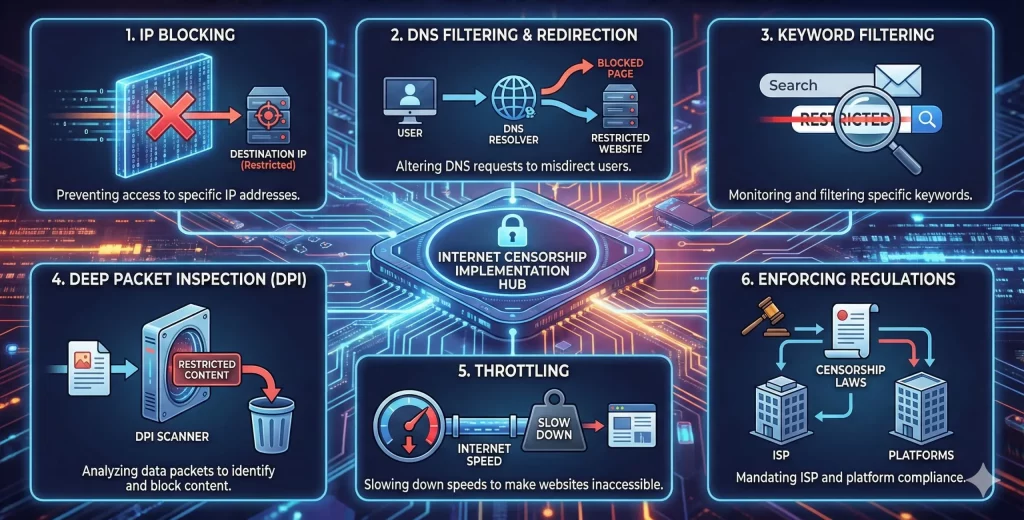
Internet censorship involves a combination of technical measures and regulatory policies. Here are the primary methods:
- IP Blocking: Preventing access to specific IP addresses linked to restricted websites.
- DNS Filtering and Redirection: Altering Domain Name System (DNS) requests to misdirect users trying to reach restricted websites.
- Keyword Filtering: Monitoring and filtering specific keywords in search queries, emails, or social media posts.
- Deep Packet Inspection (DPI): Analyzing data packets to identify and block restricted content.
- Throttling: Slowing down Internet speeds for certain websites or services to make them virtually inaccessible.
- Enforcing Regulations: Mandating that Internet service providers (ISPs) and platforms comply with censorship laws.
How Does the Great Firewall Work?
The Great Firewall employs an advanced blend of the above techniques, enhanced by artificial intelligence (AI) and machine learning technologies. Here’s how it functions:
- Network Surveillance: The Chinese government monitors traffic through DPI, allowing authorities to block or throttle connections to restricted websites.
- URL Filtering: Specific URLs or domains are blacklisted to prevent users from accessing them.
- Keyword Monitoring: Content with sensitive keywords is flagged and blocked, affecting search engines and social media platforms.
- VPN Detection and Blocking: Virtual Private Networks (VPNs), often used to bypass censorship, are detected and disabled through advanced algorithms.
- Collaboration with Local Companies: Domestic platforms like WeChat and Baidu operate under strict regulatory guidelines to enforce censorship internally.
Conclusion
Internet censorship and the Great Firewall exemplify the complexities of regulating the digital space. While censorship aims to achieve goals like national security and cultural preservation, it often raises ethical questions about freedom of expression and access to information.
The Great Firewall, in particular, showcases how technology can be leveraged to control online narratives, creating a heavily monitored and filtered Internet ecosystem.
Trusted IPv4 Leasing for Business Growth
Get enterprise-grade IPv4 space quickly, with seamless deployment and end-to-end management.
Get Started with i.leaseArticles connexes
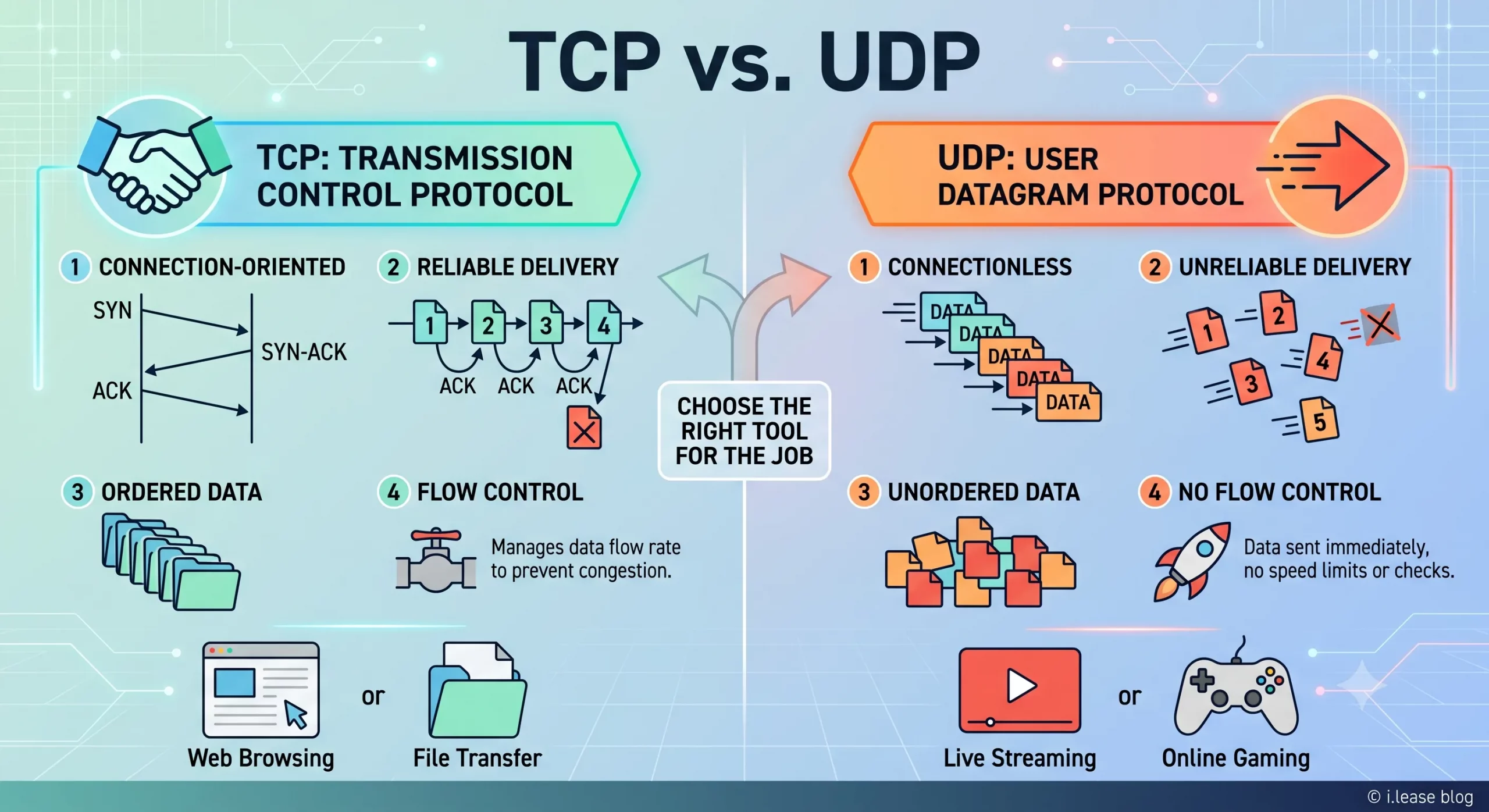
TCP vs UDP : guide de location IPv4 et de réseau d’entreprise
TCP et UDP sont deux des protocoles de transport les plus importants sur Internet. Ils déterminent la circulation des données entre les appareils, les serveurs, les plateformes cloud, les passerelles VPN, les résolveurs DNS, les systèmes de messagerie, les plateformes de streaming et les applications métier. Pour les entreprises, TCP et UDP ne sont pas de simples termes techniques. Ils ont un impact direct sur les performances de l’infrastructure. Related Posts TCP 与 UDP:IPv4 租赁和企业网络指南 TCP 和 UDP 是互联网中最重要的两种传输层协议。它们决定数据如何在设备、服务器、云平台、VPN 网关、DNS 解析器、电子邮件系统、流媒体平台以及企业应用程序之间传输。 对于企业而言,TCP 和 UDP 不仅仅是技术术语,它们会直接影响实际的基础设施性能。公网 IPv4 地址提供可从互联网访问的网络端点,而 TCP 和 UDP 则决定流量如何通过该端点进行传输。 这对于租用或购买 IPv4 地址的企业尤为重要。企业租用 IPv4 什么是BYOIP(自备IP地址)? 自带 IP(Bring Your Own IP,简称 BYOIP)是一种网络部署方式,允许企业将自己现有的公网 IP 地址段应用于云服务提供商、数据中心、内容分发网络(CDN)或其他基础设施平台。 企业无需使用服务提供商分配的新公网 IP 地址,而是可以使用自己已拥有或已获授权使用的 IPv4 或 IPv6 地址前缀。服务提供商会验证该组织对该地址段的使用权限,并在支持的情况下,通过其自身网络对该地址段进行路由公告(Advertise)。 BYOIP 有助于企业在迁移至云平台时保留现有的防火墙规则、白名单(Allowlists)、客户系统集成、IP 信誉(IP Reputation)、DNS 配置以及既有的网络身份。这不仅能够减少因更换 如何使用 i.Lease 将闲置的 IPv4 地址转化为持续的收入来源 通过 i.Lease 释放闲置 IPv4 地址的隐藏价值,将未被充分利用的数字基础设施转化为持续性收入来源,同时妥善应对市场需求、合规要求和相关风险。 租赁闲置的 IPv4 地址区块,可以在不放弃所有权的情况下,创造稳定的长期收入。 像 i.Lease 全球 IPv4 市场这样的平台,可以简化地址变现流程,并协助管理 IP 声誉与合规要求。 为什么 IPv4 地址仍然重要 尽管 IPv4 .related-post {} .related-post .post-list { text-align: left; } .related-post .post-list .item { margin: 5px; padding: 10px; } .related-post .headline { font-size: 18px !important; color: #999999 !important; } .related-post .post-list .item .post_thumb { max-height: 220px; margin: 10px 0px; padding: 0px; display: block; } .related-post .post-list .item .post_title { font-size: 16px; color: #3f3f3f; margin: 10px 0px; padding: 0px; display: block; text-decoration: none; } .related-post .post-list .item .post_excerpt { font-size: 13px; color: #3f3f3f; margin: 10px 0px; padding: 0px; display: block; text-decoration: none; } @media only screen and (min-width: 1024px) { .related-post .post-list .item { width: 30%; } } @media only screen and (min-width: 768px) and (max-width: 1023px) { .related-post .post-list .item { width: 90%; } } @media only screen and (min-width: 0px) and (max-width: 767px) { .related-post .post-list .item { width: 90%; } }
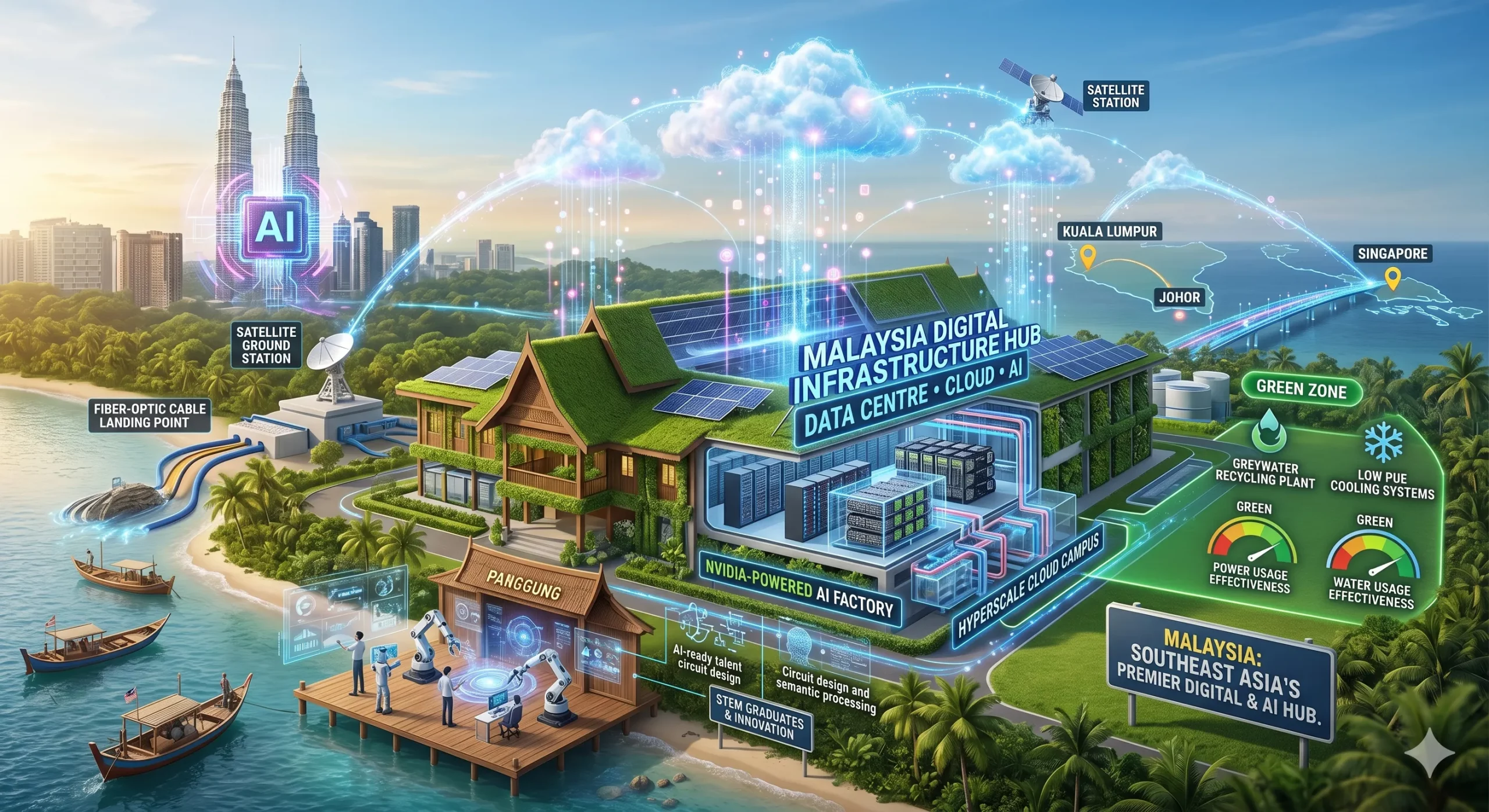
Pourquoi la Malaisie devient-elle un pôle de centres de données pour les infrastructures cloud et d’intelligence artificielle ?
La Malaisie devient l’un des marchés de croissance les plus importants d’Asie du Sud-Est dans le secteur des centres de données. La demande en cloud computing, intelligence artificielle, applications d’entreprise, paiements numériques, commerce électronique, cybersécurité et services régionaux à faible latence pousse les entreprises à construire davantage d’infrastructures au plus près des utilisateurs. Cette croissance ne repose pas uniquement sur un effet de mode. La Malaisie a attiré desRead more Related Posts TCP 与 UDP:IPv4 租赁和企业网络指南 TCP 和 UDP 是互联网中最重要的两种传输层协议。它们决定数据如何在设备、服务器、云平台、VPN 网关、DNS 解析器、电子邮件系统、流媒体平台以及企业应用程序之间传输。 对于企业而言,TCP 和 UDP 不仅仅是技术术语,它们会直接影响实际的基础设施性能。公网 IPv4 地址提供可从互联网访问的网络端点,而 TCP 和 UDP 则决定流量如何通过该端点进行传输。 这对于租用或购买 IPv4 地址的企业尤为重要。企业租用 IPv4 什么是BYOIP(自备IP地址)? 自带 IP(Bring Your Own IP,简称 BYOIP)是一种网络部署方式,允许企业将自己现有的公网 IP 地址段应用于云服务提供商、数据中心、内容分发网络(CDN)或其他基础设施平台。 企业无需使用服务提供商分配的新公网 IP 地址,而是可以使用自己已拥有或已获授权使用的 IPv4 或 IPv6 地址前缀。服务提供商会验证该组织对该地址段的使用权限,并在支持的情况下,通过其自身网络对该地址段进行路由公告(Advertise)。 BYOIP 有助于企业在迁移至云平台时保留现有的防火墙规则、白名单(Allowlists)、客户系统集成、IP 信誉(IP Reputation)、DNS 配置以及既有的网络身份。这不仅能够减少因更换 什么是区域互联网注册管理机构(RIR) 区域互联网注册管理机构(Regional Internet Registry, RIR)是负责在特定地理区域内分配和管理互联网编号资源的组织。这些资源主要包括 IP 地址(IPv4 和 IPv6)以及自治系统号(ASN),它们是支撑设备和网络在互联网上相互通信的关键要素。 如果没有一套组织完善的系统来分配唯一的 IP 地址和路由标识符,互联网便无法正常运转。RIR 确保这一过程在各自管辖的区域内保持公平、高效与一致,从而避免冲突,并提升互联网治理的透明度。 全球五大 RIR 目前全球共有五家获官方认可的 RIR,各自负责世界上特定的区域:AFRINIC – 非洲网络信息中心(非洲)APNIC – 亚太网络信息中心(亚太地区)ARIN .related-post {} .related-post .post-list { text-align: left; } .related-post .post-list .item { margin: 5px; padding: 10px; } .related-post .headline { font-size: 18px !important; color: #999999 !important; } .related-post .post-list .item .post_thumb { max-height: 220px; margin: 10px 0px; padding: 0px; display: block; } .related-post .post-list .item .post_title { font-size: 16px; color: #3f3f3f; margin: 10px 0px; padding: 0px; display: block; text-decoration: none; } .related-post .post-list .item .post_excerpt { font-size: 13px; color: #3f3f3f; margin: 10px 0px; padding: 0px; display: block; text-decoration: none; } @media only screen and (min-width: 1024px) { .related-post .post-list .item { width: 30%; } } @media only screen and (min-width: 768px) and (max-width: 1023px) { .related-post .post-list .item { width: 90%; } } @media only screen and (min-width: 0px) and (max-width: 767px) { .related-post .post-list .item { width: 90%; } }
Comment transformer des adresses IPv4 inutilisées en source de revenus récurrents avec i.Lease
Libérez la valeur cachée des adresses IPv4 inutilisées avec i.Lease, en transformant une infrastructure numérique inactive en source de revenus récurrents, tout en tenant compte de la demande du marché, de la conformité et des risques. La location de blocs IPv4 inutilisés peut générer des revenus réguliers à long terme sans renoncer à leur propriété. Des plateformes telles que la place de marché mondiale IPv4 i.Lease facilitent la monétisationRead more Related Posts TCP 与 UDP:IPv4 租赁和企业网络指南 TCP 和 UDP 是互联网中最重要的两种传输层协议。它们决定数据如何在设备、服务器、云平台、VPN 网关、DNS 解析器、电子邮件系统、流媒体平台以及企业应用程序之间传输。 对于企业而言,TCP 和 UDP 不仅仅是技术术语,它们会直接影响实际的基础设施性能。公网 IPv4 地址提供可从互联网访问的网络端点,而 TCP 和 UDP 则决定流量如何通过该端点进行传输。 这对于租用或购买 IPv4 地址的企业尤为重要。企业租用 IPv4 什么是BYOIP(自备IP地址)? 自带 IP(Bring Your Own IP,简称 BYOIP)是一种网络部署方式,允许企业将自己现有的公网 IP 地址段应用于云服务提供商、数据中心、内容分发网络(CDN)或其他基础设施平台。 企业无需使用服务提供商分配的新公网 IP 地址,而是可以使用自己已拥有或已获授权使用的 IPv4 或 IPv6 地址前缀。服务提供商会验证该组织对该地址段的使用权限,并在支持的情况下,通过其自身网络对该地址段进行路由公告(Advertise)。 BYOIP 有助于企业在迁移至云平台时保留现有的防火墙规则、白名单(Allowlists)、客户系统集成、IP 信誉(IP Reputation)、DNS 配置以及既有的网络身份。这不仅能够减少因更换 什么是区域互联网注册管理机构(RIR) 区域互联网注册管理机构(Regional Internet Registry, RIR)是负责在特定地理区域内分配和管理互联网编号资源的组织。这些资源主要包括 IP 地址(IPv4 和 IPv6)以及自治系统号(ASN),它们是支撑设备和网络在互联网上相互通信的关键要素。 如果没有一套组织完善的系统来分配唯一的 IP 地址和路由标识符,互联网便无法正常运转。RIR 确保这一过程在各自管辖的区域内保持公平、高效与一致,从而避免冲突,并提升互联网治理的透明度。 全球五大 RIR 目前全球共有五家获官方认可的 RIR,各自负责世界上特定的区域:AFRINIC – 非洲网络信息中心(非洲)APNIC – 亚太网络信息中心(亚太地区)ARIN .related-post {} .related-post .post-list { text-align: left; } .related-post .post-list .item { margin: 5px; padding: 10px; } .related-post .headline { font-size: 18px !important; color: #999999 !important; } .related-post .post-list .item .post_thumb { max-height: 220px; margin: 10px 0px; padding: 0px; display: block; } .related-post .post-list .item .post_title { font-size: 16px; color: #3f3f3f; margin: 10px 0px; padding: 0px; display: block; text-decoration: none; } .related-post .post-list .item .post_excerpt { font-size: 13px; color: #3f3f3f; margin: 10px 0px; padding: 0px; display: block; text-decoration: none; } @media only screen and (min-width: 1024px) { .related-post .post-list .item { width: 30%; } } @media only screen and (min-width: 768px) and (max-width: 1023px) { .related-post .post-list .item { width: 90%; } } @media only screen and (min-width: 0px) and (max-width: 767px) { .related-post .post-list .item { width: 90%; } }
