ما هو IP الوكيل؟
 Chan
Chanعنوان IP الوكيل هو عنوان IP وسيط يُستخدم لإخفاء أو ترحيل عنوان IP الأصلي عند الوصول إلى الإنترنت. وهو يعمل كبوابة بين المستخدم والويب. عندما يتم تقديم طلب للوصول إلى موقع ويب، يقوم الخادم الوكيل (الذي يستخدم عنوان IP الوكيل) بإعادة توجيه هذا الطلب، مخفياً عنوان IP الحقيقي للمستخدم عن موقع الويب. وهذا يسمح بزيادة الخصوصية وإخفاء الهوية عند تصفح الإنترنت.
Table of Contents
كيفية عمل بروكسي IP
عندما تستخدم وكيلاً، يرسل جهازك طلباً إلى الخادم الوكيل، الذي يرسله إلى الموقع الإلكتروني المستهدف. ثم يرى الموقع الإلكتروني أن الطلب قادم من الخادم الوكيل، وليس من عنوان IP الخاص بك. هذا يحمي هويتك الأصلية وموقعك من الموقع الإلكتروني. بعد ذلك، يتم إرجاع رد الموقع الإلكتروني إلى الخادم الوكيل، الذي يعيد توجيهه إليك.
أنواع عناوين IP الوكيل
وكلاء HTTP: تعمل هذه فقط لصفحات الويب وهي رائعة للتصفح.
وكلاء SOCKS: تتعامل مع نطاق أوسع من حركة المرور، بما في ذلك رسائل البريد الإلكتروني وملفات التورنت وبروتوكول نقل الملفات.
البروكسيات الشفافة: تُعرِّف نفسها وتمرر عنوان IP الأصلي، وغالبًا ما تُستخدم في التخزين المؤقت.
البروكسيات المجهولة: تخفي عنوان IP الخاص بالمستخدم ولكنها تعرّف نفسها على أنها وكلاء.
البروكسيات عالية المجهولية: توفر هذه البروكسيات أقصى قدر من الخصوصية من خلال عدم تعريف نفسها كخوادم وكيلة وإخفاء عنوان IP الخاص بالمستخدم تمامًا.
حالات الاستخدام الشائعة لعناوين IP للوكيل
- الشركات: تستخدم الشركات البروكسيات للأمان وموازنة الأحمال ومنع الوصول غير المصرح به إلى أنظمتها الداخلية.
- تحسين محركات البحث والتسويق: يستخدم المسوقون البروكسيات لجمع بيانات المنافسين أو تحليل حركة مرور الويب من مواقع مختلفة.
- البث: يعتمد المستخدمون على عناوين بروكسي IP لتجاوز القيود الجغرافية والوصول إلى المحتوى غير المتاح في مناطقهم.
- عشاق الخصوصية: أولئك المهتمون بالخصوصية على الإنترنت يستخدمون عناوين IP للبروكسي لإخفاء عنوان IP الحقيقي أثناء التصفح.
الفرق بين الوكيل والشبكة الافتراضية الخاصة
بينما تخفي كل من البروكسيات والشبكات الافتراضية الخاصة عنوان IP الخاص بك، تقوم الشبكة الافتراضية الخاصة بتشفير كل حركة المرور على الإنترنت، مما يوفر اتصالاً أكثر أماناً. لا تقوم البروكسيات بشكل عام بتشفير البيانات، ولكنها يمكن أن تكون أسرع من الشبكات الافتراضية الخاصة في بعض حالات الاستخدام لأنها لا تتعامل مع التشفير الثقيل.
الأفكار النهائية
تعد عناوين بروكسي IP أدوات أساسية للحفاظ على الخصوصية، والوصول إلى المحتوى المقيد، وتحسين الأمن على الإنترنت. سواء للاستخدام الشخصي أو العمليات التجارية أو تحليل التسويق، تقدم البروكسيات حلاً مرناً للتفاعل مع الويب بشكل أكثر فعالية. بعض من أشهر مقدمي خدمات البروكسي الأكثر شعبية تشمل Luminati و Smartproxy و Bright Data، حيث تقدم مجموعة من الخدمات المصممة خصيصاً لتلبية الاحتياجات المختلفة.
Related Posts
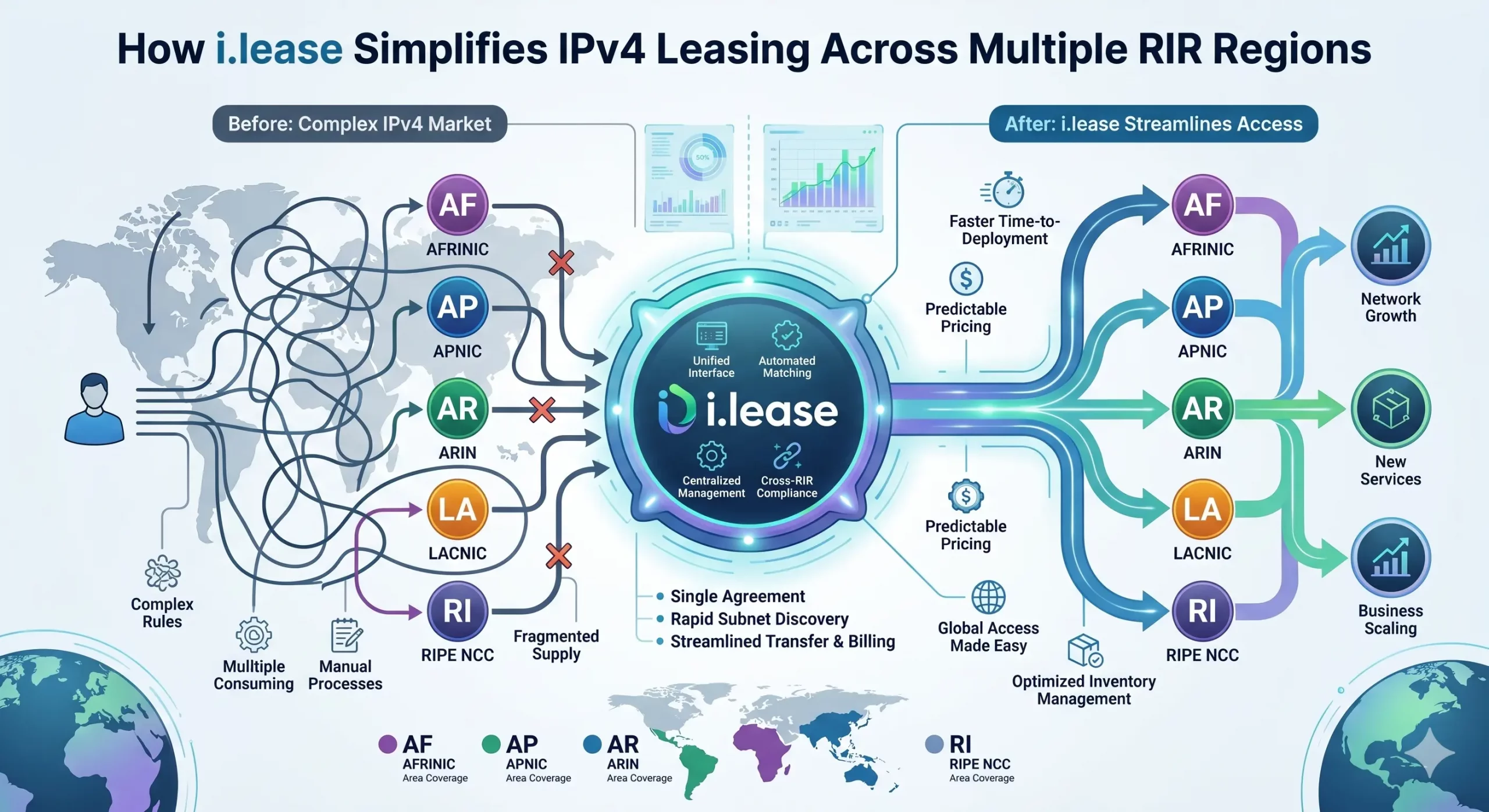
How i.lease Simplifies IPv4 Leasing Across Multiple RIR Regions
In today’s Internet infrastructure economy, IPv4 address leasing has become a critical operational strategy for enterprises, cloud providers, and network operators facing persistent address scarcity. As IPv4 exhaustion continues across all five Regional Internet Registries (RIRs)—ARIN, RIPE NCC, APNIC, LACNIC, and AFRINIC—the need for structured, compliant, and cross-regional leasing solutions has never been greater. However, beneath the surface of what appears to be a simple “supply-and-demand” market lies aRead more Related Posts Risk Placement in IPv4 Transactions: What Enterprises Should Know The IPv4 market has quietly evolved into a structured secondary asset class. As global IPv4 exhaustion continues, enterprises, ISPs, and Understanding Operational Risk in IPv4 Address Markets IPv4 has long stopped being a simple technical identifier system. It has become a constrained, priced, and operationally embedded infrastructure Por qué la mayoría de las empresas están expuestas accidentalmente al riesgo de fallo en la asignación de IPv4 La escasez de IPv4 es ampliamente comprendida. Lo que muchas empresas aún subestiman es el riesgo de continuidad relacionado con .related-post {} .related-post .post-list { text-align: left; } .related-post .post-list .item { margin: 5px; padding: 10px; } .related-post .headline { font-size: 18px !important; color: #999999 !important; } .related-post .post-list .item .post_thumb { max-height: 220px; margin: 10px 0px; padding: 0px; display: block; } .related-post .post-list .item .post_title { font-size: 16px; color: #3f3f3f; margin: 10px 0px; padding: 0px; display: block; text-decoration: none; } .related-post .post-list .item .post_excerpt { font-size: 13px; color: #3f3f3f; margin: 10px 0px; padding: 0px; display: block; text-decoration: none; } @media only screen and (min-width: 1024px) { .related-post .post-list .item { width: 30%; } } @media only screen and (min-width: 768px) and (max-width: 1023px) { .related-post .post-list .item { width: 90%; } } @media only screen and (min-width: 0px) and (max-width: 767px) { .related-post .post-list .item { width: 90%; } }
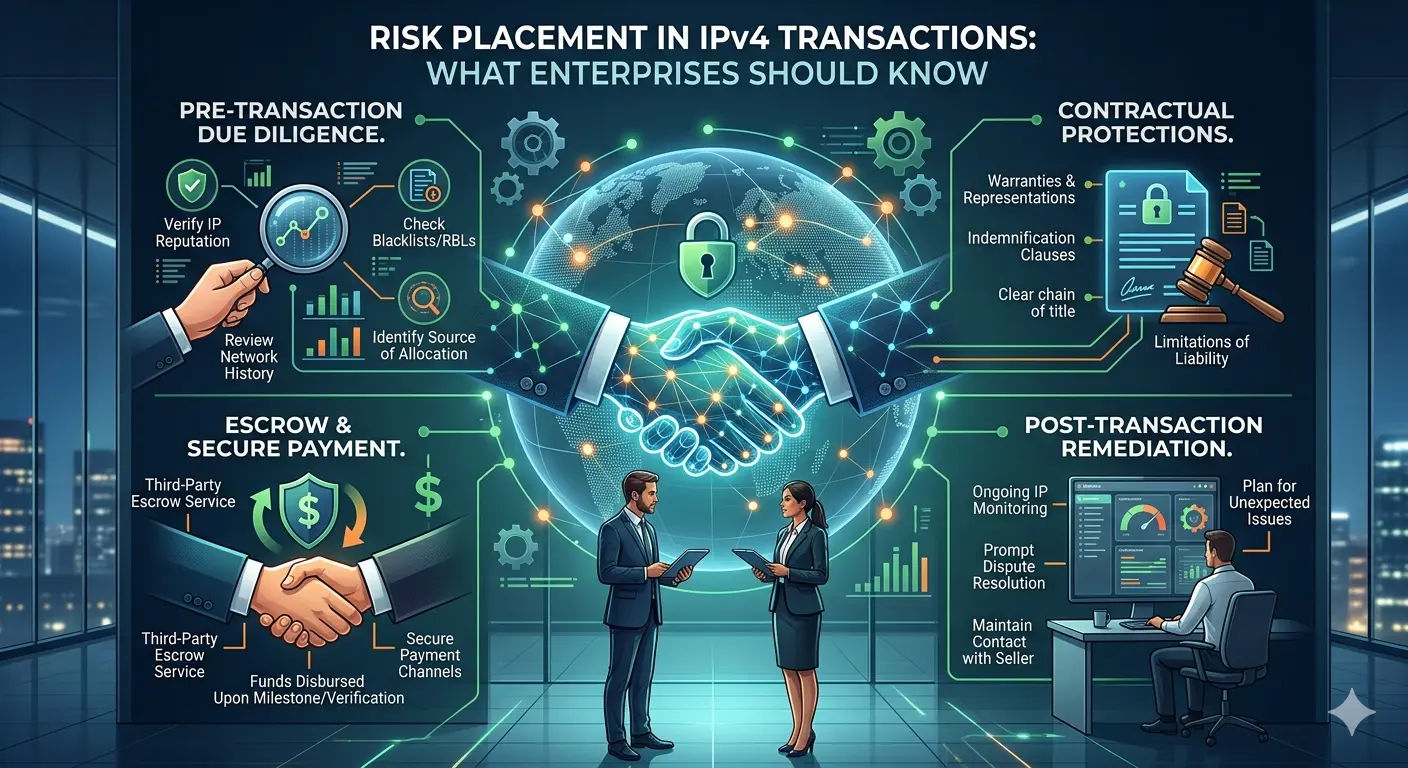
Risk Placement in IPv4 Transactions: What Enterprises Should Know
The IPv4 market has quietly evolved into a structured secondary asset class. As global IPv4 exhaustion continues, enterprises, ISPs, and brokers now routinely engage in buying, leasing, and transferring IPv4 address blocks. Alongside this growth, one topic has become increasingly important—but still under-discussed: risk placement in IPv4 transactions. For organizations participating in this market, especially through platforms such as i.lease, understanding how risk is identified, allocated, and mitigated isRead more Related Posts Risk Placement in IPv4 Transactions: What Enterprises Should Know The IPv4 market has quietly evolved into a structured secondary asset class. As global IPv4 exhaustion continues, enterprises, ISPs, and Understanding Operational Risk in IPv4 Address Markets IPv4 has long stopped being a simple technical identifier system. It has become a constrained, priced, and operationally embedded infrastructure Por qué la mayoría de las empresas están expuestas accidentalmente al riesgo de fallo en la asignación de IPv4 La escasez de IPv4 es ampliamente comprendida. Lo que muchas empresas aún subestiman es el riesgo de continuidad relacionado con .related-post {} .related-post .post-list { text-align: left; } .related-post .post-list .item { margin: 5px; padding: 10px; } .related-post .headline { font-size: 18px !important; color: #999999 !important; } .related-post .post-list .item .post_thumb { max-height: 220px; margin: 10px 0px; padding: 0px; display: block; } .related-post .post-list .item .post_title { font-size: 16px; color: #3f3f3f; margin: 10px 0px; padding: 0px; display: block; text-decoration: none; } .related-post .post-list .item .post_excerpt { font-size: 13px; color: #3f3f3f; margin: 10px 0px; padding: 0px; display: block; text-decoration: none; } @media only screen and (min-width: 1024px) { .related-post .post-list .item { width: 30%; } } @media only screen and (min-width: 768px) and (max-width: 1023px) { .related-post .post-list .item { width: 90%; } } @media only screen and (min-width: 0px) and (max-width: 767px) { .related-post .post-list .item { width: 90%; } }
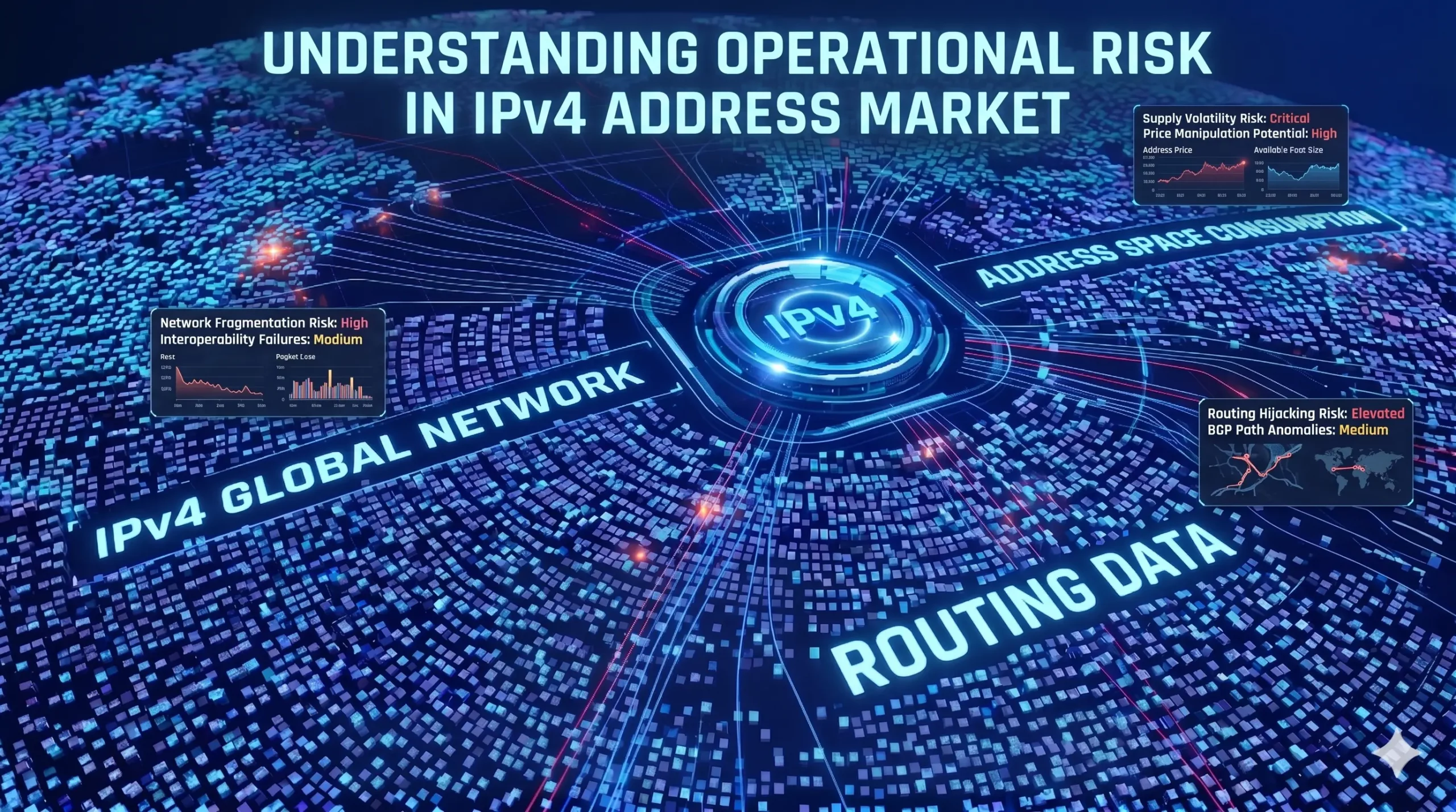
Understanding Operational Risk in IPv4 Address Markets
IPv4 has long stopped being a simple technical identifier system. It has become a constrained, priced, and operationally embedded infrastructure asset class. “In the IPv4 market, execution is not paperwork. Execution is continuity under registry-layer uncertainty.”https://heng.lu/on-why-i-lease-exists-and-why-the-broker-question-is-really-a-registry-risk-question/ Yet most of the industry still speaks about it as if it were a straightforward marketplace problem: buyers, sellers, brokers, escrow, transfer, done. That framing is increasingly outdated. The real structure of riskRead more Related Posts Risk Placement in IPv4 Transactions: What Enterprises Should Know The IPv4 market has quietly evolved into a structured secondary asset class. As global IPv4 exhaustion continues, enterprises, ISPs, and Understanding Operational Risk in IPv4 Address Markets IPv4 has long stopped being a simple technical identifier system. It has become a constrained, priced, and operationally embedded infrastructure Por qué la mayoría de las empresas están expuestas accidentalmente al riesgo de fallo en la asignación de IPv4 La escasez de IPv4 es ampliamente comprendida. Lo que muchas empresas aún subestiman es el riesgo de continuidad relacionado con .related-post {} .related-post .post-list { text-align: left; } .related-post .post-list .item { margin: 5px; padding: 10px; } .related-post .headline { font-size: 18px !important; color: #999999 !important; } .related-post .post-list .item .post_thumb { max-height: 220px; margin: 10px 0px; padding: 0px; display: block; } .related-post .post-list .item .post_title { font-size: 16px; color: #3f3f3f; margin: 10px 0px; padding: 0px; display: block; text-decoration: none; } .related-post .post-list .item .post_excerpt { font-size: 13px; color: #3f3f3f; margin: 10px 0px; padding: 0px; display: block; text-decoration: none; } @media only screen and (min-width: 1024px) { .related-post .post-list .item { width: 30%; } } @media only screen and (min-width: 768px) and (max-width: 1023px) { .related-post .post-list .item { width: 90%; } } @media only screen and (min-width: 0px) and (max-width: 767px) { .related-post .post-list .item { width: 90%; } }
