What are the risks of buying IPv4 from the wrong source?
 Stephanie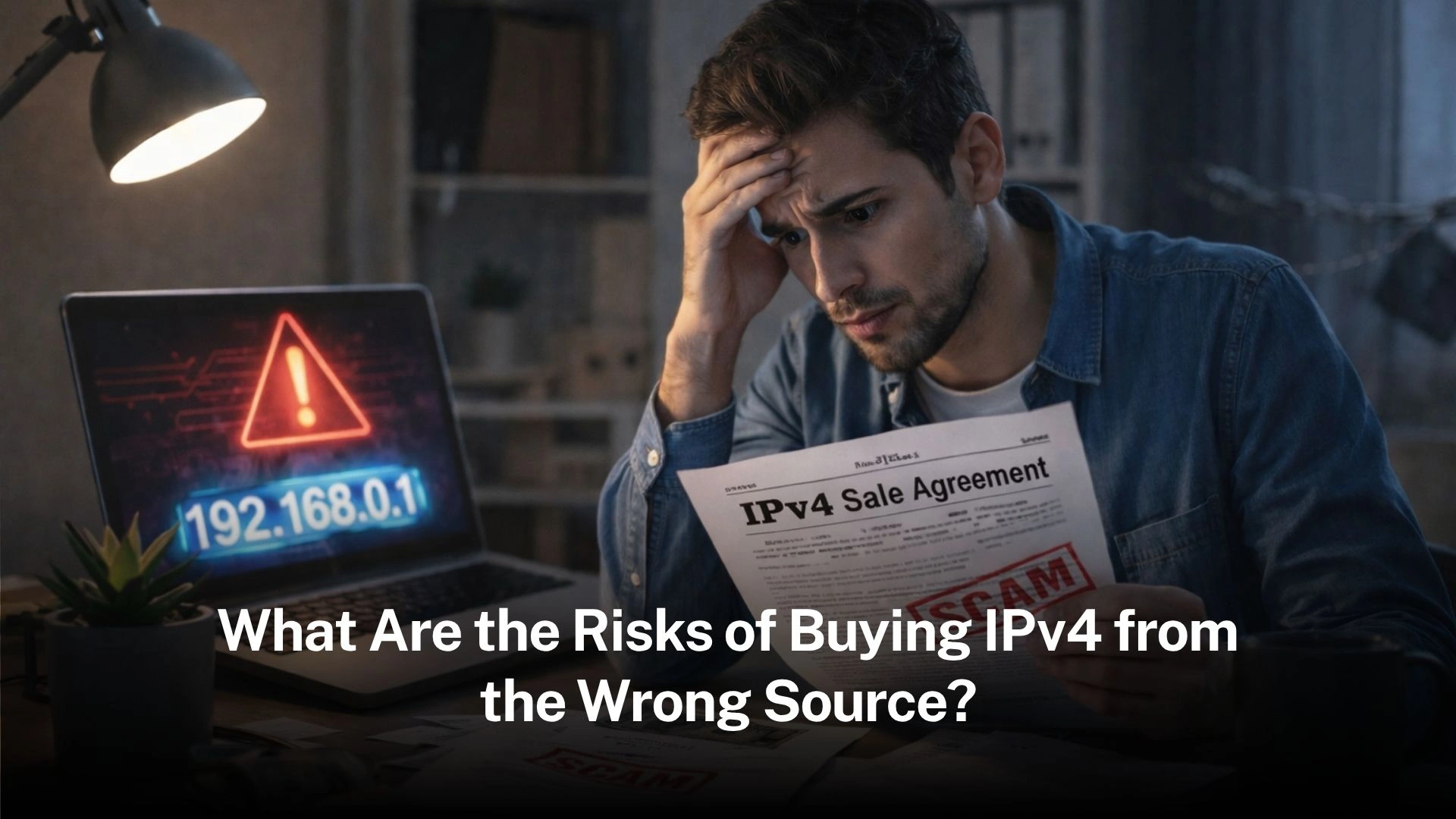
Buying IPv4 addresses outside proper IP Allocation channels exposes organisations to fraud, legal disputes, operational failures and long-term governance risks.
Table of Contents
Key points:
- Poorly governed IPv4 transactions can fail regional internet registry checks, leading to loss of assets or invalid transfers.
- Cheap or unverified sources often hide risks including hijacked IP space, blacklisting, and non-compliance with centralized IP allocation policies.
Introduction: scarcity fuels risk in the IPv4 market
The global shortage of IPv4 addresses has transformed what was once a technical resource into a high-value digital asset. With the exhaustion of primary allocations from Regional Internet Registries (RIRs), organisations increasingly turn to the secondary market to secure address space.
However, this shift has introduced a new layer of complexity. Buying IPv4 is no longer a simple procurement exercise—it is a governance-sensitive transaction tied to IP Allocation, regulatory compliance, and evolving policies enforced by each regional internet registry.
When sourced incorrectly, IPv4 acquisitions can quickly become liabilities rather than assets. The risks extend beyond financial loss to include operational instability, reputational damage, and even regulatory exposure.
Understanding IP allocation and registry governance
At the core of the IPv4 ecosystem lies a structured allocation system. Addresses are not “owned” in a traditional sense but are allocated and recorded within RIR databases such as ARIN, RIPE NCC, APNIC, LACNIC and AFRINIC.
This model means that legitimacy is defined not by possession, but by registry recognition. If an address block is not properly transferred and recorded within the relevant regional internet registry, it may not be usable at all.
As network governance experts frequently stress, accurate registration data underpins internet stability and trust. Misalignment between real-world usage and registry records can undermine routing, security and policy enforcement.
The most common risks of buying from the wrong source
1. Fraud and hijacked IP space
One of the most serious risks is purchasing address space from an entity that does not legally control it. Fraudulent sellers may offer hijacked or dormant IP blocks that appear legitimate but fail registry validation.
Industry analyses show that cybercriminals have exploited the IPv4 transfer market by “selling” stolen or improperly claimed address ranges.
Because all legitimate transfers must pass RIR verification, such transactions are ultimately invalid—leaving buyers with no enforceable rights.
2. Failure to pass regional internet registry approval
Every transfer must comply with the policies of the relevant regional internet registry, including documentation, ownership verification, and sometimes proof of need.
Failure to meet these requirements can delay or completely block a transaction. In many cases, organisations only discover compliance issues after funds are committed.
Without registry approval:
- The IP block cannot be legally transferred
- Routing authorisation may fail
- Future resale becomes impossible
This is particularly critical in regions where justification policies remain strict.
3. Misunderstanding ownership versus usage rights
A persistent source of risk is confusion between “ownership” and “usage rights”. IPv4 addresses are typically allocated under governance frameworks rather than sold as absolute property.
Some sellers exploit this ambiguity by marketing leased or restricted-use addresses as fully owned assets.
The consequences can be severe:
- Buyers may lack legal control over the asset
- Transfers or leasing may be prohibited
- Access to the address space can be revoked
As one analysis notes, this misunderstanding often leads to “legal, operational, and financial risk” when buyers assume rights they do not actually hold.
4. Blacklisted or reputationally damaged IP addresses
Not all IPv4 addresses are equal. Some carry a history of abuse—spam, botnet activity, or malicious traffic—which can severely impact usability.
Cheap IPv4 blocks are frequently associated with:
- Spam blacklists (RBLs)
- Poor email deliverability
- SEO penalties and service degradation
For enterprises relying on email infrastructure or SaaS platforms, this risk can translate directly into lost revenue and damaged customer trust.
5. Legal and compliance exposure
Circumventing centralized IP allocation rules can expose organisations to legal disputes or regulatory enforcement.
Improper transfers may:
- Violate RIR policies
- Trigger audits or investigations
- Result in revocation of address space
Experts warn that non-compliant IP assets can become “difficult to transfer” or even lose value entirely if registry requirements are not met.
In some cases, organisations may build infrastructure on IPs they later lose—creating costly disruption.
6. Operational instability and routing issues
Beyond legal risks, improperly sourced IPv4 blocks can cause significant technical problems.
Address ranges with unclear history or inconsistent registry records may suffer from:
- Broken or inconsistent routing
- Partial global reachability
- Conflicting announcements across networks
Network engineers report that such issues are often difficult to diagnose and resolve, especially when ownership records are incomplete.
7. Financial loss and market distortion
The IPv4 market is volatile, with pricing influenced by scarcity, region, and block size. Buying from the wrong source increases the risk of:
- Overpaying for unusable assets
- Purchasing non-transferable legacy space
- Losing funds in non-escrow transactions
At the same time, undervalued IPs may signal hidden problems rather than genuine bargains.
8. Strategic and scalability limitations
Even when a transaction succeeds, poorly planned acquisitions can create long-term constraints.
Organisations may find:
The block size is insufficient for growth
Integration with existing infrastructure is complex
Transition to IPv6 becomes harder to manage
These issues highlight that IPv4 procurement is not just a technical decision but a strategic one.
The role of centralized IP allocation in mitigating risk
Despite the rise of secondary markets, centralized IP allocation remains the backbone of global internet governance.
RIRs provide:
- Authoritative records of IP ownership
- Policy frameworks for transfers
- Oversight to prevent abuse and duplication
These mechanisms are designed to maintain trust and stability across the internet. However, they only work when participants adhere to them.
Buying IPv4 outside this system—whether through informal brokers, private deals, or unverifiable sellers—undermines these safeguards and increases exposure to risk.
Expert perspectives: why governance matters
Industry experts consistently emphasise the importance of governance and documentation in IP transactions.
One IP asset management analysis warns that risks include “misallocation, theft, regulatory non-compliance, and operational inefficiency”, all of which can lead to financial loss and reputational damage.
Similarly, research from the APNIC community highlights that the IPv4 transfer market has been targeted by malicious actors exploiting gaps in oversight.
These insights reinforce a central point: IPv4 is not just a commodity—it is a governed resource embedded within a global trust framework.
-IPv4 is the Internet’s most important service enabler; a device or server cannot be online without it.
– Heng.Lu, CEO of LARUS Limited and founder of the LARUS Foundation
How to reduce risk when buying IPv4
To mitigate these risks, organisations should adopt a structured approach:
Verify registry compliance
Ensure the IP block is fully transferable and recognised by the relevant regional internet registry.
Confirm ownership and documentation
Request complete WHOIS records, historical data, and proof of control.
Assess IP reputation
Conduct blacklist checks and analyse prior usage.
Use secure transaction mechanisms
Avoid direct payments without escrow or contractual safeguards.
Work with reputable providers
Engage brokers or platforms that follow transparent, compliant processes aligned with IP Allocation policies.
Conclusion: a governance problem disguised as a market transaction
The risks of buying IPv4 from the wrong source ultimately stem from a single issue: disconnecting the transaction from the governance framework that defines legitimacy.
In a world of scarce address space and growing demand, the temptation to prioritise price or speed over compliance is understandable. But the consequences can be severe and long-lasting.
For enterprises, the lesson is clear: IPv4 acquisition is not just about securing addresses—it is about securing valid, compliant, and governable IP assets within the global system.
Frequently Asked Questions
1. Why is buying IPv4 risky compared to other IT assets?
Because IPv4 addresses are governed by regional internet registry policies, not traditional ownership laws. Invalid transfers can nullify the asset.
2. What is the biggest red flag when buying IPv4?
Pricing that is significantly below market value often indicates blacklisted, hijacked, or non-transferable address space.
3. Can IPv4 addresses be taken back after purchase?
Yes. If the transfer does not comply with RIR policies, the address space can be revoked or reassigned.
4. How does centralized IP allocation protect buyers?
It ensures all transactions are recorded, verified, and compliant, reducing the risk of fraud and operational issues.
5. Is leasing IPv4 safer than buying?
Not necessarily. Leasing introduces additional risks around control and long-term access, especially if terms are unclear or poorly documented.
Related Blogs
Related Posts
Short-term vs long-term IPv4 leasing
Facing IPv4 shortages, companies must weigh cost, speed, and network growth when choosing a lease plan. Short-term leasing lets you scale resources up or down easily, but costs more over time and offers less supply certainty. Long-term leasing provides stable pricing and more reliable access, yet makes it harder to adjust your setup as needs evolve. Introduction: Why leasing IPv4 addresses makes sense IPv4 has evolved from a technicalRead more Related Posts What are the risks of buying IPv4 from the wrong source? Buying IPv4 addresses outside proper IP Allocation channels exposes organisations to fraud, legal disputes, operational failures and long-term governance risks.Key Read more Pourquoi la rareté des adresses IPv4 génère de la valeur économique pour les opérateurs La rareté des adresses IPv4, la demande persistante et la lenteur de la transition vers l'IPv6 transforment les adresses IP Read more Why IPv4 scarcity drives economic value for operators IPv4 地址曾经只是互联网运行所需的基础资源。但在今天,它越来越像一种具有市场价格、可交易、可租赁的数字资产。造成这一变化的原因并不复杂:IPv4 的总量有限,而全球互联网对 IPv4 的需求并没有消失;与此同时,IPv6 虽然早已出现,但迁移进度依然缓慢。这三股力量叠加,正在重新塑造运营商对 IP 地址的看法,也改变了互联网基础设施的经济逻辑。原文将这点概括为“有限供给、持续需求与缓慢转型”,并指出这正在推动 IP 地址成为影响全球电信经济的可交易资产。 IPv4 稀缺并不是新问题 全球互联网至今仍大量依赖 IPv4。这个协议诞生于更早的时代,只能提供大约 43 亿个地址。这个数量在互联网初期似乎足够庞大,但在今天已经明显不够。原文指出,IANA 在 2011 年就已将最后一批大型 IPv4 Read more .related-post {} .related-post .post-list { text-align: left; } .related-post .post-list .item { margin: 5px; padding: 10px; } .related-post .headline { font-size: 18px !important; color: #999999 !important; } .related-post .post-list .item .post_thumb { max-height: 220px; margin: 10px 0px; padding: 0px; display: block; } .related-post .post-list .item .post_title { font-size: 16px; color: #3f3f3f; margin: 10px 0px; padding: 0px; display: block; text-decoration: none; } .related-post .post-list .item .post_excerpt { font-size: 13px; color: #3f3f3f; margin: 10px 0px; padding: 0px; display: block; text-decoration: none; } @media only screen and (min-width: 1024px) { .related-post .post-list .item { width: 30%; } } @media only screen and (min-width: 768px) and (max-width: 1023px) { .related-post .post-list .item { width: 90%; } } @media only screen and (min-width: 0px) and (max-width: 767px) { .related-post .post-list .item { width: 90%; } }

Why IPv4 scarcity drives economic value for operators
IPv4 地址曾经只是互联网运行所需的基础资源。但在今天,它越来越像一种具有市场价格、可交易、可租赁的数字资产。 造成这一变化的原因并不复杂:IPv4 的总量有限,而全球互联网对 IPv4 的需求并没有消失;与此同时,IPv6 虽然早已出现,但迁移进度依然缓慢。这三股力量叠加,正在重新塑造运营商对 IP 地址的看法,也改变了互联网基础设施的经济逻辑。原文将这点概括为“有限供给、持续需求与缓慢转型”,并指出这正在推动 IP 地址成为影响全球电信经济的可交易资产。 IPv4 稀缺并不是新问题 全球互联网至今仍大量依赖 IPv4。这个协议诞生于更早的时代,只能提供大约 43 亿个地址。这个数量在互联网初期似乎足够庞大,但在今天已经明显不够。原文指出,IANA 在 2011 年就已将最后一批大型 IPv4 地址区块分配给各区域注册机构,这成为互联网基础设施经济逻辑的转折点。 地址池耗尽之后,市场并没有停下来,而是开始适应。网络运营商、云服务商和电信企业不再只是把 IPv4 看成技术标识,而是把它视为一种有限资源,需要管理、分配、定价,甚至纳入财务优化的考量之中。 从技术资源走向经济资产 稀缺本身并不会自动带来价值,真正让 IPv4 变得有价值的,是它在现实世界中的持续需求。尽管 IPv6 已经存在,而且理论上更先进、地址空间也几乎无限,但大量旧系统、兼容性要求以及客户环境仍然依赖 IPv4。正因如此,IPv4 的需求并没有随着 IPv6 的出现而消失。原文将这一点称为一个“悖论”:技术上更优的替代方案已经存在,但 IPv4 依赖型系统的庞大存量仍在支撑市场需求。 供给固定、需求持续,这就形成了经典的供需失衡。文章提到,IPv4 的价格因此不断上升:2014 年约为每个地址 15 美元,近年则常见于 40 到 50 美元区间,高点甚至更高。围绕 IPv4 的语言也随之发生变化:从 allocation 走向 valuation,从 assignment 走向 trading。 价格不是固定的,但市场已经成形 IPv4 市场并不是静止不变的,也不是所有地址都一个价格。价格会受到区块大小、地区需求、宏观经济环境等因素影响。原文列出的历史数据表明,2014 年每个 IPv4 地址价格约在 6 到 24 美元之间,到 2021 年某些情况下可达到 60Read more Related Posts What are the risks of buying IPv4 from the wrong source? Buying IPv4 addresses outside proper IP Allocation channels exposes organisations to fraud, legal disputes, operational failures and long-term governance risks.Key Read more Pourquoi la rareté des adresses IPv4 génère de la valeur économique pour les opérateurs La rareté des adresses IPv4, la demande persistante et la lenteur de la transition vers l'IPv6 transforment les adresses IP Read more Why IPv4 scarcity drives economic value for operators IPv4 地址曾经只是互联网运行所需的基础资源。但在今天,它越来越像一种具有市场价格、可交易、可租赁的数字资产。造成这一变化的原因并不复杂:IPv4 的总量有限,而全球互联网对 IPv4 的需求并没有消失;与此同时,IPv6 虽然早已出现,但迁移进度依然缓慢。这三股力量叠加,正在重新塑造运营商对 IP 地址的看法,也改变了互联网基础设施的经济逻辑。原文将这点概括为“有限供给、持续需求与缓慢转型”,并指出这正在推动 IP 地址成为影响全球电信经济的可交易资产。 IPv4 稀缺并不是新问题 全球互联网至今仍大量依赖 IPv4。这个协议诞生于更早的时代,只能提供大约 43 亿个地址。这个数量在互联网初期似乎足够庞大,但在今天已经明显不够。原文指出,IANA 在 2011 年就已将最后一批大型 IPv4 Read more .related-post {} .related-post .post-list { text-align: left; } .related-post .post-list .item { margin: 5px; padding: 10px; } .related-post .headline { font-size: 18px !important; color: #999999 !important; } .related-post .post-list .item .post_thumb { max-height: 220px; margin: 10px 0px; padding: 0px; display: block; } .related-post .post-list .item .post_title { font-size: 16px; color: #3f3f3f; margin: 10px 0px; padding: 0px; display: block; text-decoration: none; } .related-post .post-list .item .post_excerpt { font-size: 13px; color: #3f3f3f; margin: 10px 0px; padding: 0px; display: block; text-decoration: none; } @media only screen and (min-width: 1024px) { .related-post .post-list .item { width: 30%; } } @media only screen and (min-width: 768px) and (max-width: 1023px) { .related-post .post-list .item { width: 90%; } } @media only screen and (min-width: 0px) and (max-width: 767px) { .related-post .post-list .item { width: 90%; } }
What Determines IPv4 Pricing in Today’s Market?
Scarcity, shifting demand, and leasing platforms such as i.lease are reshaping how IPv4 addresses are valued and traded globally. IPv4 pricing is driven primarily by scarcity, block size, and fluctuating demand across regions and industries. Leasing models, including platforms like i.lease, are stabilising costs amid volatile purchase markets. What determines IPv4 pricing in today’s market A market shaped by scarcity IPv4 addresses, once freely allocated, have become a traded digital commodity. AsRead more Related Posts What are the risks of buying IPv4 from the wrong source? Buying IPv4 addresses outside proper IP Allocation channels exposes organisations to fraud, legal disputes, operational failures and long-term governance risks.Key Read more Short-term vs long-term IPv4 leasing Facing IPv4 shortages, companies must weigh cost, speed, and network growth when choosing a lease plan.Short-term leasing lets you scale Read more Pourquoi la rareté des adresses IPv4 génère de la valeur économique pour les opérateurs La rareté des adresses IPv4, la demande persistante et la lenteur de la transition vers l'IPv6 transforment les adresses IP Read more .related-post {} .related-post .post-list { text-align: left; } .related-post .post-list .item { margin: 5px; padding: 10px; } .related-post .headline { font-size: 18px !important; color: #999999 !important; } .related-post .post-list .item .post_thumb { max-height: 220px; margin: 10px 0px; padding: 0px; display: block; } .related-post .post-list .item .post_title { font-size: 16px; color: #3f3f3f; margin: 10px 0px; padding: 0px; display: block; text-decoration: none; } .related-post .post-list .item .post_excerpt { font-size: 13px; color: #3f3f3f; margin: 10px 0px; padding: 0px; display: block; text-decoration: none; } @media only screen and (min-width: 1024px) { .related-post .post-list .item { width: 30%; } } @media only screen and (min-width: 768px) and (max-width: 1023px) { .related-post .post-list .item { width: 90%; } } @media only screen and (min-width: 0px) and (max-width: 767px) { .related-post .post-list .item { width: 90%; } }
