What Is IP Address Reputation
 Stephanie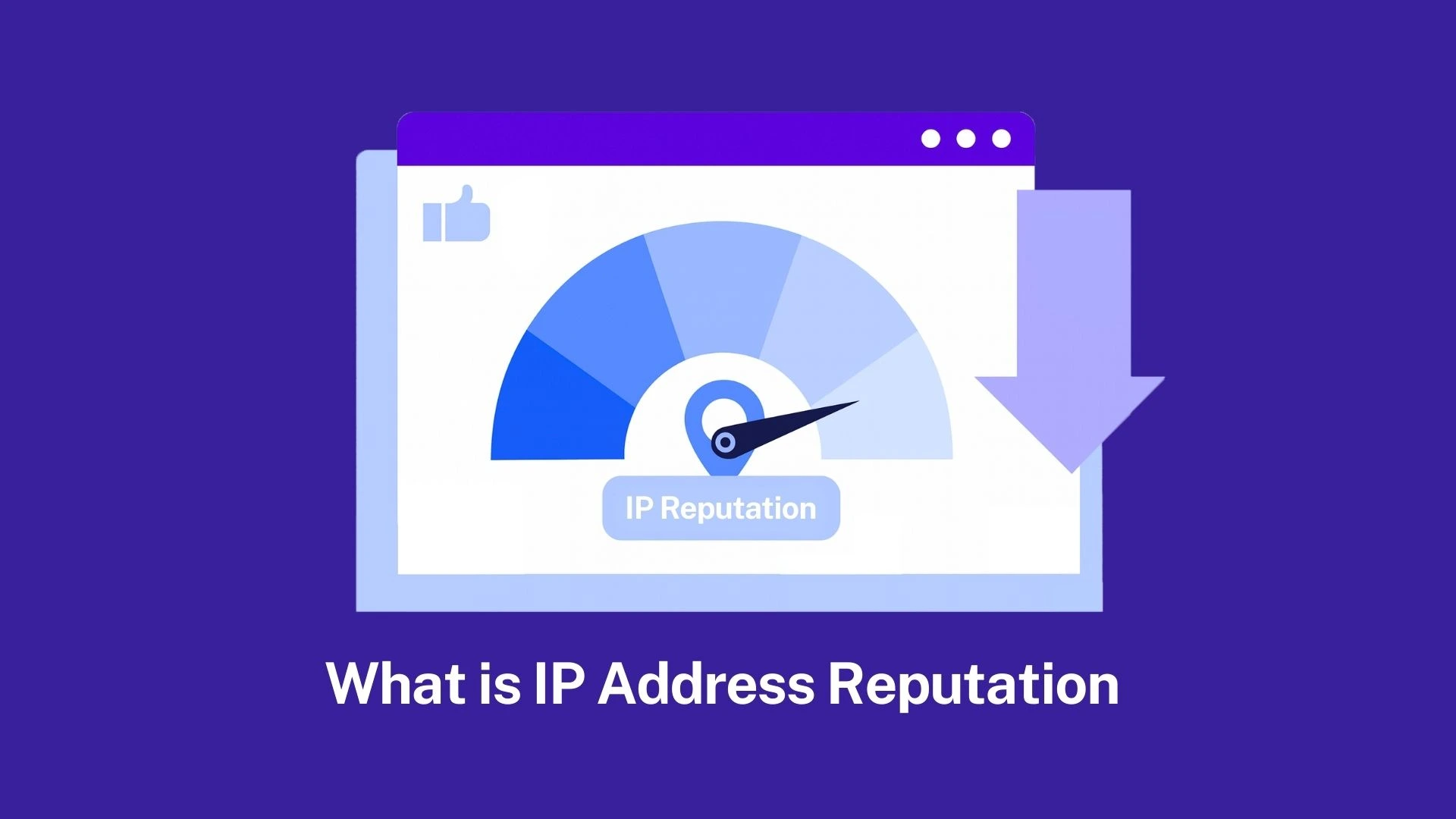
A clear comprehension of the discrepancies between IP reputation and IP risk score constitutes a critical prerequisite for effective cybersecurity governance — the former encapsulates historical trustworthiness, while the latter forecasts potential threat vulnerabilities.
Table of Contents
For instance, a clean IP will send emails that are not flagged and instead land directly in the inbox. A bad one sends emails that go to spam or never arrives. This rating also allows other websites to filter traffic. They deny requests from risky IPs. This impacts not only emails but also browsing, logins, and downloads. When an IP is marked poor, the reputation system will consider it unsafe. The traffic can be rejected or delayed. This is possible even when the user is innocent. The user IP can result from shared servers or cloud systems which have bad reputations. Because of this, reputation matters for businesses that depend on digital tools. Systems need to be kept running and business customers connected guard digital tools brand image. Also protect email marketing efforts. Building a clean reputation takes effort but losing it takes only a moment. This emphasizes the need to regularly and actively manage and monitor IP addresses.
Why IP Address Reputation Matters
When you send an email or visit a website, your IP address is shared. This address is often visible to email providers, web hosts, and security tools. These systems check the reputation of your IP before they allow access or deliver content. If your IP has a good record, your actions are accepted.
If your IP shows past issues, like spam or strange behaviour, your activity may be blocked or delayed. For email, this can mean your message goes straight to the spam folder. For websites, your connection may be denied. These checks run in the background, but they affect every online process. A clean reputation makes it easier to reach users, send newsletters, or host services. A poor reputation causes messages to fail, pages not to load, and services to stop working. Many companies lose sales when emails do not reach customers. Others see damage to their brand when users think the service is broken.
Even with strong content and secure systems, a bad IP score can break the connection. That is why businesses need to monitor their IP status often and fix issues quickly.
How Reputation Is Calculated
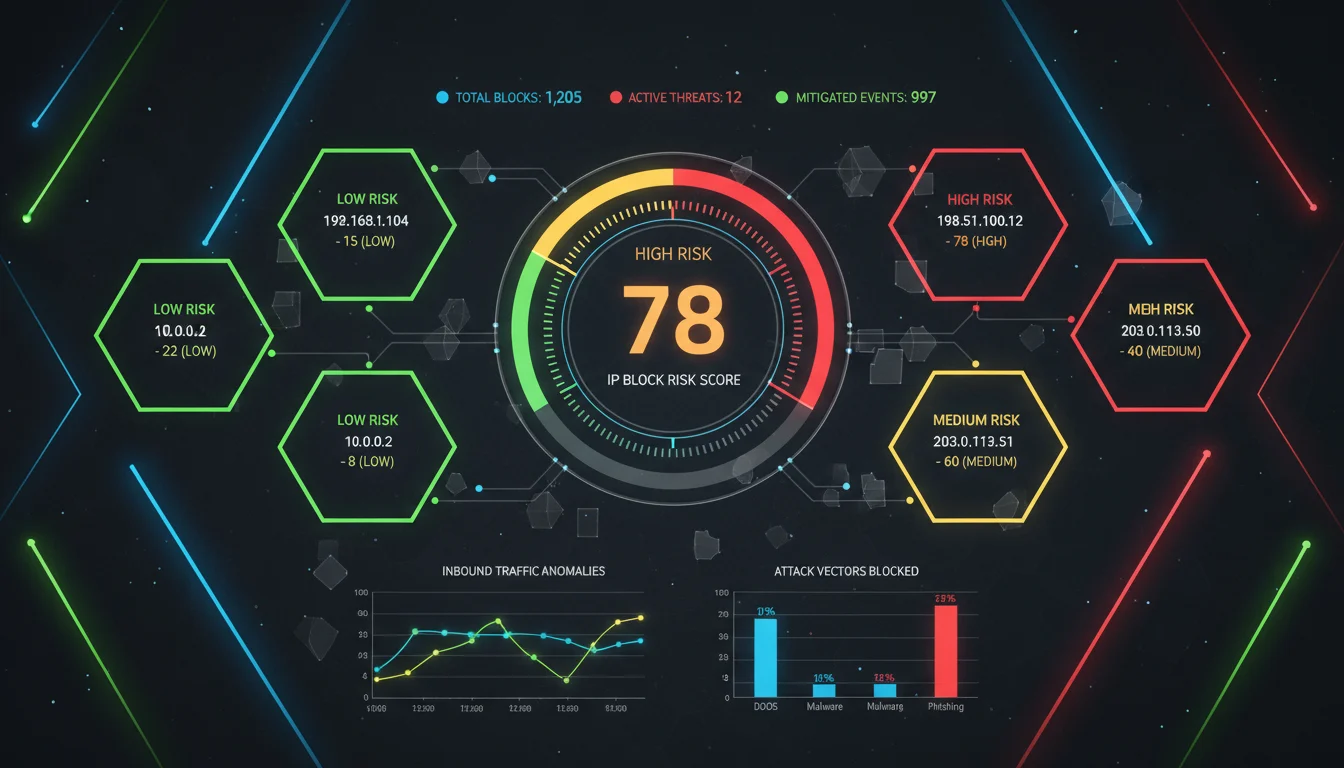
Reputation builds slowly through patterns seen over time. Security firms, email providers, and internet carriers watch for common warning signs. They track spam reports, failed login attempts, malware downloads, and how users react to certain content. When these signs appear often, the system takes notice. Each event adds to a bigger picture. The more signals an IP sends, the stronger the impression it leaves. These signals are sorted and measured. Many vendors use algorithms to give each IP a score. Some also assign risk labels, like “clean,” “low-risk,” or “blacklisted.” A clean IP does not cause problems. It sends regular traffic and follows rules. An IP with problems may have been used for spam or fraud. Even if the owner changes, the IP may still carry that past record.
This is why new users can inherit bad reputations without knowing. When a server or service checks an IP, it decides what to allow based on that reputation. If the score is low, the system may block or delay access. If the score is high, the request passes through. Most of these checks happen in seconds, but their results shape the entire user experience.
Key Sources of Reputation Signals
Reputation services help systems decide whether to trust or reject traffic. These services come in many forms. The most common ones are DNS-based blacklists, or DNSBLs. Mail servers use these lists every day. This stops known bad actors from reaching inboxes. Real-time blocklists, or RBLs, work in a similar way. They update more often and respond to fresh threats. Spam filters often use both DNSBLs and RBLs at once to catch more issues.
Large companies also provide their own data. Cisco tracks traffic patterns and flags suspicious activity. Microsoft monitors IPs across its cloud and email services. Akamai collects data from its global delivery network. These sources share intelligence that helps block bots, scanners, or abuse coming from infected systems. Many services use more than one source. When they combine several, they get a better idea of the IP’s behaviour. This makes the judgment more accurate. No single list sees everything, but using many helps reduce mistakes. A clean record across all of them shows strong trust. A mismatch can lead to further checks before traffic is allowed.
Role in Email Deliverability
The success rate of email delivery is largely dependent on the reputation of the IP. If you send emails using an IP with a poor reputation, your emails may be blocked or marked as spam. Large email service providers will carefully verify this information. Services such as Gmail, Outlook, Yahoo Mail, and Alibaba check the reputation of the IP. They decide if emails can reach the recipient’s inbox based on this reputation.
Senders can improve their reputation by gradually and carefully enabling new IP addresses. They must also ensure that users confirm their subscription information before sending emails. Keeping the email list clean, that is, deleting inactive or invalid addresses, is also helpful. Respecting unsubscribe requests is also very important. Sending emails in a stable and low-frequency manner can build trust over time. This stable sending method indicates to the provider that the sender is responsible and follows best practices.
This lowers the chance that emails get rejected or marked as spam. Managing the IP reputation plays a key role in successful email marketing and communication.
Maintaining a Good Reputation
To safeguard the reputation of emails, senders use trusted servers to send messages. They employ domain-based authentication methods such as SPF, DKIM, and DMARC. These methods can prove that the emails come from authorized sources.
Monitoring the blacklist status is important. It helps detect issues early. Early detection allows fixing problems before they cause harm. Using IP rotation requires caution. Moving to a new IP with a bad reputation can bring trouble. Therefore, careful checks are needed before switching IPs. This way, senders avoid inheriting a poor reputation from other users.Switching to an IP address with a poor reputation may damage trust. Network operators play a crucial role in protecting the system by preventing open relaying. They must ensure the security of their systems to prevent abuse and spam. If the system is open, spam senders may take advantage of it, which can damage the reputation.
Keeping the email list clean is another key step. Deleting inactive or invalid addresses can reduce the rejection rate and complaint rate. Combining proactive security measures with careful list management can build a strong reputation over time. Sending users who follow these practices reduce the risk of being blocked or labeled as spam. Maintaining a good IP reputation requires the continuous attention of technical teams and marketers. Such efforts help ensure that emails can reach their intended recipients.
Consequences of Poor Reputation
An IP with a poor reputation is often blocked by email services or websites. Users may see prompts such as “Connection Denied”, receive security warnings, or encounter timeout issues when attempting to connect. For businesses, these problems can cause serious issues. Customer acquisition efforts will fail because emails cannot reach the inbox. Online sales will slow down because users cannot access the website normally. Brand trust will drop significantly as users become frustrated. In industries such as banking or healthcare, blocked IPs may prevent key business operations.
Systems may not be able to communicate or process transactions in a timely manner. Repairing the damaged reputation of an IP requires a long time and a lot of work. Removing an IP from the blocked list requires contacting multiple services and proving that the problem has been resolved. This process typically involves checking for malware, improving security, and changing sending habits. Even with these measures, improving the reputation may take weeks or months. During this period, enterprises must closely monitor their networks to avoid further damage. Before the IP reputation is restored, the risk of lost revenue and damaged relationships remains high.An IP with a poor reputation can disrupt email delivery, block website access, and undermine customer trust. For businesses, this translates into lost revenue, failed customer acquisition, and operational bottlenecks—especially in sensitive industries like banking and healthcare. Repairing a damaged IP reputation is a time-consuming process involving malware removal, strengthened security, and improved sending practices. Even then, it can take weeks or months to fully restore trust, during which careful monitoring is essential to prevent further losses.
-Dr. Evelyn Shaw, Cybersecurity and Network Infrastructure Specialist
Recovering from Reputation Damage
Recovery begins when you find the root cause of the issue. The problem could be malware infections, spam abuse, or incorrect system settings. You must then clean your systems thoroughly. This means patching servers to fix security holes. You also need to stop any ongoing attacks quickly.
Revoking compromised credentials is necessary to block attackers. Removing bad actors prevents further harm. After fixing the problems, you can ask blacklist operators to remove your IP from their lists. Usually, you must wait for a certain time before making this request. During this waiting period, email providers watch your behaviour carefully. They check if you follow safe and trusted practices again. Keeping good system settings helps avoid new problems. Sending emails steadily, without sudden increases, shows responsibility. Getting recipients to open and interact with your emails helps improve your reputation. Doing this slowly rebuilds your IP’s trust score. You need to check your systems often. You should make changes when needed to keep a strong reputation.
Regular monitoring finds problems early. It also keeps your communication working smoothly. This ongoing care makes sure your IP remains reliable and trusted by others.

How Cloud Infrastructure Affects IP Reputation
Today’s cloud providers like AWS, Azure, and Google Cloud have a big impact on IP reputation. They offer flexible ways to assign IP addresses to users. Sometimes, they label certain IP ranges as “high risk” because of past misuse. When users get new IP addresses, these might start as “clean.”
However, if the subnet is shared, bad behaviour from others can hurt the whole range’s reputation. Cloud users need to watch this closely. They should use dedicated IP addresses whenever possible to avoid problems. It helps to keep virtual machines clean and remove any that cause issues. Monitoring changes in IP reputation is also important. This way, users can react fast if their IP gets a poor rating. Managing reputation in the cloud requires constant attention and careful steps to protect business operations and communications.
In today’s cloud landscape, providers like AWS, Azure, and Google Cloud shape the reputation of IP addresses. While new IPs can start 'clean,' shared subnets mean the missteps of one user can impact many. To protect business operations, cloud users should prioritize dedicated IPs, maintain clean virtual machines, and actively monitor reputation shifts. Effective IP reputation management in the cloud demands vigilance, proactive measures, and continuous attention
– Alex Mercer, Cloud Security Specialist
Real-World Cases and Studies
Research groups and email teams watch reputation trends closely. A university found more than 5,000 IP addresses was listed on its DNS blacklist following a security breach in 2023. It showed how quickly a problem can spread across networks. Another company moved its email service to a clean subnet. After that, their daily bounce rates dropped to below 5 percent. This change helped improve email delivery and customer reach. Email marketers have noticed similar results. When they send emails from dedicated IPs that they manage carefully, open rates often rise by 10 to 20 percent. These numbers prove that reputation matters for marketing success. Studies also show that removing an IP from real-time blocklists usually takes between 30 and 90 days of clean activity after fixing the issues. This period allows providers to confirm that problems have stopped. It also helps rebuild trust in the IP. These findings highlight how important it is to keep IP addresses clean and secure over time.
Frequently Asked Questions
1. What is IP address reputation and why does it matter?
IP address reputation is a measure of how much networks and services trust an IP address. It affects whether emails reach inboxes, websites load properly, or connections are allowed. A good reputation helps ensure smooth online communication and business operations.
2. How is IP reputation calculated?
Reputation is based on data collected over time, such as spam reports, malware distribution, login attempts, and user feedback. Security vendors and internet providers use this data to score or label IP addresses as clean, risky, or blacklisted.
3. How does IP reputation impact email delivery?
Email providers check the reputation of sending IPs before delivering messages. Poor reputation can cause emails to be blocked or sent to spam. Maintaining good practices like warming up IPs, cleaning mailing lists, and authenticating emails improves deliverability.
4. What causes an IP address to get a bad reputation?
An IP may get a bad reputation due to spam sending, malware infections, abuse from shared servers, or misconfigured systems. Sometimes new users inherit poor reputation if the IP was previously misused.
5. How can businesses recover a damaged IP reputation?
Recovery starts by identifying and fixing the cause of the problem, such as removing malware or stopping spam. After cleanup, businesses request removal from blacklists and rebuild trust through steady, responsible sending and regular monitoring.
Related Blogs
相关文章

什么是电信公司?电信运营商如何为英国、美国和加拿大提供网络连接支持?
电信公司(Telco Companies),也称为电信运营商(Telecommunications Companies),提供通信与网络连接服务。这些服务包括移动通信网络、宽带互联网、光纤连接、固定电话服务、企业网络连接、云连接、托管网络服务以及数据中心连接等。 对于普通消费者而言,电信公司通常被视为移动通信或宽带互联网服务提供商。对于企业来说,电信公司远不只是一个服务品牌,更是关键的基础设施合作伙伴,帮助企业连接办公室、数据中心、云平台、远程员工、客户应用程序以及各类数字化服务。 随着企业越来越依赖云平台、SaaS 应用、AI 工具、VPN、网络安全系统以及在线服务,电信公司已成为数字基础设施规划中不可或缺的重要组成部分。 电信公司是什么? 电信公司(Telco Companies)是提供电信服务的企业。这些服务让个人、设备、企业和各种系统能够跨越距离进行通信与连接。 一家电信公司可能提供以下服务: 移动通信服务 宽带互联网 光纤连接 固定电话服务 企业互联网接入 企业广域网(WAN)服务 云连接服务 数据中心连接 VPN 服务 托管网络解决方案 互联网传输(Internet Transit) 电信批发服务 部分电信公司拥有并运营大规模的实体网络基础设施;另一些则通过批发接入、租用基础设施或与网络运营商合作来提供电信服务。 电信公司提供哪些服务? 电信公司同时为个人消费者和企业客户提供服务。 面向消费者的服务通常包括移动通信套餐、家庭宽带、光纤互联网、固定电话以及通信组合套餐。 面向企业的服务则可能包括专线互联网接入、企业光纤、专用网络、云连接、托管安全服务、数据中心连接、物联网(IoT)连接以及企业移动通信方案。 对于大型企业客户,电信公司还可提供: 多地点办公室网络连接 远程员工接入 私有云连接 SD-WAN(软件定义广域网) 灾难恢复连接 低延迟网络路由 互联网传输(Internet Transit) 网络监控 托管防火墙服务 正因如此,电信公司不仅对日常通信至关重要,也是现代企业建设先进数字基础设施的重要支柱。 电信公司 vs 互联网服务提供商 vs 网络运营商 电信公司(Telco)、互联网服务提供商(ISP)和网络运营商(Network Operator)之间可能存在重叠,但它们并不完全相同。 电信公司提供电信服务。 互联网服务提供商(ISP)提供互联网接入服务。 网络运营商负责建设、运营和管理网络基础设施。 一些大型电信公司同时承担这三种角色。它们拥有基础设施、运营网络,并向市场提供互联网、移动通信以及企业网络服务。 规模较小的服务提供商则可能专注于其中某一层。例如,互联网服务提供商(ISP)可以销售宽带服务,而无需拥有所有实体网络基础设施;网络运营商可能负责建设和运营光纤网络,并向电信公司或 ISP 提供批发网络接入;电信公司则可能结合自有网络与合作伙伴网络,为客户提供移动通信和企业服务。 对于企业而言,理解这些区别非常重要,因为服务质量不仅取决于销售该方案的品牌,还受到其底层网络、路由设计、网络覆盖范围以及技术支持体系等因素的影响。 为什么电信公司对企业至关重要 电信公司之所以重要,是因为几乎所有现代企业都依赖稳定的网络连接。 企业可能需要电信服务来支持: 办公室互联网接入 移动网络连接 远程办公 客户支持系统 云应用程序 SaaS 平台 支付系统 VPNRead more Related Posts 什么是电信公司?电信运营商如何为英国、美国和加拿大提供网络连接支持? 电信公司(Telco Companies),也称为电信运营商(Telecommunications Companies),提供通信与网络连接服务。这些服务包括移动通信网络、宽带互联网、光纤连接、固定电话服务、企业网络连接、云连接、托管网络服务以及数据中心连接等。 对于普通消费者而言,电信公司通常被视为移动通信或宽带互联网服务提供商。对于企业来说,电信公司远不只是一个服务品牌,更是关键的基础设施合作伙伴,帮助企业连接办公室、数据中心、云平台、远程员工、客户应用程序以及各类数字化服务。 随着企业越来越依赖云平台、SaaS 应用、AI 工具、VPN、网络安全系统以及在线服务,电信公司已成为数字基础设施规划中不可或缺的重要组成部分。 电信公司是什么? 电信公司(Telco Companies)是提供电信服务的企业。这些服务让个人、设备、企业和各种系统能够跨越距离进行通信与连接。 一家电信公司可能提供以下服务: 移动通信服务 宽带互联网 光纤连接 固定电话服务 企业互联网接入 企业广域网(WAN)服务 云连接服务 数据中心连接 VPN TCP 与 UDP:IPv4 租赁和企业网络指南 TCP 和 UDP 是互联网中最重要的两种传输层协议。它们决定数据如何在设备、服务器、云平台、VPN 网关、DNS 解析器、电子邮件系统、流媒体平台以及企业应用程序之间传输。 对于企业而言,TCP 和 UDP 不仅仅是技术术语,它们会直接影响实际的基础设施性能。公网 IPv4 地址提供可从互联网访问的网络端点,而 TCP 和 UDP 则决定流量如何通过该端点进行传输。 这对于租用或购买 IPv4 地址的企业尤为重要。企业租用 IPv4 什么是区域互联网注册管理机构(RIR) 区域互联网注册管理机构(Regional Internet Registry, RIR)是负责在特定地理区域内分配和管理互联网编号资源的组织。这些资源主要包括 IP 地址(IPv4 和 IPv6)以及自治系统号(ASN),它们是支撑设备和网络在互联网上相互通信的关键要素。 如果没有一套组织完善的系统来分配唯一的 IP 地址和路由标识符,互联网便无法正常运转。RIR 确保这一过程在各自管辖的区域内保持公平、高效与一致,从而避免冲突,并提升互联网治理的透明度。 全球五大 RIR 目前全球共有五家获官方认可的 RIR,各自负责世界上特定的区域:AFRINIC – 非洲网络信息中心(非洲)APNIC – 亚太网络信息中心(亚太地区)ARIN .related-post {} .related-post .post-list { text-align: left; } .related-post .post-list .item { margin: 5px; padding: 10px; } .related-post .headline { font-size: 18px !important; color: #999999 !important; } .related-post .post-list .item .post_thumb { max-height: 220px; margin: 10px 0px; padding: 0px; display: block; } .related-post .post-list .item .post_title { font-size: 16px; color: #3f3f3f; margin: 10px 0px; padding: 0px; display: block; text-decoration: none; } .related-post .post-list .item .post_excerpt { font-size: 13px; color: #3f3f3f; margin: 10px 0px; padding: 0px; display: block; text-decoration: none; } @media only screen and (min-width: 1024px) { .related-post .post-list .item { width: 30%; } } @media only screen and (min-width: 768px) and (max-width: 1023px) { .related-post .post-list .item { width: 90%; } } @media only screen and (min-width: 0px) and (max-width: 767px) { .related-post .post-list .item { width: 90%; } }
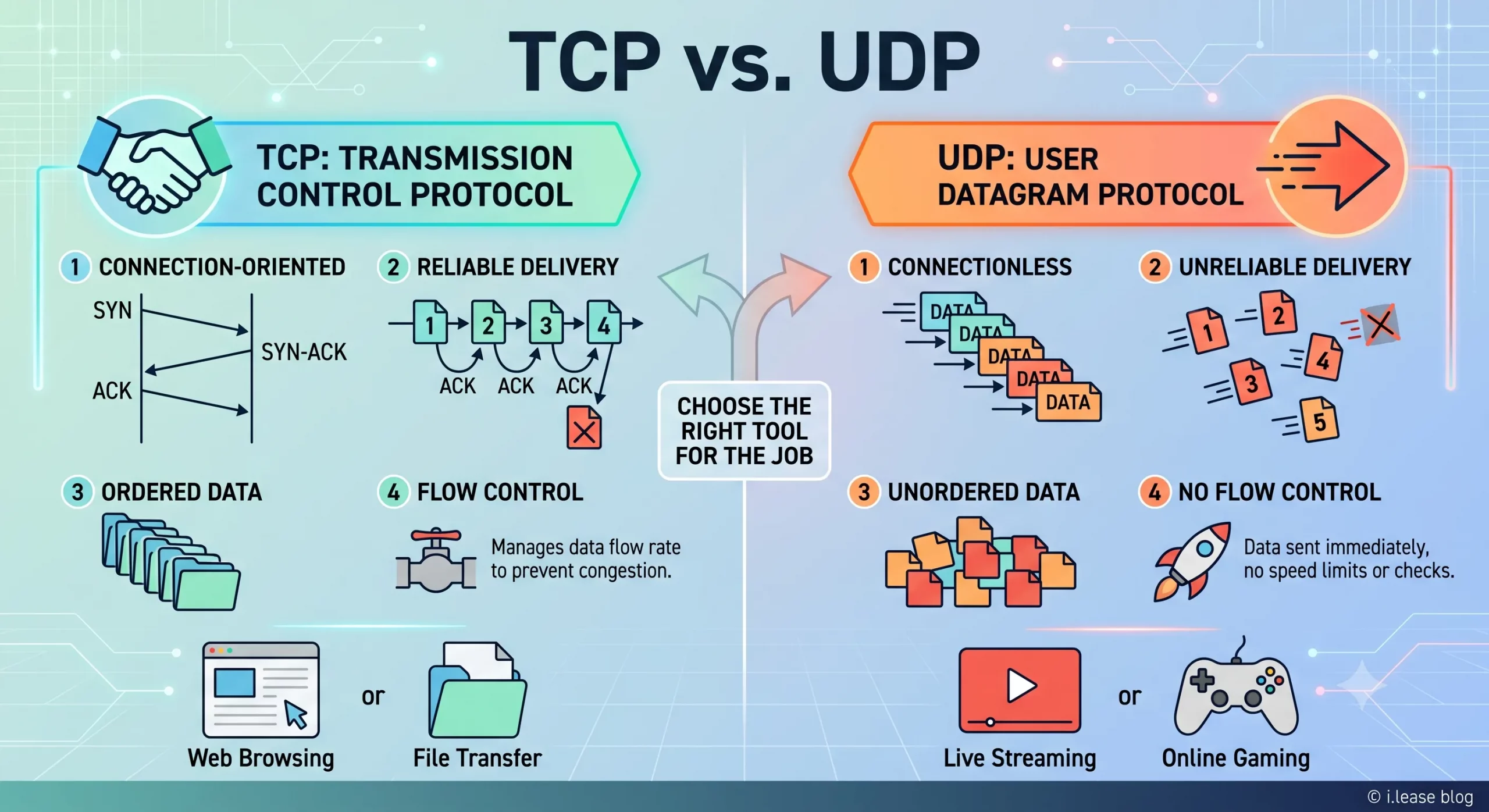
TCP 与 UDP:IPv4 租赁和企业网络指南
TCP 和 UDP 是互联网中最重要的两种传输层协议。它们决定数据如何在设备、服务器、云平台、VPN 网关、DNS 解析器、电子邮件系统、流媒体平台以及企业应用程序之间传输。 对于企业而言,TCP 和 UDP 不仅仅是技术术语,它们会直接影响实际的基础设施性能。公网 IPv4 地址提供可从互联网访问的网络端点,而 TCP 和 UDP 则决定流量如何通过该端点进行传输。 这对于租用或购买 IPv4 地址的企业尤为重要。企业租用 IPv4 地址并不是单纯为了持有这些地址,而是为了运行网站、API、VPN 隧道、DNS 服务、电子邮件平台、SaaS 应用程序、游戏服务器、流媒体系统、安全工具以及云端工作负载。不同类型的服务决定了需要使用 TCP、UDP,还是同时使用两者。 通过 i.lease,企业可以使用 IPv4 租赁服务获取用于实际网络部署的公网 IPv4 资源。需要长期控制 IP 地址资源的企业也可以购买 IP 地址,而拥有闲置 IPv4 资源的组织则可以出售 IP 地址。 TCP和UDP是什么? TCP 和 UDP 都是传输层协议。它们位于 IP 协议之上,帮助应用程序通过网络发送和接收数据。 IP 地址用于确定流量应该发送到哪里,而 TCP 和 UDP 则决定这些流量如何进行传输。 简单来说: TCP 适用于重视可靠性和按顺序传输数据的场景。 UDP 适用于重视速度、低延迟和轻量化数据传输的场景。 企业可能会使用同一个公网 IPv4 地址来运行不同的服务,但每项服务可能依赖不同的传输协议。例如,网站可能使用 TCP,VPN 网关可能使用 UDP,DNS 解析器可能同时使用 UDP 和 TCP,而游戏服务器则可能更倾向于使用 UDP,因为对于实时游戏而言,延迟造成的影响通常比少量数据包丢失更加明显。 因此,TCPRead more Related Posts 什么是电信公司?电信运营商如何为英国、美国和加拿大提供网络连接支持? 电信公司(Telco Companies),也称为电信运营商(Telecommunications Companies),提供通信与网络连接服务。这些服务包括移动通信网络、宽带互联网、光纤连接、固定电话服务、企业网络连接、云连接、托管网络服务以及数据中心连接等。 对于普通消费者而言,电信公司通常被视为移动通信或宽带互联网服务提供商。对于企业来说,电信公司远不只是一个服务品牌,更是关键的基础设施合作伙伴,帮助企业连接办公室、数据中心、云平台、远程员工、客户应用程序以及各类数字化服务。 随着企业越来越依赖云平台、SaaS 应用、AI 工具、VPN、网络安全系统以及在线服务,电信公司已成为数字基础设施规划中不可或缺的重要组成部分。 电信公司是什么? 电信公司(Telco Companies)是提供电信服务的企业。这些服务让个人、设备、企业和各种系统能够跨越距离进行通信与连接。 一家电信公司可能提供以下服务: 移动通信服务 宽带互联网 光纤连接 固定电话服务 企业互联网接入 企业广域网(WAN)服务 云连接服务 数据中心连接 VPN TCP 与 UDP:IPv4 租赁和企业网络指南 TCP 和 UDP 是互联网中最重要的两种传输层协议。它们决定数据如何在设备、服务器、云平台、VPN 网关、DNS 解析器、电子邮件系统、流媒体平台以及企业应用程序之间传输。 对于企业而言,TCP 和 UDP 不仅仅是技术术语,它们会直接影响实际的基础设施性能。公网 IPv4 地址提供可从互联网访问的网络端点,而 TCP 和 UDP 则决定流量如何通过该端点进行传输。 这对于租用或购买 IPv4 地址的企业尤为重要。企业租用 IPv4 什么是区域互联网注册管理机构(RIR) 区域互联网注册管理机构(Regional Internet Registry, RIR)是负责在特定地理区域内分配和管理互联网编号资源的组织。这些资源主要包括 IP 地址(IPv4 和 IPv6)以及自治系统号(ASN),它们是支撑设备和网络在互联网上相互通信的关键要素。 如果没有一套组织完善的系统来分配唯一的 IP 地址和路由标识符,互联网便无法正常运转。RIR 确保这一过程在各自管辖的区域内保持公平、高效与一致,从而避免冲突,并提升互联网治理的透明度。 全球五大 RIR 目前全球共有五家获官方认可的 RIR,各自负责世界上特定的区域:AFRINIC – 非洲网络信息中心(非洲)APNIC – 亚太网络信息中心(亚太地区)ARIN .related-post {} .related-post .post-list { text-align: left; } .related-post .post-list .item { margin: 5px; padding: 10px; } .related-post .headline { font-size: 18px !important; color: #999999 !important; } .related-post .post-list .item .post_thumb { max-height: 220px; margin: 10px 0px; padding: 0px; display: block; } .related-post .post-list .item .post_title { font-size: 16px; color: #3f3f3f; margin: 10px 0px; padding: 0px; display: block; text-decoration: none; } .related-post .post-list .item .post_excerpt { font-size: 13px; color: #3f3f3f; margin: 10px 0px; padding: 0px; display: block; text-decoration: none; } @media only screen and (min-width: 1024px) { .related-post .post-list .item { width: 30%; } } @media only screen and (min-width: 768px) and (max-width: 1023px) { .related-post .post-list .item { width: 90%; } } @media only screen and (min-width: 0px) and (max-width: 767px) { .related-post .post-list .item { width: 90%; } }
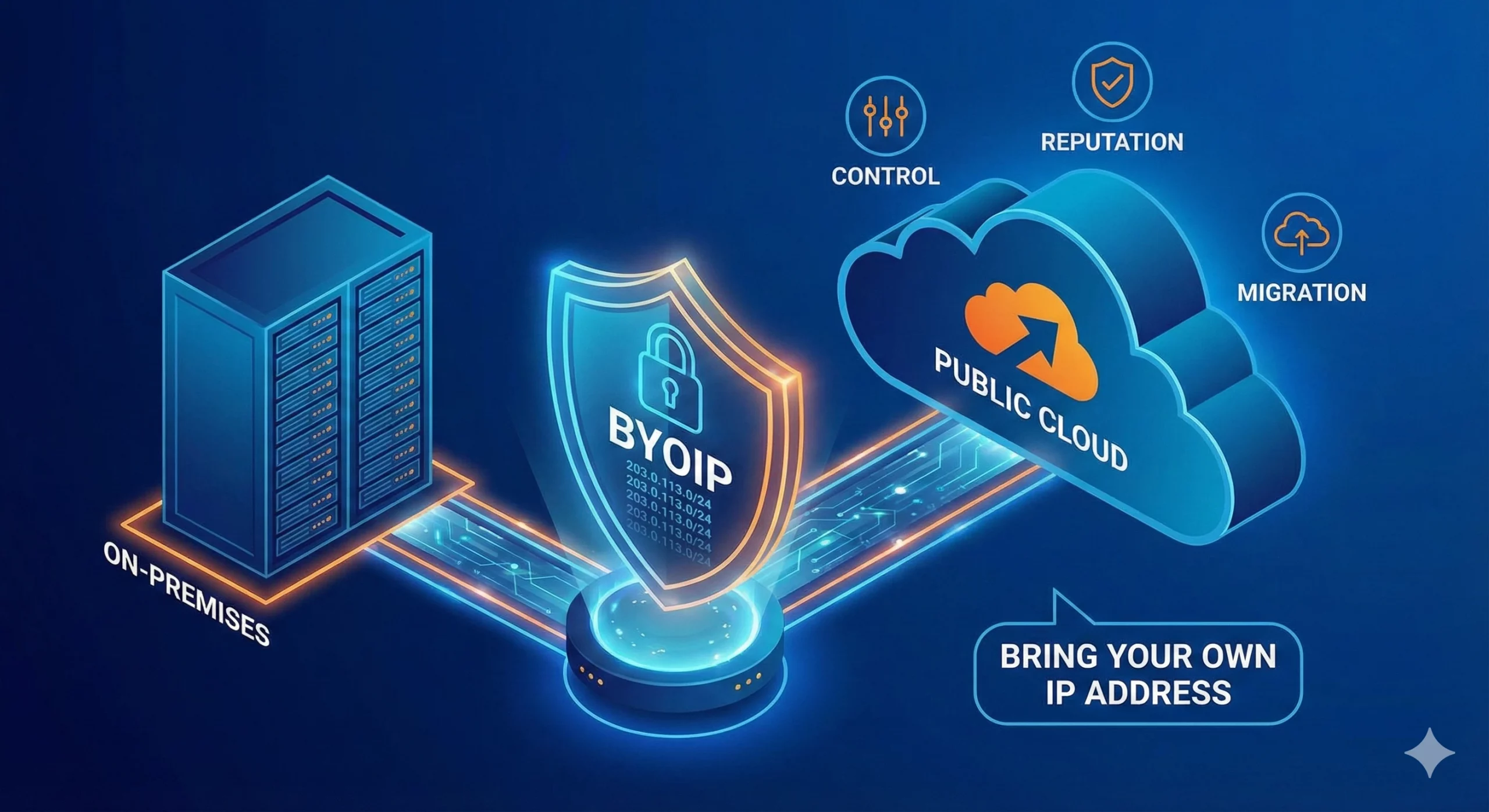
什么是BYOIP(自备IP地址)?
自带 IP(Bring Your Own IP,简称 BYOIP)是一种网络部署方式,允许企业将自己现有的公网 IP 地址段应用于云服务提供商、数据中心、内容分发网络(CDN)或其他基础设施平台。 企业无需使用服务提供商分配的新公网 IP 地址,而是可以使用自己已拥有或已获授权使用的 IPv4 或 IPv6 地址前缀。服务提供商会验证该组织对该地址段的使用权限,并在支持的情况下,通过其自身网络对该地址段进行路由公告(Advertise)。 BYOIP 有助于企业在迁移至云平台时保留现有的防火墙规则、白名单(Allowlists)、客户系统集成、IP 信誉(IP Reputation)、DNS 配置以及既有的网络身份。这不仅能够减少因更换 IP 地址而带来的业务中断,还能降低对服务提供商分配 IP 的依赖,使未来的基础设施迁移与扩展更加灵活且易于管理。 对于需要 BYOIP 地址资源的企业,可选择 购买 IPv4 地址(Buy IP),以获得长期控制权;如果更重视灵活性,也可采用 IPv4 租赁(IPv4 Leasing),按业务需求获取公网 IP 资源。 什么是BYOIP? BYOIP 是 Bring Your Own IP(自带 IP)的缩写。这是一种网络部署模式,允许组织将现有的公网 IP 地址段带入云服务提供商或其他基础设施平台使用。 在 BYOIP 模式下,组织仍然拥有或保留该 IP 地址段的使用权,而平台则获得授权,可在其基础设施中对该地址段进行路由公告(Advertise)和使用。随后,这些 IP 地址可分配给虚拟机(Virtual Machines)、负载均衡器(Load Balancers)、VPN 网关、内容分发服务(CDN)、安全平台以及公网应用程序端点等受支持的服务。 例如,一家企业将应用程序从本地数据中心迁移到云环境时,可能并不希望更换现有的公网 IP 地址。这些 IP 地址可能已经存在于客户白名单(Allowlists)、防火墙策略、DNS 记录、合作伙伴配置以及电子邮件信誉(Email Reputation)数据库中。 BYOIP 使企业能够在迁移工作负载的同时,继续使用原有的公网 IP 地址,从而保持更一致的网络身份,并减少因更换 IP 地址而带来的配置调整和业务影响。 Related Posts 什么是电信公司?电信运营商如何为英国、美国和加拿大提供网络连接支持? 电信公司(Telco Companies),也称为电信运营商(Telecommunications Companies),提供通信与网络连接服务。这些服务包括移动通信网络、宽带互联网、光纤连接、固定电话服务、企业网络连接、云连接、托管网络服务以及数据中心连接等。 对于普通消费者而言,电信公司通常被视为移动通信或宽带互联网服务提供商。对于企业来说,电信公司远不只是一个服务品牌,更是关键的基础设施合作伙伴,帮助企业连接办公室、数据中心、云平台、远程员工、客户应用程序以及各类数字化服务。 随着企业越来越依赖云平台、SaaS 应用、AI 工具、VPN、网络安全系统以及在线服务,电信公司已成为数字基础设施规划中不可或缺的重要组成部分。 电信公司是什么? 电信公司(Telco Companies)是提供电信服务的企业。这些服务让个人、设备、企业和各种系统能够跨越距离进行通信与连接。 一家电信公司可能提供以下服务: 移动通信服务 宽带互联网 光纤连接 固定电话服务 企业互联网接入 企业广域网(WAN)服务 云连接服务 数据中心连接 VPN TCP 与 UDP:IPv4 租赁和企业网络指南 TCP 和 UDP 是互联网中最重要的两种传输层协议。它们决定数据如何在设备、服务器、云平台、VPN 网关、DNS 解析器、电子邮件系统、流媒体平台以及企业应用程序之间传输。 对于企业而言,TCP 和 UDP 不仅仅是技术术语,它们会直接影响实际的基础设施性能。公网 IPv4 地址提供可从互联网访问的网络端点,而 TCP 和 UDP 则决定流量如何通过该端点进行传输。 这对于租用或购买 IPv4 地址的企业尤为重要。企业租用 IPv4 什么是区域互联网注册管理机构(RIR) 区域互联网注册管理机构(Regional Internet Registry, RIR)是负责在特定地理区域内分配和管理互联网编号资源的组织。这些资源主要包括 IP 地址(IPv4 和 IPv6)以及自治系统号(ASN),它们是支撑设备和网络在互联网上相互通信的关键要素。 如果没有一套组织完善的系统来分配唯一的 IP 地址和路由标识符,互联网便无法正常运转。RIR 确保这一过程在各自管辖的区域内保持公平、高效与一致,从而避免冲突,并提升互联网治理的透明度。 全球五大 RIR 目前全球共有五家获官方认可的 RIR,各自负责世界上特定的区域:AFRINIC – 非洲网络信息中心(非洲)APNIC – 亚太网络信息中心(亚太地区)ARIN .related-post {} .related-post .post-list { text-align: left; } .related-post .post-list .item { margin: 5px; padding: 10px; } .related-post .headline { font-size: 18px !important; color: #999999 !important; } .related-post .post-list .item .post_thumb { max-height: 220px; margin: 10px 0px; padding: 0px; display: block; } .related-post .post-list .item .post_title { font-size: 16px; color: #3f3f3f; margin: 10px 0px; padding: 0px; display: block; text-decoration: none; } .related-post .post-list .item .post_excerpt { font-size: 13px; color: #3f3f3f; margin: 10px 0px; padding: 0px; display: block; text-decoration: none; } @media only screen and (min-width: 1024px) { .related-post .post-list .item { width: 30%; } } @media only screen and (min-width: 768px) and (max-width: 1023px) { .related-post .post-list .item { width: 90%; } } @media only screen and (min-width: 0px) and (max-width: 767px) { .related-post .post-list .item { width: 90%; } }
