
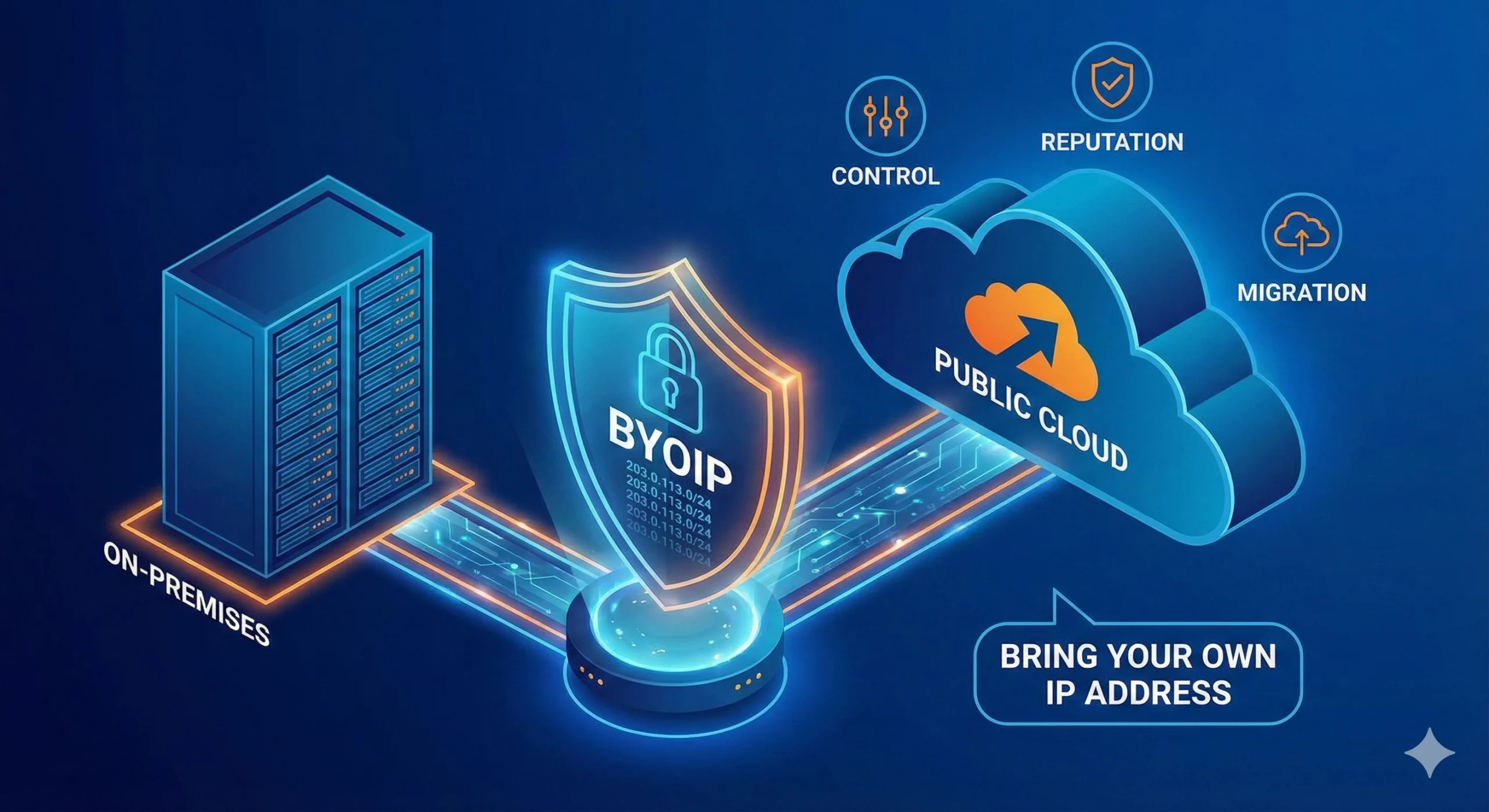
自带 IP(Bring Your Own IP,简称 BYOIP)是一种网络部署方式,允许企业将自己现有的公网 IP 地址段应用于云服务提供商、数据中心、内容分发网络(CDN)或其他基础设施平台。
目录
企业无需使用服务提供商分配的新公网 IP 地址,而是可以使用自己已拥有或已获授权使用的 IPv4 或 IPv6 地址前缀。服务提供商会验证该组织对该地址段的使用权限,并在支持的情况下,通过其自身网络对该地址段进行路由公告(Advertise)。
BYOIP 有助于企业在迁移至云平台时保留现有的防火墙规则、白名单(Allowlists)、客户系统集成、IP 信誉(IP Reputation)、DNS 配置以及既有的网络身份。这不仅能够减少因更换 IP 地址而带来的业务中断,还能降低对服务提供商分配 IP 的依赖,使未来的基础设施迁移与扩展更加灵活且易于管理。
对于需要 BYOIP 地址资源的企业,可选择 购买 IPv4 地址(Buy IP),以获得长期控制权;如果更重视灵活性,也可采用 IPv4 租赁(IPv4 Leasing),按业务需求获取公网 IP 资源。
什么是BYOIP?
BYOIP 是 Bring Your Own IP(自带 IP)的缩写。这是一种网络部署模式,允许组织将现有的公网 IP 地址段带入云服务提供商或其他基础设施平台使用。
在 BYOIP 模式下,组织仍然拥有或保留该 IP 地址段的使用权,而平台则获得授权,可在其基础设施中对该地址段进行路由公告(Advertise)和使用。随后,这些 IP 地址可分配给虚拟机(Virtual Machines)、负载均衡器(Load Balancers)、VPN 网关、内容分发服务(CDN)、安全平台以及公网应用程序端点等受支持的服务。
例如,一家企业将应用程序从本地数据中心迁移到云环境时,可能并不希望更换现有的公网 IP 地址。这些 IP 地址可能已经存在于客户白名单(Allowlists)、防火墙策略、DNS 记录、合作伙伴配置以及电子邮件信誉(Email Reputation)数据库中。
BYOIP 使企业能够在迁移工作负载的同时,继续使用原有的公网 IP 地址,从而保持更一致的网络身份,并减少因更换 IP 地址而带来的配置调整和业务影响。
BYOIP是如何运作的?
BYOIP(Bring Your Own IP,自带 IP) 的工作原理,是允许企业授权云服务提供商或基础设施平台,对企业已经拥有或获授权使用的公网 IP 前缀进行路由公告(Advertise)和使用。该 IP 地址段会先经过验证、注册到平台、完成路由授权,随后即可分配给受支持的云端或网络资源。
企业并不是简单地上传一份 IP 地址清单。BYOIP 是一个涉及地址资格审核、注册信息、使用授权、BGP 路由公告、RPKI 验证、云平台配置以及迁移规划的协调性网络流程。
从实际应用来看,虽然基础设施迁移到了新的平台,但客户、应用程序、防火墙、合作伙伴以及安全系统所使用的公网 IP 地址可以保持不变。
BYOIP 流程概览
- 企业选择符合条件的公网 IP 前缀。
- 服务提供商验证企业拥有或获授权使用该 IP 地址段。
- 企业授权服务提供商的网络对该 IP 前缀进行路由公告。
- 服务提供商将该 IP 地址段配置到客户账户中。
- 根据迁移计划,原有路由被撤销或迁移。
- 服务提供商通过 BGP 对该 IP 前缀进行公告。
- 将具体 IP 地址分配给受支持的云端或网络资源。
- 企业持续监控路由状态、IP 信誉、DNS、地理位置及可用性。
步骤一:选择符合条件的公网 IP 前缀
企业首先需要确定一个自己拥有或获授权使用的 IPv4 或 IPv6 公网地址段。该地址段必须在全球范围内保持唯一,并符合云服务提供商规定的最小前缀长度要求。
对于 IPv4,许多云平台要求最小为 /24 前缀,因为比 /24 更小的路由前缀可能无法在全球互联网中获得稳定传播。一个 /24 IPv4 地址段包含 256 个 IP 地址,但实际可分配给业务的数量仍取决于平台及网络配置。
企业还应确认该地址段未被绑定到其他不兼容的服务、未锁定在其他云平台,或不存在禁止第三方路由的租赁协议限制。
步骤二:证明拥有控制权或使用授权
云服务提供商必须确认客户确实有权将该 IP 地址段用于 BYOIP。
根据不同平台,验证方式可能包括:
- RDAP 或 WHOIS 注册记录
- 发布于注册记录中的数字证书
- 签名授权声明(Signed Authorization)
- 授权书(Letter of Authorization,LOA)
- RPKI 记录
- IRR 路由对象(Route Objects)
- 注册地址持有人的正式批准
此步骤可防止组织导入并广播属于其他机构的 IP 地址空间。
步骤三:授权服务提供商发布路由
确认控制权后,企业通常还需要授权云服务提供商的自治系统号码(ASN)作为该 IP 前缀的路由源(Origin)。
这一过程通常通过 Route Origin Authorization(ROA) 完成。ROA 会指定哪个 ASN 有权通过 BGP 宣告指定的 IP 前缀。当配置正确时,其他网络即可验证云平台发布的路由是否合法。
ROA 中应正确填写 IP 前缀、授权 ASN 以及允许的最大前缀长度。若配置错误,可能导致路由被判定为 RPKI Invalid,使部分拒绝无效路由的网络无法访问该 IP 地址段。
步骤四:在平台中配置 IP 地址段
完成验证与授权后,云服务提供商会将该 IP 前缀配置到客户的云账户、项目、订阅或网络环境中。
此时,该地址段已登记到平台,但可能尚未正式向互联网发布。不同平台可能将此状态称为 Provisioned(已配置)、Validated(已验证)、Onboarded(已导入) 或 Pending Advertisement(等待公告)。
企业应同时确认:
- 哪些区域(Region)支持使用该 IP 前缀
- 哪些云产品支持导入 IP
- 地址段将如何划分为内部地址池
- 是否支持反向 DNS(Reverse DNS)委派
- 平台是否收取额外导入费用
步骤五:准备路由迁移
BYOIP 迁移必须规划现有路由的切换过程。
如果该地址段目前已在其他数据中心或网络中使用,企业需要协调旧路由何时撤销,以及新平台何时开始广播该路由。若切换时间控制不当,可能出现路由中断、双重 Origin 或意外的 BGP 路由冲突。
迁移计划通常应包含:
- 当前 Origin ASN
- 新的云平台 ASN
- 计划撤销路由的时间
- BGP 传播预计时间
- 回滚方案(Rollback)
- 监控职责分工
如条件允许,建议采用分阶段迁移,而不是一次性迁移所有应用。
步骤六:云平台发布 IP 前缀
完成配置后,云服务提供商将通过 BGP 向互联网广播该 IP 前缀。
全球网络收到新的路由后,会开始将流量导向新的云平台基础设施。云平台负责对外进行 BGP 公告,而企业则负责在平台内部管理具体 IP 地址的分配。
此时,企业原有的公网 IP 地址段便可通过新的云环境继续对外提供服务。
步骤七:将地址分配给云端资源
导入的 IP 地址随后可分配给各种受支持的服务,例如:
- 虚拟机(Virtual Machines)
- 负载均衡器(Load Balancers)
- NAT Gateway
- VPN Gateway
- 防火墙(Firewalls)
- CDN 服务
- DDoS 防护平台
- 邮件系统
- 公网应用程序端点(Public Endpoints)
不同平台支持 BYOIP 的范围有所不同。有些平台虽然允许导入地址,但仅支持特定区域、产品或资源类型使用。
步骤八:更新 DNS、安全策略及运维配置
虽然 BYOIP 可以保留公网 IP 地址,但底层基础设施已经发生变化,因此仍需检查相关系统配置。
应重点验证:
- DNS 与反向 DNS
- 防火墙策略
- 客户及合作伙伴白名单
- VPN 配置
- 监控平台
- 安全告警系统
- API 访问规则
- 邮件认证及 IP 信誉机制
保留相同 IP 地址能够减少外部配置修改,但并不代表可以省略对新基础设施的完整测试。
步骤九:迁移后持续监控路由与 IP 状态
IP 前缀正式启用后,企业应持续监控网络可达性及地址质量。
建议重点关注:
- BGP 路由可见性
- RPKI 验证状态
- Origin ASN 是否异常变更
- 全球区域可达性
- 延迟(Latency)与丢包率(Packet Loss)
- IP 地理位置(Geolocation)
- 黑名单(Blocklist)状态
- 邮件投递成功率
- 应用程序运行状况
由于 IP 地理位置数据库更新需要时间,若迁移后仍显示旧地区,企业应主动提交更新申请,以避免影响客户访问、风控系统、授权许可或内容分发。
步骤十:准备退出与撤回计划
BYOIP 提高了地址可迁移性,但通常无法立即在多个平台之间自由切换。
部署前,企业应了解如何:
- 停止云平台的 BGP 公告
- 解除云资源上的 IP 绑定
- 撤销导入的 IP 前缀
- 更新 ROA 及其他路由记录
- 将路由恢复到原有网络
- 迁移至另一家支持 BYOIP 的平台
若该 IP 地址段属于租赁资源(Leased IP),则还应确保租赁期限、续约安排、出租方配合以及路由授权始终保持一致。
BYOIP 简单示例
假设一家 SaaS 公司目前在私有数据中心运行,并拥有一个 /24 IPv4 地址段。客户已经将这些 IP 加入防火墙白名单,多家合作伙伴也依赖这些 IP 来识别可信 API 流量。
如果该公司迁移到云平台并使用新的云端 IP,所有客户及合作伙伴都必须更新配置,这不仅增加工作量,也可能导致迁移期间出现服务问题。
采用 BYOIP 后,公司可以验证其 /24 地址段的使用权,授权云平台的 ASN,导入该地址段,迁移应用,并由云平台继续广播同一个 IP 前缀。这样,客户仍然通过原来的公网 IP 访问服务,而后台应用实际上已经运行在新的云环境中。
这正是 BYOIP 最大的价值:基础设施可以迁移,但公网网络身份(Public Network Identity)无需随之改变。
简单来说,BYOIP 是如何工作的?
BYOIP 的工作方式,是先验证企业对某个公网 IP 地址段拥有合法使用权,然后允许云服务提供商通过其网络对该地址段进行 BGP 路由公告。企业随后便可将这些现有的公网 IP 分配给云端服务,同时继续保留原有的防火墙规则、白名单、DNS 配置、IP 信誉以及客户访问方式。
为什么企业使用 BYOIP
当更换 IP 地址会造成运营或商业中断时,BYOIP 就非常有价值。
保留网络身份
公网 IP 地址可能已经与客户配置、安全策略、系统集成以及既有网络身份绑定。保留相同的地址,可以减少迁移期间需要重新配置的系统数量。
减少云迁移中断
如果没有 BYOIP,迁移到新的服务提供商时,可能需要更改 DNS 记录、防火墙规则、访问控制列表、合作伙伴白名单、VPN 配置以及客户文档。
BYOIP 可以让公网 IP 层保持更一致,同时底层基础设施发生变化,从而减少这类迁移工作量。
维持 IP 信誉
某些 IP 地址会随着时间积累稳定的信誉。这对邮件投递、API、网络安全服务,以及会被欺诈检测或信誉系统评估的平台尤其重要。
例如,Amazon 说明,当组织希望保留现有邮件系统建立起来的良好发送信誉时,可以在 Amazon SES 中使用自己的 IP 地址。阅读 AWS 关于在 Amazon SES 中使用 BYOIP 的说明。
支持白名单和合作伙伴访问
客户和合作伙伴可能只允许已知 IP 地址访问。更换这些地址可能需要多个组织之间协调更新。
BYOIP 有助于保留已经加入这些白名单的地址。
提高多云灵活性
服务提供商分配的地址通常与该提供商绑定。BYOIP 让企业对地址层拥有更多控制权,并可能降低对单一提供商的依赖。
不过,企业仍需审查每个提供商在部署、撤回、区域支持和迁移方面的限制。
支持业务连续性
当公网地址被纳入基础设施规划时,它们可以支持迁移、灾难恢复、故障切换和长期连续性策略。
BYOIP vs provider-assigned IP addresses
BYOIP vs provider-assigned IP addresses
比较项目
BYOIP
服务提供商分配的 IP
IP 地址控制权
客户拥有或获授权使用该 IP 前缀。
IP 地址由服务提供商控制。
可迁移性
在支持 BYOIP 的环境之间迁移通常更加方便。
通常绑定于原始服务提供商。
迁移影响
可保留现有基于 IP 的配置。
迁移时通常需要更换 IP 地址。
部署复杂度
需要完成所有权验证、路由授权及迁移规划。
通常可直接分配并快速部署。
最小地址范围
需符合服务提供商规定的最小 IP 前缀要求。
通常可直接提供单个 IP 地址。
IP 信誉延续性
可保留既有 IP 所建立的信誉。
新的 IP 地址通常需要重新建立信誉。
长期依赖性
可降低对服务提供商所分配 IP 的依赖。
对服务提供商的 IP 地址池依赖程度较高。
对于规模较小的工作负载,或没有 IP 可迁移需求的项目而言,服务提供商分配的 IP 地址通常已经足够使用。当公网 IP 已深度整合到企业运营、客户访问、安全策略或 IP 信誉体系中时,BYOIP 的优势就会更加明显。
常见的自带设备(BYOIP)用例
云迁移(Cloud Migration)
企业将工作负载从本地数据中心迁移到云端时,可通过 BYOIP 保留现有的公网 IP 地址段,从而减少对外部系统配置的修改。
混合云(Hybrid Cloud)
对于同时运行本地基础设施与云环境的企业,BYOIP 可作为受控迁移或混合云网络策略的一部分,帮助维持一致的公网地址规划。
多云基础设施(Multi-Cloud Infrastructure)
采用多个云服务提供商的组织通常希望对公网 IP 拥有更高的控制权。不过,在没有经过精心设计的路由架构下,同一个 IP 前缀通常无法同时由多个服务提供商进行广播。
邮件基础设施(Email Infrastructure)
企业将邮件系统迁移至支持 BYOIP 的云端邮件服务时,可利用 BYOIP 保留既有的邮件发送 IP 信誉,减少对邮件送达率的影响。
内容分发与 DDoS 防护(Content Delivery and DDoS Protection)
BYOIP 可让企业在使用内容分发网络(CDN)、流量加速平台或 DDoS 防护服务的同时,继续使用原有的公网 IP 地址空间。
面向客户的 SaaS 平台(Customer-Facing SaaS Platforms)
SaaS 服务提供商可使用已建立信誉的 IP 地址段,为 API、白名单、客户集成、专属部署环境以及区域性应用端点提供稳定的公网网络身份。
VPN 与安全网关(VPN and Security Gateways)
企业可保留已配置在员工设备、客户系统、防火墙策略及合作伙伴网络中的公网网关地址,减少迁移期间重新配置的工作量。
灾难恢复(Disaster Recovery)
BYOIP 可作为灾难恢复规划的一部分,在符合服务提供商部署及路由时程要求的前提下,让企业于备用环境中继续使用熟悉的公网 IP 地址,提高业务连续性。
BYOIP 的优点与缺点
BYOIP 的优点与缺点
优点
缺点
迁移过程中可保留现有公网 IP 地址
需要更多技术及管理层面的准备工作
减少防火墙规则和白名单的修改
需符合服务提供商规定的最小 IP 前缀要求
有助于保留邮件发送信誉及网络信誉
可能需要配置 RPKI、RDAP、BGP 以及更新注册信息
提高对公网网络身份的控制权
并非所有云服务或地区都支持 BYOIP
有助于降低对单一服务提供商的依赖
在不同服务提供商之间迁移 IP 前缀仍需妥善规划
支持云端、混合云及业务连续性策略
若路由切换规划不当,可能导致服务中断
有助于维持客户及合作伙伴配置的稳定性
租赁的 IP 地址段可能需要额外的授权及连续性保障措施
BYOIP 最大的优势在于控制权。企业可以在更换基础设施的同时,保留其重要的公网网络身份。
BYOIP 最大的挑战则在于复杂性。部署 BYOIP 需要协调注册资料、路由授权、云平台配置、安全策略以及应用迁移等多个环节。
结论
BYOIP 让企业在更换云平台或网络基础设施时,无需自动放弃已经用于业务运营的 公网 IP 地址。
它可以简化云迁移流程、保留客户白名单、维持 IP 信誉、支持混合基础设施,并减少对服务提供商分配 IP 地址的依赖。不过,成功实施 BYOIP 并不仅仅是拥有一个 IP 地址段,还需要完成注册资料验证、路由授权、RPKI 规划、IP 信誉检查、平台兼容性评估,以及经过周密规划的路由切换。
对于采用 BYOIP 的企业而言,公网 IP 资源本身已成为云迁移策略的重要组成部分。i.Lease 通过 购买 IPv4(Buy IP) 与 IPv4 租赁(IPv4 Leasing) 服务,为基础设施团队提供合适的 IPv4 资源;而拥有闲置 IP 地址空间的组织,也可通过 出售 IPv4(Sell IP) 充分发挥其资源价值。