¿Qué es un centro de datos? Cómo da soporte a sitios web, aplicaciones y redes empresariales
 Stephanie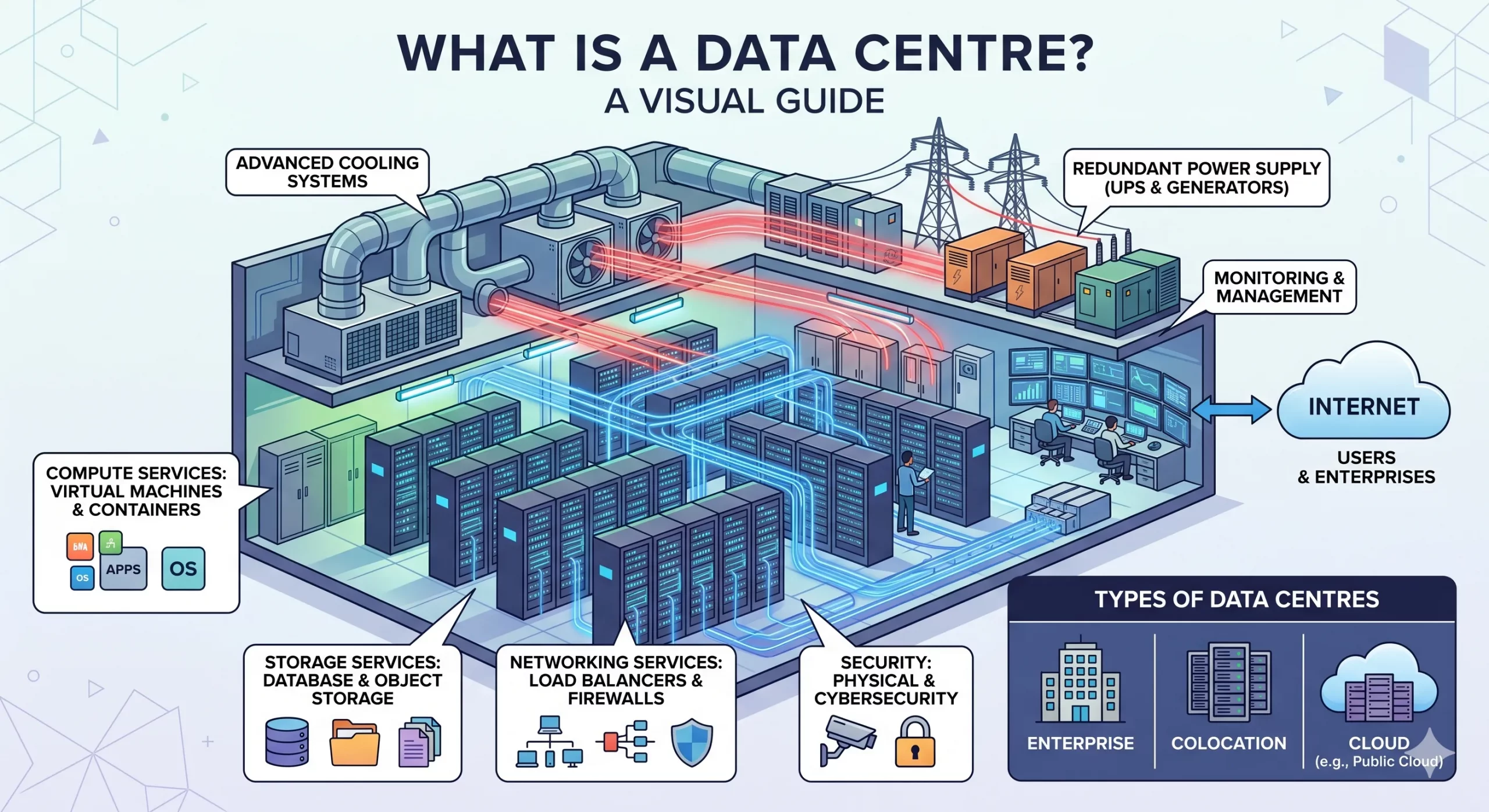
Un centro de datos es una instalación que alberga servidores, sistemas de almacenamiento, equipos de red, sistemas de energía, infraestructura de refrigeración y controles de seguridad. Las empresas utilizan centros de datos para operar sitios web, aplicaciones, servicios en la nube, bases de datos, copias de seguridad, sistemas empresariales y plataformas digitales.
Table of Contents
En términos sencillos, un centro de datos es el lugar donde la tecnología empresarial funciona a escala. En lugar de mantener sistemas importantes en un pequeño servidor de oficina, las empresas utilizan centros de datos para mejorar la fiabilidad, la seguridad, el rendimiento y la conectividad.
Los centros de datos son esenciales para la infraestructura digital moderna. Cada vez que los usuarios acceden a un sitio web, transmiten un servicio, abren una aplicación en la nube, utilizan una plataforma de pago o se conectan a un sistema empresarial, normalmente hay un centro de datos que respalda el servicio en segundo plano.
¿Qué es un centro de datos?
Un centro de datos es un entorno dedicado diseñado para mantener los servidores y sistemas de red funcionando de forma segura y continua.
A diferencia de una sala de servidores normal en una oficina, un centro de datos se construye con infraestructura especializada. Esto incluye energía redundante, sistemas de refrigeración, protección contra incendios, conectividad de red, seguridad física, monitorización y sistemas de respaldo.
El objetivo es reducir el tiempo de inactividad y mantener disponibles los servicios digitales.
Las empresas utilizan centros de datos porque las aplicaciones modernas necesitan más que un ordenador conectado a Internet. Necesitan energía estable, acceso rápido a la red, temperatura controlada, acceso seguro e infraestructura fiable.
¿Cómo funciona un centro de datos?
Un centro de datos funciona combinando computación, almacenamiento, redes, energía, refrigeración y seguridad en un único entorno gestionado.
Los servidores procesan datos y ejecutan aplicaciones. Los sistemas de almacenamiento guardan archivos, bases de datos, copias de seguridad y registros empresariales. Los equipos de red conectan los servidores con usuarios, plataformas en la nube, proveedores de Internet y otras redes.
Los sistemas de energía mantienen la instalación en funcionamiento. Los sistemas de refrigeración evitan que los equipos se sobrecalienten. Los sistemas de seguridad protegen el sitio contra accesos no autorizados. Las herramientas de monitorización ayudan a detectar problemas antes de que se conviertan en fallos graves.
En conjunto, estos sistemas permiten a las empresas operar servicios digitales de forma continua.
Main components of a data centre
Un centro de datos suele incluir varios componentes principales.
Servidores
Los servidores ejecutan sitios web, aplicaciones, bases de datos, cargas de trabajo en la nube y software empresarial. Son la capa principal de computación de un centro de datos.
Sistemas de almacenamiento
Los sistemas de almacenamiento guardan datos empresariales, archivos, copias de seguridad, registros de usuarios, datos de aplicaciones y activos multimedia.
Equipos de red
Los routers, switches, firewalls y balanceadores de carga mueven el tráfico entre servidores, clientes, plataformas en la nube e Internet.
Infraestructura de energía
Los centros de datos necesitan energía fiable. A menudo utilizan sistemas de energía de respaldo, unidades UPS, generadores y rutas eléctricas redundantes para reducir el riesgo de interrupciones.
Sistemas de refrigeración
Los servidores generan calor. Los sistemas de refrigeración mantienen los equipos a temperaturas operativas seguras y ayudan a mantener el rendimiento.
Seguridad física
Los centros de datos suelen incluir controles de acceso, vigilancia, controles de visitantes, salas cerradas y monitorización para proteger los equipos y los datos.
Sistemas de monitorización
Las herramientas de monitorización supervisan el rendimiento, el tiempo de actividad, la temperatura, el consumo de energía, el tráfico de red y el estado del hardware.
Por qué las empresas utilizan centros de datos
Las empresas utilizan centros de datos porque necesitan una infraestructura digital fiable.
Un centro de datos puede dar soporte a:
- Sitios web empresariales
- Plataformas de comercio electrónico
- Aplicaciones SaaS
- Servicios en la nube
- Sistemas internos
- Bases de datos
- Copias de seguridad y recuperación ante desastres
- Acceso VPN
- Portales de clientes
- Cargas de trabajo de IA y analítica
- Software empresarial
- Servicios de alojamiento
Para muchas empresas, el tiempo de inactividad puede significar pérdida de ventas, quejas de clientes, interrupciones operativas o daño reputacional. Un centro de datos ayuda a reducir esos riesgos al proporcionar un entorno operativo más estable.
Centro de datos vs sala de servidores de oficina
Una sala de servidores en una oficina puede funcionar para sistemas internos pequeños, pero normalmente no puede igualar la fiabilidad y la escala de un centro de datos profesional.
Una sala de servidores puede depender de la energía de la oficina, refrigeración limitada, seguridad física básica y una sola conexión a Internet. Un centro de datos está diseñado para ofrecer mayor disponibilidad, seguridad más sólida, energía redundante, mejor conectividad y monitorización continua.
Para las empresas en crecimiento, trasladar cargas de trabajo a un centro de datos puede mejorar la fiabilidad y reducir la carga operativa.
Centro de datos vs alojamiento en la nube
El alojamiento en la nube y los centros de datos están estrechamente relacionados. Los servicios en la nube normalmente funcionan dentro de centros de datos.
La diferencia está en cómo el cliente utiliza la infraestructura.
Con el alojamiento en la nube, las empresas alquilan recursos informáticos a un proveedor cloud. Es posible que no gestionen directamente los servidores físicos.
Con un centro de datos o un servicio de colocación, una empresa puede ubicar su propio equipo en un centro de datos o alquilar infraestructura dedicada.
El alojamiento en la nube suele ser flexible y fácil de escalar. Los servicios de centro de datos o colocación pueden ofrecer más control sobre el hardware, la configuración de red, el cumplimiento normativo y la infraestructura dedicada.
Muchas empresas utilizan una combinación de cloud, colocación e infraestructura privada.
Por qué la conectividad de red es importante en un centro de datos
Un centro de datos no se trata solo de servidores y energía. La conectividad de red es igual de importante.
Las empresas necesitan conectividad fiable para que usuarios, clientes, aplicaciones y socios puedan acceder a sus servicios. Esto puede incluir tránsito de Internet, peering, enrutamiento BGP, firewalls, balanceadores de carga y recursos IP públicos.
Si la red está mal planificada, incluso los servidores potentes pueden volverse difíciles de alcanzar. Un enrutamiento lento, ancho de banda limitado, poca redundancia o una planificación IP débil pueden afectar la experiencia del cliente.
Para proveedores de alojamiento, plataformas SaaS, empresas de VPN y servicios cloud, el diseño de red forma parte del propio producto.
Por qué la planificación IP es importante en los centros de datos
Los centros de datos suelen dar soporte a muchos servicios que necesitan conectividad pública. Estos pueden incluir sitios web, servidores de clientes, puertas de enlace VPN, cargas de trabajo cloud, sistemas de correo electrónico, API y plataformas de aplicaciones.
Algunos servicios pueden compartir recursos IP públicos. Otros pueden requerir direcciones IP públicas dedicadas por motivos de enrutamiento, seguridad, reputación del correo electrónico, separación de clientes o cumplimiento normativo.
Por eso la planificación IP es importante antes de que una empresa se expanda hacia un centro de datos.
Las empresas deben considerar:
Cuántos servicios orientados al público operarán Si los clientes necesitan IP dedicadas Si la reputación del correo electrónico o del alojamiento es importante Si las reglas de VPN o firewall requieren IP estáticas Si los entornos cloud o de colocación necesitan soporte de enrutamiento Si la empresa necesita acceso flexible a IP durante su crecimiento
Qué comprobar antes de elegir un centro de datos
Antes de elegir un centro de datos, las empresas deben revisar tanto los factores técnicos como los comerciales.
Las preguntas importantes incluyen:
¿Dónde está ubicado el centro de datos? ¿Proporciona energía y refrigeración fiables? ¿Qué compromisos de tiempo de actividad y nivel de servicio están disponibles? ¿Qué operadores y proveedores de red están disponibles? ¿Admite conectividad cloud o peering? ¿Qué controles de seguridad física existen? ¿Puede la instalación apoyar el crecimiento futuro? ¿Qué estándares de cumplimiento o sostenibilidad aplican? ¿Cómo se gestionan los recursos IP, el enrutamiento y la conectividad?
La mejor elección de centro de datos depende del modelo de negocio. Un proveedor SaaS, una empresa de alojamiento, una empresa corporativa, una plataforma de comercio electrónico o una carga de trabajo de IA pueden tener requisitos diferentes.
Nota práctica de i.lease
Un centro de datos necesita más que servidores, racks, energía y refrigeración. También necesita una planificación de red sólida. La conectividad pública, el enrutamiento y la gestión de recursos IP forman parte de mantener los servicios accesibles.
Las empresas que se expanden hacia centros de datos pueden necesitar utilizar alquiler de direcciones IPv4, dependiendo de si necesitan control de direcciones a largo plazo, desean monetizar recursos no utilizados o requieren acceso flexible a IP para crecer.
Reflexiones finales
Un centro de datos es la base que hay detrás de muchos servicios digitales. Da soporte a sitios web, aplicaciones, plataformas en la nube, sistemas empresariales, almacenamiento, copias de seguridad, VPN, cargas de trabajo de IA y plataformas orientadas al cliente.
Para las empresas, utilizar un centro de datos puede mejorar la fiabilidad, la seguridad, la escalabilidad y el rendimiento de la red. Pero la instalación en sí es solo una parte de la estrategia. Las empresas también deben planificar la conectividad, el enrutamiento, la seguridad, los recursos IP y la continuidad operativa.
A medida que las empresas crecen, la planificación del centro de datos se convierte en planificación empresarial. La infraestructura adecuada ayuda a mantener a los clientes conectados, las aplicaciones disponibles y los servicios digitales preparados para escalar.
Preguntas frecuentes (FAQ)
¿Qué es un centro de datos en términos sencillos?
Un centro de datos es una instalación que almacena y opera servidores, sistemas de almacenamiento, equipos de red, sistemas de energía, refrigeración y controles de seguridad para servicios digitales.
¿Por qué las empresas utilizan centros de datos?
Las empresas utilizan centros de datos para mejorar el tiempo de actividad, la seguridad, la escalabilidad, la conectividad y el rendimiento de sitios web, aplicaciones, plataformas cloud, bases de datos y sistemas digitales.
¿Un centro de datos es lo mismo que el alojamiento en la nube?
No. El alojamiento en la nube normalmente funciona dentro de centros de datos, pero los clientes alquilan recursos cloud en lugar de gestionar directamente equipos físicos.
¿Cuál es la diferencia entre un centro de datos y una sala de servidores?
Una sala de servidores suele ser una configuración interna más pequeña dentro de una oficina. Un centro de datos está diseñado específicamente para ofrecer mayor fiabilidad, seguridad más sólida, mejor conectividad y operación continua.
¿Por qué es importante la conectividad de red en un centro de datos?
La conectividad de red determina con qué fiabilidad los usuarios, clientes y sistemas pueden acceder a los servicios alojados en el centro de datos.
¿Los centros de datos necesitan direcciones IP públicas?
Muchos servicios de centros de datos necesitan direcciones IP públicas para sitios web, alojamiento, VPN, sistemas de correo electrónico, plataformas de clientes, API y aplicaciones orientadas a Internet.
¿Puede i.lease apoyar a empresas que se expanden hacia centros de datos?
Sí. i.Lease apoya a empresas que necesitan comprar IP, vender IP o utilizar alquiler IPv4 como parte de la planificación de centros de datos e infraestructura de red.
Articles connexes

Que sont les entreprises de télécommunications ? Comment les fournisseurs de télécommunications assurent la connectivité au Royaume-Uni, aux États-Unis et au Canada
Les entreprises de télécommunications, également appelées opérateurs télécoms, fournissent des services de communication et de connectivité. Ces services peuvent inclure les réseaux mobiles, l’Internet haut débit, les connexions fibre, les services de téléphonie fixe, la connectivité pour les entreprises, l’accès au cloud, les services réseau gérés et la connectivité aux centres de données. Pour les consommateurs, les entreprises de télécommunications sont souvent connues comme des fournisseurs de services mobilesRead more Related Posts Desbloqueando la privacidad digital con una red privada virtual (VPN) ¿Qué es una VPN? Una red privada virtual (VPN) es una tecnología que permite a los usuarios crear una conexión Comprensión de la traducción de direcciones de red (NAT) En las redes informáticas, gestionar las direcciones IP de forma eficiente es fundamental para garantizar una comunicación fluida entre los Arrendamiento de direcciones IP: Cómo arrendar direcciones IP El mundo digital en el que nos movemos hoy depende en gran medida de las direcciones IP, identificadores únicos asignados .related-post {} .related-post .post-list { text-align: left; } .related-post .post-list .item { margin: 5px; padding: 10px; } .related-post .headline { font-size: 18px !important; color: #999999 !important; } .related-post .post-list .item .post_thumb { max-height: 220px; margin: 10px 0px; padding: 0px; display: block; } .related-post .post-list .item .post_title { font-size: 16px; color: #3f3f3f; margin: 10px 0px; padding: 0px; display: block; text-decoration: none; } .related-post .post-list .item .post_excerpt { font-size: 13px; color: #3f3f3f; margin: 10px 0px; padding: 0px; display: block; text-decoration: none; } @media only screen and (min-width: 1024px) { .related-post .post-list .item { width: 30%; } } @media only screen and (min-width: 768px) and (max-width: 1023px) { .related-post .post-list .item { width: 90%; } } @media only screen and (min-width: 0px) and (max-width: 767px) { .related-post .post-list .item { width: 90%; } }
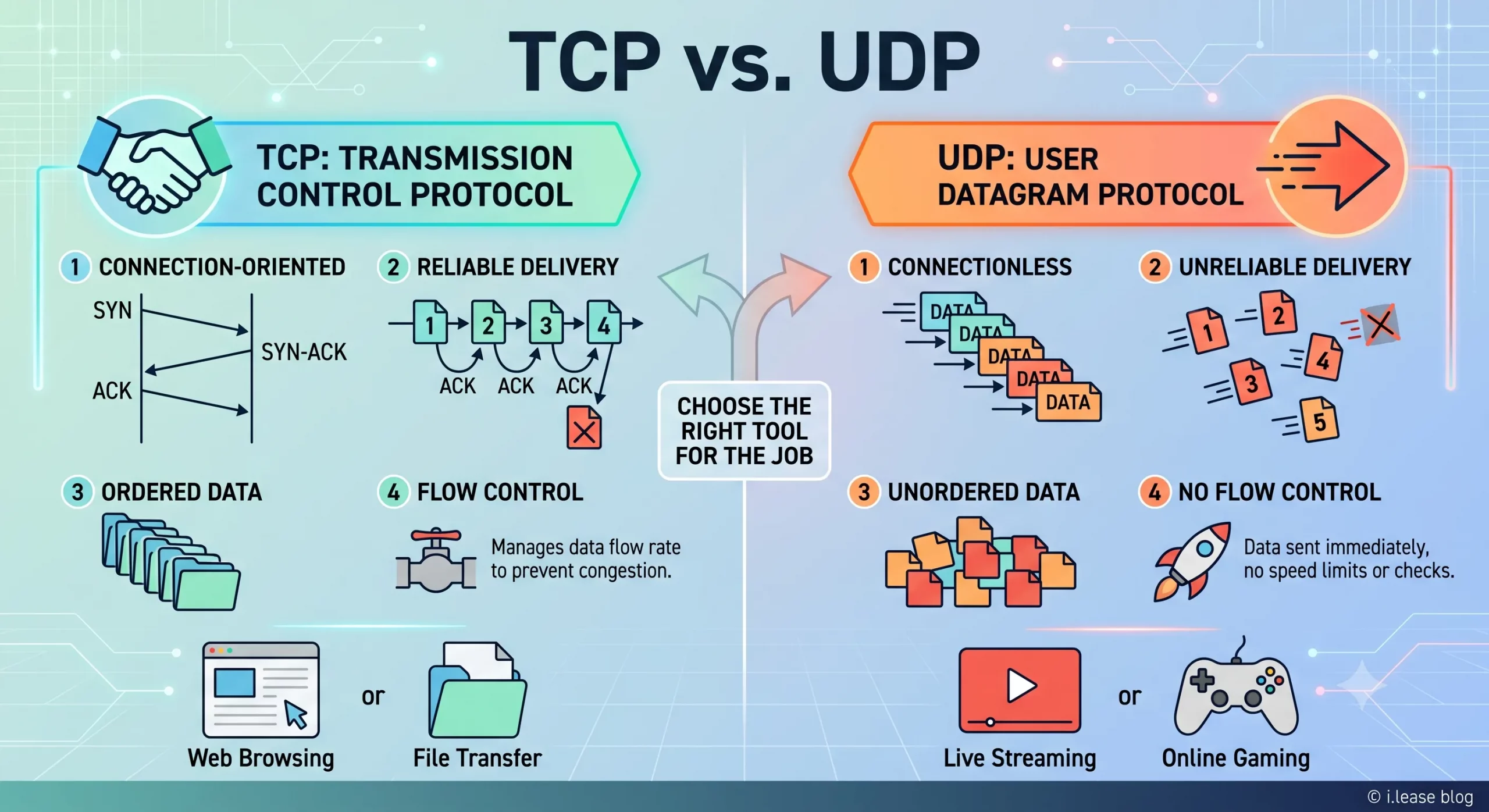
TCP vs UDP : guide de location IPv4 et de réseau d’entreprise
TCP et UDP sont deux des protocoles de transport les plus importants sur Internet. Ils déterminent la circulation des données entre les appareils, les serveurs, les plateformes cloud, les passerelles VPN, les résolveurs DNS, les systèmes de messagerie, les plateformes de streaming et les applications métier. Pour les entreprises, TCP et UDP ne sont pas de simples termes techniques. Ils ont un impact direct sur les performances de l’infrastructure. Related Posts How RIR Policy Differences Shape IPv4 Transactions Across Regions Two IPv4 blocks can have the same prefix size, similar market value, and equally willing buyers and sellers—yet require different What Is CGNAT (Carrier-Grade NAT)? Why It Breaks Hosting, Gaming, and Inbound Services CGNAT (Carrier-Grade NAT) is a technique that lets an Internet service provider share a single public IPv4 address among many RPKI and ROA Explained: How Route Origin Authorization Protects Your IPv4 Prefixes RPKI (Resource Public Key Infrastructure) is a security framework that lets IP address holders publish cryptographically signed statements about who .related-post {} .related-post .post-list { text-align: left; } .related-post .post-list .item { margin: 5px; padding: 10px; } .related-post .headline { font-size: 18px !important; color: #999999 !important; } .related-post .post-list .item .post_thumb { max-height: 220px; margin: 10px 0px; padding: 0px; display: block; } .related-post .post-list .item .post_title { font-size: 16px; color: #3f3f3f; margin: 10px 0px; padding: 0px; display: block; text-decoration: none; } .related-post .post-list .item .post_excerpt { font-size: 13px; color: #3f3f3f; margin: 10px 0px; padding: 0px; display: block; text-decoration: none; } @media only screen and (min-width: 1024px) { .related-post .post-list .item { width: 30%; } } @media only screen and (min-width: 768px) and (max-width: 1023px) { .related-post .post-list .item { width: 90%; } } @media only screen and (min-width: 0px) and (max-width: 767px) { .related-post .post-list .item { width: 90%; } }
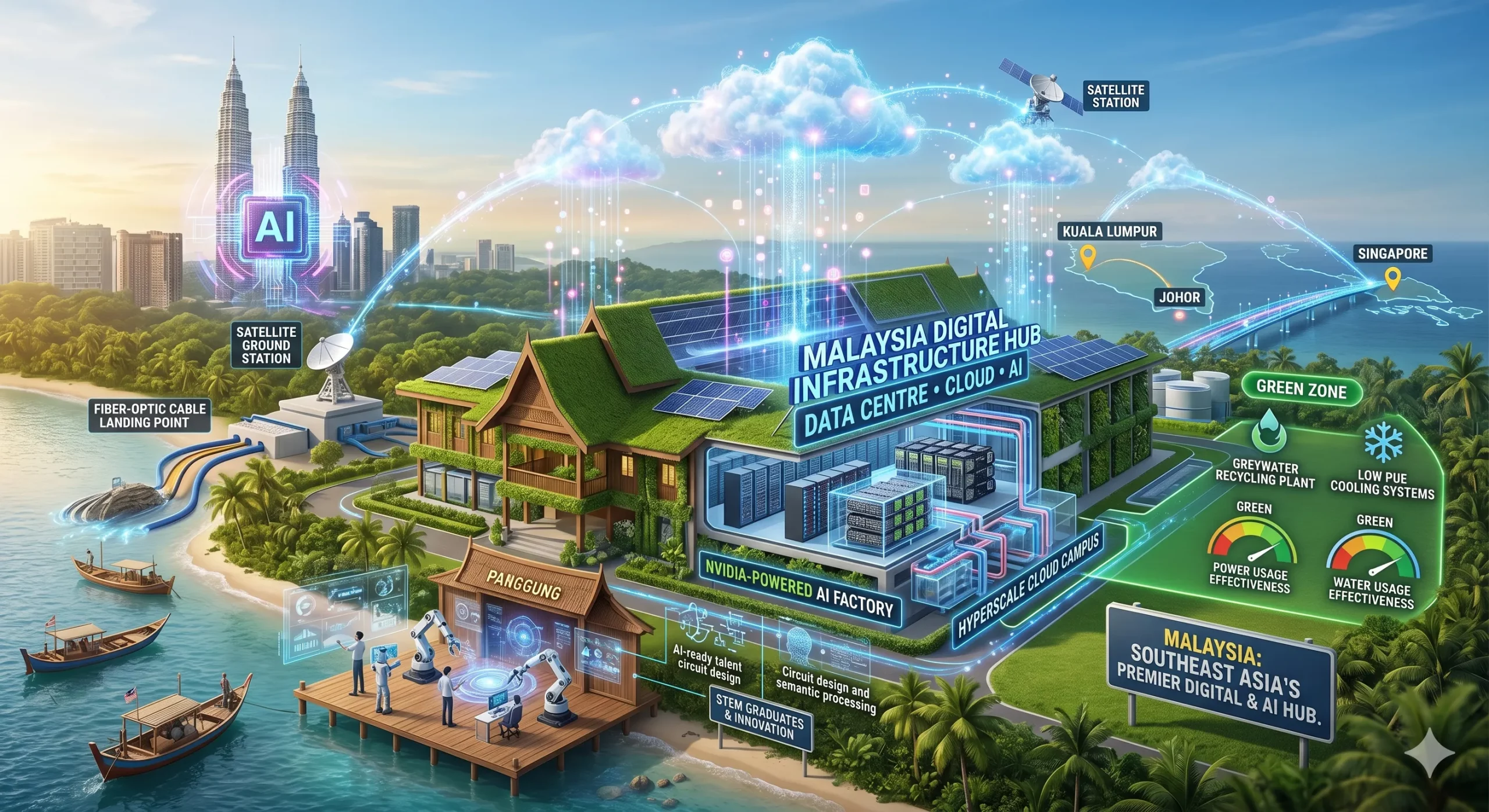
Pourquoi la Malaisie devient-elle un pôle de centres de données pour les infrastructures cloud et d’intelligence artificielle ?
La Malaisie devient l’un des marchés de croissance les plus importants d’Asie du Sud-Est dans le secteur des centres de données. La demande en cloud computing, intelligence artificielle, applications d’entreprise, paiements numériques, commerce électronique, cybersécurité et services régionaux à faible latence pousse les entreprises à construire davantage d’infrastructures au plus près des utilisateurs. Cette croissance ne repose pas uniquement sur un effet de mode. La Malaisie a attiré desRead more Related Posts Desbloqueando la privacidad digital con una red privada virtual (VPN) ¿Qué es una VPN? Una red privada virtual (VPN) es una tecnología que permite a los usuarios crear una conexión Comprensión de la traducción de direcciones de red (NAT) En las redes informáticas, gestionar las direcciones IP de forma eficiente es fundamental para garantizar una comunicación fluida entre los ¿Por qué Malasia se está convirtiendo en un centro neurálgico para la infraestructura de nube e IA? Malasia se está convirtiendo en uno de los mercados de crecimiento de centros de datos más importantes del Sudeste Asiático. .related-post {} .related-post .post-list { text-align: left; } .related-post .post-list .item { margin: 5px; padding: 10px; } .related-post .headline { font-size: 18px !important; color: #999999 !important; } .related-post .post-list .item .post_thumb { max-height: 220px; margin: 10px 0px; padding: 0px; display: block; } .related-post .post-list .item .post_title { font-size: 16px; color: #3f3f3f; margin: 10px 0px; padding: 0px; display: block; text-decoration: none; } .related-post .post-list .item .post_excerpt { font-size: 13px; color: #3f3f3f; margin: 10px 0px; padding: 0px; display: block; text-decoration: none; } @media only screen and (min-width: 1024px) { .related-post .post-list .item { width: 30%; } } @media only screen and (min-width: 768px) and (max-width: 1023px) { .related-post .post-list .item { width: 90%; } } @media only screen and (min-width: 0px) and (max-width: 767px) { .related-post .post-list .item { width: 90%; } }
