IPv4 address price history from exhaustion to 2026
An exploration of IPv4 address price trends from scarcity‑driven spikes to market corrections, and how exhaustion shaped prices up to 2026.
Table of Contents
ToggleWhat is IPv4 address exhaustion and why it matters?
The IPv4 address space — consisting of about 4.3 billion unique addresses — was created early in the internet’s history without foresight of future demand. Over decades, rapid growth in users, devices, and always‑on connections exhausted the free pool of unallocated IPv4 addresses managed by global registries. When regional registries such as the American Registry for Internet Numbers (ARIN) ran out of freely assignable IPv4 addresses, organisations could no longer obtain new addresses directly from central pools. This fundamental scarcity shifted IPv4 into a secondary market, where organisations buy, sell, and lease existing address blocks. As demand persisted even with IPv6 looming, this market evolved into a significant economic space with notable price trends
Early price trends: post‑exhaustion growth
In the years following IPv4 depletion, IPv4 address prices began to rise steadily. According to historical broker data, average prices were modest in the mid‑2010s but climbed significantly over time. Between 2014 and 2021, a major IPv4 brokerage reported per‑IP sale prices rising from around $6–24 per IP in 2014 to $23–60 per IP by 2021, depending on block size and registry. Smaller blocks such as /24 (256 addresses) typically traded at higher per‑IP prices than larger blocks, reflecting differences in demand, transfer complexity, and utility. This trend underscored the growing premium associated with IPv4 scarcity as organisations sought to secure address space ahead of competitors.
External platforms tracking IPv4 pricing noted a roughly 20% annual growth rate in IPv4 prices over several years, illustrating a market where constrained supply collided with persistent demand.
Year | Approx. Price per IPv4 (Typical Range) |
2014 | ~$6–$24 |
2017 | ~$13–$15 |
2021 | ~$45–$60 |
2024 | ~$32–$36 |
2025 | ~$35–$55 |
This table summarises approximate price levels for IPv4 addresses over time, showing the trend from modest early values to higher market rates following exhaustion.
Price peaks and market volatility
The late 2010s and early 2020s saw notable spikes in IPv4 prices. In 2021 and into 2022, brokers recorded some of the highest per‑IP sale prices on record, with individual IPv4 addresses selling for around $60 or more. This represented both speculation and genuine demand from organisations reluctant to transition fully to IPv6 or those requiring backward compatibility with legacy systems. Price volatility was also influenced by wider market conditions such as the global economic cycle and pandemic disruptions. Following the pandemic slowdown in early 2020, network expansion paused, softening demand slightly before rebounding strongly in 2021 when many economies resumed growth.
The rise of leasing markets
As purchase prices fluctuated, many organisations turned to IPv4 leasing as a more predictable and cost‑effective solution. Leasing allows businesses to secure address space without large upfront costs, and monthly lease rates — often around $0.40–$0.50 per IP — remained relatively stable even while purchase prices fluctuated. Leasing gained traction because it resembles a subscription: predictable costs, scalability, and lower risk compared with long‑term capital investment in scarce assets.
Leasing remains attractive in 2025, especially for smaller and medium‑sized networks that prefer operational flexibility over committing large capital resources to permanent address ownership.
Pricing trends into 2024 and 2025
By 2024, IPv4 purchase prices had consolidated somewhat. Market reports indicated typical ranges of roughly $32–$36 per IPv4 address, with smaller blocks commanding higher per‑IP prices due to demand and convenience. Alternative reports place 2025 purchase price ranges at $35–$55 per IP, influenced by block size, reputation, and regional demand.
In early 2025, an influx of large block inventory led to a notable decline in average prices for large blocks (e.g. /16s), with per‑IP pricing dropping from nearly $50 in mid‑2024 to about $24 by March 2025 for some block sizes. Such shifts reflected market liquidity changes, larger address releases, and evolving buyer strategies.
Simultaneously, data from IPv4.Global and other brokers suggested a gradual downward drift in average prices later in 2025, particularly across smaller and medium blocks. Such shifts reflected market liquidity changes, larger address releases, and evolving buyer strategies.
Supply, demand, and exhaustion economics
The underlying driver of the IPv4 price history is economic: scarcity plus steady demand equals premiums. Because the free pool of IPv4 addresses was completely allocated long ago, nothing new enters the market, and the only way organisations acquire addresses is through transfer from existing holders.
Similar to many commodities with finite supply, IPv4 addresses have exhibited:
- Price appreciation during tight supply periods,
- Greater volatility around market shocks, and
- Differentiation by block size and region.
The existence of both purchase and leasing markets reflects buyers’ different risk appetites and budget constraints.
IPv4 address pricing isn’t just about numbers — it’s about network strategy. With global IPv4 exhaustion now firmly in the past, organizations are making more nuanced decisions between purchasing blocks outright or leasing them to align with growth and transition to IPv6. While peak address prices in the early 2020s underscored scarcity, the market today is responding to smarter utilization, block consolidation, and leasing alternatives. For 2026, we anticipate continued moderation and segmentation in prices as operational agility and IPv6 readiness increasingly shape how enterprises value IPv4 resources.
– David Lim, Network Infrastructure Analyst
Expert views on IPv4 pricing dynamics
Industry observers have weighed in on IPv4 market trends. Analysts note that the IPv4 market’s trajectory reflects more than raw scarcity: it also reveals buyer sentiment about IPv6 transition timelines and how quickly organisations move to embrace IPv6 or depend on dual‑stack networks.
One market commentator noted that fluctuating purchase prices and the durability of leasing arrangements point to evolving network planning philosophies, where firms increasingly treat IPv4 addresses as managed assets rather than indefinite infrastructure investments.
Another perspective emphasises that the resilience of IPv4 demand, despite IPv6’s availability for decades, underscores business needs for compatibility with legacy systems, existing routing infrastructure, and gradual migration strategies.
Future outlook: 2026 and beyond
As we look ahead to 2026 and beyond, several trends are likely to shape IPv4 pricing:
- Continued price moderation, especially if large block inventories remain available.
- Stable leasing markets, with operators preferring predictable costs over speculative purchases.
- Regional pricing variation, reflecting different demand and organisational migration patterns across markets.
Some analysts also forecast potential price rebounds if large block availability tightens, or if one of the major Regional Internet Registries (RIRs) enforces policy changes that affect transfer volumes. However, the coexistence of IPv4 purchase and lease markets suggests that prices may remain dynamic rather than trending uniformly upward.
Implications for businesses and network builders
For businesses planning network infrastructure, IPv4 price history highlights several practical considerations:
- Budgeting for address acquisition: organisations must weigh the costs of purchase against long‑term leasing.
- IPv6 migration strategy: as IPv6 adoption reduces dependency on IPv4, address acquisition costs become a planning factor rather than a barrier.
- Risk management: leasing can serve as a hedge against market volatility and speculative price spikes.
Organisations should also consider IPv4 address reputation, since poor reputation can affect network deliverability and security policies, further influencing acquisition decisions.
The IPv4 market reflects one of the most compelling examples of economic scarcity in the digital age. After the free pool exhausted, IPv4 addresses transitioned into a mature secondary market where block size, year, and buyer strategy all influence value. Prices surged in the early post‑exhaustion years, peaking as large enterprises competed for limited space. Over time, increased block availability and the rise of leasing solutions have tempered price volatility. Heading into 2026, we’re seeing a more balanced ecosystem — where buyers, sellers, and lessees negotiate not just on price, but on flexibility, timing, and network deployment plans
– Rachel Chen, IP Address Management Expert
Trusted IPv4 Leasing for Business Growth
Get enterprise-grade IPv4 space quickly, with seamless deployment and end-to-end management.
Frequently Asked Questions
Because the free pool of IPv4 addresses has been fully allocated, they must be transferred between organisations, creating a secondary market with limited supply and steady demand.
Typical purchase prices in 2025 are around $35–$55 per IP, depending on block size, reputation and region.
Leasing allows businesses to obtain addresses temporarily, often at around $0.40–$0.50 per IP per month, which can be more predictable and affordable than purchasing outright.
Yes — IPv4 sale prices reached approximately $60 per address in 2021‑2022 during peak demand.
Future prices depend on inventory, demand, and migration to IPv6; if block availability tightens, prices could rebound, but leasing markets may temper upward pressure.
Related Blogs
An exploration of IPv4 address price trends from scarcity‑driven spikes to market corrections, and how exhaustion shaped prices up to Read more
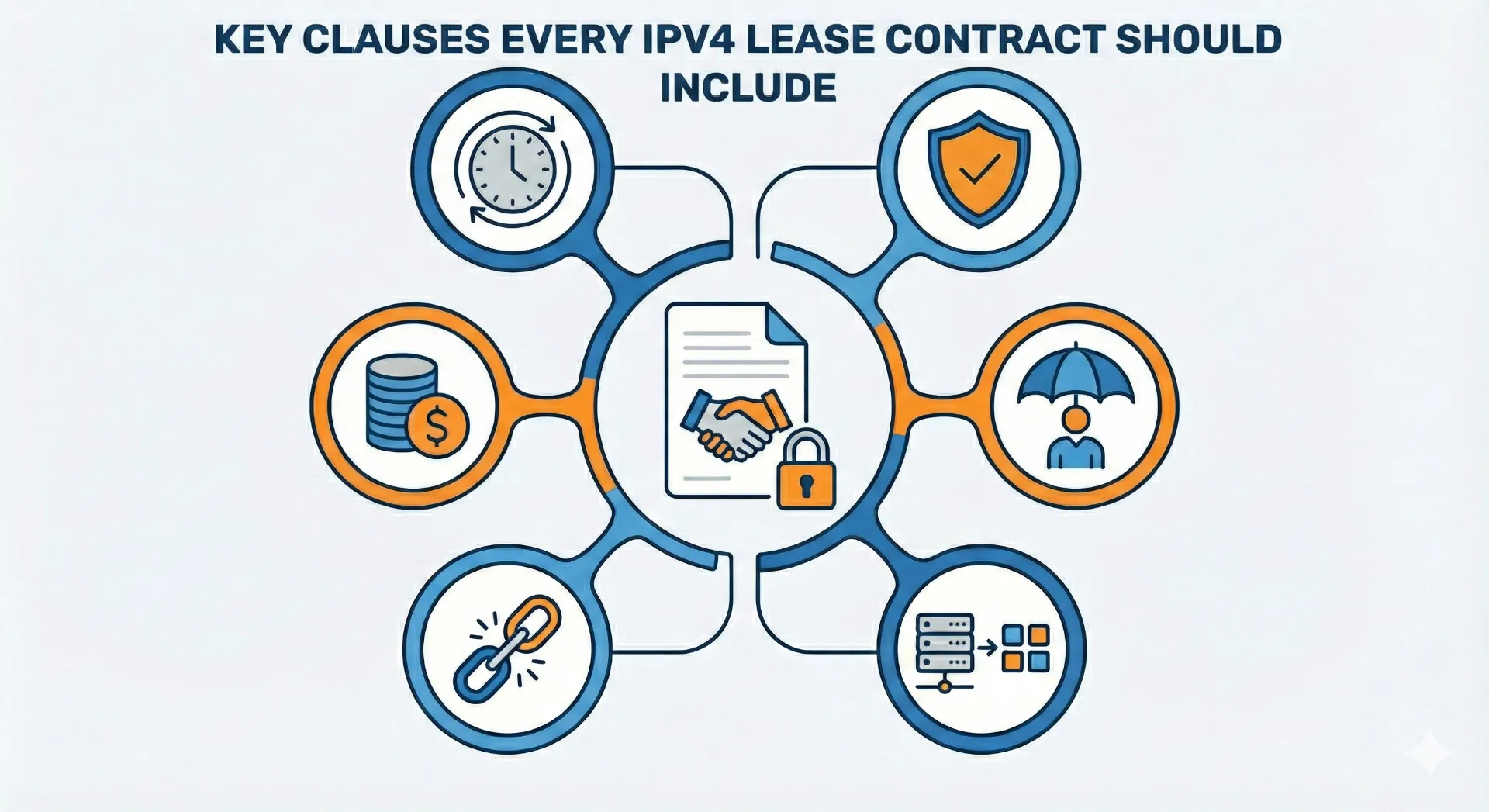
As IPv4 scarcity deepens, carefully drafted lease contracts have become essential tools for managing risk, compliance and long-term network stability.Well-defined Read more
Key points:IPv4 transfer delays are primarily driven by registry policy complexity and incomplete or inconsistent documentation.Early preparation, pre-approval and professional Read more
As IPv4 scarcity deepens, carefully drafted lease contracts have become essential tools for managing risk, compliance and long-term network stability.Well-defined Read more
Key points:IPv4 transfer delays are primarily driven by registry policy complexity and incomplete or inconsistent documentation.Early preparation, pre-approval and professional Read more
Standfirst APNIC IPv4 transfers can stall on documentation, timing, and registry hygiene. Preparation, pre-approval, and clean records materially accelerate outcomes. Read more