Who controls IP address allocation globally?
 Stephanie
Explore the complex system behind IP address allocation, its governing bodies, and the growing need for efficient global management.
Table of Contents
- The internet’s address system relies on several key organisations that manage IP address distribution worldwide.
- Growing challenges in IP address allocation include scarcity, regional disparities, and the rise of IPv6 adoption.
Introduction: Understanding the global IP address allocation system
The IP address works like a unique ID number. It lets devices share information online. Many people wonder – who gives out these IP addresses? The system has multiple parts and involves different groups working together.
Giving out IP addresses requires careful organization. The system must connect countless devices worldwide without problems. Special groups handle this job. They share addresses fairly and try to fix issues when addresses run low. More devices keep joining the internet, so this work keeps getting harder.
This article explains three key things:
1. The groups that manage IP addresses
2. The problems they deal with
3. How IPv6 helps fix these issues
The system works like building blocks – from global groups to local providers.
The role of IANA

ICANN does two main jobs:
1. Manages the Domain Name System (DNS)
2. Oversees worldwide IP address distribution
This system works like this:
- IANA holds all available IP addresses
- It divides them into large blocks
- These blocks go to regional internet registries
- The registries then distribute to local providers
This structure ensures every internet device can get an address when needed.
IANA manages all IP addresses worldwide. It gives large groups of addresses to regional registries (RIRs). These registries then distribute addresses to local networks.
John Curran from ARIN says: “IANA makes sure all regions get IP addresses fairly.” IANA works with two groups:
1. RIRs – they manage addresses in different world regions
2. ICANN – the main organization that oversees IANA
This system has three steps:
- IANA gives addresses to RIRs
- RIRs give addresses to local providers
- Providers give addresses to users and businesses
The system prevents conflicts and keeps the internet organized. As more devices connect, IANA helps manage the switch from IPv4 to IPv6 addresses. IPv6 has enough addresses for future growth. The process happens gradually to avoid problems.
The five RIRs
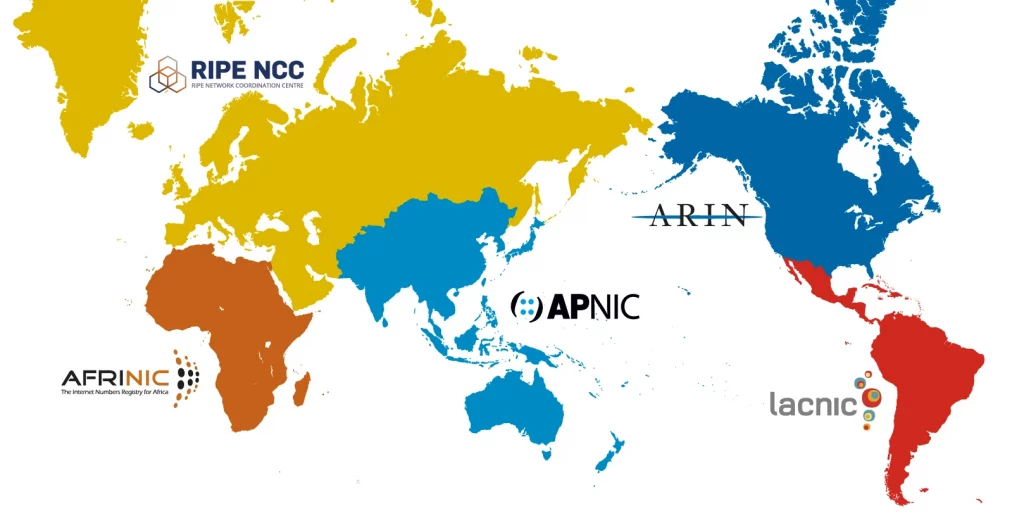
These organizations take care of giving smaller blocks of IP addresses to local internet providers and big companies in their specific parts of the world.
Five regional groups manage IP addresses around the world. Each group covers specific locations:
1. ARIN – North America, parts of the Caribbean and Africa
2. RIPE NCC – Europe, Middle East and Central Asia
3. APNIC – Asia and Pacific countries
4. LACNIC – Latin America and Caribbean nations
5. AFRINIC – The entire African continent
These RIRs play a very important role. They make sure internet companies, businesses, and even governments get enough IP addresses for their users. They also keep records of which organizations own which IP addresses in their region. This helps track where internet traffic comes from.
Alan Ford, a networking expert at NetSure, explains: “RIRs work between IANA and the companies that need IP addresses. They follow rules to give out addresses fairly based on what each region requires.” Without RIRs, it would be difficult to manage IP addresses properly in different parts of the world.
Every RIR sets its own rules for handing out IP addresses. They regularly meet with members to talk about these rules and vote on changes. This approach keeps things fair and organized. It stops arguments about who gets addresses and makes sure all requests follow the same process. The meetings let members have a say in how IP addresses are managed in their region.
How IP addresses are allocated: The process explained
First, IANA gives blocks of IP addresses to RIRs. The RIR checks each request carefully. They look at how big the network is and how many IP addresses are really needed. If the request makes sense, the RIR will give that organization some IP addresses to use.
There are special rules about which IP addresses can be used. Some IP addresses are kept aside for special uses. For example:
- Private addresses (used only inside home or office networks)
- Multicast addresses (used for sending video streams to many people at once)
RIRs also have rules to stop people from taking too many IP addresses they don’t really need. They want to make sure all IP addresses are used properly.
A big problem happened in recent years – we are running out of the old IPv4 addresses. Because of this, RIRs now mostly give out new IPv6 addresses instead. IPv6 is much better because there are way more addresses available – enough for all the new devices connecting to the internet every day. This change to IPv6 is very important for keeping the internet growing.
The whole system works like this: IANA → RIRs → Local internet providers and companies. Each step has rules to make sure IP addresses are given out fairly and used wisely. This helps the internet stay organized as more and more people and devices go online.
IPv4 exhaustion and the transition to IPv6

The biggest issue is that we’re running out of the old IPv4 addresses. IPv4 was created when the internet first started and can make about 4.3 billion different addresses. That sounds like a lot, but with so many new internet devices – like phones, tablets, smart TVs, and home appliances – we’ve used up almost all IPv4 addresses.
In 2011, the last big groups of IPv4 addresses were given out to the regional internet groups (RIRs). This made everyone start switching to IPv6, which is the new system.
Stephen Wu, an internet expert at APNIC, explains:
“We really need IPv6 now because so many everyday devices are connecting to the internet. Without IPv6, we wouldn't have enough addresses for everything.”
— Stephen Wu
This is especially important for smart devices in homes, cars, and cities that all need internet connections.
But there’s another problem – even though IPv6 is better, many places haven’t fully switched to it yet. Most networks still use IPv4 by sharing addresses between devices (called NAT). This works but isn’t perfect. The change to IPv6 is happening slowly because it costs money to upgrade equipment and some older systems don’t work with IPv6 yet.
The main points are:
1. We’ve used up most IPv4 addresses
2. IPv6 has more than enough addresses for all devices
3. The switch to IPv6 is necessary but taking time
4. Many places still use IPv4 with workarounds
This situation shows why we need to keep moving to IPv6, even if the change is happening gradually. It’s the only way to make sure there are enough addresses for all internet devices now and in the future.
The impact of IP address scarcity
Here’s what’s happening with the IP address shortage and who manages them:
The IPv4 address shortage is causing real problems. New internet companies and service providers are struggling to get enough addresses. Some have to buy IPv4 addresses from other companies at high prices because there aren’t enough new ones available.
Diane Wong from GlobalNet Solutions explains:
“Not having enough IP addresses is a big problem, especially in developing countries where more people are getting online. This shortage shows we need to move to IPv6 faster.”
— Diane Wong
staff to make the switch to the new system.
These organizations manage IP addresses worldwide:
1. ICANN – Runs IANA and controls all IP addresses globally
2. IANA – Handles the big picture of IP address distribution worldwide
3. RIRs – Give out IP addresses in different parts of the world (like ARIN for North America or APNIC for Asia)
4. NIRs – Work under RIRs in some countries to help local internet providers get addresses
The situation shows we need to:
-
- Use IPv4 addresses more carefully
-
- Move faster to IPv6
-
- Help smaller companies make the switch
-
- Keep the system fair for everyone needing addresses
The future of IP address allocation
The internet’s future depends on everyone switching to IPv6. Right now, the change is happening slowly. But more and more devices are connecting to the internet every day – things like smart home gadgets, connected cars, and other IoT devices. This means we’ll need many more IP addresses soon.
Tim Rains from Microsoft explains:
“More places are starting to use IPv6, and eventually the whole world will switch. But we can't just stop using IPv4 yet. We need to keep both systems working while helping more people move to IPv6. This way, the internet won't have problems during the change”
— Tim Rains, Microsoft
Here are the key points about the future:
1. IPv6 is the solution for having enough addresses
2. The change is happening, but not quickly
3. More internet-connected devices means we need IPv6 more than ever
4. We must manage both IPv4 and IPv6 during the transition
5. Fair distribution of addresses remains important
As more people upgrade their equipment and services, the internet will gradually move completely to IPv6. Until then, the organizations managing IP addresses will continue working to make this important change happen smoothly.
Trusted IPv4 Leasing for Business Growth
Get enterprise-grade IPv4 space quickly, with seamless deployment and end-to-end management.
Get Started with i.leaseFAQs
What is an IP address?
An IP address is a number for internet devices. Each computer, phone or smart device gets one. Devices use these numbers to communicate online.
What does IANA do?
IANA controls all IP addresses globally. It divides addresses between five regional groups. These groups then give addresses to local providers.
Why is IPv4 running out bad?
IPv4 made 4 billion addresses. Now we need more. Not enough addresses means:
– New devices can’t connect
– Companies buy old addresses at high costs
What's different about IPv6?
IPv6 fixes the address shortage. IPv6 makes enough addresses for all future devices
How do devices get IP addresses?
First, IANA gives address blocks to the five regional groups (RIRs). Then, these groups share smaller blocks with internet providers in their area. Finally, your internet company gives your devices their specific addresses when you go online. Each step follows rules to prevent waste and keep things organized.
Related Blogs
相关文章
IPv4市场的未来
尽管 IPv6 持续扩展,稀缺性仍使 IPv4 保持价值,并支撑着一个全球性的二级市场,在这个市场中,IP 地址正日益作为可交易的数字资产发挥作用。 有限的 IPv4 供应催生了一个成熟的二级市场,地址段在全球范围内被买卖和租赁。 价格虽会波动,但来自云计算、托管服务和 AI 基础设施的持续需求表明,IPv4 市场未来多年仍将保持活跃。 发生了什么事? 数字商品的崛起 全球 IPv4 地址市场正进入一个新阶段。IPv4 地址曾被视为由互联网注册机构免费分配的技术资源,如今已作为稀缺的数字资产被交易、租赁和管理。 这种转变源于一个简单的结构性事实:IPv4 协议仅支持大约 43 亿个唯一地址,而全球可自由分配的地址池实际上已经耗尽。随着互联网连接需求不断扩大——从智能手机和云计算到物联网设备——可用供应持续减少。 如今,需要额外地址的公司通常通过转让或二级市场获取,而不是直接从注册机构获得分配。其结果是,一个全球性的市场已经形成,在这个市场中,地址段可以被估值、交易,甚至作为金融工具使用。 根据行业数据,IPv4 地址已经从几乎可以忽略不计的基础设施组成部分,演变为一种被认可的商品。分析人士指出,机构如今可以从此前未使用的地址分配中获得可观回报,而某些地址段根据其规模和信誉,有时价值可达数百万美元。 Larus 等服务商以及类似交易平台所提供的经纪与市场服务的出现,表明互联网寻址系统已与现代数字经济紧密交织在一起。 IPv4 如何成为可交易资产 在早期互联网时代,IP 地址市场的概念几乎难以想象。数十年来,组织可以以极低成本、且监管有限的情况下,从区域互联网注册机构(RIR)获得大规模地址段。 然而,IPv4 地址池的耗尽改变了这一格局。 当新的地址分配不再可获得时,需求开始转向组织之间的转让。那些拥有未使用地址段的机构——通常是大学、早期互联网服务提供商或传统科技企业——突然持有了其他组织在运营和扩展中所需的资产。 行业报告显示,IPv4 地址的价值发生了显著变化。2014 年,IPv4 地址的平均交易价格约为每个 15 美元。五年内,这一价格翻倍至约 30 美元,而到 2021–2022 年,一些交易甚至超过每个地址 45 至 60 美元。 正如一位经纪行业高管在分析中所指出的,IPv4 地址实际上已成为数字基础设施经济中的一种“商品”。 这一转变重新塑造了企业管理网络资源的方式。IPv4 地址不再仅仅被视为技术标识符,IPv4 地址资源如今也被计入资产负债表,成为可以变现的资产。 IPv4 市场结构 现代 IPv4 生态系统由多个相互联动的组成部分构成: 区域互联网注册机构(RIR)ARIN、RIPE NCC 和 APNIC 等机构负责监管地址分配,并监督其各自区域内的转让活动。 经纪商和交易平台专业中介机构协助促成交易,帮助买家寻找可用地址段,并确保交易符合注册机构政策要求。 二级市场买家云服务提供商、托管公司、电信运营商和数据平台是 IPv4 资源的主要购买方。 地址转让流程本身类似于受监管的资产交易。买方必须说明其对地址资源的需求,并遵守注册机构的相关要求,而经纪商通常还会提供托管服务和验证流程,以降低欺诈风险。Read more Related Posts IPv4 租赁 vs 购买|2026 年 IPv4 市场结构性风险解析 在 IPv4 稀缺持续加剧的市场中,租赁与购买已不只是价格差异,而是两种不同的风险结构。本文解析 IPv4 租赁与购买的成本、控制权、连续性、市场风险与适用场景,帮助企业制定更合适的 IP 策略。 重点摘要 到了 2026 年,IPv4 租赁已经成为一种更灵活的运营模式,月租价格相对稳定,主要由稀缺性和快速部署需求驱动。IPv4 购买则越来越像一种长期资产策略,但也会暴露在价格周期、流动性变化和资金锁定风险之下。 IPv4 已经不只是基础设施,它是一个稀缺市场 IPv4 地址系统已经完全转入二级市场生态。自从 IANA 的免费分配耗尽后,组织现在主要依赖以下方式取得 IPv4:通过区域互联网注册机构(RIR)的转移经纪撮合的二级市场买卖像 Read more IPv4 leasing vs purchasing: structural risk in the IPv4 address market IPv4 leasing vs purchasing reflects a structural shift in IP address markets, balancing cost, control, scarcity, and operational risk in Read more تأجير IPv4 لمراكز البيانات: ما الذي تحتاج إلى معرفته مع تزايد ندرة IPv4، تعتمد مراكز البيانات بشكل متزايد على التأجير لتوسيع البنية التحتية، والتحكم في التكاليف، والحفاظ على اتصال Read more .related-post {} .related-post .post-list { text-align: left; } .related-post .post-list .item { margin: 5px; padding: 10px; } .related-post .headline { font-size: 18px !important; color: #999999 !important; } .related-post .post-list .item .post_thumb { max-height: 220px; margin: 10px 0px; padding: 0px; display: block; } .related-post .post-list .item .post_title { font-size: 16px; color: #3f3f3f; margin: 10px 0px; padding: 0px; display: block; text-decoration: none; } .related-post .post-list .item .post_excerpt { font-size: 13px; color: #3f3f3f; margin: 10px 0px; padding: 0px; display: block; text-decoration: none; } @media only screen and (min-width: 1024px) { .related-post .post-list .item { width: 30%; } } @media only screen and (min-width: 768px) and (max-width: 1023px) { .related-post .post-list .item { width: 90%; } } @media only screen and (min-width: 0px) and (max-width: 767px) { .related-post .post-list .item { width: 90%; } }

市场上的IPv4定价由哪些因素决定?
IPv4 地址的稀缺性、不断变化的需求以及 i.lease 等租赁平台正在重塑全球 IPv4 地址的价值评估和交易方式。 IPv4 地址的定价主要受稀缺性、区块大小以及不同地区和行业需求波动的影响。 包括 i.lease 在内的租赁模式正在动荡的购买市场中稳定成本。 市场上的IPv4定价由哪些因素决定? 稀缺性塑造的市场 IPv4 地址曾经是自由分配的,如今却已成为一种可交易的数字商品。过去十年间,随着全球 IPv4 地址枯竭的加剧,一个二级市场应运而生,各机构在此买卖和租赁地址块。 如今,IPv4 的定价反映了经济稀缺性、技术限制和制度安排之间复杂的相互作用。虽然 2025-2026 年的平均购买价格大致在每个地址 30 美元到 50 美元之间,但这一价格范围掩盖了因地址块大小、地理位置和使用情况而产生的显著差异。 与此同时,租赁引入了一种更可预测的定价模式。月租费通常在每个 IP 地址 0.30 美元到 0.50 美元左右,形成了一种类似订阅的市场,这与波动较大的购买价格形成鲜明对比。 最终,IPv4 并没有一个单一的“价格”,而是一个受结构性限制塑造的碎片化市场。 稀缺性仍然是根本驱动因素 IPv4 定价最关键的因素很简单:地址数量有限。 IPv4 协议提供约 43 亿个地址,而所有由区域注册机构管理的主要地址池自 2010 年代初以来均已耗尽。剩余的地址只能通过转让或租赁的方式重新分配。正如一份行业分析报告指出,“供应固定,需求增长”是市场价格动态的根本原因。 这种稀缺性已将 IPv4 从基础设施转变为一种资产类别。2020 年至 2022 年间,IPv4 价格飙升,一度达到每个地址 45 至 60 美元的高位,之后近年来有所回落。即使价格出现暂时性调整,有限供应造成的结构性上限仍然支撑着 IPv4 的长期估值。 需求模式正在转变,而不是消失 虽然稀缺性是恒定的,但需求却并非如此。相反,需求变得更加分散且周期性波动。 云计算、移动服务和联网设备的兴起持续支撑着基本需求。与此同时,大型买家(尤其是超大规模数据中心)的行为对价格产生了不成比例的影响。 例如,到 2025 年,IPv4 总传输量增长了 28%,而价格却下降了约 33%,这反映出主要参与者竞价力度的减弱。 这揭示了一个关键的动态:需求并非简单地推高价格,它还会重新分配市场力量。当大型买家退出市场时,小型参与者就会涌入,从而增加交易量,但降低价格压力。 区块大小造成价格不对称 并非所有IPv4地址的价格都相同。地址块大小起着至关重要的作用。Read more Related Posts IPv4 租赁 vs 购买|2026 年 IPv4 市场结构性风险解析 在 IPv4 稀缺持续加剧的市场中,租赁与购买已不只是价格差异,而是两种不同的风险结构。本文解析 IPv4 租赁与购买的成本、控制权、连续性、市场风险与适用场景,帮助企业制定更合适的 IP 策略。 重点摘要 到了 2026 年,IPv4 租赁已经成为一种更灵活的运营模式,月租价格相对稳定,主要由稀缺性和快速部署需求驱动。IPv4 购买则越来越像一种长期资产策略,但也会暴露在价格周期、流动性变化和资金锁定风险之下。 IPv4 已经不只是基础设施,它是一个稀缺市场 IPv4 地址系统已经完全转入二级市场生态。自从 IANA 的免费分配耗尽后,组织现在主要依赖以下方式取得 IPv4:通过区域互联网注册机构(RIR)的转移经纪撮合的二级市场买卖像 Read more IPv4 leasing vs purchasing: structural risk in the IPv4 address market IPv4 leasing vs purchasing reflects a structural shift in IP address markets, balancing cost, control, scarcity, and operational risk in Read more تأجير IPv4 لمراكز البيانات: ما الذي تحتاج إلى معرفته مع تزايد ندرة IPv4، تعتمد مراكز البيانات بشكل متزايد على التأجير لتوسيع البنية التحتية، والتحكم في التكاليف، والحفاظ على اتصال Read more .related-post {} .related-post .post-list { text-align: left; } .related-post .post-list .item { margin: 5px; padding: 10px; } .related-post .headline { font-size: 18px !important; color: #999999 !important; } .related-post .post-list .item .post_thumb { max-height: 220px; margin: 10px 0px; padding: 0px; display: block; } .related-post .post-list .item .post_title { font-size: 16px; color: #3f3f3f; margin: 10px 0px; padding: 0px; display: block; text-decoration: none; } .related-post .post-list .item .post_excerpt { font-size: 13px; color: #3f3f3f; margin: 10px 0px; padding: 0px; display: block; text-decoration: none; } @media only screen and (min-width: 1024px) { .related-post .post-list .item { width: 30%; } } @media only screen and (min-width: 768px) and (max-width: 1023px) { .related-post .post-list .item { width: 90%; } } @media only screen and (min-width: 0px) and (max-width: 767px) { .related-post .post-list .item { width: 90%; } }
关于 弹性IP地址 Elastic IP address: AWS 用户指南
在云计算中,保持 稳定的 IP 地址 对于 网站托管、应用程序和网络管理 至关重要。这就是 Elastic IP 地址(弹性 IP) 发挥作用的地方。如果你使用 亚马逊云 AWS,了解 Elastic IP 的工作原理,可以帮助你 提高可靠性、防止宕机,并优化云端成本。本文将详细介绍 Elastic IP 的定义、工作方式、优势及最佳实践。 什么是弹性 IP 地址? Elastic IP 地址 是 AWS 提供的静态公网 IPv4 地址,可分配给 Amazon EC2(Elastic Compute Cloud)实例。与普通公网 IP 不同,Elastic IP 在实例重启后不会更改,确保服务稳定运行。 弹性 IP 的工作原理 Elastic IP 地址来自 AWS 的 IP 地址池,并可随时分配给 EC2 实例。如果实例发生故障,你可以 快速将 Elastic IP 重新绑定到另一台实例,从而减少宕机时间,保持业务连续性。 ? Elastic IP 主要特点: ✔ 静态 IP 地址 – 不会随实例重启而改变。✔ 可自由分配 – 可在同一区域内的不同实例间切换。✔Read more Related Posts IPv4 租赁 vs 购买|2026 年 IPv4 市场结构性风险解析 在 IPv4 稀缺持续加剧的市场中,租赁与购买已不只是价格差异,而是两种不同的风险结构。本文解析 IPv4 租赁与购买的成本、控制权、连续性、市场风险与适用场景,帮助企业制定更合适的 IP 策略。 重点摘要 到了 2026 年,IPv4 租赁已经成为一种更灵活的运营模式,月租价格相对稳定,主要由稀缺性和快速部署需求驱动。IPv4 购买则越来越像一种长期资产策略,但也会暴露在价格周期、流动性变化和资金锁定风险之下。 IPv4 已经不只是基础设施,它是一个稀缺市场 IPv4 地址系统已经完全转入二级市场生态。自从 IANA 的免费分配耗尽后,组织现在主要依赖以下方式取得 IPv4:通过区域互联网注册机构(RIR)的转移经纪撮合的二级市场买卖像 Read more IPv4 leasing vs purchasing: structural risk in the IPv4 address market IPv4 leasing vs purchasing reflects a structural shift in IP address markets, balancing cost, control, scarcity, and operational risk in Read more تأجير IPv4 لمراكز البيانات: ما الذي تحتاج إلى معرفته مع تزايد ندرة IPv4، تعتمد مراكز البيانات بشكل متزايد على التأجير لتوسيع البنية التحتية، والتحكم في التكاليف، والحفاظ على اتصال Read more .related-post {} .related-post .post-list { text-align: left; } .related-post .post-list .item { margin: 5px; padding: 10px; } .related-post .headline { font-size: 18px !important; color: #999999 !important; } .related-post .post-list .item .post_thumb { max-height: 220px; margin: 10px 0px; padding: 0px; display: block; } .related-post .post-list .item .post_title { font-size: 16px; color: #3f3f3f; margin: 10px 0px; padding: 0px; display: block; text-decoration: none; } .related-post .post-list .item .post_excerpt { font-size: 13px; color: #3f3f3f; margin: 10px 0px; padding: 0px; display: block; text-decoration: none; } @media only screen and (min-width: 1024px) { .related-post .post-list .item { width: 30%; } } @media only screen and (min-width: 768px) and (max-width: 1023px) { .related-post .post-list .item { width: 90%; } } @media only screen and (min-width: 0px) and (max-width: 767px) { .related-post .post-list .item { width: 90%; } }
