What Happens When Your IP Allocation Runs Out
 Stephanie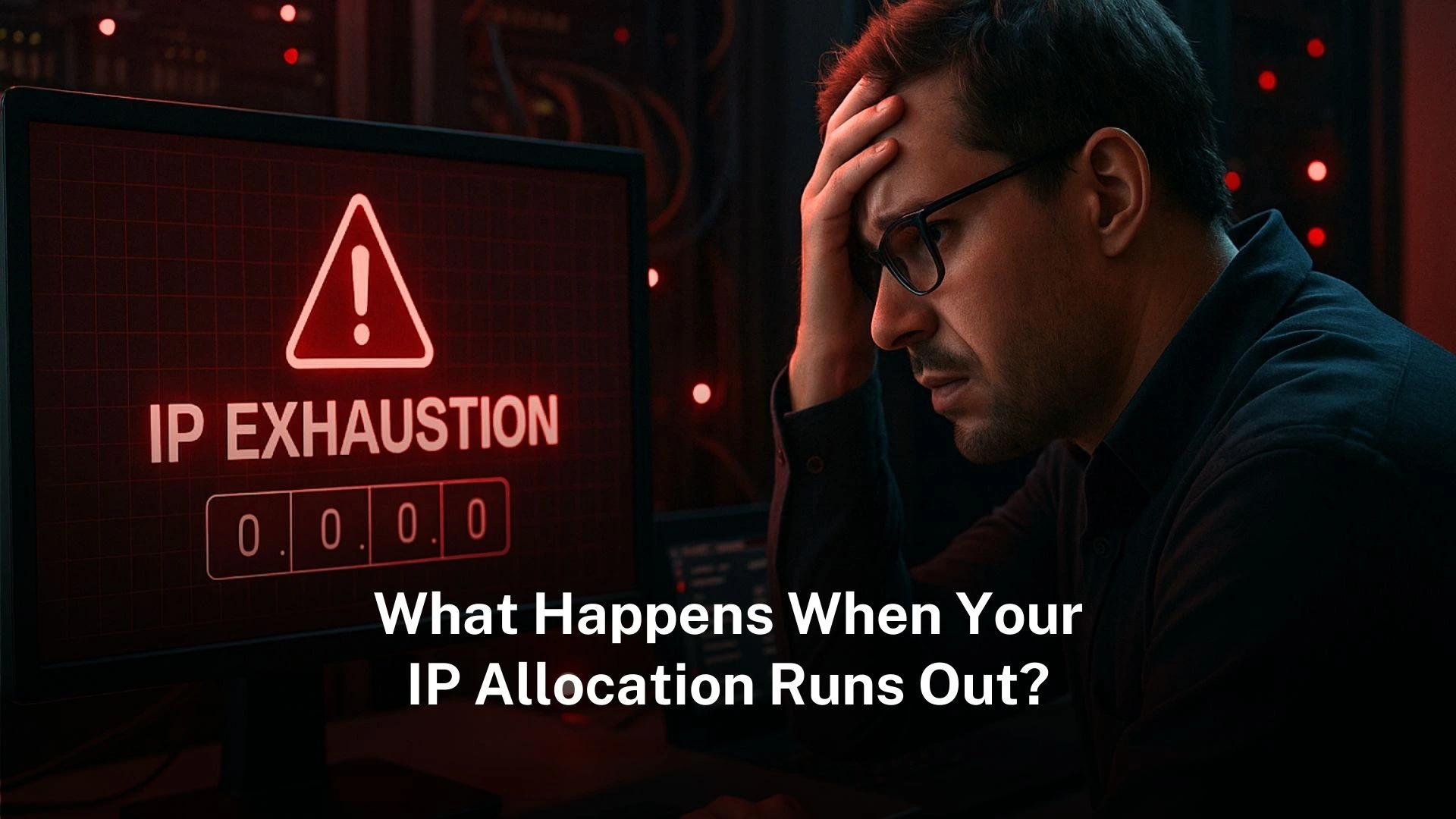
Table of Contents
An allocation can run out for many reasons. The most obvious is growth. As a business adds customers or devices, the number of addresses needed keeps rising. What seemed like a large block a few years ago may look very small once demand doubles or triples. Cloud services, streaming platforms, and mobile apps all consume huge amounts of space, and growth in these areas pushes companies past their limits.
Another reason is inefficient use. Some companies were given large blocks in the early days and used them poorly. Address space can be wasted if it is not carefully planned. Once the block is tied up, it becomes difficult to reclaim. Organisations that depend on old habits may find themselves stuck when the allocation is gone.
The rise of new technologies also plays a role. The Internet of Things adds millions of small devices that each need an address. AI-driven services also expand networks quickly. Even with NAT and other tricks, the pressure is heavy. As more services move online, the allocations that once seemed enough become too small.
When allocations run out, the timing is rarely smooth. At that point, they must make urgent choices. Some buy blocks on the transfer market. Others lease addresses at high cost. Many are forced to adopt IPv6 more quickly. In every case, the lack of space creates stress.
Immediate Consequences of Running Out
The moment an allocation is gone, the problems start. A business cannot add new customers or turn on new systems, and people waiting for service may be told to wait longer. For companies that rely on constant growth, this is more than a pause. It can mean real loss.
Sometimes the shortage comes suddenly. A seasonal spike, a new contract, or an unexpected rise in traffic can push demand past the limit. When that happens, managers scramble for solutions. They may lease blocks at high cost, buy space if it is available, or cut back on expansion. None of these options feels ideal, but they are forced to act.
In many teams the first visible sign is onboarding freezes. Sales has deals ready, but provisioning cannot move because there are no free addresses to assign, so new accounts sit in a queue and the pipeline slows. Support volumes rise at the same time, since customers ask why activation takes longer and why timelines keep shifting. This turns a technical shortage into a customer-facing problem that hurts confidence.
Existing services can also show small cracks. Engineers may recycle addresses faster than usual, and that can lead to odd session issues, stale DNS records, or confused logs. One small glitch is manageable, but when load is high and the pool is tight, little issues pile up and feel bigger than they are. Teams spend time chasing symptoms instead of fixing the root cause, which is lack of space.
Contracts can add pressure right away. Some service level agreements include penalties for delayed activations or missed delivery dates. When addresses are missing, those penalties become real costs. Legal and account managers step in, and energy that should go to growth is spent on explaining delays and asking for leniency. In the meantime, competitors who still have room move faster and win impatient customers.
Security teams feel the pinch too. Emergency changes done under time pressure increase risk. Quick NAT expansions or rushed routing tweaks may leave blind spots in monitoring. After a week of patches, people are tired, change reviews are lighter than they should be, and mistakes are more likely. The shortage starts as a number problem, and then it becomes an operations problem.
Technical and Business Impacts
Networks depend on addresses to keep devices connected. Without them, errors spread. Engineers try stopgap methods like NAT, but every new layer makes the network more complex. Performance drops, and end users notice slower speeds or unstable connections.
The business side suffers too. Customers lose patience if services do not work, and once they leave, many do not come back. Firms also face unexpected costs. Buying or leasing at the last minute is expensive. Shareholders may see the shortage as poor planning, and confidence in management can fall.
Emergency NAT at the carrier level can help, but it comes with trade-offs. Logs must map each session to a subscriber and a port, and that creates storage and privacy questions. Troubleshooting gets harder, because many users appear to share one public identity. Abuse handling also takes longer, since investigators need port and time details to trace one bad action to the right account.
Email and reputation systems can feel side effects as well. If addresses are reused too quickly or pulled from mixed pools, deliverability can drop. Some mail receivers treat new or unknown space cautiously, and that can slow campaigns or break password resets. Marketing asks why mail is delayed, but the root is again the same: the address plan is under strain.
APIs and geolocation bring another layer of friction. When many customers appear behind the same public IPs, rate limits may trigger and third-party providers may flag traffic as unusual. Location services may misplace users if the public egress changes often. Product teams then add exceptions and workarounds, which increases code paths and future maintenance.
Costs keep stacking while the team fights fires. Extra monitoring, bigger log storage, faster hardware for stateful devices, outside consultants for emergency buys, and higher lease rates all arrive at once. Finance sees an unplanned spend curve, and planning meetings shift from quarterly goals to weekly survival. Teams feel the weight, and hiring managers worry that burnout will push key people to leave.
Meanwhile, roadmaps slip. Features tied to new regions or new customer tiers depend on clean address plans, and when those are missing, product launches move out. Sales must revise targets, which frustrates everyone. The company still wants to grow, but the foundation is not ready, so leaders pick smaller steps and hope the market waits.
Regional Differences in Impact
Shortages do not hit every region equally. Some parts of the world still have holders of large unused blocks, while others struggle because demand grew faster. In places where rules are strict, transfers take longer, and companies cannot move quickly to fix shortages.
In fast-growing markets, the shortage bites first. Mobile expansion and cloud services consume huge amounts of space, so shortages appear early. Local policy shapes outcomes more than many expect. Where registries allow flexible transfers with clear steps, buyers can act in weeks. Where paperwork is heavier, the same deal may take months. A firm that operates across borders learns to stage purchases where rules are smoother and then route traffic accordingly, but that adds design work and careful compliance checks.
Economic cycles matter as well. Regions with strong e-commerce peaks see yearly stress around holidays, and address pools run hot during those weeks. Teams that plan early can coast through, but teams that wait hit the wall and must pay peak prices. In regions with steadier demand, shortages arrive more quietly, and leaders sometimes miss the signs until a launch fails.
Data residency and security rules add another wrinkle. Some countries limit where user data can flow. If egress points must stay inside national borders, address pools cannot be shared across regions as freely. That makes local scarcity harder to smooth out with global tricks. Companies then keep separate reserves per country, which ties up space and money.
Language and vendor ecosystems play a role too. In regions with many brokers and experienced legal advisors, buyers find help faster and avoid bad blocks. In places with fewer specialists, firms lean on global partners and pay higher fees for diligence. Over time this creates a gap: the regions with better support move faster and pay less, and the rest learn by hard experience.
Options Available When Allocations Run Out
When a company finds that its allocation is gone, the first step is usually to look for more space on the transfer market. Buying blocks from another holder can be costly, but it is one of the fastest ways to secure more addresses. Some firms choose to lease instead, which can fill short-term gaps but often comes with high monthly costs. Leasing gives quick relief, yet over time it can add up to more than buying outright.
Another option is to make existing space go further. NAT is widely used for this purpose. It allows many devices to share fewer addresses, and in some cases this can delay the need to buy more space. The drawback is that NAT adds complexity and sometimes breaks certain services. Some companies also push ahead with IPv6 deployment.
In some regions, governments or registries provide help through policy. They may free up unused legacy space or allow easier transfers.
Long-Term Planning for Businesses
Running out of space is a short-term crisis, but the deeper question is how to plan for the long term. Businesses that buy their own blocks often do so with a view toward stability. Ownership reduces reliance on outside providers and prevents sudden shortages from stopping growth. Once space is owned, managers can plan new projects without fear that addresses will run out in the middle of expansion.
Long-term planning also means looking at technology. NAT can help, but it cannot be the final answer. Firms know that IPv6 is the real long-term fix, even if adoption is slow. Many now run dual systems, preparing staff and users for the shift. While this adds costs, it is seen as part of protecting the future.
Financial planning is just as important. IP space is now treated as an asset, and its value can rise. Buying early may cost a lot, but it often looks cheap compared to the price paid later. Companies that see addresses as assets build them into their balance sheets and treat them as part of overall strategy. This makes IP space not just a technical need but also a business investment.
Trusted IPv4 Leasing for Business Growth
Get enterprise-grade IPv4 space quickly, with seamless deployment and end-to-end management.
Get Started with i.leaseFAQs
What happens first when an allocation runs out?
Usually the company cannot add new users or devices. They may have to stop activations and delay projects until more space is found, which causes frustration and sometimes lost revenue.
Why is leasing not always a good long-term answer?
Leasing gives fast relief but can be costly over time. Monthly fees add up, and the company never fully controls the space. Owning addresses is more stable, even if it costs more upfront.
Do all regions face the shortage the same way?
No, conditions vary. Some regions still have large blocks from early allocations, while others ran out long ago. Rules and policies also shape how easy it is to transfer space.
Why do companies treat IP space as assets today?
Because they have value beyond technical use. Addresses can be bought, sold, and transferred. Their price often rises, so ownership shows investors that a company is prepared for the future
Related Blogs
相关文章
IPv4市场的未来
尽管 IPv6 持续扩展,稀缺性仍使 IPv4 保持价值,并支撑着一个全球性的二级市场,在这个市场中,IP 地址正日益作为可交易的数字资产发挥作用。 有限的 IPv4 供应催生了一个成熟的二级市场,地址段在全球范围内被买卖和租赁。 价格虽会波动,但来自云计算、托管服务和 AI 基础设施的持续需求表明,IPv4 市场未来多年仍将保持活跃。 发生了什么事? 数字商品的崛起 全球 IPv4 地址市场正进入一个新阶段。IPv4 地址曾被视为由互联网注册机构免费分配的技术资源,如今已作为稀缺的数字资产被交易、租赁和管理。 这种转变源于一个简单的结构性事实:IPv4 协议仅支持大约 43 亿个唯一地址,而全球可自由分配的地址池实际上已经耗尽。随着互联网连接需求不断扩大——从智能手机和云计算到物联网设备——可用供应持续减少。 如今,需要额外地址的公司通常通过转让或二级市场获取,而不是直接从注册机构获得分配。其结果是,一个全球性的市场已经形成,在这个市场中,地址段可以被估值、交易,甚至作为金融工具使用。 根据行业数据,IPv4 地址已经从几乎可以忽略不计的基础设施组成部分,演变为一种被认可的商品。分析人士指出,机构如今可以从此前未使用的地址分配中获得可观回报,而某些地址段根据其规模和信誉,有时价值可达数百万美元。 Larus 等服务商以及类似交易平台所提供的经纪与市场服务的出现,表明互联网寻址系统已与现代数字经济紧密交织在一起。 IPv4 如何成为可交易资产 在早期互联网时代,IP 地址市场的概念几乎难以想象。数十年来,组织可以以极低成本、且监管有限的情况下,从区域互联网注册机构(RIR)获得大规模地址段。 然而,IPv4 地址池的耗尽改变了这一格局。 当新的地址分配不再可获得时,需求开始转向组织之间的转让。那些拥有未使用地址段的机构——通常是大学、早期互联网服务提供商或传统科技企业——突然持有了其他组织在运营和扩展中所需的资产。 行业报告显示,IPv4 地址的价值发生了显著变化。2014 年,IPv4 地址的平均交易价格约为每个 15 美元。五年内,这一价格翻倍至约 30 美元,而到 2021–2022 年,一些交易甚至超过每个地址 45 至 60 美元。 正如一位经纪行业高管在分析中所指出的,IPv4 地址实际上已成为数字基础设施经济中的一种“商品”。 这一转变重新塑造了企业管理网络资源的方式。IPv4 地址不再仅仅被视为技术标识符,IPv4 地址资源如今也被计入资产负债表,成为可以变现的资产。 IPv4 市场结构 现代 IPv4 生态系统由多个相互联动的组成部分构成: 区域互联网注册机构(RIR)ARIN、RIPE NCC 和 APNIC 等机构负责监管地址分配,并监督其各自区域内的转让活动。 经纪商和交易平台专业中介机构协助促成交易,帮助买家寻找可用地址段,并确保交易符合注册机构政策要求。 二级市场买家云服务提供商、托管公司、电信运营商和数据平台是 IPv4 资源的主要购买方。 地址转让流程本身类似于受监管的资产交易。买方必须说明其对地址资源的需求,并遵守注册机构的相关要求,而经纪商通常还会提供托管服务和验证流程,以降低欺诈风险。Read more Related Posts IPv4 租赁 vs 购买|2026 年 IPv4 市场结构性风险解析 在 IPv4 稀缺持续加剧的市场中,租赁与购买已不只是价格差异,而是两种不同的风险结构。本文解析 IPv4 租赁与购买的成本、控制权、连续性、市场风险与适用场景,帮助企业制定更合适的 IP 策略。 重点摘要 到了 2026 年,IPv4 租赁已经成为一种更灵活的运营模式,月租价格相对稳定,主要由稀缺性和快速部署需求驱动。IPv4 购买则越来越像一种长期资产策略,但也会暴露在价格周期、流动性变化和资金锁定风险之下。 IPv4 已经不只是基础设施,它是一个稀缺市场 IPv4 地址系统已经完全转入二级市场生态。自从 IANA 的免费分配耗尽后,组织现在主要依赖以下方式取得 IPv4:通过区域互联网注册机构(RIR)的转移经纪撮合的二级市场买卖像 Read more IPv4 leasing vs purchasing: structural risk in the IPv4 address market IPv4 leasing vs purchasing reflects a structural shift in IP address markets, balancing cost, control, scarcity, and operational risk in Read more تأجير IPv4 لمراكز البيانات: ما الذي تحتاج إلى معرفته مع تزايد ندرة IPv4، تعتمد مراكز البيانات بشكل متزايد على التأجير لتوسيع البنية التحتية، والتحكم في التكاليف، والحفاظ على اتصال Read more .related-post {} .related-post .post-list { text-align: left; } .related-post .post-list .item { margin: 5px; padding: 10px; } .related-post .headline { font-size: 18px !important; color: #999999 !important; } .related-post .post-list .item .post_thumb { max-height: 220px; margin: 10px 0px; padding: 0px; display: block; } .related-post .post-list .item .post_title { font-size: 16px; color: #3f3f3f; margin: 10px 0px; padding: 0px; display: block; text-decoration: none; } .related-post .post-list .item .post_excerpt { font-size: 13px; color: #3f3f3f; margin: 10px 0px; padding: 0px; display: block; text-decoration: none; } @media only screen and (min-width: 1024px) { .related-post .post-list .item { width: 30%; } } @media only screen and (min-width: 768px) and (max-width: 1023px) { .related-post .post-list .item { width: 90%; } } @media only screen and (min-width: 0px) and (max-width: 767px) { .related-post .post-list .item { width: 90%; } }

市场上的IPv4定价由哪些因素决定?
IPv4 地址的稀缺性、不断变化的需求以及 i.lease 等租赁平台正在重塑全球 IPv4 地址的价值评估和交易方式。 IPv4 地址的定价主要受稀缺性、区块大小以及不同地区和行业需求波动的影响。 包括 i.lease 在内的租赁模式正在动荡的购买市场中稳定成本。 市场上的IPv4定价由哪些因素决定? 稀缺性塑造的市场 IPv4 地址曾经是自由分配的,如今却已成为一种可交易的数字商品。过去十年间,随着全球 IPv4 地址枯竭的加剧,一个二级市场应运而生,各机构在此买卖和租赁地址块。 如今,IPv4 的定价反映了经济稀缺性、技术限制和制度安排之间复杂的相互作用。虽然 2025-2026 年的平均购买价格大致在每个地址 30 美元到 50 美元之间,但这一价格范围掩盖了因地址块大小、地理位置和使用情况而产生的显著差异。 与此同时,租赁引入了一种更可预测的定价模式。月租费通常在每个 IP 地址 0.30 美元到 0.50 美元左右,形成了一种类似订阅的市场,这与波动较大的购买价格形成鲜明对比。 最终,IPv4 并没有一个单一的“价格”,而是一个受结构性限制塑造的碎片化市场。 稀缺性仍然是根本驱动因素 IPv4 定价最关键的因素很简单:地址数量有限。 IPv4 协议提供约 43 亿个地址,而所有由区域注册机构管理的主要地址池自 2010 年代初以来均已耗尽。剩余的地址只能通过转让或租赁的方式重新分配。正如一份行业分析报告指出,“供应固定,需求增长”是市场价格动态的根本原因。 这种稀缺性已将 IPv4 从基础设施转变为一种资产类别。2020 年至 2022 年间,IPv4 价格飙升,一度达到每个地址 45 至 60 美元的高位,之后近年来有所回落。即使价格出现暂时性调整,有限供应造成的结构性上限仍然支撑着 IPv4 的长期估值。 需求模式正在转变,而不是消失 虽然稀缺性是恒定的,但需求却并非如此。相反,需求变得更加分散且周期性波动。 云计算、移动服务和联网设备的兴起持续支撑着基本需求。与此同时,大型买家(尤其是超大规模数据中心)的行为对价格产生了不成比例的影响。 例如,到 2025 年,IPv4 总传输量增长了 28%,而价格却下降了约 33%,这反映出主要参与者竞价力度的减弱。 这揭示了一个关键的动态:需求并非简单地推高价格,它还会重新分配市场力量。当大型买家退出市场时,小型参与者就会涌入,从而增加交易量,但降低价格压力。 区块大小造成价格不对称 并非所有IPv4地址的价格都相同。地址块大小起着至关重要的作用。Read more Related Posts IPv4 租赁 vs 购买|2026 年 IPv4 市场结构性风险解析 在 IPv4 稀缺持续加剧的市场中,租赁与购买已不只是价格差异,而是两种不同的风险结构。本文解析 IPv4 租赁与购买的成本、控制权、连续性、市场风险与适用场景,帮助企业制定更合适的 IP 策略。 重点摘要 到了 2026 年,IPv4 租赁已经成为一种更灵活的运营模式,月租价格相对稳定,主要由稀缺性和快速部署需求驱动。IPv4 购买则越来越像一种长期资产策略,但也会暴露在价格周期、流动性变化和资金锁定风险之下。 IPv4 已经不只是基础设施,它是一个稀缺市场 IPv4 地址系统已经完全转入二级市场生态。自从 IANA 的免费分配耗尽后,组织现在主要依赖以下方式取得 IPv4:通过区域互联网注册机构(RIR)的转移经纪撮合的二级市场买卖像 Read more IPv4 leasing vs purchasing: structural risk in the IPv4 address market IPv4 leasing vs purchasing reflects a structural shift in IP address markets, balancing cost, control, scarcity, and operational risk in Read more تأجير IPv4 لمراكز البيانات: ما الذي تحتاج إلى معرفته مع تزايد ندرة IPv4، تعتمد مراكز البيانات بشكل متزايد على التأجير لتوسيع البنية التحتية، والتحكم في التكاليف، والحفاظ على اتصال Read more .related-post {} .related-post .post-list { text-align: left; } .related-post .post-list .item { margin: 5px; padding: 10px; } .related-post .headline { font-size: 18px !important; color: #999999 !important; } .related-post .post-list .item .post_thumb { max-height: 220px; margin: 10px 0px; padding: 0px; display: block; } .related-post .post-list .item .post_title { font-size: 16px; color: #3f3f3f; margin: 10px 0px; padding: 0px; display: block; text-decoration: none; } .related-post .post-list .item .post_excerpt { font-size: 13px; color: #3f3f3f; margin: 10px 0px; padding: 0px; display: block; text-decoration: none; } @media only screen and (min-width: 1024px) { .related-post .post-list .item { width: 30%; } } @media only screen and (min-width: 768px) and (max-width: 1023px) { .related-post .post-list .item { width: 90%; } } @media only screen and (min-width: 0px) and (max-width: 767px) { .related-post .post-list .item { width: 90%; } }
关于 弹性IP地址 Elastic IP address: AWS 用户指南
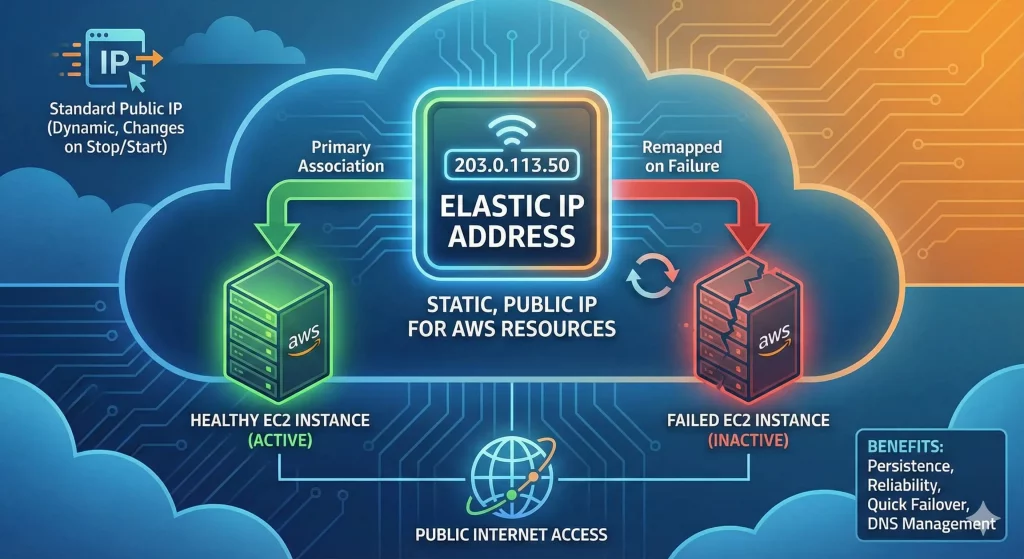
在云计算中,保持 稳定的 IP 地址 对于 网站托管、应用程序和网络管理 至关重要。这就是 Elastic IP 地址(弹性 IP) 发挥作用的地方。如果你使用 亚马逊云 AWS,了解 Elastic IP 的工作原理,可以帮助你 提高可靠性、防止宕机,并优化云端成本。本文将详细介绍 Elastic IP 的定义、工作方式、优势及最佳实践。 什么是弹性 IP 地址? Elastic IP 地址 是 AWS 提供的静态公网 IPv4 地址,可分配给 Amazon EC2(Elastic Compute Cloud)实例。与普通公网 IP 不同,Elastic IP 在实例重启后不会更改,确保服务稳定运行。 弹性 IP 的工作原理 Elastic IP 地址来自 AWS 的 IP 地址池,并可随时分配给 EC2 实例。如果实例发生故障,你可以 快速将 Elastic IP 重新绑定到另一台实例,从而减少宕机时间,保持业务连续性。 ? Elastic IP 主要特点: ✔ 静态 IP 地址 – 不会随实例重启而改变。✔ 可自由分配 – 可在同一区域内的不同实例间切换。✔Read more Related Posts IPv4 租赁 vs 购买|2026 年 IPv4 市场结构性风险解析 在 IPv4 稀缺持续加剧的市场中,租赁与购买已不只是价格差异,而是两种不同的风险结构。本文解析 IPv4 租赁与购买的成本、控制权、连续性、市场风险与适用场景,帮助企业制定更合适的 IP 策略。 重点摘要 到了 2026 年,IPv4 租赁已经成为一种更灵活的运营模式,月租价格相对稳定,主要由稀缺性和快速部署需求驱动。IPv4 购买则越来越像一种长期资产策略,但也会暴露在价格周期、流动性变化和资金锁定风险之下。 IPv4 已经不只是基础设施,它是一个稀缺市场 IPv4 地址系统已经完全转入二级市场生态。自从 IANA 的免费分配耗尽后,组织现在主要依赖以下方式取得 IPv4:通过区域互联网注册机构(RIR)的转移经纪撮合的二级市场买卖像 Read more IPv4 leasing vs purchasing: structural risk in the IPv4 address market IPv4 leasing vs purchasing reflects a structural shift in IP address markets, balancing cost, control, scarcity, and operational risk in Read more تأجير IPv4 لمراكز البيانات: ما الذي تحتاج إلى معرفته مع تزايد ندرة IPv4، تعتمد مراكز البيانات بشكل متزايد على التأجير لتوسيع البنية التحتية، والتحكم في التكاليف، والحفاظ على اتصال Read more .related-post {} .related-post .post-list { text-align: left; } .related-post .post-list .item { margin: 5px; padding: 10px; } .related-post .headline { font-size: 18px !important; color: #999999 !important; } .related-post .post-list .item .post_thumb { max-height: 220px; margin: 10px 0px; padding: 0px; display: block; } .related-post .post-list .item .post_title { font-size: 16px; color: #3f3f3f; margin: 10px 0px; padding: 0px; display: block; text-decoration: none; } .related-post .post-list .item .post_excerpt { font-size: 13px; color: #3f3f3f; margin: 10px 0px; padding: 0px; display: block; text-decoration: none; } @media only screen and (min-width: 1024px) { .related-post .post-list .item { width: 30%; } } @media only screen and (min-width: 768px) and (max-width: 1023px) { .related-post .post-list .item { width: 90%; } } @media only screen and (min-width: 0px) and (max-width: 767px) { .related-post .post-list .item { width: 90%; } }
